Opinion
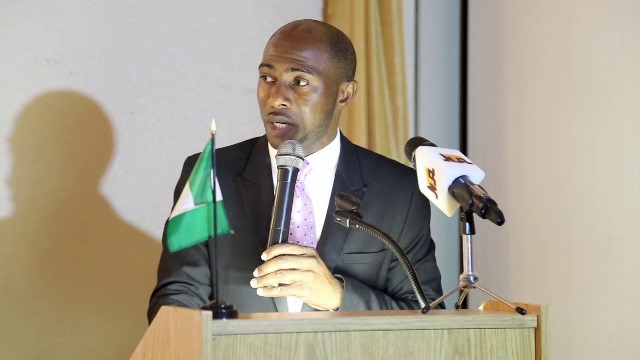
Adding Value: The Challenges of Life by Henry Ukazu
Published
6 years agoon
By
Eric
Greetings Dear Friends,
Let me confess to you all. It’s always a pleasure writing every week despite the challenges I go through trying to meet the deadline. I will also like to appreciate the kind support of my editors and various media firms who have been very resourceful and supportive. As you may know, nothing in life is easy, despite publishing insightful and thought-provoking articles every week consistently, I can authoritatively tell you if not for passion and addiction, I wouldn’t have been able to overcome the pressures. This is because I need to deal with the pressure of daily work, personal commitments and life challenges in addition to having a sound mind in order to produce a good work. In all, I will say, God is the ultimate “source” because beside from him, I can do nothing!
I had to X-ray these challenges because you may be experiencing a peculiar or different challenge that might have defined or shaped you in one way or another. We all face different challenges relating to finance, family/relationship, business, academics, health, etc. The big questions now remain, how do you face and conquer your challenges. The aim of this article is to see how we can address the numerous challenges facing life, and how it can be overcome.
Emotions:
The first step in handling any challenge is managing emotions. Your emotions play a critical role in stabilizing you in critical moments. This is because it’s extremely easy to act in anger, sadness or even frustration. As a way of advice, do or say nothing when you are angry because what you may say or do may be worst than the harm in question. Remember, words are like scars when you are hurt, the wound might heal, but the scar will still remain. It’s just like our words, it can be used to make or mar our life and relationship. As human beings, most times we allow our emotions to take a big chunk of our life. However, being able to sit down and analyze the situation will be a great way to diffuse or addresses any situation you might be facing. It’s worthy to note that only weak people act out impulsively. Strong people, however, see them as challenges and practice massive self-control.
It should be noted that your negative emotions are simply challenges. So take up the challenge and start to master your emotions. You’ll be stronger with this mindset if you master your emotions because it will enable you to study and learn human behavior.
Furthermore, It’s important to note that human beings are the most difficult people on earth to deal with. Some can be happy to relate with while some can be toxic to deal with. Most times we have people who get to our nerves, for example, our friends, partners, arrogant boss or even family member, but because we need peace, love, and friendship, you try to remain calm and allow your peace of mind to control you. In that way, you’ll be able to diffuse the problem as opposed to reacting back which might escalate the problem.
Your Job
Your job is not exempted from the challenge of life. Dealing with the politics of the job can be a great way of facing the challenges of life. You can deal with it by being positive with each ugly incident you are not comfortable with. Dealing with your colleagues, bosses, supervisors, inferiors and administrative bottleneck can be a pain in your body, however, your attitude to each situation can be a remedy in fixing the issue at play.Whether you lose your job, an opportunity, or a relationship, you’ll be forced to face the associated challenges that come with it. Regardless of how it happens, the loss is one of life’s biggest challenges in life. However, loss gives you the opportunity to reflect on what is truly important so that you to keep moving forward. We have all experienced a slow in progress, hindrance or delay on our journey. The challenge is understanding why the delay happened. What caused our progress to slow down. Setbacks are learning opportunities. Having a firm understanding of the types of things that slow your progress will allow you to both avoid and preempt them
Life issues
Every living being must surely face challenges. The only time challenges will stop will be when you give up the ghost. On a daily note, you face challenges in taking care of your responsibility both personally and professionally. Whether at home, at work, in public areas or even in the hospital, you are bound to deal with life issues. You kids can get on your nerve, it can even a traffic situation or something you can’t really explain how it came up, but you’re just expected to deal with it. My take on this is, smile and say this too shall pass especially when you have your best and the situation still persists. Things simply don’t go as planned. That’s life! And life will never stop giving you challenges. So stop complaining. Take up the challenges and assume full responsibility for the situation.
Tend to Your Loving Relationships
These relationships don’t just happen magically; they grow and are sustained through attentive care and hard work. Mature love in marriage, family, or friendships is a dynamic living experience. It requires a commitment to keep it working. It involves a daily process of overcoming the challenges. It accepts the reality that we will hurt one another and be hurt by one another. It is the nature of being human. These pains cannot be avoided. We can only devote ourselves to do what we can do to weather them and to mend them. Love, then, is essentially repair work which we must use to heal the wounds. However, we must endeavor to take responsibility for our mistakes by learning to say I’m sorry and then making an effort to make amends. We should also learn to forgive. As the monks do every day, we fall down and get up, fall down and get up again.
The question now becomes, how do we face these challenges?
Positive thinking
This is harder than most would think. Shaping your thoughts can be an uphill task. It’s easy to go awry in your head. It’s easy to start linking them with your emotions and then acting out impulsively. So take your thoughts as challenges because they want you to follow them. Overcome them slowly and have patience with yourself. Your thoughts are your reality, so create the reality you want.
Calm yourself.
During stressful times, we sometimes push the panic button and “catastrophize”, or imagine the worst. Instead, calm yourself with “traffic light coping”. This exercise, developed by Dr. Williams, works like this: When you start to feel worried, panicked, or angry—when you start to “see red”— stop and relax. Pause. Take time to breathe deeply to help calm your body and mind, then move forward.
Start with a single step. The sooner you take action, the better you’ll feel. If a challenge feels overwhelming, think about the simplest thing you could do to take you in the direction you want to go. Then do it.
Mastering Your Mind
Your mind can be a formidable opponent on your path to becoming a better person. It can pipe up with all kinds of negative commentary when things are not going well and can have the power to derail you with doubt and fear – if you let it. Mastering your mind is one of the greatest life challenges of all. Your mind controls your perspective, it informs how you receive and process your interactions with the world around you. Unlike other things you can claim mastery over after a finite amount of time, the mind can take some a lifetime to master. Some common methods to calm the mind include having personal time for yourself, therapy, meditating, self- reflection, prayer, and intentional silence. You don’t have to be hard on yourself, give your self some break.
In conclusion, whatever problems you think you have, whatever it is you’ve gone through, whatever you’re going through right now. You’re a challenge by itself. Don’t let mistakes, challenges, circumstances, pressure define you, you’re bigger than them all. Life challenges are not to paralyze but to make you discover who you are. I will leave you with some great nuggets:
Life is a challenge – Meet it
Life is a gift – Accept it
Life is an adventure – Dare it
Life is a sorrow – Overcome it
Life is a game – Play it
Life is a mystery – Unfold it
Life is a song – Sing it
Life is an opportunity – Take it
Life is a journey – Complete it
Life is a promise – Fulfill it
Life is a love – Enjoy it
Life is a beauty Praise it
Life is a struggle – Fight it
Life is a puzzle – Solve it
Life is a goal – Achieve it.
Yes, we may have been hurt in one way or the other, but as Mother Teresa will say, in other to live a positive life we need to have to have a positive mental attitude. According to her:
People are often unreasonable and self-centered, Forgive them anyway.
If you are kind, people will accuse of you ulterior motives – Be kind anyway
If you are honest people may cheat you, Be honest anyway
The good you do today maybe forgotten, Be good anyway
If you find happiness, people may be jealous Be happy anyway
Henry Ukazu writes from New York. He works with the New York City Department of Correction as the Legal Coordinator. He’s the author of the acclaimed book Design Your Destiny – Actualizing Your Birthright To Success. He can be reached via henrous@gmail.com
Related
You may like
Opinion
Rebuilding the Pillars: A Comprehensive Blueprint for Overcoming Nigeria’s Leadership Deficit
Published
5 days agoon
December 13, 2025By
Eric
By Tolulope A. Adegoke, PhD
Systemic governance reform as the critical foundation for unlocking sustainable development and restoring national promise. “Nations are not built on resources, but on systems. Nigeria’s future rests not on changing leaders, but on transforming the very structures that create them” – Tolulope A. Adegoke, PhD
Introduction: The Leadership Imperative
Nigeria, often described as the “Giant of Africa,” stands at a pivotal moment in its historical trajectory. Possessing unparalleled human capital, vast natural resources, and a dynamic, youthful population, the nation’s potential remains paradoxically constrained by deeply embedded structural deficiencies within its leadership architecture. These systemic flaws—evident across political, corporate, and civic institutions—have created profound cracks that undermine public trust, stifle economic innovation, and impede the delivery of fundamental social goods. This leadership deficit is not merely a political inconvenience; it is the central bottleneck to national progress.
Addressing this challenge requires moving beyond cyclical criticism of individuals and towards a deliberate, strategic reconstruction of the systems that produce, empower, and hold leaders accountable. This blog post presents a holistic, actionable blueprint designed to seal these cracks permanently. It offers a pathway to cultivate a leadership ecosystem that is transparent, accountable, performance-driven, and ethically grounded, thereby delivering tangible possibilities for Nigeria’s people, empowering its corporate sector, and restoring its stature on the global stage.
Section 1: Diagnosing the Structural Cracks—A Multilayered Analysis
A precise diagnosis is essential for effective treatment. Nigeria’s leadership challenges are multifaceted and mutually reinforcing, stemming from three core structural failures.
1. The Governance Architecture Failure
The current system suffers from a fundamental contradiction: a hyper-centralized federal model that stifles local innovation and accountability. Critical institutions, including the Independent National Electoral Commission (INEC), the judiciary, and the civil service, frequently operate with compromised autonomy, inadequate technical capacity, and vulnerability to political interference. Furthermore, the intended checks and balances among the executive, legislative, and judicial branches have weakened, creating avenues for impunity and concentrated power that deviate from democratic principles.
2. The Leadership Pipeline Collapse
The mechanisms for recruiting and developing leaders are fundamentally broken. Political party structures too often prioritize patronage, loyalty, and financial muscle over competence, vision, and ethical fortitude. There exists no systematic, nationwide program for identifying, nurturing, and mentoring successive generations of public servants. This results in a recurring leadership vacuum and a deficiency of cognitive diversity at decision-making tables, limiting the range of solutions for national challenges.
3. The Integrity Infrastructure Erosion
Perhaps the most damaging crack is the erosion of public trust, fueled by opacity and impunity. Decision-making processes and public resource allocations are frequently shrouded in secrecy, while accountability mechanisms are rendered ineffective. The consistent weakness in enforcing ethical codes across sectors has allowed a culture of corruption to persist, which acts as a regressive tax on development, scuttles investor confidence, and demoralizes the citizenry.
Section 2: A Tripartite Framework for Sustainable Transformation
Lasting reform necessitates concurrent, mutually reinforcing interventions across three interconnected pillars.
Pillar I: Constitutional and Institutional Reformation
Implementing True Cooperative Federalism: It is imperative to undertake a constitutional review that clearly delineates responsibilities and revenue-generating authorities among federal, state, and local governments. This empowers subnational entities to become laboratories of development, tailored to local contexts, while fostering healthy competition in providing public services. Fiscal autonomy must be matched with enhanced capacity-building initiatives at the state and local government levels.
Fortifying Independent Institutions: Key democratic institutions require constitutional protection from executive and legislative overreach. This includes guaranteeing transparent, first-line funding from the Consolidated Revenue Fund and establishing rigorous, meritocratic panels for appointing their leadership. Strengthening bodies like the Code of Conduct Bureau and the Public Complaints Commission is equally vital.
Professionalizing the Political Space: Electoral reform must introduce systems like ranked-choice voting to encourage more issue-based, inclusive campaigning. Legislation should mandate demonstrable internal democracy within political parties, including transparent primaries and audited financial disclosures, to reduce the capture of parties by narrow interests.
Pillar II: Cultivating a Leadership Development Ecosystem
Establishing a Premier National School of Governance (NSG): Modeled on institutions like the Lee Kuan Yew School of Public Policy, a Nigerian NSG would serve as the apex institution for executive leadership training. Attendance for all senior civil servants, political appointees, and legislators should be mandatory, with curricula focused on strategic public administration, ethical leadership, complex project management, and national policy analysis.
Catalyzing a Corporate Governance Revolution: The Securities and Exchange Commission (SEC) and the Corporate Affairs Commission (CAC) must enforce stricter codes requiring diverse, independent, and technically competent boards. The private sector should be incentivized—through tax credits or preferential procurement status—to establish leadership fellowship programs that place high-potential private-sector executives into public sector roles for fixed terms, fostering cross-pollination of skills and perspectives.
Instituting a Presidential Leadership Fellowship (PLF): This highly selective, merit-based program would identify Nigeria’s most promising young talents (aged 25-35) from all fields—technology, agriculture, law, the arts—and place them in intensive two-year rotations across critical government agencies, private sector giants, and civil society organizations. This creates a nurtured cohort of future leaders with a national network and a deep understanding of systemic interconnections.
Pillar III: Architecting Robust Accountability & Performance Systems
Deploying a Digital Transparency Platform: A mandatory, open-access National Integrated Governance Portal (NIGP) should display in real-time the status, budget, and contractor details of every major public project. Strategic use of blockchain technology can create immutable records for procurement contracts and resource distribution, significantly reducing opportunities for diversion.
Empowering Oversight and Consequence: Anti-corruption agencies require not only independence but also enhanced forensic capacity and international collaboration. Performance tracking must extend to the judiciary and legislature; publishing annual scorecards on case clearance rates, legislative productivity, and constituency impact can drive public accountability.
Embedding a Culture of Results: All government ministries, departments, and agencies (MDAs) must operate under a National Key Results Framework (NKRF). This performance contract system would define clear, measurable quarterly deliverables tied to national development plans. Autonomy and discretionary funding should be increased for MDAs that consistently meet targets, while underperformance triggers mandatory restructuring and leadership review.
Section 3: The Indispensable Cultural Reorientation
Technocratic fixes will fail without a parallel cultural shift that venerates service and integrity.
Embedding Ethics from Foundation: A redesigned national curriculum, from primary through tertiary education, must integrate civic ethics, critical thinking, and Nigeria’s constitutional history to build an informed citizenry that values good governance.
Launching a “Service Nation” Campaign: A sustained, multi-platform national campaign, developed in partnership with respected cultural, religious, and traditional institutions, should celebrate role models of ethical leadership and reframe public service as the nation’s highest calling.
Enacting Ironclad Whistleblower Protections: Comprehensive legislation must be passed to protect whistleblowers from all forms of retaliation, including provisions for anonymous reporting, physical protection, and financial rewards, aligning with global best practices to encourage exposure of malfeasance.
Section 4: A Practical, Phased Implementation Roadmap (2025-2035)
Phase 1: The Foundation Phase (Years 1-3)
Convene a National Constitutional Dialogue involving all tiers of government, civil society, and professional bodies.
· Establish the Nigerian School of Governance (NSG) and inaugurate the first cohort of the Presidential Leadership Fellowship (PLF).
· Pilot the National Integrated Governance Portal (NIGP) in the Ministries of Health, Education, and Works.
Phase 2: The Integration & Scaling Phase (Years 4-7)
· Enact and begin implementation of the new constitutional framework on fiscal federalism.
· Graduate the first NSG cohorts and embed training as a prerequisite for promotions.
· Roll out the NKRF performance contracts across all federal MDAs and willing pilot states.
Phase 3: The Consolidation & Maturation Phase (Years 8-12)
· Conduct a comprehensive national review, assessing improvements in governance indices, citizen trust metrics, and economic competitiveness.
· Establish Nigeria as a regional hub for leadership training, offering NSG programmes to other African nations.
· Institutionalize a self-sustaining cycle where performance culture and ethical leadership are the unquestioned norms.
Conclusion: Forging a New Path of Leadership
The task of sealing the cracks in Nigeria’s leadership foundation is undeniably monumental, yet it is the most critical work of this generation. It demands a departure from transactional politics and short-term thinking toward a covenant of nation-building. The integrated blueprint outlined here—combining institutional redesign, leadership cultivation, technological accountability, and cultural renewal—provides a viable pathway.
This is not a call for perfection, but for systematic progress. By committing to this journey, Nigeria can transform its governance from its greatest liability into its most powerful asset. The outcome will be a nation where trust is restored, innovation flourishes, and every citizen has a fair opportunity to thrive. The resources, the intellect, and the spirit exist within Nigeria; it is now a matter of courageously building the structures to set them free.
Dr. Tolulope Adeseye Adegoke is a distinguished scholar-practitioner specializing in the intersection of African security, governance, and strategic leadership. His expertise is built on a robust academic foundation—with a PhD, MA, and BA in History and International Studies focused on West African conflicts, terrorism, and regional diplomacy—complemented by high-level professional credentials as a Distinguished Fellow Certified Management Consultant and a Fellow Certified Human Resource Management Professional.
A recognized thought leader, he is a Distinguished Ambassador for World Peace (AMBP-UN) and has been honoured with the African Leadership Par Excellence Award (2024) and the Nigerian Role Models Award (2024), alongside inclusion in the prestigious national compendium “Nigeria @65: Leaders of Distinction.”
Dr. Adegoke’s unique value lies in synthesizing deep historical analysis with practical management frameworks to diagnose systemic institutional failures and design actionable reforms. His work is dedicated to advancing ethical governance, strategic human capital development, and sustainable nation-building in Africa and the globe. He can be reached via: tolulopeadegoke01@gmail.com & globalstageimpacts@gmail.com

Related
Opinion
How Dr. Fatima Ibrahim Hamza (PT, mNSP) Became Kano’s Healthcare Star and a Model for African Women in Leadership
Published
2 weeks agoon
December 6, 2025By
Eric
By Dr. Sani Sa’idu Baba
My dear country men and women, over the years, I have been opportune to watch numerous speeches delivered by outstanding women shaping the global health sector especially those within Africa. Back home, I have also listened to towering figures like Dr. Hadiza Galadanci, the renowned O&G consultant whose passion for healthcare reform continues to inspire many. Even more closer home, there is Dr. Fatima Ibrahim Hamza, my classmate and colleague. Anyone who knew her from the beginning would remember a hardworking young woman who left no stone unturned in her pursuit of excellence. Today, she stands tall as one of the most powerful illustrations of what African women in leadership can achieve when brilliance, discipline, and integrity are brought together.

Before I dwell into the main business for this week, let me make this serious confession. If you are a regular traveler within Nigeria like myself, especially in the last two years, you will agree that no state currently matches Kano in healthcare delivery and institutional sophistication. This transformation is not accidental. It is the result of a coordinated, disciplined, and visionary ecosystem of leadership enabled by Kano State Governor, Engr Abba Kabir Yusuf. From the strategic drive of the Hospitals Management Board under the meticulous leadership of Dr. Mansur Nagoda, to the policy direction and oversight provided by the Ministry of Health led by the ever committed Dr. Abubakar Labaran, and the groundbreaking reforms championed by the Kano State Primary Health Care Management Board under the highly cerebral Professor Salisu Ahmed Ibrahim, the former Private Health Institution Management Agency (PHIMA) boss, a man who embodies competence, hard work, honesty, and principle, the progress of Kano’s health sector becomes easy to understand. With such a strong leadership backbone, it is no surprise that individuals like Dr. Fatima Ibrahim Hamza is thriving and redefining what effective healthcare leadership looks like in Nigeria.
Across the world, from top medical institutions to global leadership arenas, one truth echoes unmistakably: when women lead with vision, systems transform. Their leadership is rarely about theatrics or force; it is about empathy, innovation, discipline, and a capacity to drive change from the inside out. Kano State has, in recent years, witnessed this truth firsthand through the extraordinary work of Dr. Fatima at Sheikh Muhammad Jidda General Hospital.
In less than 2 years, Dr. Fatima has emerged as a phenomenon within Kano’s healthcare landscape. As the youngest hospital director in the state, she has demonstrated a style of leadership that mirrors the excellence seen in celebrated female leaders worldwide, women who inspire not by occupying space, but by redefining it. Her performance has earned her two high level commendations. First, a recognition by the Head of Service following a rigorous independent assessment of her achievements, and more recently, a formal commendation letter from the Hospitals Management Board acknowledging her professionalism, discipline, and transformative impact.
These acknowledgements are far more than administrative gestures, they place her in the company of women leaders whose influence reshaped nations: New Zealand’s Jacinda Ardern with her empathy driven governance, Liberia’s Ellen Johnson Sirleaf with her courageous reforms, and Germany’s Angela Merkel with her disciplined, steady leadership. Dr. Fatima belongs to this esteemed lineage of women who do not wait for change, they create it.
What sets her apart is her ability to merge vision with structure, compassion with competence, and humility with bold ambition. Staff members describe her as firm yet accessible, warm yet uncompromising on standards, traits that embody the modern leadership model the world is steadily embracing. Under her stewardship, Sheikh Jidda General Hospital has transformed from a routine public facility into an institution of possibility, demonstrating what happens when a capable woman is given the opportunity to lead without constraint.
The recent commendation letter from the Hospitals Management Board captures this evolution clearly: “Dr. Fatima has strengthened administrative coordination, improved patient care, elevated professional standards, and fostered a hospital environment where excellence has become the norm rather than the exception”. These outcomes are remarkable in a system that often battles bureaucratic bottlenecks and infrastructural limitations. Her work is proof that effective leadership especially in health must be visionary, intentional, and rooted in integrity.
In a period when global discourse places increasing emphasis on the importance of women in leadership particularly in healthcare, Dr. Fatima stands as a living testament to what is possible. She has demonstrated that leadership is never about gender, but capacity, clarity of purpose, and the willingness to serve with unwavering commitment.
Her rise sends a powerful message to young girls across Nigeria and Africa: that excellence has no gender boundaries. It is a call to institutions to trust and empower competent women. And it is a reminder to society that progress accelerates when leadership is guided by competence rather than stereotypes.
As Kano continues its journey toward comprehensive healthcare reform, Dr. Fatima represents a new chapter, one where leadership is defined not by age or gender, but by impact, innovation, and measurable progress. She is, without question, one of the most compelling examples of modern African women in leadership today.
May her story continue to enlighten, inspire, and redefine what African women can, and will achieve when given the opportunity to lead.
Dr. Baba writes from Kano, and can be reached via drssbaba@yahoo.com
Related
Opinion
Book Review: Against the Odds by Dozy Mmobuosi
Published
2 weeks agoon
December 4, 2025By
Eric
By Sola Ojewusi
Against the Odds is an ambitious, deeply personal, and unflinchingly honest memoir that traces the remarkable rise of Dozy Mmobuosi, one of Nigeria’s most dynamic and controversial entrepreneurs. In this sweeping narrative, Mmobuosi reveals not just the public milestones of his career, but the intimate struggles, internal battles, and defining moments that shaped his identity and worldview.
The book is both a personal testimony and a broader commentary on leadership, innovation, and Africa’s future—and it succeeds in balancing these worlds with surprising emotional clarity.
A Candid Portrait of Beginnings
Mmobuosi’s story begins in the bustling, unpredictable ecosystem of Lagos, where early challenges served as the furnace that forged his ambitions. The memoir details the circumstances of his upbringing, the value systems passed down from family, and the early encounters that sparked his desire to build solutions at scale.
These foundational chapters do important work: they humanize the protagonist. Readers meet a young Dozy not as a business figurehead, but as a Nigerian navigating complex social, financial, and personal realities—realities that millions of Africans will find familiar.
The Making of an Entrepreneur
As the narrative progresses, the memoir transitions into the defining phase of Mmobuosi’s business evolution. Here, he walks readers through the origins of his earliest ventures and the relentless curiosity that led him to operate across multiple industries—fintech, agri-tech, telecoms, AI, healthcare, consumer goods, and beyond.
What is striking is the pattern of calculated risk-taking. Mmobuosi positions himself as someone unafraid to venture into uncharted territory, even when the cost of failure is steep. His explanations offer readers valuable insights into:
• market intuition
• the psychology of entrepreneurship
• the sacrifices required to build at scale
• the emotional and operational toll of high-growth ventures
These passages make the book not only readable but instructive—especially for emerging
African entrepreneurs.
Triumphs, Crises, and Public Scrutiny
One of the book’s most compelling strengths is its willingness to confront controversy head-on.
Mmobuosi addresses periods of intense scrutiny, institutional pressure, and personal trials.
Instead of glossing over these chapters, he uses them to illustrate the complexities of building businesses in emerging markets and navigating public perception.
The tone is reflective rather than defensive, inviting readers to consider the thin line between innovation and misunderstanding in environments where the rules are still being written.
This vulnerability is where the memoir finds its emotional resonance.
A Vision for Africa
Beyond personal history, Against the Odds expands into a passionate manifesto for African transformation. Mmobuosi articulates a vision of a continent whose young population, natural resources, and intellectual capital position it not as a follower, but a potential leader in global innovation.
He challenges outdated narratives about Africa’s dependency, instead advocating for
homegrown technology, supply chain sovereignty, inclusive economic systems, and investment in human capital.
For development strategists, policymakers, and visionaries, these sections elevate the work from memoir to thought leadership.
The Writing: Accessible, Engaging, and Purposeful
Stylistically, the memoir is direct and approachable. Mmobuosi writes with clarity and intention, blending storytelling with reflection in a way that keeps the momentum steady. The pacing is effective: the book moves seamlessly from personal anecdotes to business lessons, from introspection to bold declarations.
Despite its business-heavy subject matter, the prose remains accessible to everyday readers.
The emotional honesty, in particular, will appeal to those who appreciate memoirs that feel lived rather than curated.
Why This Book Matters
Against the Odds arrives at a critical moment for Africa’s socioeconomic trajectory. As global attention shifts toward African innovation, the need for authentic narratives from those building within the system becomes essential.
Mmobuosi’s memoir offers:
• a case study in resilience
• an insider’s perspective on entrepreneurship in frontier markets
• a meditation on reputation, legacy, and leadership
• a rallying cry for African ambition
For readers like Sola Ojewusi, whose work intersects with media, policy, leadership, and social development, this book offers profound insight into the human stories driving Africa’s new generation of builders.
Final Verdict
Against the Odds is more than a success story—it is a layered, introspective, and timely work that captures the pressures and possibilities of modern African enterprise. It challenges stereotypes, raises important questions about leadership and impact, and ultimately delivers a narrative of persistence that audiences across the world will find relatable.
It is an essential read for anyone interested in the future of African innovation, the personal realities behind public leadership, and the enduring power of vision and resilience
Related


Mike Adenuga, Emmanuel Macron Hold High-Powered Meeting in Paris
Free at Last: Burkina Faso Releases 11 Nigerian Soldiers, Aircraft
Corruption Allegations: NMDPRA Boss Farouk Ahmed Meets Tinubu, Resigns
I’m Ready for Probe, NMDPRA Boss Farouk Ahmed Responds to Dangote’s Corruption Allegation
No Court Order Against Tinted Glass Permit Enforcement, Police Insist
Alleged Corrupt Practices: Dangote Petitions ICPC Against NMDPRA MD Farouk
US Congressman Recounts Harrowing Experience in Nigeria, Confirms ‘Systematic Genocidal Campaign’
2027: Nigeria Sliding into ‘Fanatical Governance’, Momodu Blasts APC, Submissive Legislature and Weak Opposition
There’s No Govt in Nigeria, Tinubu is the Person in Power – Dele Momodu
Rebuilding the Pillars: A Comprehensive Blueprint for Overcoming Nigeria’s Leadership Deficit
Corruption! Tinubu Tackles ‘Buhari Boys’
Voice of Emancipation: Nicolas Maduro is a Goner
Threat Against Nigeria’s Multi-Party Democracy: Atiku, Obi, George, Others Accuse Tinubu of Plot to Annihilate Opposition
OAU: MicCom Institutes Financial Awards for Best Graduating Student, Producing Dept
Trending
-
Featured6 days ago2027: Nigeria Sliding into ‘Fanatical Governance’, Momodu Blasts APC, Submissive Legislature and Weak Opposition
-
Featured5 days agoThere’s No Govt in Nigeria, Tinubu is the Person in Power – Dele Momodu
-
Opinion5 days agoRebuilding the Pillars: A Comprehensive Blueprint for Overcoming Nigeria’s Leadership Deficit
-
Headline4 days agoCorruption! Tinubu Tackles ‘Buhari Boys’
-
Voice of Emancipation4 days agoVoice of Emancipation: Nicolas Maduro is a Goner
-
Headline4 days agoThreat Against Nigeria’s Multi-Party Democracy: Atiku, Obi, George, Others Accuse Tinubu of Plot to Annihilate Opposition
-
News4 days agoOAU: MicCom Institutes Financial Awards for Best Graduating Student, Producing Dept
-
Adding Value6 days agoAdding Value: Model Success to Be Successful by Henry Ukazu