Connect with us

Headline

Pendulum: Why Nigerians Are Skeptical About Fresh Loans

Published

on

By Dele Momodu

Fellow Nigerians, I have a plea to make very humbly today. But before I do so, allow me to offer some explanations. I have no problems with the government of President Muhammadu Buhari seeking and accepting loans from anywhere on planet earth. I’m a realist and I know Nigeria needs all the grants, aid, loans and whatever financial benevolence it can get to eliminate the atrocious infrastructure deficits currently plaguing our dear beloved country. There is no miracle that can change our squalid state in the shortest possible time. Nigeria is not alone in trying to use loans to rescue itself from a precarious infrastructural quagmire. Most developed nations have gone this route, once upon a time, whether the loans be from their private or foreign individuals or institutions. That is why you discover that even the richest of countries have humongous national debts. It is sometimes a case of “the bigger the head, the bigger the headache”. Therefore, I believe Nigeria needs this loan, as hefty as it sounds, very desperately and justifiably too. But this is where my agreement with this government terminates.

The ways of governments are not usually that of ordinary mortals. Nigerian politicians always act or behave like they live on a different level and not on the same planet with us, especially when they assume some political offices. One of the main reasons some of us supported the termination, or extermination, of the Jonathan administration was because of its apparent profligacy. We believed that government was on an irresponsible and uncontrollable binge and frittering away our commonwealth with reckless abandon and disdain. So, in our collective wisdom or stupidity, we conspired to sentence the government to eternal damnation and perdition.  Nearly five years after, depending on which spot you stand, many of us are now in a state of stupor and abracadabra. The more you look the less you see.

Before the elections of 2015, I was one of those who wept louder than the bereaved. In my fanatical mood, I sold the upcoming APC government at a premium, in advance. I had stubbornly persuaded myself about several fundamental issues. One. That Major General Muhammadu Buhari has transfigured from a military dictator to a born-again Democrat. I had suggested a new moniker for him during a heated debate inside a bus ride with Rotimi Amaechi in Abuja. I said he should be called the “People’s General” instead of robbing him of his greatest achievement on earth by killing the Major General title. I was of the firm belief that he should own it. After all, one of the reasons he was then admired by Nigerians was his Spartan discipline, stern mien and steely gaze. We had hoped that all of these would not only instil the fear of God in the corrupted and flawed politicians that had taken over the landscape of our country like locusts, but that it would also sanitise our polity and return our nation to the halcyon days of yore! I had voiced my views because Amaechi had sought my opinion on the advice of some consultants who read negative connotations to Buhari retaining his military title. I am bemused that this trivial discourse has become the subject of heated debate in recent weeks. What makes it sad though is the ill-advised and jejune response of the Presidency. I say no more because I have weightier matters to deal with today.

Two. I saw Buhari as one of Nigeria’s greatest paupers who hated any form of ostentatious existence and would therefore be absolutely frugal. I was studiously persuaded that, as he pontificated and promised, he would on a personal note sell off our Presidential fleet, reduce traveling to essential and barest minimum and, if possible, travel by the cheapest possible means. I was certain he would overhaul the rascally civil service, whip reckless servants into line and return us to the kind of progressive and developmental civil service that we were proud of, in the early years of Independence. More importantly, I was convinced that he would come down with a sledgehammer on the ridiculous wage bill of political office holders who are using the law to rip off their country by ascribing to themselves emoluments that are unjustifiable and immoral even by our outlandish, crass and amoral standards.

Three. I was very sure he would get rid of the cankerworm of phantom petroleum subsidies that has overshadowed our oil industry and blighted our economy. Refineries would be built in a jiffy and petroleum products would begin to flow like milk and honey, and available at next to nothing, in a country where there should be plenty of such products at affordable prices rather than lack and scarcity! NNPC would operate at a profit and never again at a loss. It would make money for the government and not a few thieving oil pirates.

Four. I had no doubt that he would quickly settle in and form a government of national unity since his mandate was freely given across political parties and non-political entities that had united to evict and eject the scourge that the PDP had become. After 30 years, I was of the firm view that Baba would have learnt useful lessons that no country can make progress in an atmosphere of perpetual acrimony and strife. Indeed, recent history before his ascension to power had demonstrated that no less. The Jonathan administration had gone into battle on so many fronts that it had become lost and confused, riddled by a deleterious internecine war that would eventually consume his government because of the unbridled discord that it had created. He would extend a hand of fellowship to every Nigerian and draw a fresh line that no hooligan would dare cross. Nigeria would start on a new and clean slate and we would all have a full sense of belonging.


Five. A government that promised change will definitely operate on meritocracy by attracting our best brains that litter everywhere in in the world. Henceforth, all hands would be on deck to rescue our long-suffering nation from political brigandage, economic strangulation, religious fanaticism and ethnic jingoism. I had boasted to anyone who cared to listen that the new government would shun every form of nepotism and vindictiveness.


Six. Our new government would declare a state of emergency against poverty and ignorance. Education would be a priority and government would sit down with lecturers and teachers and ensure that there was a visible improvement of their lot. Laboratories would be properly equipped, and research would be adequately funded. Instead of a proliferation of universities producing half-baked illiterates, we would have quality tertiary institutions that would be an asset to national development because of the qualitative materials that they would churn out rather than the feeble draining and damaging body of graduates that have been chucked into the workforce.

Seven. In the area of social infrastructure, I was so sure our government would again take health issues seriously because a healthy nation is a productive nation. Given the penchant of our leaders to fall ill from the pummelling effect of trying to manage Nigeria and Nigerians, I expected that the government would build at least one world class hospital with the vengeance it deserves. I anticipated that the existence of such a notable modern, state of the art hospital would spare us the agony, embarrassment and ignominy of keeping our leaders abroad in foreign hospitals for months whenever their health fails or collapses. I expected that in the first year, work on a road as simple and as important as the Lagos-Ibadan Expressway, already started by President Goodluck Jonathan, would resume and would be finished within four years. I believed that the President would tackle our perennial power problem and sort it out once and for all. The danger posed to our health by the environmental hazard of generators and diesel fumes would be a thing of the past as the Government would go for multilateral approach to the power conundrum by combining wind, solar, hydro and gas to provide a fulfilling power solution.


I had other fantastic expectations. The easiest of them was our security situation which I expected the People’s General to deal with in his long stride because of his much-vaunted military experience and expertise. I never for one moment thought that our security situation would become the dreadful and dreaded nightmare that it now is. I expected there would be a declaration of austerity, and we would all have to tighten our belts for a while in order to achieve our net gain of a prosperous nation. I did not envisage that what would happen was that the belt would become so tight as to almost strangulate and choke us, not because austerity measures have been put in place, but because ineptitude, incompetence, brigandage, and total impunity have taken centre stage and nothing works any longer. I was cocksure that the rule of law would be held sacrosanct by a man who had believed in the courts so much that he headed there on the occasions when he believed that he had been robbed of victory and felt he had not received justice. I wanted to see the President champion the real emancipation and independence of the Judiciary and make that arm of Government the true bastion of democracy that it should be. More than anything else, most of us believed that the President would initiate and entrench electoral reforms that would give us free and fair elections. I felt that having been the beneficiary of a relatively fair election that had seen the incumbent tumbled out of power, the President would do more to ensure that the will of the people is respected. He would respect the sanctity of elections having moaned, groaned and wept, about being rigged out and robbed of victory by dastardly political villains. Now, with the President at the helm of the affairs was the time to see the back of these thugs and touts, political jobbers with no job.


Alas, with due respect to our President, nothing of the sort has happened. All those heady expectations have been dashed on the rocks of expediency and a ruthless determination to cling to power at all costs for the benefit of a select few, by whatever name called. Sadly, the APC apparatchiks have continued on a binge. The bazaars and jamborees are real and brazen. Judging simply by their mode of appearances, their fleet of cars, for many of our supposedly new leaders, every day is Christmas.


As I write this, I hope Mr President will get to read me this week, some smart Alecs are about to spend billions on renovating the National Assembly. Both National Assembly and the State Houses of Assembly will invest in brand new cars for their members, old and new. Can someone plead and prevail on them to stop this unfortunate, spendthrift and decadent waste of our resources. Can we have pity on our country for once? How can a country seeking loans think of living so ostentatiously? All our leaders need a reorientation before our country bleeds to death. The way our country is haemorrhaging should be a serious cause of concerns to all and sundry.


I wish I could say, with certainty, that in this current term and dispensation a few of these expectations would be fulfilled, but I sincerely doubt it.  A lot more diligence, focus and integrity need to be put on show by the President and his team before we can begin to achieve these attainable expectations. Until then it all seems a pipe dream and our people will continue to be embittered, enraged and skeptical about everything the government does. My suggestion is that government should try a new approach and see the clear difference.

May God deliver us from all evil and may we discover the road that will lead us to salvation.

Continue Reading
Click to comment

Leave a Reply

Your email address will not be published. Required fields are marked *

Headline

Otunba Adekunle Ojora: Farewell to a Good Man

Published

on

By

By Eric Elezuo

The curtain dropped on the elitist life of prominent Lagosian, traditional custodian, boardroom guru, refined journalist and elaborate philanthropist, Otunba Adekunle Ojora, on January 28, 2026, bringing to an over nine decades of spreading good tidings, prosperity, unity and humanity. He was 93 years.

His death was announced via a statement by his daughter, Mrs Toyin Ojora-Saraki, on behalf of the Ojora Family, saying he died early in the morning in full submission to the will of Almighty Allah (SWT)

“With total submission to the will of Almighty Allah (SWT), the Ojora family of Lagos hereby announces the passing of our beloved patriarch, Otunba Adekunle Ojora, the Otunba of Lagos and Lisa of Ife, who returned to his creator early this morning.

“We say Alhamdulilahi for a life well lived, and we comply with Allah’s words: ‘Surely, to Allah we belong, and to Him we will all return’ (Q2:156),” the statement reads.

A distinguished businessman, people-oriented-person, the Olori Omo Oba of Lagos and the Lisa of Ife, Adekunle Ojora’s passing came with a much ancipated heartbreak, wailings and regrets, among his hugely extended family members, circle of friends, mentees, colleagues in and across business and traditional terrain, associates and the well impacted general public.

With the announcement of his death came the heavy traffic of personalities, dignitaries and nobles to his Ikoyi palatial home, where his adorable wife, Ojuolape Ojora, and one of his distinguished daughters, Mrs Toyin Saraki, who is the wife of the former Senate President, Bukola Saraki, played significant hosts.

President Bola Tinubu was one of the first mourners with a statement signed by his spokesperson, Bayo Onanuga, acknowledging the dimunitive personality of the deceased, noting how he had affected humanity in a positive light.

Tinubu commiserated with the government and people of Lagos State, as well as the Ojora and Adele royal families.

“The passing of Otunba Ojora is a significant loss to the country, the private and public sectors, and traditional institutions,” the President said, describing the late industrialist as a man whose life was defined by humility, perseverance, hard work and generosity. He further noted that his values shaped his long and distinguished career.

“He remained a towering figure whose counsel and experience benefited institutions at both national and subnational levels,” Tinubu added.

In his condolence message, former President Olusegun Obasanjo described Ojora’s death as painful, saying his absence would be difficult to fill, according to a statement released by his Special Assistant on Media, Kehinde Akinyemi.

The ex-president described Ojora as “an amiable and distinguished Nigerian who, during his lifetime, built a remarkable legacy of integrity, wisdom, and unwavering dedication.”

“By his death, the country has lost a notable captain of industry and commerce, but there is no doubt that his memory lingers on through his many landmark contributions to the development of the South-West zone in particular, and the country in general,” Obasanjo added.

He also stated that “He was a remarkable entrepreneur whose vision, determination, and resilience added value to the community and to hundreds of families who depended on his commercial activities. He was a role model and exemplar whose personal life and achievements inspired a generation of entrepreneurs, industrialists, and merchants. Over the years, with his wise counsel, unquestioned strength, and gentle guidance, Otunba Ojora commanded respect and reverence, and took particular pleasure in mentoring younger men and women to succeed in life.”

Also reacting, a former Minister of Communications, Major General Tajudeen Olanrewaju (Rtd) described Ojora as a “veteran journalist and boardroom titan”.

The former General Officer Commanding (GOC) 3 Division Nigerian Army noted that he made positive contributions to the industrial and entrepreneurial sectors of the economy, lightened up the social fabric of his time in Lagos, in particular, and across our nation.

Among dignitaries that called to the home of the Ojora’s to express heartfelt condolences were the Governor of Osun State, Senator Ademola Adeleke and his elder brother, Dr. Deji Adeleke; Africa’s richest man, Alhaji Aliko Dangote, Mr. Femi Otedola and former governor of Akwa Ibom State, Udom Emmanuel.

As a revered Muslim, versed in Islamic doctrines, the nonagenarian’s burial followed the very next day, drawing an avalanche of well wishers and mourners to the Central Mosque, on Lagos Island, where the funeral rites or the Janazah, led by the Chief Imam of Lagos, Sheikh Sulaiman Abou-Nolla, and assisted by other prominent Islamic clerics, were conducted, and finally to the Vaults and Garden, Ikoyi, where the remains were committed to mother-earth. The events were a meeting point of some sort, as they drew together prominent Islamic scholars, family members, political bigwigs and other distinguished guests.

A roll call of the elite callers at the events include the deceased’s wife, Erelu Ojuolape Ojora; his daughter, Toyin Ojora-Saraki, and her husband, former Senate President and Kwara State Governor, Bukola Saraki. Also in attendance were Lagos State Governor Babajide Sanwo-Olu, former Ogun State Governor Ibikunle Amosun, former Speaker of the Kwara State House of Assembly Ali Ahmad, former PDP National Chairman Kawu Baraje, Mufti of Ilorin Sheikh Sulaiman Onikijipa, and National President of Ansar-Ud-Deen Society of Nigeria Prince Adeniji Kazeem.

The burial ceremonies began with a recovery of the remains, which were borne by pallbearers for a burial procession before it was a motorcade bore it to the venue of the Janazah.

The long convoy of dignitaries that accompanied the body to the mosque spoke volumes of the personality of Adekunle Ojora. As the solenm approached, Imam Sulaiman Abou-Nolla led the congregation in prayers, asking for the repose of the siul of the deceased.

At the conclusion of the prayers, the body was conveyed to the Ikoyi Vault, where pallbearers and Muslim Ummah as well selected members of the family and notable dignitaries accompanied the remains,  amid chants, to its final resting place.

THE MAN, OTUNBA ADEKUNLE OJORA 

The highly principled businessman was born Isiaq Adekunle Ojora on June 13, 1932, into the distinguished Ojora Royal Family of Lagos, where he grew with a deeply-rooted tolerance for the history, culture and traditional governance of the Yoruba race and Lagos in particular.

His lineage placed him among the foremost royal families in the state, a heritage he upheld with dignity throughout his long life. Over several decades, he emerged as one of the most influential figures within Lagos’ traditional institutions, commanding respect across royal, cultural and civic circles.

Ojora was a member of the Ojora and Adele royal families of Lagos and was himself the holder of the chieftaincy of the Otunba of Lagos. He studied journalism at Regent Street Polytechnic, with the intention of developing a career in journalism. He started work as a staffer at the BBC where he rose to become an assistant editor.

In 1955, he switched his services to the Nigerian government as a reporter with the Nigerian Broadcasting Corporation. He was soon transferred to Ibadan as an information officer in the office of the regional premier. Ojora’s stint with NBC lasted until 1961 when he took up appointment as the public relations manager at United African Company.

Ojora soon developed interest in the commercial units of enterprises, he became an executive director of UAC in 1962. After a military coup truncated the first republic, Ojora was nominated as a member of Lagos City Council in 1966. A year later, he was given political appointments in two government agencies, in 1967, he was managing director of WEMABOD, a regional property and investment company and also in 1967, he succeeded Kola Balogun as chairman of Nigerian National Shipping Line.

After leaving WEMABOD, he became an investor in various firms including AGIP petroleum marketing and NCR Nigeria. He also founded the private firms Nigerlink Industries, Unital Builders and a holding company Lagos Investments. After the Nigerian Enterprise Promotion Act, he took equity interest in some foreign companies operating in Nigeria such as investments in the Nigerian operations of Bowring Group, Inchape, Schlumberger, Phoenix Assurance, UTC Nigeria, Evans Brothers and Seven-Up. He married Erelu Ojuolape, and among their children is Toyin Saraki.

Beyond royalty, Otunba Ojora was widely regarded as a bridge between tradition and modern governance.

The Otunba Adekunle Ojora would be remembered as a quintessential gentleman,  astute businessman, excellent in speech, dignified in conduct, and deeply respected across generations.

For as many as those who know him, Ojora has for decades, remained a familiar and revered presence in elite social and cultural spaces, where his highly sought-after counsel and calm disposition have proved relevant and needful.

He is also known for his refined lifestyle and strong family values, an embodiment of a “brand of old-school nobility that earned him admiration well beyond wealth or status. He was often described as a man of honour whose life reflected discipline, tradition, and unwavering integrity.

Otunba Adekunle Ojora is survived by his wife, Erelu Ojuolape Ojora, his children, grandchildren and great-grandchildren.

Continue Reading

Headline

Incumbency Factor Will Not Determine 2027 Election, Atiku, Obi, Others Talk Tough

Published

on

By

The 2027 general elections will not be determined by incumbency, control of State power or wave of political defections, opposition leaders have declared.

They argued that voter choice, opposition unity, and the integrity of the electoral process would ultimately decide the outcome.

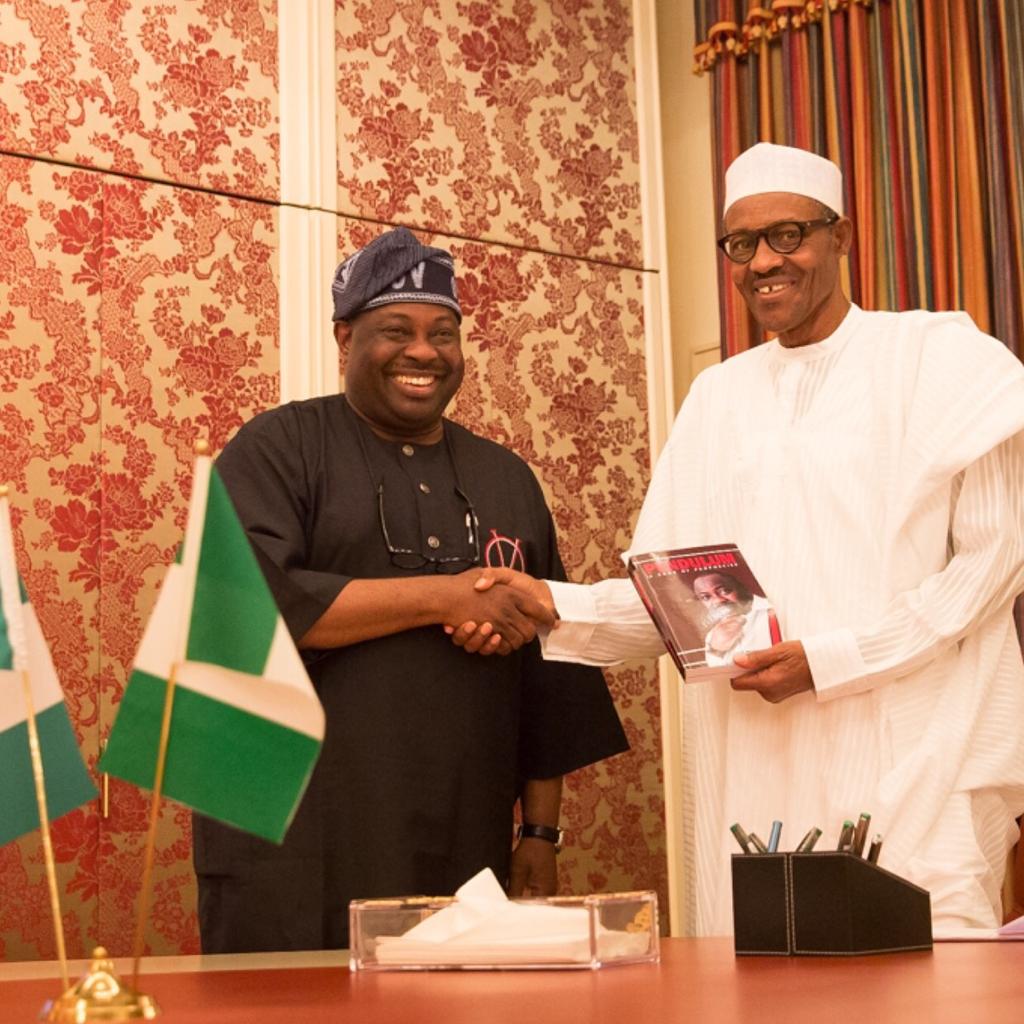
The opposition leaders made the declaration at the public launch of  “The Loyalist,’’ a memoir by National Publicity Secretary of the African Democratic Congress, ADC, Bolaji Abdullahi, in Abuja.

The event drew a wide mix of opposition leaders, former public office holders, lawmakers, intellectuals and party stakeholders.

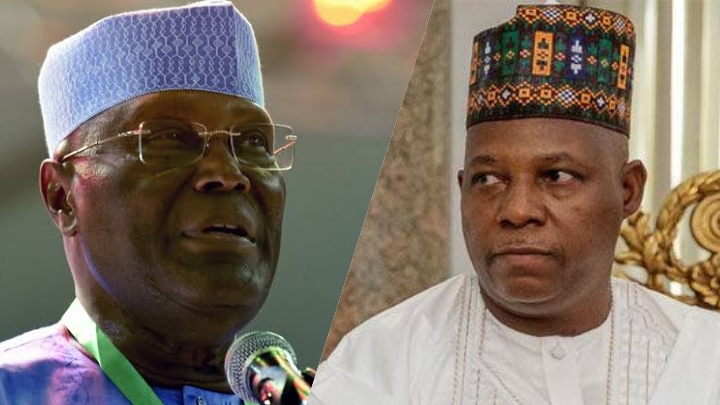
Speakers included former Vice President, Atiku Abubakar; former Anambra State governor, Peter Obi; former Minister of Interior and ADC National Secretary, Rauf Aregbesola; former Senate President and ADC National Chairman, David Mark, and veteran columnist and public intellectual, Hakeem Baba-Ahmed, who reviewed the book.

Although convened as a book presentation, the gathering quickly assumed a strong political tone, with speakers repeatedly returning to the issues of opposition unity, leadership responsibility, and the limits of incumbency power, ahead of the next general election.

Addressing what he described as a growing misconception in Nigerian politics, Aregbesola argued that governors and incumbents do not automatically determine election outcomes.

Drawing on the 2023 electoral results, he said the belief that political office guaranteed victory was not supported by evidence.

“The fact that certain governors are defecting to the APC shows that our unity is weakened, but the statistics do not support the belief that governors win elections,” Aregbesola said.

Using the South-West as an example, he said ruling party dominance at the state level had not translated into overwhelming electoral success.

“In the South-West, the APC controlled all the states except one, yet the maximum performance of the party was 55 per cent, with the other parties sharing the rest,” he said.

On his part, former Vice President, Atiku Abubakar, speaking as special guest of honour, linked the political moment to the theme of the book, describing loyalty as both a moral test and a personal burden in public life.

Atiku, who noted that his participation was informed by his own role in the political history examined in the memoir, said: “I am honoured to be part of this launch because I was also involved in the eventual inauguration of the Bukola Saraki administration, which this book deals with in very great detail.’’

He praised the author for taking on difficult questions about loyalty and conscience, saying “this is a work that dares to question loyalties, illuminate conscience, and broaden our public imagination.’’

Drawing a contrast between military discipline and political life, Atiku said loyalty in politics was rarely absolute and often exacted a heavy price.

“For those of us who come from the military and paramilitary professions, loyalty is non-negotiable; there is only absolute obedience. But in political life, loyalty is not as rigid, and it comes with consequences,” he said.

The former vice president also spoke candidly about his own experiences.

“Many of us have suffered because of loyalty. I have faced exile as a result of loyalty. I have survived assassination attempts as a result of loyalty,” he said.

Atiku warned that loyalty should never become blind allegiance, adding that “loyalty should strengthen the common goal, not narrow the circle of belonging.’’

Similarly, a former Governor of Anambra State, Peter Obi, who arrived late due to flight delays from Lagos, apologised for not observing traditional protocol before addressing the audience.

Obi also signalled political solidarity and regional commitment, saying: “I have been directed to represent the South-East, and I want to assure you that you will not be disappointed.’’

In one of the most direct political moments of the event, the author, Bolaji Abdullahi, appealed to opposition leaders to rise above rivalry and present a united front, ahead of 2027, adding that Nigerians were ready for change, though political leaders were not yet matching that urgency.

“For 2027, Nigerians are ready. But I don’t think we are ready. Nigerians look at us and see different enclaves and different entities. They see competition, rather than cooperation,” Abdullahi said.

Reviewing the book, Hakeem Baba-Ahmed said it initially provoked skepticism but ultimately impressed him.

“I brought to the book some prejudice and heightened curiosity. I expected the author to fall on his face somewhere. I was wrong,” he said.

He described the memoir as revealing and historically significant.

“This book is easily one of the most readable and revealing books I have read in a long while. It captures the essence of our contemporary social and political character,” Baba-Ahmed said.

Former Senate President, David Mark, described the task of rescuing Nigeria as a shared responsibility and praised Abdullahi’s character.

“He is a straightforward person. Even when I disagreed with him, his advice was always adopted,” Mark said.

He also clarified the long-standing controversy around the Doctrine of Necessity, saying “it was the sole responsibility of the Senate and had nothing to do with Kwara State or anyone from Kwara State.’’

Continue Reading

Headline

Coup: Investigators Widen Probe Scope to Unmask Civilian Financiers

Published

on

By

Fresh intelligence details have surfaced on the foiled coup attempt against President Bola Tinubu’s administration, shedding light on how a serving Army Colonel allegedly assembled a covert, cross-service network to undermine the constitutional order before security agencies moved in.

The Defence Headquarters had announced the arrest of 16 officers for acts of indiscipline and breaches of service regulations, following weeks of quiet tension within the Armed Forces.

In October 2025, rumours of an alleged coup plot against President Tinubu’s administration spread across social media. At the time, the Defence Headquarters (DHQ) dismissed the claims as “false and misleading,” yet the sudden cancellation of the Independence Day parade fuelled speculation about deeper security concerns.

However, fresh findings from an interim investigation report, sighted by Punch Newspapers, suggest that the alleged architect of the plot was a Colonel whose repeated failures in promotion examinations reportedly bred resentment and alienation. Rather than nursing his grievances quietly, he is said to have turned them into a recruitment tool, drawing officers from the Army, Navy and Air Force into a loose but coordinated network.

According to the report, members of the group were allegedly assigned to discreetly study sensitive installations, including the Presidential Villa, the Armed Forces Complex, Niger Barracks in Abuja and international airports in Abuja and Lagos, mapping access routes, routines and vulnerabilities. What began as expressions of dissatisfaction soon graduated into early-stage operational planning.

Security sources say searches on the officer’s vehicle uncovered charms and anti-government materials, while a raid on his residence in Lokogoma, Apo, yielded sensitive documents detailing assigned roles and outlining how key national dignitaries were to be handled once the operation commenced.

The plotters are also said to have exploited insider access, infiltrating the Presidential Villa and compromising workers linked to construction firm Julius Berger to obtain security information on the premises. Encrypted communication platforms were allegedly used to coordinate movements, logistics and funding, while discreet vehicle repairs and unusual cash flows pointed to preparations for mobilisation.

Investigators traced financial inducements of between N2 million and N5 million to some principal actors, with intelligence agencies now analysing the money trail through the Nigerian Financial Intelligence Unit.

One of the suspects, Lt-Col S. Bappah, reportedly turned a critical witness, admitting his role and providing details on recruitment methods, funding channels and communication patterns within the network.

The danger, security officials note, lay in the cross-service reach of the conspiracy, which cut across the Army, Navy and Air Force and involved officers up to the rank of Brigadier-General.

The alleged plan, uncovered ahead of its execution date of October 25, 2025, was described as lethal in scope, with the President, Vice-President Kashim Shettima, ministers, service chiefs and other top officials marked as targets.

Beyond the military hierarchy, investigators are now widening the probe to civilian financiers and political contacts who may have interacted with the core suspects. Communication trails, financial flows and external interfaces are being reviewed as part of efforts to dismantle every layer of the network and secure strategic national assets.

With the investigation concluded and reports forwarded to superior authorities, the Defence Headquarters has confirmed that indicted personnel will face appropriate military judicial panels, as Nigeria’s security establishment moves to ensure that what officials describe as a well-funded, coordinated threat never advances beyond the planning stage.

Continue Reading

Trending