Connect with us

Featured

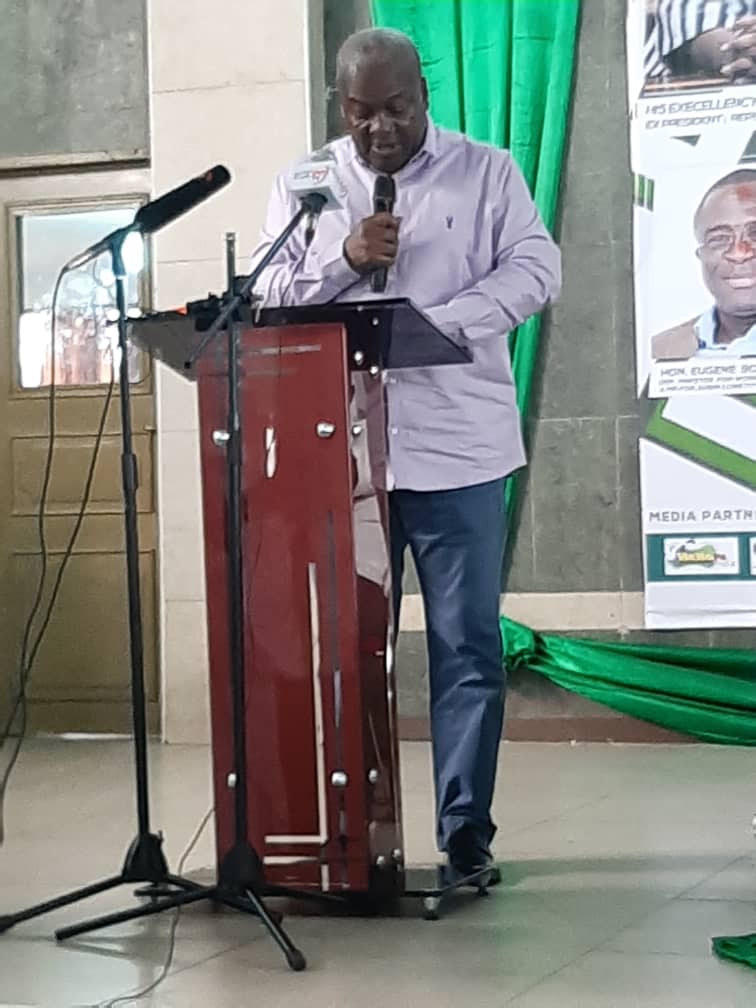
See Full Text of Speech by Dr. John Mahama at the Launch of 27th Annual Residential Delegates Congress

Published

on

ADDRESS BY THE SPECIAL GUEST OF HONOUR HE JOHN DRAMANI MAHAMA
FORMER PRESIDENT OF GHANA & FLAGBEARER OF THE NATIONAL DEMOCRATIC CONGRESS AT LAUNCH OF THE 27TH ANNUAL RESIDENTIAL DELEGATES CONGRESS OF THE GHANA NATIONAL UNION OF TECHNICAL STUDENTS ON WEDNESDAY AUGUST 14, 2019 AT THE KUMASI TECHNICAL UNIVERSITY

1

I wish to begin by thanking you all very much for the kind invitation and for your presence this afternoon.
I am particularly happy to speak with you today, first because you have reached out to me personally and this explains why I have adjusted my itinerary to be here.
The second reason is that your theme: ‘Prioritization of Technical and Vocational Education: A vehicle to accelerate Industrialization’ coincides with the thinking that dominated my interventions in TVET during my tenure as President and remains in sync with my plans going forward from 7th January, 2021.
Let me at this juncture express my sincere appreciation to Professor Naana Jane Opoku- Agyemang and her team that included her two deputies, Hon. Samuel Okudzeto Ablakwa and Hon. Alex Kyeremeh for the successes that we chalked during my term in office. Indeed, the credit for midwifing the Technical Universities is attributable to Professor Naana Jane Opoku- Agyemang and her team at the Ministry of Education. Ghana will forever be grateful to you.
Distinguished ladies and gentlemen, you will recall that in my first SONA address in 2013 after I had been newly inducted into office, I announced the policy to convert our Polytechnics into Technical Universities.
I wish to reiterate that the NDC’s idea to turn the Polytechnics into Technical Universities, was for very good reasons. It was about taking education, especially technical and vocational education seriously – making it an anchor of national development and an instrument of national transformation.
I put that pressure on myself and our government for the good of our beloved country, with an overall objective of equipping our youth with high level skills needed in preparation for entry into the world of work.
Your theme resonates so well, since it formed the fulcrum that supported all our actions in the TVET area.
The move was to help advance more vigorously, a process of repositioning the polytechnics as strategic institutions that train personnel with high level technical skills in the TVET domain, towards the country’s economic and national development agenda.
But what thoughts led to this idea in the first place?
I am aware that most of you will be privy to the information I am about to present, but it does not hurt to repeat them and even clarify the thinking behind the actions we took, if only to refresh the memory of some of us, and to share the information with those who might be paying attention to this for the first time.
2

It was a practical step taken towards the following:
• Diversifying the tertiary terrain,
• Raising the quality of technical education,
• Creating clear pathways for skills development and growth,
• Putting confidence in our learners who choose the paths of technical/vocational
training, and
• Even more important, bridging the gaps between training, employment and national
development
We acted boldly to remove the glass ceiling that had been imposed on technical education. This ceiling appeared over the years, like a deliberate effort to limit the sphere of our young ones who made the decision to take the path of TVET.
It imposed a certain stigma and inferiority on them. I believe with all conviction at my disposal, that the pupil from JSS who has aptitude for TVET must have his or her horizon expanded to the highest levels of training possible, just like his or her counterparts who choose other paths of education.
This is especially critical at this stage of our national development, when we need more technical human resources to help turn our raw material into processed goods, create and maintain machines and thereby create jobs and stimulate the economy.
The journey from HND to B.Tech was unnecessary and too long and unreasonably frustrating. You know this better than I do- what it was like to struggle to gain admission into the few higher education institutions, which offered the HND holder the opportunity for a top up to upgrade their qualifications into a degree.
The process of conversion of our polytechnics to technical universities was well thought out and planned. We did not simply announce a wholesale conversion ahead of parliamentary discussion and approval that took place.
We set up a panel of experts to meticulously study the landscape, perform a human and equipment as well as an infrastructural audit of the existing polytechnics to guide the conversation and final decisions. The panel studied best practices in many countries and decided that since everyone was pointing at the German model, to study the original that others seemed to replicate, based on their peculiar circumstances and their vision for their countries.
This process was carefully conceived and meticulously thought-through, and it was an intervention that connected the links and created a clear pathway from the JHS through the technical institutes to the TUs.
As a nation, my administration was firmly of the belief that we should make an honest appraisal of TVET, by avoiding the wrong perception that it was the refuge of those who could not meet higher academic standards.
3

This was a discriminatory, self-defeating, exclusionist, notion that had existed for many decades and was an effective way of leaving many behind. TVET is a legitimate and important area the nation should be interested in advancing, if we wish to make any difference to the basics of our economy.
We had carried out an audit of existing technical schools to aid in plugging identified holes in the pool from which the Technical Universities might source their students. This report led to the selection of 13 technical Institutes for quality improvements.
Under my administration, we invested $60.3 million to commence the expansion of TVET institutions by constructing modern school infrastructure in 13 Technical and Vocational Institutes.
An initial survey revealed sustained neglect of this important type of education. The facilities recommended for construction included workshops, dormitories, staff accommodation, administration blocks and lecture theatres. The larger aim included an equipment audit to be able to retool and fix appropriate tools for study in this critical area of education.
The beneficiary schools were:
• Ada Technical Institute (Greater Accra Region),
• Akwatia Technical Institute (Eastern Region),
• Amankwakrom Technical Institute (Eastern Region)
• Asuansi Technical Institute (Central Region),
• Bolga Technical Institute (Upper East Region),
• Kpando Technical Institute (Volta Region),
• Nkoranza Technical Institute (Brong Ahafo Region),
• Dabokpa Technical Institute (Northern Region),
• Wa Technical Institute (Upper West Region),
• Krobea Asante Technical Institute (Ashanti Region)
• Takoradi Polytechnic (Western Region)
• Accra Polytechnic (Greater Accra Region)
We also sponsored the training of 148 instructors at the Diploma level, 20 instructors at the Master’s level and 5 faculty members at the PhD level, in order to enhance the quality of teaching and learning in TVET institutions. It was imperative that the instructors themselves had the highest levels of training in their respective field, as was required in any institution.
We did not think that it was enough to complain and even admit that as a nation we did not have enough “technical expertise” to transform our natural resources into wealth for our people.
4

It is still not enough to convince ourselves that we are rich in natural resources when we continue to experience unforgivable levels of poverty and deprivation. Importing technical know-how had become so acceptable that we had all but assumed that was normal.
My government has faith in the ability of our youth to acquire the relevant skills given, the right conditions. As part of supporting brilliant but needy students, we awarded scholarships to 1,520 students, including 333 females, in Polytechnics and Technical Institutes.
It was part of the plan to promote access and at the same time, increase the visibility of females in TVET beyond those areas usually dominated by females.
It was my government that enacted The Technical Education Act, 2016 (Act 992) through parliament to pave the way for the conversion of the first six polytechnics in September 2016, of which the Kumasi Technical University was one of them. The Ministry of Education received, after that date, the report of the expert review panel on the re-assessment of Cape Coast and Tamale Polytechnics to be considered for conversion.
Consequently, an executive approval was given to upgrade the two, bringing the total number of new Technical Universities to eight. It was only two- Wa and Bolgatanga Polytechnics- that were not converted at the time, but we had put in place a programme to accelerate road infrastructure, human resources, and equipment base of these polytechnics so that we could convert them in the shortest possible time. And that is what I expect that the current government must be doing so that Wa and Bolgatanga can join their colleagues as fully-fledged Technical Universities.
While the conversion was going on, my government was still in the process of assisting the remaining polytechnics through retraining of staff, re-tooling of laboratories, renovation of existing infrastructure, deepening governance structures and the running of accredited Bachelor of Technology (B.Tech) programmes to merit their conversion to technical universities. This process we will continue when we return to office after we have win the 2020 elections.
Of course you are already aware of the construction projects we started, including hostels, library complexes, workshops, lecture theatres, offices, an ultra-modern hotel, catering and management block, installation of equipment, learning systems, the refurbishments we initiated or completed, among many to ensure that our desire to transform our country was not a slogan.
You are also aware of what progress, if any, has been made since my team and I left office. We maintain our faith in such developments, to give hope to our youth and demonstrate true meaning to the importance of TVET as vehicle to accelerate industrialization.
What I have been trying to demonstrate is that the plan was strategically conceived; it was well thought through; it was not an ad-hoc measure, picking loose ends of a non-existing overall strategy and weaving in coloured threads that don’t fit into the pattern because there is none.
5

We had a master plan, a blueprint that we followed to ensure that my administration prioritized Technical and Vocational Education as an effective vehicle to accelerate the industrialization in of our beloved country.
It is my intention, in the future government that I will head, to rebrand TVET into an alternative of first choice rather than the wretched path that students are compelled to take when all other doors are closed to them.
I am committed to the improvement of our Educational system to serve as a catalyst for the acceleration of our economy. And this must cover quality, affordability, and access at all levels of the educational ladder.
Basic education is particularly critical as it forms the foundation for solid human resource development. We will continue our work to improve the performance of public schools at both the basic and secondary levels.
We will resume our programme to fast-track educational infrastructure at the secondary level to absorb the increased numbers occasioned by the implementation of the Free SHS programme.
We will complete all the remaining 200 Community Day SHS we began and build additional ones in high density urban communities, including the Zongos and the underserved areas. I believe that this will bring secondary education to the doorsteps of our people.
In the first 3 months of my coming into office we will hold a stakeholder consultation with parents, teachers, and educational experts to identify and eliminate all the bottlenecks that are affecting the effective implementation of the free SHS programme.
Ladies and gentlemen, Free SHS is here to stay!
Indeed, it is underpinned and guaranteed by the 1992 Constitution of Ghana and it cannot be reversed by any government. But all administrations, including this one and any future one, have an obligation to make it a qualitative and enjoyable experience for our children.
And I am determined to make secondary education a beneficial learning experience, more than the current miserable conditions our children are having to face, under the Nana Akufo-Addo administration.
At a later date, before the election of 2020, I intend to lay out in detail before all stakeholders and the good people of Ghana, our blue-print for the educational sector and especially our plan for making the Free SHS programme more sustainable.
And as I have said in my statement, we intend to continue to clear the pathway, so that the path towards technical and vocational education training from the basic level, through the secondary level, to the tertiary level, will be an alternative of first choice and not an alternative of “rejected students”.
6

Indeed, I daresay that we need our brightest and best to take the path of technical education, if we are to transform this country.
Let me once again thank your executives and organisers for your kind invitation to be with you, and I wish to assure you that I will always be an advocate and an ambassador for technical universities and technical education in the Republic of Ghana.
Thank you very much and may God richly bless you.

Source: sharpnewsgh.com

Continue Reading
Click to comment

Leave a Reply

Your email address will not be published. Required fields are marked *

Featured

Sunny Irakpo Launches SILEC International Magazine in America

Published

on

By

Drug Use Prevention Advocate, Founder and President of SILEC Initiatives, and U.S. Department of State Exchange Alumnus, Ambassador Sunny Irakpo, has unveiled SILEC International Magazine (SIM), a groundbreaking media platform exclusively dedicated to reporting drug-related issues across Africa, the United States, and the global community.

The announcement was made during a strategic meeting with partners in New Jersey, where Ambassador Irakpo is currently participating in a series of community-based and public-safety initiatives to deepen his expertise in combating substance use disorders and illicit drug trafficking both in the United States and worldwide.

A First-of-Its-Kind Platform for Drug-Focused Journalism

Ambassador Irakpo emphasized that SIM is designed to shape public consciousness by promoting value-driven storytelling and providing credible information on the rising tide of drug abuse and illicit trafficking—a crisis he describes as “a looming danger destroying the vibrant youth populations of many nations.”

He noted that the magazine will spotlight the work of NGOs, CEOs, advocates, and policymakers, churches, and companies with strong social responsibility particularly from African perspectives, while amplifying influential voices and advancing global understanding of effective anti-drug efforts.

Drawing inspiration from media leaders such as Dele Momodu, Chairman of Ovation Media Group, and Dr. John Momoh, Chairman of Channels Television, Irakpo described SIM as “a beacon of hope and a tool for societal transformation.”

Recognizing U.S. Efforts Against Drug Abuse and Trafficking

Ambassador Irakpo commended the United States for its continued commitment to combating drug trafficking and addiction—efforts strengthened under previous and current administrations. He particularly noted that the U.S. government under President Donald Trump demonstrated “exceptional courage, political will, and capacity in confronting the opioid crisis and the destructive forces fueling illicit drug trade,” encouraging world leaders to emulate such resolve.

He reiterated that addressing substance abuse requires a combination of drug-demand reduction, citizen sensitization, international collaboration, and sustained public education.

A Platform With Social Impact and Youth Empowerment at Its Core

Irakpo highlighted SIM as a top-tier media platform that will not only drive awareness but also create employment opportunities for young people and support underprivileged students—particularly in Nigeria, where more than 20 million children remain out of school due to financial hardship.

He added that SIM will serve as a sustainability engine for the ongoing anti-drug overdose campaigns of SILEC Initiatives, a leading nonprofit that has educated and sensitized communities for nearly two decades.

Experienced Editorial Leadership

As SIM prepares for its U.S. take-off, Irakpo announced the appointment of veteran journalist Julius Eto as Chairman of the Editorial Board. Eto brings more than four decades of experience across Nigeria’s premier news organizations, including The Guardian, ThisDay, The Punch, Daily Times, and The Trumpet.

He will be joined by distinguished academics including Prof. Oscar Odion Odiboh and other seasoned professionals committed to advancing the magazine’s mission.

A Call for Media Reawakening and Global Collaboration

Ambassador Irakpo called for a media renaissance in Nigeria to strengthen societal values and elevate African leadership in global discourse. SIM, he said, intends to claim its rightful place as “an African voice on the world stage.”

With the official launch of SILEC International Magazine (SIM) scheduled for the first quarter of 2026 in the United States, Ambassador Irakpo extended an invitation to corporate organizations, development partners, and well-meaning individuals worldwide to support this far-reaching vision.

“With hope, determination, and the resilience symbolized by the eagle, SIM is prepared to soar across the globe. Members of the public are respectfully enjoined to visit our friendly, rich anti-drug abuse website, www.silecinitiatives.org.ng,” he added.

Continue Reading

Featured

How Tinubu Helped to Crush Military Coup in Benin Republic – Presidency

Published

on

By

The Presidency, on Sunday night, said acting on the two requests by the authorities of Benin Republic, President Bola Tinubu ordered Nigerian Air Force fighter jets to enter the country and take over the airspace to help dislodge the coup plotters from the National TV and a military camp where they had regrouped.

The Presidency, in a statement by Special Adviser to the President on Information and Strategy, Bayo Onanuga, said President Tinubu commended the swift response of the gallantry of Nigeria’s military.

The statement read: “President Bola Tinubu has commended the gallantry of Nigeria’s military on Sunday for responding swiftly to the request by the Government of Benin Republic to save its 35-year-old democracy from coup plotters who struck at dawn today.

“Acting on two separate requests from the Government of Benin, President Tinubu first ordered Nigerian Air Force fighter jets to enter the country and take over the airspace to help dislodge the coup plotters from the National TV and a military camp where they had regrouped.

“The Republic of Benin, through its Ministry of Foreign Affairs, in a Note Verbal, requested immediate Nigerian air support “in view of the urgency and seriousness of the situation and to safeguard the constitutional order, protect national institutions and ensure the security of the population.”

“In the second request, the authorities in Benin requested the deployment of Nigerian Air Force assets within Beninoise airspace for surveillance and rapid intervention operations under Benin-led coordination.

“The Benin government also requested Nigerian ground forces, “strictly for missions approved by the Beninese Command authority in support of the protection of constitutional institutions and the containment of armed Groups.”

“Nigeria’s Chief of Defence Staff, General Olufemi Oluyede, said all the requests have been fulfilled, with Nigerian ground forces now in Benin.

“Ours is to comply with the order of the Commander-in-Chief of our armed forces, President Tinubu,” he said.

He further stated: “Constitutional order was upended in the Republic of Benin, Nigeria’s neighbour, when some soldiers led by Colonel Pascal Tigri announced a coup on Sunday morning. The putschists seized the National TV and claimed they had toppled President Patrice Talon and suspended all democratic institutions.

“It took some hours before the government’s loyal forces, assisted by Nigeria, took control and flushed out the coup plotters from the National TV.

“In his remarks after the restoration of the democratic and constitutional order, President Tinubu saluted the Nigerian armed forces for standing firm as a protector and defender of democracy.

“Today, the Nigerian armed forces stood gallantly as a defender and protector of constitutional order in the Republic of Benin on the invitation of the government. Our armed forces acted within the ambit of the ECOWAS Protocol on Democracy and Good Governance.

“They have helped stabilise a neighbouring country and have made us proud of their commitment to sustaining our democratic values and ideals since 1999. Nigeria stands firmly with the government and people of the Republic of Benin.”

Continue Reading

Featured

Ozekhome, Wife Josephine, Celebrate 34 Years of Marital Bliss

Published

on

By

By Eric Elezuo

Popular Constitution lawyer and renowned human rights activist, Prof Mike Ozekhome, and wife, Lady Josephine Ozekhome, has celebrated 34 years of living together as husband and wife.

The couple took time out to shower love, encomium and affection on each other, celebrating the goodness of Godd upon their lives and home in the last 34 years.

Speaking exclusively to The Boss, Ozekhome noted that on a day like this “I remember how we started; how we weathered the storm together, and conquered together. She is the best companion anyone can have, and I’m very proud of her, and to be her husband.”

Ozekhome once stated that his wife is “a great woman of uncommon virtues and humanity; my jewel of inestimable value, soulmate, sister, best friend and mother.”

While the wife is identified as Lady (Dr) (Senior High Chief) Josephine Mike Ozekhome LL.M, LSM, LL.D. D.Sc., the renowned constitution lawyer, a dotting and loving husband, and  firebrand pro-masses Advocate, os identified as Prof Mike Ozekhome SAN, CON, OFR, Ph.D, LL.D, D.Litt,D.Sc., among a host of other watering achievements.

Mike and Josephine have built a family of lawyers, producing wonderful children, who are also lawyers, and doctors.

Happy 34th anniversary, Mike and Josephine!

Continue Reading

Trending