Featured
Oshiomhole’s Deputy Tears Him Apart ” You Are Deficient & Lack Composure To Be Chairman, So, Step Aside”
Published
7 years agoon
By
Editor
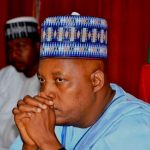
Senator Lawal Shuaibu, Deputy National Chairman, North of the ruling All Progressives Congress ( APC) has torn the reputation and honour of party Chairman, Comrade Adams Oshiomhole to shreds.
In a statement, he has said that Oshiomhole is not only deficient but lacks the Composure of the high office of Chairman, noting that he had been responsible for the crises that has engulfed the party in many states.
Here is the full text
‘
I write this letter on my own behalf, personally and as a Deputy National Chairman.
I write this letter to you with very deep heart and high sense of responsibility.
I write this letter thinking because I am a critical stakeholder in the APC project.
I write this letter with my hands shaking arising from realizing of myself being involved in a project that is currently seen as failing, even before achieving the ambition of it’s founding Fathers. I never found myself in any failed project.
I sincerely believe in the APC Project, with all my heart.
Locus Standi
l was part of more than 90% of all the meetings and processes that led to the final agreement to merge our Parties for purpose of this project. In fact, I led my own Party, the Action Congress of Nigeria, ACN, under which you initially served as Governor, to kick-start the National Convention to secure the consent of our members to merge with other Parties. You are fully aware that l was the Chairman of that National Convention in Lagos. I also served as member of the Merger Committee. Lest I forget, I was also the person mandated to file the registration documents with INEC and that is why the receipt for payment of the APC registration fees at INEC was issued in my name. I am stating all these, only to show proof, that I am a critical stakeholder in the APC project and therefore have a stake for which I reserve the right to write this letter to you. This is however, in addition to my being a legitimately elected Deputy National Chairman, North at the last National Convention, and not because I have any higher stake in APC than any other member.
Commencement
To start with, the APC project, which started with the agreement to merge our legacy political Parties, eventually succeeded in forming a strong party that came with massive goodwill across all divides in Nigeria, and which was acknowledged to be first of its kind in the history of politics in this country.
The adopted norm at that time was team work all the way to success, and never unilateral approach to any decision-making. With that, various committees were formed to work assiduously towards achieving the goals of the new political party under an atmosphere of crude attack by the ruling party then, as well as deliberate lack of cooperation from Agencies of Federal Government. It was the first time calumnious statements were introduced against an Opposition party by the ruling party instead of vice-versa.
The interim leadership of The new Party, rather adeptly came up with a formidable army of brains drawn from it’s membership, that put together quite an impressive electoral strategy on how the Party could win election at all levels. The only function of the National Chairman was to preside over meetings in which ideas were discussed, he then allowed committees to go to work and submit reports which were tabled before the working committee for decisions or for further recommendations to the larger leadership meetings for final decisions.
The Party through it’s Committees, was able to organize congresses at all levels across the states and finally produced its National Officers when it conducted what was described as the most organized National Convention in recent history. Thereafter also, the substantive leadership of Party went ahead to organize the most orderly, cohesive and successful Presidential Convention, also in recent history.
Attractive Campaigns
When the APC Presidential Campaign started, we had two attractions; the electoral asset in the person of our Presidential Candidate and the manner of campaign that was devoid of hate speech or calumnious statements as against our opponents who unleashed their attack dogs on our Presidential Candidate and our new Party.
The maturity exhibited throughout the 2015 political rallies, together with the aura of our Presidential Candidate attracted massive goodwill for the Campaigns, and the value addition to that, was unquantifiable.
At the end of our successful Campaigns in 2015, our Presidential Candidate won massively with a whooping 15,424,923 votes as against a sitting Nigerian President’s 12,853,162 votesll This is in addition to having 23 States to our credit.
2019 Election Activities and Campaigns
Under normal circumstances, when you take over as a Project Manager, it is expected that you bring to bear, your wealth of experience to the new job which will be seen in your capacity and capabilities as value addition.
In a political party like the APC, you are expected to also introduce new approach to strategies through committees that will work and submit recommendations to you towards improving on the current fortunes of the Party.
It is expected that for every decision credited to the Party, it should be the result of a meeting where resolutions are passed by the working committee.
It is also expected that policies by the party are always alI-inclusive and never one sided and to cap it up, no unilateral decisions should be made to represent the opinion of either the National Working committee, the National Executive Committee or even the least, the National Caucus. National Chairman cannot assume the powers of the National Working Committee.
Faulty Processes The last Congresses in States, unfortunately, represented a complete lack of knowledge, not to talk of experience on how due process in political electoral process is adhered to.
The National Working Committee is saddled with the responsibility of recommending guidelines for every electoral process and appointing committees that will embark on conducting primary elections for every constituency and submit report and thereafter an appeal committee will attend to complaints and petitions and also submit its report to the NWC. The National Working Committee is then expected to perform the duty of the final adjudicatory body on each electoral matter and from there you have the final list of Candidates.
National Chairman cannot, in any circumstances be Chairman of any committee be it screening committee of any other committee contrary to what you did.
Chairman presides over the meetings of Nationai Working Committee in which each matter disposed of by any appeals committee is examined and Tina! decision reached.
If the National ChairMan should chair any of these committeés what if there is a complaint about his own conduct, who do you send your petition to? He can not be a judge in his own matter!
National Working Committee meetings, in my own experience, shall not be held in private residences especially where it involves thousands of party men and women with grudges over injustice meted out on them by officials of the Party. The Party Secretariat is the officially recognized venue of such meetings, uniess if there are other motives for keeping away from there.
For every meeting of any organ of the Party, there shall be minutes of the meeting reflecting every decision taken at such meeting. Most of the meetings held and fundamental decisions purported to have been taken were not backed by minutes.
The few meetings that were covered by the Secretariat and minutes taken could clearly show that final decisions of the NWC were altered! Example was the unanimous decision by NWC to allow Mrs Aisha Alhassan, former Minister of Women Affairs to go and contest with her co-Aspirants at the primaries in Taraba State which decision was overruled by you. You singIe-handedly disqualified her and numbers in the Party got depleted and thereby weakened. So also, several other aspirants that you personally disqualified without Just cause.
Arising from such conduct, the APC ended up with severe injuries and is today badly fractured in virtually every constituency in this country, resulting in the erosion of the massive goodwill that you met the Party with.
Apart from the President, more than 60% of members including those that contested elections under the APC in 2019 are not happy with the process as it left a lot to be desired. We have Court cases in every State, by far much more than it was in 2015 and I wonder how much money the Party is likely to spend on litigations arising from mistakes of the National Chairman in not adhering to due process and sidelining transparency. Committees for primaries became secret affair to the extent that not even members of the NWC were aware of how certain committees were constituted with members mostly from Edo State outnumbering every other State and in some instance, the same Edo members sewing in more than one State in conducting primaries. The records are there to be seen. What is wrong with being just in what you find yourself doing for the people? Personal interest should not be allowed to overshadow the interests of our teeming loyal members across the country.
Building Institution
We all know and I still believe that by electing us into the various Party offices, we are expected to build this institution to flourish and wax stronger beyond our own tenure, not to be seen as undertakers that came to kill and bury it, and clearly so! The strength of every political Party I also believe, lies in the number of States it is able to win elections.
We had 23 States in 2015, but after the 2019 elections we lost 7 States!
We also had 60 Senators in 2015 at the end of the election count, we now end up with 57 Senators in 2019! You were not brought in to lose election, It is absolutely unacceptable!
What this entails is that for any Senator to become a presiding Officer he needs to go and kneel down before the PDP Senators and beg for support! And to make things worse, you announced that APC will not allow any PDP Senator to be , appointed as Committee Chairman except the committees statutorily meant for the opposition members of the Senate. That is never the tradition of the legislature anywhere! The Legislature is the house of collaboration and lobby and you can never succeed with hostile approach, you must lobby seek for cooperation of members across Party divides. If you don’t know, you have made the situation worse than it seems. Try and use your calculator and you will find that as at now, if anybody, backed by the PDP members, wants to become Senate President, all he needs is the support of only 6 APC Senators to win the election on the floor of the Senate! Chairman, strategies are not announced on television, they are discussed at caucuses.
We have no reason whatsoever to go about it this way if we really are serious in building this institution that many leaders suffered to put in place.
Conclusion and Prayer
It is my honest opinion that your ability to ensure this party flourishes is deficient as you lack the necessary composure and you also don’t possess the capabilities and the requisite experience to run a political Party.
The respect APC was commanding among its members and Sympathizers have been completely eroded, while the goodwill has equally evaporated with the type of attitude of threats to members you deploy, including senior members like Governors, Senators, Ministers and other Government officials whose functions do not fall within your jurisdiction. As I know, the relationship between Party and Government are cooperation and collaboration to ensure Government programs are implemented in line with the party manifesto, but not shouting and giving marching instructions to Government officials on television screens or on the pages of newspapers, and more often than not, they call your bluff and make look helplessly unimportant in the scheme of things”
Please don’t get me wrong, do not think I am saying these about your conduct as Chairman because I want to be Chairman. I don’t want to be National Chairman, because I can not be, even if I want to, for as long as President Muhammadu Buhari is in office, having come from the same North West geo-political zone.
In advanced democracies, people who fail to add value or build over and above what they met on assumption of duty show some civilized examples, they honourably bow out.
In that connection therefore, I want to advise you to take the path of honour, to step aside and allow the Party to embark on the onerous task of reconstruction and rehabilitation in those States it was weakened by the effect of manner the last primary election exercises were conducted or even the task of recreating the party where it is on the path of extinction, arising from the loss of a sitting APC Government, for example in Zamfara State, where you directly personally created the problem leading to the painful complete loss of APC’s electoral fortunes, FROM UP TO DOWN I All these are uncontestable facts. You cannot exonerate yourself from blame on what happened to APC Zamfara State, thereby destroying the hopes and aspirations of 534,541 APC members and supporters, including my goodselfp!
l have nothing personal, except that I love this Party and can not keep quiet seeing it being brutally murdered!
Very Sincerely,
Senator Lawal Shuaibu
Deputy National Chairman, North
‘
Sent from Yahoo Mail on Android
Related
You may like
Featured
Who Gets the Blame When Opportunities Disappear? The South Africa Example
Published
8 hours agoon
June 21, 2026By
Eric
By Anjorin Fehintola Stella
As South Africa approaches June 30, the date set by certain anti-immigrant groups as deadline for undocumented migrants to leave the country, tensions surrounding immigration have once again captured national and international attention. These groups have argued forcefully and publicly that foreigners are responsible for rising unemployment, escalating crime, and increasing pressure on already overstretched public services such as hospitals, schools, and housing. The debate has sparked strong and deeply divided reactions across the continent, raising urgent concerns about xenophobia, social cohesion, human rights, and the future of African unity at a time when continental cooperation has never been more necessary.
Yet beneath the headlines and the heated rhetoric lies a deeper and more unsettling question; Why do immigrants so often become targets during periods of economic and social uncertainty? And what does the persistence of this pattern tell us about how societies respond when the gap between expectation and reality becomes too painful to confront honestly?
The current tensions in South Africa are not simply about immigration. They reflect broader and far more complex struggles over identity, opportunity, belonging, and the distribution of scarce resources in a society still grappling with the deep and unresolved legacies of apartheid and structural inequality. To reduce the debate to a question of who should or should not be in the country is to miss what is truly at stake, both for South Africa and for the wider African continent.
Throughout history, societies facing economic hardship have repeatedly searched for visible and identifiable groups to blame for problems that are in reality deeply structural and systemic. This is not a uniquely South African phenomenon. It is a recurring pattern in human social behaviour that has appeared across cultures, continents, and centuries. In post-World War One Germany, economic devastation and national humiliation were channelled into blame directed at Jewish communities, with catastrophic consequences. In the aftermath of the 2008 global financial crisis, rising unemployment across parts of Europe fuelled hostility toward immigrant communities in countries including Greece, Hungary, and the United Kingdom. In the United States, periods of economic contraction have historically coincided with surges in anti-immigrant sentiment directed at whichever group happened to be most recently arrived and most visibly different from the majority. The pattern is consistent, when jobs become scarce, living costs rise, and opportunities diminish, frustration seeks an outlet, and that outlet is rarely the complex institutional and policy failures that actually caused the hardship.
This phenomenon is commonly and usefully referred to as scapegoating. Rather than confronting the structural causes of social and economic challenges, which are difficult to understand, slow to change, and rarely produce a satisfying emotional response, public frustration is redirected toward groups that are politically vulnerable, socially distinct, and easy to identify. Immigrants fit this profile in almost every society where they are present in significant numbers. They look different, speak differently, worship differently, and occupy a social position that makes them easy to portray as outsiders who do not belong and therefore do not deserve the resources they are perceived to be consuming.
South Africa’s situation reflects many of these dynamics with particular intensity, shaped by a history that makes its current crisis both understandable and deeply tragic.
Despite being one of Africa’s most industrialized and developed economies, South Africa continues to experience some of the highest levels of unemployment on the continent and indeed in the world. Official unemployment figures have consistently exceeded thirty percent in recent years, with youth unemployment reaching even more alarming levels. Economic inequality, as measured by the Gini coefficient, remains among the highest of any country on earth. Millions of South African citizens continue to live in poverty, in informal settlements without adequate sanitation or electricity, with limited access to quality healthcare, education, and economic opportunity. These are not new problems. They are the accumulated product of centuries of colonial exploitation and decades of apartheid, a system that was specifically designed to concentrate wealth, land, and opportunity in the hands of a small racial minority while deliberately excluding the majority from the formal economy.
For many South Africans, the promise of economic transformation that accompanied the end of apartheid in 1994 and the dawn of democracy remains painfully and visibly unfulfilled. While political freedom was achieved, and while the legal architecture of racial discrimination was dismantled, economic inclusion has proven far more difficult and far slower to realize. Land remains heavily concentrated. Corporate ownership remains skewed. Access to capital, education, and professional networks continues to reflect the inequalities of the past. This disconnect between the political promises of liberation and the economic realities of daily life has contributed to growing frustration and disillusionment, particularly among younger South Africans who were born after apartheid ended and who cannot understand why freedom has not yet translated into opportunity.
In such an environment, immigrants often become symbols of broader anxieties that have little to do with immigration itself. Many foreign nationals living in South Africa come from Nigeria, Zimbabwe, Mozambique, Somalia, Ethiopia, and other parts of the continent. They operate small businesses in townships and urban centers, work in informal sectors, provide services, and seek economic opportunities that are unavailable or severely constrained in their home countries. Their presence within local communities creates visibility. And that visibility, in a context of scarcity and frustration, can generate the perception that they are taking jobs, occupying business spaces, or accessing services that rightfully belong to citizens.
This perception, however, frequently diverges significantly from the evidence. Research on the economic impact of immigration in South Africa and elsewhere consistently shows that immigrants do not simply take jobs from citizens. They also create jobs, start businesses that employ local workers, fill skills gaps in sectors where domestic supply is insufficient, and contribute to local economies through their spending, taxation, and economic activity. A Nigerian shopkeeper in a township is not stealing an opportunity from a South African. In many cases, that shopkeeper has created a service, employed assistants, and provided affordable goods in a community that was previously underserved. The relationship between immigration and unemployment is complex, contested among economists, and cannot be reduced to the simple arithmetic of more people competing for fewer jobs.
Consider, for example, the experience of a Zimbabwean trader who crossed into South Africa after Zimbabwe’s economic collapse in the late 2000s. Having lost his savings and his livelihood to hyperinflation and political instability, he arrived with little more than skills and determination. Over years of persistent effort, he built a small clothing stall, then a shop, then a small enterprise employing three South African workers. He pays rent to a South African landlord, buys stock from South African suppliers, and contributes to the local economy in ways that are invisible in anti-immigrant rhetoric but very real in the daily life of his community. His story is not exceptional. It is representative of countless immigrants whose contributions are routinely overlooked in debates that reduce their presence to a threat.
The reality is that unemployment, poverty, and inequality in South Africa cannot be meaningfully explained by immigration. These challenges are the product of historical dispossession, inadequate education infrastructure, insufficient investment in skills development, failures of governance and service delivery, and the structural features of an economy that has not succeeded in creating opportunities fast enough to absorb its growing population. These are the real causes of South Africa’s economic distress. They are difficult to address, require sustained political will, and do not lend themselves to simple solutions or satisfying emotional narratives.
However, complex explanations rarely generate the same emotional response as simple ones. When people experience prolonged hardship, when they watch their children go hungry, when they cannot afford school fees or medical care, when they have applied for jobs repeatedly and been rejected, the desire for immediate and identifiable answers becomes overwhelming. In that state of distress, a narrative that points to a visible group of outsiders as the source of the problem offers something that structural analysis cannot, a clear villain and the emotional relief of righteous anger. This is not a failure of intelligence. It is a very human response to pain. But it is a response that, when translated into policy or action, produces injustice rather than solutions.
The consequences of xenophobic sentiment extend far beyond those who are directly targeted. When anti-immigrant hostility becomes normalized in public discourse, it weakens the social trust upon which functioning communities depend. It creates fear and suspicion where cooperation and mutual support are needed. It divides communities along lines of origin and nationality at precisely the moment when shared challenges require collective response. In South Africa, where the wounds of racial division already run deep, the addition of nationality-based hostility adds another layer of fracture to a society that is still in the long process of healing.
For the immigrants themselves, the impact of this hostility can be devastating and sometimes fatal. South Africa has experienced multiple episodes of deadly xenophobic violence over the past two decades, including the widespread attacks of 2008 in which over sixty people were killed, and subsequent outbreaks in 2015 and beyond. Shops and homes were looted and burned. Families were displaced. People who had built lives over years lost everything in days. Many of those targeted had lived in South Africa for decades, raised children there, built businesses, and considered it home. In moments of mob violence, none of that mattered. What mattered was that they were perceived as foreign.
The South African experience raises uncomfortable but necessary questions about African solidarity and the meaning of continental unity in practice. Africa has a long and rich tradition of intra-continental migration. People have moved across the continent in search of pasture, trade, education, employment, and safety for thousands of years. These movements have contributed to cultural exchange, the spread of knowledge, economic growth, and the complex and vibrant diversity that characterizes African societies today. The idea that Africans should be hostile to other Africans seeking opportunity within the continent sits in painful tension with the values of solidarity and shared humanity that African political and cultural traditions have long celebrated.
As African countries continue to pursue greater economic and political cooperation through frameworks such as the African Continental Free Trade Area, which envisions the free movement of goods, services, and eventually people across the continent, the challenge will be to translate those institutional commitments into genuine cultural and social acceptance at the community level. Trade agreements and policy frameworks matter enormously. But they cannot achieve their full potential in societies where ordinary people view fellow Africans as threats rather than as partners and neighbors.
None of this means that governments should ignore legitimate concerns about border management or the pressures placed on public services by large-scale immigration. Every sovereign nation has both the right and the responsibility to manage its borders and regulate the flow of people entering its territory. Immigration policy is a legitimate area of governance, and there are real and valid questions about how to ensure that public services are adequately funded to serve growing populations, how to manage informal settlements, and how to create pathways to legal status for long-term residents. These are proper subjects for policy debate and democratic deliberation. However, there is a fundamental and morally significant difference between addressing immigration through careful, rights-respecting policy and assigning blame for complex, historically rooted societal problems to people who had nothing to do with creating them.
The current debate in South Africa serves as a sobering reminder that economic hardship tests the strength of social order in ways that prosperity rarely does. It reveals how quickly frustration can be redirected toward those perceived as different, and how easily social divisions can deepen when the competition for scarce resources becomes acute. It also reveals the critical importance of leadership in such moments. When political leaders and public figures validate scapegoating narratives for short-term political gain, they legitimize hostility and make violence more likely. When they speak honestly about structural causes and call for solidarity, they create space for more constructive responses. The role of leadership in shaping how societies respond to economic stress cannot be overstated.
Media also bears significant responsibility in these moments. The way immigration is framed in news coverage, in social media discourse, and in public commentary shapes how ordinary people understand the issue and where they direct their frustration. Reporting that reduces immigrants to numbers and threats, that amplifies the most extreme anti-immigrant voices without context or counter-narrative, and that fails to humanize the people at the center of the debate contributes to the very climate of hostility that makes violence possible. Responsible journalism on migration requires not only accuracy but empathy and context.
Ultimately, the question confronting South Africa is larger than immigration itself. It is about how societies respond when expectations collide painfully with reality, when the promises of the past remain unfulfilled in the present, and when the future looks uncertain. Do they find the political courage and social will to confront the structural challenges that limit opportunity and perpetuate inequality? Or do they retreat into the easier and more emotionally satisfying path of finding groups to blame? History offers a sobering and consistent lesson. When opportunities disappear, someone is almost always held responsible. The real measure of a society’s maturity, its justice, and its humanity lies in whether it has the honesty and the courage to ensure that blame does not become a substitute for solutions. For South Africa, and for many societies navigating similar pressures across the world, the path forward will not be found in the targeting of the vulnerable. It will be found in the difficult, unglamorous, and absolutely necessary work of addressing the deeper inequalities and structural failures that give rise to public frustration in the first place. That work cannot wait, and it cannot be avoided. The people living at the sharp edge of these tensions, both citizens and immigrants alike, deserve nothing less.
Related
Featured
What’s the Proof That Bandit Kingpin’s Mother, Sister Got 40-Years Combined Jail Term?
Published
1 day agoon
June 20, 2026By
Eric
By Ekunode Ayomipo Jolaoluwa
A claim circulating online alleging that the mother and sister of a notorious bandit kingpin were sentenced to 40 years imprisonment for aiding terrorism activities has continued to generate public interest and reactions.
A review of the claim shows that Nigeria’s security agencies and judicial authorities have, in recent years, intensified efforts to dismantle criminal networks by targeting not only suspected bandits and terrorists but also individuals accused of providing logistical, financial or operational support to such groups. This approach forms part of broader efforts to curb insecurity across affected regions of the country.
However, despite the widespread circulation of the claim, available information does not provide sufficient evidence to independently confirm that the individuals depicted in the image were convicted and sentenced to a combined 40-year jail term for terrorism-related offences. No official court documents, statements from relevant authorities, or verifiable judicial records were readily available to substantiate the specific details presented in the image.
The absence of key information, including the identities of the accused persons, the location of the trial, the date of conviction, and the court that allegedly handed down the sentence, makes it difficult to establish the authenticity of the claim. Such details are critical in verifying reports of criminal convictions, particularly in cases involving terrorism and national security.
Experts in media verification advise that claims relating to criminal prosecutions should be supported by official records and credible sources before being accepted as factual. Without such supporting evidence, there remains a possibility that the information may have been presented without adequate context or may be inaccurate.
While the Nigerian government has maintained a firm stance against terrorism, banditry and related crimes, and courts have handed down significant penalties in proven cases, the specific claim regarding the alleged conviction of a bandit kingpin’s mother and sister could not be independently verified at the time of this review.
Related
Featured
Shalina Healthcare Launches Franchise Drive to Bridge Nigeria’s Diagnostics Testing Services’ Gap
Published
3 days agoon
June 18, 2026By
Eric
At a landmark two-day summit in Abuja, Africa’s fastest-growing diagnostics chain unveiled a hub-and-spoke franchise model promising a bold target of 500 Points of Care across Nigeria in next 3 years.
Nigeria is losing more than one million citizens every year — not to untreatable disease, but to a healthcare system that cannot tell patients what is wrong with them in time. That is the stark figure Shalina Diagnostics placed before an audience of pharmacists, doctors, clinic operators, and investors gathered this week in Abuja for the company’s inaugural Franchise Partners Meet.
The event, spanning two days at the nation’s capital, marked the most public and ambitious statement yet from a company that three years ago set out to do what no pan-African private operator has managed: build a standardised, affordable, technology-backed chain of diagnostic laboratories across Nigeria, and eventually across the continent.
Speaking to delegates, Shalina Diagnostics CEO Mr. Nalin Singla framed the problem in three simple facts: there are not enough labs; the premium chains that do exist are priced out of reach for the common man; and local labs lack the trust, the consistency, and the fast turnaround that patients and clinicians depend on.
“One million-plus Nigerians die every year due to lack of quality and timely testing. This is a problem the market cannot ignore.”
– Abbas Virji, MD, Shalina Healthcare
The company’s answer is a hub-and-spoke model it based on 3 pillars : Quality, Affordability, Availability. Under the model, franchise partners operate small patient-facing collection centres and labs, gathering samples which are then processed at Shalina’s central reference laboratories equipped with advanced diagnostic technology. Results are returned electronically with agreed turnaround times.
Shalina Healthcare Managing Director Mr. Abbas Virji, who first conceived the diagnostics arm after COVID-19 exposed the country’s testing deficit, told the summit that the network effect of scale is the key to making affordability sustainable. “By having more collection points and more scale, we can achieve lower prices for testing. The power of the community coming together, having one system — that is how we solve this.”
A BUSINESS CASE BUILT FOR ENTREPRENEURS
For aspiring franchise partners, the numbers Shalina presented were designed to dispel the notion that healthcare is an expensive sector to enter. A collection centre can pay back within three months and a full-service satellite lab achieves payback within six months, with the potential to scale as the network grows.
“You bring the location. We bring the lab. That is the entire model.”
- Nalin Singla, CEO, Shalina Diagnostics
A 27-YEAR LEGACY THAT COMMANDS TRUST
Shalina Diagnostics does not arrive in Nigeria as an unknown quantity. Shalina Diagnostics is a company launched by Shalina Healthcare, a group that has been manufacturing and distributing medicines across Africa for more than four decades, operating in 18 countries with 108 distribution depots on the continent. In Nigeria alone, the parent company has been present for 27 years, touching the lives of 40% Nigerians through 17,000 healthcare professionals, running a one-billion-tablet factory in Lagos, and more than 150 products registered with NAFDAC. The diagnostics business, now three years old, already has over 30 locations in 4 countries.
Ms. Opeyemi Akinyele, Managing Director of Shalina Healthcare Nigeria, told the summit that the diagnostics expansion is a natural extension of a mission the company has pursued since 1999. “We are anchored in three pillars — Quality, Affordability, Availability — and we are committed to delivering better health outcomes for every Nigerian.”
The company counts household names among its Nigerian pharmaceutical brands — Shal’Artem, Ibucap, Germol, Epiderm — and has earned the trust of the Pharmaceutical council of Nigeria and the Nigerian Medical Association, while the manufacturing facility has earned the commendation of NAFDAC & The House Committee onAIDS, TB and Malaria (ATM). That institutional credibility, the company argues, is something no start-up franchise competitor can replicate.
THE SCIENCE CASE: WHY DIAGNOSTICS CANNOT WAIT
The clinical argument for the summit was made by Dr. S.A. Sani, Associate Professor of Surgery and Consultant Surgeon at the University of Abuja Teaching Hospital, who laid out in unambiguous terms why access to diagnostics is not a luxury but a prerequisite for modern medicine. “Diagnostics affect approximately 70 percent of all healthcare decision-making,” Dr. Sani told delegates. “They guide prevention, screening, treatment, and monitoring. Without them, clinicians are flying blind.”
Article contributed by Vincent Ikuomola, a health correspondent based in Abuja
Photo: From left: Chief Operating Officer Shalina Diagnostics, Mr. Gaurav Bahl, MD Shalina Healthcare Nigeria, Opeyemi Akinyele, Global Head Commercial, Shalina Diagnostics, Jayant Rajani, Group Managing Director, Shalina Healthcare, Mr. Abbas Virji, Chief Executive Officer Shalina Diagnostics, Mr. Nalin Singla and Country Head, Shalina Diagnostics, Manoj Walia, during the day 2 of Shalina Diagnostics Franchisee meeting in Abuja Tuesday Photo
Related


Obi of Onitsha, Igwe Nnaemeka Alfred Achebe, Revels at 85
Who Gets the Blame When Opportunities Disappear? The South Africa Example
Voice of Emancipation: It’s Another Father’s Day Celebration
Ekiti Guber Election: INEC Declares APC’s Biodun Oyebanji Winner
Ekiti Guber: One Person injured As APC, ADC Supporters Clash over Alleged Vote-buying
Xenophobia: Stranded Nigerians in South Africa Cry Out, Says We Are Hungry, Homeless
What’s the Proof That Bandit Kingpin’s Mother, Sister Got 40-Years Combined Jail Term?
Conoil Profit Hits N3.89bn in First Quarter of 2026 Despite Revenue Decline
The Judicial Coup That Failed: How Desperate Power Mongering Manufactured the FHC Abuja Ambush Against Opposition Parties
Echoes of History: Democracy and the Deregistration Judgment
When Subsidy Removal Meets Responsible Leadership: Why Tinubu Owes Gov Adeleke a Big Thank You
INEC Heads to Appeal Court, Seeks Suspension of Judgment on Deregistration of ADC, Others
UK Court Clears Ex-Petroleum Minister Alison-Madueke of All Corruption Charges
Abiola and the Ancient Journey of June 12
Trending
-
Business4 days agoConoil Profit Hits N3.89bn in First Quarter of 2026 Despite Revenue Decline
-
Featured4 days agoThe Judicial Coup That Failed: How Desperate Power Mongering Manufactured the FHC Abuja Ambush Against Opposition Parties
-
Opinion5 days agoEchoes of History: Democracy and the Deregistration Judgment
-
Opinion2 days agoWhen Subsidy Removal Meets Responsible Leadership: Why Tinubu Owes Gov Adeleke a Big Thank You
-
Headline5 days agoINEC Heads to Appeal Court, Seeks Suspension of Judgment on Deregistration of ADC, Others
-
Headline4 days agoUK Court Clears Ex-Petroleum Minister Alison-Madueke of All Corruption Charges
-
Opinion3 days agoAbiola and the Ancient Journey of June 12
-
Featured1 day agoWhat’s the Proof That Bandit Kingpin’s Mother, Sister Got 40-Years Combined Jail Term?