Connect with us

Headline

The Charges Against CJN Illegal- Ebun Adegboruwa

Published

on


On January 13, 2019, the nation was informed of a pending six count charge against the Honourable Chief Justice of Nigeria, Honourable Justice Walter Onnoghen, before the Code of Conduct Tribunal. It is expected that the CJN will be arraigned on Monday January 14, 2019. The basis of the charge is alleged failure by the CJN to declare his assets.

1. By section 36 (4) of the 1999 Constitution, a citizen who is charged with a criminal offense must be taken to the appropriate forum with the requisite jurisdiction to try the offense, be it a court of law, a tribunal or such other quasi judicial organ.

2. By section 153 (1) (i) & (2) of the 1999 Constitution, the National Judicial Council (NJC) was established for the Federation of Nigeria.

3. By Paragraph 20 (b) of Part 1 of the Third Schedule to the 1999 Constitution, the NJC shall “exercise disciplinary control over” all judicial officers, including the CJN.

4. The NJC being a quasi judicial organ established by the Constitution, it is the appropriate forum to first raise any matter against any judicial officer, including the CJN. Thus, the NJC has exclusive jurisdiction over all judicial officers, including the CJN.

5. By the decision of the Court of Appeal in the case of Nganjiwa v Federal Republic of Nigeria, no criminal charge can be laid against a judicial officer, including the CJN, in any court of law, without first filing such complaint before the NJC.

6. The Code of Conduct Bureau (CCB) and the Code of Conduct Tribunal (CCT) are both part and parcel of the Federal Republic of Nigeria and are bound by the decision of the Court of Appeal in NGANJIWA V FRN.

7. Under and by virtue of section 287 (2) of the 1999 Constitution, “the decisions of the Court of Appeal shall be enforced in any part of the Federation by all authorities and persons and by courts with subordinate jurisdiction to that of the Court of Appeal.

8. The Code of Conduct Bureau and Code of Conduct Tribunal are both subordinate entities to the Court of Appeal and they are bound to enforce, apply and obey the decision of the Court of Appeal in Nganjiwa v FRN.

9. From the foregoing, the criminal charges filed against the CJN before the Code of Conduct Tribunal are illegal, ultra vires, unconstitutional, null and void and should either be withdrawn forthwith by the Code of Conduct Bureau, discontinued by the Honourable Attorney-General of the Federation by filing a nolle proseque or struck out by the Code of Conduct Tribunal.

10. Under and by virtue of section 36 (5) of the 1999 Constitution, “every person (including the CJN) who is charged with a criminal offense shall be presumed to be innocent until the contrary is proved”.

11. The CJN cannot by virtue of these illegal charges alone, be asked to vacate his office. The Senate President and his Deputy both faced their criminal trials recently and they both participated in and presided over the affairs of the Senate.

12. Whereas no citizen is above the law to be arraigned or charged for any criminal offence, however, the CJN must be accorded his full constitutional rights as guaranteed by the Constitution.

13. In the course of this present administration, judicial officers have been on trial, legislative officers have been on trial, lawyers and many others have been on trial, for one alleged offence or the other, but no member of the Executive arm has been so tried, notwithstanding the myriad of complaints and allegations against them.

14. I therefore appeal for transparency and uniform application of standards, in the prosecution drive of the administration.

15. As we approach the 2019 general elections, I appeal for calm from all and I urge the Executive arm of government to demonstrate unlimited respect for the due process of law always, in order not to heat up the polity unduly, given the current state of affairs of our dear country.

God bless Nigeria.

Ebun-olu Adegboruwa, Esq.
Lekki, Lagos.

Continue Reading
Click to comment

Leave a Reply

Your email address will not be published. Required fields are marked *

Headline

Why Nigerians Must Reject INEC’s Revised Timetable – ADC

Published

on

By

By Eric Elezuo

The Independent National Electoral Commission (INEC), during the week, released a fresh elections timetable, with major amendments to accommodate the just passed and signed Electoral Act 2026 by the National Assembly and President Bola Tinubu respectively.

Following the repeal of the Electoral Act, 2022 and the enactment of the Electoral Act, 2026, which introduced adjustments to statutory timelines governing pre-election and electoral activities, the Commission has reviewed and realigned the Schedule to ensure full compliance with the new legal framework.

Accordingly, the Commission has resolved as follows:

  1. Presidential and National Assembly Elections will now hold on Saturday, 16th January 2027 as against the earlier stated February 20, 2027
  2. Governorship and State Houses of Assembly Elections will now hold on Saturday, 6th February 2027 as against the former date of March 6, 2027

Also in accordance with the approved Schedule of Activities, the electoral bidy noted in the revised timetable that:

Conduct of Party Primaries, including resolution of disputes arising from primaries, will commence on 23rd April 2026 and end on 30th May 2026.

Presidential and National Assembly campaigns will commence on 19th August 2026.

Governorship and State Houses of Assembly campaigns will commence on 9th September 2026.

As provided by law, campaigns shall end 24 hours before Election Day. Political parties are strongly advised to adhere strictly to these timelines. The Commission will enforce compliance with the law.

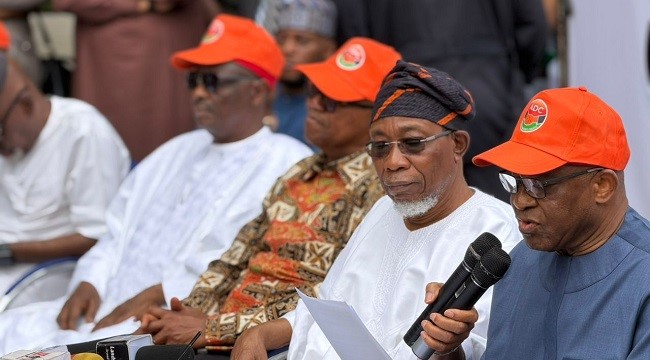
But in a swift reaction, the opposition coalition, African Democratic Congress (ADC), rejected the revised 2026–2027 general election timetable, describing it as a politically biased schedule designed to favour the re-election agenda of President Bola Tinubu, and calling on all Nigerians to speak up enmasse to reject the revised timetable.

The ADC, in a statement by its National Publicity Secretary, Bolaji Abdullahi, on Friday argued that the new deadlines and compliance requirements under the Electoral Act 2026 create near-impossible hurdles for opposition parties seeking to field candidates.

On February 13, INEC initially scheduled the 2027 Presidential and National Assembly elections for February 20, 2027, while the Governorship and State Houses of Assembly elections were fixed for March 6, 2027.

The timetable, however, faced objections from some Muslim stakeholders who noted that the dates coincided with the 2027 Ramadan period.

Following the concerns, the National Assembly amended Clause 28 of the Electoral Act Amendment Bill, reducing the required election notice period from 360 to 300 days, allowing INEC to adjust the election dates.

Subsequently, INEC released a revised schedule on Thursday, signed by its Chairman, Joash Amupitan, moving the Presidential and National Assembly elections to January 16, 2027, and the Governorship and State Houses of Assembly elections to February 6, 2027.

Reacting, the ADC said the requirement that political parties submit a comprehensive digital membership register by April 2, 2026, effectively bars opposition parties from participating.

The party stated: “The African Democratic Congress rejects the updated 2026–2027 electoral timetable released by the Independent National Electoral Commission. What has been presented as a routine administrative schedule of the upcoming general elections is, in fact, a political instrument carefully structured to narrow democratic space and strengthen the incumbent administration ahead of the 2027 general elections.

“According to the timetable, party primaries are to be conducted between April 23 and May 30, 2026, just 55 to 92 days from today. However, more significant is that, pursuant to Section 77(4) of the Electoral Act 2026, political parties are required to submit their digital membership registers to INEC not later than April 2, 2026.

“That is only about 34 days away. Section 77(7) further provides that any party that fails to submit its membership register within the stipulated time shall not be eligible to field a candidate. These are not routine administrative rules but are deliberately constructed barriers designed to exclude the opposition from participating in the election.”

The party further noted that Section 77(2) of the Electoral Act 2026 requires the digital register of members to contain name, sex, date of birth, address, state, local government, ward, polling unit, National Identification Number (NIN) and photograph in both hard and soft copies, while Section 77(6) prohibits the use of any pre-existing register that does not contain the specified information. It warned that failure to meet these requirements would lead to disqualification.

The ADC questioned the fairness of the digital membership requirement, noting that the ruling All Progressives Congress began its registration process in February 2025, long before the requirement became mandatory.

“It is not a product of foresight but insider advantage. They knew what was coming. They therefore had one full year to carry out an exercise that other political parties are expected to complete in one month, during which they must collect, process, collate and transmit large volumes of digital data to INEC under the threat of exclusion. This is practically impossible.

“Democratic competition is based on a level playing field that does not give any contestant an undue advantage. A system where one party exploits incumbency to gain a one-year head start on a requirement that other parties only became aware of when it was nearly too late is a rigged system.”

The ADC said it has joined other opposition parties in rejecting the Electoral Act 2026, adding that the INEC timetable is equally rejected as it appears designed to serve what it described as a self-succession agenda.

“Let it be clear that ADC will not take any action that appears to confer legitimacy on a fraudulent system. We are reviewing our options and will make our position known in the coming days,” the party said.

The party also called on civil society organisations, democratic stakeholders and Nigerians to scrutinise the timetable and demand fairness, stressing that democracy cannot survive when electoral rules are structured to produce predetermined outcomes.

The party has consistently accused the Tinubu-led All Progressives Congress (APC) of scheming to silence the opposition as the 2027 General Elections draw closer, citing his manipulation of state governors and Assembly members from jumping ship, and settling with the ruling party.

Presently, the president’s party has a total of 31 out of 36 states governors, more than majority of the national and states Houses of Assembly.

A frontline publisher and chieftain of the ADC, Chief Dele Momodu, has warned that Tinubu is gradually transforming into full-blown dictatorship, stressing that his second term in office would turn state governors into ‘total slaves’.

Continue Reading

Headline

Second Term for Tinubu Will Turn Governors into Total Slaves, Dele Momodu Warns

Published

on

By

Chairman, Ovation Media Group, and former presidential aspirant, Aare Dele Momodu, has expressed strong concern over what he described as growing political support for President Bola Ahmed Tinubu among state governors across the country.

Speaking during an interview on News Central TV, Momodu said he was shocked by the level of backing the president is reportedly receiving, warning that Nigeria’s democracy could face serious risks if the current political trend continues.

The media entrepreneur cautioned that allowing Tinubu to secure a second term in 2027 could, in his view, lead to excessive concentration of power. He particularly criticized what he described as a growing wave of opposition figures aligning with the ruling All Progressives Congress> (APC).

Momodu referenced reports of opposition governors, including Ahmadu Umaru Fintiri, allegedly moving closer to the ruling party, describing the development as politically troubling.

According to him, some governors are allegedly competing to demonstrate loyalty to the president ahead of future elections.

“The governors are fighting to ensure Tinubu wins a second term, fighting to be the biggest thug for him. If a man in his first term can capture the bodies and souls of Nigerians this way, imagine what he would do with a second term. It will be a full-blown dictatorship, and the governors will regret it as they become total slaves to him,” Momodu said.

He concluded by urging Nigerians to remain vigilant and actively protect democratic institutions, warning that unchecked consolidation of political power could threaten the nation’s democracy and future stability.

Gistmania

Continue Reading

Headline

Court Validates PDP 2025 Convention in Ibadan, Affirms Turaki-led NWC

Published

on

By

The Oyo State High Court sitting in Ibadan has affirmed the validity of the 2025 Elective Convention of the Peoples’ Democratic Party (PDP), which produced Dr. Kabiru Turaki as the substantive National Chairman of the party.

Delivering judgment on Friday, Justice Ladiran Akintola upheld the convention in its entirety, ruling that it was conducted in full compliance with the relevant constitutional and statutory provisions governing party elections in Nigeria.

The decision marked a significant legal victory for the party’s leadership and brought clarity to the dispute surrounding the convention’s legitimacy.

The ruling followed an amended originating summons filed by Misibau Adetunmbi (SAN) on behalf of the claimant, Folahan Malomo Adelabi, in Suit No. I/1336/2025.

In a comprehensive judgment, the court granted all 13 reliefs sought by the claimant, effectively endorsing the processes and outcomes of the Ibadan convention.

Justice Akintola held that the convention, organised by the recognised leadership of the party, satisfied all laid-down legal requirements as stipulated in the 1999 Constitution of the Federal Republic of Nigeria, the Electoral Act 2022 (as amended), and the relevant provisions of the Electoral Act 2026.

The court found no breach of due process or statutory non-compliance in the conduct of the exercise.

In the same proceedings, the court dismissed the Motion on Notice seeking a stay of proceedings and suspension of the ruling, filed by Sunday Ibrahim (SAN) on behalf of Austin Nwachukwu and two others. The applications were described as lacking merit.

Earlier in the proceedings, the court had also rejected a bid by Ibrahim to have his clients joined in the suit.

Justice Akintola ruled at the time that the joinder application was unsubstantiated and consequently dismissed it.

Continue Reading

Trending