
Featured
Sanwoolu Unveils Five Pillars of Development #ForAGreaterLagos tagged “THEME”

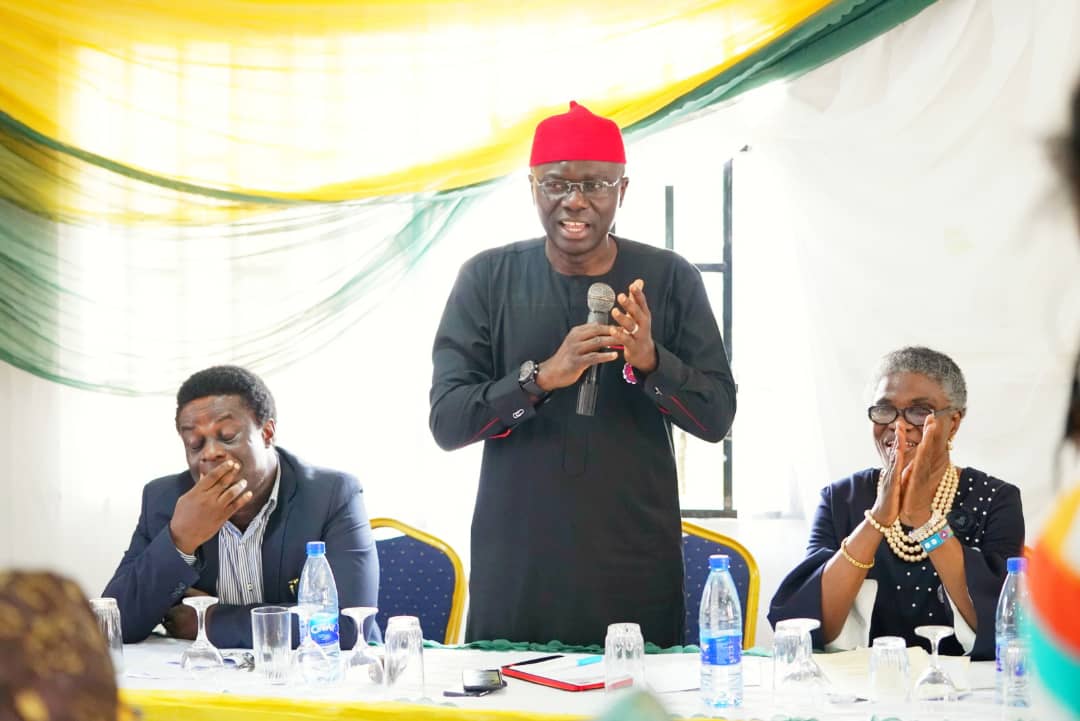

The All Progressives Congress Lagos Gubernatorial flag bearer, Babajide Sanwo-Olu, has unveiled his 5 Pillars of Development agenda for a greater Lagos tagged “THEME”, while calling on his opponents to make the campaign issue-based as it affects the people.
The unveiling of THEME, which is an acronym for all aspects of governance, took place in a series of television interviews and special events which the governorship hopeful undertook at Television Continental, Channels Television, Lagos Television, Nigeria info FM, Wazobia FM and the Pharmaceutical Society of Nigeria in a very busy week of agenda setting and stakeholders engagement.
The 3-time Lagos Commissioner, who is a graduate of University of Lagos and an alumnus of Harvard Kennedy School of Government, was the brain behind many reforms that birthed key transformational initiatives in Lagos such as the private sector-led Lagos State Security Trust Fund, Lagos State Pension Commission, Lagos Bus Management (LAGBUS) among others.
As an Advisor to the Bureau of Public Enterprise (BPE) on privatization, concession and commercialization of a number of public assets under the Federal Government privatization programme, Sanwo-Olu had the privilege of working on some landmark deals that resulted in the optimization of public assets including the Aluminum Smelter Company (ALSCON), National Arts Theatre, Lagos International Trade Fair Complex, Ikoyi Hotels Limited. Sanwo-Olu also worked on the Federal Government Debt Conversion Programme.
‘THEME’’, the policy initiatives, is detailed as follows:

T- Traffic Management & Transportation.
“Our plan is to integrate road, rail and water transportation in Lagos to solve the problem of commuting within the metropolis. We will fix all bad roads and expand our road infrastructure. We will complete existing road projects and fix inner city roads. We will improve navigation on our waterways to facilitate water transportation and promote private investment. Part of our plan is to complete the ongoing Blue Line rail project from Okokomaiko-Marina and kick-start the Red line from Agbado to Marina.
On traffic management, we have identified over 60 gridlock points as the major causes of traffic around Lagos. We are going to work with the federal government to complete the Lagos-Apapa road, build a 5000-capacity trailer park and also work with the Nigerian Port Authority for a strict on-call system that notifies trailers when to pick-up containers to avoid the indefinite waiting period. This is a very important part of our plan. We have a comprehensive strategy for achieving set goals”. We are particularly committed to reducing travel time within Lagos.
H- Health & Environment
“Our healthcare plan will be anchored on comprehensive health insurance scheme for Lagosians to improve access and affordability. We will improve primary and complete many secondary health facilities. We will work with private investors as well to ensure that Lagos is the health care destination for Nigerians. I am meeting with different health care stakeholders, and was a guest at the Pharmaceutical Society of Nigeria end of the year event, where we discussed ways to improve health care delivery in Lagos.
To keep our environment clean and healthy, we will rejig the waste management system by getting LAWMA to deliver better on its mandate as the regulator, while the PSP model will be made to respond better in collection of waste in Lagos. On the advocacy, we have plan to turn waste to wealth. This we will do by incentivizing waste sorting by our people. We must begin to separate organic waste from other household waste and put them in separate waste bags for recycling companies that will turning waste to primary and secondary raw materials. Those who properly sort their waste can make money.
E- Education & Technology.
“Our plan is to increase access to public education in Lagos, especially public primary and secondary schools. We will immediately embark on renovation of our schools and make them conducive for learning. Teachers will be trained for capacity enhancement in modern teaching methodology. We want to make teaching a more lucrative field of interest and attract the best of teachers to Lagos schools. We want to work with our educational institutions to improve curriculum and include entrepreneurial studies in our educational programmes.
We also want to create a smart economy on the back of technology. We will create incubation hubs in Lagos for technology startups to flourish, while also ensuring that we introduce coding into our public school curriculum.
I understand the transformative power of Technology. Technology will improve the rule of law, education, ease of doing business and government processes. Technology will reduce approval process circle in public-private sector dealings. It will improve government efficiency. Giving Entrepreneurs and SMEs the opportunity to thrive will lead to more jobs and more public-private sector partnerships”.
M- Making Lagos a 21st century economy
“We will support the private sector by creating an enabling environment for businesses to thrive. We will simplify access to government services to make the private sector blossom. We are going to work with the Power Distribution and Power Generating companies to solve the problem of power in Lagos. By this, we will have enough power in Lagos to drive the economy and improve the lives of the citizens. We provide more infrastructure and improve the existing ones to support private businesses and increase productivity of Lagosians. Lagos should be a 24-hour economy. Security will be very key item on our policy agenda. We will strengthen security agencies in Lagos and equip them to do better.
E- Entertainment & Tourism
“Lagos is the centre of culture and entertainment capital of Africa. We will boost our creative economy with tourism, culture and entertainment. We will develop all our tourism assets in Lagos and create tourism calendar around our important events, like the Eyo festival – such that it will attract local and international tourists. We will work with the music, film and fashion industries to make Lagos an international tourist destination.
Again, security and infrastructure are key to tourism and entertainment economy because people must feel safe to go out anytime of the day and visit tourist centres.
According to Sanwo-Olu, specific details of the THEME initiatives will be unveiled to the public
Supporting the 5 main pillars, he has also listed the following as areas of focus;
-
Infrastructure
-
Housing
-
Ease of doing business
-
Land reform
-
Power
By Eric Elezuo
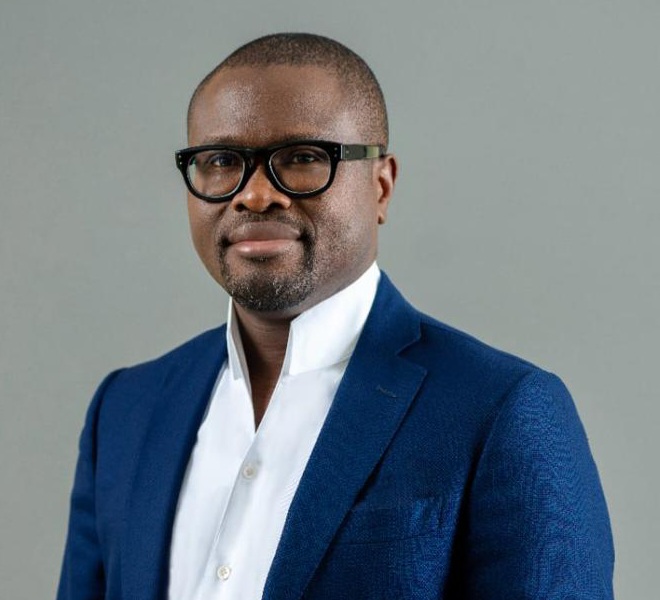
As the presidential election draws very close, one man stands taller than most of the candidates that would be on the ballot paper, or may have been on the ballot paper as far as the presidential election in Benin Republic is concerned. He is the hard working and most Indefatigable achiever, Monsieur Romuald Wadagni.
He us young, able and full of experience, having practiced positive and sincere politics for a very long in his young existence.
Wadagni comes across as the typical chip off the old block, when it comes to genuine leadership qualities and agenda. He has been tested, trusted and ready to take up the mantle of leadership towards providing genuineness and purposeful living condition for the people of Benin Republic.

In 10 consecutive years, since he was 39, Wadagni, has supervised the Finance and Economy ministry without blemish, and has received accolades from far and wide.
It is therefore not a fluke as the 49 years old, Romuald Wadagni was nominated as the ruling majority’s candidate for the upcoming presidential election in Benin.
Consequently, listed below are three things to know about him: 1:he has been the Minister of Finance for nearly 10 years. Romuald Wadagni was appointed Minister of Economy and Finance in April 2016. He was reappointed to the position in 2021 with the rank of Minister of State. He is considered one of the main architects of Benin’s economic recovery.

At the end of January 2025, he welcomed “average growth of more than 6.5% in recent years.” In 2018, Financial Afrik magazine ranked him among the 100 African personalities transforming the continent. In December 2024, the same media outlet named him “Best Finance Minister in Africa,” praising Benin’s macroeconomic stability in the face of international crises. 2: He is an expert in finance and accounting. Romuald Wadagni is a chartered accountant. After studying finance, private equity, and venture capital, he began his professional career in 1998 at Deloitte, one of the largest audit and consulting firms in the world.


At Deloitte, Romuald Wadagni rose through the ranks and successively held several positions of responsibility in France, the United States, and then in Francophone Africa. In 2012, at the age of 36, he became a partner at Deloitte. He later led the firm’s expansion across the African continent. After 17 years, he left the firm in April 2016 when he was appointed Minister of Economy and Finance of Benin.
He is the heir apparent of Patrice Talon. After two consecutive terms, President Patrice Talon, who can no longer run again, had promised to play an active role in choosing his successor. On August 31, 2025, he officially endorsed his Minister of Finance, Romuald Wadagni, as the candidate of the presidential majority.
This designation was confirmed in a joint statement by the Union Progressiste le Renouveau (UPR) and the Bloc Républicain (BR), the two main parties of the majority. On October 4, 2025, in Parakou, Romuald Wadagni and Mariam Chabi Talata, the current Vice President, were officially nominated during a major rally of the presidential majority. In his speech, the candidate minister promised to “consolidate the achievements” of his predecessor.

Prior to entering politics, Wadagni worked for the consulting firm Deloitte for 17 years. He was first appointed the minister of economy and finance on 7 April 2016, in the first Talon government, and subsequently reappointed in 2021 with the rank of senior minister.
In 2021, the financial newspaper Financial Afrik named Romuald Wadagni “Best African Minister of Economy and Finance”.
In 2024, the financial newspaper Financial Afrik named him “Finance Minister of the Year” for the 4th time in its ranking of “The 100 who are transforming Africa”.
ROMUALD WADAGNI AT A GLANCE

Romuald Wadagni is Senior Minister in charge of Economy and Finance of Benin. He was appointed on April 7, 2016, in the first government of President Patrice Talon and reappointed to this position in May 2021.
Romuald Wadagni is a public accountant certified in France and the USA. He also holds a master’s degree in finance and has completed specialized training in private equity and venture capital.
Before being appointed Minister of Economy and Finance in 2016, Romuald Wadagni had a leading international experience within Deloitte. In France from 1998, then in the United States from 2003, he developed cutting-edge expertise in several fields, serving customers in various sectors of activity (Mining, TMT, Financial Sector, Public Sector, Retail) and various governments and donors.





Nation Building Reimagined: Integrated Principles and Strategies for Sustainable Growth

Dear CDS, NSA, Your Prodigal Sons, Brothers Have Killed General Braimah

Voice of Emancipation: Lessons from the Iran/USA War

Ovation @30: A Triumph of Vision, Courage and African Excellence

ADC National Convention: To Be or Not to Be?

Israel Questions Pakistan’s Credibility in Mediating over US-Iran Ceasefire Agreement

Osun 2026: INEC Planning to Recruit APC Members As Electoral Officials, Lawmakers Allege

Trump Delays Iran’s Strike by 2-Weeks As Pakistani Leaders Intervene

Benin Republic 2026: Romuald Wadagni, The President in Waiting

FG Expels US Missionary Alex Barber

Koumagnon Family Pledges Unalloyed Support for Romuald Wadagni As President

Again, Iran Blocks Strait of Hormuz, Alleges Ceasefire Violation
Prominent ADC Leaders Storm INEC Hqrs in Protest Against Dictatorship
Nation Building Reimagined: Integrated Principles and Strategies for Sustainable Growth
-
 World4 days ago
Trump Delays Iran’s Strike by 2-Weeks As Pakistani Leaders Intervene
-
 Featured3 days ago
Benin Republic 2026: Romuald Wadagni, The President in Waiting
-
 National4 days ago
FG Expels US Missionary Alex Barber
-
 Boss Picks3 days ago
Koumagnon Family Pledges Unalloyed Support for Romuald Wadagni As President
-
 Middle East3 days ago
Again, Iran Blocks Strait of Hormuz, Alleges Ceasefire Violation
-
 News4 days ago
Prominent ADC Leaders Storm INEC Hqrs in Protest Against Dictatorship
-
 Opinion24 hours ago
Nation Building Reimagined: Integrated Principles and Strategies for Sustainable Growth
-

 World3 days ago
Trump Accuses Nigeria of Spreading Fake News on Iran Ceasefire Deal