Connect with us

Featured

Joy Unlimited as Ibidunni Ighodalo Foundation Selects 20 Qualified Parents in Waiting for IVF Treatment

Published

on

By Eric Elezuo

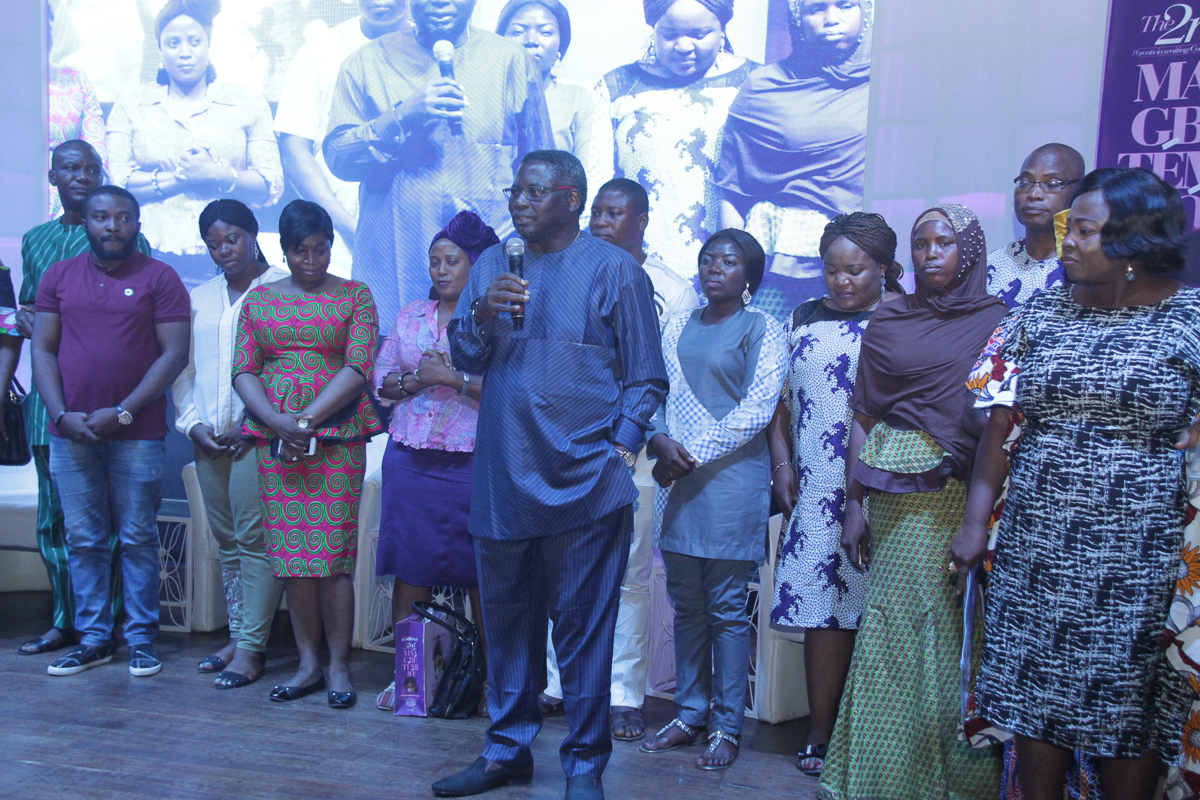
There was palpable joy at the Agip Hall of the MUSON Centre Friday when over 20 beneficiaries of the 2018 fertility treatments such as In Vitro Fertilization (IVF) and Intrauterine Insemination were selected as part efforts of the Ibidunni Ighodalo Foundation to restore the pride of the woman and recreate joy in homes.

The beneficiaries were picked through raffle draw and random selection as supervised by the Minister in Charge of the Kingsway International Christian Centre (KICC), Pastor Matthew Ashimolowo.

Ibidunni Ighadalo with husband, Pastor Ituah Ighadalo

The programme, which was in its second edition was themed: “Maa Gbe Temi Jo’ (Yoruba for I will dance with my own baby).

The day long event began with a thorough medical screening conducted on all the participants. The screening covered all areas of fertility treatment including cervical examination.

Dr Oluwatoyin Bode Abass

Thereafter, thoroughbred medical experts took turns to educated the parents in waiting on all areas worthy of coming to terms with to live a health life worthy of procreation.

The first among the speakers after Pastor Tera Onyemaka has led the congregation in spirit-filled prayer, was Dr. Ogundiran Babatunde Deji of the Bridge Clinic, who lectured on Fibroid and Pregnancy. He intimated among other things that the womb, semen, ovaries and tubes must be highly functional if fertilisation must take place while also informing that obesity encourages the emergence of fibroid. He therefore urged parents in waiting to maintain a healthy lifestyle in anticipation of their children.

Cross section of participants

Earlier, the chief host of the event and wife of the General Overseer of Trinity House, Mrs Ibidunni Ighodalo, who is also the CEO of Ibidunni Ighodalo Foundation, had given an emotional speech of what prompted her desire to put smiles and happiness in the homes of parents in need of children.

Dr Nini Iyizoba giving her lecture

In quick succession, other speakers including Dr. Oluwatoyin Bode Abass (Infertility and the Stigma that Comes with it), Dr. Nini Iyizoba, Dr. Coker, Dr. Adeleke Daramola (Male Infertility), Dr. Oluyemisi Adeyemi Bero (Surrogacy and Donors), Barr. Muiz Banire and others educated the audience on the psychological and spiritual implications of waiting for the children.

In her lecture, Pastor Ruth inculcated comedy into the serious business of waiting as a parent to be, practically dousing the the tension associated with child expectation. She mixed the physical with the spiritual to drive home her point, and all that listened to her were happy and excessively joyed.

Then the hour every one had been waitng for came, and Pastor Matthew Ashimolowo took the privilege of presenting the 20 beneficiaries for the year’s treatment. He cautioned that faith as already preached is capable of turning around the situation of anyone even without the treatment.

The richest woman in Nigeria, who doubles as the Founder of Rose of Sharon, Mrs. Folorunsho Alakija, and wife of the former Governor of Lagos State, Dame Abimbola Fashola, were on hand to speak to the needs of the parents in waiting through heartfelt prayers and shared experiences.

Pastor Ighodalo and Barr. Muiz Banire

The treatment, it was revealed costs a whopping N1.5 million per person.

Other personalities that graced the event were Pastor Ituah Ighodalo, Miss Bola Adesola and a host of others from both the medical and other professions.

The IIF was created by Ibidunni Ighodalo to raise awareness on issues pertaining to infertility and to provide grants for couples that require fertility treatments such as In Vitro Fertilization (IVF) and Intrauterine Insemination. It has over time put smiles on the faces of parents seriously in need of babies of their own.

Photo credit: Solomon Ekhaiyeme
Continue Reading
Click to comment

Leave a Reply

Your email address will not be published. Required fields are marked *

Featured

How Glo Network Became the Lifeline That Saved Two Lives: A True Story from Sallari

Published

on

By

By Dr. Sani Sa’idu Baba

It was one of those calm, bright mornings in Sallari, a town in Tarauni Local Government Area of Kano State. I had gone to visit my longtime friend and colleague, Dr. Muhammad Umar Abdullahi, at his private facility, Rauda Clinic and Maternity. We were in his office discussing research, the usual challenges of medical practice, and other issues when the sound of hurried footsteps and anxious voices broke the calm. A young man rushed in, calling for the doctor.

Without hesitation, Dr. Muhammad sprang into action. I followed him instinctively. Within moments, two people burst through the gate, one man carrying a weak, heavily pregnant woman in his arms. Her breathing was shallow and wheezy, her face pale, and her body trembling between labor contractions and an asthma crisis. The scene was intense, we both knew that every second counted.

The team quickly moved her to the emergency bed. The Chief Medical Director Dr. Muhammad and his nurses worked swiftly to stabilize her breathing and monitor the baby. Oxygen was connected, IV lines were set, and within minutes, her breathing began to steady. The baby’s heartbeat was strong. After a short but tense period, she delivered a healthy baby girl. Relief filled the room like a gentle wind.

At that moment, I couldn’t help but admire the efficiency and dedication of Rauda Clinic and Maternity. The facility operated with the precision and compassion of a modern hospital. Every member of the team knew their role, every piece of equipment was in place, and the environment radiated calm professionalism. It reminded me that quality healthcare is not only about infrastructure, but about commitment and readiness when it truly matters. Rauda Clinic stood out that day as a quiet pillar of excellence and hope for patients and families alike.

The following day, I placed a call to Dr. Muhammad to ask about the condition of the woman who had been brought in the previous morning. He sounded cheerful and relieved. “Both mother and baby are fine now,” he said. Then, with deep reflection in his voice, he narrated the extraordinary story behind their survival, a story that showed how a single phone call, made at the right moment, became the bridge between life and death. As I listened to him recount the events, I couldn’t help but marvel at how sometimes, survival depends not only on medicine but also on connection.

Her name was Amina, a mother of three. That morning, she was alone at home, her husband was in Dutse, the capital of Jigawa state where he works, and her children had already gone to school. The first wave of pain came suddenly, followed by a tightening in her chest. Within minutes, she was gasping for air, her asthma worsening with every breath. She reached for her phone to call her husband, but the call wouldn’t go through. She tried again and again, each time, “Network error.”

Her strength was fading fast. She tried to reach her neighbors, but again, no connection. Alone, frightened, and struggling to breathe, she said she felt her end was near. Then, a thought crossed her mind, her maid had left her phone in the sitting room that morning. Gathering the last of her strength, Amina crawled toward the television stand where the phone lay.

When she reached it, she noticed the green SIM icon, it was a Glo line. Hope flickered. But when she tried to make a call, she saw there was no airtime. That could have been the end until she remembered Glo’s Borrow Me Credit service. With trembling fingers, she dialed the Glo borrow me code and she got the credit instantly, and that small credit became her lifeline.

Her first attempt to reach her husband failed. Then she dialed her younger brother, Umar. This time, the call went through immediately. Interestingly, Umar is a Glo user too. Without delay, Umar and his wife rushed to her house, found her collapsed on the floor, and carried her into their car.

On their way, Umar called ahead to alert the doctor, and again, the call went through clearly. By a remarkable coincidence, Dr. Muhammad was also using a Glo line. That seamless connection meant the hospital team was fully prepared by the time they arrived. Within minutes, Amina was stabilized, and both she and her baby were safe.

The next morning, Dr. Muhammad told me that Amina had smiled faintly and said to him, “Doctor, when every other network failed me, Glo answered. If that call hadn’t gone through, I wouldn’t be here today.”

Her words carried a truth that stayed with me. It wasn’t just a patient’s gratitude, it was a testimony about the power of reliable connection. At that moment, Glo wasn’t just a telecommunications network, it was the bridge between life and death, between despair and hope.

In today’s world, a simple phone call can determine whether someone lives or dies. That day reminded me that technology, when dependable, is not just about data speed, it’s about human connection at its most critical. Glo proved to be that connection: steady, available, and trustworthy when it mattered most.

Before she was discharged, she laughed and told the doctor she had already chosen a nickname for her baby “Amira Glo.” They both laughed, but deep down, Dr. Muhammad understood the meaning behind that name. It symbolized gratitude, faith, and survival.

As I ended the call with Dr. Muhammad that day, I felt a quiet pride. I had witnessed not just the miracle of life, but the harmony of medicine, compassion, and reliable technology. Through Rauda Clinic and Maternity, I saw what true service means, dedication without boundaries, and connection that saves.

Amina’s story isn’t an advert, but living proof that sometimes, when every other signal fades, Glo stands firm, and when every other facility seems far away, Rauda Clinic and Maternity remains a beacon of care and excellence.

For patients, families, and health workers alike, Glo is proven to be a network of necessity. It connects life to hope, when every second truly counts…

Dr. Sani Sa’idu Baba writes from Kano, and can be reached via drssbaba@yahoo.com

Continue Reading

Featured

Delta Govt Confirms Death of Senator Nwaoboshi at 68

Published

on

By

Senator Peter Onyelukachukwu Nwaoboshi, the former lawmaker who represented Delta North Senatorial District in the National Assembly, has passed away. He was 68.

Reports said that Nwaoboshi died on Friday in Abuja following a brief illness.

His demise was confirmed in a condolence statement issued by the Delta State governor, Rt. Hon. Sheriff Oborevwori.

Expressing sorrow, the governor described Nwaoboshi’s passing as a monumental loss to Delta State, the Anioma nation, and the Nigerian federation.

In the statement by his Chief Press Secretary, Sir Festus Ahon, Governor Oborevwori hailed the late Senator as a “fearless advocate” of the Anioma cause whose contributions to nation-building remain indelible.

The governor recalled Nwaoboshi’s impactful tenure in the Red Chamber, particularly his role as Chairman of the Senate Committee on Niger Delta Affairs.

He noted that Nwaoboshi’s consistent advocacy for the development of the oil-rich region distinguished him as a passionate and committed leader.

“On behalf of the government and people of Delta State, I mourn the passing of my dear friend, Senator Peter Onyelukachukwu Nwaoboshi,” the governor said.

“I extend my heartfelt condolences to his immediate family, the people of Anioma nation, members of the All Progressives Congress (APC), and all those whose lives he touched. I pray that Almighty God grant his soul eternal rest.”

Before his elevation to the Senate in 2015, he served meritoriously as a two-term Chairman of the Peoples’ Democratic Party (PDP) in Delta State, where he was instrumental in consolidating the party’s grip on the State.

Continue Reading

Featured

Ribadu’s Office Denies Arming Miyetti Allah in Kwara

Published

on

By

The National Counter Terrorism Centre (NCTC), under the office of the National Security Adviser Mallam Nuhu Ribadu, has refuted claims that it armed members of the Miyetti Allah group for counter-terrorism operations in Kwara State.

The Head of Strategic Communication at NCTC, Mr. Michael Abu, issued the rebuttal on Wednesday in Abuja.

Abu described the reports circulated by some online platforms as false and misleading, saying they misrepresented ongoing security operations in forested areas of the state.

He said that in line with the Terrorism Prevention and Prohibition Act, 2022, it continued to coordinate and support law enforcement, security and intelligence agencies in countering all forms of terrorism across the country.

NCTC spokesman explained that Nigeria’s counter-terrorism efforts guided by the National Counter Terrorism Strategy (NACTEST), involved the deployment of hybrid forces comprising regular security personnel and trained auxiliaries such as hunters and vigilante elements, particularly in difficult terrains.

According to him, the hybrid approach, which was previously deployed with the Civilian Joint Task Force in the North-East, is currently being applied in parts of the North-West and North-Central, including Kwara State, and has recorded several successes against banditry and other criminal activities.

He stressed that the Federal government was not conducting kinetic operations with any socio-cultural group, adding that claims that the Office of the National Security Adviser provided arms to such organisations are unfounded and should be disregarded.

According to him, all auxiliary personnel involved in hybrid operations were recruited directly by authorised security and intelligence agencies after due diligence, and that all operations were conducted strictly in line with the law and established standard operating procedures.

He urged the media to exercise responsibility by protecting sensitive security information and seeking clarification through designated official spokespersons, while advising the public to ignore unverified reports capable of undermining ongoing operations.

He reaffirmed the centre’s commitment to transparency and stakeholder engagement to deepen public understanding of Nigeria’s counter-terrorism efforts.

Continue Reading

Trending