
Boss Picks
Tenacity, Quality the Secrets of Ade Bakare Couture’s Success – Ade Bakare

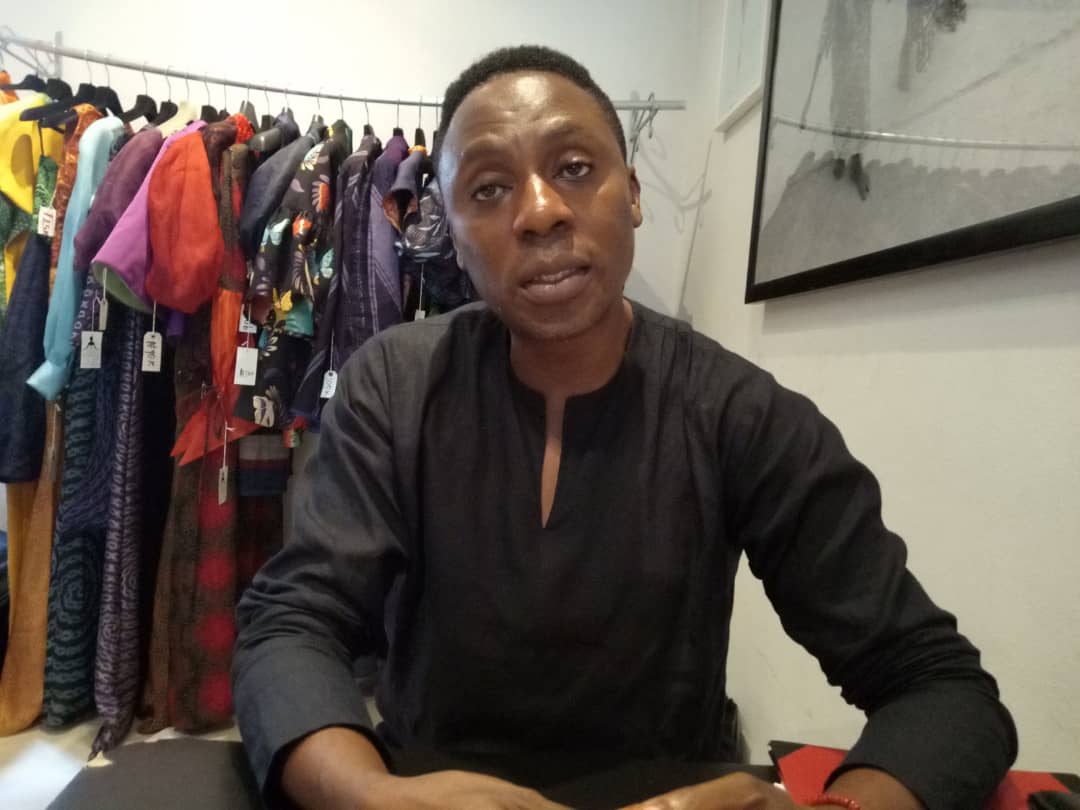

By Eric Elezuo
He needs no introduction in the fashion world. With over 27 years of experience designing and styling some of the nation’s finest women, from first ladies of president and governors, to political bigwigs, Ade Bakere is a success when it comes to couture and regular fashion designing.
In this exclusive interview, the University of Lagos History graduate bares his mind on how Ade Bakare Couture began, the challenges faced and overcame, and his plans for the nearest future. Excerpts:
Ade Bakare is known as both an individual and a brand. Who is Ade Bakare the individual?
I was born in England but relocated to Nigeria with my parents where I had my secondary school education. I attended Federal Government College, Lagos then I went to the University of Lagos where I studied History.
However, I had always wanted to study fashion from an early age, so once I finished my degree I went to England, precisely at Southford University College, Manchester, to study fashion because my parents always insisted that if you are going to do anything, you must do it well; so if you want to be a fashion designer, you have to get the proper training. A year after I completed the training I established my fashion outfit after having employment stints with some of the big names in the fashion industry, this was in the 1990s when the country was going through recession and getting a job was difficult. A lot of businesses were closing down as the economy was rough, that was when I stumbled on an article in the Evening Standard about starting your own fashion…

Ade in his shop
You went to school to study history, at what point did you realize that fashion was the thing for you? Had it always been there or the University brought it out?
Its innate, it had always been there, I just had to nurture and bring it out.
Was there anybody into fashion designing in your family before you?
My father was an Accountant and my Mom was a Caterer. However, in my Mom’s family were many very educated persons and they believe that if you want to do anything, it has to be professional, especially as most of them were doctors and professors and all that. My situation is quite similar to Fela Anikulapo-Kuti who went outside the country to study Music and I think that is what education does, it shows you that these things that you see as hobbies or passion are actually professions and one can do well with them.
During the period you went to study fashion, professions like Law, Medicine among others were in vogue. How easy was it for your parents to give you a go-ahead to study fashion designing?
Well, my Dad had a policy that once you are 21, you could decide for yourself and my Mum had nurtured me in the art of fashion through magazines and it was only natural that she would support me when I decided to go that part, but she stipulated one condition, that because of the Nigerian mentality that if you do not go to school, you are a drop out and would not be taken seriously, I must go to the University and graduate. However, I always think that if I was in England and had finished my secondary school there, she wouldn’t have minded me going from Secondary school to a fashion school. Interestingly, when I got there, I was like the only adult student as majority of the other students were fresh out of the English equivalent of Secondary school and when I said I had a degree, everyone was like, if this was what you want to do, why did you go to study History and I had to explain the Nigeria narrative to them but it was hard for them to understand because fashion designing had been appointed a degree status as early as the 1960s in England.
For them, a lawyer or doctor was not any bigger than a fashion designer, cook or chef but interestingly, a lot of people are now going into those kinds of professions. My parents did not object to my studying fashion designing so I am a product of two minds that had seen beyond all of what I earlier said and I think my case has been a success story because over there, I was seen as a spectacular student and was always called upon to lecture, and from lecturing, I was also called to handle some workshops and even now I am always called upon to teach. I think it is because of my History degree so it has not been all together a waste.

What does your fashion outfit cater for?
We dabble into a bit of everything, we do wedding outfits. For example, when Virgin Airline began, we won the bid to design the uniforms for them and although we always like to cater for other kind of clothing but having had the training in fashion, Ade Bakare Couture just knew what to do because in school you are taught how to do everything, from children’s wear, to wedding and what have you. You finally specialize in your final year.
At what stage did you know that you’ve finally made a breakthrough?
A lot of activities set my path to breakthrough. In the first place, Dele Momodu wrote about me, and portrayed me to the world in his Ovation Magazine. Then it was followed by my invitation to Nigeria by Sammy Ogbodu. Those aside, I was the official designer for late Mrs. Stella Obasanjo. More so, I have been fortunate to be discovered very early because when I started, there were not too many black designers in England. I was a novelty so people were interested in this black designer. People were intrigued, asking who is this black guy?
So your race gave you the breakthrough?
Yes, people wanted to know and work with this black person. They were quite surprised, and again, I was quite young, around 23, 24, just like how you have the musicians today. In reality, people wanted to see me work and what I could do. So, I had a lot of attention and I was able to capitalize on them but it was a two-way thing because I also faced a lot of rejection.

Ade’s adire design being showcased by models in Kigali
Who are your clients? What group of people do you style?
I like to say we cater and make things for everyone because everyone likes to look good, and we are committed to doing just that; things that stand out, that are beautifully cut and of course have good life span. Classical pieces but with a modern touch and for example, I still have ladies that have bought things from us 10-15 years ago and they still wear them.
What’s the process of making or styling a high profile client, and how long does it take?
It’s a collaborative effort and process; you meet with the client, you draw your sketch, you show them to the client, they tell you their likes and dislikes. Like the late Mrs. Obasanjo, she liked silk and soft chiffon, beautiful colors, and things neatly cut and getting all the way to the floor. Different clients like different things so you don’t always have to dictate, and because you are dealing on a one-to-one level, it takes different time to make an outfit. There are always ready to wear clothes and that doesn’t take time because the customer can just come and pick them off the shelf.
How many fashion lines do you have?
We’ve got the Ade Bakare Couture, which is the high end and what we are known for, and then we’ve got the ready to wear lines and they are quite affordable because we’ve got dresses that go for 25 thousand Naira, we’ve got jackets starting from 20 thousand naira, trousers starting from 15 thousand naira, so you could get a good outfit for 30 thousand naira with the same principles of Couture and we have generated quite a lot of success with the ready-to-wear outfits because people come for the ready to wear as they affordable.
Couture is usually expensive because you are using the best of everything but with the introduction of our ready-to-wear lines we have been able to reach a good number of our customers.

What is the major reason why you are concentrated on ladies?
Well, ladies can be very creative. The saying goes that a woman can wear everything a man can and more, she can wear jackets, trousers, shirts and the others. So, for a woman you can be more creative unlike a man, it is always a shirt or a trouser, a shorts and maybe a bit more but a woman offers variety and this allows for creativity. But note that we also run men’s wear line as well. We make desirable cloths for men too.
It was once reported that you were commissioned to do the interior decoration of a flat. Can you please shed more light on that?
Okay, when I came back from England and decided to open an outlet of the business here, we basically had to go to the client’s homes to discuss the designs with them and while there I usually comment on the interior of the house as a creative person. And you know, fashion is an arm of design. The client would then say I like your taste and we are looking to purchase another home, would you like to do the interior designs? And that was how we began, choosing and combining colors to give them the brilliant taste they desired.
As a result, we began getting more requests from clients to do more interior designing for flats, houses and all that. We do soft furnishing; bed, tables, furniture basically, kitchen and more.

Well, if you can dabble into the waters of interior designing being a fashion designer, one can guess that you do other things, so what other areas does Ade Bakare have interest in?
I have always liked to do interior designing but I also engage in costume designs and we’ve done quite a number of that for movies, we did it for ‘A Place in the Stars’, then we also got approached to do something for the cast of the series, ‘Lekki Wives’ and we did something for them. Currently, we are designing for ‘Battleground’ which is a series in its second year. So, that’s another angle to me. We are also in talks with another movie producer to design for one of his projects and I like projects. Designing is usually twice in a year, you do your autumn and spring collection so projects keeps one busy all year round.
What’s the next thing for Ade Bakare Couture?
The goal is to go global, we already have outlets in Lagos, Abuja, New York and London but we would to go global, and I am not just talking of Europe and North America, I mean West Africa. I would want that we have outlets in Ghana, Rwanda, Senegal and other places because I think it kind of unifies us when people know what we are doing then also, we are looking to get investors in the business, people who would own shares.
There are quite a large number of persons who want to go into designing and Couture, what experiences do you want to share and relate to them?
It’s actually funny you should say that. We opened this place in 2006 and that same year, I started the Young Designers Creative Competition, YDCC to support and encourage young designers in the country. With the support and sponsorship of Mrs. Ovia, Mrs. Tinubu, MTN and others we were able to get the Civic Centre. We selected 10 best entries and began working with them, though we couldn’t continue after 2 years. This was due to lack of sponsorship, but not to be deterred we set up the Fashion academy last year to train and teach students the rudiments of fashion designing, the designs, pattern cutting and tailoring.
We also talk to them about the art of designing, how to set up a business and the need to speak a second language because I think one of the things that hold young Africans back from making progress is the inability to speak a second language. We are surrounded by French speaking countries and it would be necessary to learn this language so we can work well and make progress, just like how the world is ‘giddying’ up to learn Chinese. I think for Africans, ours should be French so that when you go anywhere you won’t be limited.
We are also looking to set up academies in the major cities of the country – Abuja, Port Harcourt and others.
So, this is part of your CSR?
Yes and even from the 10th – 16th of November, we would be having an event; a retrospective on my work at Terra Kulture and we would be bringing in secondary school students on the island and mainland providing transportation and giving them an idea of what creativity is and means. It is a way to spark up their mindset at a young age. If a child wants to study music today, he might not get in touch with Wizkid but through exhibitions, concerts and auditions, he might be given a platform.
What people don’t realize is that the Western world usually start grooming their kids from a young age; look at Michael Jackson, Whitney Houston, and Beyoncé, and that’s what we are trying to do – provide a platform for the young ones. We’ve actually done the retrospective thing before, we did it when we were celebrating our 10th anniversary. I am not sure how well people are going to respond to it but so far the feedbacks have been encouraging. For example, sometime at a restaurant, a lady walked up to me and said she remembers me and I was like, oh that’s interesting. She said she had been part of those people who had been selected one time to attend our exhibition and what she took from it was that if you could draw and had a creative side, you could find yourself in this line of work. And a lot of kids are this creative; you see them drawing comics, creating interesting content. Parents of yesteryears might have frowned at that but with the way our artistes are making money, they are persuaded to encourage them, so the key is to discover the talent and support them at a young age.

It doesn’t mean that they don’t read their books and choose to go into the academics but with that talent they can carve a name for themselves and that can become their breakthrough, but that can only happen if we identify and discover these talents.
What would you have been if you were not a fashion designer?
I think I would have been in the Foreign affairs, an ambassador but at the same time, I think what I do is a form of diplomacy, promoting the Nigerian culture and the African culture because I believe a lot of problem comes from misinformation. when I am outside the country and I say I want to do this design, I can do this design, people are always like – an African, are you sure you can do this? All that is because of ignorance and I think that as Africans, we must promote our brand and the best of our ability. I have been invited by FIMA for an exhibition scheduled for 29th of November in Morocco where I would be representing Nigeria so I would be showcasing Africa fashion at that event.
In 27 years of Ade Bakare Couture, there must have been awards, please do list them?
It started from when I was in design school, I won an award at the National Student Bridal Competition, I came second of all the design schools in England. Subsequently, I was selected by Bride magazine as one of London’s most influential designers. I won Business man of the year for Northwest Bank and Western Union, and now, I just recollect something funny, I never like staying out late at events and this particular event Dele Momodu was present and he saw me get up, he asked, where are you going? and I said home, the event is taking longer than I expected and he said you are going nowhere. Lo and behold, my name was called, I don’t know if he had inside information. I also won the Nigeria City People Award on two occasions and a lot more but I like to look ahead and see what the future holds. We’ve also gotten invitations to show our work in various parts of the words, Vienna, Mozambique, Cape Town, Johannesburg, Durban and even the AMAA awards which happened recently, we were flown down and the Rwanda government sponsored the show, so I find it quite interesting because it’s a way of unifying Africans and showing us the meaning of brotherhood.
While in the plane to Kigali, I met a friend of mine who I introduced to Peace Anyiam, the organiser of the Kigali event, and I thought she was on her way to Rwanda but she said no, she was going to Gambia as she had been invited and she had been invited to Dubai also to show her collection, so I think the rest of the world are becoming interested in what Africans are doing and we ourselves must not be in the back line.
We know you are based more in England than Nigeria but is there any challenge or are there challenges on the way to becoming a successful designer?

Oh yes! And one of them is finance; people often think you just need your creativity to function in this kind of business but not so. When you read about some of the top fashion houses, you would realize that they had astute business men behind them and that keeps them moving and going forward. I think the reason most fashion businesses in Nigeria are the way they are is though no fault of the owners, sole trade business and not fashion entities because of lack of foreign investors and the pressure is borne by them.
And when people invest in your business, you are blessed with sound financial advice which you can bring into your business. For example, my very good but now late friend, Remi Lagos, she had said before she passed on that she wouldn’t mind that if the business stops but close to her end, she said she would want the business to continue but how possible would that be, seeing she had not brought in investors. Hopefully, her sister might sell the rights of the business to a financial investor who would resurrect the business. It’s the same thing when you look at big English fashion houses, the owners are long dead, say 1950s, 1960s and someone comes and is willing to pay and resurrect the business.

I’ve really begun to understand the usefulness of investors; you have the creativity and they have the finances and the financial advice to give, so you must be willing to work with them. It’s a double-edged sword because the investors can bring about your downfall but no one comes into a business to see it crumble or make a loss and most business success stories are based on investment.
What can you say is the secret to the success of your business?
Tenacity; I put in 100% and I believe if you can make any success in business you must put all your effort and that has been my driving force. There is no option to it. That’s why I said if I wanted to do anything, it would have been fashion designing and that for me is the way to make things happen if you want to be successful. Here in Nigeria, we see fashion not as a business but as a hobby, someone can say I like playing with colours and patterns and that’s why they want to do it but it’s much more than that, you must concentrate and give it your all.
Do you have any competitor in business?
I compete with myself. I strive to do better than I’ve done yesterday but we have other wonderful designers, no doubt. However, I always see myself as a person of two ways, when I am in Nigeria, I am there and when in England, it’s another ball game. Initially, when we set up here, we were importing a good deal of the outfits and it wasn’t selling that much. We began to make clothes in Nigeria and we saw that it was moving. Nigerians like a bit of their own stuff. For example, when I began the silk adire, I saw that immediately we put them on the rail, they are bought. I asked them why at a point, and one of the ladies said, this is us, this is who we are and we can really relate with these.
With how tedious the business can be, how do you relax?
I listen to music, read books then do a little bit of going out. I also do a bit of swimming.
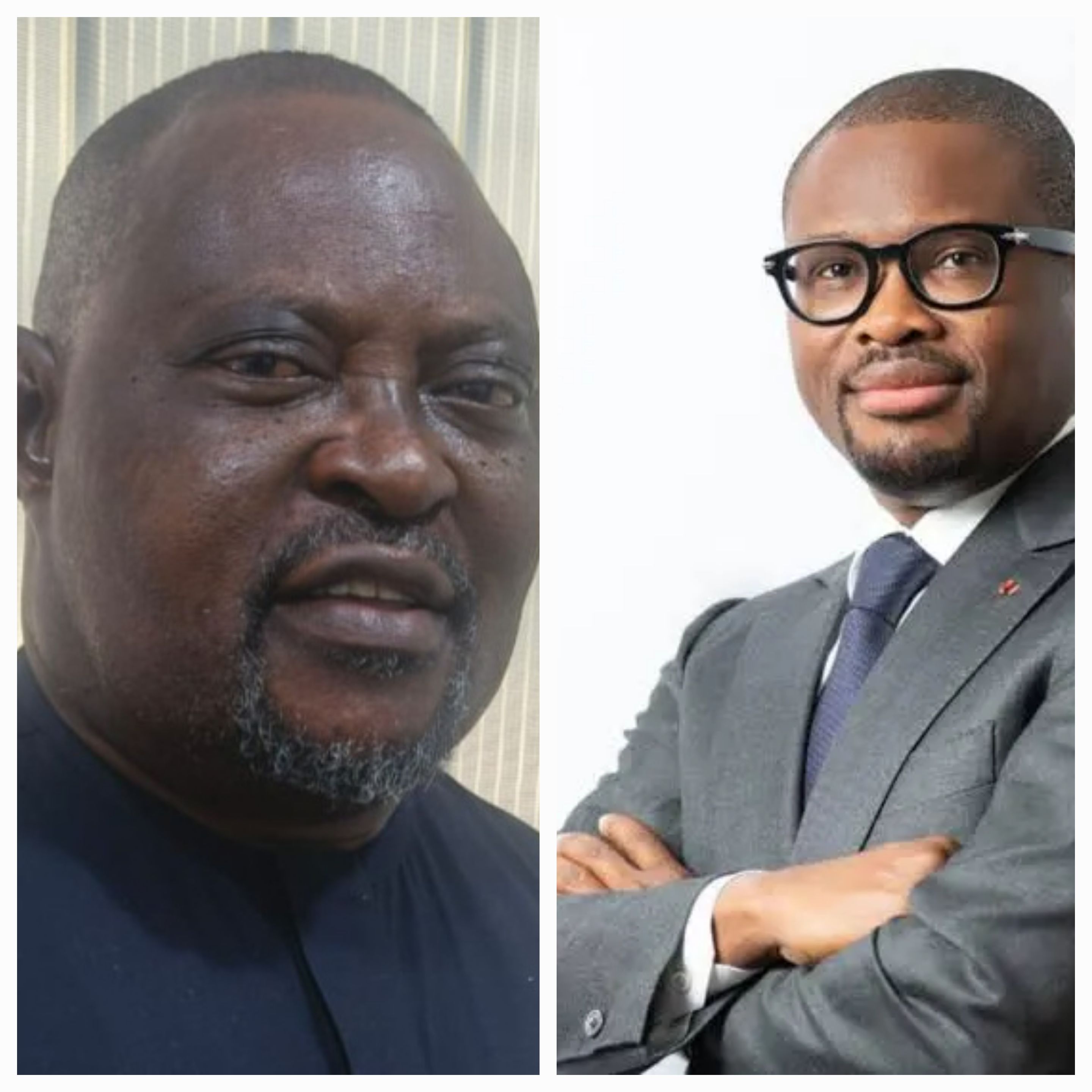
By Eric Elezuo
The Koumagnon Family and Allied Families of Seme-Kpodji, of the Republic of Benin, led by Monsieur Alberto Koumagnon, has declared their unflinching support for the candidacy of Romuald Wadagni as he steps out on Sunday to vie for the presidential seat of the Republic of Benin.
In statement of declaration, the families observed that Wadagni is propelled by a ‘vision embodied in this ambitious, realistic project, resolutely focused on the future of our country’.
The declaration is presented in full:
DECLARATION OF SUPPORT BY THE GREAT KOUMAGNON FAMILY AND ALLIED FAMILIES OF SÈMÈ-KPODJI FOR CANDIDATE ROMUALD WADAGNI

The great KOUMAGNON family and allied3 families of Sèmè-Kpodji, deeply committed to the values of peace, progress, and development, followed with particular interest the presentation, on Saturday, March 21, 2026, of the “Further Together” (Plus loin ensemble) social project by our dear candidate, President Romuald WADAGNI.
Following this important political event, and gathering on this day, 04/04/2026, we wish to express our full support for the vision embodied in this ambitious, realistic project, resolutely focused on the future of our country.
From the outset, we, descendants of the KOUMAGNON family and allied families, commend the enlightened leadership of President Patrice TALON who, faithful to his commitment to building a modern and prosperous Benin, has been able to propose to the presidential majority a competent, credible candidate who brings hope for consolidating achievements.
In this dynamic of continuity and progress, the candidacy of President Romuald WADAGNI is fully in line with the continuation of the structural reforms undertaken over several years in all sectors, particularly in infrastructure.
In this regard, we recognize and commend the many achievements of the government, especially road infrastructure, which has significantly improved mobility and living conditions for the populations of the communes of Sèmè-Kpodji and surrounding areas.
Moreover, these remarkable efforts reflect a constant determination to connect localities, stimulate economic exchanges, and sustainably strengthen the attractiveness of our territories.
Building on these achievements and firmly oriented toward the future, we are convinced of the relevance of the “Further Together” project.
Therefore, the great KOUMAGNON family and allied families of Sèmè-Kpodji give their firm, committed, and unconditional support to candidate Romuald WADAGNI, as well as to his running mate, Mrs. Mariam Chabi Talata Zimé Yérima.
In the same spirit, we call on all daughters and sons of Sèmè-Kpodji, as well as all citizens committed to peace and development in our country, Benin, to mobilize massively in support of this hopeful momentum by turning out in large numbers on April 12.
We also wish to assure our dear candidate of our commitment to mobilize widely to ensure a high voter turnout in the commune of Sèmè-Kpodji.
Together, let us continue the efforts undertaken.
Together, let us consolidate our achievements.
Together, let us go further.
Long live Benin on its path toward progress!
Long live the WADAGNI–TALATA ticket!
Thank you.
Done at Sèmè-Kpodji, on 04/04/2026
The great KOUMAGNON family and allied families
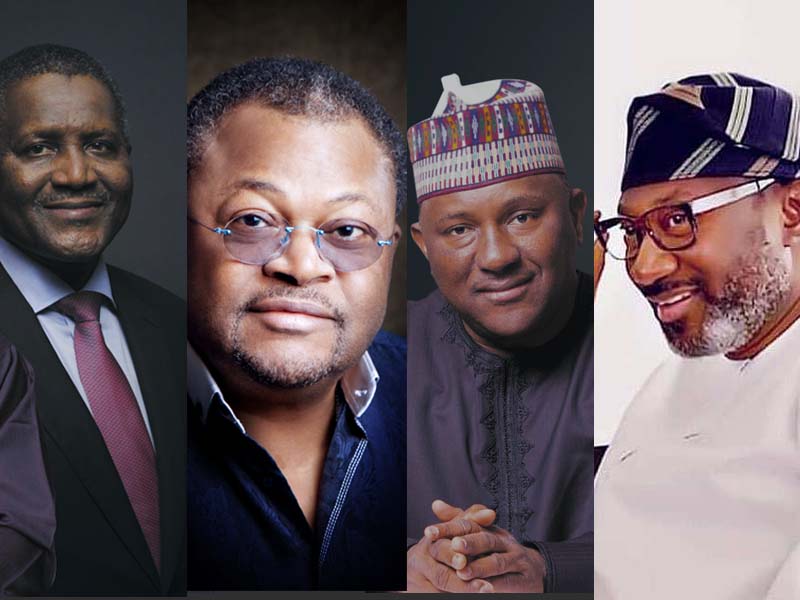
By Eric Elezuo
With a loud ovation, Nigerians reveled at the announcement of its billionaire-quartet, Aliko Dangote, Mike Adenuga, Femi Otedola, and Abdulsamad Rabiu as among Africa’s richest individuals in 2026.
The four has constantly put Nigeria in the limelight, ensuring that Forbes is never complete without a mention of the giant of Africa, Nigeria
According to the latest Africa Billionaires ranking released by Forbes, Dangote retained his position as Africa’s richest man, with an estimated net worth of $28.5 billion. He added about $4.6 billion to his fortune over the past year, largely driven by the strong performance of Dangote Cement on the Nigerian Exchange Limited.
Telecommunications magnate Adenuga also retained his place among Africa’s billionaires.
The founder of Globacom and chairman of Conoil Producing remains one of Nigeria’s most influential entrepreneurs with diversified interests spanning telecoms, oil and gas, and banking.
Otedola, chairman of Geregu Power Plc, also featured on the list despite a slight dip in his wealth over the past year. Forbes estimates that the billionaire investor lost about $200 million following the sale of a majority stake in the power generation company at a discount to its market price.
The increase in Rabiu’s net worth was largely driven by the performance of BUA Cement, whose shares rose 135% over the past year, outperforming the broader rally on the Nigerian stock market.
The 23 billionaires on the continent are now worth a combined $126.7 billion, representing a 21% increase from 2025 after they collectively added $20.3 billion to their net worth.
Across the continent, billionaire fortunes were boosted by strong equity market performance, record corporate profits, and improving currency stability in several African economies.
South Africa remains the highest number of billionaires on the list, with seven individuals, followed by Egypt with five, Nigeria with four, and Morocco with three.
Here is a peep into the world of Nigeria’s Billionaire-Quartet.
ALIKO DANGOTE

For the President of the Dangote Group, Alhaji Aliko Dangote, and his multifaceted group, playing second fiddle has never been an option. Both the enterprise and the entrepreneur have maintained market leadership to the extent that Dangote himself has appropriated the richest man in Africa status to himself, and has hardworkingly sustained the tag for as long as anyone can remember.
Since 2014, when Forbes magazine named him the world’s 23rd billionaire, jumping 20 spots on the scale from his previous 43rd position among the elite club of the world’s richest people. Aliko Dangote has not looked back, winning back to back the accolade among African billionaires, and never slipping from the world ranking.
Again, as expected, the famous Forbes has proclaimed the soft spoken businessman as Africa’s richest man for the 12th time in a row; a proof that the name Dangote is synonymous with consistency. He is a businessman, who understands that no man rest on his oars if turnovers have to continue to turn over. With marked differentiation, he has demystified the business terrain, and proved that if it can be done, then it must done. His establishment of the humongous fertilizer and sugar plants and the ambitious refinery in Lekki, Lagos, Nigeria, are testimonies of the trajectory of one who knows his onions.
Worth $13.4 by the last Forbes ranking, which sustained him as the richest man in African for the 11th time, entrepreneur extraordinaire has the following points to his name:
- Aliko Dangote, Africa’s richest person, founded and chairs Dangote Cement, the continent’s largest cement producer.
- He owns 85% of publicly-traded Dangote Cement through a holding company.
- Dangote Cement has the capacity to produce 48.6 million metric tons annually and has operations in 10 countries across Africa.
- After many years in development, Dangote’s fertilizer plant in Nigeria began operations in mid-2021.
- Dangote Refinery, under construction since 2016, hit the public space since 2024, and is one of the world’s largest oil refineries, with a capacity of 650,000 barrels per day production.
The above and many has remained the factors that have made it easy for the billionaire to remain in the top echelon of world’s money men, and the supremo among African businessmen. Little wonder he is one of the few recipients of the GCON national honours reserved for top politicians of vice president ranking and top government appointees.
Born in Kano in 1957, Dangote proudly shuttles between three wonderful tags as the richest man in Nigeria; the richest man in Africa and the richest Black man in the world. He has paid his dues, and mankind is the better for it.
Releasing impacts, Aliko Dangote Foundation (ADF), the private charitable foundation of Alhaji Aliko Dangote. Incorporated in 1994, as Dangote Foundation, is saddled with the mission to enhance opportunities for social change through strategic investments that improve health and wellbeing, promote quality education, and broaden economic empowerment opportunities. 20 years later, the Foundation has become the largest private Foundation in sub-Saharan Africa, with the largest endowment by a single African donor.
The primary focus of ADF is child nutrition, with wraparound interventions centered on health, education and empowerment, and disaster relief. The Foundation also supports stand-alone projects with the potential for significant social impact.
The Foundation works with state and national governments and many highly reputable international and domestic charities, non-governmental organizations and international agencies to advance its humanitarian agenda.
In one of its biggest collaboration to date, Aliko Dangote Foundation started working in partnership with the Bill and Melinda Gates Foundation and key northern State Governments in Nigeria from 2013 to eradicate polio and strengthen routine immunization in Nigeria.
Worthy of praise is the fact that nearly a decade, the Foundation has spent over N7 Billion in the course of feeding, clothing and the general welfare of the Internally Displaced Persons in the Northeast.
To make his host communities feel at ease, and the impact of his presence, Dangote has embarked on an initiative to provide further support to improving educational systems in Ibeju-Lekki and Epe locality. The educational support initiative is a tripartite programme consisting of scholarship, capacity building for teachers and school infrastructure projects.
In addition, Scholarships have been awarded to 52 secondary school students whilst some financial support was provided to their parents and/or guardians. Tertiary students will be included in the next batch of the scheme.
Furthermore, about 100 teachers, principals and school administrators were trained in teaching techniques for the 21st century. After which they were monitored in class on how they were using the skills acquired.
There is hardly any sector that has not felt the milk of human kindness running through Aliko Dangote; the military, media, politicians, governments across boards and more.
Dangote is surely an asset to this world!
As at today, there is no space for slowing down for Dangote as he continues to trudge on, creating firsts after first for himself and for humanity. He is blessed with three wonderful daughters, who have followed the rewarding footprints of entrepreneurship, and is looking forward to hitting the richest man in the world status. And very soon too.
ABDULSAMAD RABIU

Abdulsamad Rabiu’s consistent climb on the ladder of success has become phenomenal. The unassuming Chairman at BUA Group has become a study in entrepreneurial discipline, focus, philanthropy and intentional sacrifice. But what can actually be said of a man who has steadily evolved as one of Africa’s biggest investors, in fact, the biggest in the order of reckoning on the Nigerian Exchange. He has graciously used his BUA Foundation and the phenomenal Abdul Samad Rabiu Africa Initiative to not only affect lives, but ensured that the people of the world, especially his native Nigeria, live in better comfort. The Chairman/Chief Executive Officer, Bua Group, makers of quality cement, sugar, flour among other wonderful household items has been a epitome of enterprise. He is presently by divine and entrepreneurial orchestration one of Nigeria’s richest investor. He is also the third richest man in the Africa, by Forbes calculation behind Nigeria’s Aliko Dangote, South African billionaire, Johann Rupert.
In 2023, via a list compiled by Billionaires in Africa revealed the rankings on the Nigerian Exchange, NGX, showing that Abdulsamad Rabiu, the billionaire businessman and industrialist, overtook Aliko Dangote as the richest investor in the country, albeit temporarily.
According to data tracked by Billionaires.Africa, Rabiu’s holdings in his publicly-listed businesses on the local bourse were valued at an impressive $6.01 billion, making him the only investor with an investment portfolio worth over $6 billion then. This is a feat that can only be achieved through wholesome business acumen and dedication.
Born August 4, 1960, in Kano, to one of Nigeria’s foremost industrialists in the 1970s and 1980s, Khalifah Isyaku Rabiu, Abdul Samad Isyaku Rabiu CON is a perfect combination of many things in one.
It was in his native Kano that he kick-started his academic pursuit, carousing through elementary education with ease as a gifted child, and obtained his First School Leaving Certificate. He was later admitted into the Federal Government College, Kano, where he had his secondary education, and gradually with honours.
With a combination of fate, brilliance and determination, Abdulsamad was catapulted to Capital University in Columbus, Ohio, where he studiously studied Economics, and acquired his tertiary education before returning to Nigeria, all before his 24th birthday, to oversee his family business. He was that much sought after, and highly brilliant, and considered capable of holding fort for his father, who was being detained by the administration of General Muhammadu Buhari over matters concerning import duties.
In 1988, just after learning the ropes of entrepreneurial excellence, Abdul Samad Rabiu established BUA International Limited, for the sole purpose of commodity trading. The company followed after the footsteps of his father, and imported rice, edible oil, flour, iron and steel.
In 1990, having exhibited the character worthy of a world class entrepreneur, and the ability to execute classical projects, Rabiu’s BUA was invited by the government, which owned Delta Steel Company to supply its raw materials in exchange for finished products. This provided a much-needed leverage for the young company, and consequently expanded further into steel, producing billets, importing iron ore, and constructing multiple rolling mills in Nigeria.
Rabiu’s dexterity showed further a few years later, when the company acquired Nigerian Oil Mills Limited, the largest edible oil processing company in Nigeria, and there erupted the company’s and BUA’s influence and care over the people in the provision of affordable edible oil. His passion to see people excel in comfort has continued to make him churn out one great tiding after another, and endearing him in the hearts of the generality of the public.
A man with a vision for tomorrow, Rabiu, in 2005, started two flour-milling plants, in Lagos and in Kano, and by 2008, had broken an eight-year monopoly in the Nigerian sugar industry by commissioning the second-largest sugar refinery in sub-Saharan Africa. This was a feat only a bravest of hearts could wroth. As a result, in 2009, the company went on to acquire a controlling stake in a publicly-listed Cement Company in Northern Nigeria and began to construct a $900 million cement plant in Edo State, completing it in early 2015. Rabiu’s passion for expansion is unequalled.
BUA Group has since concentrated and excelled in manufacturing, infrastructure and agriculture and producing a revenue in excess of $2.5 billion. This is in addition to being the chairman of the Bank of Industry (BOI).
The Group, in 2019, announced plans to merge its privately owned BUA Cement with the publicly traded Cement Company of Northern Nigeria Plc (CCNN), to create Nigeria’s second largest cement producer thereby consolidating the grip on the cement market and breaking its monopolistic status.
MICHAEL ADENUGA

Michael Adenuga Jr. is one entrepreneur, who has proved over the decades that he is not the regular billionaire. He is of the stock that is not regulated by stock market figures, but by liquid cash. And that explains why his wealth and net worth supercedes whatever figures churned out by any institution, or any position he is placed in the billionaires’ list.
Adenuga is, for all intent and purpose, in a world and class of his own. This is because his business trajectory and personal philosophy are uniquely his, and therefore worthy of emulation.
Sitting atop one of the most cherished and subscribed network, Glo, Adenuga has not only inspired lives, but practically lifted not a few to enviable heights.
Known for his diverse investments in oil, gas, telecommunications, banking, construction, and real estate, Mike Adenuga notably shook up the African telecom sector with the launch of his telecommunications network, Globacom Limited (Glo), in August 2003.
Also referred to as The Guru, Adenuga is like the proverbial Iroko tree, who is unlike any other. In terms of humility, pedigree, magnanimity, wealth and portfolio of investments, he is one of a kind.
“As of Jan. 1, 2024, Forbes, the U.S.-based business magazine renowned for tracking global billionaire fortunes, estimated Adenuga’s wealth at $6.1 billion. By Dec. 31, 2024, his net worth had grown to $6.8 billion, ranking him as the 448th richest person in the world. Adenuga’s wealth is anchored in his control of Globacom, Nigeria’s second-largest mobile telecommunications and digital services provider, which boasts over 60 million subscribers,” according to Billionaires.Africa
Adenuga is fondly remembered for launching operations on Per Second Billing, thus ensuring subscribers only pay for actual time spent on a call instead of the practice of billing customers N50 per minute even when the call cuts off at just 2 seconds. It also crashed the cost of SIM card from N30,000 to N6,999 and later N100, thereby making it possible for low income earners, students and artisans to own GSM lines today. It is now one of the most recognizable brands across the continent.
Love him or hate him, you can’t fault him. He is an enigma. A definition of class, humanity, intellectual discipline and entrepreneurial acumen. He is the very epitome of when the going gets tough, the tough gets going. And of course, a reference point and research material when it comes to philanthropy. Dr. Mike Adenuga doesn’t give little or give just for giving sake. He gives to sort and solve a lasting challenge. Yes, he is Dr. Michael Adenuga Jr., ‘The People’s Billionaire,’ and without introduction, the brain behind the increasingly success stories recorded at the Globacom Group, among his many other conglomerates and subsidiaries.
Known by many appellations, such as the Spirit of Africa, a rare gem, walking kindness, moon amongst the stars, owner of wealth beyond money, the mighty oak, the man with the gift of Foresight, the Bull, Pillar of sports among a whole lot more, Adenuga’s image looms large. He appears little, and achieves so much more. Hardly seen, but gracefully and consistently felt.
Born on April 29, 1953 to Oloye Michael Adenuga Sr and Chief (Mrs) Juliana Oyindamola Adenuga, the Yeyeoba of Ijebuland, Otun Gbadebo of Ikija and Iyalaje of Ijebu-Igbo, Dr. Mike Adenuga Jnr was not a silver spoon kid, but his parents were comfortable.
The indigene of Oru, Ijebu-Igbo, Ogun State was born and schooled in Ibadan. He attended the famous Ibadan Grammar School. He had his university education in the United States. He majored in Business administration with emphasis on Marketing.
While in school, to augment the allowance sent by his parents, he worked as a cabbie (Taxi Driver), putting in many hours of work a week. This culture of back-breaking hard work shaped him for his ambitious business adventures later in life.
Dr. Mike Adenuga Jr is married to Mrs. Titi Adenuga (nee Adewale). She provides the comfort and stability that such an incredibly busy man requires. His children are Oyin, Babajide (Bobo), Paddy, Bella, Eniola, Bimbo, Sade and ‘Niyi Jnr. He also has grandchildren.
FEMI OTEDOLA

Billionaire businessman, and Chairman, Geregu Power Plc, simply addressed as Femi Otedola (CON), is a focused and determined man. He made his choice from day one, and has refused to be derailed. This explains his prolific nature in the world of entrepreneurship, which has directed his life.
One thing is very obvious before all and sundry, and that is the fact the dotting father of four adorable children is really an Epicurus son, and has no place for half measures when it comes to giving himself, his business and of course everyone around him the good life.
It won’t be forgotten in a hurry how the philanthropist spent a whopping Three Million Pounds to rent a cruise boat in celebration of his 60th birthday in 2022.
Born on November 4, 1962, in Ibadan to the family of the late Sir Michael Otedola, a former governor of Lagos State, Otedola is a definition of everything good, positive and encouraging. He has lived his 60 years representing the very essence of living, affecting lives as a philanthropist, developing careers and manpower as a businessman, industrialists and entrepreneur, and raising biological children, who has stood their own in the society. There is hardly anywhere this tall, handsome phenomenon of a personality can be faulted.
The billionaire businessman started his education at the University of Lagos Staff School before attending Olivet Baptist High School from where he was admitted into Obafemi Awolowo University in 1980. He graduated in1985.
A former chairman of Forte Oil Plc, the Chancellor of St Augustine University, Epe, Lagos, is the founder of Zenon Petroleum and Gas Ltd, and the owner of a number of other businesses across shipping, real estate and finance. He has recently invested in power generation as part of the liberalisation of the sector in Nigeria.
The author of the bestseller, MAKING IT BIG, who has homes in Lagos, Abuja, Dubai, London and New York City has a much impressive existence since he set out to take the bull by the horns in the field of enterprise. This is as chronicled by wikipedia. In 2003, having identified an opportunity in the fuel retail market, Otedola secured the finance to set up Zenon Petroleum and Gas Ltd, a petroleum products marketing and distribution company.
As owner and chairman of Zenon, in 2004 he invested N15 billion in downstream infrastructure development and acquired storage depots at Ibafon, Apapa as well as four cargo vessels, amounting to a combined total storage capacity of 147,000 metric tonnes. The same year he acquired a fleet of 100 DAF fuel-tanker trucks for N1.4 billion.
By 2005, Zenon controlled a major share of the Nigerian diesel market, supplying fuel to most of the major manufacturers in the country including Dangote Group, Cadbury, Coca-Cola, Nigerian Breweries, MTN, Unilever, Nestle and Guinness.




Nation Building Reimagined: Integrated Principles and Strategies for Sustainable Growth

Dear CDS, NSA, Your Prodigal Sons, Brothers Have Killed General Braimah

Voice of Emancipation: Lessons from the Iran/USA War

Ovation @30: A Triumph of Vision, Courage and African Excellence

ADC National Convention: To Be or Not to Be?

Israel Questions Pakistan’s Credibility in Mediating over US-Iran Ceasefire Agreement

Osun 2026: INEC Planning to Recruit APC Members As Electoral Officials, Lawmakers Allege

Trump Delays Iran’s Strike by 2-Weeks As Pakistani Leaders Intervene

Benin Republic 2026: Romuald Wadagni, The President in Waiting

FG Expels US Missionary Alex Barber

Again, Iran Blocks Strait of Hormuz, Alleges Ceasefire Violation

Koumagnon Family Pledges Unalloyed Support for Romuald Wadagni As President
Prominent ADC Leaders Storm INEC Hqrs in Protest Against Dictatorship
Nation Building Reimagined: Integrated Principles and Strategies for Sustainable Growth
-
 World4 days ago
Trump Delays Iran’s Strike by 2-Weeks As Pakistani Leaders Intervene
-
 Featured3 days ago
Benin Republic 2026: Romuald Wadagni, The President in Waiting
-
 National4 days ago
FG Expels US Missionary Alex Barber
-
 Middle East3 days ago
Again, Iran Blocks Strait of Hormuz, Alleges Ceasefire Violation
-
 Boss Picks3 days ago
Koumagnon Family Pledges Unalloyed Support for Romuald Wadagni As President
-
 News4 days ago
Prominent ADC Leaders Storm INEC Hqrs in Protest Against Dictatorship
-
 Opinion23 hours ago
Nation Building Reimagined: Integrated Principles and Strategies for Sustainable Growth
-

 World3 days ago
Trump Accuses Nigeria of Spreading Fake News on Iran Ceasefire Deal