Connect with us

Headline

Pendulum: Will Otedola Mythology Haunt the APC in Lagos State?

Published

on

By Dele Momodu

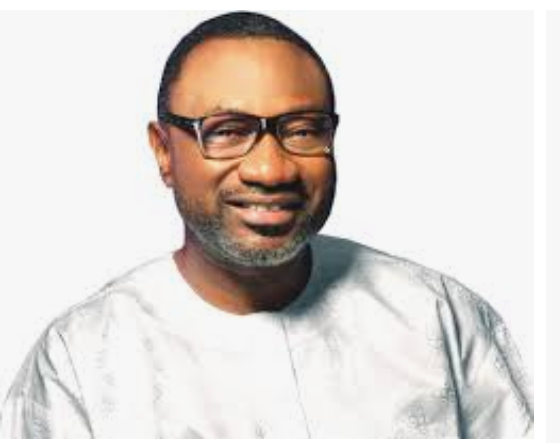
Fellow Nigerians, if you are under the age of 30, you may not readily understand what I have called the “Otedola mythology” in this heading. Let me, therefore, take little time to explain, or describe, the meaning. Otedola is a Yoruba name that translates into English as conspiracy turns to fortune. What was expected to be a negative development favoured someone, inadvertently. This was the case of Sir Michael Otedola, the father of billionaire oil baron, Femi, whose name is sometimes transmuted and translated, by his acolytes, as Otedollar – someone who prints US Dollar, because of his fabled wealth.

It was Femi, who is credited with dragging his father into politics. According to available information, Femi had a brainwave one day and suggested to his dad to go into politics and contest for the seat of Governor of Lagos State because he saw an opportunity for him given the state of affairs at the time.

Sir Michael Otedola, who was a revered elder of the National Republican Party, however, did not seem to have any chance of winning.

One, age was not on his side. He was born in 1926 and was 66 years old when he entered the race in 1991. By the standards of those days, he was considered too old – those clamouring that the young should take over the reins of power in Nigeria, under the ‘Not too young to Rule Platform – should take a view from the politics of that era which was meant to be for the younger generation with the tacit support of the older generation like Sir Michael.  Two, he was never known to be an accomplished politician. Three, he was a man of modest means who could not afford the stupendous funding required. Four, he had two formidable youthful politicians, Dapo Sarumi and Femi Agbalajobi to contend with and there was no way he was going to defeat either of the two on any regular day.

But man proposes and God disposes. Agbalajobi and Sarumi both targeted the Social Democratic Party (SDP) ticket. Agbalajobi had the avuncular support of former Governor Alhaji Lateef Jakande who was like the Alpha and Omega of Lagos State at the time, but he was resisted. No one wanted an imposition and Jakande was challenged by Dapo Sarumi and his group of newbreed politicians. Both of them fought gallantly for the ticket and neither was ready to step down for the other. The stalemate became so rough that their party had to step in by disqualifying both of them. Another popular young politician, Yomi Edu was then drafted in to replace the implacable duo. They were livid, and they and their supporters decided to sabotage their party.

In the other party was Sir Michael Otedola who had won the National Republican Party ticket.  As noted earlier, the bitterness and lack of cohesion in SDP was so bad that those who lost out in the party decided to join forces with the NRC candidate against their own man, Yomi Edu. As to be expected, a house divided against itself would naturally collapse. The underdog, Sir Michael Otedola thus gathered strength and momentum and the unthinkable soon happened. Sir Michael won the race to the shock of most onlookers. Sir Michael reigned from January 1992 to November 1993 when General Sani Abacha struck and truncated that democratic government. The rest is history.

History seems to have a knack of repeating itself and this tale was reawakened early this week by the intractable squabbles in the same Lagos State, this time by a party in power only as a result of a slender lead. There had been rumours that the political godfather in Lagos, Asiwaju Bola Ahmed Tinubu, and his political godson, the Governor of Lagos State, Akinwunmi Ambode, were at loggerheads. Many had hoped that it was a joke or one of those usual beer parlour rumours. And if it was for real, they had hoped it would be resolved eventually in favour of Ambode, as it was in the case of Ambode’s erstwhile predecessor – Tinubu versus Governor Babatunde Raji Fashola when Fashola sought a second term in office. I wrote an article at that time advising both of them to join hands together or risk losing Lagos to their opponents because, according to me, their marriage was made and consummated in heaven. Somehow that ugly situation was reportedly amicably settled then. However, later events were to demonstrate that any resolution had merely been on the surface as Tinubu and Fashola now appear to be intractable foes. Their situation is akin to what the Yoruba’s will describe as “ara o ro okun ara o ro adie” (the hen perches on a rope but no reprieve for the hen or the rope).

It is therefore very strange that given the antecedents, and the subsequent events, the same situation has come reincarnated with bigger force. And it is very unfortunate. It is not immediately clear what brought about the current imbroglio which if not properly managed could spell doom and total disaster for the APC in Lagos, with a spiralling effect at the Federal level. Everyone was relieved when the hardworking and visionary Governor of Lagos State, Akinwunmi Ambode, picked his form and seemed to have no challenger whatsoever in his party. Prior to that, the Governor had reached out to many stakeholders, including captains of industries from the State and elsewhere. One of such Lagosians was the billionaire businessman, Femi Otedola who coincidentally hails from Epe, the same town as Governor Ambode. Otedola apparently has his gaze concentrated on becoming Governor of Lagos State, like his dad, sometime in the future. Indeed, Otedola had mentioned privately to his inner circle of friends that he would like to contest in 2023. Why not run in 2019? Otedola said he had given his word to Governor Ambode not to run against him but, with a caveat, that if he fails to secure his party ticket he would run against any other APC candidate in 2019.

Anyway, back to Ambode, Tinubu and the 2019 APC ticket. Our relief and joy were however short-lived and dramatically and drastically cut short. The next day, two other giants of the APC stepped out of the wings to challenge Governor Ambode for the APC ticket. The first of the shockwaves that rippled through APC and Lagos State was the spectacular orchestrated declaration of Babajide Sanwo-olu, erstwhile Commissioner in the Tinubu and Fashola administrations before being appointed as Managing Director of Lagos State Property Development Corporation in May 2016 by Governor Ambode, the very man he seeks to unceremoniously unseat.  Sanwo-olu is a well-known veritable disciple of Asiwaju. He would not dare to make this opening gambit, unless he had the consent of Asiwaju to go for it. This was what made people believe that there was truly a rift of monumental proportions. Almost simultaneously, a three-way split loomed in the APC as Dr. Obafemi Hamzat announced that he was also running for the prized position of Governor of Lagos State. Hamzat, a prodigious Information Technology talent was Commissioner of Science and Technology from the Tinubu administration in 2005 to the end of the first Fashola Administration in 2011. In 2011, he became Commissioner for Works and Infrastructure under Fashola, in his second term, a post he held until the end of Fashola’s tenure in 2015. Since Fashola moved to the Federal level as Minister of Power, Works and Housing, Hamzat has joined him as an Adviser. As to be expected Hamzat is a strong loyalist of Fashola who is widely known to be disaffected with Tinubu despite the appearances that they keep up in public.

It is rumoured that there is a clique of current Federal Government Ministers and APC Governors who are intent on challenging the supremacy of Asiwaju Tinubu in South-West Nigeria and are intent on taking him down a peg or two. They do not support the assertion that he is leader of the Yorubas. Hamzat’s announcement that he will be running as an APC candidate for Governor of Lagos State appears to support legend that Tinubu has major problems on his hands even as he seeks to topple and remove Ambode from the Lagos State Government House. Tinubu appears to be facing a battle on two flanks from Ambode and Hamzat which is causing consternation not only in the Tinubu camp, but also in the ranks of the APC stalwarts.

This unnecessary and unimagined debacle was what led to the hoopla this week when news broke that Otedola had accepted to fly the flag of PDP since it had become obvious that Tinubu has dumped his beloved godson and there was a double schism in the APC. The emergence of a colossal gladiator like Otedola raises the stakes in the Lagos political conundrum several notches higher. It is now not simply a case of inter-party feuding, but also one of strong intra-party contest that may break the otherwise seemingly unbreakable back of APC’s camel

I have spoken to Otedola who confirmed that he has reached agreement with several key members of Lagos PDP to offer him the PDP gubernatorial ticket and he has accepted in principle whilst awaiting the outcome of the APC primaries which will take place before the PDP primaries. However, he said he was not in a hurry to make any open declaration. He would keep his options open because there were conflicting reports of Ambode and Tinubu reconciling their differences, and he would not break his promise to his kinsman, Ambode as a matter of honour and integrity.

The news of Otedola’s interest in running against the apparently Tinubu anointed APC candidate, Babajide Sanwo-olu, ignited fire, and went viral everywhere. The APC National Secretariat was said to be critically worried and troubled by what raises the spectre of history repeating itself, if Otedola contests and wins the election as a result of APC fighting a corrosive war of attrition. Otedola has all the attributes that his father lacked which makes him a very formidable opposition. He is also well loved and respected in Lagos State. The populace know that he is wealthy enough not to dip his hand into the Treasury as most politicians are wont to do.  He has also promised to recreate Lagos State into an international cosmopolitan city which will rival similar cities in the world. His vision is expansive. He does not see any reason why the Lagos landscape should not be filled with skyscrapers and other scenic attractions as other famous municipalities of the world.

That Otedola may well have his wish and contest on this occasion is becoming ominous. Activities from the Tinubu-Sanwo-olu camp appear unrelenting. As at the time of writing this article, Sanwo-olu is going on with his plans as scheduled. He has announced plans to have a mega rally tomorrow, Sunday, September 16, 2018. It is believed that all efforts to placate Tinubu may have failed abysmally, the reason for Sanwo-olu’s renewed confidence in going ahead with his campaign.

Governor Ambode is clearly in a big dilemma. It is not clear, and very doubtful, that he can win the APC ticket, on his own without serious intervention from Tinubu. Despite the overwhelming deluge of support from many political parties, it is not certain if the Governor would want to risk decamping to any other party, especially PDP, and if he would be able to win enough votes to retain his exalted position in any other party. Indeed, such a decision by Ambode would significantly play into the hands of PDP which needs APC to lose just a few hundred votes to lose the next election based on the outcome of the 2015 gubernatorial elections.

Lagos is currently in limbo and floating while awaiting the decision of the warriors and their godfathers and sponsors. The possibility of another Sir Michael Otedola scenario should not be discountenanced or totally ruled out. Otedola is not joking about his ambition at all. As he has indicated to me, he has his plans for an election well mapped out and he is ready to hit the ground running, whenever the coast becomes clearer, and it is evident that Ambode is totally out in the cold and has been hung out to dry. But even if Otedola decides to chicken out, there are big candidates hovering in the wings in the opposition party. They include former PDP candidate, Jimi Agbaje, who has tried but lost twice. He is a fine gentleman with the discipline and diligence to continue with the good works of the Ambode era, whilst charting his own course. There is also a member of the Council of Elders, Deji Doherty, a relatively young and popular businessman and hospitality giant who has wanted to be governor for some time now.

APC itself has Femi Hamzat, son of a great political family, eyeing the seat of Governor of Lagos. No one should write off any of these fine distinguished and hard-working men. They all come with fantastic resume. If the Governor is totally frustrated, the game may open up and become an all-comers affair.

The world is watching how this game would end. Good luck to Lagos and Lagosians.


Continue Reading
Click to comment

Leave a Reply

Your email address will not be published. Required fields are marked *

Headline

Opposition Parties Reject 2026 Electoral Act, Demand Fresh Amendment

Published

on

By

Opposition political parties have rejected the 2026 Electoral Act recently passed by the National Assembly, which President Bola Tinubu swiftly signed into law.

The parties called on the National Assembly to immediately begin a fresh amendment process to remove what they described as “all obnoxious provisions” in the law.

Their position was made known at a press briefing themed “Urgent Call to Save Nigeria’s Democracy,” held at the Transcorp Hilton Hotel in Abuja on Thursday.

In a communiqué read by the Chairman of the New Nigeria Peoples Party (NNPP) Ahmed Ajuji, the opposition leaders stated:

“We demand that the National Assembly immediately commence a fresh amendment to the Electoral Act 2026, to remove all obnoxious provisions and ensure that the Act reflects only the will and aspiration of Nigerians for free, fair, transparent and credible electoral process in our country. Nothing short of this will be acceptable to Nigerians.”

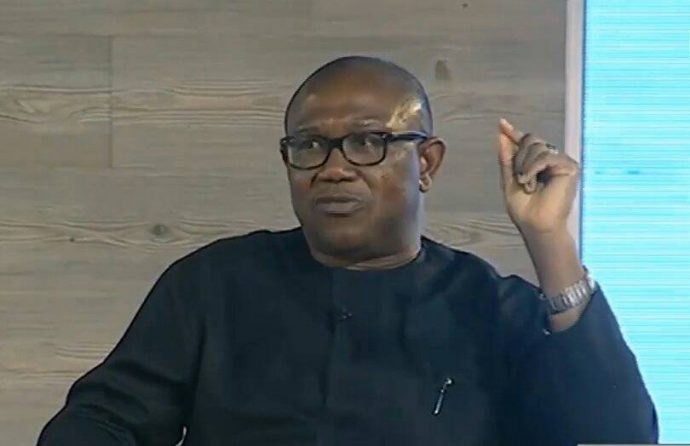
Some of the opposition leaders present in at the event include former Senate President David Mark; former Governor of Osun State, Rauf Aregbesola; former Vice President Atiku Abubakar; former Governor of Rivers State, Chibuike Rotimi Amaechi; and former Governor of Anambra State, Peter Obi, all from the African Democratic Congress (ADC).

The National Chairman of the New Nigeria Peoples Party (NNPP), Ahmed Ajuji, and other prominent members of the NNPP, notably Buba Galadima, were also in attendance.

The coalition said the amended law, signed by Bola Tinubu, contains “anti-democratic” clauses, which they argue may weaken electoral transparency and public confidence in the voting system.

At the centre of the opposition’s concerns is the amendment to Section 60(3), which allows presiding officers to rely on manual transmission of election results where there is communication failure.

According to the coalition, the provision weakens the mandatory electronic transmission of results and could create loopholes for manipulation.

They argued that Nigeria’s electoral technology infrastructure is sufficient to support nationwide electronic transmission, citing previous assurances by officials of the Independent National Electoral Commission (INEC).

The parties also rejected the amendment to Section 84, which restricts political parties to direct primaries and consensus methods for candidate selection.

They described the change as an unconstitutional intrusion into the internal affairs of parties, insisting that indirect primaries remain a legitimate democratic option.

The opposition cited alleged irregularities in the recent Federal Capital Territory local government elections as evidence of what they described as a broader pattern of electoral compromise.

They characterised the polls as a “complete fraud” and said the outcome has deepened their lack of confidence in the ability of the electoral system to deliver credible elections in 2027.

The coalition also condemned reported attacks on leaders of the African Democratic Congress in Edo State, describing the incidents as a serious threat to democratic participation and political tolerance.

They warned that increasing violence against opposition figures could destabilise the political environment if not urgently addressed.

In their joint statement, the opposition parties pledged to pursue “every constitutional means” to challenge the Electoral Act 2026 and safeguard voters’ rights.

“We will not be intimidated,” the leaders said, urging civil society organisations and citizens to support efforts aimed at protecting Nigeria’s democratic system.

On February 18, 2026, President Bola Tinubu signed the Electoral Act (Amendment) 2026 into law following its passage by the National Assembly. The Act introduced several reforms, including statutory recognition of the Bimodal Voter Accreditation System and revised election timelines.

However, opposition figures such as Atiku Abubakar and Peter Obi have also called for further amendments, particularly over the manual transmission fallback clause, which critics say leaves room for manipulation.

The president said the law will strengthen democracy and prevent voter disenfranchisement.

Tinubu defended manual collation of results, questioned Nigeria’s readiness for full real-time electronic transmission, and warned against technical glitches and hacking.

The Electoral Act sparked intense debate in the National Assembly over how election results should be transmitted ahead of the 2027 general elections.

Civil society groups under the “Occupy NASS” campaign demanded real-time transmission to curb manipulation.

In the Senate, lawmakers clashed during consideration of Clause 60, which allows manual transmission of results if electronic transmission fails.

Senator Enyinnaya Abaribe (ADC, Abia South) demanded a formal vote to remove the proviso permitting manual transmission, arguing against weakening real-time electronic reporting.

The move led to a heated exchange on the floor, with Senate President Godswill Akpabio initially suggesting the demand had been withdrawn.

After procedural disputes and a brief confrontation among senators, a division was conducted. Fifteen opposition senators voted against retaining the manual transmission proviso, while 55 supported it, allowing the clause to stand.

Earlier proceedings had briefly stalled during clause-by-clause review, prompting consultations and a closed-door session.

In the House of Representatives, a similar disagreement came up over a motion to rescind an earlier decision that mandated compulsory real-time electronic transmission of results to IReV.

Although the “nays” were louder during a voice vote, Speaker Tajudeen Abbas ruled in favour of rescinding the decision, triggering protests and an executive session.

Continue Reading

Headline

AFP: How Tinubu’s Govt Paid Boko Haram ‘Huge’ Ransom, Released Two Terrorists for Kidnapped Saint Mary’s Pupils

Published

on

By

The Nigerian government paid Boko Haram militants a “huge” ransom of millions of dollars to free up to 230 children and staff the jihadists abducted from a Catholic school in November, an AFP investigation revealed Monday.

Two Boko Haram commanders were also freed as part of the deal, which goes against the country’s own law banning payments to kidnappers. The money was delivered by helicopter to Boko Haram’s Gwoza stronghold in northeastern Borno state on the border with Cameroon, intelligence sources told AFP.

The decision to pay the militants is likely to irritate US President Donald Trump, who ordered air strikes on jihadists in northern Nigeria on Christmas Day and has been sent military trainers to help support Nigerian forces.

Nigerian government officials deny any ransom was paid to the armed gang that snatched close to 300 schoolchildren and staff from St. Mary’s boarding school in Papiri in central Niger state on November 21. At least 50 later managed to escape their captors.

Boko Haram has not been previously linked to the kidnapping, but sources told AFP one of its most feared commanders was behind the mass abduction: the notorious jihadist known as Sadiku.

He infamously held up a train from the capital in 2022 and netted hefty ransoms for the release of government officials and other well-off passengers.

Boko Haram, which has waged a bloody insurgency since 2009, is strongest in northeast Nigeria.

But a cell in central Niger state operates under Sadiku’s leadership. The St. Mary’s pupils and staff were freed after two weeks of negotiations led by Nuhu Ribadu, Nigeria’s National Security Adviser, with the government insisting no ransom was paid. Nigeria’s State Security Service flatly denied paying any money, saying “government agents don’t pay ransoms”.

However, four intelligence sources familiar with the talks told AFP the government paid a “huge” ransom to get the pupils back. One source put it at 40 million naira per head – around $7 million in total.

Another put the figure lower at two billion naira overall. The money was delivered by chopper to Ali Ngulde, a Boko Haram commander in the northeast, three sources told AFP.

Due to the lack of communications cover in the remote area, Ngulde had to cross into Cameroon to confirm delivery of the ransom before the first group of 100 children were released.

Nigeria has long been plagued by mass abductions, with criminals and jihadist groups sometimes working together to extort millions from hostages’ families, and authorities seemingly powerless to stop them.

Source: Africanews

Continue Reading

Headline

Unlawful Invasion: El-Rufai Drags ICPC, IGP, Others to Court, Demands N1bn Damages

Published

on

By

Former Governor of Kaduna State, Nasir El-Rufai, has slammed a ₦1 billion fundamental rights enforcement suit against the Independent Corrupt Practices and Other Related Offences Commission (ICPC) for what he claimed was an unlawful invasion of his Abuja residence.

El-Rufai, in a suit filed at the Federal High Court in Abuja, also listed the Chief Magistrate, Magistrate’s Court of the FCT, Abuja Magisterial District; Inspector-General of Police, and the Attorney-General of the Federation (AGF) as 2nd to 4th respondents respectively.

According to the suit filed through his lawyers, led by Oluwole Iyamu, El-Rufai prayed the court to declare that the search warrant issued on February 4 by the Chief Magistrate, Magistrate’s Court of the FCT (2nd respondent), authorising the search and seizure at his residence as invalid, null and void.

Security operatives had stormed and searched the former Governor’s residence in the ongoing investigations against him.

However, he argued in the case marked: FHC/ABJ/CS/345/2026, that the search was in violation of Section 37 of the Constitution, and urged the court to declare that the search warrant was “null and void for lack of particularity, material drafting errors, ambiguity in execution parameters, overbreadth, and absence of probable cause thereby constituting an unlawful and unreasonable search.”

In the suit dated and filed February 20 by Iyamu, ex-governor, who is currently under detention, sought seven reliefs.

He prayed the court to declare that the invasion and search of his residence at House 12, Mambilla Street, Aso Drive, Abuja, on Feb. 19 at about 2pm and executed by agents of ICPC and I-G, “under the aforesaid invalid warrant, amounts to a gross violation of the applicant’s fundamental rights to dignity of the human person, personal liberty, fair hearing, and privacy under Sections 34, 35, 36, and 37 of the Constitution.”

He urged the court to declare that “any evidence obtained pursuant to the aforesaid invalid warrant and unlawful search is inadmissible in any proceedings against the applicant, as it was procured in breach of constitutional safeguards.”

El-Rufai, therefore, sought an order of injunction restraining the respondents and their agents from further relying on, using, or tendering any evidence or items seized during the unlawful search in any investigation, prosecution, or proceedings involving him.

“An order directing the Ist and 3rd respondents (ICPC and I-G) to forthwith return all items seized from the applicant’s premises during the unlawful search, together with a detailed inventory thereof.

“An order awarding the sum of N1,000,000,000.00 (One Billion Naira) as general, exemplary, and aggravated damages against the respondents jointly and severally for the violations of the applicant’s fundamental rights, including trespass, unlawful seizure, and the resultant psychological trauma, humiliation, distress, infringement of privacy, and reputational harm.”

The breakdown of the ₦1 billion in damages includes “a N300 million as compensatory damages for psychological trauma, emotional distress, and loss of personal security;

“A ₦400 million as exemplary damages to deter future misconduct by law enforcement agencies and vindicate the applicant’s rights.

“A ₦300 million as aggravated damages for the malicious, high-handed and oppressive nature of the respondents’ actions, including the use of a patently defective warrant procured through misleading representations.”

He equally sought ₦100 million as the cost of filing the suit, including legal fees and associated expenses.

Iyamu argued that the search warrant was fundamentally defective, lacking specificity in the description of items to be seized, containing material typographical errors, ambiguous execution terms, overbroad directives, and no verifiable probable cause.

He added that the warrant violated Sections 143-148 of the Administration of Criminal Justice Act (ACJA), 2015; Section 36 of the Corrupt Practices and Other Related Offences (ICPC) Act, 2000, and constitutional protections against arbitrary intrusions and several other constitutional provisions.

“Section 146 stipulates that the warrant must be in the prescribed form, free from defects that could mislead, but the document is riddled with errors in the address, date, and district designation;

“Section 147 allows direction to specified persons, but the warrant’s indiscriminate addressing to “all officers is overbroad and unaccountable.

“Section 148 permits execution at reasonable times, but the contradictory language creates ambiguity, undermining procedural clarity,” he submitted.

Iyamu stated that the execution of the invalid warrant on Feb. 19 resulted in an unlawful invasion of his client’s premises, constituting violations of the rights to dignity (Section 34), personal liberty (Section 35), fair hearing (Section 36), and privacy (Section 37) of the Constitution.

He further argued that the search was conducted without legal justification and in a manner that inflicted humiliation and distress.

Evidence obtained without a valid warrant is unlawful and inadmissible, as established in judicial precedents such as C.O.P. v. Omoh (1969) NCLR 137, where the court ruled that evidence procured through improper means contravenes fundamental rights and must be excluded,” he said.

In the affidavit in support of the application, Mohammed Shaba, a Principal Secretary to the former governor, averred that on Feb. 19 at about 2p.m., officers from the ICPC and Nigeria Police Force invaded the residence under a purported search warrant issued on or about Feb. 4.

According to him, the said warrant is invalid due to its lack of specificity, errors, and other defects as outlined in the grounds of this application.

He said the “search warrant did not specify the properties or items being searched for.”

Shaba stated that the officers failed to submit themselves for search as provided by the law before proceeding with the search.

“That the Magistrate did not specify the magisterial district wherein he sits.

“That during the invasion, the officers searched the applicant’s premises without lawful authority, seized personal items including documents and electronic devices, and caused the applicant undue humiliation, psychological trauma, and distress.

“Now shown to me and marked as ‘EXHIBIT B’ Is the list of the items carted away.

“That no items seized have been returned, and the respondents continue to rely on the unlawful evidence.

“That the applicant suffered violations of his constitutional rights as a result, and this application is brought in good faith to enforce same,” Shaba said.

Source: Naijanews.com

Continue Reading

Trending