Connect with us

Headline

How Awolowo Bagged GCFR Without Being President

Published

on

By Eric Elezuo

The feverish acceptance of President Muhammadu Buhari’s declaration of the ever popular June 12 date as the new Democracy Day in place of the regular May 29 has remained a topic of discussion in literarily all the spaces of human endeavor  in Nigeria – political, social, economy, entertainment, creative and many more in recent days.

The desire to recognize the June 12 as a special day in Nigeria has been a topical issue since 1993 when on June 14 of the same year, the Military President, General Ibrahim Babangida went on national television to declare that the election credited as the fairest and freest in the history of Nigeria could no longer be adopted, and as a result everything concerning it hereby becomes null and void. In simple terms, Babangida annulled the election and suspended the release of further results.

However, as at the time of cancellation, about 14 out of the then 30 states of the Federation, had had their results released, with the candidate of the Social Democratic Party (SDP), Bashorun Moshood Kashimawo Olawale Abiola, popularly known as MKO, winning virtually all of them. His opponent, Alhaji Bashir Tofa, of the National Republican Convention (NRC), was trailing far behind.

Then the shocking annulment! It took the entire nation by surprise.

The politicians kicked, the civil society cried blue murder, the activists raised their voices to high heavens while the entire populace wondered aloud, yet the visible architect of the annulment, Babangida, did not change his mind. In the midst of the crises the generated afterwards, Abiola stood stoutly on the mandate given to him by the generality of Nigerians, and refused to be intimidated.

Three months after the annulment, Babangida ‘stepped aside’ as the hit from the civil society and activists became hotter. He handed over to a civilian technocrat, Chief Ernest Shonekan. Another three months was all he could stay in office before General Sani Abacha, on November 17, 1993 conducted a palace coup that ousted Shonekan. Abiola celebrated with Abacha in apparent belief that a Daniel had come to judgment, but that was not to be as Abacha proved to be the problem waiting to happen. He threw in to the dungeon as many that raised their voices in favour of the annulled June 12 1993 election.

On June 11, 1994 therefore, Abiola declared himself president in a speech he titled Enough is Enough at Epetedo area of Lagos. He went ahead to declare that he was forming a government of National Unity. He drew the displeasure of the military junta, and was subsequently arrested and incarcerated. He was never released until he died in custody on July 7, 1998 under the leadership of General Abdulsallam Abubakar. Recall that Abaha had died a month earlier on June 8, 1998.

Abubakar’s speedy return to democracy the following year did not douse the hunger for the return of June 12. This time to honour the champion of the date with recognitions not limited to declaring him as the winner of the annulled election, and then announcing him as a former President of the country.

One of the activists, who later became the Governor of Lagos State wasted no time in declaring June 12 the authentic democracy day in the state. He replicated the act in all the states in the west under the then Action for Democracy (AD), and beckoned on the Federal government to do same. The government of Chief Olusegun Obasanjo will not. Instead, the clamour was divided on party line with Peoples Democratic Party (PDP) states recognizing only May 29 and AD controlled states recognizing June 12.

But Abiola needed to be recognized, and much as subsequent governments understood, no one was willing to tamper with the May 29 date. Jonathan’s attempt to honour Abiola was rebuffed when he named the University of Lagos after the hero of democracy. He reversed his decision because majority of Nigerians, especially from the Southwest refused. But the clamour for a sustained recognition continued unabated.

Today, the government of Mohammadu Buhari has actualized the yearnings of democracy activists, and honoured Abiola with the honour of Grand Commander of the Federal Republic GCFR as well as made June 12 a national holiday to mark Democracy Day though May 29 remains handover day in order to avoid tenure elongation.

Buhari’s pronouncement elicited reactions from many quarters, especially from the judiciary which claimed it was illegal to honour Abiola with GCFR as it is only reserved for presidents and ex-presidents, and more especially that it is meant for living beings and can never be given post humously.

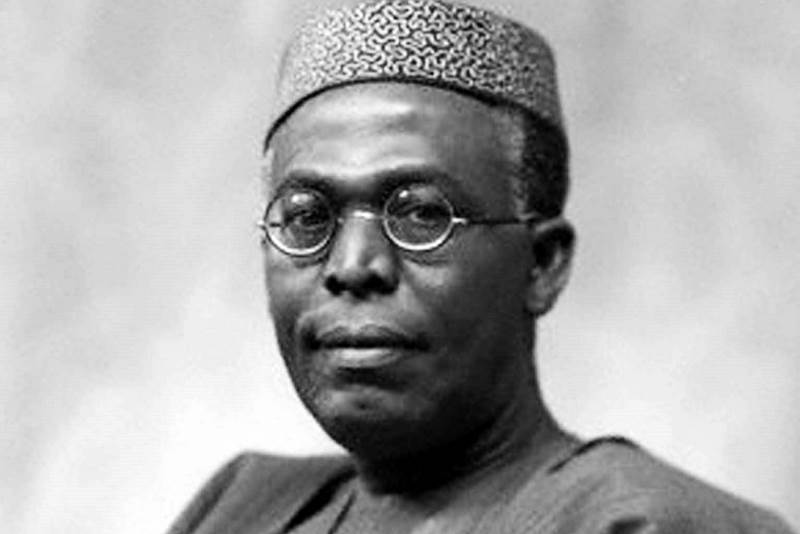
However, President Shehu Shagari broke the jinx when in 1982, he honoured Chief Obafemi Awolowo with GCFR honours in as much as the statesman was yet to become a president, and never was.

Awowolo bagged the honour as a deserving citizen based on the good works that are credited to his person including establishing the first television station in Africa, giving free education and health care the people of the Western region of his time.

Again, Awolowo was succeeded by Alhaji Shehu Shagari as a Federal Commissioner, and it was obvious the later to be President understood the magnitude of work the acclaimed Yoruba leader put into the job. Shagari Awolowo as a deserving citizen, and honoured him with the award.

Later in his administration, President Goodluck Jonathan declared that he would not hesitate to confer the highest national award, Grand Commander of the Federal Republic, on any deserving individual.

He said although many believed the award was for presidents, former President Shehu Shagari conferred the same category of award on the late sage, Chief Obafemi Awolowo, who was never a president.

Jonathan spoke in defence of the criticisms he got for conferring the award of Grand Commander of the Order of Niger on a bussinessman, Alhaji Aliko Dangote.

He said countries all over the world honour people who had contributed immensely to national growth like Dangote is currently doing. The President said the earlier individuals and groups especially opposition politicians stopped playing politics with every decision of government, the better for the country.

He said, “One of the problems we have is that some Nigerians play politics with everything, but we cannot destroy our country because of personal political ambitions.

“We now have a constitutional democracy and no one can stay in office forever. It will therefore be best for our nation if we all support whoever is there for the development of the country instead of trying to pull him down by all means.”

Recall that in July 2017, the House of Representatives advised the Nigerian government to immortalise the acclaimed winner of the June 12, 1993 presidential election, MKO Abiola with a posthumous Grand Commander of the Order of the Federal Republic (GCFR). They were emphatic and categorical on the basic award needed.

The mentioned that would be in recognition of the deceased sacrifice and contributions to the unity and development of Nigeria and Africa.

The sponsor of the motion, Sanni Zoro (Jigawa-APC), said “It is worthy to remember him always as a Nigerian who touched lives more than any other person in his life time.”

“Abiola also contributed in ensuring religious harmony by building bridges between faith organisations in the country,’’ he added.

Zoro argued that apart from being acclaimed winner of June 12, 1993 presidential election by polling eight million out of the 14 million votes cast, Mr. Abiola contributed immensely to the political development of the country.

“It will not be a novelty to bestow the GCFR on someone who is not a president of the country.

“Former President Shehu Shagari bestowed the same honour on late Chief Obafemi Awolowo in 1983.

“I believe that we should immortalise MKO Abiola by conferring on him this highest honour in the country,” he said.

Contributing, Anayo Nnebe (Anambra-PDP) urged the federal government to declare June 12 of every year as Democracy Day in the country.

“June 12, 1993 election had more significance for the country’s democracy compared to May 29, which is currently being celebrated as Democracy Day.

“The annulment of June 12 is an act of irresponsibility and recklessness by the then military regime.

“I want to add that June 12, should be declared a national holiday to reflect issues that transpired; It should be seen as a national issue and not regional one,” Nnebe stated.

Member representing Epe Federal Constituency of Lagos, Wale Raji, urged the federal government to declare the result of the annulled election by announcing late Abiola the posthumous President-elect.

In reality, all the members prayed for are exactly what the President granted. It is therefore uncalled for when diverse views are heard condemning the award.

Chief Awolowo hitherto was the only non-Nigerian President who has the award. Today, the late MKO Abiola has joined the fray.

Continue Reading
Click to comment

Leave a Reply

Your email address will not be published. Required fields are marked *

Headline

Alleged Corrupt Practices: Dangote Petitions ICPC Against NMDPRA MD Farouk

Published

on

By

Chairman, Dangote Group, Alhaji Aliko Dangote, has formally submitted a petition to the Independent Corrupt Practices and Other Related Offences Commission (ICPC) against the Managing Director of the Nigerian Midstream and Downstream Petroleum Regulatory Authority (NMDPRA), Engr. Ahmed Farouk, over alleged corruption and financial impropriety.

The petition, dated December 16, 2025, was submitted through Dangote’s lawyer, Dr. Ogwu James Onoja, SAN, and received at the office of the ICPC Chairman, Dr. Musa Adamu Aliyu, SAN.

In the petition, Dangote called for the arrest, investigation and prosecution of the NMDPRA boss, alleging that Farouk has been living far above his legitimate means as a public servant.

Dangote specifically accused Ahmed Farouk of allegedly spending over seven million United States dollars on the education of his four children in Switzerland, paid upfront for a six-year period, without any lawful explanation for the source of the funds.

According to the petition, the four children and their respective schools in Switzerland were clearly identified, along with the amounts paid on their behalf, to enable the ICPC verify the allegations.

The industrialist further alleged that Farouk Ahmed had been using his position at the NMDPRA to embezzle and divert public funds for personal gain and private interests, actions which he claimed had recently triggered public protests and widespread criticism of the agency.

Dangote maintained that Ahmed Farouk has spent his adult life working in Nigeria’s public sector, adding that his cumulative earnings over the years could not reasonably account for the alleged seven million dollars reportedly spent on the overseas education of his children.

“It is without doubt that the above facts in relation to abuse of office, breach of the Code of Conduct for public officers, corrupt enrichment and embezzlement constitute gross acts of corruption, for which your Commission is statutorily empowered under Section 19 of the ICPC Act to investigate and prosecute,” the petition stated.

It further noted that under the same section of the ICPC Act, any person found guilty of such offences is liable to imprisonment for a term of five years without an option of fine.

Dangote urged the commission to act decisively, stressing that the ICPC, alongside other anti-graft agencies, is strategically positioned to investigate and prosecute corruption-related offences.

“In view of the foregoing, we call on the Commission under your leadership to investigate the complaint of abuse of office and corruption against Engr. Farouk Ahmed and to accordingly prosecute him if found wanting,” the petition added.

The Dangote Group Chairman also expressed confidence that the matter, being in the public domain, would not be ignored, urging the ICPC to act in the interest of justice and to protect the image of President Bola Ahmed Tinubu’s administration.

Dangote further pledged his readiness to provide additional evidence to substantiate his allegations of corrupt enrichment, abuse of office and impunity against the NMDPRA Managing Director.

Continue Reading

Headline

Tinubu Didn’t Win 2023 Election, Will Lose in 2027 – Abaribe

Published

on

By

The lawmaker representing Abia South Senatorial District, Senator Enyinnaya Abaribe, has predicted that it would be impossible for President Bola Tinubu to win second termn in the 2027 presidential election.

Abaribe, who claimed that the President never won the 2023 election, said the level of hardship Nigerians are currently facing has made them more determined to ensure that Tinubu does not return as president after 2027.

Reacting to suggestions that Tinubu has never lost an election, Abaribe, who appeared as a guest on Channels Television’s Politics Today on Monday, said, “I do not think so. Everybody loses elections, and you will see when the time comes. He will lose in 2027 because I know what Nigerians are feeling outside.”

He added: “Tinubu never won the 2023 election, and everybody knows it. But we said fine, he has been declared the winner, no problem. We acknowledge him as president, but we are going to meet him in the field, and I will see how he is going to cobble together what will make him win again.

“It won’t work, because this time everybody will be ready. It will no longer be an announcement at 3am before people wake up in the morning. This time, people are ready; we are ready, and the masses are even more ready.”

The senator, who said the economy has collapsed under Tinubu and that the president has yet to solve the problem of insecurity, wondered where he would get the votes to win in 2027.

On the defection of some opposition leaders to the ruling All Progressives Congress (APC), Abaribe vowed never to join the wave, saying he would be the last person to do so.

He said that rather than strengthening the APC as a party, the defections would deepen internal divisions and fuel leadership tussles.

“If there is anybody who is going to defect to the APC, I think I should be the very, very last one. By the time I defect, it would mean there are no parties left in Nigeria, including the APC,” he said.

“I have a very simple theory about defections. I think it is very good for us in the opposition that these defections are happening. All the APC is doing is absorbing all the problems it is going to face; they are right inside the party now. Ask yourself, in all the states where there are defections, what is going on there now?”

The lawmaker described the APC as a giant with feet of clay, saying the opposition would target its weak points during the election, leading to its collapse.

Abaribe, who reaffirmed his membership of the opposition coalition, said there is a consensus among opposition leaders to unite in order to dislodge the APC from power.

The coalition has adopted the African Democratic Congress (ADC) as the platform for the 2027 elections, but many have claimed the move is a strategy to enthrone Atiku Abubakar and compel all opposition members to support him.

However, Abaribe disagreed, saying the party has yet to release its guidelines and other arrangements ahead of the 2027 elections.

Continue Reading

Headline

Threat Against Nigeria’s Multi-Party Democracy: Atiku, Obi, George, Others Accuse Tinubu of Plot to Annihilate Opposition

Published

on

By

By Eric Elezuo

Major opposition leaders in the country have raise the alarm over threat against Nigeria’s Multi-Party Democracy, accusing President Bola Tinubu of plot to annihilate opposition.

In a letter signed a group of major opposition and opinion leaders including Alhaji Atiku Abubakar, Mr. Peter Obi, Chief Bode George, Chief John Odigie-Oyegun, Alhaji Lawal Batagarawa and Senator David Mark, the group demanded an independent review body to examine public accounts of federal, state, LGs from 2015 to 2025, the embedding of anti-graft operatives directly into government payment, expenditure processes at all levels among others

Titled “Anti-Corruption, Not Anti-Opposition: A Joint Statement by Opposition Leaders on the Growing Politicisation of State Institutions for Persecution of the Opposition”, the statement frowned at the state of the nation, lamenting the “unfortunate and gradual slide of our country into a state where key national institutions – particularly the Economic and Financial Crimes Commission (EFCC); The Nigeria Police; The Independent Corrupt Practices and Other Related Offences Commission (ICPC) are increasingly perceived as tools of political intimidation, selective justice and systematic persecution of opposition leaders.”

The statement in full:

We are compelled by duty to nation and conscience to issue this statement to alert our compatriots and the international community to the unfortunate and gradual slide of our country into a state where key national institutions – particularly the Economic and Financial Crimes Commission (EFCC); The Nigeria Police; The Independent Corrupt Practices and Other Related Offences Commission (ICPC) are increasingly perceived as tools of political intimidation, selective justice and systematic persecution of opposition leaders.

Across our nation, there are mounting concerns that state power is being deployed not for prevention of economic crimes, but for persecution of perceived political adversaries, with the ultimate aim of weakening opposition voices and dismantling Nigeria’s multiparty democracy.

A Dangerous Agenda Unfolding

More than ever before in our democratic experience, Nigerians have witnessed what many now describe as a covert, undemocratic agenda: to ensure that all state governments fall under the control of the President’s party – not through transparent electoral contests, but by secretly intimidating opposition governors via the anti-corruption apparatus until they succumb and defect. Recent defections of opposition governors into the ruling party have reinforced public suspicion that political pressure, not ideological or personal persuasion, is driving this realignment. This pattern forms part of a broader project that targets not only elected leaders but also key opposition figures perceived as architects of emerging coalitions ahead of the 2027 general election. We must warn that this project, if allowed to continue unchecked, poses a grave danger to Nigeria’s democratic future.

Weaponisation of the EFCC

There is a discernible pattern of persecution of the opposition by the EFCC with the sole objective of weakening same for the benefit of the ruling APC. This disturbing pattern mirrors a long-standing sentiment openly expressed years ago by a former National Chairman of the ruling APC, Adams Oshiomhole, who declared when receiving defectors from the PDP: “Once you have joined APC, all your sins are forgiven.” Whether intended as political rhetoric or not, this statement has come to symbolise a troubling reality: allegations against members of the ruling party are routinely perceived to be overlooked, while even unsubstantiated accusations against opposition figures are vigorously pursued and subjected to media trial.

A few recent examples reinforce this perception. Months ago, a minister was implicated in a financial scandal so blatant that only sustained public outrage forced her resignation. Yet, long after stepping down, she has neither been charged nor arraigned by the EFCC and is now actively involved in the President’s re-election campaign. Similarly, another minister remained in office despite the university he claimed to have attended publicly denying his academic certificate. He, too, resigned only after intense public pressure, Months later, no charges have been filed.

Such selective enforcement undermines the legitimacy of anticorruption efforts and erodes public trust. Furthermore, Nigerians are not blind to the sudden empowerment of certain political actors, including individuals appointed to federal executive positions after crossing from the opposition but still claim to be members of opposition party – whose unstated mandate, in the public’s eyes, appears to include the systematic destabilisation of opposition parties through the creation of factions, inducement and the exploitation of judicial processes, allegedly funded by state resources.

Erosion of EFCC’s Independence

The EFCC is a critical national institution, created to safeguard Nigeria’s economic integrity.

Yet today, many Nigerians fear that its independence is steadily being eroded. An agency designed for prevention and accountability risks becoming an instrument of political persecution, undermining both justice and democracy. The President must recognise that evident social and political injustice could snowball into mayhem as the nation approaches another election cycle. This trend must be halted immediately if the nation must be spared a major catastrophe.

OUR DEMANDS
• Depoliticise EFCC: The operations of the EFCC must be urgently shielded from political interference and must not serve the whims and caprices of any President, party or political faction.

• Return EFCC to Its Statutory Mandate: The Commission must refocus on genuine detection and prevention of economic crimes across board, not selective prosecution, media trials or intimidation of opposition figures. For the avoidance of doubt, the Functions and Powers of the Commission are expressly provided for under Sections 6 & 7 respectively.

• Defend Multiparty Democracy: Nigerians must remain eternally vigilant to ensure that the President does not transform the country into a de facto one-party state – as witnessed in Lagos over the last 25 years, where opposition leaders were silenced, coerced or induced into irrelevance.

• Embed Preventive Anti-Corruption Mechanisms: Relying on the Supreme Court ruling on the powers of the EFCC over all public accounts, for true prevention of financial crimes, anti-graft operatives should be embedded in all the payment processes of governments at all levels to ensure compliance with rules of transparency, accountability and probity in public financial transactions. Put differently, the EFCC must recognise and exercise their function as covering both pre and post expenditure. operatives must also be held accountable for any unreported but later detected economic and financial infractions in their respective areas of oversight. To further strengthen the EFCC, we propose that the EFCC Act should be amended for this purpose.

• Establish an Independent Review Body: We call on the Attorney General, in consultation with the National Assembly, to set up an independent review body which should be granted full access to the public accounts of the federal, all states and all local governments covering from 2015 to 2025, with a mandate to conduct a transparent, comprehensive review of financial transactions and publish its findings. Such a review will expose the EFCC’s pattern of selective prosecution of opposition figures and reveal that many current officials of the federal government—and those of ruling-party-controlled states—should have long been prosecuted for economic and financial crimes, but were shielded due to their political affiliation. Based on its findings, the independent body should also propose amendments to EFCC’s enabling law to strengthen the agency for more effective and efficient prevention of financial crimes.
This proposed body is to be chaired by an eminent judge, and composed of the following:
– Representatives from civil society organisations
– Representatives of the Nigerian Bar Association
– Representatives of Institute of Chartered Accountants of Nigeria
– Representatives of Institute of Chartered Bankers
– The Nigerian Financial Intelligence Unit
– Representatives of anti-graft agencies
– Representatives of the Police
– Representatives of the DSS
– Representatives of the Armed Forces
– Representatives of all political parties with a seat in the National Assembly.

A Call to Defend Nigeria’s Democracy

We call on all patriotic Nigerians across party lines, professions, regions and faiths to stand firm. Our democracy is under threat through the deliberate and systematic weakening of opposition forces, with the EFCC as the central instrument in this troubling strategy.

In the coming weeks, we will provide more details, and also engage foreign partners of Nigeria’s anti-graft agencies and diplomatic missions, including United States, UK, Canada, EU, World Bank Office, United Nations, to express our deep concern about the EFCC increasingly becoming a willing tool in a broader scheme to weaken opposition in Nigeria, and also demand a reform of the anti graft agency.

Nigeria’s democracy demands our vigilance, courage and unity, as Edmund Burke, an Anglo-Irish statesman and philosopher, warned: “The only thing necessary for the triumph of evil is for good men to do nothing”.

We are equally guided by the enduring words of Martin Luther King Jnr: “Silence in the face of evil is itself evil ……In the end we shall remember not the words of our enemies, but the silence of our friends.” Now is the time for all of us to rise in defence of our cherished multiparty democracy, and indeed, in defence of the very soul of our nation.

We must make a deliberate choice not to be remembered by posterity for our Silence.
Nigeria belongs to all of us – not to a single party or a single leader.

Signed,
Sen. David Mark, GCON
Alh. Atiku Abubakar, GCON
Mallam Lawal Batagarawa
Chief Bode George
Mr. Peter Obi, CON
Chief John Odigie-Oyegun

Continue Reading

Trending