Connect with us

News

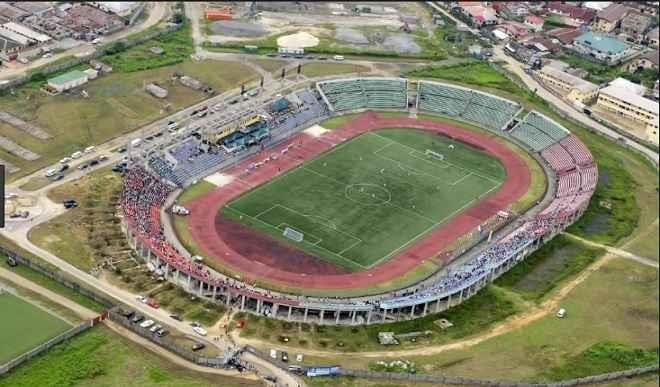
Liberty Stadium, Ibadan – A Metaphor For The South West!

Published

on

By Segun Odegbami

Were Chief Obafemi Awolowo to wake up from his place of eternal rest and see what has become of the Western Region of Nigeria, one of the places that would make him wail the loudest would be the Liberty Stadium, Ibadan.

He would wonder how a people he left, sophisticated, enlightened and largely educated, with respect for values and a way of life that set them apart from the rest, would destroy one of their greatest legacies on the altar of personal interests, materialism, bad conduct and poor political judgement.

The geographical dis-figuration of Western Nigeria in an obscure structural and political arrangement has fragmented rather than united the region and diminished its place and influence within Nigeria.

Awo would be dazed at the catastrophe that has bedeviled the several infrastructures and institutions that his government and those of his immediate successors established and carefully programmed to take the region, and by extension the rest of the country and the Black race, to the pinnacle of global emancipation and development.

That was a common vision shared by some of the great African leaders of the past – Nkrumah, Nyerere, Lumumba, and even our own Azikiwe, and Ahmadu Bello. They all had a common cause but nursed different paths to achieve it.

In Western Nigeria where he was Premier, Chief Awolowo set a pace of development that left the rest on the continent for dead.

The Liberty Stadium, Ibadan, is a unique sporting complex that encapsulated the vision of the political leader described by late Odimegwu Ojukwu, as ‘the greatest President Nigeria never had’.

When I arrived Ibadan in 1971, Liberty stadium, built around the celebration of Nigeria’s Independence in 1960 by the government of Western Nigeria under Chief Awolowo, was still ‘alive’ and actively fulfilling the objectives of its founder as the centre of sports engagement, activity and development in West Africa’s largest city.

Chief Obafemi Awolowo, even in the 1950s had understood the immense power of sport in national development.

Apart from the State-of-the-art sports facilities that he put in place, he also developed the human capacity to manage and maintain the facilities, and introduced programmes and events that drove the entire sports agenda.

That’s why in 1963, his government actively partnered with other stakeholders to host the first World boxing title fight in Nigeria inside the Liberty Stadium, between Nigeria’s Dick Tiger and America’s Gene Fulmer, in what was planned to test and to showcase Western Nigeria’s emergence as an authentic technological, social, cultural and economic regional power.

That fight was transmitted to the whole world from the stadium through Africa’s first Television Station established also in Ibadan, a rare feat in those days when several European countries were themselves new to television.

Ibadan welcomed the whole army of agents, managers, the media and the world’s boxing travelling fans who, in their hundreds, followed the train of the best boxing fights around the world.

For months before and after that fight Western Nigeria was the focus of the world’s major media. It was unprecedented advertisement for one of the fastest and most ambitious developing regions in the whole of West Africa. Surely, the region was on a trajectory that would have made it a global superpower within a few decades were it to have sustained that momentum.

In 1971, I still met the structures, facilities, and personnel running the sports agenda of Chief Obafemi Awolowo and his immediate successors. It was a visionary script for the development of Western Nigeria with sports as a major contributor.

The product was to become a model for emulation by other parts of the country, and a launch pad for Awolowo’s political ambition to lead the rest of the country.

The North, Mid-West and the Eastern parts of Nigeria joined in a healthy race to catch up with the West, leading to an unwritten competition each region harnessing its best resources to develop its environment, with the West obviously setting the fastest pace.

Liberty Stadium was a great showpiece; its architecture was unique; some of its facilities were world class; its maintenance regimen was a delight to watch and became a local tourist attraction for visitors; its sports facilities engaged the teeming youths from schools and sports clubs, and produced national champions in many sports.

The stadium was well ahead of its time in the facilities within it.

When it was taken over by the Federal Government for renovation for the proposed 1995 FIFA World Youth championship, the engineers in an Israeli firm that was contracted to do the job because they ostensibly had the latest technology in the world, lamented to us that what they met on ground in the Liberty Stadium was far ahead of whatever they had brought to ‘improve’ the stadium.

They admitted that the drainage system underneath the stadium pitch was better than the untested ‘Cell’ underground watering system they had brought and wondered why Nigerian sports administrators in charge were insisting they should go ahead with the excavation and demolition of said drainage system when they advised against it.

In ‘renovating’ the stadium, the Israelis completely destroyed it. Since that ill-informed deliberate destructive act, the Stadium has remained prostate, its painted walls a shell and a constant and painful reminder of what was once one of the best in the world!

The stadium was a ‘Mecca’. People came on excursions for a tour of the facilities. They would wait and watch the well-choreographed watering system of the turf that took place three times every day throughout the year.

Hundreds, probably thousands, of spectators came daily to watch the training sessions of star athletes on the facilities – the great Shooting Stars FC on the lush green football training field, track and field, cricket, volleyball, badminton, basketball and table tennis athletes many of whom were representing Nigeria at the time.

The youths from all over the State came in droves, mornings and evenings, to ‘drink’ lavishly and freely from the well of inspiration of the known star athletes training daily at the stadium.

The stadium had excellent functional floodlights. Many of the international matches Shooting Stars played at the time, mostly against football clubs from Germany, England and even Brazil, were played at night.

My own first international match, was against Central African Republic during preparations for the First National Sports festival in 1973. It was played under floodlights inside the Liberty stadium.

There was a stand by generator that hardly ever was put on because electricity to the facility was a priority. Although there was regular water supply to the complex, it still had a reservoir of its own that could easily service a whole segment of Ibadan.

The stadium hostel for athletes was like a 2-star hotel.

Liberty Stadium Ibadan is today a shadow of its old self, a sad reminder of a once glorious Western Nigeria.

The South West has taken its eyes off its greatest responsibility – to drive the evolution of an authentic global Black civilization using the region as theatre.

Old Western Nigeria is groaning under the affliction of poor political judgments. A mono-cultural and monolithic region has been fragmented by physical arrangements making it lose it’s focus of a dream to lead by example by building a strong and competitive economic, cultural, technologically advanced and industrial environment and be a major player in the world.

As 2019 approaches and leaders are about to be elected, the spirit of Obafemi Awolowo, encapsulated in the Liberty Stadium complex, Ibadan, waits patiently, reminding all about how important it is to choose new leaders from amongst them that can get back on the tracks of the founding political fathers of the old, old West and rebuild the entire South West!

Continue Reading
Click to comment

Leave a Reply

Your email address will not be published. Required fields are marked *

News

Court Upholds Authenticity of David Mark-led ADC Executive

Published

on

By

The Federal High Court sitting in Abuja on Friday, declined an application seeking to restrain the African Democratic Congress, led by Senator David Mark, from holding conventions, congresses or meetings to elect or ratify members of its executive bodies and other party structures.

Justice Emeka Nwite, in a ruling, refused the motion ex parte filed by a former Deputy National Chairman of the ADC, Nafiu-Bala Gombe, holding that granting such an application without hearing from the other parties would amount to overreaching.

“I have listened to the submission of the learned counsel for the applicant and have also gone through the affidavit evidence with exhibits thereto along with the written address,” the judge said.

Justice Nwite noted that the court had earlier, on September 4, 2025, ordered the defendants to show cause why an interim order restraining them from acting as leaders of the ADC should not be made, stressing that parties had since exchanged processes in the substantive matter.

“It is not in dispute that the present application is an off-shoot of the substantive matter of the said application.

“It is not in dispute that all the parties are already before this court. Hence, any ex-parte application without a notice to the other parties will be overreaching.

“Hence, the interest of justice will be met by putting the other parties on notice. Consequently, the application is refused,” Justice Nwite ruled.

He proceeded to adjourn the matter until February 3, 2026, for the respondents to show cause.

In the motion ex parte marked FHC/ABJ/CS/1819/2025, Gombe listed the ADC, Senator David Mark and Ogbeni Rauf Aregbesola as first to third defendants, while the Independent National Electoral Commission and Chief Ralph Nwosu were named as fourth and fifth defendants.

Filed on December 15 through his counsel, Michael Agber, Gombe sought three interim reliefs, including an order restraining the ADC from holding any convention, congress or meeting to elect or approve persons into its executive committees or governing bodies pending the determination of a motion on notice.

He also sought an order restraining INEC from attending, monitoring or recognising any such activities by the party, as well as an order directing the maintenance of the status quo in the management and organisation of the ADC.

When the matter was called, Agber informed the court that he had a motion ex parte. Justice Nwite recalled that a similar application had earlier been refused, with an order that the respondents be put on notice.

“Now, is there any difference from this application?” the judge asked.

Agber argued that the prayers were different, stating that the application was aimed at restraining ADC and INEC from taking steps that could affect the pending suit.

In response, Justice Nwite said: “Now, the case is already before me and if any person does something untoward, such action will be null and void.

“This application ought not to come by way of ex-parte because already, the parties are already before the court. So I am just telling you my mind.”

Emphasising the need for fair hearing, the judge added: “I cannot make an order in the absence of the party as justice is tripartite.
You can not shave somebody’s head in his absence”.

Despite the court’s reservations, Agber was allowed to move the motion. He said it was brought pursuant to Order 26 Rule 6 of the Federal High Court (Civil Procedure) Rules 2019, Sections 82 and 83 of the Electoral Act 2022, and under the inherent jurisdiction of the court.

In an affidavit of urgency, Gombe alleged that despite the pending suit, the ADC, with the acquiescence of INEC, had continued to hold meetings nationwide in preparation for conventions and congresses under what he described as the “illegal leadership of Senator David Mark and others.”

He cited several instances, including the unveiling of an alleged new ADC national headquarters, the issuance of membership cards to prominent political figures, and the release of party guidelines for the Osun governorship primary election, which he claimed were in contempt of an earlier court order.

Justice Nwite recalled that on September 4, 2025, the court had similarly refused Gombe’s earlier ex parte application seeking to stop the David Mark–led leadership of the ADC, and had instead directed that all defendants be put on notice.

Continue Reading

News

Ex-CJN Tanko Mohammed is Dead

Published

on

By

A former Chief Justice of Nigeria (CJN), Justice Ibrahim Tanko Muhammad (retd.), is dead. He was aged 71

The former CJN reportedly died at a hospital in Saudi Arabia, about two weeks before his 72nd birthday on December 31.

Muhammad’s death was confirmed in a condolence statement on Tuesday in Abuja by the Nigerian Association of Muslim Law Students (NAMLAS).

In the statement titled “NAMLAS Condolence Message on the Passing of Hon. Justice Ibrahim Tanko Muhammad, GCON, Former Chief Justice of Nigeria,” the association described his passing as a significant loss for the country.

“Indeed, to Allah we belong, and to Him we shall return.

“The Nigeria Association of Muslim Law Students (NAMLAS), National Headquarters, Abuja, receives with profound sorrow the news of the passing of Honourable Justice Ibrahim Tanko Muhammad, GCON, former Chief Justice of Nigeria. His demise is a monumental loss to the Nigerian judiciary, the legal profession, the Muslim Ummah, and the nation at large,” NAMLAS said.

The association hailed Justice Muhammad as “a towering figure of integrity, humility, and unwavering commitment to justice.”

According to NAMLAS, throughout his judicial career, Muhammad “exemplified the highest ideals of the Bench—fairness, courage, and fidelity to the rule of law.”

“As Chief Justice of Nigeria, he discharged his responsibilities with wisdom and restraint, leaving behind a legacy of service that will continue to guide generations of legal practitioners,” the statement added.

Beyond his role on the Bench, the association noted the late jurist’s mentorship of young Muslim law students across the country.

“To NAMLAS, the late Chief Justice was more than a jurist; he was a fatherly pillar and a source of encouragement to Muslim law students across the country,” it said.

The association also highlighted that the deceased’s “support, moral guidance, and openness to the aspirations of young Muslim legal minds reflected his deep belief in mentorship, continuity, and the nurturing of future custodians of justice.”

It extended condolences to his family, the Nigerian judiciary, and the nation.

“We extend our heartfelt condolences to his family, the Nigerian Judiciary, the Government and people of Nigeria, and the entire Muslim Ummah”.

The association offered prayers for the repose of his soul, asking that Allah forgive his shortcomings, accept his good deeds, and grant him “the highest abode in Jannatul Firdaus.”

Continue Reading

News

Gowon is Not Dead, in Good Health, Aide Debunks Death Rumour

Published

on

By

Adeyeye Ajayi, Personal Assistant to former military Head of State, General Yakubu Gowon (rtd), has dismissed recent rumours on social media purporting the death of the ex-leader.

Ajayi described the rumour as false and misleading.

In a statement released on Sunday, Ajayi called on the public to disregard the reports, emphasizing that they are baseless and misleading. He stressed that the rumours only serve to create unnecessary panic and confusion among Nigerians.

He assured that General Gowon is in good health and continues to live an active life. He highlighted that the former Head of State has been attending public functions and engaging with various social and national initiatives.

Ajayi further described General Gowon as a continued voice of reason in Nigeria, noting his ongoing contributions to national dialogue and development.

He urged Nigerians to focus on credible news sources, and exercise caution before sharing unverified information online.

Social media platforms in recent days have seen multiple posts claiming that the 90-year-old ex-leader had passed away. Analysts and observers have warned that such false reports can cause unnecessary anxiety and undermine public trust in information.

Ajayi concluded by urging the public to celebrate the legacy and life of General Gowon while dismissing any unverified reports about his health. He reiterated that the former head of state remains active, healthy, and committed to supporting initiatives for Nigeria’s growth and progress.

Continue Reading

Trending