The Nigerian government paid Boko Haram militants a “huge” ransom of millions of dollars to free up to 230 children and staff the jihadists abducted from a Catholic school in November, an AFP investigation revealed Monday.
Headline
30 Years of Living and Working in Lagos (Part 3)
Published
8 years agoon
By
Eric
By Dele Momodu
Fellow Nigerians, thanks for travelling with me these past couple of weeks on my trajectory. The whole essence of my biographical essays is to remind our youths of today that there can be no greatness without pain. As Dr Tai Solarin, the famous social critic and educator once wrote, “may your road be rough…” Mine has been a rollercoaster, full of bumps and turns. No Formula 1, or better still Le Mans, driver could have envisaged, navigated and manoeuvred my life’s journey properly and easily. I shall endeavour to demonstrate the immutable laws and power of time today. Your life can come tumbling down within a twinkle of an eye. Yes, in a matter of seconds, your life can freeze. That was my case on July 22, 1995.
I had spent the previous night in Abeokuta, the city of rocks, where I had gone to visit the former Governor of Ogun State, Chief Olusegun Osoba, to discuss the June 12 imbroglio. My adopted father, Chief Moshood Abiola, had been in detention for about one agonising year and it appeared we were all helpless to get him freed from General Sani Abacha’s gulag. I liked to sit and draw from Chief Osoba’s fountain of knowledge. Almost from the moment I landed in Lagos, from the ancient town of Ile-Ife, in 1988, I had identified and chosen him as my role model and ultimate inspiration in journalism business. It is difficult to find any star reporter greater than Osoba. I followed his every move with keen interest and read his story with admiration and addiction. Let me take you on a voyage on how I got hooked on my Osoba drug.
I was squatting with friends for a while in Lagos because I just couldn’t afford to pay rent. I had rotated from Bimbo Ajiboye to Segun Adegbesan and Biodun Obisakin. It was while in Segun Adegbesan’s house that I discovered a song sang in praise of Osoba by the Juju Music maestro, Chief Commander Ebenezer Obey. My God, I woke up every morning to play this song and fantasised endlessly about wanting God to structure and bless my life like that of Akinrogun Osoba. I’m sure I played the tape for what seemed an eternity. Osoba has remained my point of prayer contact ever since. You can then imagine how elated I would have been getting to meet and bond with this hero, my idol and my all-time journalism icon. In case you are wondering what the love was all about, it was simply because Osoba was able to kill the myth that journalists should be the dregs of society and lambs of God who took away the sins of the earth. Why should journalists risk so much and yet remain poorer than church rats, I used to wonder.
The case of Osoba and I was that of love at first sight. I had heard of his supposed arrogance and short temper, but my experience was totally different. He found a worthy protégé in me and never stopped admiring and acknowledging my strides. He was permanently proud of my excursions and audacity in the media world. He read me religiously and we spoke as frequently as time permitted both of us. His bosom friend, Mr Obafunke Otudeko, also turned out to be a great fan of my work. Just imagine such grace from God. This was the background to my going to spend time with Osoba in Abeokuta on July 21, from whence I departed the following morning, ostensibly to Lagos, not realising I would be embarking on a longer, more dangerous journey.
I was driving home to the remote village of Adigboluja on the fringes of the Lagos and Ogun States border when I saw my wife’s car, so I stopped. I was tired and looking forward to a great sleep on getting home, after chatting late into the night with the big boss in Abeokuta. “Ajani, I’m happy you passed this route because I was just wondering how to get you to break some bad news…” my wife said with a calmness that actually pumped up my adrenalin. “I hope no one died,” I exclaimed! “No dear. It is about your political activities and the role you are playing in Chief Abiola’s saga…” My wife was yet to drop the bombshell. I could no longer bear this suspense, so I thundered, “darling, please, tell me what the matter is. You know when it comes to Abiola, he is my Daddy, and I must continue to support him in whatever little way I can…”
My mind did some supersonic journey on a stream of consciousness and I flashed back to my last encounter with Chief Abiola. After his Epetedo declaration where he proclaimed himself as the President of Nigeria in 1994 and his journey to South Africa for the Inauguration ceremony of the great Madiba, Dr Nelson Mandela, where he grabbed the seat reserved for the Nigerian leader! So much water had passed under the bridge. Abiola had to go into hiding for about 13 days, and a few of us, including his personal assistant Fred Enoh, and politician, Ademola Adeniji Adele, a Lagos Prince (God bless his departed soul), and others worked feverishly for his re-entry into the community of humans. We had gone to get him out of Chief Wahab Dosunmu’s house in some long-winding street in Surulere, Lagos, for a short rally, I think on a field in Shitta, before proceeding to his house in Ikeja.
A detachment of fully armed police officers was waiting patiently, like vultures, along Toyin Street, as Abiola’s convoy drove through. Chief was riding in Adeniji Adele’s open roof jeep and was standing tall for all to see him as we meandered into Moshood Abiola Crescent. One spiritualist who was recruited by a family member (supposedly to protect Chief from any harm and release honey bees into the atmosphere to sting the police if they tried to arrest Chief) was hanging to the right of the jeep while I was hanging to the left. I don’t know what would have happened if some snipers had chosen to be trigger-happy. The spiritualist was the first to panic while Chief remained brave to the end. That’s a story for another day. We drove into Chief’s house without any incidence. Chief thereafter told me to go home because I had not refreshed in the last 48 hours. I told him I would be back in a few hours. By the time I got back, the massive security operatives had taken possession of his expansive home and no one was allowed in or out.
I rushed quickly to a business centre on Allen Avenue to place a call to Chief Abiola. Mobile phones were not yet common in 1994 (see how much life has changed) and I called the operator who passed me on to him. When he came on the line, I instantly knew there was big trouble. Chief tried to sound tough as always. “Dele 1, please go home to your wife because these security guys won’t let you in… I’ve been reliably informed that they are coming to arrest me in the night when the crowd around here would have left but I don’t think Sani can try it o!” Those were Abiola’s last words to me on earth, as the phone went dead. Of course, Chief was arrested, and the rest is history!
Those last moments raced through my mind like a blockbuster movie as I stood, transfixed, before my wife. Her next words were going to shock me to my bone marrow: “Four men came looking for you this morning. At first, I was reluctant to open the door but one of them called Abdul Oroh said he is your good friend and brother so I let them in. They told me to inform you to disappear immediately because there was a security report that you are to be picked up for being one of the brains behind the pirate radio, known then as Radio Freedom (later Radio Kudirat)”. As she spoke, my heart was pumping and thumping. Wow, I soliloquised! I already had a premonition I was going to be targeted. Truth was I knew nothing about the operations of the radio which was being managed by Kayode Fayemi, with the active knowledge and interventions of Wole Soyinka, Bola Tinubu and others.
My wife and I took an instant and reasonable decision. I should go underground immediately and that was it. I never saw that home again. I called Tokunbo Afikuyomi in London and he advised me to get out of Abacha’s clutches and the impending peril as soon as possible. He gave me an elaborate roadmap of what was known as the NADECO routes, what to do, how to prepare, what to expect and, basically, how to disappear through the forests of a thousand daemons.
First I went into a bunker, like Saddam Hussein, away from prying and probing eyes, somewhere in Kaffi, Alausa, near the Lagos State Secretariat, thanks to my dear friends, the Orolugbagbes, who kept me safe and sound, from July 22 to the early hours of July 25, when I started my journey of fate and faith. My wife had moved to her sister’s place in Ikeja GRA with our first son, Olupekan, who was barely ten months old. I was accompanied by three wonderful people, Captain Rotimi Seriki (my brother-in-law, a pilot at Nigeria Airways, now deceased, one of the kindest souls God ever created), my very close friends, Olakunle Sikiru Bakare (a Director at Fame magazine and now Publisher of Encomium magazine) and Bola Orolugbagbe (a successful businessman who dealt in automobiles in Victoria Island). We set out by road towards Badagry and found our way to some place close to Seme Border. Captain was at the wheels driving with uncommon gusto. Every now and then we stopped at those grisly and gory checkpoints with palpable trepidation on my part, as the fugitive. But we went through without any problem.
Fortunately, I had a two-year multiple visa to the United Kingdom. I had obtained an ECOWAS passport for the purpose of this dangerous voyage. We parked our car somewhere along the route and Captain Seriki showed me the narrow path to take into Benin Republic, alone. They would drive and meet me on the other side. That must have been one of my lowest and scariest minutes on earth. I was dressed and trudged like a farmer going to his farm. I had been told to walk as confidently as possible and keep a straight poker face, avoiding direct eye-contact with anyone. It was a lonely distressing and depressing, seemingly never-ending trek. My main passport was with my co-conspirators. One of them carried my bag. I strolled across easily, even if my heart was in my throat, and waited for my people to arrive. I looked back towards my beloved country Nigeria, and wept bitterly.
I never planned to live outside my country. I loved to travel but never stayed more than three weeks. This journey was going to be tough. I wondered where, when and how it would end. After what seemed an eternity, my people arrived. I wished they could penetrate my mind to see how truly grateful I was. We took a vehicle to Cotonou from the Bening Republic side of the Seme Border. Captain had arranged with a friend of his to host us briefly. My own Guru and Spirit had provided some logistical support as always. After having a quick bath and changing into better clothing, I was set for an epic journey. Since I was not ready to stay anywhere near Nigeria, my people drove me to a motor-park where I boarded a jalopy of a vehicle to Lome in Togo and from Aflao Border to Accra, Ghana. The moment my people dropped me and went back to Nigeria must have been one of my loneliest. I arrived Ghana for the first time ever that evening, and checked in at a small but cute hotel called Noga Hill Hotel. It was more than a poor relative of our fabulous Nicon Noga Hilton (now Transcorp Hilton), but for me it was like the best sanctuary one could hope for.
That was how my journey into a three-year exile began without knowing what exciting and better plans God had kept secretly from me and was soon to reveal…
Related
You may like
Headline
Opposition Parties Reject 2026 Electoral Act, Demand Fresh Amendment
Published
8 hours agoon
February 26, 2026By
Eric
Opposition political parties have rejected the 2026 Electoral Act recently passed by the National Assembly, which President Bola Tinubu swiftly signed into law.
The parties called on the National Assembly to immediately begin a fresh amendment process to remove what they described as “all obnoxious provisions” in the law.
Their position was made known at a press briefing themed “Urgent Call to Save Nigeria’s Democracy,” held at the Transcorp Hilton Hotel in Abuja on Thursday.
In a communiqué read by the Chairman of the New Nigeria Peoples Party (NNPP) Ahmed Ajuji, the opposition leaders stated:
“We demand that the National Assembly immediately commence a fresh amendment to the Electoral Act 2026, to remove all obnoxious provisions and ensure that the Act reflects only the will and aspiration of Nigerians for free, fair, transparent and credible electoral process in our country. Nothing short of this will be acceptable to Nigerians.”
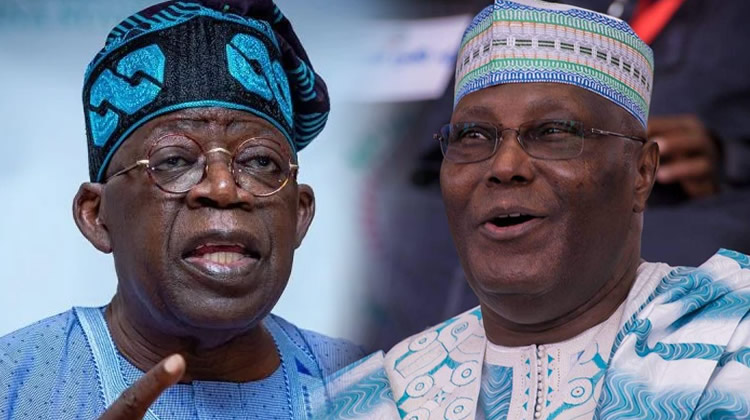
Some of the opposition leaders present in at the event include former Senate President David Mark; former Governor of Osun State, Rauf Aregbesola; former Vice President Atiku Abubakar; former Governor of Rivers State, Chibuike Rotimi Amaechi; and former Governor of Anambra State, Peter Obi, all from the African Democratic Congress (ADC).
The National Chairman of the New Nigeria Peoples Party (NNPP), Ahmed Ajuji, and other prominent members of the NNPP, notably Buba Galadima, were also in attendance.
The coalition said the amended law, signed by Bola Tinubu, contains “anti-democratic” clauses, which they argue may weaken electoral transparency and public confidence in the voting system.
At the centre of the opposition’s concerns is the amendment to Section 60(3), which allows presiding officers to rely on manual transmission of election results where there is communication failure.
According to the coalition, the provision weakens the mandatory electronic transmission of results and could create loopholes for manipulation.
They argued that Nigeria’s electoral technology infrastructure is sufficient to support nationwide electronic transmission, citing previous assurances by officials of the Independent National Electoral Commission (INEC).
The parties also rejected the amendment to Section 84, which restricts political parties to direct primaries and consensus methods for candidate selection.
They described the change as an unconstitutional intrusion into the internal affairs of parties, insisting that indirect primaries remain a legitimate democratic option.
The opposition cited alleged irregularities in the recent Federal Capital Territory local government elections as evidence of what they described as a broader pattern of electoral compromise.
They characterised the polls as a “complete fraud” and said the outcome has deepened their lack of confidence in the ability of the electoral system to deliver credible elections in 2027.
The coalition also condemned reported attacks on leaders of the African Democratic Congress in Edo State, describing the incidents as a serious threat to democratic participation and political tolerance.
They warned that increasing violence against opposition figures could destabilise the political environment if not urgently addressed.
In their joint statement, the opposition parties pledged to pursue “every constitutional means” to challenge the Electoral Act 2026 and safeguard voters’ rights.
“We will not be intimidated,” the leaders said, urging civil society organisations and citizens to support efforts aimed at protecting Nigeria’s democratic system.
On February 18, 2026, President Bola Tinubu signed the Electoral Act (Amendment) 2026 into law following its passage by the National Assembly. The Act introduced several reforms, including statutory recognition of the Bimodal Voter Accreditation System and revised election timelines.
However, opposition figures such as Atiku Abubakar and Peter Obi have also called for further amendments, particularly over the manual transmission fallback clause, which critics say leaves room for manipulation.
The president said the law will strengthen democracy and prevent voter disenfranchisement.
Tinubu defended manual collation of results, questioned Nigeria’s readiness for full real-time electronic transmission, and warned against technical glitches and hacking.
The Electoral Act sparked intense debate in the National Assembly over how election results should be transmitted ahead of the 2027 general elections.
Civil society groups under the “Occupy NASS” campaign demanded real-time transmission to curb manipulation.
In the Senate, lawmakers clashed during consideration of Clause 60, which allows manual transmission of results if electronic transmission fails.
Senator Enyinnaya Abaribe (ADC, Abia South) demanded a formal vote to remove the proviso permitting manual transmission, arguing against weakening real-time electronic reporting.
The move led to a heated exchange on the floor, with Senate President Godswill Akpabio initially suggesting the demand had been withdrawn.
After procedural disputes and a brief confrontation among senators, a division was conducted. Fifteen opposition senators voted against retaining the manual transmission proviso, while 55 supported it, allowing the clause to stand.
Earlier proceedings had briefly stalled during clause-by-clause review, prompting consultations and a closed-door session.
In the House of Representatives, a similar disagreement came up over a motion to rescind an earlier decision that mandated compulsory real-time electronic transmission of results to IReV.
Although the “nays” were louder during a voice vote, Speaker Tajudeen Abbas ruled in favour of rescinding the decision, triggering protests and an executive session.
Related
Headline
AFP: How Tinubu’s Govt Paid Boko Haram ‘Huge’ Ransom, Released Two Terrorists for Kidnapped Saint Mary’s Pupils
Published
3 days agoon
February 24, 2026By
Eric
Two Boko Haram commanders were also freed as part of the deal, which goes against the country’s own law banning payments to kidnappers. The money was delivered by helicopter to Boko Haram’s Gwoza stronghold in northeastern Borno state on the border with Cameroon, intelligence sources told AFP.
The decision to pay the militants is likely to irritate US President Donald Trump, who ordered air strikes on jihadists in northern Nigeria on Christmas Day and has been sent military trainers to help support Nigerian forces.
Nigerian government officials deny any ransom was paid to the armed gang that snatched close to 300 schoolchildren and staff from St. Mary’s boarding school in Papiri in central Niger state on November 21. At least 50 later managed to escape their captors.
Boko Haram has not been previously linked to the kidnapping, but sources told AFP one of its most feared commanders was behind the mass abduction: the notorious jihadist known as Sadiku.
He infamously held up a train from the capital in 2022 and netted hefty ransoms for the release of government officials and other well-off passengers.
Boko Haram, which has waged a bloody insurgency since 2009, is strongest in northeast Nigeria.
But a cell in central Niger state operates under Sadiku’s leadership. The St. Mary’s pupils and staff were freed after two weeks of negotiations led by Nuhu Ribadu, Nigeria’s National Security Adviser, with the government insisting no ransom was paid. Nigeria’s State Security Service flatly denied paying any money, saying “government agents don’t pay ransoms”.
However, four intelligence sources familiar with the talks told AFP the government paid a “huge” ransom to get the pupils back. One source put it at 40 million naira per head – around $7 million in total.
Another put the figure lower at two billion naira overall. The money was delivered by chopper to Ali Ngulde, a Boko Haram commander in the northeast, three sources told AFP.
Due to the lack of communications cover in the remote area, Ngulde had to cross into Cameroon to confirm delivery of the ransom before the first group of 100 children were released.
Nigeria has long been plagued by mass abductions, with criminals and jihadist groups sometimes working together to extort millions from hostages’ families, and authorities seemingly powerless to stop them.
Source: Africanews
Related
Headline
Unlawful Invasion: El-Rufai Drags ICPC, IGP, Others to Court, Demands N1bn Damages
Published
3 days agoon
February 23, 2026By
Eric
Former Governor of Kaduna State, Nasir El-Rufai, has slammed a ₦1 billion fundamental rights enforcement suit against the Independent Corrupt Practices and Other Related Offences Commission (ICPC) for what he claimed was an unlawful invasion of his Abuja residence.
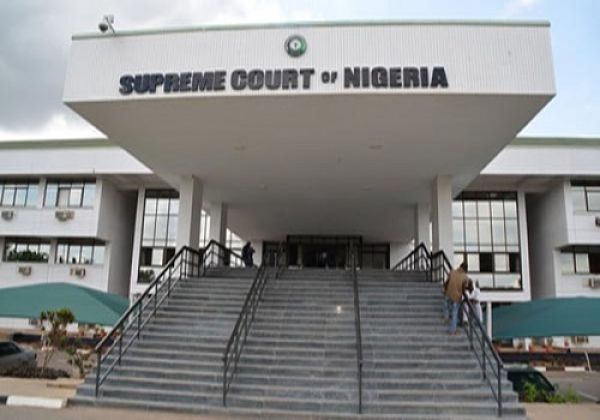
El-Rufai, in a suit filed at the Federal High Court in Abuja, also listed the Chief Magistrate, Magistrate’s Court of the FCT, Abuja Magisterial District; Inspector-General of Police, and the Attorney-General of the Federation (AGF) as 2nd to 4th respondents respectively.
According to the suit filed through his lawyers, led by Oluwole Iyamu, El-Rufai prayed the court to declare that the search warrant issued on February 4 by the Chief Magistrate, Magistrate’s Court of the FCT (2nd respondent), authorising the search and seizure at his residence as invalid, null and void.
Security operatives had stormed and searched the former Governor’s residence in the ongoing investigations against him.
However, he argued in the case marked: FHC/ABJ/CS/345/2026, that the search was in violation of Section 37 of the Constitution, and urged the court to declare that the search warrant was “null and void for lack of particularity, material drafting errors, ambiguity in execution parameters, overbreadth, and absence of probable cause thereby constituting an unlawful and unreasonable search.”
In the suit dated and filed February 20 by Iyamu, ex-governor, who is currently under detention, sought seven reliefs.
He prayed the court to declare that the invasion and search of his residence at House 12, Mambilla Street, Aso Drive, Abuja, on Feb. 19 at about 2pm and executed by agents of ICPC and I-G, “under the aforesaid invalid warrant, amounts to a gross violation of the applicant’s fundamental rights to dignity of the human person, personal liberty, fair hearing, and privacy under Sections 34, 35, 36, and 37 of the Constitution.”
He urged the court to declare that “any evidence obtained pursuant to the aforesaid invalid warrant and unlawful search is inadmissible in any proceedings against the applicant, as it was procured in breach of constitutional safeguards.”
El-Rufai, therefore, sought an order of injunction restraining the respondents and their agents from further relying on, using, or tendering any evidence or items seized during the unlawful search in any investigation, prosecution, or proceedings involving him.
“An order directing the Ist and 3rd respondents (ICPC and I-G) to forthwith return all items seized from the applicant’s premises during the unlawful search, together with a detailed inventory thereof.
“An order awarding the sum of N1,000,000,000.00 (One Billion Naira) as general, exemplary, and aggravated damages against the respondents jointly and severally for the violations of the applicant’s fundamental rights, including trespass, unlawful seizure, and the resultant psychological trauma, humiliation, distress, infringement of privacy, and reputational harm.”
The breakdown of the ₦1 billion in damages includes “a N300 million as compensatory damages for psychological trauma, emotional distress, and loss of personal security;
“A ₦400 million as exemplary damages to deter future misconduct by law enforcement agencies and vindicate the applicant’s rights.
“A ₦300 million as aggravated damages for the malicious, high-handed and oppressive nature of the respondents’ actions, including the use of a patently defective warrant procured through misleading representations.”
He equally sought ₦100 million as the cost of filing the suit, including legal fees and associated expenses.
Iyamu argued that the search warrant was fundamentally defective, lacking specificity in the description of items to be seized, containing material typographical errors, ambiguous execution terms, overbroad directives, and no verifiable probable cause.
He added that the warrant violated Sections 143-148 of the Administration of Criminal Justice Act (ACJA), 2015; Section 36 of the Corrupt Practices and Other Related Offences (ICPC) Act, 2000, and constitutional protections against arbitrary intrusions and several other constitutional provisions.
“Section 146 stipulates that the warrant must be in the prescribed form, free from defects that could mislead, but the document is riddled with errors in the address, date, and district designation;
“Section 147 allows direction to specified persons, but the warrant’s indiscriminate addressing to “all officers is overbroad and unaccountable.
“Section 148 permits execution at reasonable times, but the contradictory language creates ambiguity, undermining procedural clarity,” he submitted.
Iyamu stated that the execution of the invalid warrant on Feb. 19 resulted in an unlawful invasion of his client’s premises, constituting violations of the rights to dignity (Section 34), personal liberty (Section 35), fair hearing (Section 36), and privacy (Section 37) of the Constitution.
He further argued that the search was conducted without legal justification and in a manner that inflicted humiliation and distress.
“Evidence obtained without a valid warrant is unlawful and inadmissible, as established in judicial precedents such as C.O.P. v. Omoh (1969) NCLR 137, where the court ruled that evidence procured through improper means contravenes fundamental rights and must be excluded,” he said.
In the affidavit in support of the application, Mohammed Shaba, a Principal Secretary to the former governor, averred that on Feb. 19 at about 2p.m., officers from the ICPC and Nigeria Police Force invaded the residence under a purported search warrant issued on or about Feb. 4.
According to him, the said warrant is invalid due to its lack of specificity, errors, and other defects as outlined in the grounds of this application.
He said the “search warrant did not specify the properties or items being searched for.”
Shaba stated that the officers failed to submit themselves for search as provided by the law before proceeding with the search.
“That the Magistrate did not specify the magisterial district wherein he sits.
“That during the invasion, the officers searched the applicant’s premises without lawful authority, seized personal items including documents and electronic devices, and caused the applicant undue humiliation, psychological trauma, and distress.
“Now shown to me and marked as ‘EXHIBIT B’ Is the list of the items carted away.
“That no items seized have been returned, and the respondents continue to rely on the unlawful evidence.
“That the applicant suffered violations of his constitutional rights as a result, and this application is brought in good faith to enforce same,” Shaba said.
Source: Naijanews.com
Related


INEC Moves Presidential, Guber Elections to January and February Respectively
Opposition Parties Reject 2026 Electoral Act, Demand Fresh Amendment
FCCPC Uncovers Patterns of Price Manipulation by Local Airlines
Many Killled, Houses Torched As Terrorists Unleash Deadly Attacks on Adamawa Communities
Fubara Appoints New SSG, Chief of Staff
Bill Gates Denies Involvement with Epstein, Admits Dating Two Russian Ladies
Tiwa Savage Launches Music Foundation in Lagos
In Death, Charles Taylor Jr. Reunites Liberians
The Power of Strategy in the 21st Century: Unlocking Extraordinary Possibilities (Pt. 2)
Princess Olufunmilayo Omisore Celebrates Grand 80th Birthday in Lagos
How an Organist Can Live a More Fulfilling Life
Adding Value: Confidence and Succces by Henry Ukazu
Vote Buying, Low Turnout Mar FCT Polls – Yiaga Africa
Vexatious and Meddlesome: ADC Condemns Wike’s Tour of FCT Polling Units
Trending
-
Boss Picks4 days agoIn Death, Charles Taylor Jr. Reunites Liberians
-
Opinion5 days agoThe Power of Strategy in the 21st Century: Unlocking Extraordinary Possibilities (Pt. 2)
-
Events4 days agoPrincess Olufunmilayo Omisore Celebrates Grand 80th Birthday in Lagos
-
Opinion4 days agoHow an Organist Can Live a More Fulfilling Life
-
Adding Value5 days agoAdding Value: Confidence and Succces by Henry Ukazu
-
Featured5 days agoVote Buying, Low Turnout Mar FCT Polls – Yiaga Africa
-
News5 days agoVexatious and Meddlesome: ADC Condemns Wike’s Tour of FCT Polling Units
-
Headline3 days agoAFP: How Tinubu’s Govt Paid Boko Haram ‘Huge’ Ransom, Released Two Terrorists for Kidnapped Saint Mary’s Pupils