Headline
Opinion: 33 Years Of Road Safety Administration, Traffic Management In Nigeria: Journey So Far
Published
5 years agoon
By
Editor
By Assistant Corps Marshal (ACM( Bisi Kazeem fsi
The ugly narrative of Road Traffic crashes in the early 70s changed through Federal Government’s resilience in the establishment of the Federal Road Safety Commission (FRSC) in 1988, as the Lead Agency in road safety administration and traffic management in Nigeria via decree no 45 of 1988 as amended by decree no 35 of 1992, later codified as FRSC Act (CAP 141) Laws of the Federation 1990 and FRSC Act CAP F19, LFN, 2004; FRSC (Establishment) Act, 2007.
Being a strategic intervention to address the ugly trend of road crashes, the FRSC has, since its establishment operated in line with best global practices. The organisation was specifically established and empowered by legislation to coordinate road safety administration and traffic management in Nigeria with an ultimate aim of halting the trend of road traffic crashes and fatalities on all roads (204,000km) in the country, and its Laws and Regulations can be exercised in any part of the country.
The major goal of the founding fathers was for the Corps to become a world class organisation that will fulfill its primary purpose of existence, and align herself towards realizing all United Nations resolutions on reduction of deaths and injuries on the roads and make Nigerian roads one of the safest in the world.
To achieve this cardinal mandate of saving lives without compromise, the FRSC religiously chose the path of honour in efficient service conveyance, by delivering high quality services in line with a Quality Management Policy that is not at variance with other laws of the land in respect to road safety administration and management in the country. Unlike other agencies of government, the establishment of FRSC was in conformity with the lead agency concept recommended by the United Nations and World Health Organization, that member nations should dedicate an agency of government to lead in coordinating Road safety management as a best practice to combat the scourge of death and injuries from RTC.
Prior to the establishment of the FRSC in 1988, the World Health Organization (WHO) had adjudged Nigeria, the second only behind Ethiopia, as the most dangerous country in the world to drive a motor vehicle.
In its thirty three years as lead agency in traffic and safety management, FRSC has recorded tremendous achievements in the area of Traffic Engineering, Road Safety Administration, Traffic Management, rescue operation, and Crash reduction. It has achieved this glorious feat, as a result of a chain of leadership ingenuity that led to the fusion of the services of volunteers called Special Marshals and social responsibility groups in its programmes to enhance road safety management in Nigeria.
To this end, road safety administration in Nigeria has witnessed a paradigm shift from Traditional approach to Safe Systems Approach through the use of state of the art Information Technology facilities; the Corps has been able to enhance its operational capacity aimed at promoting public safety and security. The Corps under different governmental and administrative leaderships has proven to allay the menace of road traffic crashes in the past 33 years.
Considering that road transport sector in Nigeria accounts for over 90% of passengers and freight movement, this exerts undue pressure on the FRSC in discharging its cardinal responsibilities. In view of the foregoing, the Corps has over the years embarked on several reforms which include but not limited to the following: Development of a national road safety strategy road map, established a National Road Safety Advisory Council (NaRSAC) which is directly under the Office of the Vice President, Yemi Osinbajo improved operational efficiency, enhanced regulatory environment, and accelerated response capability to situations that needed immediate actions.
The Corps therefore defined its cause in tandem with UN Decade of Action as well as the mantra of functional 21st century organisation by chatting a path to meet the Accra Declaration of 50% reduction in fatality by 2015, achieve the UN decade of action on road Safety of 50% fatality reduction by 2021 and the rollover of UN Decade of Action in 2031.
The Corps has now come of age after going through good times and tides. In its thirty Three years journey, it recorded for instance, a commendable 62.4% reduction in crash from 40,881 in 1976 to 25,792 within its first operational year alone. In this regard, it is instructive to state that the Corps has doggedly fought RTC from the unacceptable 40,881 of 1976 down to 10522 in 2020. The statistics above shows that the Corps is gaining grounds accordingly.
As a performance driven organisation with clearly set measurable Key performance Indicators, FRSC is today, the only law enforcement organization in Nigeria certified by the International Standard organization. The Corps has over three decades designed and operated 28 web applications for its operational activities so as to create an accessible platform for the general public.
The introduction of the toll free 122 emergency number and a 24 hours call center established to reduce response time for crash victims; a single step that has reduced emergency response time from 50 minutes to 15 minutes thereby decreasing the number of fatalities in crash situations. More so, the introduction of Verification Portal for drivers licence and number plates, the introduction of the Road Transport Safety Standardisation Scheme (RTSSS) for uniformity and harmonization of fleet operators in the country, the Driving School Standardisation Scheme (DSSP), the introduction of the speed limiting device whose enforcement began on 1st February, 2017, and the vehicle tracking system among others, are policies formulated and implemented to fight road traffic crash to extinction.
Further to the aforementioned, as one of the nation’s custodian of critical data infrastructure, the Corps has successfully strengthened inter-agency cooperation with relevant stakeholders such as the National Identity Management Commission (NIMC), National Bureau of Statistics (NBS), Nigerian Customs Service (NCS), and Banks in Nigeria with evident success in inter agency collaboration and harmonization of data for national development.
Again, it is noteworthy to look at the direction of the present leadership of Dr Boboye Oyememi’s swift response to the incessant abuse of traffic rules which led to the putting together of the OPERATION COBRA to address certain life-threatening traffic-related offences. This singular step has become instrumental to the decline in crash rate as offenders apprehended by the Operation Cobra squad are usually referred to a government health facility for Emotional Stability Test. Oyeyemi’s Management has so far constructed and inaugurated 16 permanent structures in various Sector commands, with other two awaiting inauguration.
To achieve the stated targets, the Corps has developed transformational initiatives focused on People, Processes and Technology (PPT) that is why today not only does its staff pride as the most disciplined but the Corps stands as the best Information Technology (IT) driven organization in Nigeria with its robust data base and over 95 percentage digitalized administrative and operational procedures.
It is therefore expedient to state that the era covering the period of reign of the present Corps Marshal, Dr. Boboye Oyeyemi, and establishment of State Traffic Agencies was encouraged to further complement the function of the FRSC within the states. The Corps also embarks in consultation with stakeholders who have become more involved through the mechanism of the special marshals, celebrity Special Marshals and road Safety clubs. The deployment of FRSC personnel to Tank Farms has to a large degree, dwindled the rate of crashes associated with articulated vehicles, particularly tankers carrying petroleum products. Through its Safe-to- Load initiative, articulated vehicle have been subjected to checks before they are allowed to load from the various depots across the country with trained personnel of the Corps undertaken routine checks to ensure strict compliance.
In pursuit of aggressive public enlightenment programme, the FRSC Management under him established the National Traffic Radio 107.1 FM in October, 2019 as a medium for educating mass members of the public on traffic matters and updating them of road conditions across the country. The Corps further introduced a massive welfare scheme through the Post Service Scheme and the 20,000 Housing project for Staff.
With its present 12 Zonal Commands, 37 Sector Commands, 213 Unit Commands, 41 Out Posts, FRSC Academy, FRSC Training Schools, FRSC Staff College, 214 Driver License Centres/Work Stations, 1 Signage Plant, 1 National Driver License Print Farm, 43 Emergency Ambulance Points (ZEBRAs), and 17 Staff Clinics; it’s quite in order to posit that the Corps has witnessed tremendous expansion in these 33 years rising from its hitherto few command structures to having representation in the 774 Local Governments of the Federation.
On the global scene, FRSC takes leadership role of West African road Safety Organisation (WARSO) as part of measures to scale up the bar on road safety management within the West African region. . Further to this, the Corps has provided technical assistance to Sierra Leone, Liberia, Ethiopia and so on. It has secured implementation of a policy robust engagement with international organizations for capacity building including world bank project on Safe corridor Project etc. Apart from succeeded in securing the endorsement of National Road Safety Strategy in 2016, FRSC made Nigeria the first African country to be admitted into International Traffic Safety Data analysis group IRTAD, became the first African country to accede to six (6) United Nations Conventions on Road Safety. This is to align with global best practice and domesticate the standards.
These efforts have given the organization awards both national and international especially during a workshop under the auspices of the United Nations Economic Commission for Africa in Adis Ababa, Ethiopia, where the FRSC was adjudged the best lead agency on road safety management in Africa.
In the same vein, the Corps’ success story has been attributed to its establishment under the Presidency with clear mandate and budget, also identified the introduction of a world class drivers’ licensing standard by the FRSC which is difficult to forge, building and maintenance of a dedicated work force including regular marshals and a volunteer arm and optimal deployment of technology, a feat which has been described as unparalleled in Africa, South of the Sahara.
Experts in the transportation industry also identified data utilization and transparency as one of the Corps’ quick win strategies which has ensured effective management of traffic-related matters through a weekly reportage of traffic trends, utilisation of data for performance monitoring and targeted interventions, effective monitoring, evaluation and planning, in addition to transparent evaluation of trends and sustained drive for improved performance.
In recognising the leadership role FRSC has played in shaping Nigeria’s Road Safety in thirty three (33) years, it is important to acknowledge that the level of awareness and citizen’s view of road safety as a collective responsibility together with political will of the government is the reason for the achievements so far recorded.
Bisi Kazeem is the Corps Public Education Officer, FRSC
Related
You may like
-
Enhancing Food Security: Governor Umo Eno’s Worthy Interventions
-
My Memoir: How I Survived Nigeria/South Africa Match by Eric Elezuo
-
Rotary Africa, Taiwan Sign Historic Inter-Country Committee Protocol Agreement
-
Abiodun Oshinibosi Introduces Girl-Child Matrix Project
-
Efik Group Cautions Deposed Obong To Respect Supreme Court, Stop Parading As King
-
Opinion: 2023:Politics Without Ideas- Reuben Abati
Headline
Parties’ Deregistration: ADC, Not NDC, is the Target
Published
1 day agoon
June 29, 2026By
Eric
By Eric Elezuo
As the 2027 presidential election draws closer, intrigues, manipulations and maneuvers have continued to be the order of the day as political parties engage in one gimmick or another to outdo and undo one another.
While some are playing politics of numbers and conviction, others are engaging tendencies that tend to question the status quo and established principles under which genuine democracy is formed. As a matter of fact, fingers have been pointed at the President Bola Tinubu-led Federal government as the brain behind all machinations that have attempted to derail multi-party democracy, and institute a one-party state, which is alien to the Nigerian democratic roots. This is as a result of the constant imbroglio that has consistently engulf almost all the major political parties in the country.
Fresh facts have however, emerged to prove that every act of frustration thrown at the opposition has been indirectly aimed at the main opposition party, the African Democratic Congress (ADC), and its presidential candidate, Alhaji Atiku Abubakar.
According to reliable sources, the recent deregistration of parties, especially the Nigerian Democratic Congress (NDC), was actually targeted at the ADC.
Recall that the Federal High Court in Lokoja, Kogi State, on June, 26, set aside its earlier judgement directing the Independent National Electoral Commission (INEC) to register the NDC as a political party. A ruling that put a question mark on the eligibility of the party presenting candidates in the forthcoming 2027 elections
The presiding judge, Isah Dashen, held that all relevant parties must be heard before any substantive decision can be made in the matter.
According to the judge, the earlier judgement was constitutionally defective as it was delivered without hearing from all interested parties.
Mr Dashen further ruled that the status quo be restored to what it was before the December 10, 2025 judgement, pending the determination of the substantive suit.
He also observed that certain material facts were suppressed in the earlier proceedings, which justified the decision to set aside the judgment.
Consequently, the court ordered that the substantive suit should begin afresh, with the Independent National Electoral Commission (INEC), the PMP and the NDC as parties to the case.
According to NAN’s reports, the applicant’s lawyer, Chikezie Ekeocha, told journalists that the PMP approached the court after discovering that NDC’s registration was based on a logo it had previously submitted to INEC before the commencement of the suit.
According to Mr Ekeocha, the court agreed that the applicant’s rights had been affected and consequently vacated the earlier judgement.
“The court has ordered all parties to return to the position they occupied before the judgment of 10 December 2025, and directed the claimants to join all necessary parties to ensure the issues in dispute are effectually and completely determined,” he said.
He explained that the implication of the ruling is that every action taken by INEC in compliance with the now-vacated judgment stands reversed.
“The recognition of the NDC, the issuance of its certificate of registration, its inclusion in INEC’s records, and any appearance on ballot papers arising from that judgement must be withdrawn pending the final determination of the substantive suit,” Mr Ekeocha stated.
He, however, clarified that the substantive case remains before the court and has not been decided.
“The matter has not been concluded. The court merely set aside its previous judgment and directed that the party whose interests were affected be joined so that all sides can be heard before a fresh decision is reached.”
Mr Ekeocha also dismissed suggestions that the court merely ordered parties to maintain the status quo, insisting that the ruling specifically directed a restoration of the position that existed before the 10 December 2025 judgement.
The ruling effectively returns the dispute over the registration of the NDC to the Federal High Court for a fresh hearing, with all relevant parties expected to participate before a new determination is made.
It would also be recalled that a few weeks earlier, the Federal High Court in Abuja, had ordered the deregistration of five political parties including the African Democratic Congress (ADC). The others are Action People’s Party (APP), Action Alliance (AA), Zenith Labour Party (ZLP) and Accord Party.
However, on June 16, the Court of Appeal in Abuja halted the enforcement of the judgement, ruling that it violated its earlier ruling staying proceedings before the Federal High Court.
While INEC awaits the release of the Certified True Copy (CTC) of the judgment to deregister the NDC, the NDC has reacted, rejecting the judgment as travesty of justice.
Lending credence to the notion that the President Tinubu-led administration is basically targeting the establishment of the ADC as a party, and the candidature of its presidential flagbearer, former Vice-President Atiku Abubakar, who is also the presidential candidate of the ADC, has stated categorically that there are plots to prevent the party from participating in the 2027 general election.
Atiku’s position is stated in a statement issued by his Senior Special Assistant on Public Communication, Phrank Shaibu on Monday, notifying the public that he had received credible information suggesting that political and legal manoeuvres were being deployed against the ADC, stressing that the persecution that has been thrown towards the NDC was a clear distraction as the main target is the ADC.
Atiku alleged that anti-democratic elements within the ruling All Progressives Congress (APC) were working to ensure that the ADC is excluded from the ballot.
“We are fully aware of their plots. While they seek to sow confusion within the opposition, we know their real target is the ADC because it represents the most credible alternative,” he said.
Atiku called on Nigerians to reject any attempt to determine which opposition parties participate in the election.
“We therefore call on all Nigerians — not just ADC members and supporters — to rise in defense of democracy and reject any attempt by the ruling party to cherry-pick which opposition parties are permitted to participate in the next general election,” he said.
“Our message to the APC and the hooded men plotting in dark chambers is simple: you may conspire, but you will not succeed.
“If the APC is truly confident in its popularity, why is it so terrified of the ADC?”
He said he hoped the information available to him would not materialise but argued that recent political developments made such concerns difficult to dismiss.
“The pattern has become all too familiar. First, institutions that ought to be neutral are drawn into partisan contests,” he said.
“Then, frivolous litigations suddenly gain unusual momentum. Administrative powers are selectively deployed.
“Political pressure is mounted behind closed doors. Before long, democracy itself becomes the casualty.”
Atiku alleged that the ruling party has focused more on weakening the opposition than addressing the country’s economic and security challenges.
“The obsession with silencing the opposition has become so consuming that governance itself has taken a back seat,” he said.
“At a time when Nigerians are battling hunger, inflation, unemployment, insecurity, and collapsing purchasing power, those entrusted with public office appear preoccupied with political survival rather than national survival.”
Nigerians recall that ever since the official rejuvenation of the ADC in June/July of 2025, where the duo of Senator David Mark and Ogbeni Rauf Aregbesola emerged as the party’s chairman and secretary respectively, the party has not known moments of peaceful coexistence as litigations from corners unknown have sprang up in a bid to destabilize the party and deprive it of the opportunity of featuring on the ballot paper come 2027.
ADC, as a child of circumstance emerged from the rumbles of the litigation-ridden former main opposition party, the Peoples Democratic Party (PDP), where two factions have consistently remelained at loggerheads over leadership. While the Minister of the Federal Capital Territory, Nyesom Wike, who is working assiduously to ensure the reelection of Bola Tinubu, leads one faction, Oyo State Governor, Seyi Makinde, who became a defacto head, leads the other faction. In all, PDP appeared to have no direction, forcing many of its members to jump ship, thereby birthing the ADC, and to a large extent, the NDC, which is presenting Peter Obi as the presidential candidate, with former Kano governor, Rabiu Musa Kwankwaso, as his running mate.
Sources also informed The Boss that the hasty reading and passage of the Electoral Act 2026 by the Godswill Akpabio-led National Assembly, with many great areas left unattended to, were also part of the grand design to deprive the ADC the constitutional rights of presenting candidates for the 2027 elections.
But both the ADC and the NDC has vowed that they would follow every process to ensure that the crackdown on opposition parties by the Tinubu administration comes to an abrupt end.
But beyond the intrigues, Nigerians are gearing up to participate fully in the forthcoming election with cross sections of the population either hailing Tinubu for his policies or knocking him for the untold hardship in the land.
Related
Headline
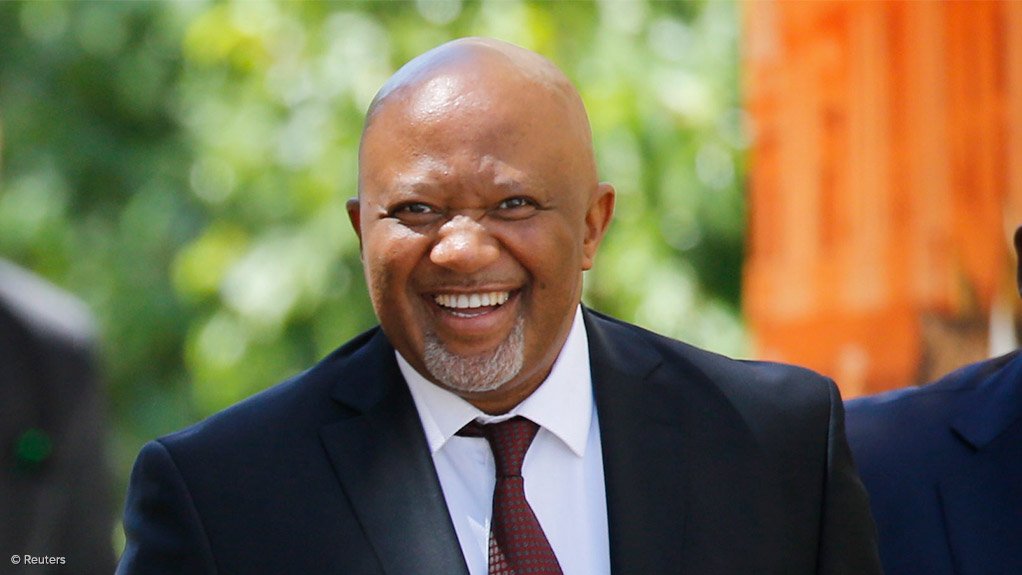
South Africa Nothing Without Africa – MTN Boss, Mcebisi Jonas
Published
3 days agoon
June 27, 2026By
Eric
The MTN Group Chairman, Mcebisi Jonas, has condemned the ongoing anti-foreigner sentiment in South Africa, describing it as a symptom of State failure being cynically exploited by politicians with no interest in genuine solutions.
The speech is seen as one of the most substantive interventions by a senior business figure into xenophobic crisis currently plaguing South Africa.
Delivered during the funeral service of Zimbabwean-born activist and public servant, Thokozani Damasane, Jonas’ words have sparked a wave of discussion across South African civil society.
“I was thinking, what is home to Damasane?” he said. “Because I understand, and I understood very early in life, that home is where humanity is. Home is about humanness. It is about the good of humanity and striving for the good of humanity.”
Thokozani Damasane was born and educated in Zimbabwe before relocating to South Africa during the post-apartheid transition period. Jonas described him as arriving “as an outcast” into a country still finding its post-liberation footing – and choosing, nonetheless, to commit himself entirely to its struggles and its people.
“He immersed himself deeply into the struggles, into the pains of South Africans, and he became one of us,” Jonas said.
“In Damasane’s strength, our strength as South Africa and South Africans is reflected. And in his weaknesses, our own weaknesses are reflected.”
Speaking further, Jonas blamed the state for the failure being witnessed, emphasising that if foreigners leave South Africa today, the country’s problems will still persist.
“Foreigners can leave tomorrow – inequality will be with us,” he told the congregation.
“Foreigners will leave tomorrow – unemployment will be with us. Foreigners will leave tomorrow – our police will remain corrupt. Foreigners will leave tomorrow – our politicians will still be concerned with one thing: being elected and re-elected.
“The problem is the failure of the state. The State doesn’t manage immigration. It doesn’t manage its borders. It doesn’t enforce
law enforcement. It doesn’t manage education. What are you expecting?”
Jonas argued that this failure created fertile ground for political manipulation. “When people feel the burn, they become vulnerable to politicians whose sole purpose is to be elected and re-elected. Some of them have no credibility whatsoever. But they lead marches and tell our people that the problem is not us – it is foreigners.”
Jonas recounted a conversation he had witnessed between Damasane and a young man who had challenged the right of foreigners to be in South Africa. Damasane’s response, Jonas said, had stayed with him ever since.
“Damasane said to this guy: Just wait fifteen or twenty years. You will also want to leave your country.”
Jonas told mourners those words now carry a weight Damasane may not have anticipated. “As I stand up today, I look at South Africa. The level of oppression and inequality, the level of exclusion of our people, the level of corruption, the betrayal of the dream of liberation – those words of Damasane ring very loud in my ears.”
South Africa is nothing without Africa
Jonas closed with a call for what he described as a return to “national consciousness” – one rooted in continental solidarity and economic interdependence rather than ethnic exclusion.
“We are a nation embedded in Africa,” he said. “And without Africa, our growth as a country – economically – our fortune is intertwined with the growth of Africa. South Africa is nothing without Africa. And Africa is nothing without South Africa.”
He also reframed the question of legacy and identity for Damasane’s children, who were present. “Sometimes this thing called meritocracy is measured in wealth. No. It is values, it is principles, it is integrity. And your father had all of that.”
“We cannot judge people by their origin,” he told mourners. “We cannot determine the legal status of people by their origin.”
Related
Headline
NDC Rejects Court Ruling on Party’s Registration, Heads to Appeal Court
Published
3 days agoon
June 27, 2026By
Eric
The Nigeria Democratic Congress (NDC), on Friday, vowed to challenge the judgment nullifying its registration by the Independent National Electoral Commission (INEC), insisting that it would exercise its constitutional right of appeal.
Reacting to the ruling on Thursday, the party’s spokesman, Osa Director, said the NDC was still awaiting the certified copy of the judgment before making a comprehensive statement on the court’s decision.
He, however, confirmed that the party had resolved to head to the appellate court.
“We are still waiting to obtain a copy of the judgment. After reading the comprehensive judgment, we will make a detailed statement,” he said.
The spokesman added: “For now, what is certain is that we will exercise our right of appeal.”
Insisting that the party would challenge the ruling, he said: “It is our constitutional right to appeal, and we intend to exercise that right.”
When asked specifically whether the NDC would appeal the judgment voiding its registration, the spokesman replied: “Yes, the party will appeal the case.”
The party’s reaction came shortly after a Federal High Court sitting in Lokoja, Kogi State, in a judgement that nullified its registration by INEC, a development that could have significant implications for the NDC’s participation in the country’s political process ahead of the 2027 general elections.
The NDC, however, maintained that it would refrain from making further comments on the substance of the judgment until it had studied the full text of the court’s decision.
The party’s planned appeal is expected to set the stage for a fresh legal battle over its status and continued existence as a registered political party.
Related


Certificate Forgery: Group Seeks Tinubu’s Disqualification from 2027 Election
A Cry from the Creeks: A Daughter’s Plea for the Niger Delta
Remembering Michael Joseph Jackson (1958 – 2009)
Parties’ Deregistration: ADC, Not NDC, is the Target
The Deluge We Built: Rain Does Not Create Catastrophe, It Reveals It
Glamour As Oluwatoyosi Ibirinola and Christopher Oladayo Tie Nuptial Knots in Lagos
Professor Abiodun Adeniyi: An Epitome of Leadership, Scholarship and Media Entrepreneurship
Trump Declares Trade War on Nations Imposing Digital Tax on US Tech Firms
Alleged Coup: Court Orders DSS to Probe VDM over Leaked Trial Video
The Dreams That Died, and the Son Who Was Worth More Than All of Them
Elevating Societies: Leadership As Enduring Bridge from Ruler-ship to Generational Prosperity
Hardship: Remi Tinubu Asks Poor Nigerians to Start Akara, Roasted Corn Business
FG Seeks Foreign Collaboration to Rescue Abducted Oyo Pupils, Teachers
How GLO’s Customer-Centred Innovations’ Keeping Nigerians Connected to the 2026 FIFA World Cup
Trending
-
World3 days agoTrump Declares Trade War on Nations Imposing Digital Tax on US Tech Firms
-
National6 days agoAlleged Coup: Court Orders DSS to Probe VDM over Leaked Trial Video
-
Tech and Humanity3 days agoThe Dreams That Died, and the Son Who Was Worth More Than All of Them
-
Opinion3 days agoElevating Societies: Leadership As Enduring Bridge from Ruler-ship to Generational Prosperity
-
Featured3 days agoHardship: Remi Tinubu Asks Poor Nigerians to Start Akara, Roasted Corn Business
-
National4 days agoFG Seeks Foreign Collaboration to Rescue Abducted Oyo Pupils, Teachers
-
National2 days agoHow GLO’s Customer-Centred Innovations’ Keeping Nigerians Connected to the 2026 FIFA World Cup
-
Headline3 days agoNDC Rejects Court Ruling on Party’s Registration, Heads to Appeal Court