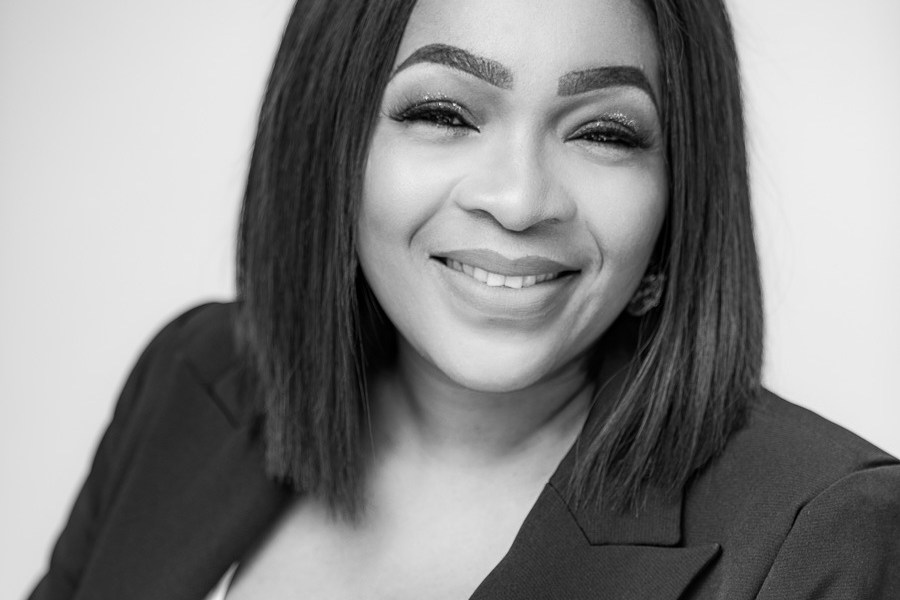
By Folu Adebayo
Almost thirty years ago, I held a healthy baby boy in my arms and I began to write his life.
Not on paper. In my chest. The way every mother does in those first hours, when the weight of a newborn is still strange and the future feels like something you can simply decide. We named him Akintade. And in the quiet of that hospital room, I wrote the whole story out.
I saw the first day of school. The blazer a little too big for his shoulders, the gap-toothed grin, my hand letting go of his at the gate. I saw a graduation, a gown, a name read out, a cap thrown into the air. I saw a wedding day. I saw grandchildren I would spoil and hand back sticky and overtired. I had written every chapter before he had lived a single day.
I just did not know that I was dreaming about a son who did not yet exist.
Akintade is autistic. He communicates without words.
And one by one, the chapters I had written began to be erased. The school gate I had imagined did not look the way I had pictured it. The graduation. The wedding. For a long time, I grieved each one as if it were a death. Because in a way, it was. Quietly, privately, in a grief I did not have permission to speak aloud, I mourned a future that was never going to arrive.
I want to be honest about that grief, because so many parents carry it in silence and are made to feel ashamed of it. We are told we should only feel grateful, only feel love. And we do feel those things, fiercely. But alongside them, in the early years, there was mourning. And pretending otherwise helps no parent who is sitting tonight where I once sat.
| “What died was never my son. What died was the script I wrote before I ever knew him.” |
Here is what took me years to understand, and what I would give anything to tell my younger self in that hospital room.
What died was never my son. What died was the script I had written before I knew him. Those were my dreams. My expectations. I had handed a newborn a stack of plans he never asked to carry, and when life gave me a different story, I mourned my version of him as though it were a real person who had been taken away.
It was not. He was here the whole time. The real one. And the real one was never the tragedy. The tragedy existed only in the comparison, only in measuring the son I was given against the son I had invented.
The day I finally put the script down; I got my son back.
And the son I got back was worth more than every dream I had lost.
Let me tell you about the real Akintade, the one I almost missed while grieving the imaginary one. He is jovial. He communicates using Picture Exchange Communication (PECS) and Makaton signs (by the way, all of us in my household are makaton experts, thanks to Akintade) He is full of life. He has a spot on the sofa that is his, where he settles when he comes home. He loves good food. His whole face changes when Afrobeats comes on, a joy so complete and so unguarded that it puts the rest of us to shame, we who have learned to hold our happiness back.
He may never speak full sentence to me. But without a single word, this man has taught me more about human worth than anyone I have ever met. He has redrawn my understanding of what success means, of what a life is for, of how to love without condition and without expectation of return. The dreams I lost were small, ordinary, borrowed from everyone else’s idea of a good life. What he gave me instead was something I did not know to dream of.
He may never speak a sentence. But without a single word, he has changed how I understand human worth.”
I am writing this in a Nigerian paper deliberately, because I know how autism is too often spoken of among my people. In hushed tones. As shame. As something to hide, to pray away, to be ashamed of in front of relatives. I have seen families isolate these children, and I have seen the children pay the price for our silence and our fear.
So let me say it plainly, as a Nigerian mother, in a Nigerian paper. My autistic son is not a punishment. He is not a curse. He is not a lesser version of a real child. He is a whole human being, of immense worth, who has enriched my life beyond anything I could have planned. And the shame that surrounds children like him belongs not to them, but to a society that has not yet learned to see them.
This is the work I have given my life to. Becoming his voice in every room he cannot speak in. Building a centre that bears his name. And trying, in whatever way I can, to change how our people see these extraordinary children, so that the next mother holding a baby like mine is met with understanding instead of pity, and welcome instead of shame.
If you are a parent reading this tonight, sitting in the chair I once sat in, mourning a future you had already written, I want to say one thing to you.
Put the script down. Gently, and without guilt. The grief is real and you are allowed it. But do not let it keep you from the child who is actually in front of you, the real one, who has been waiting this whole time to be met as he is rather than as you imagined him.
Go and meet your actual child. You may find, as I did, that the son you were given is worth more than all the dreams you lost. A man called Akintade is here. He has changed me. And if his story changes how even one family sees their own child, then every dream I once grieved was a small price for the one I was given instead.
Folu is the mother of Akintade, a Tech Leader, founder of Tade Autism Centre, Neurohelp.ai, and ATSI Charity. She is an autism advocate working to change how autism is understood and embraced.