Connect with us

World

US Electoral College Set to Confirm Biden Win Monday

Published

on

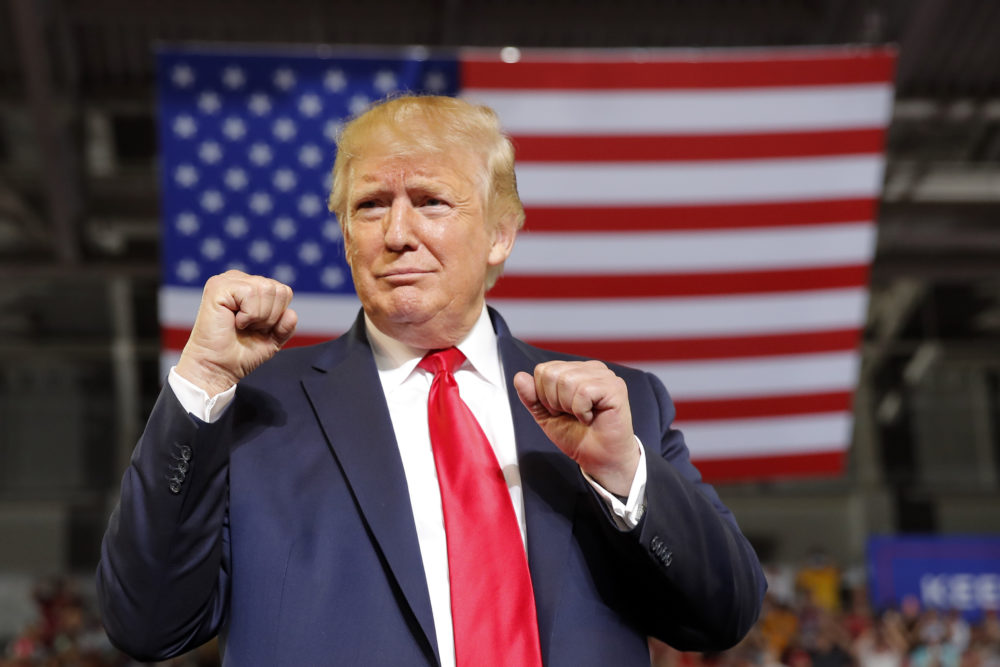
Long a mere formality, a vote on Monday by members of the Electoral College to formally recognise Joe Biden as the next US president has taken on unusual import this year with Donald Trump refusing to admit defeat.

The results of the November 3 vote have been certified by each of the 50 states and the District of Columbia; the Democrat won with a record 81.3 million votes, or 51.3 percent of those cast, to 74.2 million, and 46.8 percent, for the Republican president.

But in the United States, the occupant of the White House is chosen by indirect universal suffrage, with each state allocating its electors — whose numbers are essentially based on population — to the candidate who carried the state.

The results confirm an easy victory for Biden, with 306 of the 538 electoral votes, to 232 for Trump, with 270 required for election.

Electoral College members meet Monday to formalise the process, though the electors actually meet separately in each state.

Biden will then deliver a speech in the evening to celebrate the latest confirmation of his win and “the strength and resilience” of US democracy — a clear jab at Trump’s unprecedented stance.

Electors are local political officials or activists, civil society figures or friends of candidates.

Most are unknown to the wider public, though national personalities occasionally take part — like Hillary Clinton, who lost to Trump in the 2016 election but who will vote Monday in New York to confirm President-elect Biden and Vice President-elect Kamala Harris.

– No Trump concession –

Although there have been a few “faithless electors” in past years — who cast votes for someone other than the candidate who won their state — there have never been enough to change an election outcome.

So Biden’s victory will become all the more official on Monday.

But Trump, still the legal occupant of the White House until January 20, has continued to make baseless assertions that the November vote was the “MOST CORRUPT ELECTION IN U.S. HISTORY,” as he tweeted yet again on Sunday.

He added, “How do states and politicians confirm an election where corruption and irregularities are documented throughout?”

In fact, his campaign has not been able to document any widespread fraud, and its legal challenges to the vote — in dozens of suits, heard by scores of judges — have virtually all been dismissed, often in scathing language.

– An ultimate humiliation –

In an ultimate humiliation, the US Supreme Court — despite having a conservative majority assured by three Trump appointees — on Friday bluntly refused to even consider two Republican challenges to the vote.

Large numbers of Republican lawmakers are on record as backing Trump’s false claims of fraud.

Some may finally be willing to recognize Biden’s victory once the Electoral College ratifies it.

But with polls showing that as few as one in four Republican voters accept the election results as valid, Trump is not expected to give in anytime soon.

“WE HAVE JUST BEGUN TO FIGHT!!!” he tweeted.

This weekend, when asked on Fox News whether he would attend Biden’s inauguration on January 20 — as demanded by protocol and centuries of tradition — the former real estate magnate snapped, “I don’t want to talk about that.”

The president might yet seek to use America’s drawn-out transition process in one last attempt to reverse the outcome: some elected officials allied with Trump have speculated about contesting the result on January 6 when Congress is to formally validate the Electoral Congress tally.

Such a maneuver is given virtually no chance of succeeding.

Regardless, Trump’s struggle against a repeatedly confirmed result seems sure to leave Biden facing a steep challenge with the country more divided than ever.

(AFP)

Continue Reading
Click to comment

Leave a Reply

Your email address will not be published. Required fields are marked *

World

Okonjo-Iweala Rocks with Igbo Cultural Dances at WTO Open Day in Switzerland

Published

on

By

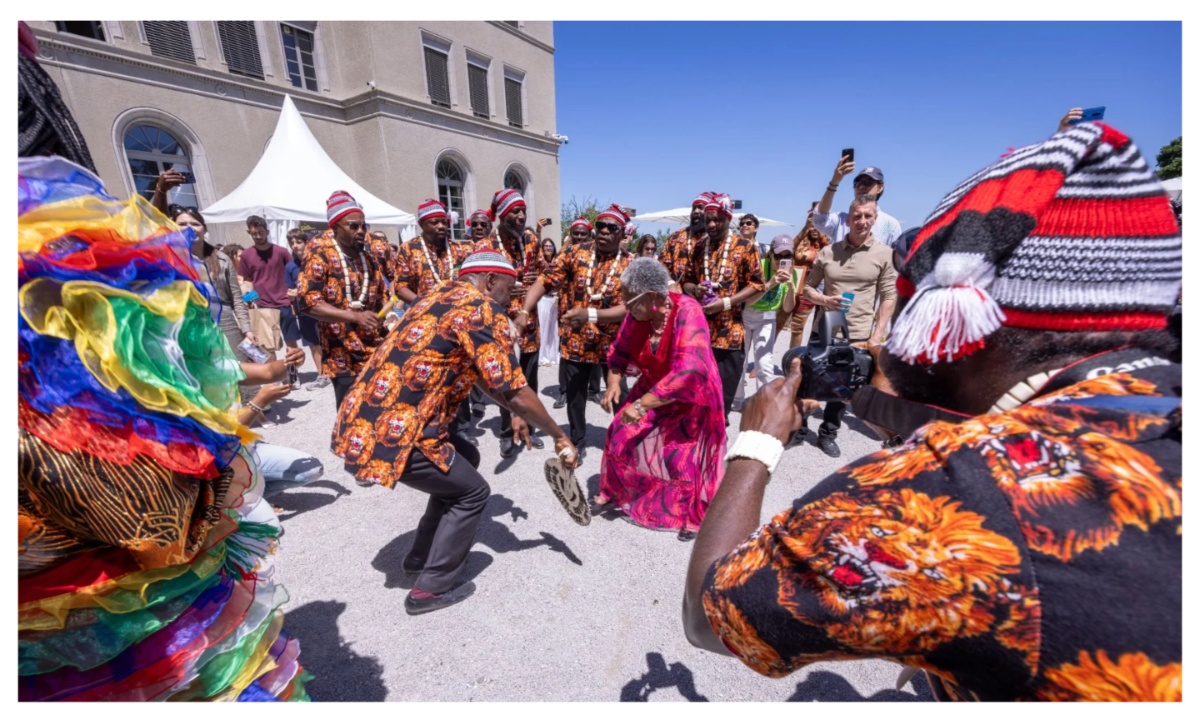
Director-General of the World Trade Organization (WTO), Dr. (Mrs.) Ngozi Okonjo-Iweala, recently attracted a unique global attention when she danced with Igbo masquerades at the WTO Open Day in Geneva, Switzerland.

In a viral video, an Adamma masquerade, adorned in elaborate woven raffia and a beautifully carved maiden mask, strode into the centre of the square and moved with intricate footwork.

The masquerade stamped its feet to the escalating tempo of the drums, bringing the raw spirit of Southeastern Nigeria straight into the heart of global governance.

The crowd erupted in cheers as Okonjo-Iweala immediately caught the rhythm.

She matched the masquerade’s energy, rolling her shoulders and executing graceful, rhythmic steps that perfectly mirrored the cadence of the Ogene.

Continue Reading

USA

Trump Warns of Attack on American Identity As US Turns 250

Published

on

By

America turns 250 on Saturday — a landmark birthday that coincides with a time of deep national division and a president determined to seize the festive center stage.

The independence anniversary also comes in the middle of a brutal heatwave that has placed some 160 million Americans under major or extreme heat warnings, playing havoc with planned parades and block parties in towns and cities across much of the country.

But the searing temperatures have done little to deter President Donald Trump, who has gone to great lengths to ensure the event becomes, in large part, a celebration of himself.

Executive Branch

On Saturday evening, Trump will hold a huge campaign-style political rally on the National Mall in the capital, Washington, along with roaring military flyovers and what he has touted as the world’s biggest fireworks display.

“It’s going to be approximately 107 degrees (41C) out, and I’m going to go, and I’m going to make a really long speech — just to show that I can do anything,” he earlier said.

Late Friday, the president visited the Mount Rushmore National Monument for an address under the gaze of the giant granite heads of four of his legendary predecessors.

While he lauded American exceptionalism and praised the country’s past leaders, he said that the American identity was “under a renewed attack.”

Taking aim at domestic “radicals and extremists,” he charged that there was “a resurgence of the communist menace in our land.”

It is a theme that Trump has repeatedly hammered home in recent weeks, as the anti-establishment left of the Democratic Party carried a string of US primary victories.

The president has cast the rise of the left ahead of November’s midterm elections as “communists” on the rampage, posing a major “threat” to the country.

On Friday, Trump said there has been an attempt to “beat the American spirit out of us, alienate us from our history” in recent years.

While his language fell short of the more violent anti-immigrant rhetoric he has wielded in past speeches, the underlying message was clear.

“You do not have to be born here, but you do have to love what we have built,” he said.

The location of Trump’s speech was a fitting backdrop for a president who views himself as one of the greats.

Trump’s supporters have even introduced legislation to have his likeness chiseled beside those of George Washington, Thomas Jefferson, Abraham Lincoln, and Theodore Roosevelt.

For Americans, the 250th festivities offer a moment for reflection as well as celebration.

After two and a half centuries of triumphs and tragedies, slavery and freedom, civil war and world wars, multiple surveys indicate a nation divided about where it is and where it’s going.

A Quinnipiac University Poll showed 61 percent of Americans thought the US was not living up to the ideals stated in the Declaration of Independence — though even opinion on that was divided, with most Republicans thinking it did, and most Democrats thinking it didn’t.

“There’s too many people that hate on each other, steal from each other. They don’t love each other,” said Los Angeles-based artist Johnny Presley.

“I’m sick of the way this country treats people. I’m sick of the way this country treats its foreign neighbors,” he added. “I’m sick of a lot of damn things.”

For others, like American-Iranian Karisa Tavassoli, an educator in Atlanta, the basics of the American dream still ring true.

“I have safety, I have freedom of speech, I have freedom of religion, I can wear whatever I want as a woman,” she told AFP.

“There are many flaws here, but we have something very special that’s worthy of protecting,” she added.

Alonzo Coby, a member of the Shoshone-Bannock Tribes, is grateful to be able to celebrate 250 years of the United States.

“But I want people to remember that Native Americans have been here a lot longer than 250 years,” he said.

AFP

Continue Reading

World

Trump Declares Trade War on Nations Imposing Digital Tax on US Tech Firms

Published

on

By

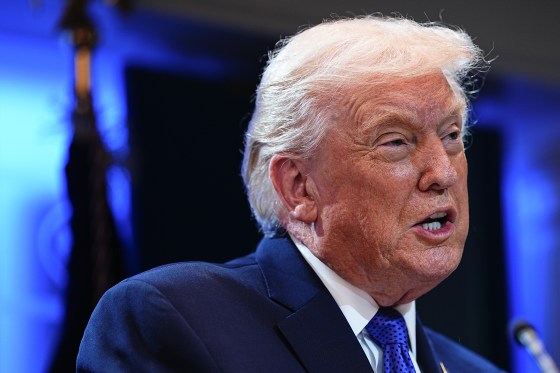
U.S. President, Donald Trump, has threatened to impose a 100 per cent tariff on imports from any country that introduces a digital services tax (DST) targeting American technology companies.

In a statement posted on his Truth Social platform on Friday, Trump warned that countries introducing or maintaining digital services taxes on U.S. tech firms would face immediate retaliatory tariffs on all goods exported to the United States.

“Any country that imposes such a Tax will immediately be met with a 100% TARIFF on any Goods sent to the United States of America,” Trump declared, insisting that digital services taxes unfairly single out American businesses and undermine U.S. economic interests.

The latest warning is aimed primarily at several European countries that have adopted or are considering digital services taxes on multinational technology companies such as Apple, Google, Meta, Amazon, and Microsoft.

Washington has long argued that such taxes disproportionately target U.S.-based firms while discriminating against American innovation.

Trump also asserted that the proposed 100 per cent tariff would supersede existing and future trade agreements, signalling a more confrontational trade policy if countries proceed with taxing revenues generated by U.S. technology giants within their borders.

France became the first major economy to introduce a digital services tax in 2019, prompting repeated threats of retaliatory tariffs from Washington.

Other countries, including the United Kingdom, Italy, Spain, Austria, and Canada, have either implemented or proposed similar measures while negotiations continue under the Organisation for Economic Co-operation and Development (OECD) to establish a global framework for taxing multinational corporations.

The OECD’s two-pillar international tax agreement was designed to reduce unilateral digital taxes by allocating a greater share of multinational profits to countries where earnings are earned while establishing a global minimum corporate tax.

Continue Reading

Trending