Connect with us

World

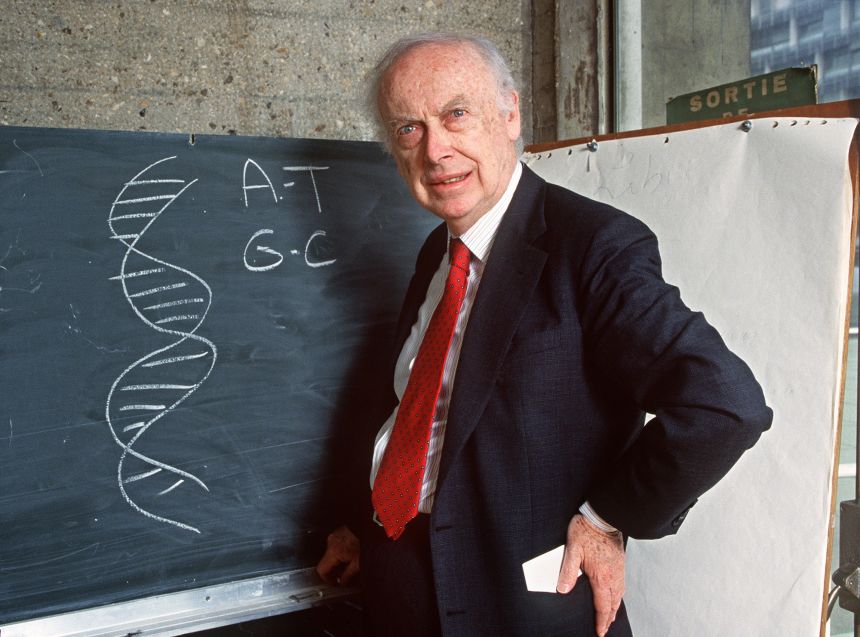
Brain Behind Discovery of DNA, James Watson Dies at 97

Published

on

American scientist, James Watson, one of the co-discoverers of the structure of deoxyribonucleic acid (DNA), has died at the age of 97.

Watson, alongside Francis Crick, identified the double-helix structure of DNA in 1953, a discovery that transformed biology and medicine. Their work, which revealed how genetic information is stored and transmitted, earned them and Maurice Wilkins the 1962 Nobel Prize in Physiology or Medicine.

“We have discovered the secret of life,” they said at the time.

His death was confirmed by the Cold Spring Harbor Laboratory (CSHL) in New York, where he spent much of his career. Watson led the institution for decades before stepping down as chancellor following controversy over his remarks on race and sex.

Watson’s reputation declined sharply after comments he made suggesting genetic differences in intelligence between races. In a 2007 interview with The Times, he said he was “inherently gloomy about the prospect of Africa”, adding that “all our social policies are based on the fact that their intelligence is the same as ours whereas all the testing says not really.”

He later apologised “unreservedly”, but the remarks cost him his position at CSHL. In 2019, further comments linking race and intelligence prompted the lab to strip him of his remaining honorary titles. “Dr. Watson’s statements are reprehensible, unsupported by science,” the laboratory said in a statement.

DNA was first discovered in 1869, but its role as the genetic material in cells wasn’t confirmed until 1943. The molecule’s structure remained unknown until Watson and Crick built their model, using X-ray images produced by Rosalind Franklin at King’s College London images reportedly obtained without her consent.

Though Franklin died in 1958, she is now widely credited for her crucial role in solving the DNA structure. At the time, however, her contributions were largely overlooked.

Watson also drew criticism for sexist remarks in his 1968 memoir The Double Helix, where he commented on Franklin’s appearance. Despite this, some former colleagues noted that he supported women scientists at Harvard in the 1950s and 60s, when few others did.

In 2014, feeling isolated from the scientific community, Watson sold his Nobel medal for $4.8 million. The Russian buyer later returned it to him.

Born in Chicago in April 1928, Watson was the son of Jean and James Watson, descendants of English, Scottish, and Irish settlers. A gifted student, he entered the University of Chicago at 15, where he became interested in X-ray diffraction, a key technique in revealing atomic structures.

Watson later studied at Cambridge University, where he met Crick and began building models of DNA. After their discovery, he joined Harvard University as a biology professor.

He and his wife, Elizabeth, had two sons. One was diagnosed with schizophrenia, inspiring Watson to continue research into the genetic basis of mental illness.

In 1968, he became director of Cold Spring Harbor Laboratory, transforming it into a leading global centre for molecular biology research, the same institution that later confirmed his death.

Continue Reading
Click to comment

Leave a Reply

Your email address will not be published. Required fields are marked *

World

Israel Questions Pakistan’s Credibility in Mediating over US-Iran Ceasefire Agreement

Published

on

By

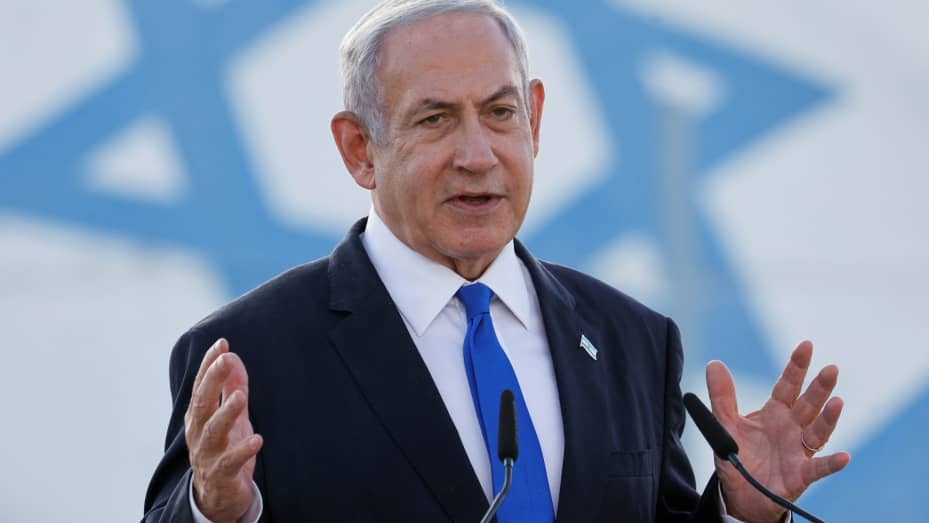
Israel has expressed doubts about Pakistan’s ability to act as a credible mediator in the ongoing Middle East conflict. This comes as diplomatic interactions involving the United States and Pakistan continue, particularly regarding Iran and its allies. Israel’s Ambassador to India, Reuven Azar, made his position clear during a recent statement in New Delhi.

Ambassador Azar articulated that Israel does not recognise Pakistan as a dependable player in mediation. He elaborated that the United States’ decision to engage Pakistan in these diplomatic efforts is driven primarily by its own strategic interests.

During his remarks, Azar addressed the historical context in which the United States has previously involved countries like Qatar and Turkey to facilitate talks aimed at reaching agreements with groups such as Hamas. He indicated that these choices were made for pragmatic reasons rather than based on the reliability of the states involved.

US Strategy Involving Pakistan

The involvement of Pakistan by the United States is reportedly based on specific strategic calculations that align with its broader diplomatic goals in the region. Despite Israel’s scepticism, Washington appears committed to its course of diplomatic engagement, which includes Pakistan as a participant in discussions related to the conflict.

Ambassador Azar also emphasised the importance of coordination with the United States regarding the desired outcomes of these diplomatic efforts. He noted that maintaining alignment with US objectives is crucial for Israel as it navigates the complexities of the ongoing hostilities.

Moreover, Azar’s comments suggest that there is a level of caution within Israel regarding the potential implications of Pakistan’s involvement. The ambassador’s statements reflect a broader perspective among Israeli officials about the challenges of engaging with states that possess varied relationships with groups involved in the conflict.

Regional Implications of Mediation Roles

The rejection of Pakistan as a credible mediator raises questions about the future of diplomatic efforts in the Middle East. As the situation evolves, the roles of various nations in facilitating peace talks will remain under scrutiny. The perspectives of nations like Israel are central to understanding the dynamics of mediation in ongoing conflicts.

Ambassador Azar’s comments may influence how other countries view Pakistan’s involvement. As different nations weigh the potential effectiveness of various mediators, the confidence displayed by Israel could impact international diplomatic discussions going forward.

The current geopolitical landscape is complicated, with alliances and enmities frequently shifting. Israel’s firm stance against Pakistan’s mediation reflects deeper concerns about the reliability of diplomatic partners in a region marked by longstanding tensions and hostilities.

Source: thecsrjournal.in

Continue Reading

World

Mahama, Macron Hold High-Level Bilateral Talks in France

Published

on

By

By Eric Elezuo

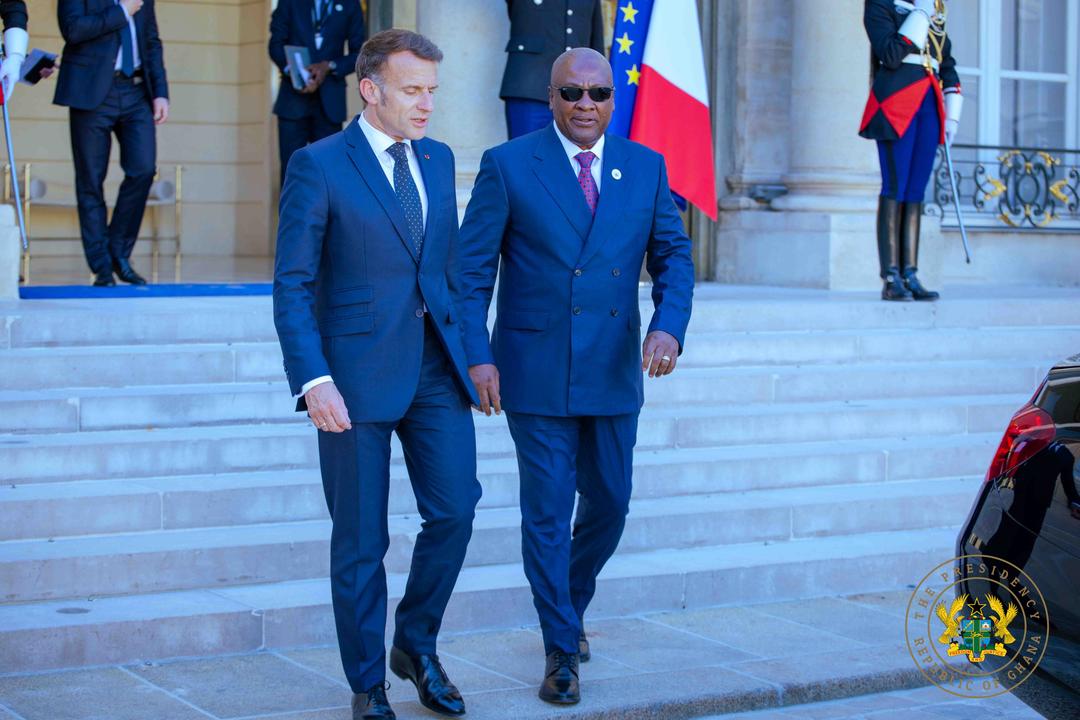
True to his words targeted at reshapening the economic narratives of the people of Ghana, President John Dramani Mahama, has paid a diplomatic and economic visit to France, where he held high level bilateral talks with his counterpart, Mr. Emmanuel Macron.

The Ghana President’s visit corresponds with his intention to maximize his second term in office towards making the Eldorado that it was during his first coming between 2012 and 2016.

The presidency.gov.gh, the authentic platform for activities of President Mahama, captured the visit as follows:

President John Dramani Mahama and his French counterpart, President Emmanuel Macron, held high-level bilateral talks at the Élysée Palace on Wednesday, marking a significant milestone in the deepening diplomatic and economic relationship between Ghana and France.

The meeting, held at the official invitation of President Macron, followed the successful conclusion of the One Health Summit in Lyon, which both leaders co-chaired on Tuesday.

During the deliberations, President Macron expressed his profound gratitude to President Mahama for his leadership in co-chairing the Lyon summit. Highlighting Ghana’s growing influence in global health policy, President Macron announced that Ghana has been selected as the first beneficiary of the newly introduced National Health Compact.

The French leader also lauded the Accra Reset Initiative, an ambitious framework introduced by President Mahama. Macron described the initiative as “very important,” noting that its principles were frequently referenced as a blueprint during the Lyon summit.

For his part, President Mahama expressed his appreciation for the warm reception and the opportunity to co-chair the One Health Summit, noting its critical importance to the World Health Organisation (WHO) and global pandemic preparedness.

On the economic front, President Mahama officially thanked France and China for their pivotal roles in supporting Ghana’s debt restructuring process. He informed President Macron that the Ghanaian economy has shown remarkable resilience, stating that “the economy has bounced back and is doing very well, with very positive indicators.”

The two leaders discussed a broad range of development cooperation, including building on years of support from the French Development Agency (AFD), the Accra-Kumasi Expressway, ensuring food security through year-round farming initiatives, advancing Artificial Intelligence (AI) development and enhancing support for maternal health services.

President Mahama emphasised that the strength of the Ghana-France relationship is rooted in a shared commitment to democracy, the rules-based international system, and global peace.

“Ghana and France stand together on key issues of peace and security”, President Mahama stated, as the two leaders analysed the impact of global conflicts on distant regions and discussed strategies to maintain stability within the West African sub-region.

Prior to arriving at the Élysée Palace, President Mahama and his delegation met with the President of the French Senate
Continue Reading

Middle East

Again, Iran Blocks Strait of Hormuz, Alleges Ceasefire Violation

Published

on

By

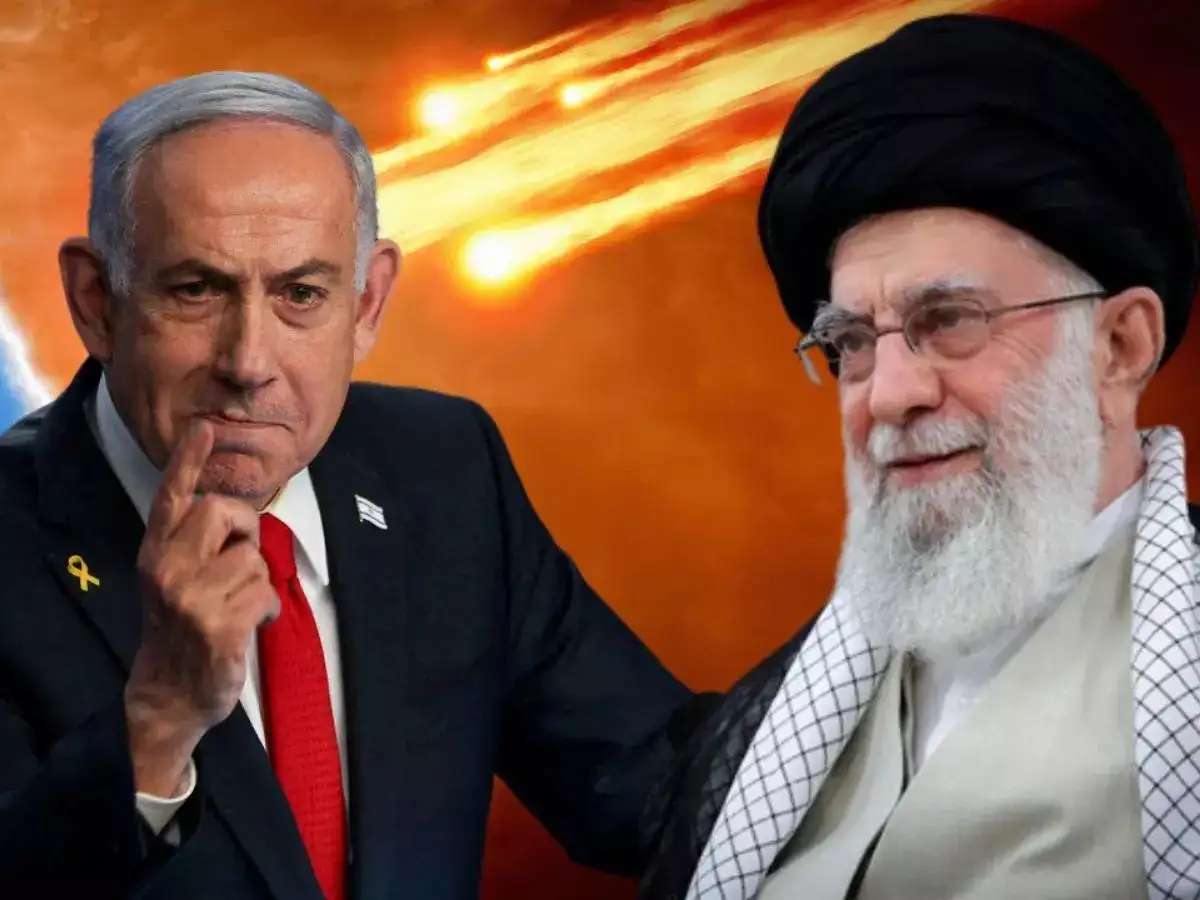
Iran, on Wednesday, shut the Strait of Hormuz following fresh Israeli strikes on Hezbollah targets in Lebanon, raising fears that a fragile ceasefire with the United States could collapse less than a day after it was reached.

The closure comes amid renewed hostilities that have cast doubt over efforts to halt more than a month of fighting. While both Iran and the United States had earlier declared victory after brokering the truce, fresh missile and drone attacks were reported across Iran and parts of the Gulf, alongside intensified Israeli bombardments in Lebanon.

In Beirut, Israeli strikes hit residential and commercial areas without prior warning, leaving at least multiple people dead and many others injured in what has been described as one of the deadliest days of the conflict.

Iranian state media confirmed the closure, with IRNA reporting that the move was taken “in the wake of Israel’s attacks on Lebanon.” The development has heightened concerns over the stability of the ceasefire agreement mediated by the United States.

Authorities in Iran also imposed strict controls on maritime movement in the strategic waterway. Ships near the strait were instructed to seek permission from Sepah, a special operations unit under the Iranian Revolutionary Guard Corps, before passage. A radio message cited by The Wall Street Journal warned that any vessel attempting to cross without approval “will be destroyed.”

Earlier in the day, Iran had indicated a willingness to reopen the strait during the proposed two-week ceasefire, noting this would be done with “coordination with Iran’s Armed Forces and with due consideration of technical limitations.” U.S. officials, meanwhile, said American forces could assist in managing ship traffic, although details remain unclear.

U.S. President Donald Trump also told ABC News he was open to a “joint venture” arrangement with Iran that would involve charging tolls for vessels passing through the strait.

However, reports of ceasefire breaches soon emerged. Pakistani Prime Minister Shehbaz Sharif, who played a role in negotiating the agreement, said on X that violations had already been recorded, further deepening uncertainty over whether the truce will hold.

Continue Reading

Trending