
Headline
Why Chicago Saga May Not End Soon

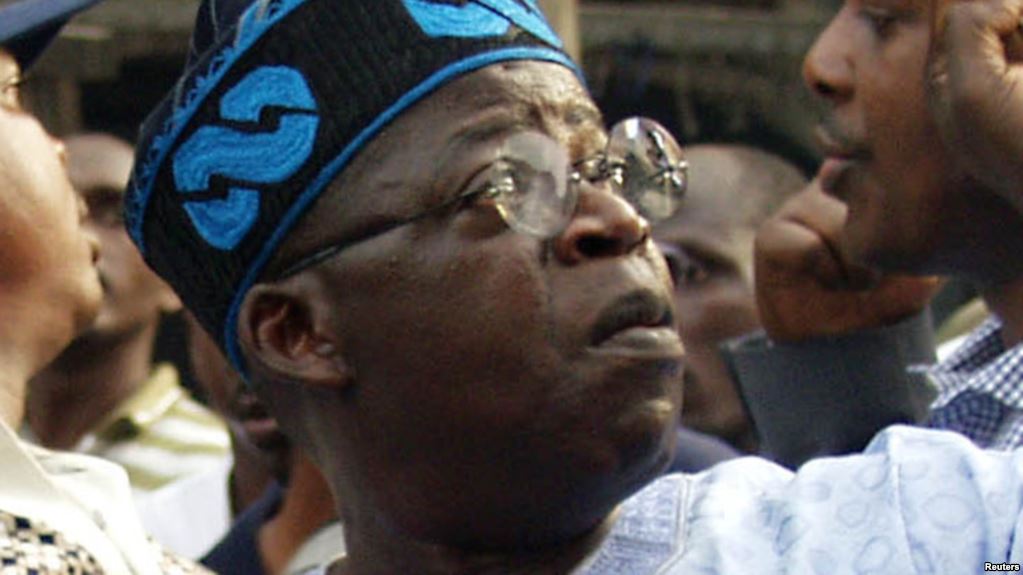

By Eric Elezuo
The crises surrounding the authenticity of President Bola Tinubu’s academic sojourn is as old as his political career. But the simple desire of the Nigerian public has been for the president to show evidence that he attended school, especially the Chicago State University. This plea has been met with rebuff, therefore, dragging the saga of a supposedly unauthenticated certificate.
However, on Friday, the Chicago State University announced that a said Bola A. Tinubu attended their school, but the transcript released still bear female as gender, and offers discrepancy in dates, thereby sustaining the saga.
Earlier in 2002, the present Minister of Aviation, Festus Keyamo, went to court over certificate forgery against Tinubu. This was cited by the spokesperson, Atiku Abubakar Campaign Organisation, Daniel Bwala, in an interview on Channels TV. He noted that Keyamo had sued the Lagos Assembly in 2002 over Tinubu’s candidacy as the then governor of Lagos State.
Citing a law report titled Keyamo V. House Of Assembly, Lagos State (2002), Bwala said, “This is the Supreme Court decision in the case I have cited and I will just read a line: The appellant alleged amongst others as a legal practitioner that he has been confronted by some of his clients who wanted to understand certain things they consider important relating to their contesting the governorship in Lagos State.
“He further, that is Festus Keyamo, alleged certificate forgery against the Governor of Lagos State, Bola Ahmed Tinubu and that the latter was not qualified for the office of the governor.”
Bwala noted that Keyamo, who is today speaking in favour of and defending tinubu’s eligibility, was the appellant in the then case.
Atiku Abubakar, a former Vice President of Nigeria, and the Peoples Democratic Party (PDP) candidate in the 2023 presidential election had heightened the tension associated with the 2023 election by filing a petition to obtain information about Tinubu’s academic records at Chicago State University, where the president claimed he attended and obtained a certificate.
Atiku’s attorney, Angela Liu, had requested documents pertaining to Tinubu’s admission, attendance, degrees, awards, and honors obtained during his time at the university. These issues had been a subject of disputes since the days of Tinubu’s stewardship as the governor of Lagos State.
Atiku had aimed to use the subpoena to verify the authenticity of his claims and establish the truth amidst ongoing disputes about his election and academic history.
Atiku’s application was spurred by an earlier case in Nigeria on November 9, 2022, several months before the Presidential elections, in which one Mr. Mike Enahoro-Ebah, described as a “Human Rights Defender and Public Interest Litigator” in Abuja, commenced proceedings against Tinubu by filing a “Direct Criminal Complaint” in the Chief Magistrate Court of the Federal Capital Territory (FCT).
In a swift response however, President Tinubu’s legal team had filed a counter motion to dismiss the subpoena in the Circuit Court of Cook County, Illinois, Chicago, USA through Victor Henderson, counsel to President Tinubu, who argued that the petition lacked the necessary court authorization and provided inadequate time for compliance, violating the Illinois Supreme Court Rules.
According to BussinessDay, “Legal experts and commentators have voiced their opinions on Atiku’s pursuit of justice abroad. Mike Ozekhome, a human rights lawyer and Senior Advocate of Nigeria, viewed Atiku’s actions positively, stating that the international nature of the matter warranted seeking legal assistance outside Nigeria.
“Kennedy Khanoba, a Constitutional lawyer, however, maintained that unless President Tinubu is convicted in the US court, Atiku’s efforts might yield little results. He emphasized that only a conviction would have a significant impact on Tinubu’s presidential position, as convictions result in a prohibition from holding public office for a specified period.
“Jackson Ojo, a political analyst, told Punch Newspaper that the sovereignty of Nigeria as an independent state could limit the influence of foreign court rulings on Nigerian affairs. He expressed skepticism about the direct impact of an American court ruling on the outcome of Nigerian elections and judicial proceedings.
As the legal battle unfolds, Nigerians remain divided on the efficacy of seeking justice abroad. Atiku’s pursuit of evidence through the US court system has ignited debates about the integrity of Nigeria’s legal system and its potential impact on the country’s political landscape. The final verdict and its implications for the Nigerian presidency remain uncertain as legal proceedings continue.
But complicating the defence of Tinubu and his legal, the United States District Court for the Northern District of Illinois, Eastern Division, admitted that it has jurisdiction in the case instituted by Atiku, to compel CSU to produce critical documents relating to Tinubu.
The desire of all and sundry to know the truth led to a bombardment of the university official X (former Twitter) account, and due to heavy traffic and enquiries about President Bola Tinubu academic records, a lockup of the account of authorised.
In the X account of the university, there was the ‘protect your posts’ feature that allows users to disclose their mission from persons who are not followers.
This, it was learnt was due to new enquiries to those who were not usual visitors to the X account of the university.
Owing to this, any new visitor to the social media account was asked to disclosed the purpose.
THE ORIGIN
In his original complaint as described by oblongmedia, Mr. Enahoro-Ebah alleged that Mr. Tinubu submitted an “Affidavit of Personal Particulars” to INEC in June 2022 as part of a required filing to run for President that included a forged CSU diploma dated June 22, 1979 and other information that is inconsistent with the CSU documents.
According to court papers filed by Atiku in the US court dated August 2, 2023, to support the allegations, “Mr. Enahoro-Ebah stated that after Mr. Tinubu made his INEC filing, Mr. Enahoro-Ebah obtained a subpoena from the Circuit Court of Cook County, dated August 11, 2022, and served it on CSU. In response to the subpoena, CSU’s Registrar, Mr. Caleb Westberg, sent a letter dated September 22, 2022, to Mr. Enahoro-Ebah’s Chicago counsel, Mr. Matthew J. Kowals, advising Mr. Kowals that “[t]he enclosed documentation is all the records we have for Bola E. Tinubu.
“According to the complaint, the documents that accompanied Mr. Westberg’s letter included a CSU diploma issued to Mr. Tinubu on June 27, 1979. The June 27 diploma allegedly produced by CSU to Mr. Kowals, and the June 22 diploma allegedly submitted by Mr. Tinubu to INEC, are very different documents. In addition to the different dates, the documents have different seals, fonts, and language. The June 22 diploma has grammatical errors that the June 27 diploma does not have. They are also signed by different persons who are ostensibly officials of CSU. The June 22 diploma has three signatures, one of which purports to be the signature of Dr. Elnora Daniel as President of CSU. The other two signatures on the June 22 diploma are illegible.
“By contrast, the June 27 diploma only has two signatures. They purport to be the signatures of Dr. Daniel, again as the President of CSU, and Dr. Niva Lubin as the Chairperson of the Board of Trustees. Compare
“In his complaint, Mr. Enahoro-Ebah asserts that the June 27 diploma produced by CSU to Mr. Kowals is authentic, and that the June 22 diploma submitted by Mr. Tinubu to INEC is a forgery. However, Applicant’s staff have recently conducted further research into the names of CSU officials with legible signatures on the two diplomas: Dr. Daniel (whose signature appears on both the June 22 and June 27 diplomas) and Dr. Lubin (whose signature appears only on the June 27 diploma). According to public records, Dr. Daniel and Dr. Lubin did not join CSU until the late 1990s—around two decades after CSU supposedly awarded the June 22 diploma and/or the June 27 diploma to Mr. Tinubu.
Applicant’s research therefore calls into question the authenticity of both the June 22 and the June 27 diplomas.
In his complaint, Mr. Enahoro-Ebah alleged the following additional discrepancies between the information provided by Mr. Tinubu to INEC and the documents produced by CSU to Mr. Enahoro-Ebah:
“According to documents produced by CSU, the “Bola Tinubu” who attended CSU was a U.S. citizen, while in the information provided to INEC, Mr. Tinubu states that he has always been solely a Nigerian citizen and has never acquired the citizenship of any other country. According to the documents produced by CSU, the “Bola Tinubu” who attended CSU was born in 1954, while according to the information provided to the INEC, Mr. Tinubu was born in 1952.
“According to the documents produced by CSU, the “Bola Tinubu” who applied to CSU submitted a prior transcript from Southwest College that identified “Bola Tinubu” as “female.” According to the documents produced by CSU, the “Bola Tinubu” who attended CSU claimed that s/he had graduated from Government College, Lagos, in 1970, while in the information provided to INEC, Mr. Tinubu makes no mention of having attended Government College.
ATIKU SATISFIES ALL REQUIREMENTS – US COURT
Pursuant to the above, Atiku, by and through his counsel, applied to the Court for an order granting him leave to compel CSU to release and verify the authenticity of documents purportedly issued to Tinubu by the university.
The court said Atiku has satisfied all statutory requirements as he is an “interested person”; and the respondent, CSU, is a public university established and existing under the laws of Illinois, with its principal campus and offices in Chicago.
Having met all requirements, the court said it will not hesitate to grant the prayers of Atiku.
Recall that the Independent National Electoral Commission (INEC), on March 1, 2023 declared Bola Tinubu winner of the February 25, 2023 presidential election, having polled 8,794,726 to defeat his closest rivals, Atiku Abubakar of the PDP and Peter Obi of the Labour Party to the second and third positions respectively.
Both Atiku and Obi questioned Tinubu’s eligibility to run for the presidency. Obi’s argument revolved around Tinubu’s alleged forfeiture of $460,000 due to a drug-related case in the United States and his inability to secure 25 percent of votes in the Federal Capital Territory among other irregularities he felt occurred during the elections.
CHICAGO STATE UNIVERSITY CONFIRMS TINUBU’S STUDENTSHIP
Chicago State University, CSU, in an article published on CBS Chicago, confirmed that President Bola Tinubu attended the university and graduated in 1979.
Read the full statement below:
“As an educational institution, we are sometimes asked to provide information related to student records. The federal law known as FERPA (the Family Educational Rights and Privacy Act) protects the privacy of student records and limits what an institution can release.
In August 2023, a request was made in U.S. federal court for the university to provide information related to educational records concerning Bola Tinubu, the President of Nigeria, and a former CSU student. The university has confirmed Tinubu attended CSU and graduated in 1979 with a bachelor’s degree. Federal law, however, prevents us from providing further information without consent or unless allowed via court order.
CSU is confident in the veracity and integrity of our records regarding Tinubu’s completion of graduation requirements and degree certificate. The university is not a party to the Nigerian legal proceedings that spurred this request, and a U.S. federal judge will determine whether the university will provide further requested information.
Our response to the request for Tinubu’s academic records has been entirely consistent with our practices, policies and federal law. We would respond in exactly the same manner for any request for any student information by a third party.”
Meanwhile in a post on the PDP website, Angela Liu, who is Atiku’s Attorney for the case against Tinubu about the Chicago University Certificate, argued that the university never gave the president any certificate.
The application made in Case No. 23-cv-5099 was filed pursuant to 28 United States Constitution 1782.
The post stated that Liu already submitted a 24-paragraph declaration in support of the application, pursuant to 28 U.S.C 1782, for an order granting leave to serve the Subpoenas to Chicago State University attached to the Application as Exhibits 1 and 2.
Angela Liu stated, “How can you have two certificates issued by the same university, to the same person, for the same course of study, but issued on different dates and signed by two different people.”
According to Atiku’s lawyer, the certificates which Tinubu submitted in Nigeria were different.
“The first Chicago State University certificate which Bola Tinubu submitted to INEC was issued on 22nd June, 1979, and signed by three signatories including a certain Dr. Elnora Daniel, whose signature is dated 22 June 1979.
“The second certificate supposedly issued to Mr. Enahoro by Tinubu and tendered at the PEPT was issued on 27th June, 1979, and now signed by two people and the same Dr. Elnora Daniel, signed it but now the date changed to 27th June, 1979, and a certain Dr. Niva Lubin also signed.”
According to the post, “Now evidence has shown that Tinubu submitted two different certificates and both may even be fake. The two certificates have different fonts, they both have different dates, they both have different Chicago University Logo, they both have different grammar written, they both have different signatories.
“Now here is the crazy part, the Dr. Elnora Daniel who Tinubu put on his certificate as a signatory for CSU in 1979, was not an employee of CSU in 1979. She was not employed by CSU until 1998
“A whole 19 years after Tinubu allegedly graduated. So how did she sign in 1979, when the woman was not even an employee of Chicago University as at that time.
“Also the second signatory Dr. Niva Lubin who Tinubu claimed signed his certificate dated in 1979 was not an employee of Chicago University until 1996. A whole 17 years after Tinubu claimed he graduated.”
It alleged that Tinubu had no certificate from Chicago State University and Atiku had taken the bold step to summon Chicago State University as a respondent in the case in Illinois.
Tinubu’s political rival, Atiku Abubakar, claims that documents showing that Tinubu graduated from Chicago State in 1979 are not authentic, and that is grounds to nullify Tinubu’s election victory earlier this year.

According to the People’s Gazette, Tinubu submitted the diploma to Nigeria’s election commission. It was purportedly issued in 1979 and signed by university President Elnora Daniel. But Daniel didn’t arrive at CSU until 1998 and left about ten years later. Submitting false records to the National Election Commission before the vote should nullify the election, Abubaker claims.
At a hearing in Chicago, Abubakar’s lawyers asked a federal judge to compel CSU officials to turn over Tinubu’s academic documents and appear for depositions. Judge Jeffrey Gilbert of the United States District Court for the Northern District of Illinois did not rule on the request.
CSU’s lawyer, Michael Hayes, told Gilbert that the university wouldn’t be able to certify Tinubu’s diploma under oath.
A CSU spokeswoman said the university can confirm the president graduated. However, it cannot authenticate the diploma because it is a ceremonial document that is not part of a student’s official academic file.

With the confirmation of a certain Bola A. Tinbu attending and graduating from CSU in 1979, it therefore behoves on the Atiku legal team to prove that the aforementioned Bola is not Nigeria’s president, but a certain lady as the documents tend to declare.
The parties will soon have their day in court, and so the saga continues.





Amid Denials, ADC Reportedly Secures Rainbow Event Centre As Venue for National Convention

America 2028: Kamala Harris Considers Throwing Hat in the Ring

Shettima Lacks Respect, I Won’t Engage Him, Atiku Responds to VP’s Challenge

2027: ADC Leaders Plan Massive Coalition Against APC, Tinubu

IGP Disu Orders Ban on Illegal Checkpoints Nationwide

NAF Defends Borno-Yobe Border Market Airstrike

Trump Orders US Naval Blockade of Strait of Hormuz

Benin Republic 2026: Romuald Wadagni, The President in Waiting

Koumagnon Family Pledges Unalloyed Support for Romuald Wadagni As President

FG Expels US Missionary Alex Barber

Dear CDS, NSA, Your Prodigal Sons, Brothers Have Killed General Braimah

Nation Building Reimagined: Integrated Principles and Strategies for Sustainable Growth

Again, Iran Blocks Strait of Hormuz, Alleges Ceasefire Violation
Trump Delays Iran’s Strike by 2-Weeks As Pakistani Leaders Intervene
-
 Featured4 days ago
Benin Republic 2026: Romuald Wadagni, The President in Waiting
-
 Boss Picks4 days ago
Koumagnon Family Pledges Unalloyed Support for Romuald Wadagni As President
-
 National5 days ago
FG Expels US Missionary Alex Barber
-
 Opinion2 days ago
Dear CDS, NSA, Your Prodigal Sons, Brothers Have Killed General Braimah
-
 Opinion2 days ago
Nation Building Reimagined: Integrated Principles and Strategies for Sustainable Growth
-
 Middle East4 days ago
Again, Iran Blocks Strait of Hormuz, Alleges Ceasefire Violation
-
 World5 days ago
Trump Delays Iran’s Strike by 2-Weeks As Pakistani Leaders Intervene
-

 News5 days ago
Prominent ADC Leaders Storm INEC Hqrs in Protest Against Dictatorship