The Oracle
Nigeria in Search of an Enduring Political Structure: Imperative of Structural Reform (Pt. 1)
Published
3 years agoon
By
Eric
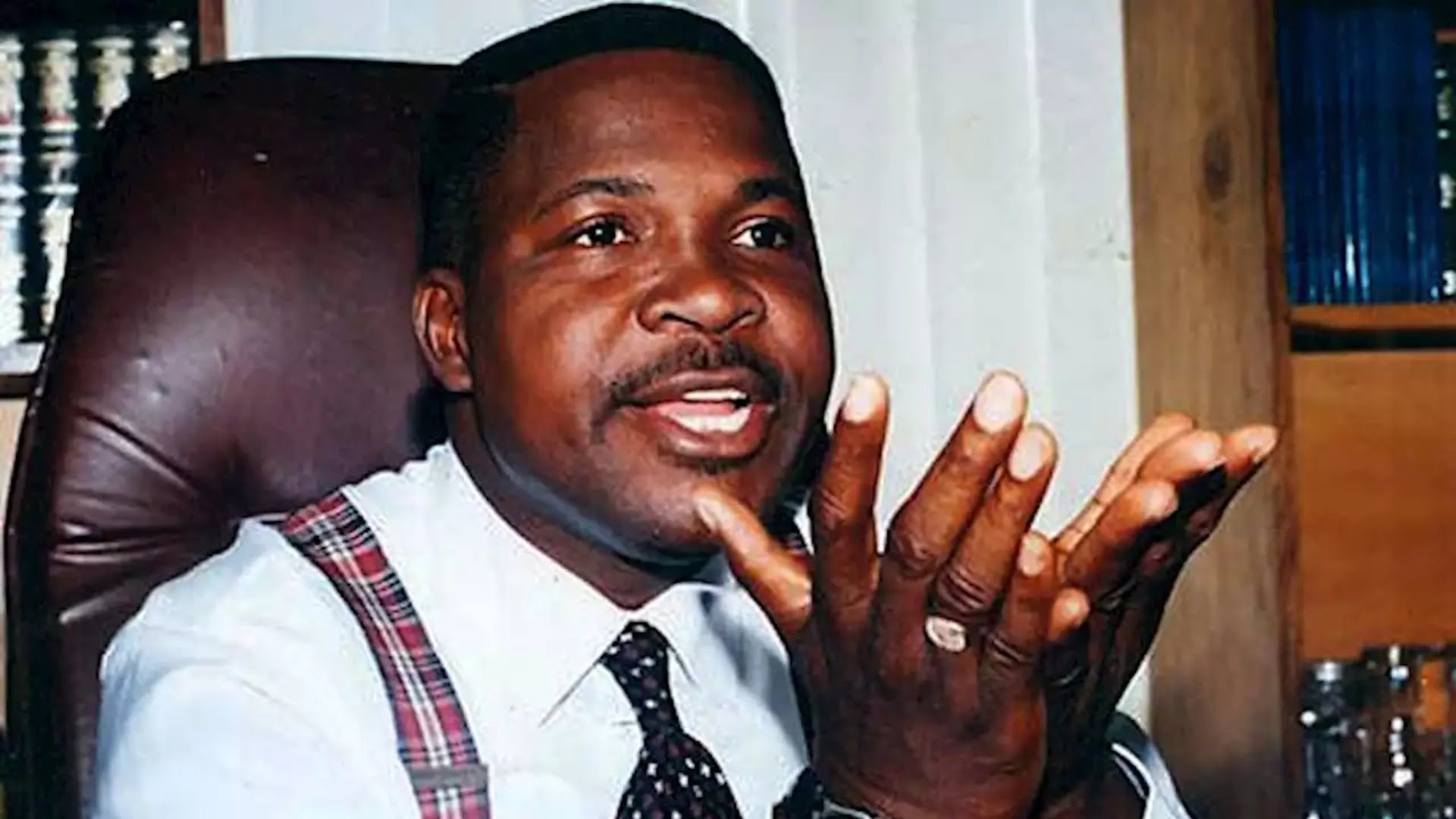
By Mike Ozekhome
INTRODUCTION
Since the Southern and Northern protectorates were amalgamated in
1914 by Lord Frederick Lugard of the then British colonial government and gained political independence from Britain on October 1 1960, Nigeria as a political entity or socio-political structure has been under threats of disintegration, a threat which exists as a result of lack of understanding and harmony among the different ethnic nationalities that make up Nigeria as an independent and a sovereign state. These factors of lack of understanding, unity, peace and harmony among these ethnic nationalities that constitute the Nigerian state, may be attributed to differences or diversities evident in the culture, language, religion and most importantly the worldview of the various ethnic nationalities that make up the political structure called Nigeria.
Nigeria as a country was a British colony idea and shared boundaries with French colonies. However, the manner in which the colonial boundaries were drawn compounded the problems of the colonies. The colonial boundaries did not take into account the ethnic, religious, cultural and geographical lines. Consequently, some culturally, ethnically, and religiously homogenous and contiguous communities were arbitrally severed and forcefully kept in different colonial authorities. And because these communities had been interacting culturally, ethnically, religiously and occupationally before the deluge of imperial occupation, and because the various colonial authorities did not seek integration of the severed communities but, instead their separation, consequent upon the divergent interests of the respective colonial authorities, seeds of discord, disharmony and conflicts were sown in these communities. New boundaries were created and scarce resources became competition objects.
It was not, therefore, surprising that after political independence, when Africans took over the reins of power, the various communities which were suffering under the weight of colonial abuse, consequent upon their “exile” resulting from their forceful separation and excision from their Kith’s and Kins, rose up in gallant defense of their “territorial” integrity and “sovereignty”.
They demanded to be re-integrated with their kith’s and kins wherever they might be in the post independent African countries.
However, the demands and movements rather than help in resolving the conflicts, generated new conflicts. It is our contention that rather than seek for re-integration with kith’s the emphasis should be on peaceful co-existence. Needless to say, African countries with greater mix of these colonial anomalies impinging on the free operation and functioning of pre-Berlin Conference ethnic, religious, cultural and spatial identities and sensibilities, faced enormous, in fact,
gargantuan development tasks mediated and modulated by the homogeneity or heterogeneity of these critical determinants of sustainable development. Sustainable development entails not only economic development but equitable distribution of economic benefits such as equitable provision of basic needs, remedy of social inequities and environmental damages. It can be achieved only in time of peace.
NIGERIAN, AN ARTIFICIAL CREATION
Nigeria’s creation was fundamentally flawed with the British super-imposing Northern hegemony and dominance over Southern Nigeria. Nigeria is an artificial creation. Indeed, the name Nigeria was given to her by a young British journalist, Miss Flora Louisa Shaw (who later married Lord Lugard) on 8th January, 1897. What is today known as Nigeria was ruled by the Royal Niger Company around 1886 to 1899. Following the revocation of its character, the Royal Niger Company sold its holdings in the territory which later became Nigeria to British for £865,000. This was the price for which Nigeria was purchased. (i.e., about N 735. 2 Million only). By 1900, the Southern Nigeria Protectorate and Northern Nigeria Protectorate passed from the Royal Niger Company to Britain. By 1st January, 1914, these two territories were amalgamated as the Colony and Protectorates of Southern and Northern Nigeria. The fusion of these two territories was done for political and commercial reasons without any consideration on the preferences of the inhabitants of these territories. These people already had their set ways of life – the Benin and Oyo Empires; Hausa City States; Igbo City States; Kanem Bornu, Ile-Ife civilization cradle of the Yoruba race. We already had great historical figure like Oba Ovonranmwen Nogbaisi of Benin Empire, King Nana of Itsekiri, King Jaja of Opobo, Queen Amina, Mal Idriss Alooma, Queen Idia, etc.
THE INDEPENDENCE
Nnamdi Azikiwe, Ahmadu Bello, Obafemi Awolowo, Sir Tafawa Balewa, Chief Anthony Enahoro, Joseph Tarka, Chief Dennis Osadebe, Herbert Macaulay, etc., who fought, unarguably, for the flag independence of Nigeria from Britain, in reality, projected the ideas of their enclaves. For example, while people from the Southern part of Nigeria craved for independence in the 50’s, the people from Northern Nigeria felt the timing was wrong. Chief Anthony Enahoro’s motion for Nigeria’s Independence suffered setbacks in parliament on several occasions with the northern members of parliament staging a walkout as a consequence of the motion. However, in 1953, Enahoro initiated move to self-government through the motion he sponsored in the Western House of Assembly. This eventually led to Nigeria’s independence on 1st October, 1960. While it could be argued that the people currently occupying the territory called Nigeria were never consulted before the amalgamation of 1914, all of them lifted the Nigerian flag the moment the Union Jack was lowered in October 1, 1960.
Many who felt granting independence to Nigeria would usher in unprecedented growth, were surprised to see unprecedented corruption, looting of the nation’s treasury and mismanagement of the country by the supposedly founding fathers of the Country. The military that came to salvage the problem on 15th January, 1966, even compounded it by their lop-sided manner of cleansing the system. There is a conspiracy theory that the Igbos used the coup to pave way for General Aguiyi-Ironsi to be Head of State of Nigeria. The Northern members of the Nigerian Army did not hold back as they retaliated over the killing of Ahmadu Bello, Tafawa Balewa, Maimalar and others by also slaughtering many innocent Igbo soldiers and civilians through a genocidal ethnic-cleansing. This eventually led to the Nigerian Civil War. There have been many coup d’états in Nigeria since the 1966 coup d’état. However, since the year 1999, there has not been any coup. There have been different agitations springing up in some parts of the country.
If there is one thing all Nigerians are agreed upon, it is the belief – fueled by disappointment and frustration – that have we have failed to fulfill our potential as a nation, we are a long way from living up to the dreams of our founding fathers. Right from our 21st year of independence (when we hypothetically came of age), till date, few issues have consistently featured in our national discourse (particularly in the media) as the National Debate. By this is meant the seeming past time of virtually every Nigerian to bemoan our experience as a nation. Simply put, Nigeria is a failed, broken nation. Apply every conceivable yardstick, according to every knowledgeable (and not-so-knowledgeable) expert, the country is not just a disaster waiting to happen – IT HAS ALREADY HAPPENED.
THE DIAGNOSIS
Virtually every thing that can possibly go wrong, is wrong with our country: insecurity, collapsed infrastructure, failure of the public school system, an economy in shambles (epitomized by the free-fall of the value of the Naira and spiraling inflation), an unremitting insurgency, etc. The list is endless. With such a litany of woes, it is no surprise that many Nigerians have since given upon their country. But is all hope lost? Is the situation irredeemable? Can Nigerian be salvaged? If so, what does it take? As usual, the first step in tackling any problem is accurate diagnosis. Accordingly, in attempting to deconstruct “The Nigerian Conundrum”, the first task is to assess the scale of the challenge –to probe the depth of the rot.
In his book “The Trouble with Nigeria,” Professor Chinua Achebe surmised that Nigeria’s problem “is simply and squarely a failure of leadership . . . The Nigerian problem is the unwillingness or inability of its leaders to rise to the responsibility, the challenge of personal example, which are the hallmarks of true leadership”. He concluded that, with good leaders, we can overcome the challenges of tribalism, lack of patriotism, social injustice, mediocrity, indiscipline and corruption. Those sentiments were echoed a generation later by a notable scholar, who, when asked to identify the key “Issues/ Problems with Fix(ing) Nigeria “offered the following response:
- Complex ethno-religious composition that gives rise to tribalism,
- High power distance culture that makes institutional leaders see themselves as ‘Lords’ that cannot be questioned rather than as servants of the people,
- Corruption on steroids,
- Weak institutions, and
- High illiteracy/poverty rate, that make it easier for the political elite to weaponise poverty.
I will add, state captured by elite buccaneers and weak followership/civil society.
As pointed out Ehi Braimah “Bad planning, wrong choices/priorities, egregious greed and corruption are largely responsible for Nigeria’s fall from grace”. By that, he was alluding to a time (in 1974), when Nigeria was reportedly so prosperous, that she lent money to the International Monetary Fund, the IMF. The source of that revelation, Alhaji’ Abubakar Alhaji, the then Permanent Secretary of the Federal Ministry of Finance, identified over-dependence on oil and the huge cost of governance at all levels as contributing to the comatose state of our economy.
A FUNNY COUNTRY: MISPLACED PRIORITIES
*Naija & her ways*
79,000 Nigerian muslims spent $5,000 each to go to Saudi Arabia to stone and kill the devil with stones. $395 Million from a poor underdeveloped Country like Nigeria. Saudi economy is growing through Tourism. 50,000 Christians went to Israel to Kiss Jesus statue there and attach JP to their names. $250 Million =$645 Million – (over Half a BILLION Dollars ) …$1.3 billion. Let’s not convert it to naira because some of us will not sleep, but let’s try. (782 billion naira, Over half a Trillion naira.)
This amount can be used to fund fresh graduates who have innovative Ideas and in turn, create millions of Jobs. Since we have been traveling to Israel and Saudi Arabia, has our Economy improved? What is Government’s business with pilgrimages? What is wrong with us?
Africans (especially Nigerians) what Is wrong with our logic?
Nowhere is the rot more noticeable than in the value of the Naira. From a high of US dollars to one naira back in the Seventies, it is shocking that the Naira has now plunged to an all-time low of N740 to the dollar. In terms of education, our public universities have been shut for the umpteenth time because of a prolonged strike (8 months strikes and counting) by lecturers over lack of payment of a mere living wage. Apart from threatening to proscribe their union, the Federal Government’s latest clearly desperate, response, was to ask affected students to sue the lecturers’ union.
FUNTIMES
“Dear Geography teacher, thanks for deceiving me. If the earth is rotating, what am I still in Nigeria? mtcheeeew” – Anonymous.
Related
You may like
The Oracle
The Oracle: Human Rights: Our Everyday Essentials (Pt. 1)
Published
1 day agoon
April 11, 2026By
Eric
By Prof Mike Ozekhome SAN
INTRODUCTION
Human rights are the basic freedoms and protections that belong to every person by virtue of their humanity. They are not favour to be granted by governments, nor luxuries to be afforded by wealth, but guarantees essential for dignity, justice, and peace. They follow us into classrooms, marketplaces, courts, homes, voting booths, and hospitals. They are embedded in our everyday lives often unnoticed until they are violated.
Yet, across the world today and particularly in Nigeria these rights are under pressure. Millions are deprived of quality education, clean water, fair trials, and safety from violence. Inequalities persist across gender, ethnicity, ability, and economic status. Authoritarian tendencies are growing. Youths are rising to protest brutality. Women are demanding equality. Minorities are seeking inclusion. Human rights, once considered universal, are increasingly contested.
We shall take a deep dive into the current state of human rights, globally and locally, with a sharp focus on Nigeria’s complex terrain. It begins by tracing the historical evolution of rights, then explores the challenges of our age from digital surveillance to climate displacement and highlights the voices of the marginalized. We will also examine the legal and institutional mechanisms of enforcement and end with a call to collective action to build a just, inclusive, and equitable world.
THE ORIGINS AND EVOLUTION OF HUMAN RIGHTS
Human rights did not appear suddenly in history. They evolved through centuries of philosophical thought, political revolutions, social struggles, and legal innovations. They were shaped by ancient traditions, redefined through war and rebellion, and finally enshrined into the legal frameworks that now govern modern societies. To understand why they are so essential today, we must trace their origins.
Though the modern language of “human rights” emerged in the 20th century, the quest for dignity and justice is as old as civilization (Sheeba Malik, ‘Evolution of Human Rights from Ancient Times till 20th). Early African societies had customary laws that emphasized communal welfare and fairness. Ancient Egyptian law promoted justice (Ma’at), while Yoruba traditional systems emphasized collective responsibility and moral order (Emmanuel J. Udokang, ‘Traditional Ethics and Social Order: A Study in African Philosophy’ (2014) Cross-Cultural Communication 10 (6)).
One of the earliest landmarks in the journey toward human rights was the Magna Carta, signed in 1215 by King John of England under pressure from rebellious barons (Britannica, ‘Magna Carta’ <https://www.britannica.com/topic/Magna-Carta> Accessed on the 4th of December, 2025.). At the time, kings ruled with near absolute authority. The Magna Carta was revolutionary because it introduced the idea that even the monarch was subject to the law. Though its original intent was to protect the privileges of the English nobility, it contained principles that would echo through history. Clause 39 of the document states:
“No free man shall be seized or imprisoned… except by the lawful judgment of his equals or by the law of the land.”
This was the seed of the concept of due process, the idea that justice must follow legal procedures and not be based on arbitrary power. Over time, the Magna Carta inspired later legal developments such as habeas corpus (the right to challenge unlawful detention), and even modern constitutions (Chertsey Museum, ‘Magna Carta: Freedom under Law’ <https://chertseymuseum.org/magna_carta> Accessed on the 4th of December, 2025.). In essence, it was one of the first formal rejections of unchecked authority.
Centuries later, in 1789, the French Revolution gave rise to the Declaration of the Rights of Man and of the Citizen (Déclaration des droits de l’homme et du citoyen), another cornerstone of modern human rights thought (Yale Law School Library, ‘Declaration of the Rights of Man – 1789’ <https://avalon.law.yale.edu/18th_century/rightsof.asp> Accessed on the 4th of December, 2025.). Inspired by Enlightenment thinkers like Jean-Jacques Rousseau and Montesquieu, and influenced by the American Declaration of Independence (1776), this document was a powerful assertion that rights belonged not just to nobles or monarchs, but to all citizens. It declared, in Article 1:
“Men are born and remain free and equal in rights.”
The Declaration emphasized liberty, property, security, and resistance to oppression. It proclaimed freedom of speech, the presumption of innocence, and the sovereignty of the people. Importantly, it broke from feudal traditions and asserted the universal nature of rights. These ideas would later influence the constitutions of many nations, including Nigeria.
While these early documents were monumental, they were not perfect. The Magna Carta did not protect women or peasants, and the French Declaration did not extend full rights to women or enslaved people in French colonies. But they signaled a new era one where rights were no longer gifts from rulers, but entitlements grounded in human dignity.
However, the greatest leap came after World War II, when the world, shocked by the Holocaust and widespread atrocities, convened under the United Nations to craft a global framework of human dignity.
In 1948, the Universal Declaration of Human Rights (UDHR) was born (Wikipedia, ‘Universal Declaration of Human Rights’ <https://en.wikipedia.org/wiki/Universal_Declaration_of_Human_Rights> Accessed on the 4th of December, 2025.). It declared that “all human beings are born free and equal in dignity and rights.” It introduced the world to 30 rights including freedom from torture, freedom of speech, the right to work, and the right to education. Though not legally binding, it inspired over 60 international instruments, including the International Covenant on Civil and Political Rights (ICCPR) and the International Covenant on Economic, Social and Cultural Rights (ICESCR).
Nigeria, having gained independence in 1960, is a signatory to most major international human rights treaties (Wikipedia, ‘Human rights in Nigeria’ <https://en.wikipedia.org/wiki/Human_rights_in_Nigeria> Accessed on the 4th of December, 2025.). The 1999 Constitution of the Federal Republic of Nigeria enshrines many of these rights in Chapter IV from the right to life (Section 33) to freedom of expression (Section 39) and movement (Section 41). However, these rights are too often suspended in practice not through law, but through silence, impunity, and neglect.
As we trace this historical evolution, a painful irony becomes clear: never before have human rights been more recognized, yet so routinely violated. The gap between theory and reality continues to widen.
NIGERIA AND THE GLOBAL HUMAN RIGHTS CRISIS
Human rights lose their power when they are not equally applied. While laws may proclaim that all people are equal before the law, reality often reveals a very different picture especially in societies like Nigeria, where social, economic, and cultural divisions determine whose rights are truly respected. The most dangerous threat to human rights is not always violent abuse, but silent exclusion. Across gender, ethnicity, disability, and sexual identity, many Nigerians are systematically denied full citizenship in the realm of rights.
Women, who make up nearly half of Nigeria’s population (STATISTICAL REPORT ON WOMEN AND MEN IN NIGERIA (2022) <https://www.nigerianstat.gov.ng/pdfuploads/2022_Statistical_Report%20on%20Women%20and%20Men_%20in%20Nigeria.pdf> Accessed on the 4th of December, 2025.), continue to face entrenched discrimination. The 1999 Constitution guarantees equality under Section 42 (1) A citizen of Nigeria of a particular community, ethnic group, place of origin, sex, religion or political opinion shall not, by reason only that he is such a person…, and Nigeria has ratified key international instruments like the Convention on the Elimination of All Forms of Discrimination Against Women (CEDAW) (Eseni Azu Udu et al., ‘Evaluating the Enforcement of the Rights of Women under the Convention on the Elimination of All Forms of Discrimination against Women (CEDAW) 1979: The Nigerian Experience’ (2023) Beijing Law Review 14 (2). However, the Gender and Equal Opportunities Bill, which seeks to domesticate CEDAW into Nigerian law, has been rejected multiple times in the National Assembly (Femi Falana, ‘Condemnation of the National Assembly’s rejection of bills seeking gender equality by Funmi Falana’ Vanguard News <https://www.vanguardngr.com/2022/03/condemnation-of-the-national-assemblys-rejection-of-bills-seeking-gender-equality-by-funmi-falana/> Accessed on the 4th of December, 2025.). Women’s rights to inheritance, land ownership, education, and protection from gender based violence remain severely compromised, especially in rural and northern regions.
According to the Nigeria Demographic and Health Survey (NDHS 2018), 31% of women aged 15 to 49 have experienced physical violence (*FIDA, ‘PRESS STATEMENT BY FIDA NIGERIA ON THE COMMEMORATION OF INTERNATIONAL WOMEN’S DAY 2025’ <https://fida.org.ng/author/lern/page/6/#:~:text=Accordingly%2C%20across%20Nigeria%2C%20millions%20of,states%2C%20leaving%20many%20women%20unprotected.> Accessed on the 4th of December, 2025.), while about 1 in 4 Nigerian girls are married before age 18 in violation of the Child Rights Act (2003). Although this law prohibits child marriage, it has not been adopted in several northern states where religious or cultural practices override federal statutes. The result is a two tiered legal system that fails to offer equal protection to all Nigerian children.
The rights of persons with disabilities are similarly neglected. After years of advocacy, Nigeria passed the Discrimination Against Persons with Disabilities (Prohibition) Act in 2018, which mandates accessibility, education, and protection against discrimination (Anietie Ewang, ‘Nigeria Passes Disability Rights Law; Offers Hope of Inclusion, Improved Access’ Human rights watch <https://www.hrw.org/news/2019/01/25/nigeria-passes-disability-rights-law> Accessed on the 4th of December, 2025.).
However, enforcement remains minimal. Many public buildings, schools, and health centers are still inaccessible, and employers routinely exclude disabled persons from job opportunities, despite Section 6 of the Act requiring equal employment access. The National Commission for Persons with Disabilities, established to oversee compliance, remains under resourced and under recognized.
Religious minorities, too, face threats to their basic freedoms. Nigeria’s constitutional guarantee of freedom of religion under Section 38 of the 1999 Constitution of Nigeria (As Amended) is often tested in regions where religious laws are enforced to the detriment of minorities. In 2022, the killing of Deborah Samuel, a Christian student in Sokoto accused of blasphemy, drew national and international outrage. Despite video evidence, few arrests were made, and no prosecutions followed (Aljazeera, ‘Mob kills student over ‘blasphemy’ in northern Nigerian college’ <https://www.aljazeera.com/news/2022/5/12/mob-kills-student-over-blasphemy-in-northern-nigerian-college> Accessed on the 4th of December, 2025.). This case shows the dangerous intersection of mob justice, religious extremism, and weak rule of law.
Ethnic marginalization also remains a major fault line in Nigeria’s political and social fabric. From the historic exclusion of Igbo people after the Biafran War, to the neglect of minority communities in the Niger Delta and Middle Belt, political power and resource allocation are often shaped by ethnic favoritism. The execution of Ken Saro-Wiwa and eight other Ogoni activists in 1995 for protesting environmental degradation in the Niger Delta remains one of Nigeria’s most infamous human rights violations. Though the Niger Delta Development Commission (NDDC) was created to address the region’s neglect, corruption and underperformance have kept many oil-producing communities impoverished and polluted.
These realities expose a hard truth: the majority of Nigerians live on the margins of their own rights. Legal recognition means little without enforcement, and equality on paper is meaningless without access, inclusion, and accountability.
A human rights framework must address not only individual liberty but also systemic inequality. If justice is to have real meaning in Nigeria, it must start by amplifying the voices of those pushed to the edges women, children, persons with disabilities, ethnic minorities, and sexual minorities. These are not special interest groups; they are citizens of equal worth, entitled to the same protections, dignity, and opportunities as anyone else. (To be continued).
THOUGHT FOR THE WEEK
“To deny people their human rights is to challenge their very humanity”. – Nelson Mandela.
Related
The Oracle
The Oracle: The New Digital Colonialism: Navigating AI Policy Under Foreign Tech Dominance (Pt. 5)
Published
1 week agoon
April 4, 2026By
Eric
By Prof Mike Ozekhome SAN
INTRODUCTION
In our last outing, we continued from the dangers of weak localization and disproportionate influence of foreign technology on African ecosystems. Followed by an in-depth analysis of the issues generated by AI policy and later at what African States needs to do to tackle the challenge-using Nigeria as a case study with special emphasis on the pen in the trans-continental transformation of AI technology and later x-ray the need for technological sovereignty and for crafting an indigenous AI policy agenda. We shall then conclude with an overview of lessons from abroad including the US, EU and China. Today, we shall take a look at the Future of African Digital Sovereignty, starting from Lagos to Accra, Cape Town to Cairo, Dakar to Dares Salaam, and in fact all fifty-four nations of African continent. We shall thereafter conclude with how the choices made by the African nations today with respect to AI governance, data sovereignty, and technological infrastructure will determine whether the continent will remain passive a consumer of foreign systems or emerges as an active shaper of global digital futures. Enjoy.
THE FUTURE OF AFRICAN DIGITAL SOVEREIGNTY
Imagine this: the year is 2050. From Lagos to Accra, Cape Town to Cairo, Dakar to Dares Salaam, all fifty-four nations of our beloved continent stand as co-authors of a shared digital destiny. The pen that once wavered in the hands of fragmented states has become steady, guided by unity, foresight and the vision to craft a future defined not by dependence, but by sovereignty, equity and innovation.
Across Africa, technology is no longer imported as a foreign product but created, nurtured and exported as a global standard. In Lagos, young engineers design energy-efficient AI chips that rival and surpass those made in Silicon Valley. In Kigali, a hub once celebrated for its early smart city experiments, Africa’s first quantum computing centre now powers healthcare breakthroughs across continents. Nairobi has become the headquarters of the Pan-African AI Ethics Council, an institution that sets the global benchmark for human-centred artificial intelligence. Accra, Addis Ababa and Johannesburg anchor Africa’s digital economy with data centres that rival those of Europe and Asia, ensuring that Africa’s data never again flows outward without reciprocity.
The transformation began with a recognition: technology is not neutral. Africans understood that algorithms, data systems and biometric technologies are instruments of power. Instead of uncritically adopting systems that excluded the rural, the poor, the disabled or the linguistically diverse, the continent chose a different path: technology that reflects African values of dignity, community and justice. The lessons of early missteps, such as exclusionary ID systems and exploitative data mining by foreign corporations, were not forgotten. They became rallying points for reform.
By 2035, every African nation had adopted a binding Digital Bill of Rights, enshrining privacy, dignity, transparency and accessibility as constitutional guarantees. Consent is no longer a perfunctory box to be ticked but an active and meaningful right, accessible even to citizens with low literacy or those living in remote communities. Algorithms deployed in courts, schools, banks and hospitals are explainable, accountable and open to independent audit. Citizens are not passive subjects of technology but active shapers—through participatory platforms that allow them to influence how data is collected, how AI is used, and how rights are protected.
The institutions that guard this ecosystem are robust, independent and trusted. The African Data Protection Commission; born out of a coalition of all fifty-four nations, operates with technical excellence and political autonomy. It not only oversees compliance but actively invests in capacity-building across the continent. Local regulators are no longer captured by external interests; they are guardians of sovereignty. Civil society, academia and entrepreneurs are embedded in digital governance as co-creators, not outsiders. The result is an ecosystem where technology is democratized and trust is the currency of digital life.
Infrastructure, once the Achilles’ heel of African development, is now its greatest strength. Universal broadband covers the continent, powered by a mix of green energy grids, solar satellites and fibre networks woven through deserts, forests and cities. Every village is a node in Africa’s digital constellation. Data centres, built and managed by Africans, ensure that information flows within Africa before it flows outward. These infrastructures are interoperable, resilient and sovereign.
Economic life thrives within this digital ecosystem. The African Continental Free Trade Area has blossomed into the world’s largest digital single market, seamlessly integrating fintech, e-commerce and cross-border innovation. A farmer in Mali can sell directly to buyers in Morocco using blockchain-backed platforms that guarantee fair prices, transparency, and security. A nurse in Uganda consults instantly with a doctor in Tunisia through AI-powered telemedicine networks. Start-ups in Lusaka or Ouagadougou scale as easily as those in Paris or Singapore, because Africa’s venture ecosystem is rich, connected and self-sustaining.
Yet the utopia is not measured by economic prosperity alone. Africa’s digital future has become a moral compass for the world. By embedding Ethics by Design into every innovation, Africa proved that technology could uplift rather than exclude. AI systems in Africa are trained on diverse datasets that reflect the continent’s multitude of languages, cultures, and histories, ensuring that bias is minimized and inclusion maximized. Assistive technologies empower people with disabilities to thrive. Rural communities once disconnected are now innovators, shaping tools that respond to their own realities—tools built in Hausa, Wolof, Amharic, Zulu and hundreds of other African languages.
Education has been re-imagined. Many children across the continent now have access to quality, personalized, AI-driven learning, designed with local contexts in mind. Universities collaborate through the Pan-African Digital Knowledge Network, pooling resources to create world-leading research in AI, biotechnology, renewable energy and cyber security. Brain drain has reversed—talent flows into Africa, not away from it.
Crucially, Africa’s rise did not come through isolation but through strategic partnership. Unlike the extractive digital colonialism of the past, today’s partnerships are forged on reciprocity and respect. Africa sits at the table of global digital governance as an equal, co-drafting the ethical frameworks that guide the use of AI, biotechnology and space technologies. Where once it was a consumer, Africa is now a producer, standard-setter and exporter of innovation and ideas.
This Africa is not utopia because it is flawless. It is utopia because it has embedded resilience, justice and inclusion into the fabric of its digital transformation. It has proven that sovereignty is not about closing borders but about opening opportunities, not about resisting technology but about owning it, shaping it, and ensuring it serves humanity.
CONCLUSION
Africa stands at a crossroads. The choices made today about AI governance, data sovereignty, and technological infrastructure will determine whether the continent remains a passive consumer of foreign systems or emerges as an active shaper of global digital futures. To avoid a new wave of digital colonialism, African states must embed ethics, sovereignty, and inclusion into their AI policies, invest in indigenous innovation, and strengthen regional collaboration. Only then can Africa wield the pen of authorship—crafting a digital destiny rooted in dignity, justice, and self-determination. (The end).
THOUGHTS FOR THE WEEK
“Historically, privacy was almost implicit, because it was hard to find and gather information. But in the digital world, whether it’s digital cameras or satellites or just what you click on, we need to have more explicit rules – not just for governments but for private companies”. – Bill Gates.
“Social media is changing the way we communicate and the way we are perceived, both positively and negatively. Every time you post a photo, or update your status, you are contributing to your own digital footprint and personal brand” – Amy Jo Martin.
Related
The Oracle
The Oracle: The New Digital Colonialism: Navigating AI Policy Under Foreign Tech Dominance (Pt. 4)
Published
2 weeks agoon
March 27, 2026By
Eric
Prof Mike Ozekhome SAN
INTRODUCTION
The last episode of this treatise concluded our examination of the preferences of the Western (US, EU) and Eastern (China) hemispheres on the subject after which we considered the dangers of weak localization and disproportionate influence of foreign technology on African ecosystems. This was followed by an analysis of the issues generated by AI policy and later we looked at what African States needs to do to tackle the challenge-using Nigeria as a case study. Today, we shall continue with same with special emphasis on the pen in the trans-continental transformation of AI technology and later x-ray the need for technological sovereignty and for crafting an indigenous AI policy agenda. We shall then conclude with an overview of lessons from abroad including the US, EU and China. Enjoy.
AI POLICY AND DIGITAL TRANSFORMATION IN AFRICA, WHO WIELDS THE PEN?
In one sentence, we wield the pen. Our governments, independent state actors, entrepreneurs, African men, women and youth all share in this responsibility. The future of Africa’s digital transformation depends on whether we choose to author our own story or allow others to continue writing it for us.
Africa is witnessing an increasing call for technological sovereignty: the ability to control our own infrastructure, data and innovations. This idea, central to decolonial frameworks, insists that we must move away from being a passive consumer of technologies and reclaim control of its digital future. Kwame Nkrumah emphasized the importance of pan-African cooperation for achieving sovereignty. That vision today extends to the digital realm, where regional collaboration and homegrown solutions are critical for breaking dependency on Western corporations. Achille Mbembe further argues that Africa should leverage indigenous knowledge systems and local resources to create technologies that reflect African values, rather than merely importing Western tools ill-suited to its unique needs.
The digital divide between Africa and the West is not merely technical; it is rooted in structural and historical inequalities. The continent’s persistent reliance on foreign technologies reflects centuries of global imbalances that continue to shape how resources and knowledge flow. A central issue is technological dependency: Africa consumes technologies made elsewhere instead of shaping them (Tyler Robinson, ‘Navigating Digital Neocolonialism in Africa’ (cigionline.org) < www.cigionline.org/static/documents/DPH-paper-Stevenson_1.pdf > Accessed on 16th September, 2025).
Global tech giants dominate Africa’s digital landscape, extracting vast amounts of data without adequate investment in local infrastructure or people. Data extraction not only perpetuates Western dominance but also strips Africa of sovereignty over its own digital futures. Without robust regulations or sufficient local technological capacity, African nations remain vulnerable to these external forces.
NEED FOR TECHNOLOGICAL SOVEREIGNITY
Against these challenges, the need for technological sovereignty becomes undeniable. Africa must not remain a passive participant in the global digital economy. We must take proactive steps to build our own technological infrastructure and policies. Sovereignty in the digital age is not just about access but about authorship: designing systems that align with African values, priorities and aspirations. Some progress is already visible. Many governments are beginning to reclaim data oversight by establishing national data centres, such as those in Benin and Togo. These centres enable local data governance and prevent exploitation. Even when international institutions provide support, African states are increasingly insisting on local ownership and oversight (ibid).
Partnerships and trade agreements have also played a role in shaping Africa’s digital transformation, sometimes limiting, sometimes enabling. The Policy and Regulatory Initiative for Digital Africa (PRIDA), funded by the European Union and implemented by the African Union, supports broadband access, harmonized digital policies, and the capacity to implement them. While the framework is influenced by European legislation, it ensures stronger protections for African citizens. The Pan-African e-Network Project, originally launched in India but now African-led, connects countries via satellite and fibre, enabling teleeducation and telemedicine across borders. It demonstrates that partnerships can succeed when they are driven and managed by Africans. Similarly, the Smart Africa Alliance was established to transform the continent into a collaborative digital market. By centring ICTs within socio-economic development agendas, the alliance promotes sustainable policies, digital infrastructure, and affordable access across its member states.
TOWARD AN INDIGENOUS AI POLICY AGENDA: RECOMMENDATIONS
While significant progress has been made, more must be done to ensure that Africa wields the pen in shaping its digital destiny. Recommendations emerging from this discussion are clear:
1. Prioritize investment in indigenous technologies and local innovation rather than relying primarily on foreign solutions.
2. Expand digital literacy and capacity-building across the continent to empower citizens to participate meaningfully in the digital economy.
3. Strengthen regional collaboration by developing a unified digital strategy that reflects Africa’s collective interests and unique needs.
4. Establish and enforce robust regulatory frameworks to protect data, safeguard citizens, and curtail exploitative practices of global tech corporations.
5. Pursue strategic partnerships with external actors only on terms that guarantee local ownership, oversight, and long-term autonomy.
6. Operationalise Ethics by Design across all AI and digital identity systems by embedding impact assessments, fairness audits, user consent, and accountability mechanisms at every stage—from policy formulation to system deployment.
7. Mandate algorithmic explainability and independent auditing for all AI models impacting critical sectors such as healthcare, credit, policing, and education, ensuring transparency and bias detection.
8. Localise and secure data within national borders by requiring sensitive national datasets to be stored in certified local data centres, supported with investments in infrastructure and cybersecurity.
9. Extend NDPA protections to vulnerable and marginalised communities by enabling inclusive identity verification methods, community-based registration agents, and exemptions for hard-to-reach populations.
10. Establish a Public Interest Technology Task Force composed of ethicists, technologists, civil society, and legal scholars to provide oversight and human rights evaluations before new systems are rolled out.
11. Prioritise national capacity building in data ethics and digital rights through mandatory training for government agencies, judiciary, MDAs, and law enforcement bodies.
12. Make digital consent comprehensible, accessible, and verifiable by requiring plain-language terms, local translations, audio/visual options, and legal avenues to revoke consent.
13. Decentralise and democratise identity systems by adopting a federated model where local governments, trusted institutions, and community actors can verify identity, reducing exclusion and dependency on centralised systems.
14. Enforce mandatory Data Protection Impact Assessments (DPIAs) for high-risk public projects, with findings made public and subject to independent review; impose strict penalties for non-compliance.
15. Create civic engagement pathways in digital governance through open consultations, citizen assemblies on AI ethics, participatory monitoring, and data literacy campaigns to treat citizens as democratic stakeholders.
Only by embracing these recommendations can Africa move from dependency to sovereignty. This continent must wield the pen herself, authoring a digital future rooted in African values and aspirations and ensuring full participation in the global digital economy on our own terms.
LESSONS FROM THE EU, US AND CHINA
THE EU
1. The European Union’s AI Act provides a tiered, risk-based approach to regulating artificial intelligence, distinguishing between unacceptable, high, limited, and minimal risk. Obligations such as transparency, oversight, and outright bans are matched to the level of risk. For Africa, this model illustrates how to avoid over-regulating low-risk tools while ensuring strict oversight of high-risk applications.
2. Closely tied to this is the EU’s privacy-by-design approach, anchored in the General Data Protection Regulation (GDPR). Here, privacy safeguards, data minimisation, and “by default” protections are integrated from the outset of system design. Africa can adopt this holistic model by embedding privacy and data rights into both law and practice, with strong enforcement mechanisms.
3. The EU also prioritises transparency, accountability, and liability. High-risk systems must undergo conformity assessments, independent audits, and documentation processes. Liability frameworks are being expanded to ensure that citizens can seek redress when harmed by AI systems. This provides a template for Africa to hold developers, deployers, and regulators accountable.
4. In addition, the EU AI Act prohibits certain practices outright, such as social scoring, manipulative techniques, and some forms of biometric surveillance. Setting non-negotiable boundaries protects citizens while providing clarity for innovators.
5. Finally, the EU demonstrates the value of operational readiness and compliance infrastructure. GDPR compelled companies to build compliance units (e.g., privacy officers, auditing mechanisms), which now serve as the foundation for AI oversight. Africa should similarly invest early in institutions, regulators, and technical capacity to ensure that laws are enforceable in practice.
THE UNITED STATES
1. The United States illustrates how rapid executive action can shape emerging technologies even before legislation matures. For instance, Executive Order 14110 (2023) on AI mandated agency risk assessments, civil rights considerations, and workforce planning. Africa can similarly use presidential or ministerial directives to establish immediate governance frameworks while legislative processes catch up.
2. The Blueprint for an AI Bill of Rights (2022) articulates citizen protections, including transparency, fairness, privacy, and the right to opt out. This offers a model for Africa to enshrine AI-related rights in constitutional or statutory instruments, ensuring that protections are not left as policy afterthoughts.
3. The U.S. also underscores the importance of equity and non-discrimination. Policies emphasize audits, training, and oversight in areas such as employment, housing, health, and policing to prevent algorithmic bias. Africa should follow this lead by embedding protections for marginalized groups into its AI strategies, addressing gender, ethnic, and rural-urban disparities
4. At the same time, the U.S. demonstrates how innovation and competition can be promoted alongside regulation. Federal agencies such as NIST, together with grant schemes and research funding, stimulate startups and infrastructure growth. For Africa, combining protective regulation with incentives for local innovation will ensure that governance does not stifle creativity or competitiveness.
CHINA
1. China’s national AI strategy highlights the power of entrepreneurial hubs and incubators as engines of innovation. Africa can adapt this model by building regional AI hubs that connect academia, industry, and startups while attracting diaspora talent.
2. China also leveraged digital financial inclusion by integrating AI into mobile payments and lending platforms. With Africa’s mobile money infrastructure already strong (e.g., M-Pesa), scaling digital finance to directly support entrepreneurs could accelerate indigenous innovation.
3. Through initiatives like Made in China 2025, China has pursued indigenous innovation and self-sufficiency, investing in local chip design, cloud infrastructure, and AI frameworks. Africa, too, must localize its data, develop homegrown AI models, and reduce dependence on foreign technology.
4. The country’s advances in AI for healthcare: diagnostics, wearables, predictive analytics, demonstrate how technology can bridge systemic service gaps. Africa could apply similar solutions to leapfrog chronic shortages in health systems.
5. China’s Digital Silk Road shows how digital exports can extend influence abroad. Africa can flip this approach by creating an African Digital Corridor, exporting its innovations and setting standards based on African values.
6. At the same time, China’s struggles with semiconductors underscore the risks of supply chain dependency. Africa must build resilience through semiconductor R&D, local cloud infrastructure, and open-source software ecosystems.
7. Finally, China shows how standards and regulation can be tools of global influence. By actively shaping AI governance in developing regions, it is carving out international leadership. Africa, through the AU and AfCFTA, can harmonize its own AI standards, strengthening its voice in global digital policy debates. (To be continued).
THOUGHT FOR THE WEEK
“Over time I think we will probably see a closer merger of biological intelligence and digital intelligence”. (Elon Musk).
Related


Nation Building Reimagined: Integrated Principles and Strategies for Sustainable Growth
Dear CDS, NSA, Your Prodigal Sons, Brothers Have Killed General Braimah
Voice of Emancipation: Lessons from the Iran/USA War
Ovation @30: A Triumph of Vision, Courage and African Excellence
ADC National Convention: To Be or Not to Be?
Israel Questions Pakistan’s Credibility in Mediating over US-Iran Ceasefire Agreement
Osun 2026: INEC Planning to Recruit APC Members As Electoral Officials, Lawmakers Allege
Trump Delays Iran’s Strike by 2-Weeks As Pakistani Leaders Intervene
Benin Republic 2026: Romuald Wadagni, The President in Waiting
FG Expels US Missionary Alex Barber
Koumagnon Family Pledges Unalloyed Support for Romuald Wadagni As President
Again, Iran Blocks Strait of Hormuz, Alleges Ceasefire Violation
Prominent ADC Leaders Storm INEC Hqrs in Protest Against Dictatorship
Nation Building Reimagined: Integrated Principles and Strategies for Sustainable Growth
Trending
-
World4 days agoTrump Delays Iran’s Strike by 2-Weeks As Pakistani Leaders Intervene
-
Featured3 days agoBenin Republic 2026: Romuald Wadagni, The President in Waiting
-
National4 days agoFG Expels US Missionary Alex Barber
-
Boss Picks3 days agoKoumagnon Family Pledges Unalloyed Support for Romuald Wadagni As President
-
Middle East3 days agoAgain, Iran Blocks Strait of Hormuz, Alleges Ceasefire Violation
-
News4 days agoProminent ADC Leaders Storm INEC Hqrs in Protest Against Dictatorship
-
Opinion23 hours agoNation Building Reimagined: Integrated Principles and Strategies for Sustainable Growth
-
World3 days agoTrump Accuses Nigeria of Spreading Fake News on Iran Ceasefire Deal