Connect with us

Featured

Opinion:Threats to Nigeria’s 2023 Elections

Published

on


Threats to Nigeria’s 2023 Elections
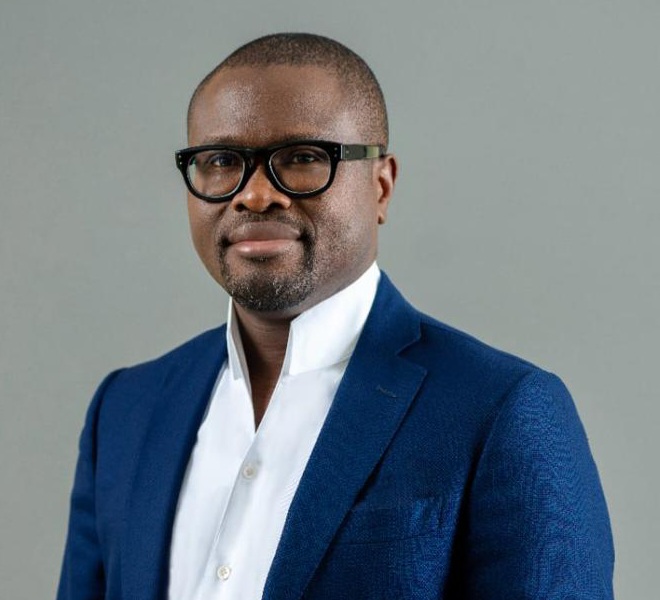
BY Reuben Abati


From today, we have just about 47 days to Nigeria’s general elections, a major transition that would involve a change of government, the seventh since the return to civilian rule in 1999, but the biggest fear is that the current electoral process faces threats from different directions more than any other before it. I intend to identify some of these and reflect on them, as we all begin to count down to this year’s major elections. Yesterday in Ojota, Lagos, it was reported that there was a shoot out between members of the Oodua Progressives Congress (OPC), and the Oodua self-determination activists and Nigeria’s security agencies. Persons were killed, others were injured. By 9 am, concerned citizens had declared the Ojota area of Lagos a no-go area except you would willingly take a stray bullet in your head and die just like that.  In Anambra State, unidentified gunmen burnt down a police station in Umuchu community in Aguata Local Government Area.


The same station was destroyed by #EndSARS protesters in 2020 during a mass protest. The Umuchu Improvement Union decided to rebuild it, only for it to be set ablaze again.   In parts of the East and elsewhere, both police stations and the offices of the electoral umpire have been special targets of evil-minded arsonists and unknown gunmen, ahead of the elections. As of December 2022, we were told that over 50 INEC offices had been attacked in four years, across 15 states. Of these, 11 incidents in Imo state alone, seven in Osun, five in Akwa Ibom, five in Enugu and Ebonyi, four in Abia and Cross River, two in Anambra, Taraba, Borno, and one in Ogun, Lagos, Bayelsa, Ondo and Kaduna. The frequency of these attacks has since increased as the elections draw nearer, causing understandable panic and concern among right-thinking members of the Nigerian community. The truth is that INEC facilities and security stations have become targets of arson and vandalism.


The attacks point to a trend: the determination to destroy INEC infrastructure, incapacitate the institution, and derail the 2023 electoral process. The details are as follows:  yet uncollected Permanent Voters’ Cards (PVCs) have been stolen, generating sets and computers are destroyed and the assailants across the country disappear into thin air. There is no record of arrests having been made. When INEC offices are not attacked, there are other attacks that point to what is beginning to look like a deliberate attempt by some hoodlums to make sure the 2023 elections do not take place. On March 28, 2022 for example, a Kaduna bound train from Abuja was attacked and bombed and passengers were injured and abducted. More than 100 of the abducted passengers did not all regain their freedom until September 2022. The families who lost their loved ones, or paid ransoms, and those whose relatives were injured, humiliated and flogged, would never forget their pain and loss. Their only crime, at the risk of sounding repetitive is that they are Nigerians living in a country of strange occurrences where life has become “nasty, short and brutish”.


On Saturday, just a few days ago, the railway station at Igueben in Edo State was attacked. This time, it was the station, not the train. Over 30 persons were abducted including the manager of the train station. This is all made more worrisome because before the re-opening of the Abuja-Kaduna rail line on December 15, 2022, the Minister of Transportation had boasted that special measures had been taken to ensure the safety of passengers and the entire Nigerian railway value chain. The Minister has since visited Igueben and he simply repeated the same tosh without even thinking about how additional security measures would eb taken.  What we see is that government officials do not learn from what happens to the people. They repeat the same embarrassing script in an odious advertisement of their lack of capacity. So much money and commitments have been invested by Nigeria in the country’s rail network, but the management is atrocious because it is in the hands of incompetents who on top of it all, have not learnt the lesson of keeping quiet when you have nothing intelligent or reasonable to say. In some other countries, where merit is more important than connections, the Minister of Transportation and the Managing Director of the Nigeria Railway Corporation (NRC) would be out of job by now.


But the bigger picture, the big elephant in the room, is that this is election season and it seems that some fifth columnists are determined to truncate the process, derail it, make it impossible, as it were for Nigerians to have credible elections. This may sound hypothetical, but from the evidence of current trends, it is possible to do a threat assessment and conclude accordingly. We face a very high level of security threat as we get closer to the 2023 elections, and it is one reason why the security agencies must arouse from their slumber and stop playing possum when the house is threatened by arsonists.  President Muhammadu Buhari had given, before now, the security agencies a deadline of December 2022 to make sure that they “got on top of the security situation” in the country. The various service chiefs pledged that they would do their job. The joke is now on them. Where are they? Are they hiding in some secret cupboards somewhere? There is widespread insecurity in the land. The people have played their part by seeking to register and collect their Permanent Voter’s Cards: 93. 5 million registered voters and over 48 million young people who want to use the 2023 opportunity to have a say in how they are governed. Who is afraid of the people’s voice and power? Buhari wants to leave a strong legacy. The starting point, and the obvious redemptive choice is to leave behind a free and fair election that produces the best options for Nigeria. This week, the President would begin to show up as we have been told at rallies of his party in 10 states (why 10?),,for  the APC’s Presidential candidate Asiwaju Bola Ahmed Tinubu. The last time President Buhari was sighted at any APC rally was during the flag off of the campaign in Jos, Plateau State. But now, he wants to come out to throw his weight and influence behind his party’s Presidential candidate. In doing so, at this crunch time, he must be reminded that he had told us again and again that he is for everybody and for nobody and all he wants is for Nigerians to vote according to their conscience. He has an obligation to toe that chosen  path even as he relishes photo opportunities at campaign rallies by his own party, otherwise he would be accused of hypocrisy. His party members expect him to deliver single-handedly, over 12 million votes from the North. But the times have changed. Out of the total of 93. 5 registered voters, over 48 million of them are young men and women, and they are majorly in the South, espousing a combination of #EndSARS, #IPOB and #TakeOurCountry Back ideals. There is a new generation in the electoral space that does not know the older generation. This is bound to be an election like no other. It would be a contest between the old and new order, the rich and the poor, the establishment and the people. Whoever wins, Nigeria stands the strong chance of new realignments and awakening.  The best bet for President Buhari as he goes into final retirement from public service and partisan politics is to protect his legacy for Nigerians, and take ownership of his own narrative. He is not getting the help that he badly needs!


The 2023 election process is further threatened by the inability of the people, especially young men and women who dominate the electoral register to get their PVCs. In Lagos state or elsewhere, the story has been that either the INEC officials do not show up, or they arrive late and close early, provoking the anger of majorly young voters who believe that there is an attempt to disenfranchise them. INEC spokespersons continue to argue that they are prepared and ready, but what explains the inefficiency in INEC collection centres from Local Government Areas to the wards, and the fact that INEC ad-hoc staff are mostly unavailable at their duty desks. There has been a clamour for the extension of the INEC time-table for the collection of PVCs beyond January 22, 2023. INEC must also audit its own processes beyond merely making promises it cannot keep. The people have been told that the only way they can vote and for their votes to count is for them to have a voter’s card. One man, one vote. INEC must in addition to everything else explain why its Voter’s Cards are showing up in refuse dumps and drainage channels. How did they get there?  The PVCs must be in the hands of Nigerian voters who expect to use them to exercise their due rights under the law.  This is not something that INEC must sweep under the carpet. The   organization has announced that beginning from today, it would embark on the enlightenment of the electorate across the country. It is not just the voters that need enlightenment, the process must begin with INEC officials and ad hoc staff.


The politicians also must be called to order. The beauty of the Electoral Act 2022 is that it spells out in no uncertain terms, the penalty for misconduct. Sections 91, 92 93, 94, 95, 96, 97, guide conduct during elections accordingly, with penalties properly spelt out in Sections 92 (7), (8), 93(2), 94(2), 95 (6), 96(3) and 97 (1) but nonetheless, the level of impunity has been horrendous. Candidates go to campaign rallies and the major thing they do is to abuse their own opponents with a barrage of hate speech, toxic language and argumentum ad hominem. In some states where certain parties are in charge politically, they do not allow the opposition to campaign or erect campaign materials. There has been in fact a rank disregard for Section 97 of the Electoral Act which forbids any form of campaign on “religious, tribal or sectional reason for the purpose of promoting or opposing a particular political party or the election of a particular candidate…”  Meanwhile, it has been reported that a special prayer session was organized by Muslim clerics in Kano recently in support of the APC Presidential candidate, Bola Ahmed Tinubu. At the event, one Abdulmutalab Mohammed Auwal, a Sheik, advised Muslims to vote only for a Muslim-Muslim ticket as a call to Jihad. He argued the Bola Tinubu/Shettima Muslim/Muslim ticket is an indication of the supremacy of Islam. The meeting was attended by about 75 Muslim groups from the North and other parts of Nigeria. Other speakers at the event promoted the politics of religion. The last time we checked, the 1999 Constitution of Nigeria at Section 10 thereof says: “The Government of the Federation or of a state shall not adopt any religion as State Religion”. It is the same provision that is reflected in Section 97 of the Electoral Act 2022 on the prohibition of “campaign based on religion or tribe”. But here in Nigeria both the people and the government break the laws routinely because impunity reigns. How on earth can a total of 75 groups gather at a forum and preach hatred based on religion and they are allowed to get away with it?


So in essence, the security agencies are not doing their work! They have an obligation to protect the state against all levels of threat, and they must do so, proactively, and consistently, not when it is convenient for them to do so. A general election such as this country is about to hold in the next two months is not just about the ballot paper, and the people’s ability to choose, it is also a national security operation. It is the integrity of the Nigerian state that is at stake. The electoral framework is clear on that. The people’s right to vote and choose, freely and without inducement or any form of harassment or molestation, must be protected and defended. Election managers often talk about a certain concentric circle of security operations on election day, but clearly, the security dimension of any major national security event is not a day-event, it is a process: before, during and after. Not enough has been done before the elections as indicated by the multiple security breaches around the country. The challenges ahead are clear and obvious. The politicians are behaving as if the election this year is a kind of war. The last thing this country wants is any form of war.  Nigerians want peace. The 2023 Budget as defined has a deficit of N77 trillion. Unemployment rate is over 33%. There is a debt overhang of over N22 trillion. Revenue projection is about N10 trillion. There is the possibility that fuel subsidy and other subsidies will be removed but there is no guarantee that the gains accruing therefrom will be properly managed. Tighten your seat belts. This is bound to be a tough year for us, as Nigerians. The politicians will win or lose, but they don’t seem to care enough about us. This is our sad reality.

Continue Reading
Click to comment

Leave a Reply

Your email address will not be published. Required fields are marked *

Featured

Reno, Fani-Kayode’s Brains Configured to Say Anything and Delete – Dele Momodu

Published

on

By

By Eric Elezuo

Renowned journalist and a chieftain of the African Democratic Congress (ADC), Chief Dele Momodu, has come down hard on two loyalists of President Bola Tinubu, Reno Omokri and Femi Fani-Kayode, who were ambassadors-designate, before being posted to Mexico and Germany respectively.

Momodu, in a statement titled Reno Omokri and Femi Fani-Kayode: A Tale of Two Shameless friends, and posted on his verified social media handles, including Instagram, noted that the two men have proved themselves as very ‘shameless’, with brains configured to say anything and delete immediately.

While referring to Reno and Fani-Kayode as two perpetual agents of perfidy’, Momodu informed that his statement was in other not to give the ‘two…friends’ the impression to think they could bully him into silence and submission.

“No. They can’t. They both have no credibility whatsoever. Together, they’ve expressed the worst views ever about BOLA TINUBU that they will never be able to erase, or clean up, in a million years, except the world finally comes to an end,” he said.

While maintaining that he stands by his qualification of President Tinubu as a dictator, he clarified that the duo of Rwno and Fani-Kayode has disparaged and said worst things about Tinubu in the past, with whom they are hobnobbying with at the present.

Momodu revealed that his suspension of his weekly column on ThisDay and The Boss Newspaper was out of respect for some Yoruba elders, for Tinubu, and not to be critical of him as he did to his predecessors, saying that he has nothing against the president except for his consistent dive into the world of dictatorship and tyranny.

The Ovation Magazine publisher berated the duo of Reno and Fani-Kayode for severally reaching out to him privately for publicity. He also boted that he is not a victim of poor upbringing as the two men constantly portray. He further contrasted himself from the two men, saying he does not fight like pigs, and unlike the duo, has a job.

Read the statement in full

RENO OMOKRI & FEMI FANI-KAYODE: A TALE OF TWO SHAMELESS FRIENDS…

I was going to ignore these two perpetual agents of perfidy but later decided to respond to them just in case they think they could bully me into 🔕 silence and submission.

No. They can’t. They both have no credibility whatsoever. Together, they’ve expressed the worst views ever about BOLA TINUBU that they will never be able to erase, or clean up, in a million years, except the world finally comes to an end.

The only reason I could adduce for Tinubu’s tolerance of both irritants is desperation and his inability to find better people to do the dirty jobs. The brains of these ones have been configured to say anything and delete immediately.

I have never disparaged TINUBU in my life. I have never called him a murderer. I have never called him a drug baron or addict. I’m intelligent enough, not to say what I have no proof of. Only morons talk without thinking. I thank God for good upbringing. I do not fight like pigs. And I have a job and manage my modest income. I’m not seeking government appoints. I know how many times Femi and Reno have reached out to me, privately, either begging for publicity or apologizing for attacking me publicly.

All I have accused Tinubu of is DICTATORSHIP and I stand by it with my full chest. I oppose tyranny because I once suffered under it. Chief Moshood Abiola won an election but dictatorship deprived him of his victory. Why should we replace military dictators with civilian slavemasters. That’s my only grouse against TINUBU. Because of our past association, I have been partial and generous to him by not being as critical of him as I did to his predecessors.
Because of TINUBU, I stopped writing my PENDULUM column on the Backpage of Thisday and The Boss newspapers. Also, out of respect for Yoruba elder statesmen, including retired Generals who pleaded that we give him time to stabilize. They are alive to bear me witness.

How Femi and Reno can continue to harass people on behalf of a TINUBU they’ve permanently damaged and sent to the cleaners really baffles me.

But this is Nigeria…

– AARE BASORUN AKINROGUN DELE MOMODU

Continue Reading

Featured

Resign by March 31, Tinubu Tells Political Appointees Seeking Elective Offices in 2027

Published

on

By

President Bola Tinubu has directed all political appointees in his administration who intend to contest elective offices in the 2027 general elections to resign their positions on or before March 31, 2026.

The directive, according to the Presidency, is in line with Section 84(12) of the Electoral Act and the timetable released by the Independent National Electoral Commission (INEC) for party primaries ahead of the 2027 polls.

The directive was conveyed on Tuesday through a statement from the Office of the Secretary to the Government of the Federation (OSGF).

The statement was signed by the Permanent Secretary, General Services Office, Dr. Ibrahim Abubakar Kana, on behalf of the Secretary to the Government of the Federation, Senator George Akume.

According to the statement, the directive applies to all categories of presidential political appointees who plan to participate in party primaries or seek nomination for any elective office in the forthcoming elections.

Those affected include Ministers, Ministers of State, Special Advisers to the President, Senior Special Assistants, Special Assistants and Personal Assistants to the President.

It also covers Directors-General and Chief Executive Officers of Federal parastatals, agencies, commissions and government-owned companies, as well as other political appointees appointed by the President.

The government stated that all affected officials are required to submit their formal resignation letters through the Office of the Secretary to the Government of the Federation on or before the March 31, 2026 deadline.

“Accordingly, all affected officials are required to submit their formal resignation letters through the Office of the Secretary to the Government of the Federation not later than March 31, 2026,” the statement said.

The Presidency explained that the directive is intended to ensure strict compliance with electoral laws and promote fairness in the political process ahead of the elections.

President Tinubu emphasised that the measure is aimed at upholding transparency and providing a level playing field for all aspirants preparing to participate in party primaries and the 2027 general elections.

The administration also reiterated its commitment to strengthening democratic institutions and ensuring credible electoral processes in the country.

Continue Reading

Featured

Electoral Umpires in Nigeria and Its Miasma of Failures

Published

on

By

By Hon. Femi Kehinde

Elections in Nigeria since 1923 had been bedeviled with hiccups, brouhaha, frustration, suspicion, lack of trust, and untrustworthy umpires, who were usually placed into such positions by perhaps equally untrustworthy men of power. Nigeria does not stand in isolation in this instance. However, its peculiarities of electoral failures have definitely impacted its growth and development, and stunted the eminence of its position in the Committee of Nations.

Sir Hugh Clifford assumed the office of Governor of Nigeria on August 8, 1919 and served until 1925, succeeding Sir Frederick Lugard, the apparent founder of a country called “Nigeria”- after the Amalgamation of the Southern and Northern Protectorate he had established in 1900 and 1903 respectively. He had consequently amalgamated these two uncommon people on the 1st of January, 1914 into a union called “Nigeria”- a name suggested to him by his British Journalist-wife, Flora Shaw, whom he married on 10th of June, 1902.
Perhaps as a soothsayer, the British Secretary of the Colonies, Lord Harcourt, the man whom Port-Harcourt was named after, in a formal “Instruments of Instruction” Cablegram dispatch to Sir Frederick Lugard on the 26th of December, 1913, sanctioning the creation of a new Nigeria on the 1st of January, 1914, and the appointment of Sir Lugard as its first Governor-General, said: “…May the Union be fruitful…May the Parties remain constant”.

In 1919, Sir Lord Frederick Lugard left office as Governor-General of Nigeria and was succeeded by Sir Hugh Clifford – a hugely prominent and highly experienced British Colonial Officer, who had hitherto, been Governor of the Gold Coast (present day Ghana).

Subsequently in 1922, to administer Nigeria within his own conception and to govern its people in strict adherence to the Rule of Law and democratic tenets and principles, Sir Hugh Clifford created Nigeria’s first Constitution ably tagged the “Clifford Constitution of 1922”. Interestingly, Britain has never operated a written constitution.

To herald democracy in accordance to this Constitution, he conducted an election into a talk-shop like Legislative Council, where only four (4) members were elected; three (3) from Lagos and one (1) from Calabar.

Infact, Lagos and Calabar were then referred to as British Crown Colonies. The four elected members were Egerton Shyngale, Eric Olawolu Moore, Crispin Adeniyi-Jones, Kwamina Ata-amonu. The three (3) successful candidates from Lagos were elected on the platform of Herbert Macaulay’s Nigerian National Democratic Party (NNDP), while the Calabar candidate emerged as an independent candidate.

There was no Electoral Commission to organize the election. It was personally organized and supervised by the Office of the Governor of Nigeria – Sir Hugh Clifford, who was completely apolitical (non-partisan).

However, in 1959, the tide changed. The 1959 General Election was the most significant, as it determined who would lead the country into independence. In 1958, Ronald Edward Wraith, a highly consulate British Administrative Officer, was appointed as the first Electoral Umpire by the British Governor-General in Nigeria, Sir James Wilson Robertson. His task was to design the framework for the country’s first major elections. He was appointed to oversee the 1959 General Elections, which were the most critical elections prior to Nigeria’s independence in 1960. Wraith is often credited with introducing the concept of the Secret Ballot to Nigeria. He spent years traveling round the country to educate Nigerians on how to register and vote, ensuring the transition from colonial rule to the First Republic, had a structured, albeit imperfect, foundation.

The 1959 elections, despite being organized by a British expert and Colonial Officer, was still bedeviled with irregularities. The Parties; NCNC, NPC, and AG, held dominant controls of their Regions. Elections were even won before contest, due to non-availability of Nomination Forms for opposition party members.

Right from the 1959 elections, participatory democracy began to fumble and wobble. The massive riggings of the Federal Elections of 1964 and Regional Elections of 1965 respectively, ultimately led to the collapse of the First Republic on the 15th January, 1966.

In 1960, Chief Eyo Esua was the first indigenous Chairman of the Federal Electoral Commission (FEC) during Nigeria’s First Republic. He was a veteran trade unionist and teacher. Before entering the electoral space, he was a founding member and long-time General Secretary of the Nigeria Union of Teachers (NUT). He was appointed by the Balewa government to oversee the 1964 and 1965 elections. His tenure was defined by the extreme political volatility of the 1960s. The 1964 federal election was marred by boycotts and allegations of massive fraud.

Esua was known for his personal integrity, famously admitting publicly that the 1965 Western Region elections were riddled with irregularities. This admission, while honest, highlighted the powerlessness of the Commission against the political giants of the time, shortly before the 1966 coup. He did not however admit that the 1964 Federal Election which he superintended, was equally marred with irregularities, and was infact a precursor of the 1965 Regional electoral riggings in all the regions of the federation.

In the 1965 Regional Elections in the Western Region, Chief Obadiah Ojerinola, a seasoned Senior Civil Servant in the Government of the Western Region, was appointed by the Ladoke Akintola government as the Electoral Umpire.

Obadiah Ojerinola was a high-ranking Civil Servant in the Western Region of Nigeria. Unlike the figures he worked alongside (like Chief S.L. Akintola, Chief Remi Fani-Kayode), he was not a “party man” by trade but an official within the regional bureaucracy. His appointment to lead the Electoral Body suggests he held a position of significant seniority and perceived stability within the Western Region’s Civil Service at the time.

Obadiah Ojerinola, served as the Chairman of the Western Region Electoral Commission during the highly controversial 1965 Western Region election, a period considered as one of the darkest chapters in Nigerian political history, often referred to as the era of “Wild Wild West” (Wetie).

As the “electoral umpire,” Ojerinola was at the center of the storm between the two major warring factions: NNDP (Nigerian National Democratic Party), led by Chief Samuel Ladoke Akintola (the incumbent Premier), and UPGA (United Progressive Grand Alliance), an alliance including the Action Group (AG) led by Chief Mrs. H.I.D Awolowo and Hon. Dauda Soroye Adegbenro (standing in for the imprisoned Obafemi Awolowo).

Ojerinola’s Commission was accused of extreme bias in favor of Akintola’s government. The election is remembered for several systemic failures. Before the first vote was even cast, the Commission declared many NNDP candidates “unopposed” by refusing to accept the nomination papers of opposition candidates.

On election day, there were reports of widespread ballot box stuffing and the physical intimidation of voters by “party thugs”. In a bizarre turn of events, Ojerinola’s Commission announced Akintola as the winner, while the opposition (UPGA) simultaneously announced their own victory via a pirate radio broadcast.

The conduct of the Ojerinola-led Commission sparked a total breakdown of law and order. Protesters began dousing political opponents and their property with petrol and setting them on fire, hence the term ‘Wetie’, meaning “douse it”. The Western Region became ungovernable, with widespread rioting and killings.

This electoral crisis is widely cited as the primary “trigger” for Nigeria’s first military coup on January 15, 1966, which ended the First Republic and led to the deaths of Akintola and other top leaders like Tafawa Balewa (Prime Minister of Nigeria), Festus Okoti-Ebo (Minister of Finance), Ahmadu Bello (Premier of the Northern Region).

Ojerinola is often studied as a cautionary tale of what happens when an electoral body loses its perceived neutrality. His tenure proved that without a credible ‘umpire’, the Democratic process can collapse into violence.

Similarly, the Electoral Umpires in the Eastern Regional Elections and the Northern Regional Elections in 1965, were Barrister Anthony Aniagulu (later Justice Anthony Aniagulu of the Supreme Court of Nigeria Rtd.) and Alhaji Bello Makaman Kano respectively. They performed similar feats like Ojerinola, to ensure the success of their regional gladiators in the NCNC and NPC respectively.

On 15th November, 1976, Michael Ani was appointed to the role of the Chairman of the Federal Electoral Commission (FEDECO) by General Olusegun Obasanjo’s military administration. Prior to entering the electoral arena, Michael Ani was a seasoned Civil Servant, who was known for his administrative discipline.

His primary responsibility was to oversee the transition from military rule to civilian government, which eventually led to the 1979 general elections. He led a 24-man commission tasked with organizing the return to democracy. His mandate included the registration of political parties, the delimitation of electoral constituencies, and the general conduct of the voting process.
Though he was appointed in 1976, he is most famously remembered for his legal interpretation during the 1979 presidential election. He ruled that Alhaji Shehu Shagari had met the requirement of winning one-quarter of the votes in “at least two-thirds of all the states,” despite the mathematical ambiguity of what constituted two-thirds of Nigeria’s then 19 states. His tenure is often remembered for this “Twelve Two-Thirds” legal dispute regarding the spread of votes required for a presidential winner; a case that eventually went to the Supreme Court.
However, despite Michael Ani’s famed integrity, urbane and cosmopolitan disposition, FEDECO which he presided may still not pass the crucibles of a free and fair election. In late June or early July 1979, through a nationwide State Broadcast before the elections held on August 11, 1979, the Head of State, General Olusegun Obasanjo, addressed the nation on radio and television where he said amongst several others that: “The best candidate may not necessarily win an election”.

Whatever that may mean.

In 1980, Justice Victor Ovie-Whiskey was appointed as the Chairman of the Federal Electoral Commission (FEDECO) during the Second Republic, succeeding Michael Ani, by President Shehu Shagari. He was a distinguished Jurist who served as the Chief Judge of the High Court of the defunct Bendel State. He presided over the 1983 General Elections, which were incredibly contentious due to the “landslide” victories claimed by the ruling National Party of Nigeria (NPN).

He is famously remembered for his defense of his integrity. When accused of taking bribes to rig the 1983 election, he famously quipped that if he saw a bribe of a million naira, he would “faint” because he had never seen such an amount of money.

Despite his background as a fair-minded Judge, the 1983 elections were so disputed that they served as a primary justification for the military coup led by Muhammadu Buhari on 31st December, 1983.

In-parenthesis, Oyo and Ondo States suffered massive electoral riggings, violence and manipulations in the Gubernatorial and Presidential Elections of 1983.

In Ondo State, Hon. Justice (Dr.) Lateef Oladepo Aremu, served as the Resident Electoral Commissioner (REC) for the Federal Electoral Commission (FEDECO). He was a distinguished Nigerian Jurist and later, a pioneer in the judiciary of Osun State.

As the Resident Electoral Commissioner for Ondo State, Justice Aremu was at the center of one of the most disputed Gubernatorial elections in the Second Republic.

FEDECO declared Chief Akin Omoboriowo of the National Party of Nigeria (NPN) as the winner over the incumbent Governor, Chief Michael Adekunle Ajasin of the Unity Party of Nigeria (UPN). The announcement sparked widespread riots, arson, and violence across Ondo State, as many citizens believed the results had been manipulated. The election results were eventually contested in court. In a landmark decision, the judiciary (up to the Supreme Court) overturned the FEDECO declaration, ruling that Chief Michael Ajasin was the actual winner and had been “robbed” of his mandate.

Justice Aremu’s role during this time is often cited in political and legal studies regarding the independence of electoral bodies.
While the FEDECO of 1983 faced massive criticism for “collusion” with the ruling party, Aremu’s later career as a pioneer Judge in Osun State (starting in 1992) saw him rebuild a reputation for intellectual depth and judicial integrity. His transition from the high-pressure electoral environment of 1983 to the Osun State High Court bench in 1992 is viewed as a significant paradigm shift from the Administrative side of the law back to the Adjudicatory side, where he spent the remainder of his distinguished career.

In the 1983 Elections in Ondo State, successful businessman, Chief Agbayewa, and serving member of the Federal House of Representatives, Hon. Olaiya Fagbamigbe who had both decamped from the UPN to the NPN, were killed and burnt to ashes by irate mob in Akure.

In Oyo State, Stephen Sunmiboye Ajibade (commonly cited as S.S. Ajibade) was a prominent Civil Servant and Administrator who served as the Resident Electoral Commissioner (REC) for the Federal Electoral Commission (FEDECO) during the 1983 General Elections. His tenure is historically significant due to the intense political climate of the Nigerian Second Republic and the controversial nature of the elections in the “Wild West.”

As the head of FEDECO in Oyo State, Ajibade was the primary official responsible for the logistical execution and the final announcement of election results in what was then one of Nigeria’s most politically sensitive and volatile states. Under his supervision, FEDECO declared Dr. Victor Omololu Olunloyo of the National Party of Nigeria (NPN) as the winner of the Governorship race. This was a seismic shift in Oyo politics, as it meant the defeat of the incumbent Governor, Chief Bola Ige of the Unity Party of Nigeria (UPN).

Ajibade’s stint as Resident Electoral Commissioner was marked by extreme pressure and allegations of electoral malpractices that characterized the 1983 polls nationwide. The UPN and Chief Bola Ige accused the Oyo State FEDECO office of inflating figures in favor of the NPN. This led to a period of significant tension and sporadic violence across Ibadan and other parts of the state.

The results announced by Ajibade’s office were challenged in the landmark case of Ige v. Olunloyo. While the lower Courts, and eventually the Supreme Court upheld the results (unlike in neighboring Ondo State), the conduct of the election remained a point of heavy criticism by political analysts and historians.

Beyond his role in FEDECO, S.S. Ajibade, a native of Modakeke in present day Osun State, was a Career Administrator. Interestingly, Sam Mbakwe’s name was found on the voters register in Modakeke despite being sitting Governor of Imo State.

In the years following the 1983 elections and the subsequent military coup, he continued to serve in various administrative capacities within the Nigerian Civil Service. He is often remembered in Nigerian political history as an official who stood at the center of one of the most litigated and debated electoral cycles in the country’s history.

The “Transition Years” (1987–1998) represent the most unstable yet fascinating and intriguing period in Nigeria’s electoral history. This era was characterized by a tug-of-war and maradonic styles between military rulers (specifically Generals Ibrahim Babangida and Sani Abacha) and the Chairmen tasked with returning the country to civil rule.

Professor Eme Awa was appointed by General Babangida in 1987 to lead the newly formed National Electoral Commission (NEC). He was a highly respected Professor of Political Science at the University of Nigeria, Nsukka. He was seen as an intellectual heavyweight with a deep understanding of federalism, and also known for his uncompromising integrity. He reportedly fell out with the military government because he refused to be dictated to, regarding the conduct of local government elections. He resigned in 1989. His departure was a signal to many that the military was not yet ready for a truly independent electoral body.

Prof. Humphrey Nwosu, a former student of Eme Awa, took over the NEC in 1989 with a mission to innovate. He is also a Professor of Political Science. He was energetic, vocal, and deeply committed to “homegrown” democracy. He introduced the Option A4 voting system (Open Ballot System), where voters queued behind the poster of their preferred candidate. This was meant to eliminate ballot-box snatching and ghost voting.

Nwosu conducted the June 12, 1993, Presidential Election, widely regarded as the freest and fairest in Nigeria’s history. As results showing M.K.O. Abiola in the lead were being announced, the military government annulled the election. Nwosu was famously silenced, and disappeared from the public eye for years.

Following the chaos of the June 12, 1993 annulment and the removal of Nwosu, Prof. Okon Uya was appointed by the short-lived Interim National Government (ING). He was a distinguished Professor of History and former Ambassador to Argentina. Prof. Uya was tasked with conducting a fresh presidential election to “correct” the June 12 impasse. His tenure was cut short when General Sani Abacha seized power in a coup in November 1993, dissolving all democratic structures, including the NEC.

Under the Abacha regime, the Commission was renamed the National Electoral Commission of Nigeria (NECON), and Chief Sumner Dagogo-Jack was appointed as its Chairman in 1994. Chief Dagogo-Jack was an Administrator from Rivers State. His tenure is often criticized because the five registered Political Parties at the time all nominated General Sani Abacha as their sole presidential candidate; a move popularly described by late Chief Bola Ige as “five fingers of a leprous hand”. The transition process he was overseeing ended abruptly when General Abacha died in June 1998.

This era proved that no matter how brilliant the Chairman was (like Nwosu or Awa), the “Independence” of the Commission was always at the mercy of the military’s willingness to vacate power.

In 1998, the Independent National Electoral Commission (INEC) was established by the military administration of General Abdulsalami Abubakar, replacing NECON. The formation of INEC was a foundational step in the transition program that eventually ended decades of military rule and ushered in the Nigerian Fourth Republic on the 29th May, 1999. Justice Ephraim Akpata was appointed as the first Chairman of the newly formed Independent National Electoral Commission (INEC). He was a retired Justice of the Supreme Court of Nigeria.

Justice Akpata is credited with the successful conduct of the 1999 elections, which ended decades of military juntas and ushered in the Fourth Republic. He was widely respected for his integrity and for standing his ground against political pressure during a very fragile transition period.

In the year 2000, following the death of Justice Ephraim Akpata, President Olusegun Obasanjo appointed Dr. Abel Guobadia to succeed the deceased INEC Chairman. He became the second Chairman of the Fourth Republic’s INEC. He was a distinguished Physicist and diplomat. He served as the Executive Secretary of the National Universities Commission (NUC) and was Nigeria’s Ambassador to South Korea.
He oversaw the first civilian-to-civilian transition in Nigeria’s history. While successful in keeping the Republic moving, the 2003 election was heavily trailed by allegations of “ballot-box stuffing”, logistical chaos and failures.

As at then, Dr. Guobadia was the first Chairman in Nigerian history to successfully complete a full five-year term of office from 2000 to 2005, without being sacked or resigning. Though his tenure was controversial due to the “landslide” victories of the ruling party, he maintained a calm, “by-the-book” judicial approach to electoral disputes, always advising critics to seek redress in Court.

In 2005, Prof Maurice Iwu succeeded Dr. Abel Guobadia as INEC’s Chairman. He was in office between 2005 and 2010. Professor Iwu’s tenure is perhaps one of the most debated in Nigerian history. He was a Professor of Pharmacognosy (the study of medicines derived from natural sources).
He oversaw the 2007 General Elections, which were widely criticized by international observers and even the winner, Umaru Musa Yar’Adua, for being deeply flawed. Despite the criticism, Prof Iwu introduced several technological concepts, like the initial electronic voting machine designs, though they were not fully implemented during his time.

Prof Attahiru Jega succeeded Maurice Iwu as INEC’s Chairman, and was in office between 2010 and 2015. Prof. Jega is often regarded as the man who restored the image of INEC. He was a former Vice-Chancellor of Bayero University, Kano and a prominent academic activist (former President of ASUU).

Prof. Jega is notably known for introducing the Permanent Voter Card (PVC) and the Smart Card Reader, which significantly reduced “over-voting” and ballot stuffing. He presided over the 2015 election, the first time in Nigerian history that an incumbent president (Goodluck Jonathan) lost to an opposition candidate (Muhammadu Buhari) and conceded.

Prof. Mahmood Yakubu succeeded Prof. Attahiru Jega in 2015. He was in office as the longest serving INEC Chairman in Nigerian history, serving from 2015 to October 7, 2025, when his tenure extinguished. He was a Professor of History and former Executive Secretary of the Tertiary Education Trust Fund (TETFund).

He pushed for the Bimodal Voter Accreditation System (BVAS) and the INEC Result Viewing Portal (IReV). These tools were designed to upload polling unit results directly to the internet in real-time.
While Prof Yakubu successfully managed the 2019 and 2023 elections, his tenure has faced intense scrutiny over technical glitches during the 2023 presidential result uploads.

Following his departure from INEC in October 2025, Prof. Mahmood Yakubu was appointed by President Bola Ahmed Tinubu as the Nigeria Ambassador-designate to Qatar.

The incumbent Chairman of the Independent National Electoral Commission (INEC) is Professor Joash Ojo Amupitan (SAN). He was sworn in by President Bola Ahmed Tinubu on October 23, 2025, succeeding Professor Mahmood Yakubu. He is a distinguished Professor of Law and a Senior Advocate of Nigeria (SAN). Prior to his appointment, he served as the Deputy Vice-Chancellor (Administration) at the University of Jos.

However, would the electoral land-mines and the labyrinths of systemic failures allow this Ayetoro Gbede-born, highly regarded Scholar and Administrator, be truly independent and perhaps etch his name in gold as an apostle of electoral credibility in Nigeria, which had for so long remained a forlorn hope and mirage?

Fair play is lost in a football match, between shooting stars of Ibadan and Rangers International of Enugu, when you asked the shooting stars of Ibadan to choose the referee.

Wishing this former Pro-Chancellor and Chairman of the Governing Council of a faith-based University – Joseph Ayo Babalola University (JABU), Ikeji-Arakeji, a successful voyage.

Hon. (Barr.) Femi Kehinde, MHR is a
Former Member of the House of Representatives, National Assembly, Abuja (1999-2003), representing Ayedire, Iwo, Olaoluwa Federal Constituency of Osun State, and Principal Partner, Femi Kehinde & Co. Solicitors, Ibadan, Oyo State

Continue Reading

Trending