Connect with us

Opinion

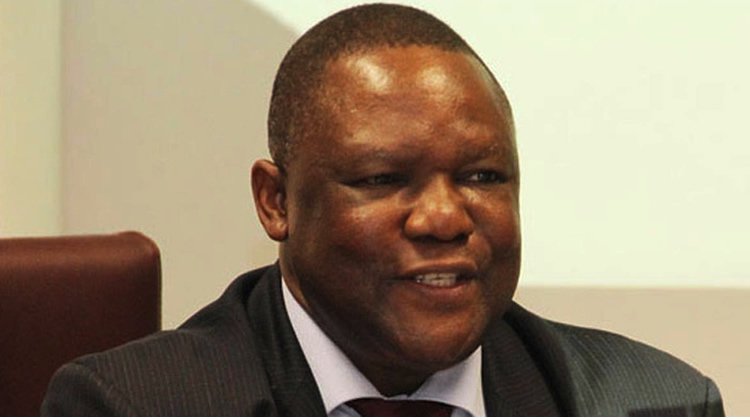
Opinion: Potentiality Digest: Tribute to Dr Obadiah Mailafia

Published

on

By Sodeeq Abdulakeem Sulyman
Every soul shall taste death…the life of this world is nothing but a provision of vanities.” – Surah Aal-e-Imran: 185.
Monday is a day I always anticipate to experience because of the kind of intellectual explorations I engaged in, in order to nourish my own intellectual firmament and maturation. This is as a result of the various newspaper articles written by distinguished intellectuals like Sam Omatseye (The Nation); Alex Otti (ThisDay); Sulaimon Olanrewaju, Tope Popoola, Amb. Ademola Adeoye (The Nigerian Tribune) and the now late Dr Obadiah Mailafia (The Nigerian Tribune and the Punch newspapers).
From the list of the renowned personalities I mentioned, the late Dr Obadiah Mailafia is one, whose intellectual disquisitions and explication always leave me in sheer amazement. Dr Mailafia was an Economist who combined intellect with brilliance to relay his views to the public, without holding any restitution regardless of whose ox is gored! He was a man of sound conviction and principles whose foundations were built on the ideologies of the great philosophers of the Classics and Renaissance.
With the short and simple descriptions I have presented on the personality of Dr Mailafia, I was saddened yesterday (Sunday, 19th September, 2021), when I heard the news of the shocking and sudden demise of his. I was devastated to confirm that one of the sages that I hold respect for their views, positions and arguments on both national and international politics, economic and sociocultural affairs and reforms lives no more!
As the loss of Dr Mailafia’s great soul perches my mind, and troubles my heart, I deem it necessary for myself to pen this tribute, to join his colleagues, mentors and protégés around the world who will be pouring encomiums on the lifetime of Dr Mailafia. For me, this is a choice that was so easy for me to make, because Dr Mailafia used his moral, religious, political and ideological infirmities and proclivities to objectivised his views on any subject matter he wishes to discuss. No doubt, if you lay your hands on anything written by Dr Mailafia, you will be left with no choice than to commend his panache and astuteness.
Dr Mailafia was a man I firmly believed that I am going to meet him one day. But now that I am in emotional torrent because of the void Dr Mailafia’s demise will create in the space of our nation building, most especially now that we are in urgent and serious need of his technocratic and bureaucratic acumen, as a trained Librarian, Author and voracious Humanist, I don’t joke with quotes and wise sayings of anybody I read their works. Dr Mailafia’s point of views occupied a portion of my quote bank.
Hence, I am humbly sharing some quotes and wise sayings of Dr Mailafia with you. I hope the few ones I am sharing will affirm to you the depth of Dr Mailafia’s eloquence as a monumental and topnotch scholar whose kind is rare in this era. Excerpt:
Every leader is limited by his education, innate ability, mindset and unique circumstances.” – Obadiah Mailafia
 
Democracies, if truth be told, do not die because of violent interventions. They die because of daily acts of lawlessness and impunity; because of extremism devoid of restraint and forbearance, because of disloyalty to the nation by leaders and citizens.” – Obadiah Mailafia
 
In a country of such diversity, ethnic and religious cleavages can easily be exploited by unscrupulous elites to inflame latent tensions, leading to inter-communal violence.” – Obadiah Mailafia
 
The 1999 constitution is a fraud. Nobody knows who wrote it. In good hands, people can live with even bad constitutions. But in the hands of closet Jihadists, it represents the triumph of tyranny.” – Obadiah Mailafia
 
The highest wisdom of statecraft is to know that even the saint will occasionally get his hands dirty.” – Obadiah Mailafia
 
Technocrats focus on getting the right things done; politicians focus on getting the right things in tune with the popular will. Politics, after all, is the art of the possible.” – Obadiah Mailafia
 
Nations are not impersonal abstractions. They are the collective outcomes of individual creativity, vision and purpose.” – Obadiah Mailafia
 
Nations that flourish are those that continually reinvent themselves in light of domestic and changing world conditions. Those that fail to reform will atrophy and die.” – Obadiah Mailafia
 
Great states are not products of chance. They are products of imagination, creativity and purpose-driven leadership.” – Obadiah Mailafia
 
In our 21st century, national power is determined by population, territory, landmass, economic prowess, technological capability and military might. National glory is an important, albeit unquantifiable, element, in that equation. National glory is about prestige, national reputation and aura.” – Obadiah Mailafia
 
A good economist, in my view, must be a leader who knows the price of everything as well as the value of the most important things that matter for humanity and civilisation.” – Obadiah Mailafia
Dr Mailafia was an embodiment of excellence and distinction. His story will continue to resonate to both the present generation and posterity as a beacon of hope and advocate of social justice. He was a rare leader that lived to exemplify the words of Simon Sinek that “There are leaders and there are those who lead. Leaders hold a position of power or influence. Those who lead inspire us.”
Dear Dr Mailafia, I can categorically confirm to the world that your intellectual gumption always pushes me beyond my limits. As you joined your ancestors, I am taking courage to accept your death as inevitable through your patriotism, intellectual devotion to change the narrative of the Black race and drive changes by deploying confidence, compassion and capabilities. I join everyone around the world to salute your soul. You have lived well to be accommodated to the pantheon of noble Nigerians.
I extol your virtues. Rest well my Master of unrealistic epiphany.

Continue Reading
Click to comment

Leave a Reply

Your email address will not be published. Required fields are marked *

Opinion

PDP Crisis: Illegal Factional Convention is a Direct Assault on Party Constitution and Democracy

Published

on

By

By Prince Adedipe Dauda Ewenla

The attention of party faithfuls and the general public has been drawn to the desperate and unconstitutional attempt by a faction within the Peoples Democratic Party to foist an illegal National Convention on the party in clear violation of its constitution and established democratic norms.

Let it be stated unequivocally: the Constitution of the PDP is clear, unambiguous, and binding on all members only a duly elected National Working Committee (NWC) has the constitutional authority to convene, approve, and conduct a National Convention.

This position is firmly grounded in the provisions of the PDP Constitution:

1. Section 31(3) clearly vests the power to summon and convene the National Convention in the appropriate constitutional organ of the party, which operates through the National Working Committee.

2. Section 29(2)(a) establishes the National Working Committee as the principal executive organ responsible for the day-to-day administration and decision-making of the party.

3. Section 47(1) affirms the supremacy of the party constitution, making it binding on all members and organs of the party without exception.

Flowing from these provisions, any gathering, meeting, or assembly convened outside this constitutional framework is illegal, null, void, and of no consequence, being ultra vires, null ab initio, and incapable of conferring any legal rights or obligations whatsoever.

The ongoing attempt by a faction reportedly aligned with the Minister of the Federal Capital Territory, Nyesom Wike, to organize a so-called convention through an imposed and illegitimate caretaker structure is nothing but a brazen assault on the rule of law, party supremacy, and internal democracy, and amounts to a clear case of constitutional subversion.

For the avoidance of doubt:
Individuals who have been suspended or expelled from the party lack the locus standi to act on its behalf.

Any caretaker arrangement not constitutionally backed by the elected organs of the party remains a nullity ab initio.
No faction, no matter how powerful, can override the supremacy of the party constitution.

Any purported action taken in furtherance of this illegality is void and liable to be set aside ex debito justitiae by any court of competent jurisdiction.

It is instructive that the Federal High Court and other competent courts have already taken judicial notice of these constitutional breaches by entertaining suits challenging the legality of the proposed convention. This alone is a clear warning that the entire process is fundamentally defective and cannot stand the test of law.

We therefore align firmly and unequivocally with the leadership direction and stabilizing efforts under Kabiru Turaki, whose commitment to constitutional order, due process, and party unity remains the only credible path forward for the PDP at this critical time.

The party cannot and must not be hijacked by individuals driven by personal ambition, vendetta politics, or external influence.

The survival of the PDP as a viable opposition platform depends on strict adherence to its constitution and respect for its legitimate structures.

We warn, in the strongest possible terms, that:

Any convention conducted outside the authority of a duly elected NWC will be resisted and rejected by loyal members of the party.

Any outcome from such an illegal exercise will be treated as void ab initio and will not be recognized within the party or before the Independent National Electoral Commission.

Those promoting this illegality are inviting avoidable chaos, multiplicity of suits, and grave political consequences for the PDP ahead of 2027.

This is not just about a convention this is about the soul, legality, and future of our great party.

I call on all genuine stakeholders to rise above factional manipulation and defend the constitution of the PDP with courage and clarity.

The rule of law must prevail. Fiat justitia ruat caelum. The constitution must stand. The PDP must not fall.

Prince Amb. (Dr.) Adedipe Dauda Ewenla
PDP Southwest Ex-Officio

Continue Reading

Opinion

Intentional Progressive Leadership and Disciplined Security: Catalysts for Unlocking Possibilities

Published

on

By

By Tolulope Adegoke PhD

In an increasingly interconnected and volatile world, the twin forces of intentional progressive leadership and disciplined security stand as indispensable drivers of meaningful advancement. Intentional progressive leadership is characterized by deliberate, forward-thinking decision-making that prioritizes inclusive growth, innovation, accountability, and long-term societal transformation over short-term gains or entrenched interests. Disciplined security, in turn, refers to a professional, rule-of-law-based, human-centered approach to safeguarding citizens, institutions, and resources—one that integrates military, intelligence, law enforcement, and community engagement while upholding human rights and fostering trust. Together, these elements do not merely maintain stability; they actively unlock possibilities across three interconnected spheres: peoples (individuals and communities), corporates (businesses and organizations), and nation building (state institutions and societal cohesion).

This write-up examines their active roles, portrays the current realities as they stand in Nigeria, Africa, and the wider world, provides relevant global and regional examples, and offers practical, unbiased solutions. Drawing on established patterns of development, the analysis underscores that where these forces converge effectively, they generate exponential outcomes; where they falter, stagnation and fragility ensue. The goal is to present a balanced, evidence-informed perspective suitable for policymakers, business leaders, scholars, and development practitioners internationally.

Defining and Contextualizing the Core Elements

Intentional progressive leadership goes beyond charisma or authority. It demands strategic vision anchored in data, ethical governance, stakeholder inclusion, and adaptive resilience. Leaders in this mold invest in human capital, promote transparency, and align policies with sustainable development goals. Disciplined security complements this by creating the enabling environment of safety and predictability. It emphasizes professional training, intelligence-led operations, community policing, and the rule of law rather than militarization or repression. When these operate in synergy, they transform potential into tangible progress: educated citizens innovate, businesses thrive without fear, and nations build resilient institutions.

Active Roles in Delivering Possibilities for Peoples

For individuals and communities, intentional progressive leadership and disciplined security create pathways to dignity, opportunity, and empowerment. Progressive leaders prioritize education, healthcare, and skills development, viewing people as the primary asset. Disciplined security ensures freedom from fear, enabling daily pursuits of livelihood and aspiration.

In practice, this synergy fosters social mobility and cohesion. Progressive leadership invests in youth programs and vocational training, while disciplined security protects learning environments and public spaces. The result is reduced vulnerability to exploitation and increased civic participation.

Active Roles in Delivering Possibilities for Corporates

Corporations require stable operating environments to invest, innovate, and expand. Intentional progressive leadership enacts policies that ease business registration, combat corruption, and promote public-private partnerships. Disciplined security safeguards supply chains, intellectual property, and personnel against threats like extortion or sabotage.

This combination drives economic dynamism. Businesses flourish when leaders provide predictable regulations and when security forces respond swiftly to disruptions, allowing corporates to focus on value creation rather than risk mitigation.

Active Roles in Delivering Possibilities for Nation Building

At the national level, these elements are foundational to sovereignty, legitimacy, and prosperity. Progressive leadership builds inclusive institutions, diversifies economies, and integrates regional and global partnerships. Disciplined security preserves territorial integrity, deters external interference, and supports internal harmony.

Nation building succeeds when leadership fosters national identity and security architecture reinforces it through equitable protection and justice.

The Current Picture: Realities in Nigeria, Africa, and the Wider World

Nigeria exemplifies both promise and persistent hurdles. As Africa’s most populous nation and largest economy, it possesses immense human and natural potential. Yet, as of early 2026, security challenges remain acute: insurgency and banditry in the Northeast and Northwest, farmer-herder conflicts in the Middle Belt, kidnapping for ransom nationwide, and separatist tensions in the Southeast. These have displaced millions, stifled agriculture and commerce, and eroded public trust. Leadership under President Bola Tinubu has pursued reforms, including kinetic and non-kinetic counter-insurgency measures, the appointment of a new Chief of Defence Staff in late 2025 for better operational coherence, and emphasis on human capital development (HCD 2.0). Progress includes reported surrenders of insurgent affiliates and targeted infrastructure investments, yet gaps persist in governance coordination, community engagement, and addressing root causes such as poverty and youth unemployment.

Across Africa, the landscape is heterogeneous. Positive models include Rwanda, where post-genocide leadership under President Paul Kagame has combined visionary governance with disciplined security to achieve sustained growth, digital innovation, and regional stability. Botswana stands as another exemplar: decades of prudent, transparent leadership have turned diamond revenues into broad-based development while maintaining professional security institutions that uphold democratic norms. Ghana demonstrates democratic continuity with progressive economic policies and relatively effective security cooperation. Conversely, parts of the Sahel face coups, jihadist expansion, and governance fragility, highlighting how leadership vacuums and undisciplined security exacerbate cycles of instability.

Globally, the interplay is evident in success stories such as Singapore’s transformation under Lee Kuan Yew, where meritocratic leadership and disciplined, corruption-free security institutions propelled a resource-poor city-state into a high-income economy. South Korea’s post-war reconstruction similarly blended visionary leadership with security alliances and human capital focus. In contrast, nations experiencing leadership complacency or fragmented security—such as certain conflict zones in the Middle East or Latin America—illustrate stalled development and eroded possibilities.

These realities reveal a clear pattern: intentional progressive leadership and disciplined security are not luxuries but necessities. Their absence perpetuates underdevelopment; their presence catalyzes breakthroughs.

Relevant Examples Illustrating Essence and Impact

  • Rwanda: Post-1994 genocide, intentional leadership focused on reconciliation, education, and technology hubs, supported by disciplined security reforms that prioritized professional training and community policing. This has elevated Rwanda to one of Africa’s fastest-growing economies, attracting foreign investment and reducing poverty dramatically.
  • Botswana: Progressive leadership emphasized accountable resource management and anti-corruption measures, paired with a professional military and police force. The outcome is one of Africa’s most stable democracies and highest Human Development Indices.
  • Singapore: Lee Kuan Yew’s intentional policies built a merit-based civil service and rigorous, rule-based security apparatus. This created a safe, efficient environment that transformed the nation into a global financial and logistics hub.
  • Nigeria-specific: Initiatives like community-based security arrangements in some states, when aligned with progressive local leadership, have reduced localized banditry. Corporate examples include Lagos tech ecosystems thriving amid targeted security enhancements in business districts.

These cases justify the essence: deliberate leadership and disciplined security deliver measurable possibilities when integrated holistically.

Proffering Relevant Solutions: Pathways Forward Without Prejudice

Solutions must be context-specific yet universally applicable, emphasizing collaboration across stakeholders.

For Peoples (Individuals and Communities):

  • Nigeria and Africa: Scale up human capital programs like Nigeria’s HCD 2.0 through universal basic education, vocational training, and digital literacy, especially in rural and conflict-affected areas. Integrate community policing models that empower local vigilantes under professional oversight to build trust.
  • Wider World: Adopt inclusive social safety nets and mental health support in post-conflict settings. International partners can provide technical assistance for youth entrepreneurship funds.
  • Outcome: Reduced vulnerability and empowered citizens who contribute actively to development.

For Corporates:

  • Nigeria and Africa: Enact progressive policies such as streamlined business regulations, tax incentives for security technology investments, and public-private security partnerships (e.g., joint task forces for critical infrastructure). Encourage corporate social responsibility in community safety initiatives.
  • Wider World: Promote global standards like ISO security management systems and cross-border investment guarantees tied to stability metrics.
  • Outcome: Enhanced investor confidence, job creation, and innovation ecosystems.

For Nation Building:

  • Nigeria: Strengthen institutional reforms, including anti-corruption enforcement, judicial independence, and devolved security responsibilities (e.g., state police with federal safeguards). Foster inclusive national dialogues and leverage technology for intelligence sharing.
  • Africa: Enhance African Union mechanisms for peer review, joint peacekeeping, and economic integration to address transnational threats.
  • Wider World: Support multilateral frameworks that reward progressive governance with development aid and security cooperation, emphasizing capacity-building over external imposition.
  • Cross-cutting Measures: Invest in data-driven monitoring (e.g., peace indices), leadership training academies, and civil society engagement to ensure accountability.

Implementation requires political will, sustained funding, and adaptive evaluation. International standards—such as those from the World Bank’s governance indicators or the Institute for Economics and Peace—can guide benchmarking without external overreach.

Conclusion: A Call to Deliberate Action

Intentional progressive leadership and disciplined security are not abstract ideals but active agents that shape destinies. In Nigeria and across Africa, where challenges are pronounced yet potential is vast, their effective deployment can convert vulnerabilities into strengths. Globally, they offer proven blueprints for resilient, prosperous societies. The current picture, while marked by setbacks, also reveals pathways of hope through ongoing reforms and exemplary models. By embracing these forces with intentionality, stakeholders at all levels can deliver genuine possibilities—empowered peoples, thriving corporates, and cohesive nations. The imperative is clear: invest in people-centered leadership and professional security today to secure a more equitable and stable tomorrow. Through collaborative, evidence-based strategies, Nigeria, Africa, and the wider world can realize their full potential in an interdependent global order.

Dr. Tolulope A. Adegoke, AMBP-UN is a globally recognized scholar-practitioner and thought leader at the nexus of security, governance, and strategic leadership. His mission is dedicated to advancing ethical governance, strategic human capital development, and resilient nation-building, and global peace. He can be reached via: tolulopeadegoke01@gmail.comglobalstageimpacts@gmail.com

Continue Reading

Opinion

Characterisation of Biomass Feedstocks Relaxation Properties Using Visco Elastic Models

Published

on

By

By Dr. Aminu Owonikoko, PhD

Overview

This thesis investigates a deceptively simple but industrially important question: what happens to biomass materials when they are compressed and then allowed to relax? Biomass — such as woodchips, wheat straw, leafy residues, cotton seeds, and wood pellets — is a major renewable resource used for energy production and sustainable manufacturing. However, its physical behaviour during handling, storage, and processing is poorly understood. Unlike uniform materials such as sand or grain, biomass is irregular, springy, and unpredictable. This unpredictability leads to blockages, equipment failures, and inefficient energy use in biomass processing plants.

The research provides a scientific foundation for predicting how biomass behaves under pressure by combining controlled experiments with Visco elastic modelling. The work introduces a new method for extracting key model parameters, enabling more accurate and transparent predictions of biomass relaxation behaviour.

Why Biomass Behaviour Matters

Biomass supply chains involve several mechanical steps: compaction, transport, storage, and feeding into processing equipment. During these steps, biomass is often compressed. Once the pressure is removed, the material “relaxes” — it expands, shifts, and redistributes internal stresses. This relaxation affects:
• how much biomass can be stored
• how reliably it flows through hoppers and conveyors
• how much energy is required to process it
• the likelihood of blockages or equipment downtime

Understanding this behaviour is essential for designing efficient, reliable, and cost effective biomass systems.

Research Aim

The central aim of the thesis is to characterise the stress relaxation behaviour of five biomass feedstocks and to develop robust Visco elastic models that can predict this behaviour under different loading conditions.

Experimental Approach

Five biomass materials were selected due to their relevance in renewable energy and agricultural supply chains:
• Fuzzy cotton seeds
• Leafy biomass
• Wheat straw
• Woodchips
• Wood pellets

Each material was compressed using a Shimadzu MTS testing machine. After reaching a target stress level, the load was held constant while the material’s stress decay was recorded over time (typically 60, 120, and 180 seconds). These measurements captured both fast relaxation (immediate stress drop) and slow relaxation (longer term settling).

The experimental data revealed that each biomass type behaves differently, reflecting differences in structure, moisture content, particle shape, and internal bonding.
Modelling Approach

To interpret the experimental results, the thesis applies Visco elastic models — mathematical tools traditionally used to describe materials that behave partly like solids and partly like fluids. Two models were central:
1. Zener Model
– Captures both elastic and viscous behaviour
– Useful for materials with a clear fast relaxation component

2. Two Maxwell Elements Model
– Represents two relaxation processes simultaneously
– Ideal for materials with both fast and slow relaxation phases

A key contribution of the thesis is the development of a numerical and graphical method for estimating model parameters (such as relaxation time constants) without relying heavily on curve fitting software like MATLAB or OriginPro. This method improves transparency, reduces error, and makes the modelling approach more accessible to engineers.
Key Findings

1. Biomass Has Distinct Relaxation “Signatures”

Each biomass type exhibits a unique pattern of stress decay. For example:
• Wood pellets relax quickly and predictably.
• Leafy biomass relaxes slowly and irregularly.
• Wheat straw shows intermediate behaviour.
These signatures can be used to classify materials and predict their handling performance.

2. Fast and Slow Relaxation Are Mechanically Meaningful

The two Maxwell elements model successfully separates fast and slow relaxation processes. This distinction helps engineers understand how biomass responds immediately after compression versus how it settles over time.

3. New Parameter Extraction Method Improves Accuracy

The thesis introduces a novel approach for estimating relaxation time constants and stress components. This reduces dependence on automated curve fitting tools and provides more reliable model predictions.

4. Models Predict Real Behaviour Well

When applied to experimental data, both the Zener and two Maxwell models accurately reproduce the relaxation curves. This confirms that Visco elastic modelling is a powerful tool for biomass characterisation.

Practical Implications

The findings have direct relevance for industries that handle biomass:
• Improved equipment design: Better predictions of relaxation behaviour reduce blockages and mechanical failures.
• Optimised storage: Understanding how biomass settles helps determine safe and efficient storage densities.
• Reduced energy use: More predictable flow reduces the energy required for conveying and processing.
• Enhanced process reliability: Plants can operate more consistently with fewer interruptions.

Conclusion

This thesis provides a comprehensive experimental and theoretical framework for understanding biomass relaxation behaviour. By combining detailed measurements with improved Visco elastic modelling, it offers new insights into how biomass responds under pressure — insights that are essential for scaling up renewable energy and sustainable manufacturing.

The work advances both scientific understanding and practical engineering, contributing to the development of cleaner, more efficient biomass systems.

Continue Reading

Trending