Connect with us

Opinion

The State of the Nation and the People’s Constitution

Published

on

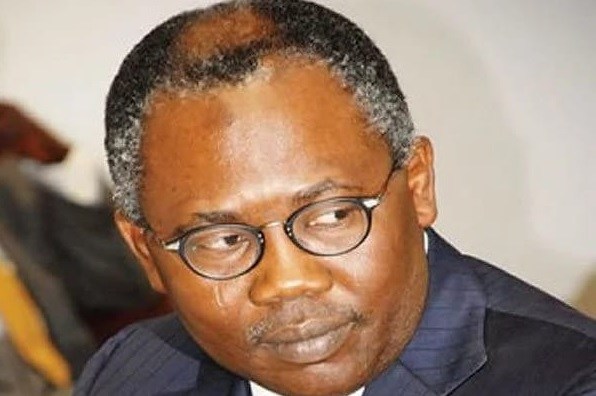
By Mohammed Bello Adoke, SAN, CFR,  FCI Arb (UK)

1. Introduction

This topic raises two fundamental issues, namely: the state of the nation which examines contemporary issues agitating the minds of Nigerians, and how those issues can be addressed in the context of a peoples Constitution that satisfies the wishes and aspirations of the people. I therefore wish to proceed by providing a synopsis of some of the major contemporary issues of concern in the nation and thereafter examine how the constitution can be made to address the challenges and accommodate the diverse interests in the polity.

2. The State of the Nation and Contemporary Challenges of the Nigerian State

The Nigerian State is presently plagued by a myriad of issues which have the potential of shaking the very foundation upon which the state is built. While, for want of time and space, it may not be possible to interrogate each and every issue, I consider it pertinent to mention the following:

(i) The Structure of the State and Devolution of Powers
One of the contemporary issues that have raised agitations from different sections of the country is the perceived lopsidedness in the power sharing arrangement between the various tiers of government especially between the federal and state governments. It is contended that the sphere of the federal government is too large to the extent that it negates the federal principle of unity in diversity. Nigerians desire a federation where the constituent units (States) of the federation enjoy the autonomy of dealing with issues that are peculiar to them and controlling their development priorities. Arising from this feeling of a lopsided power sharing arrangement are the calls for restructuring of the federation; devolution of powers from the central to the state’s governments in areas such as control of the police and the attendant need for State Police to address the serious challenge of insecurity plaguing Nigeria; control of resources within the country and generally, the granting of greater autonomy to the states in the political, social and economic spheres. There is the need for the constitution to be framed in such a manner as to accommodate these diverse views.

(ii) Resource Control Agitations
Proponents of resource control draw inferences from the provisions sections 134 and 140 of the 1960 and 1963 Constitutions, respectively to contend that the constituent units of the federation once enjoyed greater control over their resources than what obtained under the 1979 Constitution and the current1999 Constitutions. Agitators in this regard readily point to a time when the regions controlled almost 50 per cent of the resources within their regions and contributed to the running of the central government. They recall that the regions at this stage of the nation’s history, enjoyed greater development in accordance with their priorities, diversities and peculiarities. They thus contend that the over concentration of resources at the centre (a carryover from military rule) has weakened the states and rendered them ineffective as federating units. The 13 per cent derivation principle in the Constitution is also considered by proponents of resource control, especially from mineral bearing communities to be inadequate.

This has come for these issues to be examined holistically with a view to addressing these challenges. Arising from such feelings are the calls for fiscal federalism, changes in the revenue sharing formula, demand for greater equity stake for oil-bearing communities in the Petroleum Industry Bill, etc. They contend that it is only a people’s constitution that can assuage them by addressing these concerns.

(iii) Political Marginalisation
The growing feelings of marginalization across the country have their roots in the perception that certain sections of the country are being unduly favoured at the expense of others in the allocation of resources, political patronage and government support using common resources, which ought to be enjoyed, by all sections of the country. There is therefore a palpable feeling of lack of inclusiveness in governance and unfair distribution of political patronage and resources of the federation. This has become so pronounced as to justify the perception that it is only when the political leadership hails from a particular state or geopolitical zone that the socio-political and economic prosperity of the State or geopolitical zone would be guaranteed. This has manifested in the calls for an Igbo president, southwest president, northern president, president from the middle-belt, south-south president, and wide spread condemnation of perceived lopsided political appointments, (Ministers and heads of the various MDAs) in Nigeria.

The cries of political marginalisation are not limited to geopolitical considerations, but extend also to the religious divide within the country, especially between Christians and Muslims. This is more so as the federal character principle in the Constitution has not been able to address these concerns to the satisfaction of all either on account of poor implementation or abuse to the detriment of other sections of the country. Thus, it is not uncommon to hear of a Christian or Muslim president in the conversations on where the political leadership of the country should come from. These demands based on ethnicity and religion have the potential of overshadowing the need for merit in the system. The calls for rotational presidency between the North and South or amongst the 6 geopolitical zones of the country, multiple vice Presidency, Christian/Moslem tickets etc. are examples of how deeply these issues have eaten into the fabric of the society. The country is therefore in search of some form of political engineering that will ensure that these diverse views are accommodated in the constitution.

(iv) Separatist Agitations
The logical fallout from the pervading feeling of marginalisation in the polity are separatist agitations, which have given rise to movements of various types calling for the separation of their enclaves from the Nigerian state as presently constituted. These groups express the feeling that they are not being fairly treated in the federation and strongly assert that time has come for them to take their collective destiny in their hands by creating their own republics. Thus, we now have increased calls for Biafra and Oduduwa republics, amongst others to be carved out of Nigeria. While the right to self-determination is a universally acknowledged right, section 2(1) of the Constitution of the Federal Republic of Nigeria, 1999 as amended provides that “Nigeria shall be one indivisible and indissoluble Sovereign State “. The question arises as to what extent the constitution has provided for the enjoyment of the right to self-determination with this seemingly iron cast provision. How can the feelings of these separatist agitators be accommodated within the existing constitutional framework? The recent arrest of Nnamdi Kanu and Sunday Adeyemo (Igboho) on account of their pursuit of separatist agenda has brought these issues to the fore.

3. Towards Addressing Nigeria’s Contemporary Challenges
Nigerians have proffered different solutions to our national challenges/questions which include but are not limited to poor governance, insecurity, a poor democratic culture, weak institutions, mismanagement of the nation’s diversity, marginalisation, etc,. There is a need to develop a constitutional framework that adequately addresses these concerns in a manner that offers sufficient comfort to the various segments of the country. I believe this can be achieved through the process of making a people’s constitution and enthronement of good governance in the polity.

(i) The People’s Constitution
A large segment of the Nigerian population holds the view that much of the nation’s malaise stems from the Constitution. They posit that had a people’s constitution been in place, such a constitution would have addressed all the challenges being experienced in the country. They readily assert that the 1999 Constitution is neither autochthonous (i.e home grown)), nor produced by the people themselves. They see it as having been imposed on the people by the military. The proponents of this view refer to the preamble to the constitution which states that “We the People of the Federal republic of Nigeria having firmly and solemnly resolved…” as fraudulent, since the ‘people’ were not consulted by the military before the constitution was enacted. They also point to the absence of a Constituent Assembly made up of elected representatives of the people or a referendum that could have validated the constitution.

A peoples’ Constitution also refers to the ownership of the Constitution. This means that the populace must identify with it and as a prelude to doing so, it follows that they must understand it. It should not be a document seen as belonging to ‘’government’’ as it were. What then should be the process of forging such a constitution; a process led constitution etc. In some climes, it begins with the language of the constitution. It is written in the indigenous language of the people. For example, the original language of the Tanzanian Constitution is Swahili which all Tanzanians see as theirs. South Africa’s Constitution is translated into the indigenous languages in the country. Admittedly, the diversity of languages in Nigeria makes this well-nigh impossible here! Ultimately, a people’s constitution must be the product of serious dialogue about the foundations of the state (which are rather shaky as shown by the agitations already discussed) and negotiations about the terms for going forward (the nature and structure etc).
To deal with some of what can rightly be termed contemporary issues relating to the state of the nation, President Goodluck Ebele Jonathan, convoked a Constitutional Conference in 2014 to deliberate on the Constitution with a view to distilling areas of common agreement that would form the basis of a new constitution or amendment to the existing constitution. However, the report of the conference could not be fully implemented before the end of his tenure. The National Assembly (7th, 8th and 9th Assemblies) also initiated moves to amend the constitution to reflect the wishes and aspirations of the people with varying degrees of success. The 1st -4th Alteration to the Constitution has shown that with the requisite political will, the elected representatives of the people can play an important role in the evolution of a people’s constitution. However, the amendments so far undertaken appear to fall short of the expectations of the people as calls for devolution of powers, fiscal federalism, state police, etc still flourish. This has led to renewed calls for a holistic review of the constitution and enactment of a people’s constitution as a panacea for dealing with our urgent concerns such as political marginalisation (by means of such formulae as rotational presidency or multiple vice presidency among others) to allay the fears of the minority groups and ethnic nationalities who feel that the present arrangement does not guarantee them access to political offices needed to advance the interest of their people within the federation.

The pertinent question that arises is how to ensure that a people’s constitution is enacted. This in turn spawns’ other questions. Will the mere convoking of a sovereign national conference to discuss all the contending issues in the federation suffice? What should be the role of the National Assembly in the constitution- making process? Do we still need to convoke a Sovereign National Conference with an elected National Assembly in place? Closely related to this issue is the question as to whether a constitution made by the National Assembly needs to be subjected to a referendum to ascertain that it emanates from the people? Furthermore, having come together to make the peoples constitution, should the Constitution contain provisions for dealing with the separatist agitations of the people who may no longer wish to be part of the federation? These are pertinent questions that Nigerians must answer in our quest to evolve a people’s constitution.

(ii) Good governance
Apart from the constitution (whether autochthonous or not), there are Nigerians who hinge the nation’s challenges on the lack of good governance. To this school of thought, separatist agitators, resource control agitations, political marginalisation etc, are mere symptoms of lack of good governance. They contend that if Nigeria had good governance, all these agitations would disappear. They draw examples from some advanced democracies where successive presidents have sometimes come from one family without a care from the people. To this school of thought, our priority should be to enthrone good governance in the polity. For them, this is the panacea for dealing with the myriad of problems besetting the country.
This leads logically to the real indices of good governance. There is no denying the serious problems of grinding poverty and its many manifestations such as inadequate shelter or even homelessness, food insecurity; serious levels of unemployment. In addition, the phenomenon of ‘out of school children that is rampant in some parts of the country means there is a whole ‘army’ of potential criminals out there. All of these factors contribute to the insecurity in the land. Further in the matter of education, the very obvious drop in the standard and quality of education in the land bodes no one any good.

The Nigerian Constitution does provide some kind of blueprint for good governance that seeks to address some of these concerns in the Fundamental Objectives and Directive Principles of State Policy in Chapter 2. It is however limited by its non-justiciability. A peoples’ Constitution should rethink this. The South African Constitution merges them with the Bill of Rights. The relevance of these provisions as well as the priority to be accorded them is underscored by the Sustainable Development Goals of the United Nations and their target date of 2030. The 17 goals set for the nations of the world (including Nigeria) capture the expectations of the citizens of every country from their governments and in sum approximate to good governance. There is a need for the legislature and the Executive to take them seriously.
Ghana’s Constitution mandates the Executive to report annually to the Legislature on what has been done to further the attainment of the Fundamental Objectives. Nigeria’s Executive and Legislature can be constitutionally compelled to do the same. There is no doubt that financial constraints will make it difficult for the State to meet these Objectives easily. An incremental approach to attaining them is therefore a way out. This means that proper planning with adequate timelines will be embarked upon for the purpose and these would be reported upon appropriately.

(iii) The Leadership Recruitment process
Closely related to the problem of the absence of good governance is the leadership recruitment process, which many Nigerians contend is less than satisfactory. It is argued that if the leadership process is more inclusive and people oriented, the right kind of political leadership that will be accountable to the people will emerge. It is also argued that such leadership will govern well and, in the process, reduce the prevailing tension in the country. Specific issues to address in this regard are elections and the law governing them. The credibility and independence of the electoral umpire to take proper charge of elections must be guaranteed to ensure the transparency and credibility of elections. Any attempt at stifling the electoral umpire and fettering its discretion in the exercise of its power to organize and manage elections will not be in the best interests of the people. A peoples Constitution should be able to meet this requirement.

4. Conclusion
In conclusion, it should be appreciated that the myriad of problems facing the country requires delicate political engineering. This can be achieved through a combination of a constitution that works for the people (able to accommodate all the competing interests and diversities) and good governance on the part of the political leadership. This is because enacting a people’s constitution alone will not suffice. Nigerians must also embark on a process of recruiting the right political leaders who will work towards making a people’s constitution capable of enthroning good governance, transparency and accountability in the polity. Social justice and equity in the distribution of political offices and resources remain potent factors that a peoples’ constitution should provide for Nigeria. This will eliminate or reduce to the barest minimum, the present separatist agitations in the country.

Continue Reading
Click to comment

Leave a Reply

Your email address will not be published. Required fields are marked *

Opinion

How Dr. Fatima Ibrahim Hamza (PT, mNSP) Became Kano’s Healthcare Star and a Model for African Women in Leadership

Published

on

By

By Dr. Sani Sa’idu Baba

My dear country men and women, over the years, I have been opportune to watch numerous speeches delivered by outstanding women shaping the global health sector especially those within Africa. Back home, I have also listened to towering figures like Dr. Hadiza Galadanci, the renowned O&G consultant whose passion for healthcare reform continues to inspire many. Even more closer home, there is Dr. Fatima Ibrahim Hamza, my classmate and colleague. Anyone who knew her from the beginning would remember a hardworking young woman who left no stone unturned in her pursuit of excellence. Today, she stands tall as one of the most powerful illustrations of what African women in leadership can achieve when brilliance, discipline, and integrity are brought together.

Before I dwell into the main business for this week, let me make this serious confession. If you are a regular traveler within Nigeria like myself, especially in the last two years, you will agree that no state currently matches Kano in healthcare delivery and institutional sophistication. This transformation is not accidental. It is the result of a coordinated, disciplined, and visionary ecosystem of leadership enabled by Kano State Governor, Engr Abba Kabir Yusuf. From the strategic drive of the Hospitals Management Board under the meticulous leadership of Dr. Mansur Nagoda, to the policy direction and oversight provided by the Ministry of Health led by the ever committed Dr. Abubakar Labaran, and the groundbreaking reforms championed by the Kano State Primary Health Care Management Board under the highly cerebral Professor Salisu Ahmed Ibrahim, the former Private Health Institution Management Agency (PHIMA) boss, a man who embodies competence, hard work, honesty, and principle, the progress of Kano’s health sector becomes easy to understand. With such a strong leadership backbone, it is no surprise that individuals like Dr. Fatima Ibrahim Hamza is thriving and redefining what effective healthcare leadership looks like in Nigeria.

Across the world, from top medical institutions to global leadership arenas, one truth echoes unmistakably: when women lead with vision, systems transform. Their leadership is rarely about theatrics or force; it is about empathy, innovation, discipline, and a capacity to drive change from the inside out. Kano State has, in recent years, witnessed this truth firsthand through the extraordinary work of Dr. Fatima at Sheikh Muhammad Jidda General Hospital.

In less than 2 years, Dr. Fatima has emerged as a phenomenon within Kano’s healthcare landscape. As the youngest hospital director in the state, she has demonstrated a style of leadership that mirrors the excellence seen in celebrated female leaders worldwide, women who inspire not by occupying space, but by redefining it. Her performance has earned her two high level commendations. First, a recognition by the Head of Service following a rigorous independent assessment of her achievements, and more recently, a formal commendation letter from the Hospitals Management Board acknowledging her professionalism, discipline, and transformative impact.

These acknowledgements are far more than administrative gestures, they place her in the company of women leaders whose influence reshaped nations: New Zealand’s Jacinda Ardern with her empathy driven governance, Liberia’s Ellen Johnson Sirleaf with her courageous reforms, and Germany’s Angela Merkel with her disciplined, steady leadership. Dr. Fatima belongs to this esteemed lineage of women who do not wait for change, they create it.

What sets her apart is her ability to merge vision with structure, compassion with competence, and humility with bold ambition. Staff members describe her as firm yet accessible, warm yet uncompromising on standards, traits that embody the modern leadership model the world is steadily embracing. Under her stewardship, Sheikh Jidda General Hospital has transformed from a routine public facility into an institution of possibility, demonstrating what happens when a capable woman is given the opportunity to lead without constraint.

The recent commendation letter from the Hospitals Management Board captures this evolution clearly: “Dr. Fatima has strengthened administrative coordination, improved patient care, elevated professional standards, and fostered a hospital environment where excellence has become the norm rather than the exception”. These outcomes are remarkable in a system that often battles bureaucratic bottlenecks and infrastructural limitations. Her work is proof that effective leadership especially in health must be visionary, intentional, and rooted in integrity.

In a period when global discourse places increasing emphasis on the importance of women in leadership particularly in healthcare, Dr. Fatima stands as a living testament to what is possible. She has demonstrated that leadership is never about gender, but capacity, clarity of purpose, and the willingness to serve with unwavering commitment.

Her rise sends a powerful message to young girls across Nigeria and Africa: that excellence has no gender boundaries. It is a call to institutions to trust and empower competent women. And it is a reminder to society that progress accelerates when leadership is guided by competence rather than stereotypes.

As Kano continues its journey toward comprehensive healthcare reform, Dr. Fatima represents a new chapter, one where leadership is defined not by age or gender, but by impact, innovation, and measurable progress. She is, without question, one of the most compelling examples of modern African women in leadership today.

May her story continue to enlighten, inspire, and redefine what African women can, and will achieve when given the opportunity to lead.

Dr. Baba writes from Kano, and can be reached via drssbaba@yahoo.com

Continue Reading

Opinion

Book Review: Against the Odds by Dozy Mmobuosi

Published

on

By

By Sola Ojewusi

Against the Odds is an ambitious, deeply personal, and unflinchingly honest memoir that traces the remarkable rise of Dozy Mmobuosi, one of Nigeria’s most dynamic and controversial entrepreneurs. In this sweeping narrative, Mmobuosi reveals not just the public milestones of his career, but the intimate struggles, internal battles, and defining moments that shaped his identity and worldview.

The book is both a personal testimony and a broader commentary on leadership, innovation, and Africa’s future—and it succeeds in balancing these worlds with surprising emotional clarity.

A Candid Portrait of Beginnings

Mmobuosi’s story begins in the bustling, unpredictable ecosystem of Lagos, where early challenges served as the furnace that forged his ambitions. The memoir details the circumstances of his upbringing, the value systems passed down from family, and the early encounters that sparked his desire to build solutions at scale.

These foundational chapters do important work: they humanize the protagonist. Readers meet a young Dozy not as a business figurehead, but as a Nigerian navigating complex social, financial, and personal realities—realities that millions of Africans will find familiar.

The Making of an Entrepreneur

As the narrative progresses, the memoir transitions into the defining phase of Mmobuosi’s business evolution. Here, he walks readers through the origins of his earliest ventures and the relentless curiosity that led him to operate across multiple industries—fintech, agri-tech, telecoms, AI, healthcare, consumer goods, and beyond.

What is striking is the pattern of calculated risk-taking. Mmobuosi positions himself as someone unafraid to venture into uncharted territory, even when the cost of failure is steep. His explanations offer readers valuable insights into:
• market intuition
• the psychology of entrepreneurship
• the sacrifices required to build at scale
• the emotional and operational toll of high-growth ventures

These passages make the book not only readable but instructive—especially for emerging

African entrepreneurs.

Triumphs, Crises, and Public Scrutiny
One of the book’s most compelling strengths is its willingness to confront controversy head-on.

Mmobuosi addresses periods of intense scrutiny, institutional pressure, and personal trials.

Instead of glossing over these chapters, he uses them to illustrate the complexities of building businesses in emerging markets and navigating public perception.

The tone is reflective rather than defensive, inviting readers to consider the thin line between innovation and misunderstanding in environments where the rules are still being written.

This vulnerability is where the memoir finds its emotional resonance.

A Vision for Africa

Beyond personal history, Against the Odds expands into a passionate manifesto for African transformation. Mmobuosi articulates a vision of a continent whose young population, natural resources, and intellectual capital position it not as a follower, but a potential leader in global innovation.

He challenges outdated narratives about Africa’s dependency, instead advocating for
homegrown technology, supply chain sovereignty, inclusive economic systems, and investment in human capital.

For development strategists, policymakers, and visionaries, these sections elevate the work from memoir to thought leadership.

The Writing: Accessible, Engaging, and Purposeful

Stylistically, the memoir is direct and approachable. Mmobuosi writes with clarity and intention, blending storytelling with reflection in a way that keeps the momentum steady. The pacing is effective: the book moves seamlessly from personal anecdotes to business lessons, from introspection to bold declarations.

Despite its business-heavy subject matter, the prose remains accessible to everyday readers.

The emotional honesty, in particular, will appeal to those who appreciate memoirs that feel lived rather than curated.

Why This Book Matters

Against the Odds arrives at a critical moment for Africa’s socioeconomic trajectory. As global attention shifts toward African innovation, the need for authentic narratives from those building within the system becomes essential.

Mmobuosi’s memoir offers:
• a case study in resilience
• an insider’s perspective on entrepreneurship in frontier markets
• a meditation on reputation, legacy, and leadership
• a rallying cry for African ambition

For readers like Sola Ojewusi, whose work intersects with media, policy, leadership, and social development, this book offers profound insight into the human stories driving Africa’s new generation of builders.

Final Verdict

Against the Odds is more than a success story—it is a layered, introspective, and timely work that captures the pressures and possibilities of modern African enterprise. It challenges stereotypes, raises important questions about leadership and impact, and ultimately delivers a narrative of persistence that audiences across the world will find relatable.

It is an essential read for anyone interested in the future of African innovation, the personal realities behind public leadership, and the enduring power of vision and resilience

Continue Reading

Opinion

Redefining Self-leadership: Henry Ukazu As a Model

Published

on

By

By Abdulakeem Sodeeq SULYMAN
In a world filled with talents and unique gifts, nurturing oneself for an impact-filled living becomes one of the potent metrics for assuming how one’s life would unfold – either in the nearest or far future. I am sure the question you may be curious to ask is ‘what is the important quality that has shaped the life of every individual who has unleashed their ingenuity?’ Apparently, our society is filled with numerous people, who missed the track of their life. Their iniquity is boiled down to one thing – failure to lead oneself.
Realising how important it is to be your own leader has been the springboard for every transformative life. Notably, this also becomes the premise for appreciating and celebrating Henry Ukazu for setting the pace and modeling self-leadership in this era, where self-leadership is under-appreciated by our people. Self-leadership itself engineers purposeful and impactful living, turning individuals to sources of hope to others.
This is exactly what Henry Ukazu symbolises. The name Henry Ukazu is akin to many great things such as ‘Unleashing One’s Destiny,’ ‘Finding One’s Purpose’ and ‘Triumphant Living.’ Regardless of the impression one have formed about Henry Ukazu, one thing you cannot deny is his ability to be pure to nature and committed to his cause. Henry Ukazu is one of the rare people who still believed in the values of the human worth and has committed every penny of his to ensure that every human deserves to live the best life.
The trajectory of Henry Ukazu’s life is convincing enough to be choosing as an icon by anyone who chooses to climb the ladder of self-leadership. Oftentimes, Henry Ukazu always narrate how he faced the storms of life when birthing his purpose. He takes honour in his struggles, knowing full well that every stumbling blocks life throws at him helped in building himself. If not for self-leadership, he will not found honours in his struggles, let alone challenging himself to be an example of purposeful living to others.
Without mincing words, Henry Ukazu’s life has been blessed with the presence of many people, with some filling his life with disappointments, while some blessing him with immeasurable transformations. Surprisingly, Henry Ukazu has never chosen to be treating people negatively; rather he would only choose the path of honour by avoiding drama and let common sense prevail. That’s one of the height of simplicity!
Dear readers, do you know why today is important for celebrating Henry Ukazu? Today, 3rd December, is his birthday and with all sincerity, Henry Ukazu deserves to be celebrated because he has chosen the noble path, one filled with honours and recognitions for being an icon of inspiration and transformation to the mankind. As Henry Ukazu marks another year today, may the good Lord continue shielding him from all evils and guiding him in right directions, where posterity will feel his role and impacts!
Many happy returns, Sir!

Continue Reading

Trending