
Headline
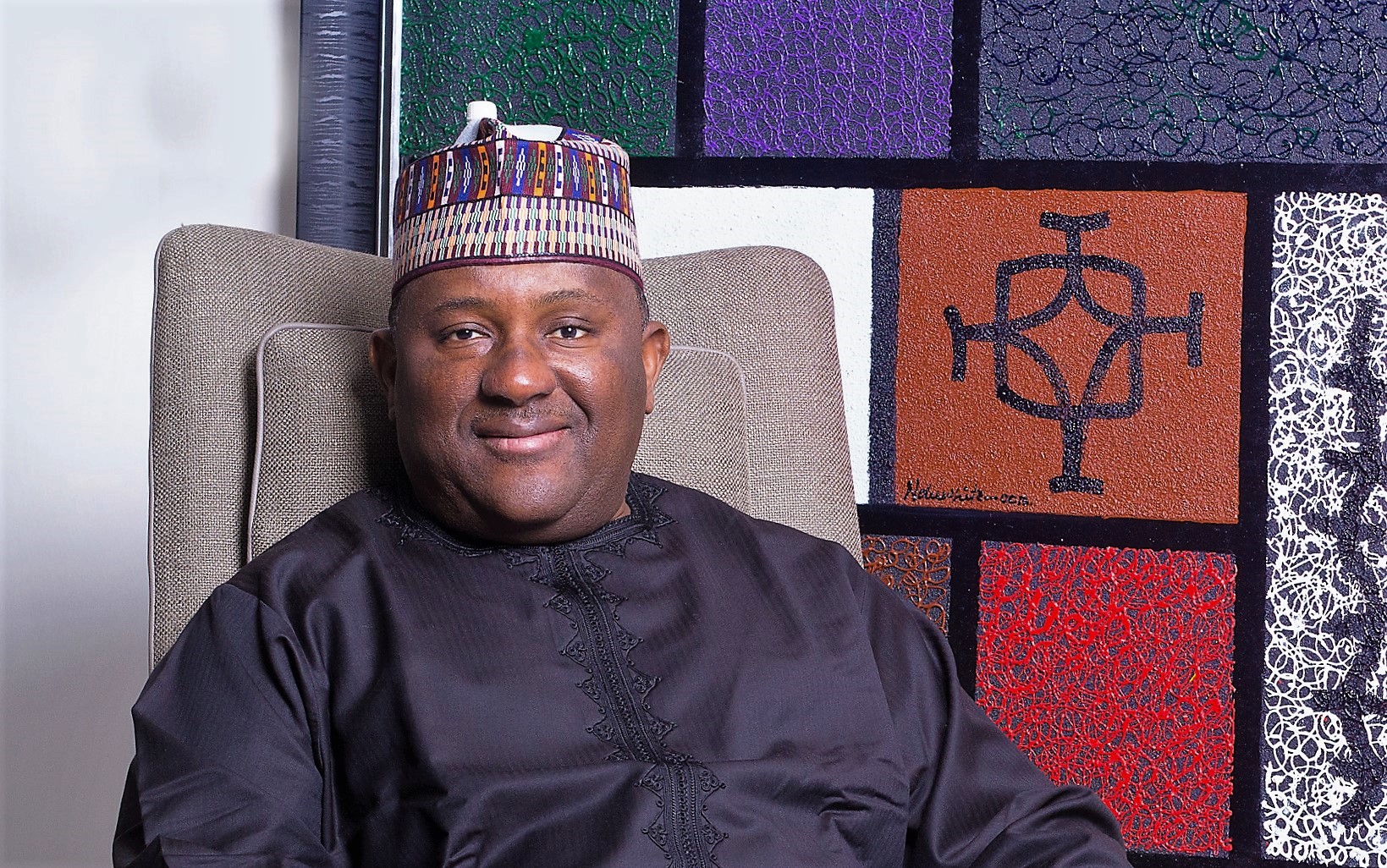
Chairman, BUA Group, Abdulsamad Rabiu Revels at 61


By Eric Elezuo
What can be said of a man, who has steadily evolved as one of Africa’s biggest philanthropist, in fact, the second in the order of reckoning. He has graciously used his BUA Foundation and the phenomenal Abdul Samad Rabiu Africa Initiative to not only affect lives, but ensured that the people of world, especially his native Nigeria, live in defined comfort. He is Alhaji Abdulsamad Rabiu, the Chairman/Chief Executive Officer, Bua Group, makers of quality cement, sugar among other wonderful household items.
Born on August 4, 1960, in Kano, to one of Nigeria’s foremost industrialists in the 1970s and 1980s, Khalifah Isyaku Rabiu, Abdul Samad Isyaku Rabiu CON is a perfect combination of many things in one.
It was in his native Kano that he kick started his academic pursuit, carousing through elementary education with ease as a gifted child, and obtained his First School Leaving Certificate. He was later admitted into the Federal Government College, Kano, where he had his secondary education, and gradually with honours.
With a combination of fate, brilliance and determination, Abdulsamad was catapulted to Capital University in Columbus, Ohio, where he studiously studied Economics, and acquired his tertiary education before returning to Nigeria, all before his 24th birthday, to oversee his family business. He was that much sort after, and highly brilliant, and considered capable of holding fort for his father, who was being detained by the administration of General Muhammadu Buhari over matters concerning import duties.
In 1988, just after learning the ropes of entrepreneurial excellence, Abdul Samad Rabiu established BUA International Limited, for the sole purpose of commodity trading. The company followed after the footsteps of his father, and imported rice, edible oil, flour, and iron and steel.
In 1990, having exhibited the character worthy of a world class entrepreneur, and the ability to execute classical projects, Rabiu’s BUA was invited by the government, which owned Delta Steel Company to supply its raw materials in exchange for finished products. This provided a much-needed leverage for the young company, and consequently expanded further into steel, producing billets, importing iron ore, and constructing multiple rolling mills in Nigeria.
Rabiu’s dexterity showed further a few years later, when the company acquired Nigerian Oil Mills Limited, the largest edible oil processing company in Nigeria, and there erupted the company’s and BUA’s influence and care over the people in the provision of affordable edible oil. His passion to see people excel in comfort has continued to make him churn out one great tiding after another, and endearing him in the hearts of the generality of the public.
A man with a vision for tomorrow, Rabiu, in 2005, started two flour-milling plants, in Lagos and in Kano, and by 2008, had broken an eight-year monopoly in the Nigerian sugar industry by commissioning the second-largest sugar refinery in sub-Saharan Africa. This was a feat only a bravest of hearts could wroth. As a result, in 2009 the company went on to acquire a controlling stake in a publicly-listed Cement Company in Northern Nigeria and began to construct a $900 million cement plant in Edo State, completing it in early 2015. Rabiu’s passion for expansion is unequalled.
BUA Group has since concentrated and excelled in manufacturing, infrastructure and agriculture and producing a revenue in excess of $2.5 billion. This is in addition to being the chairman of the Bank of Industry (BOI).
The Group, in 2019, announced plans to merge its privately owned Obu Cement with the publicly traded Cement Company of Northern Nigeria Plc (CCNN), to create Nigeria’s second largest cement producer thereby consolidating the grip on the cement market and breaking its monopolistic status.
It is worthy of note that Cement Company of Northern Nigeria PLC in which Rabiu owned more than 97% was producing two million metric tons of cement per annum (Mtpa) while Obu Cement has an annual production capacity of 6Mtpa. The move is in line with the company’s resolve to deepen the Nigerian capital markets and enhance the growth of the cement industry.
Rabiu’s expansion strides cannot be complete without a mention of his extraordinary philanthropic gestures.
In April 2020, he made a whopping donation towards the fight to contain the spread of the Coronavirus pandemic presently ravaging the country.
In a letter dated April 24, 2020, he personally signed and addressed to The Presidential Task Force on COVID-19, the billionaire businessman, congratulated the duo of the Task Force and the Nigeria Centre for Disease Control (NCDC) for doing a good job while observing that much as so much has been done, there was still need to do a lot more, as the disease continued to make inroads into many parts of the country, especially Lagos and Kano states.
“I view with deep concern, the increased rate of spread of the Coronavirus, especially in Kano and Lagos states despite concerted collective efforts to curb the spread and effects of the virus in Nigeria,” he said.
With sincere reference to ‘what is going on, especially in Kano at the moment’ the philanthropist, who had earlier donated N1 billion to the private sector led CACOVID and other states, announced the release of another N3.3 billion ‘grant to the working group made up of the Presidential Task Force, NCDC and other stakeholders in equipping two existing permanent facilities in Kano and Lagos states’.

He said: “To this end, I am immediately committing and making available – through the Bua Foundation two grants of Two Billion Naira for the Kano-based intervention and One Billion Naira for Lagos State being the two epicentres of this virus in Nigeria.”
Rabiu also informed that “a sum of N300 million will also be made available immediately in cash to the Presidential Task Force to assist with logistical and operational activities of the taskforce. This grant is in addition to BUA’s earlier contributions to the private sector led CA-COVID coalition and donations to other states.”
Giving directive on how the funds will be spent, the BUA Foundation Chairman hinted that the “working Group will be expected to use resources at its disposal to ensure these facilities – to be determined by the Working Group – are fully equipped in the shortest possible time.”
He further revealed his trust in the working group to judiciously use the grant for the purposes meant, saying “I believe this will effectively help to expand the scope of interventions, ongoing research as well support already stretched medical cities dedicated to this fight.”

Rabiu’s BUA had in March through a confirmed funds transfer to the COVID-19 relief fund account with the Central Bank of Nigeria redeemed its pledge of N1billion ($2.6m) to the fight against COVID-19. In addition, the company also announced another donation of N300million to Sokoto, Edo and Ogun States to assist in galvanizing a coordinated response and adequate preparedness in the fight against the COVID-19 pandemic in this states. The donations to Sokoto and Edo States were on behalf of its Cement subsidiary, BUA Cement which has its major operations in those states whilst Ogun was also selected as a beneficiary due to its proximity to Lagos which had been the epicenter of the virus in Nigeria.
In total, Rabiu and his group have so far donated N4.6 billion to the fight against the dreaded pandemic, making them the single highest donor as at date.
In 2021, Rabiu’s focus bestowed on him the grace of becoming the biggest gainer in shares. According to Forbes, which listed the billionaire among the four top billionaires in Africa for the year, “shares of his BUA Cement PLC, which listed on the Nigeria Stock Exchange in January 2020, doubled in value in the past year. That pushed Rabiu’s fortune up by an extraordinary 77%, to $5.5 billion. One thing to note: Rabiu and his son together own about 97% of the company, giving the company a tiny public float. The Nigerian Stock Exchange requires that either 20% or more of a company’s shares to be floated to the public, or that the floated shares are worth at least 20 billion naira — about $50 million — a paltry sum, to be sure. A spokesman for the Nigerian Stock Exchange told Forbes that BUA Cement meets the second requirement. (Forbes discounts the value of stakes when the public float of a company is less than 5%.)”
Rabiu has constantly used his BUA Foundation for his philanthropic activities. Some of them include the construction of a 7,000-square-meter paediatric ward at the Aminu Kano Teaching Hospital and the construction of the Centre for Islamic Studies at Bayero University Kano amongst several others.
He is known to have signed several major deals with French companies in recent times, from Axens as technical partner to his new refinery, to a 300tn plasterboard factory deal with French construction giant St Gobain. He followed it up with listing a segment of his business empire on the Lagos Stock Exchange.
In June 2021 therefore, when French President Emmanuel Macron inaugurated the France-Nigeria Business Council, a private sector initiative to enhance business relations between the two countries, Abdul Samad Rabiu, was appointed its inaugural President. He had earlier been appointed Chairman of the France Nigeria Investment Club. These appointments drew encomiums from high places including President Muhammadu Buhari.
Practically every woman’s dream, Abdul Samad is married to his beautiful wife, and they are blessed with children, among whom are Isyaku Rabiu, Junaid Rabiu, Rukkayah Rania Rabiu and Khadijah Rabiu. He has 42 siblings including Nafiu Rabiu and Rabiu Rabiu, the chairman of IRS Airlines.
Rabiu’s abilities are beyond comparison. He is a force to reckon with in the field of enterprise and human capacity building. He is quite a gift to Nigeria, and the world. We wish you a hearty 61st birthday. Congratulations!




ADC Unveils Approved Timetable for Congresses, Convention

AFCON 2025: CAS Overturns CAF Verdict

MoneyMaster Enhances Banking App, Gifts Customers Data, Airtime

Iran Has Given Up on Nuclear Weapons, Trump Claims

IGP Disu Redeploys Top Police Officers in Major Shake-up

FG Helpless over Power Outages, Minister Adelabu Admits, Apologises to Nigerians

Obi Condemns Arrest of Sheikh Ahmad Shortly after Meeting in Kaduna

AFCON 2025: George Weah Urges CAS to Overrule CAF’s Verdict

My Dear Brother, Dele Momodu by Segun Adeyemi

Why Investing in People Outperforms Every Resource on Earth

Trump Announces 5-Day Ceasefire on Strikes Against Iran, Opts for Talks

The Travails of Nasir El-Rufai

Open Letter to British Prime Minister, Sir Keir Starmer by Gold Emmanuel

Voice of Emancipation: President Tinubu’s State Visit to the United Kingdom
-
 Sports6 days ago
AFCON 2025: George Weah Urges CAS to Overrule CAF’s Verdict
-
 Opinion6 days ago
My Dear Brother, Dele Momodu by Segun Adeyemi
-
 Opinion5 days ago
Why Investing in People Outperforms Every Resource on Earth
-
 World4 days ago
Trump Announces 5-Day Ceasefire on Strikes Against Iran, Opts for Talks
-
 Headline4 days ago
The Travails of Nasir El-Rufai
-
 Opinion4 days ago
Open Letter to British Prime Minister, Sir Keir Starmer by Gold Emmanuel
-
 Voice of Emancipation5 days ago
Voice of Emancipation: President Tinubu’s State Visit to the United Kingdom
-

 Adding Value6 days ago
Adding Value: The Six Pillars of Success Pt. 2 by Henry Ukazu