Connect with us

Opinion

Opinion: Nigeria and the Struggle to Safeguard Her Triplets

Published

on

By Hajia Halima Idris

Nigeria, a country in West Africa, fondly called Giant of Africa, is one of the most populated countries in the continent with over 201 million people, according to a 2019 index. The country is rich in resources and boasts of over 371 cultural tribes of which Hausa, Yoruba, and Igbo seem to dominate, and from which other tribes take their roots. These have form the major tribes and languages spoken.

However, Nigerians apart from the official English Language, are known for their generally and globally accepted Pidgin English. Again, three major religions hold sway in the country, and they are: Islam, Christianity, and Traditional also known as Paganism. The country has seen an intermittent rulership of the military and civilian. But since 1999, civilian government has been entrenched, and from the look of things, have come to stay.

The Ethno-Religious Contentions

Barring the 30 months civil war of 1967 – 1970, Nigeria has relatively existed peacefully with one military regime after another. Much as they come with their attendant hassles, things were not this bad post 1999 when more a permanent civilian democracy was birthed in the country. The advent created more awareness, and people canvassed for a more liberal form of government where their voices could be heard. They wanted to be part of the decision-making for nation building. It is instructive to note that the country was more unified then than now. One wonders therefore, if democracy rendered the entity called Nigeria impotent or are there forces behind the disunity that has currently engulfed the nation. Much as the institutions of unity like the unity schools and the National Youth Service Corps still exist, the crack of disunity has remained obvious.

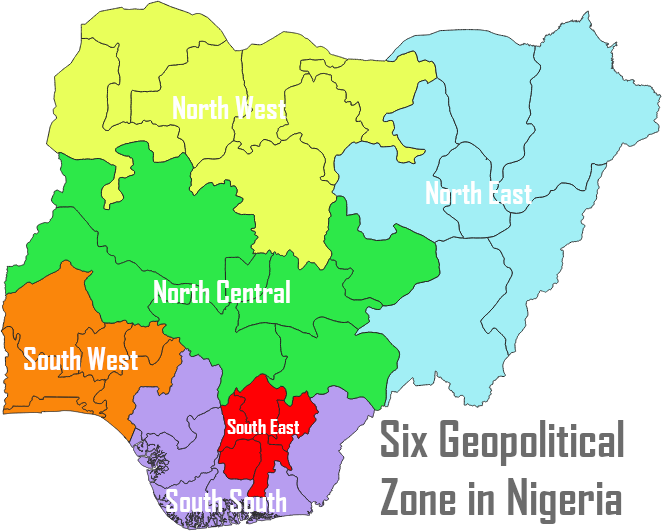
The post-1999 days have brought with ethnic and religious conflict which started from smear campaigns and escalated to the media. There have been series of ethnic and religious clashes in different parts of the country. And then, there is this quest and struggle for power among the people. The six known geo-political regions (North-East, North-West, North-Central, South-South, South-East, and South-West are all enmeshed in the struggle for power but sadly enough, have ignored the sworn responsibility of developing Nigeria and making it a better place for the citizens.

The country is blessed, and religion, a volatile issue in its existence, is practiced more than it is in (Mecca) Makkah (Muslims) and Rome (Christians). The country  is also blessed with arable soil for all forms of agricultural purposes, mineral resources, as well as innovative and creative youth population.

But we are bitter and angry at one another and this has led to ignoring the avenues that will permit the country compete with more advanced countries in terms of Human capital development, social development, and Creative and Tourism wealth. Most of these advanced countries do not have half of what Nigeria has, but they have a mindset for development, and its population are quite happy with the system.

RECOMMENDATIONS

What we need in Nigeria will not be anything new. They are what we already have, but ignored because of sentiments and negligence from both the leaders the led.

These, in my opinion, can move the Nigeria closer to the promised land if given serious and adequate attention:

AGRICULTURE

Nigeria is known for Cotton, Cocoa, Ginger, Cashew, Shea butter, Palm oil, Groundnut, Sesame, Timber, Mango, Orange, Corn, Rice, Sugar cane, Beans, Hibiscus, Moringa, Tiger Nuts, I won’t even go into the mineral resources we are blessed with. As Governor Zulum stated in one of his interviews with Channels Television; a liter of fresh orange juice, fresh ginger, and fresh mango juice is more expensive than a liter of fuel or diesel in the world market, I don’t why Nigerians are fighting for Oil when we can get richer just by exporting our agricultural products.

We use to be the largest exporters of palm oil; we sold the seed to Malaysia and now they are one of the biggest exporters of the product. Shea Butter is picked locally and sold to Ghanaians at a cheap price, and they sell to the world market. Some Canadians have invaded our local market through our people in the Diaspora buying hibiscus and are producing its juice (Zobo) in a well-packaged bottle to compete with other assorted drinks in foreign supermarkets.

All the agricultural products I mentioned above are needed in the world today, and will boost the Nation’s economy. These products can change this country from its poverty state to become one of the richest countries in the world. Thailand is known for rice, Malaysia’s palm oil, Mauritius has sugar cane, India has rice, and the list can go on. But no country has boast of a combination of all these products except Nigeria.

Instead of fighting for power and supremacy, why don’t we compete in the ability to create jobs among our people? Let’s produce and export agricultural products. Let the regions compete in income generated revenue from production and exportation of its agricultural products as well as raw materials. A positive competition will help us create jobs for people, and it will encourage investments for both national and international investors.

HUMAN CAPITAL DEVELOPMENT

To move from our current position to a more adaptable and safer environment, human capital must be built. Policies and the environment must encourage and appreciate innovative and creative people. Not everyone will have to work with the government, people can run their businesses, employ others, and pay taxes to the government to boost the economy. India has created over 36.6 million jobs from the creative and tourism sectors and contributed over 9.4% of the country’s GDP, Dubai created over a Million jobs and 13.4% of its GDP not to mention the USA, China, and others. The youths have all it takes to boost the economy of the country as we see them making the country proud outside Nigeria. The sports sector is another angle from which human development will benefit the country. We have a lot of unused sports facilities, with a proper policy and leadership, the investors who understand the power and money in sports and creativity will run to grab the opportunity to invest.

EDUCATION

Nigerians are intelligent and smart people. But there must be an extra effort to get people to acquire both formal and informal education. The efforts put in this sector are not enough, we need more to take us to where we want to go. Where are the Technical colleges and NBTI centers we have? Education should be supported at all the National, State, and Local Government levels. All aspirants/elected members must design the number of people they wish to educate, and they should be held responsible if they fail. Failure to do so should automatically disqualify them from re-election.

HEALTH CARE CENTRES

To reduce the weight on Government, aspirants or elected legislators should all build one or more health care facilities in their constituents for their people. Imagine if there are 471 National and state assembly members but one health center each, Nigerians will benefit from the dividend of democracy and will always support their representatives. The more is built by a member, the higher his/her chances at getting re-elected.

In conclusion, Nigerians should compete as a region in developing this country through their rich natural recourses and human capacity. They will create jobs, make the country richer, attract investors, improve tourism, and reduce insecurity and illiteracy.

If we get engaged, there will be no time for tribal or religious conflicts and we will appreciate our differences and why we are born as a one Nigeria.

Nigeria is a nursing mother, tending her triplets, no one expects her to ignore her pains if one of the trio is snatched from her.

Hajia Halima Idris (Queen) wrote from Kaduna, Nigeria.

Continue Reading
Click to comment

Leave a Reply

Your email address will not be published. Required fields are marked *

Opinion

A Holistic Framework for Addressing Leadership Deficiencies in Nigeria, Others

Published

on

By

By Tolulope A. Adegoke PhD

“Effective leadership is not a singular attribute but a systemic outcome. It is forged by institutions stronger than individuals, upheld by accountability with enforceable consequences, and sustained by a society that demands integrity as the non-negotiable price of power. The path to renewal—from national to global—requires us to architect systems that make ethical and competent leadership not an exception, but an inevitable product of the structure itself” – Tolulope A. Adegoke, PhD

Introduction: Understanding the Leadership Deficit

Leadership deficiencies in the modern era represent a critical impediment to sustainable development, social cohesion, and global stability. These shortcomings—characterized by eroded public trust, systemic corruption, short-term policymaking, and a lack of inclusive vision—are not isolated failures but symptoms of deeper structural and ethical flaws within governance systems. Crafting effective solutions requires a clear-eyed, unbiased analysis that moves beyond regional stereotypes to address universal challenges while respecting specific contextual realities. This document presents a comprehensive, actionable framework designed to rebuild effective leadership at the national, continental, and global levels, adhering strictly to principles of meritocracy, accountability, and transparency.

I. Foundational Pillars for Systemic Reform

Any lasting solution must be built upon a bedrock of core principles. These pillars are universal prerequisites for ethical and effective governance.

1.      Institutional Integrity Over Personality: Systems must be stronger than individuals. Governance should rely on robust, transparent, and rules-based institutions that function predictably regardless of incumbents, thereby minimizing personal discretion and its attendant risks of abuse.

2.      Uncompromising Accountability with Enforceable Sanctions: Accountability cannot be theoretical. It requires independent oversight bodies with real investigative and prosecutorial powers, a judiciary insulated from political interference, and clear consequences for misconduct, including loss of position and legal prosecution.

3.      Meritocracy as the Primary Selection Criterion: Leadership selection must transition from patronage, nepotism, and identity politics to demonstrable competence, proven performance, and relevant expertise. This necessitates transparent recruitment and promotion processes based on objective criteria.

4.      Participatory and Deliberative Governance: Effective leaders leverage the collective intelligence of their populace. This demands institutionalized channels for continuous citizen engagement—beyond periodic elections—such as citizen assemblies, participatory budgeting, and formal consultation processes with civil society.

II. Context-Specific Strategies and Interventions

A. For Nigeria: Catalyzing National Rebirth Through Institutional Reconstruction
Nigeria’s path requires a dual focus: dismantling obstructive legacies while constructing resilient, citizen-centric institutions.

·         Constitutional and Electoral Overhaul: Reform must address foundational structures. This includes a credible review of the federal system to optimize the balance of power, the introduction of enforceable campaign finance laws to limit monetized politics, and the implementation of fully electronic, transparent electoral processes with real-time result transmission audited by civil society. Strengthening the independence of key bodies like INEC, the judiciary, and anti-corruption agencies through sustainable funding and insulated appointments is non-negotiable.

·         Genuine Fiscal Federalism and Subnational Empowerment: The current over-centralization stifles innovation. Empowering states and local governments with greater fiscal autonomy and responsibility for service delivery would foster healthy competition, allow policy experimentation tailored to local contexts, and reduce the intense, often violent, competition for federal resources.

·         Holistic Security Sector Reform: Addressing insecurity requires more than hardware. A comprehensive strategy must include community-policing models, merit-based reform of promotion structures, significant investment in intelligence capabilities, and, crucially, parallel programs to address the root causes: youth unemployment, economic inequality, and environmental degradation.

·         Investing in the Civic Infrastructure: A functioning democracy requires an informed and engaged citizenry. This mandates a national, non-partisan civic education curriculum and robust support for a free, responsible, and financially sustainable press. Protecting journalists and whistleblowers is essential for maintaining transparency.

B. For Africa: Leveraging Continental Solidarity for Governance Enhancement
Africa’s prospects are tied to its ability to act collectively, using regional and continental frameworks to elevate governance standards.

·         Operationalizing the African Governance Architecture: The African Union’s mechanisms, particularly the African Peer Review Mechanism (APRM), must transition from voluntary review to a system with meaningful incentives and consequences. Compliance with APRM recommendations could be linked to preferential access to continental infrastructure funding or trade benefits under the AfCFTA.

·         The African Continental Free Trade Area (AfCFTA) as a Governance Catalyst: Beyond economics, the AfCFTA can drive better governance. By creating powerful cross-border commercial interests, it builds domestic constituencies that demand policy predictability, dispute resolution mechanisms, and regulatory transparency—all hallmarks of sound leadership.

·         Pan-African Human Capital Development: Strategic investment in continental human capital is paramount. This includes expanding regional centers of excellence in STEM and public administration, fostering academic and professional mobility, and deliberately cultivating a new generation of technocrats and leaders through programs like the African Leadership University.

·         Consistent Application of Democratic Norms: Regional Economic Communities (RECs) must enforce their own democratic charters uniformly. This requires establishing clear, automatic protocols for responding to unconstitutional changes of government, including graduated sanctions, rather than ad-hoc diplomatic responses influenced by political alliances.

C. For the Global System: Rebuilding Equitable and Effective Multilateralism
Global leadership crises often stem from outdated international structures that lack legitimacy and enforceability.

·         Reforming Archaic Multilateral Institutions: The reform of the United Nations Security Council to reflect 21st-century geopolitical realities is essential for its legitimacy. Similarly, the governance structures of the International Monetary Fund and World Bank must be updated to give emerging economies a greater voice in decision-making.

·         Combating Transnational Corruption and Illicit Finance: Leadership deficiencies are often funded from abroad. A binding international legal framework is needed to enhance financial transparency, harmonize anti-money laundering laws, and expedite the repatriation of stolen assets. This requires wealthy nations to rigorously police their own financial centers and professional enablers.

·         Fostering Climate Justice and Leadership: Effective global climate action demands leadership rooted in equity. Developed nations must fulfill and be held accountable for commitments on climate finance, technology transfer, and adaptation support. Leadership here means honoring historical responsibilities.

·         Establishing Norms for the Digital Age: The technological frontier requires new governance. A global digital compact is needed to establish norms against cyber-attacks on civilian infrastructure, the use of surveillance for political repression, and the cross-border spread of algorithmic disinformation that undermines democratic processes.

III. Universal Enablers for Transformative Leadership

Certain interventions are universally applicable and critical for cultivating a new leadership ethos across all contexts.

·         Strategic Leadership Development Pipelines: Nations and institutions should invest in non-partisan, advanced leadership academies. These would equip promising individuals from diverse sectors with skills in ethical decision-making, complex systems management, strategic foresight, and collaborative governance, creating a reservoir of prepared talent.

·         Redefining Success Metrics: Moving beyond Gross Domestic Product (GDP) as the primary scorecard, governments should adopt and be assessed on holistic indices that measure human development, environmental sustainability, inequality gaps, and citizen satisfaction. International incentives, like preferential financing, could be aligned with performance on these multidimensional metrics.

·         Creating a Protective Ecosystem for Accountability: Robust, legally enforced protections for whistleblowers, investigative journalists, and anti-corruption officials are fundamental. This may include secure reporting channels, legal aid, and, where necessary, international relocation support for those under threat.

·         Harnessing Technology for Inclusive Governance: Digital tools should be leveraged to deepen democracy. This includes secure platforms for citizen feedback on legislation, open-data portals for public spending, and digital civic assemblies that allow for informed deliberation on key national issues, complementing representative institutions.

Conclusion: The Collective Imperative for Renewal

Addressing leadership deficiencies is not a passive exercise but an active, continuous project of societal commitment. It requires the deliberate construction of systems that incentivize integrity and penalize malfeasance. For Nigeria, it is the arduous task of rebuilding a social contract through impartial institutions. For Africa, it is the strategic use of collective action to elevate governance standards continent-wide. For the world, it is the courageous redesign of international systems to foster genuine cooperation and justice. Ultimately, the quality of leadership is a direct reflection of the standards a society upholds and enforces. By implementing this multilayered framework—demanding accountability, rewarding merit, and empowering citizens—a new paradigm of leadership can emerge, transforming it from a recurrent source of crisis into the most reliable engine for human progress and shared prosperity.

Dr. Tolulope A. Adegoke, AMBP-UN is a globally recognized scholar-practitioner and thought leader at the nexus of security, governance, and strategic leadership. His mission is dedicated to advancing ethical governance, strategic human capital development, and resilient nation-building, and global peace. He can be reached via: tolulopeadegoke01@gmail.comglobalstageimpacts@gmail.com

Continue Reading

Opinion

Tali Shani vs Mike Ozekhome: How a Legal Mole-Hill Was Turned into a Mountain

Published

on

By

By Abubakar D. Sani, Esq

INTRODUCTION

News of the decision of a British Tribunal in respect of a property situate in London, the UK’s capital, whose ownership was disputed has gained much publicity since it was delivered in the second week of September 2025. For legal reasons, the charges brought against prominent lawyer, Chief Mike Ozekhome, SAN, based on same is the most that can be said of it as no arraignment was made before Hon. Justice Kekemeke of the High court of the FCT, Abuja, sitting in Maitama.

Accordingly, this intervention will be limited to interrogating the common, but false belief (even in legal circles), that the Tribunal somehow indicted him with conclusive ‘guilt’. I intend to argue that this belief is not correct; and that, on the contrary, nothing could be further from the truth. For the sake of context, therefore, it is necessary to refer to relevant portions of the decision of Judge Paton (the name of the Tribunal’s presiding officer), which completely exonerated Chief Ozekhome, but which his detractors have always conveniently suppressed.

WHAT DID THE TRIBUNAL SAY?

Not a few naysayers, smart-alecs, emergency analysts and self-appointed pundits have been quick to latch on to some passages in the judgement of the Tribunal which disagreed with Ozekhome’s testimony to justify their crucifixion of Chief Ozekhome – even without hearing his side of the story or his version of events. This is a pity, of course, especially for the supposedly learned senior lawyers among them who, by ignoring the age-old principle of fair hearing famously captured as audi alterem partem (hear the other side) have unwittingly betrayed patent bias, malice, malevolence and utter lack of bona fides as the major, if not exclusive, motivator of their view-points and opinions. I have particularly watched about five of such senior lawyers shop from one platform to another, with malicious analysis to achieve nothing, but reputational damage. They know themselves.

Before proceeding to those portions, it is important to acknowledge that the Tribunal conducted a review of the evidence placed before it. The proceedings afforded all parties the opportunity to present their respective cases. The learned Judge carefully evaluated the testimonies, documentary exhibits and surrounding circumstances and rendered a reasoned decision based on the materials before the Tribunal.

It is also not in doubt that the Tribunal made certain critical observations in the course of assessing the credibility of the witnesses and the plausibility of their explanations. Such evaluative comments are a normal and inevitable feature of judicial fact-finding, particularly in property tribunals in contested proceedings involving complex transactions and disputed narratives. They do not amount to indictment.

It is precisely the improper isolation and mischaracterization of some of these observations that have given rise to the present misconception that the Tribunal somehow pronounced a verdict of guilt on Chief Ozekhome. It is therefore necessary to place the relevant excerpts in their proper legal and factual context, so as to demonstrate how the self-same tribunal exonerated Ozekhome.

“Paragraph 98: Once one steps back from that material, and considers the Respondent’s own direct personal knowledge of relevant matters relating to this property, this only commences in 2019. That is, he confirmed, when he was first introduced to Mr. Tali Shani – he thought in about January of that year. He did not therefore know him in 1993, or at any time before January 2019. He could not therefore have any direct knowledge of the circumstances of the purchase of this property, or its management prior to 2019. He had, however, known the late General Useni for over 20 years prior to his death, as both his lawyer and friend.

“Paragraph 103: Such of the Respondent’s written evidence had been about the very recent management of the property, and in particular his dispute over its management (and collection of rents) with one Nicholas Ekhorutowen, who provided no evidence in this case. The Respondent confirmed in oral evidence that it was upon the execution of the powers of attorney that he came into possession of the various pre registration title and conveyancing documents which formed part of his disclosure. These had been handed over to him by the next witness who gave evidence, Mr. Akeem Johnson.

“Paragraph 168: Unlike the fictitious “Ms. Tali Shani”, a man going by the name of Mr. Tali Shani exists and gave evidence before me in that name. A certified copy of an official Nigerian passport was produced both to the Land Registry and this Tribunal, stating that Mr. Tali Shani was born on 2nd April 1973. I do not have the evidence, or any sufficient basis, to find that this document – unlike the various poor and pitiful forgeries on the side of the “Applicant” – is forged, and I do not do so.

“Paragraph 200: First, I find that General Useni, since he was in truth the sole legal and beneficial owner of this property (albeit registered in a false name), must in some way have been connected to this transfer, and to have directed it. He was clearly close to, and on good terms with, the Respondent. There is no question of this being some sort of attempt by the Respondent to steal the general’s property without his knowledge.

“Paragraph 201: As to precisely why General Useni chose to direct this transfer to the Respondent, I do not need to (and indeed cannot) make detailed findings. I consider that it is highly possible that it was in satisfaction of some debt or favour owed. The Respondent initially angrily denied the allegation (made in the various statements filed on behalf of the “Applicant”) that this was a form of repayment of a loan of 54 million Naira made during the general’s unsuccessful election campaign. In his oral evidence, both he and his son then appeared to accept that the general had owed the Respondent some money, but that it had been fully paid off. The general himself, when asked about this, said that he “did not know how much money he owed” the Respondent.

“Paragraph 202: I do not, however, need to find precisely whether (and if so, how much) money was owed. The transfer may have been made out of friendship and generosity, or in recognition of some other service or favour. The one finding I do make, however, is that it was the decision of General Useni to transfer the property to the Respondent.”

It must be emphasised that even where a court finds that a witness has given inconsistent, fluctuating, or implausible testimony, as some have latched on, such a finding does not, without more, translate into civil or criminal liability. At best, it affects the weight and credibility to be attached to such evidence. It does not constitute proof of fraud, conspiracy, or criminal intent. See MANU v. STATE (2025) LPELR-81120(CA) and IKENNE vs. THE STATE (2018) LPELR-446­95 (SC)

Notwithstanding the Tribunal’s engagement with the evidence, certain passages had been selectively extracted and sensationalised by critics. On the ipssisima verba (precise wordings) of the Tribunal, only the above paragraphs which are always suppressed clearly stand out in support of Chief Ozekhome’s case, as the others were more like opinions.

Some paragraphs in the judgement in particular, appear to have been carefully selected as “weapons” in Chief Ozekhome’s enemies’ armoury, as they are most bandied about in the public space. The assumption appears to be that such findings are conclusive of his guilt in a civil property dispute. This is unfortunate, as the presumption of innocence is the bedrock of our adversarial criminal jurisprudence. It is a fundamental right guaranteed under section 36 of the Constitution and Article 7 of the African Charter which, regrettably, appear to have been more observed in the breach in his case.

More fundamentally, the selective reliance on few passages that disagreed with his evidence or testimony and that of Mr. Tali Shani, ignore the above wider and more decisive findings of the Tribunal itself. A holistic reading of the judgment reveals that the Tribunal was far more concerned with exposing an elaborate scheme of impersonation, forgery, and deception orchestrated in the name of a fictitious Applicant, Ms Tali Shani, and not Mr. Tali Shani (Ozekhome’s witness), who is a living human being. These findings, which have been largely ignored in public discourse, demonstrate that the gravamen of the Tribunal’s decision lay not in any indictment of Chief Ozekhome, but in the collapse of a fraudulent claim against him, which was founded on false identity and fabricated documents.

The Tribunal carefully distinguished a fake “Ms” Tali Shani (the Applicant), who said she was General Useni’s mistress and owner of the property, and the real owner, Mr Tali Shani, who was Chief Ozekhome’s witness before the Tribunal. It was the Tribunal’s finding that she was nothing but a phantom creation and therefore rejected her false claim to the property (par. 123). It also rejected the evidence of her so called cousin (Anakwe Obasi) and purported son (Ayodele Obasi) (par. 124).

The Tribunal further found that it was the Applicant and her cohorts that engaged in diverse fraud with documents such as a fraudulent witness statement purportedly from General Useni; all alleged identity documents; fabricated medical correspondence; the statement of case and witness statements; a fake death certificate; and a purported burial notice. (Paragraph 125). Why are these people not concerned with Barrister Mohammed Edewor, Nicholas Ekhoromtomwen, Ayodele Damola, and Anakwe Obasi? Why mob-lynching Chief Ozekhome?

The Tribunal found that the proceedings amounted to an abuse of process and a deliberate attempt to pervert the course of justice. It therefore struck out the Applicant’s claim (Paragraphs 130–165). The Tribunal significantly found that Mr Tali Shani exists as a human being and had testified before it in June, 2024. It accepted a certified Nigerian passport he produced, and accepted its authenticity and validity (Paragraph 168). Can any objective person hold that Ozekhome forged any passport as widely reported by his haters when the maker exists?

Having examined the factual findings of the Tribunal and their proper context, the next critical issue is the legal status and probative value of such findings. The central question, therefore, is whether the observations and conclusions of a foreign tribunal, made in the course of civil proceedings, are sufficient in law to establish civil or criminal liability against a person in subsequent proceedings.

STATUS OF JUDGEMENTS UNDER THE LAW

The relevant statutory provisions in Nigeria are sections 59, 60, 61, 173 and 174 of the Evidence Act 2011, provide as follows, respectively:

Section 59: “The existence of any judgment, order or decree which by law prevents any court from taking cognisance of a suit or holding a trial, is a relevant fact, evidence of which is admissible when the question is whether such court ought to take cognisance of such suit or to hold such trial”;
Section 60(I): “A final judgment, order or decree of a competent court, in the exercise of probate. Matrimonial, admiralty or insolvency jurisdiction, which confers upon or takes away from any person any legal character. or which declares any person to be entitled to any such character or to be entitled to any specific thing, not as against any specified person but absolutely, is admissible when the existence of any such legal character, or the title of any such legal persons to an) such thing, is relevant (2) Such judgment, order or decree is conclusive proof (a)that any legal character which it confers accrued at the time when such judgment, order or decree came into operation; (b) that any legal character. to which it declares any such person to be entitled. accrued to that person at the time when such judgment order or decree declares it to have accrued to that person; (c) that any legal character which it takes away from any such person ceased at the time from which such judgment, order or decree declared that it had ceased or should cease; and (d) that anything to which it declares any person to be so entitled was the property of that person at the time from which such judgment. order or decree declares that it had been or should be his property”;

Section 61: “Judgments, orders or decrees other than those mentioned in section 60 are admissible if they relate to matters of a public nature relevant to the inquiry; but such judgments, orders or decrees are not conclusive proof of that which they state”

Section 173: “Every judgment is conclusive proof, as against parties and privies. of facts directly in issue in the case, actually decided by the court. and appearing from the judgment itself to be the ground on which it was based; unless evidence was admitted in the action in which the judgment was delivered which is excluded in the action in which that judgment is intended to be proved”.;

Section 174(1): “If a judgment is not pleaded by way of estoppel it is as between parties and privies deemed to be a relevant fact, whenever any matter, which was or might have been decided in the action in which it was given, is in issue, or is deemed to be relevant to the issue in any subsequent proceeding”;

(2):”Such judgment is conclusive proof of the facts which it decides, or might have decided, if the party who gives evidence of it had no opportunity of pleading it as an estoppel”.
It can be seen that the decision of the Tribunal falls under the purview of section 61 of the Evidence Act, as the provisions of sections 59 and 60 and of sections 173 and 174 thereof, are clearly inapplicable to it. In other words, even though some Judge Paton’s findings in respect of Chief Ozekhome’s testimony at the Tribunal relate to matters of public nature (i.e., the provenance and status of No. 79 Randall Avenue, Neasden, London, U.K and the validity of his application for its transfer to him) none of those comments or even findings is in any way conclusive of whatever they may assert or state (to use the language of section 60 of the Evidence Act).

In this regard, see the case of DIKE V NZEKA (1986) 4 NWLR pt.34 pg. 144 @ 159 where the Supreme Court construed similar provisions in section 51 of the old Evidence Act, 1948. I agree with Tar Hon, SAN (S. T. Hon’s Law of Evidence in Nigeria, 3rd edition, page 1041) that the phrase ‘public nature’ in the provision is satisfied where the judgement is clearly one in rem as opposed to in personam. It is pertinent to say a few words about both concepts, as they differ widely in terms of scope. The former determines the legal status of property, a person, a particular subject matter, or object, against the whole world, and is binding on all persons, whether they were parties to the suit or not. See OGBORU V IBORI (2005) 13 NWLR pt. 942 pg. 319 @407-408 per I. T. Muhammed, JCA (as he then was).

This was amplified by the apex court in OGBORU V UDUAGHAN (2012) LLJR -SC, where it held, per Adekeye, JSC that: “A judgment in rem maybe defined as the judgment of a court of competent jurisdiction determining the status of a person or thing as distinct from the particular interest of a party to the litigation. Apart from the application of the term to persons, it must affect the “res” in the way of condemnation forfeiture, declaration, status or title”.

By contrast, “Judgments ‘in personam’ or ‘inter partes’, as the name suggests, are those which determine the rights of parties as between one another to or in the subject matter in dispute, whether it be corporeal property of any kind whatever or a liquidated or unliquidated demand but which do not affect the status of either things or persons or make any disposition of property or declare or determine any interest in it except as between the parties (to the litigation). See HOYSTEAD V TAXATION COMMISSIONERS (1926) A. C. 155. These include all judgments which are not judgments in rem. None of such judgments at all affects any interest which third parties may have in the subject matter. As judgment inter partes, though binding between the parties and their privies, they do not affect the rights of third parties. See CASTRIQUE V IMRIE 141 E. R. 1062; (1870) L. R. 4H. L. 414”.

Suffice it to say that the decision of the London Property Tribunal was, in substance, one affecting proprietary rights in rem, in the sense that it determined the status and registrability of the property in dispute. However, it did not determine any civil or criminal liability, nor did it pronounce on the personal culpability of any party. The implication of this is that, even though the decision was in respect of a matter of a public nature, it was, nonetheless, not conclusive as far as proof of the status of the property, or – more importantly – Chief Ozekhome’s role in relation to it. Indeed, the property involved was not held to have been traced to the owner (General Useni) as having ever tried or convicted for owning same. I submit that the foregoing is the best case scenario in terms of the value of Judge Paton’s said decision, because under section 62 of the Evidence Act, (depending, of course, on its construction), it will fare even worse, as it provides that judgments “other than those mentioned in sections 59. 60 and 61 are inadmissible unless the judgment, etc is a fact in issue or is admissible under some other provision of this or any other Act”.

CONCLUSION

Some people’s usual proclivity to rush to judgment and condemn unheard any person (especially a high profile figure like Chief Ozekhome), has exposed him to the worst kind of unfair pedestrian analysis, malice, mud-slinging and outright name-calling especially by those who, by virtue of their training, ought to know better, and, therefore, be more circumspect, restrained and guarded in their utterances. This is all the more so because, no court of competent jurisdiction has tried or pronounced him guilty. It is quite unfortunate how some select lawyers are baying for his blood.

The decision of the London Tribunal remains what it is: a civil determination on attempted transfer of a property based on the evidence before it. It is not, and cannot be, a substitute for civil or criminal adjudication by a competent court. The presumption of innocence under Nigerian laws remains inviolable. Any attempt by commentators to usurp that judicial function through premature verdicts is not only improper, but inimical to the fair administration of justice.

Continue Reading

Opinion

The Atiku Effect: Why Tinubu’s One-Party Dream Will Never Translate to Votes in 2027

Published

on

By

By Dr. Sani Sa’idu Baba

It is deeply disappointing if not troubling to watch a former governor like Donald Duke accuse Atiku Abubakar of contesting for the presidency “since 1992” without identifying a single provision of the 1999 Constitution of the Federal Republic of Nigeria that such ambition violates. Donald Duke was once widely regarded as one of the most intelligent and forward-thinking leaders of his generation, which makes it even more puzzling to understand what must have come over him to suddenly align with those throwing tantrums at others who are by far more competent, experienced, and eligible than themselves. While I acknowledge that Duke has recently moved to the ADC, the party that Atiku belongs to, Nigerians should not be distracted by his kind of rhetoric.

As former presidential candidate and ADC chieftain Chief Dele Momodu has repeatedly stated, “everyone is afraid of Atiku Abubakar,” particularly as the 2027 presidential election approaches. That fear, according to Momodu, explains the ongoing campaign of calumny against him. Donald Duke’s remarks therefore cannot be separated from this wider effort to diminish a man widely seen as the most formidable opposition figure in Nigeria today.

However, the issue of Donald Duke is not the central purpose of my message today. It is only incidental. The real purpose is to share what should be considered good news for Nigerians, the growing perception among ordinary citizens and the conversations happening daily at junctions, gatherings, markets, campuses, mosques, churches, and in the nooks and crannies of the country. The truth is that Nigerians are largely unbothered by the APC’s one-party state ambition. They are not impressed by forced defections or elite political gymnastics. What occupies their minds instead is the unrelenting presence of opposition, sustained hope, and the quiet but powerful confidence inspired by what has now become known as the “Atiku Effect”.

In my own opinion, which aligns with the thinking of many discerning Nigerians, no one in either the opposition or the ruling camps today appears healthier physically, mentally, socially and politically than Atiku Abubakar. Health is not determined by propaganda or ageism, but by function, resilience, and capacity. As we were taught in medical school, “healthspan, not lifespan, defines vitality,” and “physiological resilience is age-independent.” These principles make it clear that fitness, clarity of thought, stamina, cognitive and physiological reserve matter far more than the number of years lived. By every observable measure, Atiku remains fitter and more grounded than many who are younger but visibly exhausted by power.

It is no longer news that Nigeria is being pushed toward a one-party state through the coercion of opposition governors into the ruling APC. What is increasingly clear, however, is that this strategy reflects anxiety rather than strength. Nigerians understand that governors do not vote on behalf of the people, and defections do not automatically translate into electoral victory. This same script was played before, and history has shown that elite alignment cannot override popular sentiment. Just as it happened in 2015, decamping governors cannot save a sitting president when the people have already reached a conclusion.

This is where the Atiku Effect becomes decisive. Atiku Abubakar represents continuity of opposition, courage in the face of intimidation, and the refusal to surrender democratic space. His consistency reassures Nigerians that democracy is still alive and that power can still be questioned. This is precisely why Dele Momodu’s assertion that “everyone is afraid of Atiku Abubakar” resonates so strongly across the country. It is not fear of noise or recklessness, but fear of discipline, experience, and endurance.

Across Nigeria today, the ruling party is increasingly treated as the most unserious political party in the history of Nigeria, not because it lacks power, but because it lacks credibility. Nigerians know that hunger does not disappear because governors defect, inflation does not bow to propaganda, and hardship does not respond to political coercion. What they see instead is a widening gap between political theatrics and lived reality. In that gap stands Atiku Abubakar, a constant reminder that an alternative voice still exists and that the idea of a one-party state cannot survive where hope remains alive.

Let me say this unapologetically: the one-party project being pursued by the ruling party is dead on arrival. It is dead because Nigerians are politically conscious. It is dead because votes do not move with defections. And above all, it is dead because Atiku Abubakar remains standing, indefatigable, resilient, and central to the national conversation. As long as he continues to challenge bad governance and embody opposition, democracy in Nigeria will continue to breathe. And that, more than anything else, explains why so many are desperately trying and failing to stop him because Atiku Abubakar is a phenomenon and a force that cannot be stopped in 2027…

Dr. Sani Sa’idu Baba writes from Kano, and can be reached via drssbaba@yahoo.com

Continue Reading

Trending