Opinion
Opinion: President Buhari Goofed on Southern Governors’ Anti-Grazing Stance
Published
5 years agoon
By
Eric
By Chief Mike Ozekhome SAN
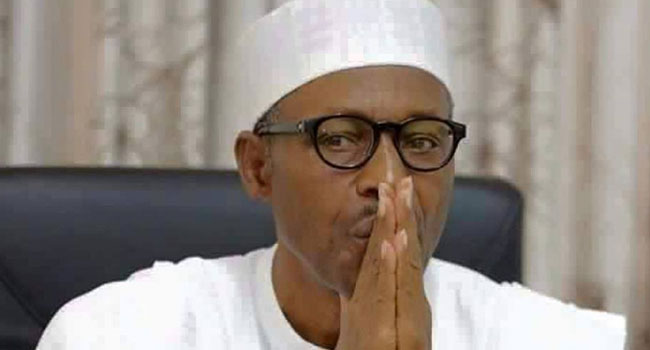
President Muhammadu Buhari has obviously been ill-advised on the well thought out Southern Governors’ stance against open grazing by the AttorneyGeneral whose views were made known only two days ago.
Buhari, with all humility, is quite wrong to say the Southern Governors’ stance is an act of questionable legality. If the Federal Government feels strong and sure about its puritanical ,but legally flawed stance, I challenge the Federal Government to challenge the Governors’ resolutions by suing all the State Governors of Nigeria, through invocation of the original jurisdiction of the Supreme Court under section 232(1) of the 1999 Constitution . The action will fail miserably.
I am ready,able and willing to defend such states probono. I can state categorically that neither the president’s views, nor those of the Attorney General, are anchored on any provisions of the Constitution.
The Constitution is the fons et origo, the grundnorm, the Oba, Eze, Oghie and Emir of our laws. Other laws must bow to the supremacy of this National identity card of a country; for such other laws or FG’s resistance are but mere warrant Chiefs, Daudus, Bales and Ukpi Drummers within the Constitution ‘s sacred domain.
The Governors have been given powers by the same Constitution in sections 5(2), 11(2), 14(2)(b), 176(2) and 215(4) of the 1999 Constitution to act as the Chief Security Officers of their various states to provide their citizens with welfare and security, which the Constitution says are the primary purpose of government.
The Houses of Assembly of the states have equally been given powers by section 4(7) of the same Constitution to make laws for the peace, order and good government in their states. In accordance with hallowed principles and practice of federalism and democracy, the Southern Governors do not require any permission from, or approval by,the FG for them to govern their states and protect their citizens, in the same way a boarding house pupil must first seek his Headmaster-s permission to visit his parents outside the school.
Mr. President’s statement, churned out, as usual, by his SSA on Media and Publicity, Mr Garba Shehu, to the effect that that the Governors were politicking with serious security issues and attempting a show of power, is therefore most unfortunate, embarrassing, devisive ethnocentric, insensate and insensitive to the memory of dead and dying Nigerians.
These are thousands of innocent Nigerians savagely and brutally mauled down in cold blood,either in their own homes, farms,or on the streets and alleys, by these rampaging pastoralists.
The President appears undisturbed and unperturbed that Nigerians,especially in the South,have their wives, mothers and daughters violently violated and raped by these marauding AK-47 riffles-wielding expansionists that wear the fake toga of herdsmen. What has the Government done about it? Nothing.
It usually customarily wrigs its hands in pretended helplessness and washes them off every loss of life like Pontius Pilate in the Bible. This is so despicable!. It is so abhorrent and shameful! Only yesterday, 124 people were slaughtered in just three states, with 100 of them being children, women and the elderly in Benue State alone.
Nigerians have become weary of mourning. The Governors are tired of being Chief mourners, undertakers and elegy poets of their citizens. And Buhari is saying they must shut up and worship on the blood-sucking alter of Nigeria’s so called unity,indivisibility and indissolubility? We are living a lie of a contraption called a country that has since been reduced to a big scam and a one-chance dilapidated vehicle on a drudgery journey to no destination. I challenge the Federal Government to go to the Supreme Court and challenge the states.By this, I hereby alter my earlier stance that the states should sue the Federal Government. No.
It is the complaining and fretting FG that should take that step if uncomfortable with the Southern Governors’s communique.The states should go ahead and enforce the anti-grazing laws in their respective domains ,using their neighbourhood and vigilante security outfits since ( and I can bet on this ), the FG will never lend its centrally -commanded Police Force to aid the states.
It is so easy to predict this clueless Government from the negatived.For empashis, we are operating a Federal system of government,not a unitary system. The Federal Government cannot therefore dictate to states like a slave owner to his purchased slaves.
It is an aberration. Freedom of movement and right of some Nigerians to associate certainly end where other Nigerians’ rights begin. These freedom and right do not permit or licence particular business merchants ( that is what nomadic cow rearers are ) to carry deadly AK-47 riffles and maim and kill other innocent Nigerians in their homes, rape their mothers, wives and daughters in their houses.Such must be evil freedoms and rights. Nigerians of a particular ethnic group do not have any right to freely graze their cattle on other people’s lands and thereby destroy their farm produce.
It is this archaic and odious tribialistic ,prebendalistic,sectionalistic and nepotic mindset that has made Buhari bring Nigeria down to her knees and to a despicable state of nadir,where she now wobbles, fumbles and tumbles. Have you ever heard any Southerner complain about all the currency changers and Bureau de Change (BDCs) operators across every nook and crany of Nigeria,even though everyone knows that over 95 % of the business is controlled by Northerners? No!
Do you know why?
Because they are not violent. They ply their trade peacefully, even if illegally and illegitimately. By the way,have you ever heard any Government raid or touch any of these special breed of Nigerians? I have personally never heard. This is because we live in a country that is governed by two different sets of laws- one for the highly revered Northerners; the other for the highly despised Southerners. No Nation grows that way.
The last time I checked,the freedom of movement guaranteed for Nigerians is not sacrosanct as it can be derogated from by the clear provisions of section 45 ,through enactment of a law that is “reasonably justifiable in a democratic society in the interest of defence,public safety, public order, public morality or public health”; or for “the purpose of protecting the rights and freedom of other persons”.
The last time I checked also, section 41 of the same Constitution is meant for full-blooded human beings ; not cows, goats and sheep.That is why section 41 of the Constitution starts by saying “every citizen of Nigeria is entitled to move freely throughout Nigeria and to reside in any part thereof…”
‘Citizen’ is defined as “an inhabitant of a particular town or city”; “a person who is at home in any country”; “one entitled to the rights and privileges of a freeman”. Other synonyms of citizen are civilian, national, inhabitant, resident, voter, settler and dweller.I checked very painstakingly and carefully, using different dictionaries, thesaurus, Black Law’s Dictionary and even Wikipedia, but I couldn’t and didn’t see where cows, goats and sheep were mentioned or regarded as ‘citizens’ of Nigeria or elsewhere.
The Constitution that gives the freedom of movement to “every citizen of Nigeria’ also didn’t provide that such a citizen must be accompanied by cows, goats and sheep before he can exercise it.
So, where is the Buhari Government getting its vibes from? I do not know. Or, do you ? Fellow Nigerians, the last time I checked also, we have not been told that Buhari has sucecessfully moved the NASS to amend and alter our country’s name, FEDERAL REPUBLIC OF NIGERIA, to FULANI REPUBLIC OF NIGERIA, or NIGERIAN REPUBLIC OF THE FULANIS, or FULANISED REPUBLIC OF NIGERIA, or THE REPUBLIC OF FULANIS, or FEDERAL REPUBLIC OF THE NORTH, or NORTHERN REPUBLIC , or FEDERAL REPUBLIC OF NORTHERN NIGERIA, or REPUBLIC OF NORTHERN NIGERIA, or NORTHERN NIGERIAN REPUBLIC, or REPUBLIC OF NORTHERN NIGERIA AND OTHER TERRITORIES, or ISLAMIC REPUBLIC OF NIGERIA, or FEDERATION OF ISLAM AND OTHERS. So,what is going on here? I can no longer understand. Or can you? N
Nigeria, we hail thee.
Related
You may like
Opinion
The Scars of Glory and the Burden of Leadership!
Published
7 days agoon
March 7, 2026By
Eric
By Tolulope A. Adegoke, PhD
“True glory is never unscarred, and authentic leadership is never unburdened; together, they forge the crucible from which resilience, innovation, and equitable possibilities emerge for peoples, corporations, and nations alike” – Tolulope A. Adegoke PhD
In the annals of human endeavor, glory is often portrayed as the pinnacle of achievement—a radiant summit where triumphs are celebrated and legacies are forged. Yet, beneath this luminous facade lie the indelible scars that mark the journey: the wounds of sacrifice, the echoes of failure, and the silent toll of perseverance. Leadership, in turn, emerges not as a crown of ease but as a weighty mantle, demanding unwavering resolve amid uncertainty. This write-up explores the intertwined realities of glory’s scars and leadership’s burdens, framing them as essential catalysts for unlocking possibilities across peoples, corporations, and nations. By examining these themes through a global lens, we uncover how embracing such challenges can foster resilience, innovation, and sustainable progress in an interconnected world.
The Essence of Glory’s Scars
Glory, in its purest form, is rarely bestowed without cost. It is the culmination of battles fought, both literal and metaphorical, where victories are etched upon the soul as much as upon history. For individuals—be they entrepreneurs, artists, or activists—the scars of glory manifest in personal sacrifices. Consider the innovator who toils through sleepless nights, forsaking family ties and personal well-being to birth a groundbreaking idea. These scars are not mere blemishes; they are badges of authenticity, reminding us that true achievement demands vulnerability and endurance.
On a corporate scale, these scars appear in the form of organizational trials. Companies navigating global markets often endure economic downturns, regulatory hurdles, and competitive upheavals. The 2008 financial crisis, for instance, left deep imprints on multinational firms, forcing restructurings that scarred workforces through layoffs and cultural shifts. Yet, from these wounds emerge stronger entities, equipped with adaptive strategies and diversified portfolios. In nations, glory’s scars are woven into the fabric of collective memory—wars, revolutions, and economic reforms that reshape societies. Post-colonial nations in Africa and Asia, for example, bear the marks of independence struggles, where the pursuit of sovereignty inflicted profound social and economic pains. These historical scars, however, pave the way for renewed identities and developmental trajectories, aligning with international standards such as the United Nations Sustainable Development Goals (SDGs), which emphasize inclusive growth and resilience.
Internationally, the delivery of possibilities hinges on recognizing these scars as opportunities for learning. The World Economic Forum’s Global Risks Report highlights how past crises, like pandemics or climate events, scar global systems but also unlock innovations in healthcare and sustainability. By integrating lessons from these experiences, peoples can access education and empowerment, corporations can drive ethical capitalism, and nations can pursue equitable diplomacy. Thus, glory’s scars are not deterrents but gateways to transformative potential.
The Weight of Leadership’s Burden
Leadership, often romanticized as visionary guidance, carries an inherent burden that tests the mettle of those who wield it. At its core, this burden involves decision-making under duress, balancing immediate needs with long-term visions, and shouldering accountability for outcomes that affect multitudes. For individuals in leadership roles—such as community organizers or CEOs—the weight manifests in ethical dilemmas and emotional fatigue. The isolation of command, where leaders must project confidence while grappling with doubt, can lead to burnout, a phenomenon increasingly addressed in global mental health initiatives like those from the World Health Organization.
In the corporate realm, the burden of leadership is amplified by stakeholder expectations and market volatilities. Executives must navigate shareholder demands, employee welfare, and environmental responsibilities, often amid geopolitical tensions. The rise of ESG (Environmental, Social, and Governance) criteria exemplifies how leaders are now accountable for broader impacts, transforming corporate governance into a high-stakes endeavor. Successful corporations, such as those in the Fortune 500, demonstrate that bearing this burden fosters innovation; for instance, tech giants investing in AI ethics despite regulatory uncertainties create pathways for inclusive technological advancement.
Nationally, leaders bear the heaviest loads, steering policies that influence millions. Heads of state confront burdens like economic inequality, security threats, and diplomatic negotiations, all while upholding democratic principles or cultural values. The Paris Agreement on climate change illustrates this: national leaders commit to burdensome transitions from fossil fuels, yet these efforts unlock possibilities for green economies and international collaboration. In alignment with frameworks like the International Monetary Fund’s guidelines for fiscal responsibility, such leadership burdens ensure that nations deliver on promises of prosperity and stability.
Globally, the burden of leadership is a shared imperative for delivering possibilities. The G20 summits and similar forums underscore how collaborative leadership can mitigate burdens through knowledge exchange and resource pooling. By fostering diverse leadership models—incorporating gender parity and cultural inclusivity, as advocated by the OECD—peoples gain empowerment, corporations achieve sustainable competitiveness, and nations build resilient alliances. Ultimately, the burden is not a curse but a crucible, refining leaders to champion equitable futures.
Intersections: Where Scars and Burdens Converge
The scars of glory and the burden of leadership are inextricably linked, forming a symbiotic dynamic that propels progress. Leaders who bear burdens often accumulate scars through trials, yet these experiences equip them to inspire and innovate. For peoples, this convergence means access to role models who humanize success, encouraging grassroots movements that align with universal human rights standards, such as those in the Universal Declaration of Human Rights. Individuals scarred by adversity, like refugees turned advocates, embody leadership that uplifts communities, delivering possibilities in education and social mobility.
Corporations at this intersection thrive by institutionalizing resilience. Firms like Patagonia, scarred by environmental advocacy battles, shoulder leadership burdens in sustainability, setting benchmarks that influence global supply chains. This approach not only complies with international trade standards but also unlocks market opportunities in eco-conscious consumerism.
Nations, too, find strength in this nexus. Emerging economies, scarred by historical exploitations, burden their leaders with reforms that foster inclusive growth. Initiatives like the African Continental Free Trade Area exemplify how addressing these elements can deliver economic possibilities, harmonizing with WTO principles for fair trade.
In a world of rapid globalization, embracing these intersections adheres to international norms, such as those from the International Labour Organization, ensuring that progress is ethical and inclusive. By viewing scars as wisdom and burdens as duties, stakeholders across levels can co-create a landscape ripe with opportunities.
Pathways Forward: Embracing the Inevitable for Collective Advancement
To harness the scars of glory and the burden of leadership for global benefit, a proactive stance is essential. Education systems worldwide should integrate leadership training that acknowledges these realities, preparing future generations in line with UNESCO’s global citizenship education. Corporations must invest in wellness programs and ethical frameworks, aligning with ISO standards for sustainable management. Nations, through multilateral engagements, can share best practices, as seen in ASEAN’s collaborative leadership models.
In conclusion, the scars of glory remind us of the human cost of aspiration, while the burden of leadership underscores the responsibility of power. Together, they form the bedrock for delivering possibilities to peoples, corporations, and nations—fostering a world where challenges are not endpoints but springboards to excellence. By honoring these elements with integrity and foresight, we pave the way for a more equitable and dynamic global order, where glory’s light shines not despite the scars, but because of them.
Dr. Tolulope A. Adegoke, AMBP-UN is a globally recognized scholar-practitioner and thought leader at the nexus of security, governance, and strategic leadership. His mission is dedicated to advancing ethical governance, strategic human capital development, and resilient nation-building, and global peace. He can be reached via: tolulopeadegoke01@gmail.com, globalstageimpacts@gmail.com
Related
Opinion
Give What, to Gain What? Reflections on the 2026 International Women’s Day Theme
Published
1 week agoon
March 5, 2026By
Eric
By Oyinkansola Badejo-Okusanya
At first glance, the theme of this year’s International Women’s Day celebration sounded a little odd to me.
Last year’s theme, Accelerate Action, was clear enough. You read it and immediately understood it as a call to move faster, push harder, do more, close the gaps. It was energetic, direct and unambiguous.
But “Give To Gain”? Give what? To whom? And to gain what, precisely? How is giving a pathway to gender equity? In the legal profession, and in leadership generally, we are trained to think in terms of advantage. What do I gain? What do I secure? What do I protect? But the more I reflected, the more I realised that perhaps that reflection was the point. Because my reflection took me to some of the most defining moments in my professional journey, and they did not come from what I took. They came from what someone chose to give.
A colleague who gave me insights instead of indifference, a leader who gave me visibility in a room where my voice would have been overlooked, a mentor who gave me honest feedback when flattery or a comfortable silence would have been easier.
None of those acts diminished them. They did not lose relevance, influence, or authority. If anything, their giving expanded their impact. Sometimes, some of us act as though giving someone else room to rise somehow shrinks our own space. But leadership does not weaken when it is shared wisely. It deepens.
That is the quiet power behind “Give To Gain”, and the paradox at the heart of this year’s theme. “Give To Gain” is not a call to diminish ourselves. It is a call to invest in one another because when we give from strength, we gain strength. So give respect.
give access. Give honest evaluation. Give opportunity without prejudice. And you will gain trust, loyalty and potential. Give mentorship and gain contunuity, give equal footing and gain the full measure of talent available. That kind of giving multiplies gain.
So perhaps the theme is not so odd after all. In a world that often asks, “What do I stand to lose?” this year’s International Women’s Day asks instead, “What could we stand to gain, if we were all willing to give?”
In the context of gender equity, the theme becomes even more compelling. Giving equal footing is not about doing women a favour; it is about acknowledging merit. When barriers fall, capacity rises to the surface. When access expands, talent flourishes. When women thrive professionally, institutions gain.
Against this backdrop, I began to think about the remarkable women who embodied this principle long before it became a theme. Women who gave intellectual rigour to complex situations and gained distinction. Women who gave courage and resilience in the face of resistance or in rooms where they were the only one, and gained respect. Women who gave mentorship to younger women and gained a legacy that cannot be erased.
Women who gave integrity to public service and the private sector and gained trust and admiration that cannot be manufactured.
Women whose boldness did not ask for permission to contribute. They did not lower their standards to fit expectations.
They gave of their intellect, their discipline, their time and their resilience, and in doing so they expanded the space for others. That is the spirit I want to honour this IWD month.
Beginning tomorrow, on International Women’s Day and continuing through all the remaining days of March, I will be celebrating a female icon who exemplifies this principle. Women who have given and gained. Each day, one story. One journey.
One example of boldness in action. Not to romanticise their journeys or suggest that their paths were easy, but to illuminate them and show what is possible when you dare to try.
Each profile will tell a story of contribution and consequence, of how giving strengthens, and how excellence, when sustained with integrity, inevitably earns its place.
My hope is that other women will read these stories and recognise themselves in them. That men also will read them and see leadership, not limitation. And that we will all be reminded that progress is rarely accidental. It is built, often quietly, by those willing to give more than is required.
If this year’s theme “Give To Gain” means anything to me, it means that we must intentionally amplify the inspiring examples that prove what is possible when women are bold.
Because inspiration and visibility are forms of giving. And sometimes, the simple act of telling a story is the spark that lights ambition in someone who was unsure where or whether she belonged.
This March, I choose to give inspiration and visibility and honour where it is so richly deserved.
And I trust that in doing so, we will gain a stronger world, a clearer sense of direction and possibility and another generation of women bold enough to step forward without apology.
Now the theme no longer seems strange. Now I understand that when we give boldly, we gain collectively. And that is a theme worth celebrating.
Oyinkansola Badejo-Okusanya, SAN FCIArb
Related
Opinion
Beyond the Vision: The Alchemy of Turning Ideas into Execution
Published
2 weeks agoon
February 28, 2026By
Eric
By Tolulope A. Adegoke PhD
History is littered with the skeletons of great ideas that never saw the light of day. In boardrooms and basements across the world, concepts with the power to reshape industries lie dormant, suffocated not by a lack of merit, but by a lack of execution. We live in an era that venerates the “light bulb moment,” yet the painful truth, as articulated by venture capitalists and historians alike, is that ideas are a dime a dozen; it is execution that is richly rewarded . The journey from the spark of imagination to the tangible reality of a finished product, a profitable corporation, or a thriving nation is an alchemical process. It requires the transformation of abstract thought into concrete action—a discipline that separates the dreamer from the builder. This evolution of an idea into reality is not a mystical event but a replicable process, best understood through the distinct exemplars of visionary individuals, resilient corporations, and transformative nations.
The Individual: The “Thinker-Doer” Synthesis
The romantic notion of the genius lost in thought, sketching blueprints while others do the heavy lifting, is a seductive myth. The reality, as demonstrated by history’s most impactful figures, is that the major thinkers are almost always the doers. Steve Jobs, a figure synonymous with innovation, famously articulated this principle by invoking the ultimate Renaissance man, Leonardo da Vinci. Jobs argued that the greatest innovators are “both the thinker and doer in one person,” pointing out that da Vinci did not have a separate artisan mixing his paints or executing his canvases; he was the artist and the craftsman, immersing himself in the physicality of his work . For Jobs, this synthesis was the guiding doctrine of Apple. He understood that abstract ideation is sterile without the feedback loop of hands-on mastery. The refinement of the Mac’s typography, the feel of a perfectly weighted mouse, the intuitive interface of the iPhone—these were not born from pure theory but from an obsessive, tactile engagement with the building process. The “doer” digs into the hard intellectual problems precisely because they are engaged in the act of creation.
This principle is further illuminated by the career of Elon Musk. While often perceived as a master inventor, Musk’s greatest genius may lie in his ability to execute existing ideas at a scale and speed previously thought impossible. He was not a founder of Tesla on day one, but he stepped in to spearhead its execution, transforming an electric vehicle concept into a global automotive powerhouse. At SpaceX, he inherited the age-old idea of space travel but revolutionized its execution by challenging fundamental cost structures and vertically integrating manufacturing. Musk embodies the “thinker-doer” by immersing himself in the engineering details, sleeping on the factory floor, and distilling complex challenges down to their fundamental physics. Both Jobs and Musk validate the venture capital adage that investment is placed not in ideas, but in the people capable of navigating the treacherous path from Point B to Point Z—the messy, unglamorous grind where visions are either realized or abandoned.
“In the architecture of achievement, ideas are merely the blueprints; execution is the foundation, the steel, and the mortar. A blueprint without a builder is just a dream drawn on paper” – Tolulope A. Adegoke, PhD
The Corporation: Engineering the Culture of Execution
For corporations, the evolution of an idea into reality is not a one-time event but a cultural imperative. It demands a structure and a philosophy that bridges the notorious gap between strategy and outcome. Procter & Gamble (P&G), a consumer goods giant, provides a master-class in adapting its execution model to survive and thrive. Despite investing billions in internal research and development, P&G recognized that its traditional closed-door approach was failing to meet innovation targets. The company evolved its idea-generation process by embracing “Connect + Develop,” opening its innovation pipeline to external inventors, suppliers, and even competitors. This shift in mindset was merely the idea; the reality was the rigorous, internal execution that vetted, integrated, and scaled those external concepts—like the Mr. Clean Magic Eraser, which was discovered as a prototype in Japan and flawlessly executed by P&G’s operational machine. The company’s success hinges on what researchers call “imaginative integrity”—the ability to make an imagined future so tangible that the entire organization can build toward it.
Similarly, UPS stands as a testament to the power of “creative dissatisfaction.” For over a century, UPS has operated not on bursts of pure invention, but on the relentless engineering and re-engineering of its systems. Founder Jim Casey instilled a culture where the status quo was perpetually questioned—from testing monorail-based sort systems to optimizing delivery routes with algorithmic precision. The idea was not merely to deliver packages, but to create the pinnacle of logistical efficiency. The execution involved tens of thousands of employees “pulling together” to transform the organization repeatedly, embracing changes that ranged from entering the common carrier business in the 1950s to mastering e-commerce logistics in the 1990s. These companies succeed because they build what management experts call the “five bridges” to execution: the ability to manage change, a supportive structure, employee involvement, aligned leadership, and cross-company cooperation. At Costco, this is embodied by CEO James Sinegal, whose Spartan office and relentless focus on in-store details align leadership behavior with the company’s razor-thin margin strategy, proving that execution is modeled from the top down.
The Nation: The Political Economy of Progress
The evolution of ideas into reality scales beyond individuals and firms to the very level of nations. The economic trajectories of countries are determined by their ability to adapt foreign concepts and execute them within local contexts. The post-war rise of Japan is perhaps the most powerful example of this phenomenon. In the early 20th century, Japan was exposed to American ideas of scientific management, but the devastation of World War II left its industrial base in ruins. The idea that saved Japan was quality control, imported through lectures from American scholars W. Edwards Deming and Joseph Juran. The genius of Japan, however, was not in the adoption of the idea, but in its adaptation. Private organizations like the Union of Japanese Scientists and Engineers (JUSE) took the lead, transforming foreign theories into the uniquely Japanese practice of Total Quality Management (TQM) and the grassroots phenomenon of Quality Control circles. This was not government-mandated execution; it was a national movement of “thinker-doers” on the factory floor, relentlessly refining processes. The evolution of this idea rebuilt a nation, turning “Made in Japan” from a byword for cheap goods into a global standard for reliability.
In contrast, Singapore represents a different model of national execution: the state as a strategic architect. Upon independence, Singapore possessed few natural resources and a uncertain future. The government, however, possessed a clear-eyed vision of industrial development. It actively sought external assistance from the United Nations and Japan, but crucially, the Singaporean authorities acted as the “agent of adaptation” . They did not passively accept advice; they made decisive judgments about what was relevant to their unique circumstances and demanded specific adaptations. This disciplined, top-down execution of economic strategy—from building world-class infrastructure to enforcing rigorous education standards—evolved the idea of a “sovereign nation” into the reality of a first-world entrepôt. The contrast with nations like Tunisia, where external donors took the lead due to a lack of domestic policy clarity, highlights a fundamental truth: ideas flow freely across borders, but the ability to execute them is a domestic condition, cultivated through leadership and institutional will.
Conclusion: The Integrity of the Build
Ultimately, the evolution of an idea into reality demands what can be termed “imaginative integrity”—the unwavering commitment to binding the vision to the execution. It is a concept that applies equally to the Renaissance painter mixing his own pigments, the CEO sleeping on the factory floor, and the nation-state meticulously adapting foreign technology. The world is full of “crude ideas” that lack the refinement of execution; even a brilliantly designed structure like MIT’s Stata Center can falter if the craftsmanship of its realization is flawed.
The journey from “A to Z” is long, and the gap between strategy and outcome is the graveyard of potential. To traverse it, one must recognize that thinking and doing are not sequential acts but concurrent disciplines. The doers are the major thinkers, for they are the ones who test hypotheses against reality, who adapt to feedback, and who possess the grit to push through the inevitable obstacles. Whether it is a nation reshaping its economy, a corporation reinventing its logistics, or an individual defying the limits of technology, the lesson remains constant: the future belongs not just to those who can dream it, but to those who can build it.
Vision sees the path; execution walks it, blisters and all. The distance between a dream and a legacy is measured only by the courage to begin the work.
History does not remember the whisper of a thought, but the echo of its impact. To think is human, but to execute is to leave a mark on time.
Dr. Tolulope A. Adegoke, AMBP-UN is a globally recognized scholar-practitioner and thought leader at the nexus of security, governance, and strategic leadership. His mission is dedicated to advancing ethical governance, strategic human capital development, and resilient nation-building, and global peace. He can be reached via: tolulopeadegoke01@gmail.com, globalstageimpacts@gmail.com
Related


Adding Value: Introducing the Six Pillars of Success by Henry Ukazu
The Boss Newspaper Welcomes Folu Adebayo into Its League of Columnists
Justice Segun-Bello vs The Condes: Couple Appeals to Nigerians over Injustice, Intimidation
The Oracle: The New Digital Colonialism: Navigating AI Policy Under Foreign Tech Dominance (Pt. 2)
Operation Epic Fury: I’m No Longer Interested in Nobel Peace Prize, Says Trump
World Cup 2026: Iran Tackles Trump, Says No One Can Exclude Us
Rescue Effort Underway As Fueling Aircraft Crashes in Iraq – US Military
International Women’s Day: The Boss Celebrates 100 Influential Nigerian Women
Iran Confuses Israel As Missile Splits into Multiple Warheads in Tel Aviv
Tenure Policy: India, Others Reject Tinubu’s Ambassadors
Voice of Emancipation: Yoruba Sovereignty is Inevitable
Former Super Eagles Coach, Festus Onigbinde is Dead
Adenuga, Dangote, Otedola, Rabiu Make 2026 Forbes Africa Billionaires List
South African Actress, Nomzamo Mbatha, Tells Success Story on Glo-Sponsored African Voices
Trending
-
Boss Picks5 days agoInternational Women’s Day: The Boss Celebrates 100 Influential Nigerian Women
-
Middle East5 days agoIran Confuses Israel As Missile Splits into Multiple Warheads in Tel Aviv
-
Headline3 days agoTenure Policy: India, Others Reject Tinubu’s Ambassadors
-
Voice of Emancipation5 days agoVoice of Emancipation: Yoruba Sovereignty is Inevitable
-
Sports4 days agoFormer Super Eagles Coach, Festus Onigbinde is Dead
-
Headline4 days agoAdenuga, Dangote, Otedola, Rabiu Make 2026 Forbes Africa Billionaires List
-
Entertainment5 days agoSouth African Actress, Nomzamo Mbatha, Tells Success Story on Glo-Sponsored African Voices
-
Featured4 days agoBusiness Series: UBA to Spotlight Africa’s New Generation of Female Leaders