Connect with us

Opinion

Opinion: Isa Pantami: The Leopard and Its Unchanging Spots

Published

on

By Chief Mike Ozekhome SAN

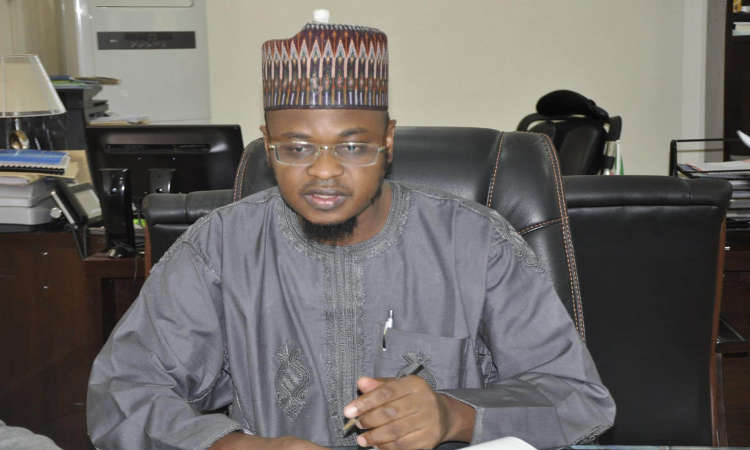
Mallam Isa Pantami is no ordinary Nigerian. He is a Minister of the Federal Republic of Nigeria. Pantami is also no ordinary Minister. He is charged with the sensitive portfolio of Communications and Digital Economy. Before his ministerial appointment, he had headed the very sensitive and delicate position of Director-General of the National Information Technology Development Agency. As Minister, Pantami oversees the critical agencies of NCC, NITDA, NIPOST, NIGCOMSAT and GALAXY BACKBONE. In this digitalised world, Pantami by his office has access to Nigerians’ private communications, NIN, identities, etc. Ordinarily, this would not have posed a problem at all, since someone, a Nigerian, out of our 210 million population, must head the Ministry any way. But, his antecedents are quite worrisome. That is what has led to the sudden bedlam and ruckus by Nigerians generated through the traditional and social media routes. How? Why? I will tell you. Isa is an acclaimed Islamic fanatic, fundamentalist and supporter of extremist Islamic sects. Taught in Saudi Arabia by fiery Muhammad Inn Uthaymin (nicknamed “giant of Islam, a Cleric who once opposed women driving for fear of mixture of men and women at petrol stations, traffic lights and Police checkpoints), Pantami as a Graduate Assistant, started preaching and leading prayers in mosques right from his days at the Tafawa Balewa University, Bauchi, where he had graduated from. He is said to be the Chief Imam of the Al Mannar mosque, Abuja, where he preaches. There is nothing wrong about one being close to his maker, including his present tafsir teaching during the Ramadan fasting season (Ramadan Kareem). So, I do not begrudge him of his passionate pastime.

To me, it is even a plus that as Minister, he still finds time to worship his God. After all, the Holy Prophet Mohammed (peace be on to him), when asked by the pagans of Mecca (Makkah) to worship their gods, answered: “Say, O disbelievers, I do not worship what you worship. Nor are you worshippers of what I worship. Nor will I be a worshipper of what you worship. Nor will you be worshippers of what I worship. For you is your religion, and for me is my religion” (Surah Al-Kafirun109:1). What he was simply emphasising was the freedom and individuality of religion and conscience between a person and his God. We call this secularity. It is entrenched in section 10 of the 1999 Constitution of Nigeria.

But, does Isa Pantami realise this in his earlier fiery teachings of extremism and religious intolerance, and bigotry, even as far back as nearly 20 years ago? I think not. Let me show you a sample of his expressed mindset and why Nigerians are united, in reactions that have since gone viral, are calling for his immediate resignation or outright sack.

Amongst other in his Salafist ideology and spine- chilling teachings in support of two of the globally most acclaimed deadliest terrorist groups in the world (the Taliban and al-Quaeda), some years ago, Patanmi had said unapologetically, “Oh God, give victory to the Talibans and to the al-Quaeda. This jihad is an obligation for every single believer, especially in Nigeria”. He also reportedly endorsed the killings of “unbelievers” (non-Moslems).

In a video that has since gone viral (which he was later forced to own up after initially denying his previous incendiary and inflammatory statements), he openly castigated then President Goodluck Jonathan, for sending the military to kill Boko Haram insurgents whose blood he regarded as “our Muslim brother’s blood”.
Hear him: “We are praying to God to answer all our prayers. It is our right and obligation before all Muslim leaders, politicians, government appointees, academics. All of us should not fold their arms and watch helplessly how they shed our Muslim brothers’ blood and cheat them in vain.

Even if the Boko Haram fighters commit a crime but can we justify the way and manner they are being killed? Just look at how they are killing people as if they are shooting pigs, even though they committed a crime why the extrajudicial killing?

Take them before the law for a fair trial. You caught someone sleeping and you killed them. If it is not Muslims that undergo such treatments who else?
The Niger Delta people did something similar to this. They massacre people, stole weapons, killed expatriates and kidnapped some of them, yet you still accept them back, opened a ministry for them, gave them a minister and put them on a monthly salary pay without work.
The militants did more harm compared to what Boko Haram boys did. But why will they do something like this? Why selective justice?”

He even prayed for the day when the images on the naira notes and the “Gregorian date, the Calendar of the infidels”, will be wiped out: “And therefore, we are praying to God, that based on our understanding, we pray for a day when the images on the notes in our pockets will be removed. No Muslim Cleric has ever spoken against these images as forbidden. May be self-sufficient enough not to need this currency. It is against the Religion to put even the images of Companions of the Prophet on the currency. May Allah help us to see that day when the Gregorian date, the Calendar of infidels that on the notes…”
Boko Haram was thereby given the necessary muscle and many Muslims were innocently led to believe that Killing Boko Haram insurgents amounted to Killing Muslims. Nigerians have today, witnessed the corrosive and deadly consequences of boko haram’s killings, maiming, arson and the general insecurity enthroned and watered by such dangerous hate preachments. Boko Haram has since abducted the Chibok, Dapchi, Kankara, Kagara and Jangebe girls; blown up the UN headquarters; engaged in serial cases of maiming, killings and kidnaps in Kaduna, Maiduguri, Bauchi, Damaturu, Madalla, Mubi, Gamboru, Yola, Gombi, Kano, Baga, Bunu Yadi, Konduga, Gwoza, to mention just a few places.

Reeling under the weight and yoke of damning public criticisms by a wide spectrum of Nigerians, Pantami (who had earlier denied making the statements), summersaulted and claimed that he has since changed his views and extreme religious ideology, which he claimed had been based on youthful ignorance. Said he:

“Some of the comments I made some years ago that are generating controversies now were based on my understanding of religious issues at the time, and I have changed several positions taken in the past based on new evidence and maturity,”

“I was young when I made some of the comments; I was in university, some of the comments were made when I was a teenager. I started preaching when I was 13, many scholars and individuals did not understand some of international events and therefore took some positions based on their understanding, some have come to change their positions later”.

Has he really changed? What has changed? Can a leopard ever change its spots? In saner climes, Pantami should have resigned immediately without more. Or be sacked forthwith. Lifting the veil off his purported transformation or assumed transfiguration is so easy when viewed against the background of his new acts even as Minister. Only recently, On March 22, 2021, Patami’s Ministry hosted a virtual flag-off ceremony for a capacity development programme empowering 600 people with VSAT Installation Skills. Patami himself was present and he even spoke at the event. It was a Virtual Flag-off Capacity Development Programme on VSAT Installation Skills and TVRO Systems for 600 youths by Patami.

The ceremony was not covered by AIT, Channels, NTA, TVC, ITV, or even FM Youtube channels. Rather, a very little-known Islamic TV channel called Al-Afrikiy was contracted to relay an event organized by a whole Federal Government of Nigeria. It must be borne in mind that Al-Afrikiy is not merely an Islamic-influenced learning TV station, it is also an Islam-only TV channel. It broadcasts strictly religious matters.
Why did President Muhammadu Buhari nominate Patami in the first place? Can he, as Commander-In-Chief, claim not to have access to information regarding Patanmi’s dangerous antecedents? I think not. Or, don’t you know the reason? Simple: his usual infamous inclination towards prebendalism, cronyism, sectionalism, tribalism, favouritism, religiosity and mediocrity.

By the way, where was the DSS which was supposed to screen Pantami before his name was sent to the Senate? Why did it turn its focus away from these destructive extremist views of the very Minister in charge of Nigerians’ information data, with unabridged access to same, including NIM, BVN, biodatas, etc?

What about our fawning rubber stamp “take-a-bow” Senate that was supposed to do a very thorough screening of Pantami? Why did it simply allow the Carmel to pass through the needle’s eye? When will it winnow out the chaff from the real wheat? Why has it turned a sacred duty on behalf of Nigerians into a “yes sir” party affair, which suggests that President Buhari can do no wrong, or make any mistake? This is reminiscent of Boxer’s slogan of “Napoleon is always right”, in George Orwell’s Animal Farm. For me, Mallam, (Sheikh, Dr, Cleric) Isa Pantami should honorably resign, as Mrs Kemi Adeosun, former Finance Minister, once did. Where he fails to do this, Buhari should immediately relieve him of his ministerial position. His antecedents loudly proclaim him as a clear and present danger to Nigeria’s asphyxiatingly fragile unity, harmony and religious and ethnic tolerance. I know Buhari will not do it. At least, make we “siddon look”.

Continue Reading
Click to comment

Leave a Reply

Your email address will not be published. Required fields are marked *

Opinion

The State of Leadership Today: A Look at Global, African and Nigerian Realities

Published

on

By

By Tolulope A. Adegoke PhD

“Leadership for our age is measured not by the height of the throne, but by the depth of its roots in integrity, the breadth of its embrace of collective talent, and the courage to cultivate systems that bear fruit for generations yet unseen” – Tolulope A. Adegoke, PhD.

Leadership today is at a crossroad. Around the world, in our communities, and within our organizations, old ways of leading are straining under new pressures. This isn’t just a theoretical discussion; it’s about the quality of our daily lives, the success of our businesses, and the future of our nations. Let’s walk through the current trends, understand their very real impacts, and then explore practical, hands-on solutions that can unlock a better future for everyone.

Part 1: The Leadership Landscape – Where We Stand

The Global Picture: Beyond the Solo Leader

The image of the all-powerful, decisive leader at the top of a pyramid is fading. Today, effective leadership looks different. It’s more about empathy and service than authority. People expect their leaders—in companies and governments—to be authentic, to listen, and to foster teams where everyone feels safe to contribute. Furthermore, leadership is now tightly linked to purpose and responsibility. It’s no longer just about profits or power; stakeholders demand action on climate, fair treatment of workers, and ethical governance. Leaders must also be tech-savvy guides, helping their people navigate constant digital change while dealing with unpredictable global events that disrupt even the best-laid plans.

Africa’s Dynamic Challenge: Youth and Promise

Africa’s story is one of incredible potential meeting stubborn challenges. The continent is young, energetic, and full of innovative spirit. Yet, this tremendous asset often feels untapped. Too frequently, a gap exists between this rising generation and established leadership structures, leading to frustration. While the African Continental Free Trade Area (AfCFTA) presents a historic chance for economic unity, it requires leaders who think beyond their own borders. At the same time, democratic progress sometimes stalls, with leaders clinging to power. The most pragmatic leaders are those who engage with the vibrant informal economy—the hustlers, market traders, and artisans—who form the backbone of daily life and hold the key to inclusive growth.

Nigeria’s Pressing Reality: Crisis and Resilience

In Nigeria, the leadership experience often feels like moving from one emergency to the next. Attention is consumed by immediate crises—security threats, economic swings, infrastructure breakdowns—making long-term planning difficult. This has triggered a profound loss of confidence, visibly seen in the “Japa” phenomenon, where skilled professionals leave seeking stability and opportunity abroad. This brain drain is a direct critique of the system. Politics remains deeply influenced by ethnic and regional loyalties, which can overshadow competence and national vision. Yet, in the face of these trials, a remarkable spirit of entrepreneurial resilience shines through. Nigeria’s business people and tech innovators are daily solving problems and creating value, often compensating for wider systemic failures.

Part 2: The Real-World Impact – How This Affects Us All

These trends are not abstract; they touch lives, businesses, and countries in tangible ways.

·         On Everyday People: When leadership is perceived as self-serving or ineffective, trust evaporates. People feel anxious about the future and disconnected from their leaders. This can manifest as cynicism, social unrest, or the difficult decision to emigrate. The struggle to find good jobs, feel secure, and build a future becomes harder, deepening inequalities.

·         On Companies and Organizations: Businesses operate in a tough space. They face a war for talent, competing to retain skilled employees who have global options. They must also navigate unpredictable policies, provide their own power and security, and balance profitability with rising demands for social responsibility. The burden of operating in a challenging environment increases costs and risk.

·         On Nations: Countries plagued by poor governance face a competitiveness crisis. They struggle to attract the kind of long-term investment that builds economies. Policy becomes unstable, changing with political winds, which scares off investors and stalls development. Ultimately, this can destabilize not just one nation but entire regions, as problems like insecurity and migration spill across borders.

Part 3: A Practical Pathway Forward – Building Leadership That Delivers

The situation is complex, but it is not hopeless. Turning things around requires deliberate, concrete actions focused on systems, not just individuals.

1. Fortify Institutions with Transparency and Merit.

We must build systems so strong that they work regardless of who is in charge.

·         Action: Legally protect key institutions—the electoral body, the civil service, the courts—from political interference. Appointments must be based on proven competence and integrity, not connections.

·         Action: Implement technology-driven transparency. Let citizens track government budgets and projects in real time through public online portals. Sunshine is the best disinfectant.

2. Bridge the Gap Between Leaders and the Led.

Leadership must become a conversation, not a monologue.

·         Action: Create mandatory Youth Advisory Councils at all levels of government and in large corporations. Give young people a formal platform to contribute ideas and hold leaders accountable on issues like education, digital innovation, and job creation.

·         Action: Leaders must adopt regular, unscripted “town hall” meetings and use simple digital platforms to explain decisions and gather feedback directly from citizens and employees.

3. Channel Entrepreneurship into National Solutions.

Harness the proven problem-solving power of the private sector.

·         Action: Establish Public-Private Impact Partnerships. For example, the government can partner with tech companies to roll out digital identity systems or with agribusinesses to build modern farm-to-market logistics. Clear rules and shared goals are key.

·         Action: Launch National Challenge Funds that invite entrepreneurs and researchers to compete to solve specific national problems, like local clean energy solutions or affordable healthcare diagnostics, with funding and market access as the prize.

4. Redeploy Nigeria’s Greatest Export: Its Diaspora.

Turn the brain drain into a brain gain.

·         Action: Create a Diaspora Knowledge & Investment Bureau. This agency would actively connect Nigerians abroad with opportunities to mentor, invest in startups, or take up short-term expert roles in Nigerian institutions, transferring vital skills and capital.

·         Action: Offer tangible incentives, like tax breaks or matching funds, for diaspora-led investments in critical sectors like healthcare, renewable energy, and vocational training.

5. Cultivate a New Mindset in Every Citizen.

Ultimately, the culture of leadership starts with us.

·         Action: Integrate ethics, civic responsibility, and critical thinking into the core curriculum of every school. Leadership development begins in the classroom.

·         Action: Celebrate and reward “Local Champions”—the honest councilor, the community organizer, the business owner who trains apprentices. We must honor integrity and service in our everyday circles to reshape our collective expectations.

Conclusion: The Work of Building Together

The challenge before us is not to find a single heroic leader. It is to participate in building a better system of leadership. This means championing institutions that work, demanding transparency in our spaces, mentoring someone younger, and holding ourselves to high ethical standards in our own roles.

For Nigeria and Africa, the possibility of a brighter future is not a dream; it is a choice. It is the choice to move from complaining about leaders to building leadership. It is the choice to value competence over connection, to seek common ground over division, and to invest in the long-term health of our community. This work is hard and requires patience, but by taking these practical steps—starting today and in our own spheres—we lay the foundation for a tomorrow defined by promise, stability, and shared success. The power to deliver that possibility lies not in one person’s hands, but in our collective will to act.

Dr. Tolulope A. Adegoke, AMBP-UN is a globally recognized scholar-practitioner and thought leader at the nexus of security, governance, and strategic leadership. His mission is dedicated to advancing ethical governance, strategic human capital development, and resilient nation-building, and global peace. He can be reached via: tolulopeadegoke01@gmail.comglobalstageimpacts@gmail.com

Continue Reading

Opinion

Globacom Redefines Standard for Telecoms in 2026

Published

on

By

By Michael Abimboye

As always, Globacom is at the heart of telecoms transformation in Nigeria. The acquisition of additional spectrum, is a decisive move that has expanded network capacity and fundamentally improved customer experience.

With the ability to carry significantly higher data volumes at greater speeds, users are seeing faster downloads, stronger uploads, seamless video streaming, and clearer voice calls even at peak periods. Crucially, this expansion has driven down latency. Independent performance testing has ranked Glo as the network with the lowest latency in Nigeria, meaning faster response times whenever data commands are initiated.

This spectrum advantage is being matched on the ground by the rollout of thousands of new LTE sites nationwide. Network capacity has increased pan-Nigeria, with noticeably higher download speeds across regions. At the same time, the installation of thousands of additional towers is easing congestion and closing coverage gaps, particularly in high-density locations such as markets and tertiary institutions, where demand for fast, reliable internet is highest.

Power reliability, often the silent determinant of network quality, is also being reengineered. Globacom has deployed hybrid battery power systems across numerous sites, reducing dependence on diesel while improving sustainability. Beyond cost efficiency, this greener model delivers stronger uptime ensuring uninterrupted power supply and optimal performance for base stations and switching centres.

Behind the scenes, Glo has upgraded its switching systems and data centres to accommodate rising traffic volumes nationwide. These upgrades are designed not only for today’s demand but to ensure the network consistently meets performance KPIs well into the future, even as data consumption continues to grow.

Equally significant is the massive reconstruction and expansion of Globacom’s optic fibre cable (OFC) network. Along highways and metro routes affected by road construction, fibre routes are being reconstructed and relocated to safeguard service continuity. Thousands of kilometres of new fibre have also been rolled out nationwide, fortifying the OFC backbone, improving redundancy, reducing network glitches, and enabling the network to handle increasingly heavy data loads with resilience.

These investments collectively address long-standing coverage gaps while driving densification and capacity enhancement in already active areas, ensuring a more balanced and reliable national footprint.

At the core layer, Globacom is modernising its network elements through new platforms and applications, upgraded enterprise and interconnect billing systems, and an expanding roster of roaming partners for both in-roaming and out-roaming services strengthening its integration into the global telecoms ecosystem.

Taken together, these are not incremental upgrades. They represent a deliberate, system-wide repositioning.

In 2026, Globacom is not just improving its network; it is asserting itself as the technical leader in Nigeria’s telecommunications industry and has gone on a spending spree to satisfy the millions of subscribers enjoying seamless connectivity across Nigeria.

Continue Reading

Opinion

How GLO Sustains Everyday Businesses in Kano, Nigeria’s Centre of Commerce

Published

on

By

By Dr Sani Sa’idu Baba

For more than two weeks, Kano woke up under a veil of fog. Not the poetic kind, but the stubborn Harmattan fog that dulls vision, slows movement, and disrupts daily rhythm. Dawn arrived quietly. Shops opened late. Calls failed repeatedly. Internet bars blinked on and off like uncertain promises. Across the state, one reality became impossible to ignore: communication had become a struggle. This reality carried even greater weight in the capital of Kano, the centre of commerce in Nigeria.

As Ramadan approaches and gradually leads to the celebration of Eid-el-Fitr, everyone understands what this season represents. It is a period when online businesses, both big and small, become a major source of livelihood for millions. Traders prepare for peak demand, online vendors scale up advertising, and buyers from across the country look to Kano for goods. Visitors stream in from other states, transactions multiply, and the success of this entire commercial ecosystem depends heavily on one thing: seamless network connectivity between buyers and sellers.
In Kano, where business breathes through phone calls, alerts, and instant messages, poor network is not just inconvenient, it is costly. Calling became difficult. Browsing the internet felt like a battle. For many, it meant frustration. For others, it meant loss.

As these challenges persisted day after day, conversations across the city began to take a clear and consistent direction. In homes, offices, and markets, a new conversation began to dominate discussions. A brother of mine, deeply involved in the communication business at Farm Center Market, the largest hub for telecom activity in Kano shared his amazement. Day after day, customers walked up to data vendors with one clear, confident request: “Glo data.” Not alternatives. Not experiments. Just Glo, he said. At first, it seemed puzzling. If you were already on Glo, you might not even notice the difference. But for those struggling on other networks, the contrast was undeniable. In the middle of foggy mornings and unstable signals, Glo stood firm.

And soon, the conversation spread everywhere. At tea junctions in the early hours, as people warmed their hands around cups of shayi, discussions circled around how Glo “held up” when others disappeared. In university classrooms, students whispered comparisons before lectures began, who could download materials, who could submit assignments, and which network actually worked. More strikingly, Glo users quietly turned their phones into lifelines, sharing hotspots with classmates so others could access lecture notes, submit assignments, and stay connected. At sports viewing centres, between goals and missed chances, fans debated networks with the same passion as football rivalries. In markets, traders told customers how Glo saved their day. In every gathering of people across Kano, Glo became the reference point. The reason was simple: Glo had saved businesses.

Consider the POS operator by the roadside. Every successful transaction that attracts him/her ₦100 here, ₦200 there is survival. Failed transfers mean angry customers and lost income. During these fog-heavy days, many operators would have been stranded. But where Glo bars stayed strong, withdrawals went through, alerts dropped, and trust preserved.

Picture a roadside trader making her first sale of the day through a simple WhatsApp call, her voice steady as she confirms an order that will set the tone for her business. Nearby, an online vendor advertises products in WhatsApp groups, responds to messages, takes calls from interested buyers, and confirms deliveries, all in real time. Behind every one of these small but significant transactions is reliable connectivity. Delivery riders weaving through traffic and racing against time also depend on uninterrupted network access to reach customers, confirm payments, and complete orders. In moments when other networks struggled, Glo quietly kept these wheels of commerce turning, ensuring that daily hustle did not grind to a halt. Beyond the busy streets of the city, the impact of this reliability becomes even more profound in remote villages in Kano.

Back in Kano city, rising transportation costs have reshaped the way people work. Many professionals have had no choice but to adapt, turning their homes into offices and relying heavily on the internet to stay productive. Many now attend virtual meetings, send large files, collaborate remotely, and meet deadlines without leaving their homes. In a period marked by economic pressure and uncertainty, dependable internet is no longer a convenience, it is a necessity. In these conditions, Glo continues to provide the stability that keeps work moving forward.

At this point, Glo stops being seen merely as a telecommunications company. It emerges as the invisible backbone of the Nigerian hustle, supporting the determination and resilience of everyday people. From POS operators and online merchants to students, delivery services, market traders, and remote workers who refuse to give up, Glo remains present in the background, quietly powering their efforts. In tough terrains, harsh weather, and challenging times, when other networks fluctuate or fade, Glo stays connected.

You may not always hear it announce itself loudly, and you may not notice it when everything is working smoothly. But when a single call saves a business, when one alert prevents a financial loss, and when one stable connection keeps a dream alive, Glo proves its value, not as noise or empty promises, but as consistent reliability and lived experience. And that is how quietly, consistently, and powerfully Glo continues to power Nigeria’s everyday businesses, sustaining dreams and survival UNLIMITEDLY…

Dr. Baba writes from Kano, and can reached via drssbaba@yahoo.com

Continue Reading

Trending