Connect with us

Opinion

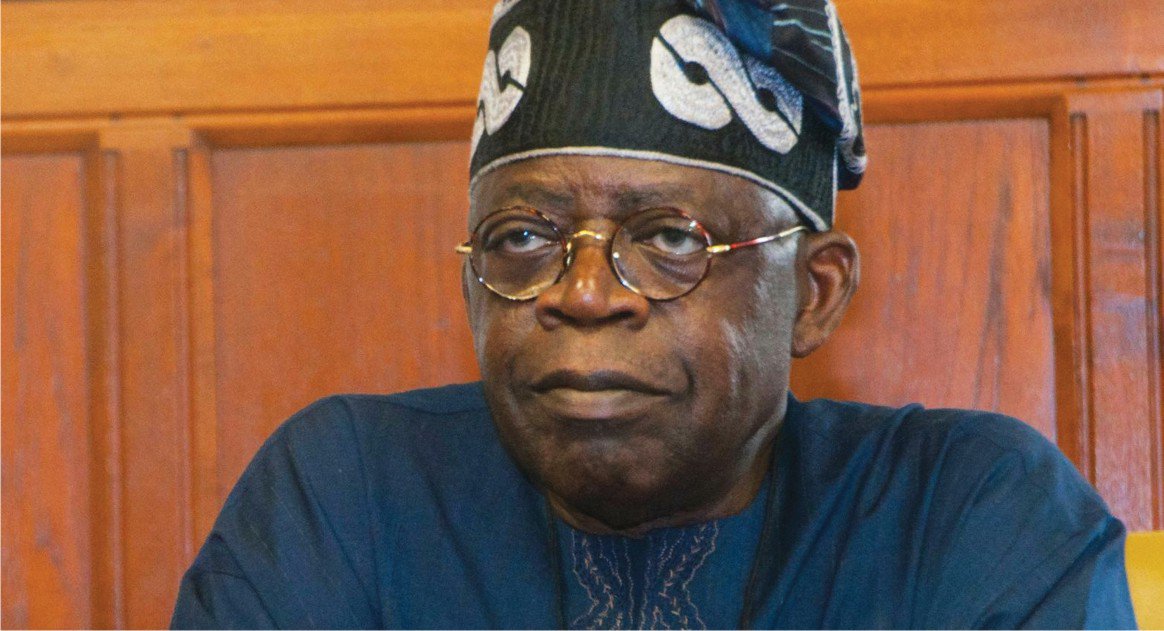
Tinubu: A Statesman @ 69

Published

on

By Mobolaji Sanusi

“The true statesman is the one who is willing to take risks.”——Charles de Gaule(1890-1970)

It is not by human power but by the grace of almighty God that in over two decades of the current democratic dispensation, Bola Ahmed Tinubu (BAT), has become a puzzle that power brokers in the nation’s political firmament have found a hard row to hoe. Tinubu, omo olodo ide, holds numerous important titles including the Jagaban of Borgu land, Asiwaju of Lagos and governor emeritus of Lagos State.

On March 29, 2021, he will clock 69, but yet remains an enigma that keeps waxing stronger and escaping, in the process, the unceasing traps of his ever mounting socio-political traducers. This unfaltering torchbearer of progressive politics, looks set, to remain for a long time to come, a mystery that fake friends masquerading as his genuine allies, and confessed foes alike will try, albeit unsuccessfully, to unravel.

Tinubu, despite his unrivaled contemporary vilification by envious political gladiators and parasites, remains the most-sought-after politician and perhaps, one of the few most significant of the progressive hue in modern-day Nigeria. The reality, even amongst those that hate to love Tinubu, is that he has become a veritable political brand that can be ignored at the peril of any noteworthy politician in the nation. Since 1999, when this new political experiment was born, Tinubu, like Awolowo achieved until his death in 1987, has been the main issue in our current democratic journey. When his political party was in the opposition until 2015, the concerns of previous governments was what will be Tinubu’s reactions to their policies and actions: Now that his party controls the federal government, the concerns of those in government and also within the ruling political party’s topmost hierarchy is whether Tinubu is with them or how best they could tame his looming political image. Until he speaks on any issue of national significance, public opinion is not settled. That shows how purposefully powerful Tinubu has, so far, been to our body polity. The Asiwaju of Lagos has faced fears, betrayal and treachery but at the end of it all remain undaunted.

Today, in our political firmament, Tinubu has become a political brand whose name, most politicians deploy to win support at national and state levels during electioneering periods. The question to ask any aspiring politician seeking public office to determine his prospects or seriousness is: Have you been endorsed by Tinubu or not? That is how politically turbulent the Tinubu phenomenon is in today’s Nigeria.

This writer keeps observing how political ignoramuses deride him; the grovelers of centrist conservative elements impugn his character, but that is Tinubu, the enigma still standing like the rock of Gibraltar. No doubt, Tinubu has the skills of political liberation and he’s equally imbued with the power of intuition which makes him tower above adversaries. This man of unquantifiable knack for philanthropy has this uncanny nerve for discovering talent not minding the fact that most of these people turn out to stab him in the back. But Tinubu, at sixty-nine, must ask himself a self reassessment question to wit: Could it be genuinely said that his created talents are discovering fresh beneficial talents or just using the platform he created for them to pursue their selfish agenda? It has become imperative for Asiwaju to start paying attention to how he handles back-stabbers and over-fed loyalists with diminished passion for what he stands for other than to continue to use his brand to extort, undermine and be envious of younger loyalists, creating avoidably in the process, more enemies for him.

Out of sheer envy for Tinubu’s result-oriented political track record; his steadfast commitment to finding solutions to political challenges, most people that he helped to power later see him as serious threat to their ambitions to cling onto power.

Some, out of steep spite of his large-heart and enormous goodwill, will query his source of wealth: And simply because the man is doing what they cannot ever do or are not privileged to do since they are not in a position to do it, they harbour the ache in their bellies. Some see him as being immoderate. But Benjamin Disraeli had an answer for the Tinubu-phobia when he said: ‘Moderation has been called a virtue to limit the ambition of great men, and to console undistinguished people for their want of fortune and their lack of merit.’ There are empirical examples of Nigerians, irrespective of tribes and especially among the Yoruba, the man’s cradle, that have benefited immensely from his political and pecuniary largesse. But sadly, these same people still hypocritically relish speaking ill of him. Surprisingly, Tinubu relishes welcoming such backstabbers back to his fold. Most of us see this as a weakness but he sees that to be one sacrifice of greatness that he must pay. One can only hope that this inclination of taking back dangerous backstabbers would not turn to be his undoing later in life.

Whoever doubts Tinubu’s progressive credentials needs to embark on historical excursion. After not less than three failed attempts at the presidency, current president, General Muhamadu Buhari eventually clinched the coveted post in 2015 and 2019 respectively because of the invaluable support and political ingenuity of Tinubu. Former President Goodluck Jonathan, whatever reservation he might have for Tinubu will forever be secretly grateful for the irreplaceable support that Tinubu gave him in 2011. Also worthy of mention is the fact that at a time that the Yoruba states of Oyo, Ogun, Osun, Osun and Ekiti were falling to the gangsterism of dethroned People’s Democratic Party (PDP) in 2003 and 2007, it was only Asiwaju’s Lagos that stood to absorb the heat of conservatism before eventually launching, single-handedly, the worthwhile battle that liberated the former western region but Ondo, from the grips of rampaging agents of feudal politics. Progressivism is indeed taking firm root in the country today because of the great political mind possessed by Tinubu.

Despite the sleaze of political mudslinging by mostly beneficiaries of his political large-heartedness, Tinubu’s democratic scorecard remains very glittering and unassailable.

Tinubu is indeed and always politically determined to succeed. And it is this uncommon determination to be great and to politically liberate the people from the yoke of reactionary politics that compelled him to take with zeal, progressive politics, since year 2014’s merger of Action Congress of Nigeria (ACN) with other opposition parties – far beyond the west and to all parts of the country. This gave birth to All Progressives Congress (APC) that today controls the seat of power in Abuja. The move at that time generated spite, covetousness as much as cynicism from those who always see impossibility rather than possibility in Tinubu’s laudable political initiatives.

The difference between Tinubu and the rest in the political arena is that he sees possibility where others predict doom. His often-talked-about political superiority complex does not mean haughtiness; although it might appear to be so in the eyes of the mischievous among politicians/citizens who want to see it so. Tinubu feels a higher esteem over the obstacles he desires to surmount and he is blessed with the rare courage of overcoming them, with enough energy reserved for any eventuality.

The positive roles of Tinubu in the successful political merger of the opposition parties; the outcome of the 2015 general elections in favour of then opposition and the fact that a precedent has been set that makes it impossible for a ruling party, especially at the centre, to take others for granted in the political space have become a burden of envy in the minds of most politicians that see Tinubu as a threat. Rejection of Tinubu’s political ingenuity is nothing but a deliberate creation of avoidable amphitheatre of perfidious hypocrisy.

The current firm control of the centre by erstwhile opposition, hitherto considered as impossible, and the invaluable role played by the Jagaban of Borgu land in bringing it to fruition merely confirmed him as the definitive contemporary political leader of the progressives in the country.

Like Awolowo during his lifetime, Tinubu, ‘omo olodo ide, has, in contemporary Nigerian politics, become a thorn in the flesh of conservative/progressive politicians of less candour. This unjustifiable kvetching syndrome by some of the current political elite class against Tinubu has become a catalyst that gives him more inspiration to surpass his present enviable feat. Tinubu must realize that this is not the time to rest on his oars. Things are really tough in the country and like the political magician that we know him to be, he should, once again, step forward and rescue this country from the current abyss of undesired change. This writer, wholeheartedly wishes Asiwaju, the husband of adorable Senator Oluremi Tinubu, plenteous happy returns of your day in sound health and continuing political relevance. Happy birthday to you sir. And as the Yoruba would pray: Akanbi, omo olodo ide, “igba odun, odun kan.”

Sanusi, a lawyer/Journalist is the immediate past MD/CEO of Lagos State Signage & Advertisement Agency.

Continue Reading
Click to comment

Leave a Reply

Your email address will not be published. Required fields are marked *

Opinion

How an Organist Can Live a More Fulfilling Life

Published

on

By

By Tunde Shosanya

It is essential for an Organist to live a fulfilling life, as organ playing has the capacity to profoundly and uniquely impact individuals. There is nothing inappropriate about an Organist building their own home, nor is it unlawful for an Organist to have a personal vehicle. As Organists, we must take control of our own futures; once again, while our certificates hold value, organ playing requires our expertise. We should not limit ourselves to what we think we can accomplish; rather, we should chase our dreams as far as our minds permit. Always keep in mind, if you have faith in yourself, you can achieve success.

There are numerous ways for Organists to live a more fulfilling and joyful life; here are several suggestions:

Focus on your passion. Set an example, and aim for daily improvement.

Be self-reliant and cultivate harmony with your vicar.

Speak less and commit to thinking and acting more.

Make choices that bring you happiness, and maintain discipline in your professional endeavors.

Help others and establish achievable goals for yourself.

Chase your dreams and persist without giving up.

“Playing as an Organist in a Church is a gratifying experience; while a good Organist possesses a certificate, it is the skills in organ playing that truly matter” -Shosanya 2020

Here are 10 essential practices for dedicated Organists…

1) Listen to and analyze organ scores.

2) Achieve proficiency in sight reading.

3) Explore the biographies of renowned Organists and Composers.

4) Attend live concerts.

5) Record your performances and be open to feedback.

6) Improve your time management skills.

7) Focus on overcoming your weaknesses.

8) Engage in discussions about music with fellow musicians.

9) Study the history of music and the various styles of organ playing from different Organists.

10) Take breaks when you feel fatigued. Your well-being is vital and takes precedence over organ playing.

In conclusion, as an Organist, if you aspire to live towards a more fulfilling life in service and during retirement, consider the following suggestions.

1) Plan for the future that remains unseen by investing wisely.

2) Prioritize your health and well-being.

3) Aim to save a minimum of 20 percent of your monthly salary.

4) Maintain your documents in an organized manner for future reference.

5) Contribute to your pension account on a monthly basis.

6) Join a cooperative at your workplace.

7) Ensure your life while you are in service.

8) If feasible, purchase at least one plot of land.

9) Steer clear of accumulating debt as you approach retirement.

10) Foster connections among your peers.

Continue Reading

Opinion

The Power of Strategy in the 21st Century: Unlocking Extraordinary Possibilities (Pt. 2)

Published

on

By

By Tolulope A. Adegoke PhD

“In Nigeria, strategy is not an abstraction imported from elsewhere—it is forged daily in the crucible of reality. Here, global principles meet local truths, and the strategies that work are those humble enough to learn from both. The future of this nation will be written not by those who wait for solutions, but by those who create them from the raw materials of our own experience” – Tolulope A. Adegoke, PhD

Introduction: Why Strategy Matters More Than Ever

There was a time when strategy meant creating a detailed plan and sticking to it for years. You would map everything out, follow the steps, and expect success to follow. That world no longer exists.

Today, change happens too fast for rigid plans. Industries transform overnight. Skills that were valuable last year become obsolete. Global events ripple through local economies in ways we could never predict. In this environment, strategy has evolved into something more dynamic—less about predicting the future and more about building the capacity to navigate it successfully.

This is the power of 21st-century strategy. It helps individuals chart meaningful careers in uncertain times. It enables businesses to thrive despite constant disruption. It allows nations to build prosperity that outlasts any single administration.

Nowhere is this more evident than in Nigeria. Here, strategy is not an abstract exercise. It is a daily necessity. Nigerians navigate unreliable infrastructure, policy shifts, and economic volatility while pursuing their ambitions. The strategies that work here are not imported from textbooks. They are forged in the reality of local experience—blending global knowledge with gritty, on-the-ground wisdom.

This exploration looks at how strategy works at three levels in Nigeria: for the person trying to build a meaningful life, for the business striving to grow, and for the nation working to secure its future.

Part One: For the Nigerian People—Redefining Success in a Changing World

The Old Promise That No Longer Holds

Not long ago, the path to a good life seemed clear. You went to school, earned your degree, found a job, and worked your way up. That degree was your ticket. It signaled to employers that you had what it takes.

That promise has broken.

Today, Nigeria produces hundreds of thousands of graduates each year. Many of them are brilliant. Many of them struggle to find work. The degree that once opened doors now barely gets a foot in. Employers have changed what they look for. They want to know not what you studied, but what you can actually do.

This is not unique to Nigeria. It is happening everywhere. But in Nigeria, where formal jobs are scarce and the youth population is massive, the shift hits harder. For the average Nigerian young person, the message is clear: waiting for someone to give you a job is not a strategy.

A New Way of Thinking About Yourself

The most important strategic shift for any individual is this: stop thinking of yourself as someone looking for work and start thinking of yourself as someone who creates value.

This is not just positive thinking. It is a fundamental change in perspective. When you see yourself as a value creator, you ask different questions. Not “who will hire me?” but “what problems can I solve?” Not “what jobs are available?” but “where can I apply my skills?” Not “what degree do I need?” but “what can I learn to become more useful?”

This mindset matters because it puts you in control. You are no longer waiting for opportunities to be given to you. You are actively looking for ways to contribute. And in an economy where problems are everywhere, people who can solve them will always find a way to earn a living.

What Skills Actually Matter Today

If degrees no longer guarantee success, what does? The answer lies in skills that are both practical and adaptable.

Problem-solving sits at the top of the list. Every organization, every community, every family faces challenges. People who can look at a difficult situation and figure out a way forward are always needed. This skill does not come from a textbook. It comes from practice—from learning to think clearly when things go wrong.

Communication matters more than most people realize. The ability to express ideas clearly, to listen carefully, to persuade others, to write simply—these are not soft skills. They are the tools we use to turn thoughts into action. In any field, people who communicate well stand out.

Digital literacy is no longer optional. It is the baseline. Using spreadsheets, collaborating on online platforms, understanding how data works, knowing your way around common software—these are not technical skills for specialists. They are basic tools for modern work. Without them, you are locked out of most opportunities.

Adaptability might be the most important of all. The willingness to learn new things, to admit what you do not know, to try something different when the old way stops working—this is what keeps people relevant over a lifetime. The person who can learn will always find a place. The person who stops learning will eventually be left behind.

Learning That Fits Real Life

The traditional model of education assumes you learn first and work later. You spend years in school, then you start your career. But in a fast-changing world, that model breaks down. By the time you finish learning, what you learned may already be outdated.

This is why many Nigerians are turning to micro-credentials—short, focused courses that teach specific, job-ready skills. These programs take weeks or months, not years. They cost a fraction of what university costs. And they signal clearly to employers what you can do.

A certificate in data analysis, digital marketing, project management, or solar installation tells a clear story. It says: I have this specific skill, and I can apply it right now. For employers, that is often more valuable than a general degree.

The beauty of this approach is flexibility. You can learn while working. You can stack credentials over time, building a portfolio of skills. You can pivot when opportunities shift. This is lifelong learning made practical—not an ideal, but a working strategy for staying relevant.

Taking Control of Your Financial Life

Strategy also applies to money. For years, most Nigerians had limited options. You saved what you could, kept it at home or in a bank, and hoped it would be enough. Inflation often ate away at whatever you managed to put aside.

Technology has changed this. Today, anyone with a smartphone can access tools that were once available only to the wealthy. Apps allow you to save automatically, invest small amounts, and get advice tailored to your situation. You can build a diversified portfolio with whatever you have. You can protect your money against inflation. You can plan for goals that matter to you.

The key is to start early and stay consistent. Small amounts saved regularly, invested wisely, grow over time. This is not about getting rich quick. It is about building a foundation that gives you choices. The person with savings can take risks. The person with investments can weather storms. Financial strategy is not just about money—it is about freedom.

Part Two: For Nigerian Businesses—Thriving in a Complex Environment


The End of the Five-Year Plan

There was a time when companies created detailed five-year plans and followed them religiously. Those days are gone. Markets move too fast. Technology changes too quickly. Consumer behaviour shifts in ways no one predicts.

Today, successful companies think differently. They set direction but stay flexible. They plan but remain ready to pivot. They treat strategy not as a document but as a continuous conversation—a way of making decisions in real time as new information emerges.

This is especially true in Nigeria, where the business environment presents unique challenges. Electricity is unreliable. Roads are poor. Policy can change overnight. Currency fluctuations affect everything. Companies that succeed here learn to adapt constantly. Rigidity is a recipe for failure.

What Digital Transformation Really Means

Every business today hears about digital transformation. But in Nigeria, going digital looks different than it does elsewhere.

You cannot simply move everything online and expect it to work. Internet access is not universal. Many customers prefer cash. Trust is built through personal relationships, not just websites. The purely digital model that works in London or Singapore will hit walls here.

Successful Nigerian companies understand this. They build hybrid models—digital at the core, but with physical touchpoints where needed. They offer online ordering and offline delivery. They accept digital payments but also cash. They use technology to enhance relationships, not replace them.

This is not a compromise. It is a sophisticated adaptation to local reality. The companies that get it right are not less digital. They are more intelligent about how digital actually works in their context.

Digital maturity matters more than digital adoption. This means building systems that function even when infrastructure fails. It means training people to use tools effectively. It means integrating technology into every part of the business, not just tacking it on at the edges. Companies that achieve this maturity outperform their competitors consistently.

Building Trust in a Low-Trust Environment

Nigeria faces a trust deficit. Years of broken promises, failed institutions, and economic volatility have left people cautious. Consumers do not easily trust businesses. Employees do not easily trust employers. Partners do not easily trust each other.

For companies, this is both a challenge and an opportunity. The businesses that earn trust stand out. They build loyal customer bases. They attract committed employees. They form partnerships that last.

Building trust takes time and consistency. It means delivering what you promise, every time. It means being transparent when things go wrong. It means treating customers and employees with respect, not as transactions. It means showing up consistently, even when it is difficult.

Some of Nigeria’s most successful companies have built their reputations on this foundation. They are not necessarily the flashiest or the most innovative. They are the ones people know they can count on. In an environment where trust is scarce, reliability becomes a competitive advantage.

The Power of Collaboration

The old model of business assumed competition was everything. You fought for market share. You protected your secrets. You went it alone.

That model is breaking down. The challenges businesses face today are too complex for any single organisation to solve alone. Climate change affects everyone. Skills gaps require industry-wide responses. Infrastructure deficits need collective action.

Forward-thinking Nigerian companies are embracing collaboration. They share data with competitors to build industry standards. They partner with government on infrastructure projects. They work with educational institutions to shape curricula. They understand that when the whole ecosystem grows, everyone benefits.

This is not charity. It is enlightened self-interest. A rising tide lifts all boats. Companies that invest in the broader environment create conditions for their own success.

Artificial Intelligence: Proceed with Purpose

Artificial intelligence is everywhere in business conversations. The hype is enormous. The fear of being left behind is real.

But for Nigerian companies, the strategic question is not whether to use AI. It is how to use AI wisely. Jumping on every trend without purpose leads nowhere. Building AI capabilities without governance creates risk.

The smart approach starts with problems, not technology. What specific challenges does your business face? Where could better data or smarter algorithms help? What decisions could be improved with more insight? These questions point to where AI might actually add value.

Equally important is data governance. AI learns from data. If your data is poor, your AI will be poor. If your data is biased, your AI will be biased. If your data is insecure, your AI creates vulnerability. Building strong data practices is not a technical detail. It is a strategic foundation.

Some Nigerian companies are already showing the way. They are using AI to assess credit risk for customers without formal banking history. They are using it to predict crop yields for farmers. They are using it to personalize learning for students. These applications solve real problems. They are not imported from elsewhere. They are built for Nigeria, by Nigerians.

People First: The Talent Challenge

Every business leader in Nigeria will tell you the same thing: finding and keeping good people is the hardest part of the job. The best talent is scarce. Competition is fierce. Many of the brightest leave for opportunities abroad.

This makes talent strategy central to business success. Companies that win the talent game win everything else.

What does good talent strategy look like? It starts with recognizing that people want more than money. They want to grow. They want to be valued. They want to do work that matters. Companies that provide these things attract and retain better people even when they cannot pay the highest salaries.

This means investing in training and development. It means creating clear career paths. It means building cultures where people feel respected and supported. It means giving people autonomy and trusting them to do good work.

Some Nigerian companies have built their own universities—internal training programs that develop talent systematically. Others partner with online learning platforms to give employees access to courses. Others create mentorship programs that connect experienced leaders with younger staff. These investments pay back many times over in loyalty, productivity, and innovation.

Part Three: For the Nigerian Nation—Building a Future That Works for Everyone

From Short-Term Thinking to Long-Term Vision

For decades, Nigerian governance has been shaped by election cycles. Each new administration brings its own plans, its own priorities, its own language. Programmes start and stop. Momentum is lost. Progress is fragmented.

This is changing. Slowly but significantly, Nigeria is building long-term strategic frameworks that outlast any single government. The Nigeria Agenda 2050 looks three decades ahead. The Renewed Hope Development Plan (2026-2030) translates that vision into concrete action for the next five years. These documents are not just paperwork. They represent a commitment to continuity—a recognition that real development takes time and persistence.

The shift matters because it changes how decisions get made. When long-term goals are clear, short-term choices can be evaluated against them. Does this policy move us toward the future we want? Does this budget advance our long-term priorities? These questions create discipline. They reduce the risk that immediate pressures will derail important work.

The Nigeria First Approach

There is a quiet revolution happening in Nigerian economic thinking. It is captured in the phrase “Nigeria First.”

For too long, Nigeria has been a consumer of other people’s products. We import what we could make. We buy what we could build. We send our resources abroad and buy back finished goods at higher prices. This pattern has kept us dependent. It has limited our industrial development. It has cost us jobs.

The Nigeria First approach aims to change this. It says: where possible, we should buy Nigerian. We should build Nigerian. We should invest in Nigerian capabilities.

This is not protectionism. It is strategic procurement. Government spending accounts for a significant portion of the economy—as much as 30 percent of GDP. When that money flows abroad, it creates jobs elsewhere. When it stays home, it builds local industry. Directing even a portion of procurement toward Nigerian producers could unlock millions of jobs and stimulate manufacturing capacity.

Agencies like NASENI (National Agency for Science and Engineering Infrastructure) are driving this agenda. They are not just talking about local manufacturing. They are building it—developing products, training innovators, creating infrastructure for strategic industries like battery manufacturing. They are proving that Nigerians can make world-class products.

The challenge now is scaling this approach. Moving from pilot projects to systemic change. Embedding Nigeria First in procurement rules, in investment decisions, in the daily choices of businesses and consumers. Making patriotism practical—not just a sentiment but a force that shapes economic behaviour.

Digital Sovereignty: Owning Our Future Online

The digital economy runs on infrastructure. Data centers, fiber networks, cloud platforms—these are the roads and bridges of the 21st century. Countries that own their digital infrastructure have sovereignty. Countries that depend on others are vulnerable.

Nigeria is building toward digital sovereignty. Agencies like Galaxy Backbone are laying fiber across the country, connecting states, building data centers that meet international standards. This infrastructure ensures that government data stays in Nigeria. It provides continuity even when commercial providers face challenges. It builds capability that can serve the whole economy.

The vision goes further. With robust digital infrastructure, Nigeria can become a regional hub—serving West and Central Africa, attracting investment, creating jobs in technology and services. This is not just about catching up. It is about leapfrogging—using digital technology to accelerate development in ways previous generations could not.

But infrastructure alone is not enough. Digital sovereignty also means data sovereignty—control over the information that flows through these networks. It means policies that protect privacy while enabling innovation. It means building the human capacity to manage and secure digital systems. It means creating an environment where Nigerian technology companies can thrive.

The Demographic Dividend or Disaster?

Nigeria’s young population is often described as an opportunity. With a median age of eighteen, we are one of the youngest countries in the world. These young people could drive decades of economic growth.

But demography is not destiny. Young people are only an asset if they are productively engaged. If they are educated, healthy, and employed, they create wealth. If they are not, they become a source of instability.

This makes human capital development the most important investment Nigeria can make. Every child who receives quality education adds to our future capacity. Every young person who learns a skill becomes a potential contributor. Every life saved through better healthcare strengthens the whole society.

The challenge is scale. Nigeria’s education system is underfunded and overstretched. Millions of children are out of school. Quality varies enormously. The same is true for healthcare, for skills training, for social support. Building systems that reach everyone is a massive undertaking.

Yet progress is possible. Technology offers new ways to deliver education at scale. Community health workers can extend care to remote areas. Apprenticeship models can train young people in practical skills. The building blocks of human capital exist. The task is to assemble them into functioning systems.

The Governance Challenge

None of this works without effective governance. Good plans fail without good execution. Vision without implementation is just dreaming.

Nigeria’s governance challenges are well documented. Implementation gaps separate policy from reality. Coordination failures mean different agencies work at cross purposes. Capacity constraints limit what even dedicated officials can achieve. Trust deficits make collaboration difficult.

Addressing these challenges requires its own strategy. It means investing in the civil service—training, motivating, and supporting the people who run government day to day. It means using technology to improve transparency and accountability—making it harder for things to fall through cracks. It means creating platforms for dialogue between government, business, and civil society—so policies reflect real needs and real constraints.

It also means accepting that governance reform is slow work. Institutions are not built overnight. Trust is earned over years. Capacity grows through practice. The goal is not perfection but progress—steady, cumulative improvement in how things get done.

Conclusion: The Power of Small Wins Adding Up

There is a temptation to think of strategy as something grand—bold visions, dramatic transformations, sweeping changes. And certainly, those have their place.

But in Nigeria, the most powerful strategy may be something more modest. It is the individual who learns a new skill and applies it. The business that delivers on its promises, day after day. The policy that works as intended and makes life slightly better. These small wins, repeated millions of times, accumulate into something extraordinary.

This is the power of compounding progress. Each skilled graduate adds to the talent pool. Each reliable business builds trust in the market. Each functioning program demonstrates that government can work. These gains build on each other. Over time, they transform what is possible.

Nigeria has immense resources—human, natural, cultural. It has a young population full of energy and ambition. It has entrepreneurs solving problems every day. It has officials working to build systems that serve everyone. The foundation is there.

Strategy provides the framework—the way of thinking that helps individuals, businesses, and the nation make good choices amid uncertainty. It does not guarantee success. Nothing does. But it improves the odds. It helps us see more clearly. It keeps us moving in the right direction, even when the path is unclear.

That is the power of 21st-century strategy. Not predicting the future, but preparing for it. Not controlling events, but navigating them. Not waiting for possibilities to arrive, but working to make them real.

For Nigeria and Nigerians, those possibilities are extraordinary. The work of strategy is to bring them within reach.

Dr. Tolulope A. Adegoke, AMBP-UN is a globally recognized scholar-practitioner and thought leader at the nexus of security, governance, and strategic leadership. His mission is dedicated to advancing ethical governance, strategic human capital development, and resilient nation-building, and global peace. He can be reached via: tolulopeadegoke01@gmail.comglobalstageimpacts@gmail.com

Continue Reading

Opinion

In Defence of Atiku Abubakar: Experience, Reach and the 2027 Reality

Published

on

By

By Tim Okojie Ave

The debate over who should carry the opposition banner in 2027 must be guided by political reality, not ethnic sentiment or social media noise. Nigeria is at a crossroads, and defeating President Bola Tinubu in 2027 will require experience, national reach, and electoral strength—not experiments.

I do not believe in, nor do I promote, ethnic politics. Recent Nigerian history proves that elections are not won by zoning rhetoric but by strategic calculations. Former President Goodluck Ebele Jonathan, a southerner, was not allowed to complete a second term—not because of performance alone, but because power blocs rallied against him. When the then-opposition APC sought a candidate capable of defeating Jonathan, they did not argue that it was “still the South’s turn.” Instead, they searched across the country for a candidate with massive grassroots followership and electoral weight. That search led them to Muhammadu Buhari, despite his past electoral losses and controversial human rights record as a former military ruler.

The result is now history.

It is therefore laughable when uninformed voices argue that Atiku Abubakar should be denied the ADC ticket because he has contested elections before. By that same logic, Buhari should never have been given the APC ticket. Political persistence is not a crime; it is often the mark of conviction and relevance.

Others argue that Atiku is “too old,” forgetting that leadership is not a sprint but a test of wisdom, stamina, and experience. Age did not disqualify global leaders like Joe Biden or Nelson Mandela, nor did it stop Buhari himself. What matters is physical fitness, mental clarity, and capacity—and on all counts, Atiku Abubakar remains fit.
The argument that it is “still the South’s turn” in 2027 is politically weak and strategically dangerous. When APC wanted to win, they ignored zoning sentiment and focused on victory. That is exactly what the African Democratic Congress (ADC) must do if it is serious about defeating Tinubu and reducing him to a one-term president. Political parties exist to win elections, not to appease ethnic emotions.

ADC must ensure party supremacy and resist being bamboozled into handing its ticket to candidates who exist mainly on social media but lack nationwide structure and grassroots acceptance.

If asked for my candid opinion on who best fits the ADC ticket in 2027, my choice is clear: Atiku Abubakar.

He possesses unmatched political experience, having served eight solid years as Vice President under President Olusegun Obasanjo. He is globally recognised as an astute politician and a patriotic business mogul. His wealth is independent of public office, meaning he is unlikely to treat Nigeria’s treasury as a personal bank.
Since leaving office, despite relentless political persecution, Atiku has not been successfully linked to any proven corruption case—an indication of transparency and resilience. He is healthy, active, and capable of representing Nigeria internationally without embarrassment.

Ultimately, elections are not won by sentiment but by strategy. If ADC truly seeks victory in 2027, it must choose a candidate with national appeal, experience, credibility, and structure. On all these counts, Atiku Abubakar stands tall.

This is not ethnic politics.
This is political realism.

Tim Okojie Ave is the Publisher, National Chronicle newspaper

Continue Reading

Trending