By Hon. Femi Kehinde
William Shakespeare, the great English poet, writer and author, had said gleefully in his epic play, Macbeth, “tomorrow and tomorrow and tomorrow, creeps in this petty pace from day to day, to the last syllable of recorded time; and all our yesterday’s have lighted fools
The way to dusty death,. Out, out, brief candle!
Life’s but a walking shadow, a poor player,
That struts and frets his hour upon the stage, And then is heard no more. It is a tale Told by of an idiot, full of sound and fury, signifying nothing.
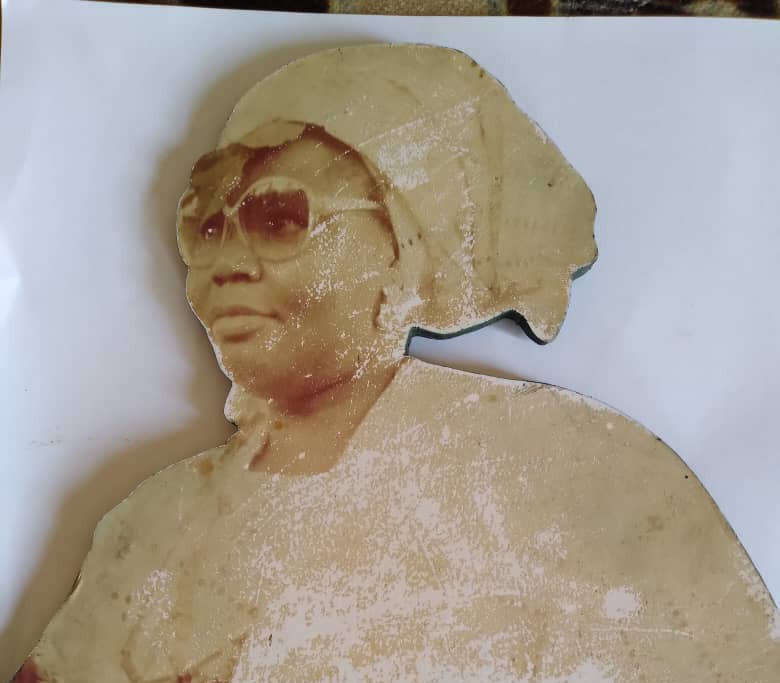
Elizabeth Wulemotu Boladale Aduke Kehinde, lived a life of full accomplishments, and was described upon her demise, in a funeral tribute, by her great uncle – Justice Bolarinwa Oyegoke Babalakin as- “a woman of business sagacity.” What a sweet and befitting epithet!
Wulemotu was born in April 1937 and had her Primary School Education at the Anglican Primary School, Elekiri Gbongan, and later completed her Primary school education, at the St. Paul’s Primary School, Gbongan. She was later admitted into the St. Patrick’s Modern Secondary School, Gbongan, where she completed her Secondary Modern school education in 1957.
She immediately went into the world of commerce and early marriage.
Wulemotu got married to Samuel Adebisi Akanji Kehinde- a young police officer from Ile-Ogbo, in Iwo District and then working at the Gbongan Police Station. Samuel had joined the police in 1953. He retired in 1988, after 35 years of meritorious service as a senior police officer, and died on the 27th of October, 2013 at the age 81 years.Wule, had her first child in 1959.
She moved to Ibadan, with her husband in 1960, upon his transfer from the Gbongan Police Station, to the Police station and Divisional Headquarters at Yemetu, Ibadan.
In Yemetu Barracks, she started the business of sewing bedsheets and pillow cases for Police officers, and traversed various police units on her bicycle for marketing. She briefly worked at the University Teaching Hospital Ibadan, from 1960 to 1961, as a Ward maid. In obedience to her husband- Samuel, she left the services of UCH and continued full blown, her trading business in 1961.
Writing Wule’s story is like writing my own story, because she had mentored me and her two other children for an uninterrupted period of slightly above 50 years until her passage on Saturday, the 19th of February, 2011. We saw it through and we witnessed her growth in matrimony, commerce, traditional and community leadership, humaneness and philanthropy.
She lived her life for the Gbongan community, whom she loved, so much and admirably as its Iyalode. Gbongan was founded by a man named Olufiade (short form Olufi). Olufiade was a direct descendant of Alaafin Abiodun Adegoriolu who reigned in Oyo, between 1750 and 1789.Olufi contested for the throne of the Alaafin of Oyo, after the demise of his father, but lost to another Prince. He had to leave Oyo as tradition demanded, and was followed by many Oyo Citizens that were sympathetic to his struggle for the throne of Alaafin.
Olufi and his entourage left Oyo via Igbori route, stayed there for some time and then moved to Soungbe, from where they finally got to Gbongan Ile. The Olufi carried along from Oyo, a beaded crown, which made his followers recognise him, not only as an Oyo Prince, but an Oba in his own right.
The unrest that wrecked the stability of Oyo, also affected many Oyo Towns, and this allowed marauders to penetrate several Oyo Towns, including Gbangan-Ile. Olufi and his followers had to migrate to a more forested location, which was more secure than the former location. The present Gbongan is situated in the forest belt of Osun State. This is why at the present location, we have such settlements like Oke-Egan, Oke-Apata, Ile-Opo, Aiyepe and Owo-Ope. Gbongan Town is watered by a network of streams like Oyunlola, Akinjole, Alaanu, Oleyo, Yemoja and Elu.
Her Eastern boundary with Ile-Ife is the big Sasa River. This present Gbongan was founded around 1825. The fact that Gbongan was headed by an Oba attracted many people to settle there and the thick forested location, provided security for the population from the invaders. By the middle of the 19th century, which started as a small settlement at Gbongan-Ile by 1790, had grown to become one of the largest towns in her area.
THE OBAS THAT HAVE REIGNED IN GBONGAN
History of Gbongan has it that Olufi and Koisetan reigned at Gbongan-Ile. Fagbola was the first Olufi that reigned in the present Gbongan between 1825 and 1835.
The reign was in this order:
Fagbola 1825-1835 (from Fagbola Ruling House)
Olujide 1835-1859 (from Olujide Ruling House)
Sooko 1860-1913 (from Sooko Ruling House)
Ajagbogbo 1913-1924 (from Ajagbogbo Ruling House)
Asabi 1926-1948 (from Asabi/Olugboira Ruling House)
Oyeniyi Makanjuola 1948-1971 (from Fagbola Ruling House)
Jacob Adeoye 1973-1988 (from Olujide Ruling House)
Solomon Oyewole Babayemi (Dr.) 1989-1997, (from Akinrinola Ruling House)
Adetoyese Oyeniyi (Dr.) 1998- (from Odugbemi Ruling House)
Wulemotu was born into the family of Kasumu Oyekanmi and Alimotu of Ile-Opo compound. Alimotu had some of her roots in Modakeke and Oke-Egan. Kasumu’s father- had six children-Oyekanmi, Oyedeji, Oyedun, Asiyanbi, Oyewade and Akinloye. Akinwenu’s wife, Osunleye, hailed from Agbandaku Compound, Ede.
Kasumu did not live too long. He was a victim, along side his brother—Oyedeji, of the dreaded small pox (Sanponna) epidemic of 1947. Kasunmu’s friend and confidant was Baale Asabi (1926-1928). Asabi instilled Wule’s father- Kasumu as Balogun.
Alimotu also died some few years, after the birth of Femi in 1959. Kasumu and Alimotu had two female children – Wulemotu and Balisatu.
As a result of the death of Kasumu in 1947,Wulemotu was in the early care and mentorship of Kasumu’s younger sister-Oyedun, who begat Professor Adebayo Williams and Lady Evangelist Taiwo Williams.
Larinade was also Alimotu’s younger sister, who also took motherly role and care of Wule and Bali, after the death of Alimotu in 1962. Larinade begat Oluboade and Moronkeji, both of blessed memory.
Chief Mrs. Elizabeth Wulemotu Aduke Kehinde–the late Iyalode of Gbongan Land, was a prominent participant in the Akintola/Awolowo Saga, of the first Rebuplic.
She led the women vanguards of UPGA in Gbongan, and was clamped into detention on spurious charges, that bordered on political vendettas. She was bailed out of custody by the UPGA lawyers. Before her passage. She was always willing to tell the story of this UPGA/DEMO saga. When Chief Awolowo in 1979,came to Gbongan on electioneering campaign, as UPN Presidential flag bearer, it was the luck of Wulemotu at the campaign rally, to present her idol- Chief Obafemi Awolowo, with a copy of the Holy Bible on behalf of the UPN members in the Gbongan constituency. To her, it was also a beautiful moment, when she met Chief Awolowo in 1980, in Israel and Mount Sinai, on Holy Pilgrimage.
Samuel Adebisi Kehinde, almost lost his job as a police officer, for having an activist of a woman as a wife, in the first Republic.
Bosede Asake, her second child, was born on the 20th of February, 1966, shortly after the overthrow of the First Republic on the 15th of January 1966. Adeyemi was born on the 3rd of October, 1973.
In 1968, the Nigeria Police was unified and the Local government Police or Regional Police was merged, with the Federal Police as a now unified Nigeria Police force.
Samuel was absorbed into the Federal Police force and was in December 1968 transferred from Ibadan to Igbara Oke. We had to relocate with him to Igbara Oke, where he assumed duty as a Station Police Officer in 1969.
All is children had to change schools.
Femi particularly, left the ICC Primary School, Yemetu Aladorin Ibadan, to continue his Primary School education, at the St. Paul’s Primary School, Igbara Oke. We were in Igbara Oke for about 6 months, before Samuel was transferred to Idanre, and we had to move school again, to St. Paul’s Primary School, Idanre.
We were in Idanre briefly, before the nomadic police officer of a father, was transferred to Akure and we all had to move school again.
Shortly thereafter, Samuel was transferred to the Eastern region, after the end of the Biafra war,where he sojourned for another 10 years.
As a result of these frequent transfers, Femi had to relocate finally to Gbongan with Wulemotu, to continue with his Primary School Education, which he finished at the St. Paul’s Primary school in 1972, from where he proceeded to Origbo Community High School, Ipetumodu in January, 1973 and later the University of Ife, where he read law, graduated in 1983 and qualified as a lawyer in 1984.
Wulemotu Aduke Kehinde, pioneered the distillery of Local Gin, by using brewed Tea, as a colourant, known in the 1960s in the Gbongan Community and its environs, as “Ogogoro Wule” and also later diversified into produce buying, money lending transportation, Sawmill, general merchandise, and petroleum business.
In the early 60s, Wule inherited her father’s Cocoa plantation in Mojapa, in the early 60s. In 1965, she bought her first taxi cab that was placed in the care of Aderemi- a brother in law from Akiriboto, Gbongan, to drive.
In 1970, she demolished her family compound at Ile-Opo, and erected a modern structure a- storey building with Boys Quarters, which was immediately leased to the Nigeria Police force, as a Police barracks. Coincidentally, Samuel’s property at Ile-Ogbo, was also at this period, leased to the Police, as Police Barracks.
She also lived in a part of the premises, until the 12th of December, 1980, when she moved to her newly completed mansion at Oke-Ola Gbongan, that was directly opposite her Saw Mill industry, which she had established in 1976.
She had ventured into Saw Mill business in 1970, when Chief Jimoh Ibrahim Inuolaji, her in law, established a Saw Mill industry at Oke-Ola Gbongan. Her Saw Mill industry- Boladale Saw Mill industry prospered her. The Saw Mill industry had two imported CDC machines as band Saws, circular machines, Saw, sharpening equipments, all imported from France, with a fleet of Timber (Agbegilodo) lorries under the brand name-“Afisuru”. Many of her staff at the Saw Mill, enjoyed Motor Cycle loan.
She had earlier engaged in transport business of road Haulage, passenger transportation, with taxis and Peugeot 404 pick up (farioro) with the trading Name- Afisuru transport services.
She ventured into beer distributorship and beer parlours at Ile-Opo and Oke Church, Gbongan, respectively in the 70s.
In the early 70s, she had built for the St. Paul’s cathedral, a church extension within the premises of the St. Paul’s Church Cathedral, Gbongan.
In 1977, she built her first Estate named- the Boladale Estate at the Ola Estate, Layout Ile Ife, that was leased to the University of Ife teaching Hospital, Ile-Ife, as accommodation for Medical doctors and Nurses.
She started the development of another Estate along Motel Royal, on Ede Road, Ile-Ife, but this development, remained uncompleted and incapacitated due to land tussles and litigation.
She started the construction of Boladale Petrol Station in 1976 and completed the station in 1978 and handed it over to the AGIP oil.
This station was reputed to be the first Petrol filling station on the Ife- Ibadan High way in 1978. This Station later became Boladale Petroleum Station.
This Station has now been consumed by the over head bridge on the Gbongan Osogbo junction.
Wule subsequently built 2 other Petrol Stations, at the Adenuga junction Gbongan and also at Oke-Ola near her residence, for ease of business. She had also started a similar station at Ile-Ogbo, that could not be completed due to land tussles.
In 1980, as part of her yearly vacation, she started yearly visits or holidays to the United Kingdom, Italy and annual Pilgrimage to Israel or Jerusalem.
In 1981, during her holiday to London, as part of memorable excitements, she witnessed the wedding of Prince Charles and lady Diana Spencer, that took place on Wednesday, the 29th of July 1981 at St. Paul’s Cathedral in London, United Kingdom. The groom is the heir apparent to the British throne and the bride was a member of the Spenser family.
According to her, she enjoyed the street shows that were done to commemorate the wedding ceremony. She enjoyed her yearly vacation, to the United Kingdom, religiously, until her last trip to the UK in 2010, some few months before her exit in February 2011.
She was an activist in the mould of a man. She was the matron of the IPMAN Independent Petroleum Marketers Association of Nigeria (IPMAN) Oyo and Osun states chapter, and was very instrumental, to the election of some members of it’s executives. Wule was the first woman Councillor to represent Gbongan. She served as the Supervisory Councillor for Health, in the old Irewole Local Government Council, Ikire. She was the pioneer Vice Chairman of the newly created Ayedaade Local Government of Oyo State in July, 1989, when it was carved out of Irewole Local Government, Ikire. She uniquely, started and encouraged the construction of the Gbongan-Orile Owu Road. She took the first set of Caterpillars to the Road.
As a political leader, she was one of those who fought relentlessly to make the Ayedade Local Government a reality. She was a hard working and dynamic leader, whose leadership roles and qualities could not be quantified. Wule was installed as the Otun Iyalode of Gbongan in 1980, and was elevated to the position of Iyalode of Gbongan land in the year 2004. Wulemotu Aduke Boladale, had three children which she deliberately spaced within the span of 7 years, perharps due to the enamour of commerce and active life, – Femi (1959), Bose (1966) and Yemi (1973).
She loved good cars and had quite a good number of them. A very hardworking and resourceful woman. She would ride inside her Timber lorry (Agbegilodo) to the thick forests, to fell timbers and negotiate with the owners of the Timber trees.
Her five grand children are Oyindamola, Olayinka, Fiyinfoluwa, Bola and Kikelomo, and her two daughters in law were- Olufunmilayo- wife of Femi and Olajumoke- wife of Yemi.
Elizabeth, as part of her commitment to the worship of God, had also before her demise, started the construction of a new Vicarage for the Christ Apostolic Church, Oke Apata Gbongan, and also the renovation of the Muslim Ansar Ud-deen Praying ground (Yidi), for the Muslim community, at the junction of Gbongan Ife Road, Oke Ola, Gbongan.
These were her uncompleted projects.
Wulemotu Elizabeth Ayeriyina Boladale Aduke, may your irrepressible soul continue to enjoy peaceful repose with the Lord.
Hon. (Barr.) Femi Khinde
(SON)









 Adding Value6 days ago