Connect with us

Business

Access Bank Board Approves Dividend Payment to Shareholders

Published

on

The Board of Directors of Access Bank Plc has approved the bank’s audited report and accounts and payment of cash dividends for the 2020 business year.

The board met at the weekend to consider the banking group’s audited consolidated and separate financial statement for the year ended December 31, 2020.

In a regulatory filing after the meeting, Access Bank stated that the board approved the financial statements and the payment of a final dividend for the immediate past business year. The Central Bank of Nigeria (CBN) will, however, still review the results and recommendations.

According to the bank, the audited results will be released to the investing public after the approval of the CBN.

Shareholders of Access Bank had received a total dividend of N23.1 billion as cash payouts for the 2019 business year. Shareholders received N14.22 billion as final dividend for the 2019 business year in addition to interim dividend of N8.89 billion earlier paid by the bank, bringing total dividend for the year to N23.11 billion.

With this, shareholders received a final dividend of 40 kobo per share in addition to interim dividend of 25 kobo per share, representing a total dividend per share of 65 kobo. The dividend per share of 65 kobo represented an increase of 30 per cent on total dividend of 50 kobo per share paid for the 2018 business year.

Most analysts expected Access Bank to sustain impressive dividend payout.

Access Bank recently secured the initial approval from the CBN to restructure its operating structure from a commercial banking group to a financial services holding company (holdco).

In a regulatory filing at the stock market, Access Bank stated that it has received CBN’s Approval-in-Principle to restructure to a holdco.

Group Managing Director, Access Bank Plc, Mr. Herbert Wigwe said the proposed holdco structure would enable the bank to further accelerate its objectives around business diversification, improved operational efficiencies, talent retention as well as robust governance.

He said the restructuring and strategic acquisitions across the continent will result in a more connected African banking network that builds on Access Bank’s existing foundation and enhances its value proposition to stakeholders, including customers and employees.

According to him, shareholders will benefit from the economies of scale of a larger banking network, including the associated cost efficiencies arising from the bank’s federated information technology system and replication of investments in innovative products across a wider range of markets.

He outlined that a broader and connected Africa network remains a core strategic focus for geographic earnings growth and diversification, which will further enhance profitability and risk metrics.

He added that with these transactions, Access Bank will be well placed to promote regional trade finance and other cross-border banking services, further leveraging its presence in key global trade corridors in the United Arab Emirates (UAE), United Kingdom (UK), China, Lebanon and India.

Continue Reading
Click to comment

Leave a Reply

Your email address will not be published. Required fields are marked *

Business

Fuel Importation Ban: Dangote Tackles NMDPRA over Continuous Issuance of Import Licences

Published

on

By

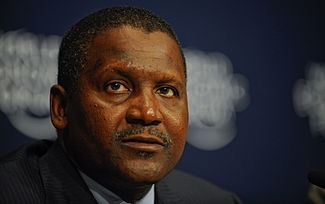
President of Dangote Industries Limited, Aliko Dangote, has raised concerns that Nigeria’s downstream regulator, the Nigerian Midstream and Downstream Petroleum Regulatory Authority (NMDPRA), is still issuing licences for petrol importation despite public assurances to the contrary, warning that the practice could undermine the operations of his refinery and threaten the country’s energy security.

Speaking in an exclusive interview with THISDAY, Dangote said the continued importation of refined petroleum products into Nigeria was hurting the Dangote Petroleum Refinery, which he insisted has the capacity to meet the country’s fuel demand.

“They are still issuing licences despite that we can meet the demand. They are still killing us with importation. They are importing and we are exporting. Yes, we can do 75 million litres, but they are still back-loading,” Dangote said.

According to the billionaire businessman, the refinery can produce up to 75 million litres of petrol daily, but some market participants are still bringing imported products into the country, a development he said could distort the domestic fuel market.

Dangote said the persistence of import licences contradicts earlier assurances by the Nigerian Midstream and Downstream Petroleum Regulatory Authority (NMDPRA) that fuel imports would be restricted once domestic refining capacity improved.

His comments came against the backdrop of a statement by the NMDPRA indicating that it had stopped issuing new licences for petrol importation because domestic refining was now meeting a significant portion of Nigeria’s demand.

The regulator said the decision aligns with provisions of the Petroleum Industry Act, which allows import licences to be issued only when local production cannot meet national consumption needs.

According to the agency, no new petrol import licences were issued in 2026 as supply from domestic refineries, particularly the Dangote refinery, was considered sufficient to support the local market.

However, NMDPRA data for January 2026 showed that about 24.8 million litres of imported petrol were still consumed daily in Nigeria, although the figure dropped significantly to about three million litres per day in February.

Dangote further alleged that many of the companies importing petrol into Nigeria do not operate retail outlets or filling stations, suggesting that some of the imported volumes may be diverted or smuggled after arriving in the country.

He warned that the trend could mirror challenges previously faced by Nigeria’s rice industry, where local producers struggled to compete with imported products.

Nigeria has historically relied on imported refined petroleum products due to the poor performance of its state-owned refineries. However, expectations have risen with the start of operations at the Dangote refinery, which has a processing capacity of 650,000 barrels per day and is regarded as the largest single-train refinery in the world.

The facility is seen as a major step in Nigeria’s efforts to end decades of dependence on imported fuel.

Meanwhile, Nigeria’s minister of foreign affairs, Yusuf Tuggar, has said the ongoing tensions in the Middle East highlight the need for stronger energy partnerships with countries like Nigeria.

He noted that disruptions in oil shipments through the Strait of Hormuz, a key global oil corridor, underscore the importance of diversifying supply sources.

Tuggar said Nigeria’s untapped oil and gas reserves present an opportunity for Gulf states to partner with the country in expanding production and stabilising global energy supply.

Nigeria currently produces about 1.7 million barrels of oil per day, up from around 1.4 million barrels when President Bola Tinubu assumed office in 2023, with the potential for further growth through increased investment in fields and pipelines.

He added that while Nigeria still imports significant volumes of refined petroleum products, expanding domestic refining capacity could help the country better withstand global energy shocks in the future.

Continue Reading

Business

UBA Unveils Diaspora Platform to Connect Global Africans with Investment Opportunities

Published

on

By

Africa’s Global Bank, United Bank for Africa (UBA) Plc, has unveiled a diaspora banking and investment platform designed to serve Africans living and working across the world and within the continent.

The platform, launched in collaboration with leading ecosystem partners including United Capital, Africa Prudential, UBA Pensions, Afriland Properties, Heirs Insurance Group, and Avon Healthcare Limited — represents a major step in redefining diaspora banking beyond remittances toward structured wealth creation and long-term investment.

At the unveiling, which took place at UBA’s global headquarters in Lagos under the theme: “Beyond Banking: Powering the Global African Lifestyle, all the company representatives were on hand to showcase a seamless platform that goes beyond remittances, wealth creation, protection, and long-term prosperity.

Speaking at the event, UBA’s Head of Diaspora Banking, Anant Rao, described the initiative as a strategic shift in how Africa engages its global citizens.

“For decades, Africa’s engagement with its diaspora has focused largely on remittances. Today, we are moving beyond that. This platform represents a transition from simple money transfers to a financial ecosystem where Africans globally can bank, make payments, invest, protect their families, and build long-term wealth seamlessly,” he said.

Rao noted that African diaspora remittance flows exceed $100 billion annually, making them one of the most resilient and consistent sources of capital into the continent.

“Diaspora capital is not just a flow of funds — it is a strategic growth partner for Africa.
Our role is to provide a trusted platform that converts capital into structured investment and shared prosperity across the continent.”

The objective is to provide a platform that brings together offerings across the numerous needs of the Global African, including Banking and payments, Investments, securities services, asset management, Insurance, Pensions, real estate and Pensions.

Through this coordinated ecosystem, diaspora customers can access financial solutions across multiple sectors through a single trusted platform, enabling them to manage their financial lives and family commitments across borders with ease and transparency.

UBA’s Group Head, Marketing and Corporate Communications, Alero Ladipo, emphasised the importance of collaboration in delivering a seamless diaspora experience.

“The modern African is a global citizen — mobile, ambitious, and deeply connected to home. Whether living in Africa, Europe, the Americas, or the Middle East, there must be a structured and secure financial connection back home. This platform ensures that Africans everywhere can remain economically connected to the continent with confidence and transparency.”

Partners within the ecosystem highlighted growing demand among diaspora Africans for structured investment opportunities, secure property ownership, insurance protection, and long-term financial planning.

United Capital showcased globally accessible investment products designed to deliver professionally managed and transparent wealth creation opportunities.

Afriland Properties emphasised structured and well-governed real estate investment pathways for diaspora clients.

Heirs Insurance highlighted protection solutions for life, and assets, while Avon Healthcare Limited demonstrated healthcare access and insurance solutions for families across borders.

Africa Prudential and UBA Pension reinforced digital investment management and long-term pension savings solutions designed to support diaspora participation in African capital markets.

Together, the partners underscored a shared commitment to providing diaspora Africans with credible, transparent, and professionally managed financial pathways.

Rao also reiterated the guiding philosophy of Africapitalism, championed by UBA’s Founder and Chairman, Mr. Tony O. Elumelu, CFR.

He explained that Africapitalism is the belief that Africa’s private sector must play a leading role in the continent’s development by making long-term investments that generate both economic returns and social impact.

As Africa continues to position itself as one of the world’s most dynamic growth frontiers, UBA believes mobilising diaspora capital through trusted financial institutions will be central to shaping the continent’s next phase of development.

“Africa will increasingly be financed by Africans themselves, including Africans abroad.

“Our responsibility is to build the trusted financial infrastructure that makes this possible.

“When Africa’s global citizens invest back into Africa, growth becomes inevitable,” he concluded.

Continue Reading

Business

Dangote Refinery’s Crude Distillation Unit and Motor Spirit Block Hit 650,000bpd Capacity

Published

on

By

Dangote Refinery’s Crude Distillation Unit and Motor Spirit (MS) Block Hit 650,000 bpd Capacity
…First Refinery In The World to Attain This Feat

The Dangote Petroleum Refinery has achieved a major operational milestone with the full restoration and optimisation of its Crude Distillation Unit (CDU) and Motor Spirit (MS) production block. Both units are now running at optimal performance, further strengthening the steady state operations of Africa’s largest oil refining facility.

Following a scheduled maintenance exercise on the CDU and MS Block, the refinery has commenced an intensive 72 hour series of performance test runs in collaboration with licensor UOP. These tests are designed to validate operational efficiency and confirm that all critical parameters meet global standards.

Chief Executive Officer, David Bird, noted that the seamless integration and strong performance of the units demonstrate the refinery’s advanced engineering and robust operational capabilities.

“Our teams have demonstrated exceptional precision and expertise in stabilising both the CDU and MS Block, and we are pleased to see them functioning at optimal efficiency. This performance testing phase enables us to validate the entire plant under real operating conditions. We are confident that the refinery remains firmly on track to deliver consistent, world class output.

This milestone underscores the strength, reliability, and engineering quality that define our operations. We remain committed to producing high quality refined products that will transform Nigeria’s energy landscape, eliminate import dependence, and position the nation as a net exporter of petroleum products.”

Bird added that the CDU and MS Block, which comprise the naphtha hydrotreater, isomerisation unit, and reformer unit, are now operating steadily at the full nameplate capacity of 650,000 barrels per day. He further confirmed that all remaining processing units will begin their respective performance test runs in Phase 2, scheduled to commence next week.

During the recent festive period, the refinery supplied between 45–50 million litres of Premium Motor Spirit (PMS) daily. With the CDU and MS Block now fully restored, the refinery is positioned to comfortably deliver up to 75 million litres of PMS to the domestic market as required.
Expressing appreciation to customers and Nigerians across the country, Bird reaffirmed the refinery’s unwavering commitment to enhancing Nigeria’s energy security while supporting industrial development, job creation, and economic diversification.

Continue Reading

Trending