
Headline
Adeduntan, Ahmadu, Hosa Okunbo: Gigantic Strides to Forbes Best of Africa



By Eric Elezuo
The web space was a beehive of activities Friday when the trio of Nigeria’s successful business leaders and prolific entrepreneurs, were honoured with one of world’s most glamourous awards; the Forbes Best of Africa awards.
The foremost business leaders are the Managing Director/CEO, FirstBank of Nigeria Limited, Dr. Adesola Adeduntan; Founder/Executive Chairman, Online Integrated Solutions Limited, Mahmood Ahmadu and Chairman, Ocean Marine Solutions Limited, Captain Hosa Wells Okunbo.
With all these super human achievements trailing him, only a few persons would believe that the indefatigable Adeduntan is just 51 years old. This is as a result of the achievements that have trailed his young life. Under his watch, FirstBank was named the biggest mover of 2019 according to KPMG Report within the same period. It is not incorrect to say that Adeduntan is a creative achiever.
Born Adesola Kazeem Adeduntan on May 7, 1969, in Ibadan, Oyo State, the banker started his early education at Ibadan Municipal Government Primary School (IMG), Adeoyo between1975 and 1981, for his primary education before proceeding to Urban Day Grammar School, Old Ife Road, Ibadan, where he had his secondary schooling. His excellent to duties created a space for him to become the Deputy Senior Prefect in his final year in 1986.
In the same year, he was admitted to the University of Ibadan in to study Veterinary Medicine, and qualified in 1992 as a Veterinary Surgeon, a profession he hardly practiced before switching over to financial management.
Consequently, in 1994 he joined Afribank (Nig) Plc., and was posted to the Ibadan Main Branch as a graduate trainee. He spent 18 months there learning the ropes, and working in various areas of banking operations including cash management, clearing, credit risk management, and foreign operations.
Between September 1995 and May 2002, Adeduntan worked with Arthur Andersen Nigeria, rising to become manager in the firm’s financial services industry business, leveraging on the 18 months mentorship he received at Afribank. In this role, he led and managed the statutory audit of a number of leading Nigerian banks.
In August 2000, he served as an instructor at the Andersen World-Wide Induction training for new hires in Eindhoven, the Netherlands. He also served as the lead instructor for the Local Office Basic Accounting Training and Induction course in 1999. It was while he was with Arthur Andersen that qualified as a chartered accountant in 2000.
With more feathers to his cap, Adeduntan moved to the financial services industry in KPMG as a senior manager in June 2002, and served diligently till October 2004 when he bowed out. At KPMG, he co-pioneered the firms’ financial risk management advisory services. He was also a KPMG-accredited Trainer and facilitated several internal training programmes.

When he left KPMG in 2004 to study, he pursued a Master’s degree in Business Administration at the Cranfield School of Management, where he was a British Chevening Scholar. He graduated in September 2005.
Armed with yet another great feather, Adeduntan moved to Citibank Nigeria Limited in 2005 where he became the Senior Vice-President (General Manager) and Chief Financial Officer. He was saddled with the responsibility of overseeing the bank’s financial and product control functions, quality assurance and operational risk management. he was on hand to assist the bank in its recapitalisation during the banking consolidation era.
In October 2007, he called it quits with Citibank, and a month later, pitched tent with the Africa Finance Corporation, as the pioneer Chief Financial Officer and Business Manager.
His achievement at the AFC includes leading the team that secured an A3/P2 investment grade international credit rating from Moody’s Investors Service in March 2014. This made the Africa Finance Corporation the second highest-rated lending financial institution in Africa.
In July 2014, he was appointed an Executive Director/Group Chief Financial Officer of FirstBank, where he was responsible for the bank’s financial control, internal control and enhancement, business performance management, treasury and procurement functions.
On Monday January 4, 2016, Adeduntan succeeded Bisi Onasanya, and assumed duty as Managing Director of FirstBank of Nigeria Limited, and its commercial banking subsidiaries including FBN UK, FBN Ghana, FBN DRC, FBN Guinea, FBN Gambia, FBN Mortgages, FBN Senegal, FBN Sierra Leone and First Pension Custodian Limited.
He coordinated his functions so professionally that on December 7, 2016, he was awarded the 2016 Banker of The Year award by the Leadership Newspaper “For refusing to ‘go with the flow’ even when the temptation was high and the reward substantial, and for reminding his colleagues that banking is nothing without integrity”.
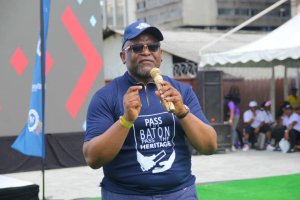
A man of many beneficial and influential parts, Adeduntan currently sits on the board of the Nigerian Economic Summit Group, and as a non-executive director on the boards of the Nigeria Interbank Settlement System (NIBSS), Africa Finance Corporation (AFC), FBN Bank U.K. Ltd., Universal Payments Plc., and FMDQ OTC Securities Exchange. He is also a Fellow of the Institute of Chartered Accountants of Nigeria.
In less than five years at the helm of affairs at FirstBank, Adeduntan has turned the tables and rewrote banking narratives, delving into all aspects of human endeavour to see to the development of SMEs, youth entrepreneurship among many others.
In his speech at the kick off of FirstBank’s celebration of 125 years of unbroken business operations, Adeduntan hinted as follows:
“From that very modest beginning in 1894, First Bank has traversed an incredible journey of delivering impeccable financial services to its customers and supporting the building of the modern-day Nigeria and indeed, West Africa, including our early pivotal role as the monetary and fiscal policy regulator for the entire West African region,” he said.
Adeduntan has seen to the sponsorship of prolific enterprises to guide the youths on the right path. These include the African Fashion Week which took place at the Oriental Hotel and Youth Empowerment Seminar at the Harbour Point Event Centre. These shows among a whole lot have a lot of testimonials following.
Adesola is married to Mrs. Adenike Adeduntan and together they have three wonderful children.
He has change the financial game, make positive impact in the economic advancement of Nigeria, and very many other countries, especially where FirstBank domiciles, and of course succeeded in bagging the prestigious Forbes Best of Africa Awards
Mahmood Ahmadu: The Man Forbes Best of Africa Cap Fits
No one was surprised when this great son of Africa was nominated as the winner of Forbes Best of Africa award. The reason is not farfetched: Mahmood Ahmadu has conquered the vast territory of entrepreneurship, leaving in his trail tales of good tidings of great joy.
An accomplished entrepreneur, Mahmood Ahmadu, who is the Founder and Executive Chairman of OIS, also known as Online Integrated Solutions Ltd, was born on September 9, 1966. He is a product of a very humble beginning. It is not by accident that his crowning coincides with his 54th birthday.
He attended ATBU and Nasarawa State University, where he obtained his qualifications. Records have it that Mahmood Ahmadu obtained further educational qualifications in the form of management, IT and communication industry courses. He has since utilized these skills to start and operate small businesses involved in the exchange of various profitable products and services.
At quite an early age during the early 1980s, Mahmood received a family inheritance with which he established his first company called A2A Communications Limited. The company, it is said, shot him into limelight as one of the pioneers in the field of GSM business, especially in Northern Nigeria with branches in almost all the state capitals. He has since shown class in the field of buy and sale, service delivery among others, establishing various facets of companies to accommodate the teeming and growing Nigerian workforce. His business activities and operations span 53 countries and five continents.
Mahmood has further leveraged on his growing goodwill over the years and dexterity in creating opportunities to expand his venture both locally and internationally. He has also raised awareness on the importance of education and has also enhanced the quality of education through scholarship programmes.

He has always aimed to be the best in whatever he does, and thus has stayed on top in managing a strong international network between IT and Telecom companies thereby boosting his capability, capacity and credibility. This has given him an edge in relating seamlessly with both the international and local business world, giving his companies a multinational presence in over 56 international locations across 10 different time zones.

Idahosa Wells Okunbo: Indefatigable Choice for Forbes Best Africa
The mark of greatness lies in the ability to point at a direction, and say this is the number of lives I have touched, impacted and given a new lease of hope. However, it is only a handful of the men of means who qualify to be dressed in this garb, and the person of Captain Idahosa Wells Okunbor, popularly known as Hosa, is the first out of a few to be so classified. It was therefore, not a surprise when he was nominated and honoured with the Forbes Best of Africa award.
Hosa’s philanthropy speaks loud and volumes, and has become a reference point in admonition and encouragement.
Born on January 7, 1958 in Benin City, Hosa, a business magnate, investor, philanthropist and trained commercial pilot of repute, is a proud product of the Reverend Robert Amos Okunbo family, who himself is a clergyman, teacher and community leader.
Okunbo started his path to a glorious career when he enrolled at the Government Primary School in Benin City, old Bendel State, now Edo State for his elementary education. He proceeded to Federal Government College, Warri, in 1971, where he sat for the West African Senior School Certificate Examination, and came out in flying colours.
As a scholar, who was not confused as regards the path he wishes to follow, he made his choice early in life to become a pilot. Consequently, he pursued his desire by studying at the Nigerian Civil Aviation Training Centre, Zaria, Kaduna State, and became a professional commercial pilot at the age of 21. He also attended ACME School of Aeronautics, Fort Worth Texas in 1983, where he obtained an Airline Transport Pilot License.
At the age of 25 in 1983, Okunbo was made a captain. He practiced his trade as a flight captain with Intercontinental Airlines for about two years, before moving over to Okada Airlines where he served with honours for another three years.
In 1988 and at the age of 30, he retired from piloting having recorded over a whopping 7,000 hours of flight time, and ventured into private business, a calling that further launched him into the cycle of philanthropy.

With his hands in many pies, Okunbo established Hoslyn Ventures Nigeria Ltd., a company that was saddled with procurement in the Nigerian petroleum sector. Hoslyn Ventures was an indigenous oilfield service company that was responsible for the Early Production Facility (EPF) project at Nigerian National Petroleum Corporation (NNPC) between 1998 and 2001.
More so, he had served in many capacities including chairmanship or directorial position on numerous company boards in Nigeria in various business sectors such as the agro-allied, petroleum, telecommunications, power, real estate and banking industries.
A man of diverse intelligence, who has investments in many businesses, Okunbo founded the following companies, which he also sits atop as chairman:
- Wells San-Carlos Agro Farms Ltd., which, in March 2016, unveiled a $750 million, 9,000-hectare (22,000-acre) farm intended to “create 85,000 jobs in Edo State”.
- Ocean Marine Security Ltd., an offshore asset-protection company, rendering services to major oil companies in Nigeria, including NNPC. Wikipedia reported that the company recently completed the building of the 46-kilometre (29 mi) Escravos–Warri Crude Pipeline, which was inaugurated by Nigeria’s former Minister of State for Petroleum, Emmanuel Ibe Kachikwu.
- PPP Fluid Mechanics Ltd., a marine and logistics company
- Westminster Security Solutions Nigeria Ltd, a franchise of Westminster Group Plc UK, of which he is major shareholder.
- Wells Group of companies, which include Wells Dredging Ltd., Wells Property Development Company Ltd., and
- Wells Entertainments Ltd. – through which Okunbo financed the movie Black November.
- OMS Tankers Ltd., which owns Nigeria’s first marine tankers.
- Hoslyn Habitat Ltd., which is a design, construction and landscaping company.
- Gyro Air Ltd., operators of charter flight operations.
Okunbo is a director in the following companies:
- Joint Marine Environ Guard Ltd. (JMEG)
- Secure Anchorage Area Ltd. (SAA)
- Digisteel Integrated Services Ltd.
- Phil Nugent Nigeria Ltd.
- Integrated Energy Distribution and Marketing Ltd. (IEDM), which is a core investor in Ibadan and Yola Electricity Distribution Companies.
Okunbo is member of the Board of Directors of NatCom Development and Investment Ltd., which is the holding company Nigerian telecommunications giant NTEL.

Capt. Hosa Okunbo
In 2012, Okunbo received the Africa Titans Award from the Congress of the United States in collaboration with the African Society Summit, in recognition of “strides on behalf of Africa in the international arena.” He was honoured for being one of those “who seek to project a new and hopeful light on Africa.”
In November of the same year, the University of Benin conferred on him with an honorary Doctor of Science degree.
He was granted the “Worthy Ambassador of Unity Award” as an old student of Federal Government College, Warri in March 2016.
On October 2, 2014, the Oba of Benin, Oba Erediauwa, gifted Okunbo “with the ‘Traditional Beads’ for being a worthy son of the ancient Kingdom.”
Hosa’s act of philanthropy is congenital as he is known to have expressed his benevolence to as many that has come his way. Testimonies have it that no one who comes in contact with him goes back without a smile on his face. He is known to be nice to a fault, and has seen quite a good number of his constituents through academics or profitable empowerment.
He is a very good man.
Okunbo is married and is blessed with numerous healthy and prolific children







Amid Denials, ADC Reportedly Secures Rainbow Event Centre As Venue for National Convention

America 2028: Kamala Harris Considers Throwing Hat in the Ring

Shettima Lacks Respect, I Won’t Engage Him, Atiku Responds to VP’s Challenge

2027: ADC Leaders Plan Massive Coalition Against APC, Tinubu

IGP Disu Orders Ban on Illegal Checkpoints Nationwide

NAF Defends Borno-Yobe Border Market Airstrike

Trump Orders US Naval Blockade of Strait of Hormuz

Benin Republic 2026: Romuald Wadagni, The President in Waiting

Koumagnon Family Pledges Unalloyed Support for Romuald Wadagni As President

Dear CDS, NSA, Your Prodigal Sons, Brothers Have Killed General Braimah

FG Expels US Missionary Alex Barber

Nation Building Reimagined: Integrated Principles and Strategies for Sustainable Growth

Again, Iran Blocks Strait of Hormuz, Alleges Ceasefire Violation
Trump Delays Iran’s Strike by 2-Weeks As Pakistani Leaders Intervene
-
 Featured4 days ago
Benin Republic 2026: Romuald Wadagni, The President in Waiting
-
 Opinion2 days ago
Dear CDS, NSA, Your Prodigal Sons, Brothers Have Killed General Braimah
-
 Boss Picks4 days ago
Koumagnon Family Pledges Unalloyed Support for Romuald Wadagni As President
-
 National5 days ago
FG Expels US Missionary Alex Barber
-
 Opinion2 days ago
Nation Building Reimagined: Integrated Principles and Strategies for Sustainable Growth
-
 Middle East4 days ago
Again, Iran Blocks Strait of Hormuz, Alleges Ceasefire Violation
-
 World6 days ago
Trump Delays Iran’s Strike by 2-Weeks As Pakistani Leaders Intervene
-

 News5 days ago
Prominent ADC Leaders Storm INEC Hqrs in Protest Against Dictatorship