
Sports
Curtain Draws On 2019 African Games as Nigeria Finishes Second

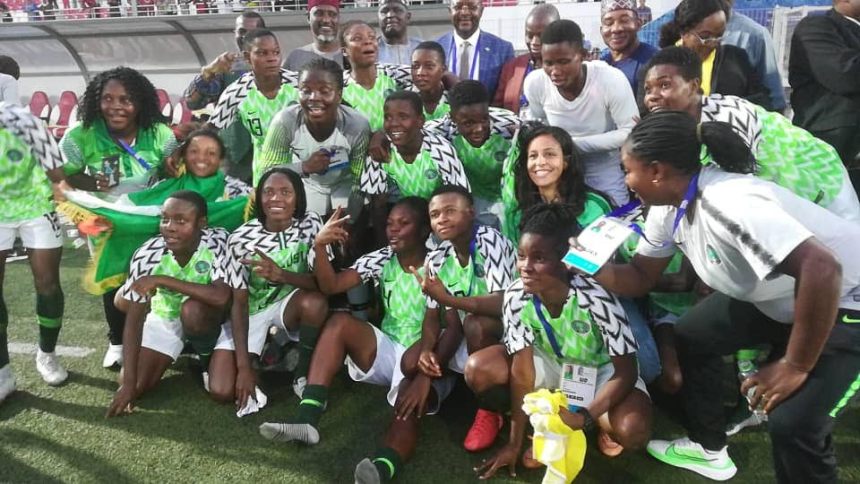

After 15 days of intensive competition, the curtain will fall on the 12th African Games tonight in Rabat.
Team Nigeria was conveniently occupying the second spot on the medals table at the close of events on Friday night.
Only two events are yet to be completed.
The position will certainly not change, but there would be additional medals for events not concluded.
Team Nigeria ended Day 15 of the ongoing African Games on a high as its medal haul increased to 126 (46 gold, 33 silver and 47 bronze medals) at the end of proceedings.
Egypt occupied first spot with 102 old medals while South Africa was third with 36 gold medals.
Sade Olatoye was Nigeria’s only individual gold medalist on the last day in athletics as she emerged victorious in the women’s Shot Put. Her first-round attempt of 16.61m was good enough for the gold. It was Olatoye’s second medal of the Games, having won bronze in the Hammer Throw.
In men’s Javelin, Nnamdi Chinecherem won bronze, throwing a distance of 73.24m.
On the track, Divine Oduduru failed to meet the expectations once more as the sprinter once again finished 2nd with a 20.54s clocking in the men’s 200m final.
Nigeria’s other representative, Ogho-Oghene Egwero, was 6th in 21.00s. Zambia’s Sidney Siame won the race with 20.34s.
Nigeria’s only athlete listed to run in the women’s 200m final, Rosemary Chukwuma, did not take part in her race.
In the women’s 400m Hurdles, Abasiono Akpan rallied her way back into contention as she was able to claim bronze for her efforts. She clocked 57.66s.
Nnamdi Chinecherem won bronze in men’s Javelin, throwing a distance of 73.24m. It is his first senior medal, having won gold at the African junior championship in April.
Nigeria women’s 4x400m made up of the quartet of Patience Okon-Geroge, Blessing Oladoye, Kemi Francis and Favour Ofili combined to run a time of 3:30.32s which fetched them gold.

For the men, they settled for bronze in 3:03.42s.
After her earlier heroics, Ayomide Bello showed how good she is in the C1 200m Women Final of Canoeing. She returned a time of 50.51s to win the event. She also teamed up with her compatriot Foloki to win the doubles in the event.
Nigeria on the last day of action in weightlifting got more medals. Obeyi Joseph was the first to clinch the medal as she settled for bronze in the women’s +87kg (245kg), Snatch (105kg) and Clean-Jerk (130kg) classification. In the same vein, Olawale Barde won bronze in the men’s 102kg (343kg), Snatch (158kg) and Clean-Jerk (185kg).
Also, Tijani Abdul secured bronze in the men’s +109kg (323kg), Snatch (180kg) and Clean-Jerk (143kg).
Wrestling
Finally, Nigeria scooped two gold and two silver medals in weightlifting. Daniel Amaas proved too strong for The Gambia’s Mbal Cumba as he edged him 3-1 to win gold in the men’s Freestyle 65kg Finals. Also, Emmanuel John pipped Sami Mustapha 3-1 to claim gold in the men’s Freestyle 74kg final.
Soso Tamurau lost to Egypt’s Hosam Meghany 3-1 to win the men’s Freestyle 97kg final, while Ebikewemimo Wilson was overpowered by Algeria’s Abdelhak Khebache in the men’s Freestyle 57kg final.
On a rather dissaponting note, Nigeria’s wait for a first gold medal since 1973 in the men’s football event continues as the Flying Eagles, who represented the country, lost to Burkina Faso 2-0 in the final.
Nigeria also finished second at the last edition of African Games in Congo Brazzaville albeit with 47 gold medals.
Premium Times




Amid Denials, ADC Reportedly Secures Rainbow Event Centre As Venue for National Convention

America 2028: Kamala Harris Considers Throwing Hat in the Ring

Shettima Lacks Respect, I Won’t Engage Him, Atiku Responds to VP’s Challenge

2027: ADC Leaders Plan Massive Coalition Against APC, Tinubu

IGP Disu Orders Ban on Illegal Checkpoints Nationwide

NAF Defends Borno-Yobe Border Market Airstrike

Trump Orders US Naval Blockade of Strait of Hormuz

Benin Republic 2026: Romuald Wadagni, The President in Waiting

Koumagnon Family Pledges Unalloyed Support for Romuald Wadagni As President

Dear CDS, NSA, Your Prodigal Sons, Brothers Have Killed General Braimah

FG Expels US Missionary Alex Barber

Nation Building Reimagined: Integrated Principles and Strategies for Sustainable Growth

Again, Iran Blocks Strait of Hormuz, Alleges Ceasefire Violation
Trump Delays Iran’s Strike by 2-Weeks As Pakistani Leaders Intervene
-
 Featured4 days ago
Benin Republic 2026: Romuald Wadagni, The President in Waiting
-
 Boss Picks4 days ago
Koumagnon Family Pledges Unalloyed Support for Romuald Wadagni As President
-
 Opinion2 days ago
Dear CDS, NSA, Your Prodigal Sons, Brothers Have Killed General Braimah
-
 National5 days ago
FG Expels US Missionary Alex Barber
-
 Opinion2 days ago
Nation Building Reimagined: Integrated Principles and Strategies for Sustainable Growth
-
 Middle East4 days ago
Again, Iran Blocks Strait of Hormuz, Alleges Ceasefire Violation
-
 World5 days ago
Trump Delays Iran’s Strike by 2-Weeks As Pakistani Leaders Intervene
-

 News5 days ago
Prominent ADC Leaders Storm INEC Hqrs in Protest Against Dictatorship