Nigeria’s largest telecom operators are temporarily suspending airtime and data loan services, a once-sticky feature for prepaid users, as new consumer lending rules force them into full regulatory compliance.
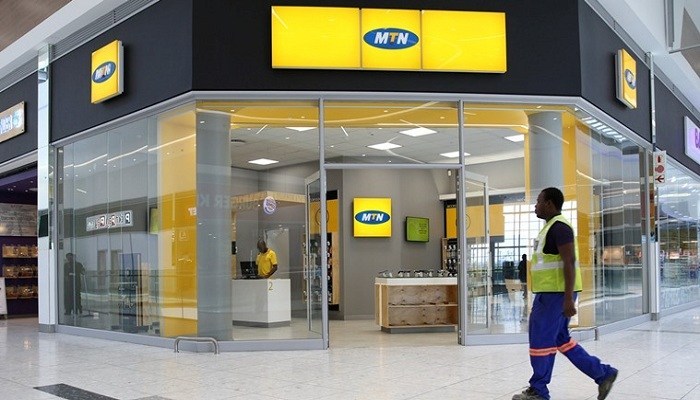
On Thursday, MTN Nigeria, the country’s largest telco, temporarily suspended its airtime and data lending product, Xtratime, and Airtel Nigeria, the second-largest provider, followed suit on Friday, citing the need to align with “evolving requirements.” Both companies say customers can still purchase airtime and bundles through standard channels.
“MTN Nigeria Communications PLC (MTN Nigeria or the Company) hereby notifies the Nigerian Exchange Limited and the investing public that the Company has temporarily suspended its airtime and data credit advance service (“Xtratime”),” the telco said in its filing. “This relates to the implementation of processes under the Digital, Electronic, Online or Non-Traditional Consumer Lending Regulations, 2025, which introduced a new compliance and licencing framework for entities providing digital or non-traditional consumer credit services.”
Nigerian telecom providers are reviewing their digital lending services to consumers following new rules by the Federal Competition and Consumer Protection Commission (FCCPC), passed in July 2025. Those guidelines apply to any entity involved in the provision, facilitation, or administration of digital or non-traditional consumer lending, bringing airtime and data advances into scope and requiring operators to obtain licences and meet the compliance requirements before continuing the services.
“Airtel Nigeria remains committed to the highest standards of compliance, transparency, and consumer protection, while continuing to innovate responsibly within Nigeria’s digital ecosystem,” said Ismail Adeshina, the company’s director of marketing, in the statement released Friday.
However, in a statement issued on Friday, the FCCPC pushed back against claims that it ordered the suspension of airtime lending services, stating that it “has not prohibited airtime borrowing or data advance services, and no directive was issued preventing consumers from accessing lawful telecom value-added services.”
The regulator framed the disruptions as a consequence of operators’ failure to comply with existing rules within the stipulated timelines.
The FCCPC’s Digital, Electronic, Online, or Non-Traditional Consumer Lending (DEONCL) Regulations and Guidelines apply to entities involved in digital consumer lending, including services tied to repayable monetary value. Products, such as MTN’s Xtratime, fall within the scope of the framework.
The FCCPC said the rules were introduced following “a deluge of consumer complaints” involving opaque charges, unexplained deductions, aggressive recovery practices, and poor disclosure standards across digital lending services.
According to the consumer protection watchdog, affected digital lending operators, including telcos, were initially given a 90-day compliance window in 2025, later extended to January 5, 2026, yet relevant operators failed to meet the necessary compliance steps.
“In the telecom sector, our findings indicated that some operators engaged in exclusionary third-party technical arrangements in clear disobedience to the provisions of the Federal Competition and Consumer Protection Act, 2018. The Regulations sought to unlock the market to allow local participants alongside foreign partners, in line with free market principles. These measures benefit Nigerians by reducing abusive practices, improving transparency, strengthening consumer choice, and encouraging responsible innovation by legitimate operators,” the regulator said on Friday.
Any temporary suspension, restriction, or operational change introduced by service providers, including telcos, should therefore be understood as a business or compliance decision by those operators, not a ban imposed by the FCCPC, the statement read.
Securing approval under the framework requires service providers to apply to the FCCPC, submit corporate and ownership documents, and disclose their lending models, including interest rates, charges, and default fees. Applicants must also declare all digital lending applications and interfaces used to issue credit, and provide evidence that these systems meet data protection and security standards under Nigerian law.
The rules further require formal consumer lending or service-level agreements (SLAs) for any partnerships with banks or fintechs. The FCCPC charges approval and renewal fees under the regulations, including an additional ₦500,000 ($372) for each lending application beyond the initial five permitted under a single approval.
While it is usually not reported separately, airtime lending contributes a sizable amount to telcos’ revenue.
In 2025, MTN Nigeria’s fintech revenue reached ₦191.3 billion ($142.5 million), growing by 80% from the previous year. About ₦10.9 billion ($8.1 million) accounted for its core fintech revenue, while the rest significantly came from airtime lending and other value-added services.
In Airtel’s case, the telco reports airtime credit service under its mobile services revenue segment, and according to how it defined this product in its 2025 financial year, it treats airtime credit as a value‑added service (VAS) classified as a mobile services product rather than a mobile money product.
In the nine months to December 2025, Airtel Nigeria’s mobile services revenue grew by 50% to $1.12 billion from $738 million year‑on‑year in constant‑currency terms. Data brought in $576 million; voice contributed $432 million, and “other” revenue—the bucket where airtime and data credit earnings sit—reported $113 million, up by about 44% from the previous year.
By comparison, Airtel Nigeria’s mobile money product, SmartCash, earned only $6 million over the same period, underscoring how small its fintech line still is relative to core mobile services income.
Airtime and data lending are high-margin businesses for telcos, since they keep the interest on advances, while incurring little to no procurement costs. Airtime credit is also critical for Nigeria’s credit-starved market, where increased telecom tariffs have pushed up the cost of staying online.
Other telecom operators operating in Nigeria, including Globacom and T2, are yet to announce similar moves. Both MTN Nigeria and Airtel Nigeria said the suspension is temporary and that the services will resume once they meet the requirements.
Source: Tech Cabal









 Islam3 days ago