Opinion
Opinion: Ripe Time to Trust Atiku with Nigeria’s Top Job
Published
7 years agoon
By
Eric
By Alaba Yusuf
There comes a prime time in the life of a nation when it’s citizens, democratically, determine the next course of action for the corporate existence of their country’s sovereignty – through a referendum or outright general election. Britain’s rattling BREXIT battle is one of such. And the Presidential Election in Nigeria this weekend, aligns both Commonwealth Comity nations. Neither is a do or die affair. Nonetheless, monumental milestones that could make or mar people’s collective destiny.
Thus, when British political philosopher and legal luminary, Lord Acton, postulated “for forms of government, let the fools contest; whatever is best administered is best governed”, the great Victorian historian and essayist must have had his heart tortured by the rat race often associated with the political class of his time, particularly politicians’ desperate craving to lord it over one another in a cyclical style of hegemonic ascendancy. The Nigerian political firmament presents a rainbow of optical illusion, one that creates confusion with 73 aspiring presidential candidates from a legion of 91 “political parties.” A real rat race of pretenders and contenders.
That notwithstanding, monopoly of opinion is never known to be an attribute of civil rule. In fact, democracy would have failed in its own definition, as government of the people, for the people and by the people, if competition is taken off the affairs of men and women. Contest, therefore, opens the space for choice and options. Hence, the embedded principles of elections and fundamental human rights, the sweet taste of victory and the sour feel of loss, all make democracy a game of continuous search for the best hands as helmsmen the world over. Good governance and exemplary leadership therefore remain the ultimate goal in any political contest. And Nigeria is never an exception in this lure for power and service to fatherland.
For once, let’s halt attention on the inanities and litany of errors of the ruling All Progressives Congress (APC). Let’s shift focus from unfulfilled political promises, breaches of the rule of law, scandals of certificate forgery and one-sided anti-corruption campaign, issues of police and security agents’ harassment, toga of global headquarter of extreme poverty, general insecurity and international repudiation of President Muhammadu Buhari’s administration. These are aches that defy the potency of panadol or paracetamol. I forbid Tramadol. Say nay to hard drugs.
For good effect, let’s zoom our mind’s binoculars on the Presidential elections slated for Saturday February 16. It is Nigeria’s ultimate date with fate. Without iota of doubt, this poll shall present a veritable case study of a political panic-drama; one poised to pitch mere pretenders against real contenders, patriots against power-grabbing zealots. In other words, concerned citizens in combat with confrontational cabals.
A perfect scenario for confusion is all well laid out by INEC’s registration of over 70 contestants, all vying for the key to Aso Rock Villa. Real rat race in human race. Sadly, ego and the zeal to seal political deals with the eventual winner, has left both the gladiators and spectators alike in the uncertain terrain of suspense and lucre permutations. Many have dropped by the way side, even though the umpire (INEC) says they can’t jump ship now, for they are legally bound to complete the race even on crutches.
Meanwhile, whatever becomes the end result of this epochal political chess game of February 16, would definitely ricochet like a rubber ball on the entire nation and international canvass of opinion. The socio-economic and political lives of Nigerians and friends of Nigeria would practically be affected or impacted by this crucial general election. Hence, Nigeria is practically the cynosure of world’s eyes. How we tackle the choice of who will run the affairs of 200 million people, the largest headcount of black beings in the Globe, remains a spectacle in mankind’s mind.
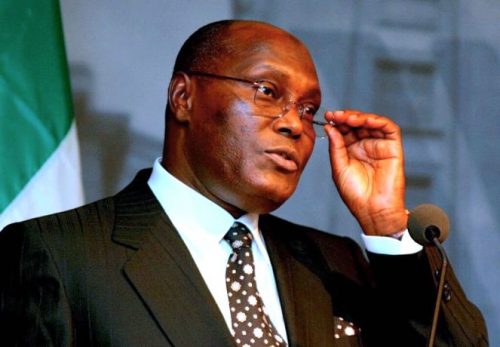
No wonder that democratic leaders and institutions the world over are keeping a tab on the pulse of event in the domain of the Giant of Africa! The United Nations, African Union, European Union, ECOWAS, world media and other well meaning Organisations have already detailed independent observers and monitors to ensure that the 2019 elections, which the Opposition PDP’s candidate, Atiku Abubakar, is favored to win, turns out free, fair, credible and transparent. This is a task that must be done. For only equity can guarantee tranquility in a heterogeneous society.
The reality of world’s interest has jolted not a few in the incumbent APC Federal Government’s camp. Some have lost their tempers so much they have resulted to hate speech and unprovoked innuendos. The arrowhead of this is Governor of Kaduna State, El-Rufai, who yelled hell to foreign election observers whom he referred to as those who want to interfere and shall “return to their countries in body bags.” What?
Even President Buhari was quoted as teasing the beleaguered people of Zamfara State, to whom he prayed God brings abundant rainfall and bumper harvest, so the that these fellow countrymen and women “will have the energy to fight again.” Another oddity.
His Campaign spokesman, Festus Keyamo, a lawyer, also publicly accused the United States of tacitly backing the Opposition leader, Atiku Abubakar, whom the Buhari government once tagged a “corrupt man on American wanted list.” Let him step into into the US, if he won’t be arrested, they had taunted. All hot air.
Atiku has since been to America and back, walking free as air and daily getting endeared to Nigerian voters in their millions. The tumultuous crowd that welcomed the PDP Flagbearer in North West States of Sokoto, Jigawa, Kaduna, Katsina, Zamfara and Kano, have since demystified Buhari’s mythical bloc vote from his homestead. The threat was so much that former US President Bill Clinton’s intention to visit Nigeria this week, to cultivate truce between the top rival parties at the poll, had to be cancelled. Because the Senior American doesn’t want to be seen as a meddlesome interloper in the affairs of another sovereign country.
Despite the odds, the Second Signing of the National Peace Accord took place in Abuja, Wednesday 13 February, with all stakeholders pledging peace and appealing for fairness and justice throughout the duration of the elections. Respect and treat Mother Nigeria with tender love, were the watchwords. And statesman Atiku, quoting former President Good Jonathan, assured the nation: “my ambition is not worth a drop of blood of any Nigerian.”
But barely 72 hours to a crucial poll, unity and equity seem to be on the run in the country. While insecurity to lives and property pervade, gross job loss and mass unemployment exist in a plagued economy, coupled with the ugly label of being the epicenter of global extreme poverty and squalor. The question now is: “Which way Nigeria?’ To be or not to be? The world is askance.
Therefore, is time not ripe for the candidate who wants to make Nigeria work and great again? Atiku surely has the Midas’ Touch to turn adversity into prosperity, poverty into plenty, apathy into sympathy, hostility into friendliness and people’s sorrow into collective joy.
Hence Nigerians, in their leadership quest, should endeavor to seek out a statesman of class and panache, one who sincerely loves the country and has proclivity and affinity with the people, a patriot with empathy and compassion, a knowledgeable welfarist, a bridge builder and unifier, a charismatic and humble element, a great listener and team player, a business-minded executive with belief in both job and wealth creation, a defender of democracy and constitutionalism, a proven law abiding citizen and, in a nutshell, a congruent leader who fuses capacity, competence and character together to enhance and advance people’s-centered vision, to create and propagate equitable national developmental innovations. Such a leader is the answer to Nigeria of today. And it is not an Eldorado!
And who can fix this messy scene? No other but quintessential humanist and political bridge builder, a detribalised Nigerian, non fanatical man of faith, a wealth creator and educationist, Atiku Abubakar, former Vice President of Nigeria (1999-2007). His recent nationwide campaign of love and hope, is a clear testimony to the fact that Atiku is the People’s Choice. He is a unique unifier and a world class astute leader of repute.
For a nation that is still recovering from a scary democratic summersault in Osun State gubernatorial election, which former Vice President Atiku Abubakar rightly described as a “travesty of justice and imposition of tyranny by the ruling APC”, efforts should be made to avoid further pitfalls. The systemic burning of places housing INEC sensitive electoral materials are enough bad omen.
Hence our nation urgently needs the services of a defender of democracy and believer in constitutionalism; a due process persona and a dogged fighter who won 14 landmark constitutional cases which today are helping to advance, nourish and polish democracy in Nigeria. One such epochal legal feat was the Supreme Court judgement that prevented a President or Governor from having the power to fire his Vice or Deputy, because of the political umbilical cord of a shared common and indivisible joint ticket on which they ran for office! Atiku exemplify constitutionalism and the rule of law unlike ex military Head of State, retired General Muhammadu Buhari, who claims to be a “converted democrat.”
At this juncture in our national history, it takes the wisdom and rare wit of a gentle giant to stake the odds. We need one who has been tested and trusted; one who can embrace the tedious trips to law courts and pay huge legal bills to secure judgement in Nigeria. The experience of such a great leader of men and women is what Nigerians require to tame current APC monstrous misnomers. No doubt, Atiku has the sagacity and capacity to unweave the web of political entanglement that an incumbent administration can throw at any challenger gunning to become president this year.
So without prejudice to the 72 other contestants in the Presidential Poll slated for February 16, Atiku is remains head and shoulder above them all. Atiku is the man for the top job; one to truly keep Nigeria united, restructured and secured. Atiku, the consummate philanthropist and large hearted welfarist is capable of wielding and cementing the fault lines of this country. He surely knows how to create and bring back jobs through viable and profitable private public partnership and direct foreign investments. He has even vowed to bring about equity, tranquility and development across the nation.
That aside, brand Atiku is a household name that needs little or no publicity. He is well known to all strata of society – be it the young or old, poor or rich, men or women, business class or the working class. Atiku is at home everywhere he goes. He is detribalised, generous and charitable, compassionate and caring, law abiding and a seasoned politician, education investor and wealth creator, innovator of note and above all, a visionary leader with a mission to return sanity back to our common humanity.
Finally, eligible voters are enjoined to think right and help save Nigeria from falling off the political cliff of implosion, self immolation and precipitous perdition. With Atiku, the best among the rest, Nigeria will work again.
Surely, it is prime time to serve Atiku’s ripe fruits to Nigerians from the altar of Aso Aso Rock Villa. Let’s all vote for an achiever and mentor to others. Let’s be Atikutated and get Nigeria working again.
Alaba Yusuf, an international analyst and journalist, wrote from Abuja
Related
You may like
Opinion
The Synergy Imperative: Integrating Transformative Leadership and Strategic Management for Africa’s Ascent
Published
4 days agoon
December 20, 2025By
Eric
By Tolulope A. Adegoke, PhD
“The bridge from Africa’s potential to its preeminence is built with the twin pillars of visionary leadership, which dares to imagine the impossible, and disciplined management, which masters the possible” – Tolulope A. Adegoke, PhD
Africa’s journey from a continent brimming with untapped potential to a unified global powerhouse is arguably the defining narrative of our century. This transformation, however, hinges on a critical catalyst: a new paradigm of leadership. To dismantle the persistent architecture of poverty and transcend the historical cycle of mediocrity, African nations require more than administrators; they need visionary architects and master builders. This necessitates a powerful fusion of transformative leadership—which sets the daring direction—and strategic, execution-focused management—which paves the road to get there. The synergy between these two forces is non-negotiable for unlocking the innovative capacity needed to deliver tangible possibilities for Africa’s people, its dynamic corporations, and its sovereign nations.
I. The Essence of Transformative Leadership: Architecting a New Continental Consciousness
True transformative leadership moves beyond maintaining the status quo. It is an audacious practice of reimagining futures, challenging deeply embedded narratives, and mobilizing collective will toward a shared, audacious horizon.
1. Crafting a Unifying and Aspirational Narrative: The transformative leader’s first task is to be a master storyteller for the future. This involves articulating a vision that moves past diagnoses of poverty to paint a vivid, compelling picture of continental success—a Africa renowned for its innovation, quality, and strategic influence. This narrative must replace a mindset of scarcity with one of boundless opportunity, fostering a new identity where “Made in Africa” signifies excellence, reliability, and cutting-edge solutions. It is about making the idea of a continental giant not a distant dream, but an inevitable destination in the public imagination.
2. Demonstrating Unshakeable Ethical Fortitude: The battle against mediocrity is fundamentally a battle for integrity. Transformative leaders must embody and enforce an ironclad commitment to governance that is transparent, accountable, and institutionally robust. This requires the political courage to depersonalize state institutions, empowering independent judiciary, audit authorities, and anti-corruption commissions not just on paper but in practice. By becoming the chief guardian of institutional integrity, a leader builds the essential currency of trust—without which long-term investment and social cohesion are impossible.
3. Championing Radical Inclusivity: No single entity holds a monopoly on innovative ideas. Transformative leaders actively dismantle top-down governance silos to create participatory ecosystems. They facilitate sustained dialogues that bring together the pragmatic insights of the private sector, the grassroots realities understood by civil society, the foresight of academia, and the voices of marginalized communities. This inclusive approach does more than improve policy; it fosters a profound sense of collective ownership over the continent’s destiny, building a resilient coalition for sustained change.
II. The Discipline of Strategic Management: Building the Engine of Execution
A vision without a rigorous mechanism for implementation remains a mere hallucination. Transformative leadership must be operationalized through management systems characterized by precision, adaptability, and results.
1. Engineering a Performance-Obsessed Public Sector: The public administration must be fundamentally redesigned into a lean, data-driven delivery machine. This demands:
o Integrated Outcome Frameworks: Adopting systems like the Balanced Scorecard to cascade the national vision into clear departmental objectives, measurable Key Performance Indicators (KPIs), and individual accountability metrics for civil servants.
o Evidence-Based Policy Orchestration: Investing in robust data analytics units and real-time monitoring dashboards. Resource allocation and program adjustments must be driven by hard evidence of what works, moving policymaking from political intuition to strategic science.
o Relentless Process Innovation: Launching comprehensive digital governance initiatives to automate and streamline bureaucratic processes—from business licensing to customs clearance. This eliminates friction, reduces opportunities for graft, and dramatically improves the user experience for citizens and investors alike.
2. Cultivating Dynamic Innovation Ecosystems: Management’s role is to create the fertile ground where creativity and enterprise can flourish. This is a deliberate, managerial function:
o Establishing Agile Policy Laboratories: Creating regulatory sandboxes in key sectors like fintech, renewable energy, and logistics allows startups to test breakthrough ideas in a controlled environment with temporary regulatory relief, fostering innovation without compromising systemic stability.
o Orchestrating Strategic Alliances: Building structured platforms for public-private-research collaboration. Government can de-risk pioneering R&D in areas like vaccine manufacturing or artificial intelligence for agriculture, with clear pathways for commercialization led by the private sector and fueled by academic research.
o Safeguarding Intellectual Creation: Modernizing and rigorously enforcing intellectual property regimes managed by efficient, trustworthy institutions. This protects African innovators, attracts R&D investment, and ensures that breakthroughs conceived on the continent yield prosperity for its people.
3. Mastering Capital: Human and Financial:
o Strategic Human Capital Development: Aligning national education and vocational training curricula with the future skills demanded by the continental transformation agenda requires active management through a permanent skills council, ensuring a seamless pipeline of talent for the industries of tomorrow.
o Pioneering Financial Architecture: Beyond domestic revenue mobilization, management excellence is key to structuring and accessing innovative finance. This includes developing bankable project pipelines for green bonds, diaspora investment instruments, and blended finance models to fund the massive infrastructure required for integration, all while maintaining impeccable sovereign debt management.
III. The Tangible Dividend: Delivering Expanded Possibilities for All
The ultimate metric for this leadership-management model is the tangible impact on the ground.
· For Africa’s Citizens: The outcome is expanded human agency and dignity. This manifests as access to meaningful, future-oriented employment; quality, affordable healthcare and education delivered efficiently; and social protections that empower rather than create dependency. Citizens experience a state that is a capable partner in their aspirations.
· For Africa’s Enterprises: The outcome is a predictable, enabling, and competitive operating environment. Corporations and entrepreneurs benefit from reliable infrastructure, seamless administrative processes, access to capital, and a fair, transparent market. This enables them to scale, innovate, and compete confidently on regional and global stages.
· For Africa’s Nations and Continental Body: The outcome is sovereign capability and collective strategic influence. Individually, nations evolve into resilient, adaptive economies. Collectively, a strategically managed and integrated Africa transforms into a formidable negotiating bloc, capable of shaping global rules on trade, climate, and digital governance, and moving from being a subject of global dynamics to a definitive shaper of the world order.
Conclusion: The Imperative of Synergy
The path from poverty to preeminence is paved by the dual forces of transformative leadership and strategic management. Leaders must provide the spark of vision, the moral compass, and the political will to embark on an audacious journey. The management apparatus must provide the meticulous map, the engine, and the metrics to navigate it successfully. When these elements align in harmony—when the architect’s dream is matched by the engineer’s precision—Africa will ignite a self-sustaining cycle of innovation, inclusive growth, and shared prosperity. This is the pathway that turns the latent potential within its people, the ambition of its corporations, and the sovereignty of its nations into a manifested reality. It is how the continent will cease to be perpetually “rising” and will firmly stand, a realized giant, shaping the century ahead.
Dr. Tolulope Adeseye Adegoke is a distinguished scholar-practitioner specializing in the intersection of African security, governance, strategic leadership and effective management. His expertise is built on a robust academic foundation—with a PhD, MA, and BA in History and International Studies focused on West African conflicts, terrorism, and regional diplomacy—complemented by high-level professional credentials as a Distinguished Fellow Certified Management Consultant and a Fellow Certified Human Resource Management Professional.
Related
Opinion
A Marriage That Changed History: Celebrating Mobolaji and Dele Momodu at 33
Published
4 days agoon
December 20, 2025By
Eric
By Dr. Sani Sa’idu Baba
Some marriages are sustained by time, a few are tested by trials, but only the rarest are forged by destiny and proven by history. The union of Chief Dele Momodu and Chief Mobolaji Aderamaja Momodu belongs firmly in this extraordinary class, a marriage where love speaks with courage, partnership walks with purpose, and devotion quietly reshapes lives and legacies.
As Chief Dele and his remarkable wife Mobolaji Momodu mark 33 years of marital union, I am compelled to pause, not just to celebrate longevity, but to honour a love story that has survived trials, triumphed over tyranny, and blossomed into a partnership that continues to inspire generations.
I have always known them as love birds. It is almost impossible to engage Chief Dele Momodu in any meaningful conversation without the affectionate and respectful mention of his wife. He speaks of her not as an appendage to his success, but as its backbone, his confidant, his compass, and proudly, his “prayer warrior.” That alone speaks volumes in a world where gratitude within marriage is often whispered, if acknowledged at all.
Chief Mobolaji is kindness personified. Whenever I am privileged to be their guest whether at their warm Ikoyi home in Lagos or at public functions, her concern is constant and sincere. She will not sit comfortably until she is certain that everyone around her, especially her guests, is fine. That gentle strength, that instinctive compassion, defines her essence.
Yet, beyond her kindness lies courage. History will forever remember one defining moment on 25th July 1995 during the dark, oppressive days of General Sani Abacha’s dictatorship, a very heart-touching story. Strange, faceless men had come looking for Dele Momodu at their home. At the time, he was away in Ogun State. Without hesitation, His wife Mobolaji immediately sensed the danger coming when she suspected that those men could have been Abacha’s attack dogs. Highly cerebral young woman she was, she acted smartly by sneaking to trace the road the knew her husband was likely following to come back home. Luckily enough, she stopped him and raised the alarm. That single, decisive action changed the course of history.
Dele Momodu had already tasted detention for his pro-democracy stance where he was detained in Alagbon close. Now, he was being hunted again, this time in connection with the underground Radio Freedom, later renamed Radio Kudirat, in honour of the murdered activist Kudirat Abiola. Acting swiftly on his wife’s intuition and bravery, he disguised himself as a farmer and fled through the Seme border into Cotonou, Benin Republic. That escape marked the beginning of a three years exile in London, but also the preservation of a voice Nigeria could not afford to lose. That moment was not just the act of a wife, it was the intervention of destiny, executed through love.
In making that daring escape, Dele Momodu paid an enormous personal price. He left behind his only child in the care of his devoted wife and also his elderly mother in Ile-Ife, stepping into the uncertainty of exile with nothing but faith, conviction, and hope. That three years journey away from home would later prove transformative, culminating in the birth of Ovation International Magazine in London in April 1996, a global brand that would redefine African storytelling and project Nigerian excellence to the world. How Ovation emanated from Momodu’s rare bravery and risk taking is a another interesting story for another day.
Chief Dele Momodu has often shared that his earliest ambition was simple: to become a teacher, marry a teacher, and live happily thereafter . Fate, however, had grander plans. Their story began during their university days at the University of Ife (now Obafemi Awolowo University), where Dele earned a degree in Yoruba in 1982 and later a Master’s degree in English Literature in 1988. From humble beginnings in Ile-Ife, they embarked on a journey that would take them across mountains and valleys.
On their 30th wedding anniversary, Chief Dele Momodu described his wife as a “combination of brains and beauty”, a woman with whom he has “climbed mountains and descended valleys together.” Few statements capture the depth of partnership more profoundly.
Their marriage in December 1992, graciously bankrolled by the late Chief Moshood Kashimawo Olawale Abiola, Dele Momodu’s adopted father was not merely a union of two souls, but the convergence of purpose, principle, and providence.
After 33 years today, their union stands as a testament to what marriage should be: friendship strengthened by faith, love fortified by sacrifice, and partnership tested, and proven by history.
Beyond the public milestones and historic moments lies a quieter but equally profound achievement, the family they built together. Blessed with four sons whom I refer to as “the Momodu’s 4 effects”, Chief Dele Momodu and Chief Mobolaji Momodu have raised a generation that reflects the values of discipline, faith, and excellence that define their home.
As they celebrate this remarkable milestone, Nigeria celebrates with them. Their story reminds us that behind every courageous man is often a discerning, fearless woman, and behind every lasting marriage is mutual respect, unwavering loyalty, and shared vision.
Happy 33rd Wedding Anniversary to Chief Dele Momodu and Chief Mobolaji Aderamaja Momodu, a couple whose love did not merely survive time, but shaped it.
May the years ahead be gentler, brighter, and filled with the same grace that has defined the journey so far, in good health, wealth, happiness, fulfillment and massive blessings.
Dr Baba writes from Kano, and can be reached via drssbaba@yahoo.com
Related
Opinion
Rebuilding the Pillars: A Comprehensive Blueprint for Overcoming Nigeria’s Leadership Deficit
Published
1 week agoon
December 13, 2025By
Eric
By Tolulope A. Adegoke, PhD
Systemic governance reform as the critical foundation for unlocking sustainable development and restoring national promise. “Nations are not built on resources, but on systems. Nigeria’s future rests not on changing leaders, but on transforming the very structures that create them” – Tolulope A. Adegoke, PhD
Introduction: The Leadership Imperative
Nigeria, often described as the “Giant of Africa,” stands at a pivotal moment in its historical trajectory. Possessing unparalleled human capital, vast natural resources, and a dynamic, youthful population, the nation’s potential remains paradoxically constrained by deeply embedded structural deficiencies within its leadership architecture. These systemic flaws—evident across political, corporate, and civic institutions—have created profound cracks that undermine public trust, stifle economic innovation, and impede the delivery of fundamental social goods. This leadership deficit is not merely a political inconvenience; it is the central bottleneck to national progress.
Addressing this challenge requires moving beyond cyclical criticism of individuals and towards a deliberate, strategic reconstruction of the systems that produce, empower, and hold leaders accountable. This blog post presents a holistic, actionable blueprint designed to seal these cracks permanently. It offers a pathway to cultivate a leadership ecosystem that is transparent, accountable, performance-driven, and ethically grounded, thereby delivering tangible possibilities for Nigeria’s people, empowering its corporate sector, and restoring its stature on the global stage.
Section 1: Diagnosing the Structural Cracks—A Multilayered Analysis
A precise diagnosis is essential for effective treatment. Nigeria’s leadership challenges are multifaceted and mutually reinforcing, stemming from three core structural failures.
1. The Governance Architecture Failure
The current system suffers from a fundamental contradiction: a hyper-centralized federal model that stifles local innovation and accountability. Critical institutions, including the Independent National Electoral Commission (INEC), the judiciary, and the civil service, frequently operate with compromised autonomy, inadequate technical capacity, and vulnerability to political interference. Furthermore, the intended checks and balances among the executive, legislative, and judicial branches have weakened, creating avenues for impunity and concentrated power that deviate from democratic principles.
2. The Leadership Pipeline Collapse
The mechanisms for recruiting and developing leaders are fundamentally broken. Political party structures too often prioritize patronage, loyalty, and financial muscle over competence, vision, and ethical fortitude. There exists no systematic, nationwide program for identifying, nurturing, and mentoring successive generations of public servants. This results in a recurring leadership vacuum and a deficiency of cognitive diversity at decision-making tables, limiting the range of solutions for national challenges.
3. The Integrity Infrastructure Erosion
Perhaps the most damaging crack is the erosion of public trust, fueled by opacity and impunity. Decision-making processes and public resource allocations are frequently shrouded in secrecy, while accountability mechanisms are rendered ineffective. The consistent weakness in enforcing ethical codes across sectors has allowed a culture of corruption to persist, which acts as a regressive tax on development, scuttles investor confidence, and demoralizes the citizenry.
Section 2: A Tripartite Framework for Sustainable Transformation
Lasting reform necessitates concurrent, mutually reinforcing interventions across three interconnected pillars.
Pillar I: Constitutional and Institutional Reformation
Implementing True Cooperative Federalism: It is imperative to undertake a constitutional review that clearly delineates responsibilities and revenue-generating authorities among federal, state, and local governments. This empowers subnational entities to become laboratories of development, tailored to local contexts, while fostering healthy competition in providing public services. Fiscal autonomy must be matched with enhanced capacity-building initiatives at the state and local government levels.
Fortifying Independent Institutions: Key democratic institutions require constitutional protection from executive and legislative overreach. This includes guaranteeing transparent, first-line funding from the Consolidated Revenue Fund and establishing rigorous, meritocratic panels for appointing their leadership. Strengthening bodies like the Code of Conduct Bureau and the Public Complaints Commission is equally vital.
Professionalizing the Political Space: Electoral reform must introduce systems like ranked-choice voting to encourage more issue-based, inclusive campaigning. Legislation should mandate demonstrable internal democracy within political parties, including transparent primaries and audited financial disclosures, to reduce the capture of parties by narrow interests.
Pillar II: Cultivating a Leadership Development Ecosystem
Establishing a Premier National School of Governance (NSG): Modeled on institutions like the Lee Kuan Yew School of Public Policy, a Nigerian NSG would serve as the apex institution for executive leadership training. Attendance for all senior civil servants, political appointees, and legislators should be mandatory, with curricula focused on strategic public administration, ethical leadership, complex project management, and national policy analysis.
Catalyzing a Corporate Governance Revolution: The Securities and Exchange Commission (SEC) and the Corporate Affairs Commission (CAC) must enforce stricter codes requiring diverse, independent, and technically competent boards. The private sector should be incentivized—through tax credits or preferential procurement status—to establish leadership fellowship programs that place high-potential private-sector executives into public sector roles for fixed terms, fostering cross-pollination of skills and perspectives.
Instituting a Presidential Leadership Fellowship (PLF): This highly selective, merit-based program would identify Nigeria’s most promising young talents (aged 25-35) from all fields—technology, agriculture, law, the arts—and place them in intensive two-year rotations across critical government agencies, private sector giants, and civil society organizations. This creates a nurtured cohort of future leaders with a national network and a deep understanding of systemic interconnections.
Pillar III: Architecting Robust Accountability & Performance Systems
Deploying a Digital Transparency Platform: A mandatory, open-access National Integrated Governance Portal (NIGP) should display in real-time the status, budget, and contractor details of every major public project. Strategic use of blockchain technology can create immutable records for procurement contracts and resource distribution, significantly reducing opportunities for diversion.
Empowering Oversight and Consequence: Anti-corruption agencies require not only independence but also enhanced forensic capacity and international collaboration. Performance tracking must extend to the judiciary and legislature; publishing annual scorecards on case clearance rates, legislative productivity, and constituency impact can drive public accountability.
Embedding a Culture of Results: All government ministries, departments, and agencies (MDAs) must operate under a National Key Results Framework (NKRF). This performance contract system would define clear, measurable quarterly deliverables tied to national development plans. Autonomy and discretionary funding should be increased for MDAs that consistently meet targets, while underperformance triggers mandatory restructuring and leadership review.
Section 3: The Indispensable Cultural Reorientation
Technocratic fixes will fail without a parallel cultural shift that venerates service and integrity.
Embedding Ethics from Foundation: A redesigned national curriculum, from primary through tertiary education, must integrate civic ethics, critical thinking, and Nigeria’s constitutional history to build an informed citizenry that values good governance.
Launching a “Service Nation” Campaign: A sustained, multi-platform national campaign, developed in partnership with respected cultural, religious, and traditional institutions, should celebrate role models of ethical leadership and reframe public service as the nation’s highest calling.
Enacting Ironclad Whistleblower Protections: Comprehensive legislation must be passed to protect whistleblowers from all forms of retaliation, including provisions for anonymous reporting, physical protection, and financial rewards, aligning with global best practices to encourage exposure of malfeasance.
Section 4: A Practical, Phased Implementation Roadmap (2025-2035)
Phase 1: The Foundation Phase (Years 1-3)
Convene a National Constitutional Dialogue involving all tiers of government, civil society, and professional bodies.
· Establish the Nigerian School of Governance (NSG) and inaugurate the first cohort of the Presidential Leadership Fellowship (PLF).
· Pilot the National Integrated Governance Portal (NIGP) in the Ministries of Health, Education, and Works.
Phase 2: The Integration & Scaling Phase (Years 4-7)
· Enact and begin implementation of the new constitutional framework on fiscal federalism.
· Graduate the first NSG cohorts and embed training as a prerequisite for promotions.
· Roll out the NKRF performance contracts across all federal MDAs and willing pilot states.
Phase 3: The Consolidation & Maturation Phase (Years 8-12)
· Conduct a comprehensive national review, assessing improvements in governance indices, citizen trust metrics, and economic competitiveness.
· Establish Nigeria as a regional hub for leadership training, offering NSG programmes to other African nations.
· Institutionalize a self-sustaining cycle where performance culture and ethical leadership are the unquestioned norms.
Conclusion: Forging a New Path of Leadership
The task of sealing the cracks in Nigeria’s leadership foundation is undeniably monumental, yet it is the most critical work of this generation. It demands a departure from transactional politics and short-term thinking toward a covenant of nation-building. The integrated blueprint outlined here—combining institutional redesign, leadership cultivation, technological accountability, and cultural renewal—provides a viable pathway.
This is not a call for perfection, but for systematic progress. By committing to this journey, Nigeria can transform its governance from its greatest liability into its most powerful asset. The outcome will be a nation where trust is restored, innovation flourishes, and every citizen has a fair opportunity to thrive. The resources, the intellect, and the spirit exist within Nigeria; it is now a matter of courageously building the structures to set them free.
Dr. Tolulope Adeseye Adegoke is a distinguished scholar-practitioner specializing in the intersection of African security, governance, and strategic leadership. His expertise is built on a robust academic foundation—with a PhD, MA, and BA in History and International Studies focused on West African conflicts, terrorism, and regional diplomacy—complemented by high-level professional credentials as a Distinguished Fellow Certified Management Consultant and a Fellow Certified Human Resource Management Professional.
A recognized thought leader, he is a Distinguished Ambassador for World Peace (AMBP-UN) and has been honoured with the African Leadership Par Excellence Award (2024) and the Nigerian Role Models Award (2024), alongside inclusion in the prestigious national compendium “Nigeria @65: Leaders of Distinction.”
Dr. Adegoke’s unique value lies in synthesizing deep historical analysis with practical management frameworks to diagnose systemic institutional failures and design actionable reforms. His work is dedicated to advancing ethical governance, strategic human capital development, and sustainable nation-building in Africa and the globe. He can be reached via: tolulopeadegoke01@gmail.com & globalstageimpacts@gmail.com
Related


How Wike Promised to ‘Hold PDP’ to Pave Way for Tinubu’s Reelection – Makinde
Tinubu Strips Finance Minister Edun of Critical Powers
Six Rivers PDP House of Reps Members Defect to APC
Glo Wishes Christians Joyous Christmas, Urges More Compassion, Unity
Trump Recalls US Ambassador to Nigeria, Others
Jake Paul Lands in Hospital with Broken Jaw after Anthony Joshua Trashing
Superiority War: I’ve Exclusive Authority to Confer Titles Across Yorubaland, Says Alaafin
NNPCL Slashes Fuel Price by N80
Ribadu’s Office Denies Arming Miyetti Allah in Kwara
Friday Sermon: Religion: Reflecting the Violence and Desperation of Our Time
Free at Last: Burkina Faso Releases 11 Nigerian Soldiers, Aircraft
Mike Adenuga, Emmanuel Macron Hold High-Powered Meeting in Paris
The Synergy Imperative: Integrating Transformative Leadership and Strategic Management for Africa’s Ascent
Consistent, Focused, Impactful: The Story of Bella Disu
Trending
-
Business4 days agoNNPCL Slashes Fuel Price by N80
-
Featured4 days agoRibadu’s Office Denies Arming Miyetti Allah in Kwara
-
Islam5 days agoFriday Sermon: Religion: Reflecting the Violence and Desperation of Our Time
-
Headline6 days agoFree at Last: Burkina Faso Releases 11 Nigerian Soldiers, Aircraft
-
Opinion4 days agoThe Synergy Imperative: Integrating Transformative Leadership and Strategic Management for Africa’s Ascent
-
Headline6 days agoMike Adenuga, Emmanuel Macron Hold High-Powered Meeting in Paris
-
Boss Of The Week3 days agoConsistent, Focused, Impactful: The Story of Bella Disu
-
Featured5 days agoRespite As Court Stops Police, IGP from Enforcing Tinted Glass Permit Nationwide