Connect with us

Headline

Fayose Received $5m from Dasuki’s Imprest, Obanikoro Tells Court

Published

on

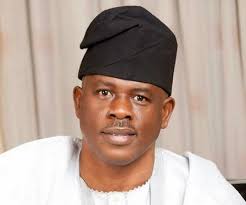
A former Minister of State for Defence, Senator Musiliu Obanikoro, on Monday told a Federal High Court that money was given to former Governor Ayo Fayose of Ekiti State from the imprest account of a former National Security Adviser in June 2014.

Obanikoro gave evidence in the trial of Fayose before Justice Mojisola Olaterogun in Lagos, where Fayose is facing charges of N6.9bn fraud.

He was arraigned by the Economic and Financial Crimes Commission on October 22, 2018, alongside a company, Spotless Investment Ltd. He faces 11 counts.

He pleaded not guilty to the charges, and was granted bail in the sum of N50m, with one surety in like sum.

The substantive trial began on November 19, 2018, with the EFCC calling four witnesses.

On Monday, Mr. Rotimi Jacobs (SAN) appeared for the EFCC, while Messrs Kanu Agabi (SAN) and Olalekan Ojo (SAN) represented the first and second accused respectively.

Jacobs then called on Obanikoro, the fifth prosecution witness, to give evidence. The counsel led the former minister in evidence.

Jacobs asked him where he was in 2014 and he told the court that he was the Minister of State for Defence. The counsel then asked him to tell the court what he knew about the case.

The witness testified that in June 2014, when Ekiti State governorship election was near,  he received a call from the accused (Fayose), enquiring from him (Obanikoro) if there was any “message” for him from the then National Security Adviser, Col. Sambo Dasuki.

The witness said that he told Fayose that there was none but promised to check with the NSA and give Fayose feedback.

He told the court that eventually, the NSA confirmed to him that he had a “message” for the accused and that the funds would be made available.

The prosecutor then showed the witness exhibit E to confirm if it was the account to which the funds were transferred, and the witness replied: “Yes.”

The witness told the court that on June 13, 2014,  and also on June 16, 2014, funds were posted into the account, adding that the funds were from the imprest account of the NSA.

He said that he asked the accused how he wanted the money, and he told him that some amounts should be paid in Naira and others in dollars.

According to him, the money was eventually brought in a bullion van to the private wing of the Ikeja Airport, where one Agbele, sent by the accused, was on standby. He testified that after confirmation from the accused, the money was taken to Ekiti State.

The witness told the court that afterwards, he went to Ado-Ekiti to meet the accused in his hotel, known as Spotless, and gave him the dollar component which was $5m.

The prosecution counsel asked Obanikoro how many days it was to the Ekiti governorship election when he gave Fayose the money. “About three days to the election,” the witness replied.

The prosecution also asked the former minister the source of the money. “The NSA is the only person that can ascertain the source of the money; it was from the imprest account of the NSA,” he said.

The counsel asked how the money was debited and the witness told the court that he gave instructions to the managing director of Diamond Bank, but was not available when the deductions were made.

When asked his connection with the accounts, Obanikoro said that it was used for security purposes, adding that he would not want to divulge further information on that.

After the evidence, the defence sought an adjournment to enable it to cross-examine the witness. After several objections and counter objections, the judge granted an adjournment until February 4 for cross-examination of Obanikoro.

The EFCC  said that, on June 17, 2014, Fayose and Agbele took possession of N1.2bn for funding his governorship election campaign.

The Commission said that the accused reasonably ought to have known that the sum formed part of crime proceeds. It alleged that Fayose received a cash payment of $5m (about N1.8bn) from Obanikoro without going through any financial institution, noting that the sum exceeded the amount allowed by law.

It also accused Fayose of retaining N300m in his Zenith Bank account and taking control of the aggregate sums of about N622m which sums, it said, formed part of crime proceeds.

Fayose was also alleged to have procured De Privateer Ltd. and Still Earth Ltd., to retain in their Zenith and FCMB accounts the aggregate sums of N851m which formed part of crime proceeds.

He was also accused of illegally using the aggregate sums of about N1.6bn to acquire properties in Lagos and Abuja.

The accused was also alleged to have illegally used N200m to acquire a property in Abuja in the name of his elder sister, Moji Oladeji.

The News Agency of Nigeria reports that the alleged offences contravene Sections 15(1), 15 (2), 15 (3), 16(2)(b), 16 (d), and 18 (c) of the Money Laundering Prohibition Act, 2011.

(NAN)

Continue Reading
Click to comment

Leave a Reply

Your email address will not be published. Required fields are marked *

Headline

Why Nigerians Must Reject INEC’s Revised Timetable – ADC

Published

on

By

By Eric Elezuo

The Independent National Electoral Commission (INEC), during the week, released a fresh elections timetable, with major amendments to accommodate the just passed and signed Electoral Act 2026 by the National Assembly and President Bola Tinubu respectively.

Following the repeal of the Electoral Act, 2022 and the enactment of the Electoral Act, 2026, which introduced adjustments to statutory timelines governing pre-election and electoral activities, the Commission has reviewed and realigned the Schedule to ensure full compliance with the new legal framework.

Accordingly, the Commission has resolved as follows:

  1. Presidential and National Assembly Elections will now hold on Saturday, 16th January 2027 as against the earlier stated February 20, 2027
  2. Governorship and State Houses of Assembly Elections will now hold on Saturday, 6th February 2027 as against the former date of March 6, 2027

Also in accordance with the approved Schedule of Activities, the electoral bidy noted in the revised timetable that:

Conduct of Party Primaries, including resolution of disputes arising from primaries, will commence on 23rd April 2026 and end on 30th May 2026.

Presidential and National Assembly campaigns will commence on 19th August 2026.

Governorship and State Houses of Assembly campaigns will commence on 9th September 2026.

As provided by law, campaigns shall end 24 hours before Election Day. Political parties are strongly advised to adhere strictly to these timelines. The Commission will enforce compliance with the law.

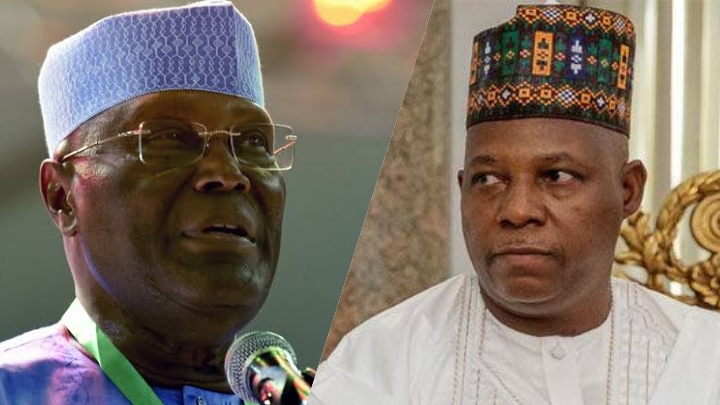
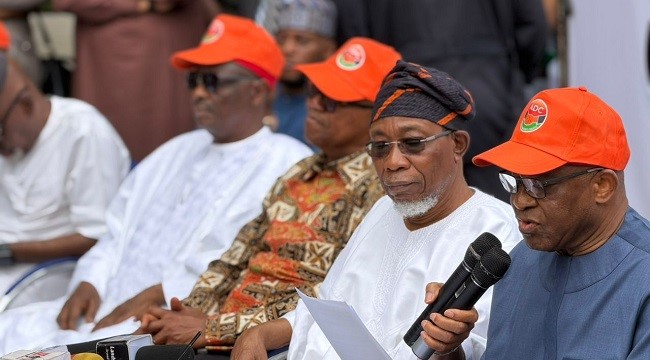
But in a swift reaction, the opposition coalition, African Democratic Congress (ADC), rejected the revised 2026–2027 general election timetable, describing it as a politically biased schedule designed to favour the re-election agenda of President Bola Tinubu, and calling on all Nigerians to speak up enmasse to reject the revised timetable.

The ADC, in a statement by its National Publicity Secretary, Bolaji Abdullahi, on Friday argued that the new deadlines and compliance requirements under the Electoral Act 2026 create near-impossible hurdles for opposition parties seeking to field candidates.

On February 13, INEC initially scheduled the 2027 Presidential and National Assembly elections for February 20, 2027, while the Governorship and State Houses of Assembly elections were fixed for March 6, 2027.

The timetable, however, faced objections from some Muslim stakeholders who noted that the dates coincided with the 2027 Ramadan period.

Following the concerns, the National Assembly amended Clause 28 of the Electoral Act Amendment Bill, reducing the required election notice period from 360 to 300 days, allowing INEC to adjust the election dates.

Subsequently, INEC released a revised schedule on Thursday, signed by its Chairman, Joash Amupitan, moving the Presidential and National Assembly elections to January 16, 2027, and the Governorship and State Houses of Assembly elections to February 6, 2027.

Reacting, the ADC said the requirement that political parties submit a comprehensive digital membership register by April 2, 2026, effectively bars opposition parties from participating.

The party stated: “The African Democratic Congress rejects the updated 2026–2027 electoral timetable released by the Independent National Electoral Commission. What has been presented as a routine administrative schedule of the upcoming general elections is, in fact, a political instrument carefully structured to narrow democratic space and strengthen the incumbent administration ahead of the 2027 general elections.

“According to the timetable, party primaries are to be conducted between April 23 and May 30, 2026, just 55 to 92 days from today. However, more significant is that, pursuant to Section 77(4) of the Electoral Act 2026, political parties are required to submit their digital membership registers to INEC not later than April 2, 2026.

“That is only about 34 days away. Section 77(7) further provides that any party that fails to submit its membership register within the stipulated time shall not be eligible to field a candidate. These are not routine administrative rules but are deliberately constructed barriers designed to exclude the opposition from participating in the election.”

The party further noted that Section 77(2) of the Electoral Act 2026 requires the digital register of members to contain name, sex, date of birth, address, state, local government, ward, polling unit, National Identification Number (NIN) and photograph in both hard and soft copies, while Section 77(6) prohibits the use of any pre-existing register that does not contain the specified information. It warned that failure to meet these requirements would lead to disqualification.

The ADC questioned the fairness of the digital membership requirement, noting that the ruling All Progressives Congress began its registration process in February 2025, long before the requirement became mandatory.

“It is not a product of foresight but insider advantage. They knew what was coming. They therefore had one full year to carry out an exercise that other political parties are expected to complete in one month, during which they must collect, process, collate and transmit large volumes of digital data to INEC under the threat of exclusion. This is practically impossible.

“Democratic competition is based on a level playing field that does not give any contestant an undue advantage. A system where one party exploits incumbency to gain a one-year head start on a requirement that other parties only became aware of when it was nearly too late is a rigged system.”

The ADC said it has joined other opposition parties in rejecting the Electoral Act 2026, adding that the INEC timetable is equally rejected as it appears designed to serve what it described as a self-succession agenda.

“Let it be clear that ADC will not take any action that appears to confer legitimacy on a fraudulent system. We are reviewing our options and will make our position known in the coming days,” the party said.

The party also called on civil society organisations, democratic stakeholders and Nigerians to scrutinise the timetable and demand fairness, stressing that democracy cannot survive when electoral rules are structured to produce predetermined outcomes.

The party has consistently accused the Tinubu-led All Progressives Congress (APC) of scheming to silence the opposition as the 2027 General Elections draw closer, citing his manipulation of state governors and Assembly members from jumping ship, and settling with the ruling party.

Presently, the president’s party has a total of 31 out of 36 states governors, more than majority of the national and states Houses of Assembly.

A frontline publisher and chieftain of the ADC, Chief Dele Momodu, has warned that Tinubu is gradually transforming into full-blown dictatorship, stressing that his second term in office would turn state governors into ‘total slaves’.

Continue Reading

Headline

Second Term for Tinubu Will Turn Governors into Total Slaves, Dele Momodu Warns

Published

on

By

Chairman, Ovation Media Group, and former presidential aspirant, Aare Dele Momodu, has expressed strong concern over what he described as growing political support for President Bola Ahmed Tinubu among state governors across the country.

Speaking during an interview on News Central TV, Momodu said he was shocked by the level of backing the president is reportedly receiving, warning that Nigeria’s democracy could face serious risks if the current political trend continues.

The media entrepreneur cautioned that allowing Tinubu to secure a second term in 2027 could, in his view, lead to excessive concentration of power. He particularly criticized what he described as a growing wave of opposition figures aligning with the ruling All Progressives Congress> (APC).

Momodu referenced reports of opposition governors, including Ahmadu Umaru Fintiri, allegedly moving closer to the ruling party, describing the development as politically troubling.

According to him, some governors are allegedly competing to demonstrate loyalty to the president ahead of future elections.

“The governors are fighting to ensure Tinubu wins a second term, fighting to be the biggest thug for him. If a man in his first term can capture the bodies and souls of Nigerians this way, imagine what he would do with a second term. It will be a full-blown dictatorship, and the governors will regret it as they become total slaves to him,” Momodu said.

He concluded by urging Nigerians to remain vigilant and actively protect democratic institutions, warning that unchecked consolidation of political power could threaten the nation’s democracy and future stability.

Gistmania

Continue Reading

Headline

Court Validates PDP 2025 Convention in Ibadan, Affirms Turaki-led NWC

Published

on

By

The Oyo State High Court sitting in Ibadan has affirmed the validity of the 2025 Elective Convention of the Peoples’ Democratic Party (PDP), which produced Dr. Kabiru Turaki as the substantive National Chairman of the party.

Delivering judgment on Friday, Justice Ladiran Akintola upheld the convention in its entirety, ruling that it was conducted in full compliance with the relevant constitutional and statutory provisions governing party elections in Nigeria.

The decision marked a significant legal victory for the party’s leadership and brought clarity to the dispute surrounding the convention’s legitimacy.

The ruling followed an amended originating summons filed by Misibau Adetunmbi (SAN) on behalf of the claimant, Folahan Malomo Adelabi, in Suit No. I/1336/2025.

In a comprehensive judgment, the court granted all 13 reliefs sought by the claimant, effectively endorsing the processes and outcomes of the Ibadan convention.

Justice Akintola held that the convention, organised by the recognised leadership of the party, satisfied all laid-down legal requirements as stipulated in the 1999 Constitution of the Federal Republic of Nigeria, the Electoral Act 2022 (as amended), and the relevant provisions of the Electoral Act 2026.

The court found no breach of due process or statutory non-compliance in the conduct of the exercise.

In the same proceedings, the court dismissed the Motion on Notice seeking a stay of proceedings and suspension of the ruling, filed by Sunday Ibrahim (SAN) on behalf of Austin Nwachukwu and two others. The applications were described as lacking merit.

Earlier in the proceedings, the court had also rejected a bid by Ibrahim to have his clients joined in the suit.

Justice Akintola ruled at the time that the joinder application was unsubstantiated and consequently dismissed it.

Continue Reading

Trending