
Entertainment
Nigeria Dance Steps Since 2000: Which is Your Favourite?


By Timothy Edaki
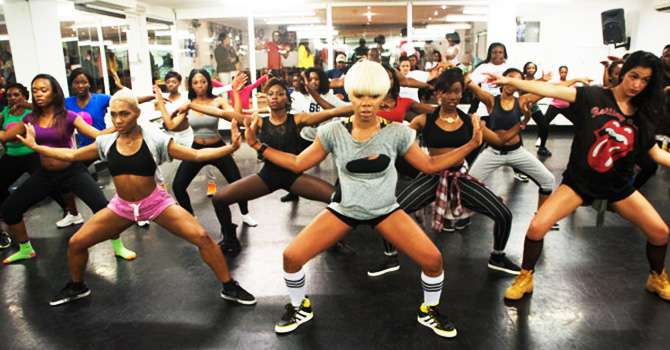
Dance, they say is the rhythmic movement of the body. It can be the movement of the body in consonance to sounds. Dance is an art, but it isn’t just an art as most people believe. For some folks, it is a form of therapy, a healing balm, a form of help to troubled and disheveled minds and hearts.
Dance as earlier said is also an entertainment, a way of expressing joy and excitement and without mincing words, Nigeria is a dance loving country. The nation is known for churning out frequently, dance steps and moves.
Ever since Kafayat, better known as Kaffy won the prestigious dancethon and made it to the Guiness Book of Records, more and more Nigerians have taken to dancing as a vocation.

This article gives a breakdown of dance steps in Nigeria since the year 2000.
Makossa:
This is not really a Nigerian dance. It steams from Congo and even has a Congolese song with the name but Nigerians, lovers of all good things were quick to incorporate the dance steps, which entails movement of the legs curved sideways back and front. The dance was an offshoot from the late 1990s and was made popular by Awilo Longomba and Koffi Olomide who enjoyed massive success for their inputs, especially in Nigeria
Interestingly, the word Makossa is not a Congolese word but from the Cameroon Douala language meaning dance.
Galala:
For the older folks, this dance will be best remembered of as being brought into the limelight by Rasta man, Daddy Showkey. Other artistes contributed their own quota to the dance movement, including the late Ras Kimono and Blacky. The dance is a true friend of the high and low, in short everyone dances it.
Suo:
Immediately after Galala, Suo came into the spotlight. Originated by Marvelous Benji in the song titled Suo, and promoted by the Danfo Drivers, the dance was an offspring of the former, Galala. It began from the Ajegunle area of Lagos and soon moved to other parts of the nation.
Yahooze:

This dance came to the fore in 2008 by Olu Maintain and became an instant hit. It was loved all over, in clubs, bars, hotel, parties and social gatherings. The dance involved a movement of the hands with two fingers moved up while the other fingers stay folded and the hand moved slowly from the shoulder in synchrony to the song.
Alanta:

A popular dance but one that was disliked by a lot of Christians who found the song as an expression of what those condemned to hell fire would face. It was a dance that one did raising one’s hand over the stomach and chest as if one was on fire with varied faces of someone on fire. The legs also followed in the movement. The dance was made popular by the group, Artquake in their song Alanta.
Azonto:

Originally, a Ghanian dance but one that Nigerians made popular, especially after the Starboy crooner, Wizkid did a hit song titled Azonto. The dance is still one of the country’s favorite as it remains evergreen. It involved the use of the hands and the legs.
Kukere:
The dance has its root in the Cross River state of the nation. It was made popular by ome time Project Fame winner, Inyanya in his song Kukere. It had a very short stint with the populace, probably because it was quite an easy dance to do. It is however, still evident in a number of dance routines and rehearsals.
Skelewu:

It also had a very short duration in the country and was brought to the fore by the OBO, Davido in his hit song, Skelewu. It was one song that gained prominence immediately and was on numerous chats for many weeks.
Shoki:

This dance literally stole the day. It was a hit. Everyone danced it, from politicians to business moguls to those on the street. It was the dance of the people, with the people and for the people. One cannot really credit anyone as the progenitor of this dance because it was already in vogue before the media blew it to popularity. However, rapper Lil Kesh and Orezi would be credited for their early promotion of the dance in their respective songs titled Shoki.
Sekem:
The dance also had quite a short duration, perhaps because for anyone conversant with dance, it bore a resemblance to the legendary Michael Jackson’s ‘Moon walk’ which was on its own quite a difficult dance move. It was exemplified in the song, Sekem by Mc Galaxy who doubles as the proprietor of the said dance.
Shakiti Bobo:
The dance was brought to the fore by the acclaimed Voice of the street, Olamide in his song, Bobo. As characteristic with Olamide’s songs, the dance and song immediately spread like wildfire among Lagosians. The dance involved standing on one leg with the other slightly raised up while the hands moved up and down.
Shaku Shaku:

It is doubtful that there is anyone who doesn’t know this dance. It is popular and trending and social media has done more to promote it than anyone can imagine although credit always goes to Olamide as the pioneer of the dance in his song ‘Science student’. However, the major promoters of the dance are Idowest and Slimcase in their songs ‘Shepeteri’ and ‘Legbegbe’.
These are just a few; a lot of other dance steps and moves have made waves at one time or another including P-Square’s Alingo, the Ghanaian ‘One Corner’ dance. More dance steps are gradually coming into the country and Nigerians are ever prepared to rock the boat. Already, there is the ‘Gwara Gwara’ and most recently Olamide’s ‘Motogbana’




ADC Raises Alarm over INEC’s Plot to Prevent Party from Fielding Candidates
Jigawa ADC Receives Defecters from APC, NNPP, PDP

I Won’t Be Intimidated, Seun Okinbaloye Replies Wike

Amnesty Condemns Wike’s ‘Shoot’ Remark Against Seun Okinbaloye

‘ADC Membership Hits 500,000 after INEC Derecognition of Leadership’

Is Amupitan’s INEC Complicit?

Effective Strategic Leadership: Resolving Nigeria’s Contemporary Challenges and Unlocking Inclusive Possibilities

When Anthropic Accidentally Opened Its Own Vault: The Claude Code Leak of March 31, 2026

Bauchi Gov Bala Mohammed Signals Possible Defection to ADC
Effective Strategic Leadership: Resolving Nigeria’s Contemporary Challenges and Unlocking Inclusive Possibilities
ADC Rejects INEC’s Interpretation of Court of Appeal Ruling

The Oracle: The New Digital Colonialism: Navigating AI Policy Under Foreign Tech Dominance (Pt. 5)

This Attack on Democracy Will Not Stand – ADC Chairman, David Mark

Joeboy Stars on Easter Edition of Glo-Powered African Voices
-
 Tech and Humanity3 days ago
When Anthropic Accidentally Opened Its Own Vault: The Claude Code Leak of March 31, 2026
-
 Headline5 days ago
Bauchi Gov Bala Mohammed Signals Possible Defection to ADC
-
 Opinion2 days ago
Effective Strategic Leadership: Resolving Nigeria’s Contemporary Challenges and Unlocking Inclusive Possibilities
-
 Headline5 days ago
ADC Rejects INEC’s Interpretation of Court of Appeal Ruling
-
 The Oracle2 days ago
The Oracle: The New Digital Colonialism: Navigating AI Policy Under Foreign Tech Dominance (Pt. 5)
-
 Headline4 days ago
This Attack on Democracy Will Not Stand – ADC Chairman, David Mark
-
 Entertainment3 days ago
Joeboy Stars on Easter Edition of Glo-Powered African Voices
-

 Featured4 days ago
Gov Adeleke Commends MicCom Legacy As Family Launches N150m Engineering Endowment at OAU