Connect with us

Economy

Illegal JVs in Oil Industry: Agbakoba Threatens to Sue FG

Published

on

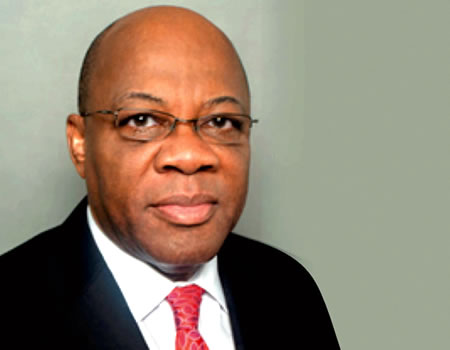
A former President of the Nigerian Bar Association (NBA), Olisa Agbakoba (SAN), has threatened to drag the Federal Government to court to determine the constitutionality of continuing outsourcing of oil and gas management to International Oil Companies (IOCs) through Joint Ventures (JVs) and Production Sharing Contracts (PSCs).

Agbakoba also called for a complete overhaul of Nigeria’s oil and gas sector, insisting that the current system has ‘completely failed’ and is responsible for poverty and hunger across the country.

The human rights lawyers, who stated this at a press conference in Lagos, argued that the current Contract Oil model directly contradicts Sections 16 and 44(3) of the Nigerian Constitution.

He maintained that the law mandates the government to manage Nigeria’s natural resources in a manner that secures the maximum welfare, freedom, and happiness of every citizen and that the current arrangement, which primarily benefits IOCs, falls far short of this constitutional requirement.

Agbakoba also stated that it is a fundamental principle of administrative law that statutory bodies, including the government, can not delegate their core functions without express legal authorisation. Without such express authority, the current arrangements may be ultra vires and potentially void.

The lawyer said, “These responsibilities, fundamental to the nation’s sovereignty and economic well-being, may be inherently governmental and thus incapable of being lawfully delegated to private entities. Furthermore, it is dubious whether the federal government has the authority to delegate the inherent rights of Nigerians to their natural resources to third parties.

“While the federal government is reluctant to consider shared or joint ownership with state governments, who represent Nigerians more directly, it sees no issue in delegating, outsourcing, and sharing joint ownership with IOCs. This inconsistency raises questions about the government’s interpretation and application of its constitutional mandate.

“We will approach the court to declare that the PIA, the current legal framework for the continued outsourcing or unlawful delegation of the management of Nigeria’s oil and gas to IOCs, is unconstitutional.

“The dominance of IOCs in the sector has historically limited opportunities for developing local content and building domestic capacity in the oil and gas industry,” he said.

Agbakoba also said that the current system of JVs and PSCs, which was initially justified by a lack of funds, now appears to violate the inherent rights of Nigerians over their natural resources.

He stated that if the country adopts a “Development Oil” approach, it can reclaim control over its vital oil and gas sector and transform it into a powerful engine for national development.

The senior lawyer insisted that this paradigm shift requires bold policy changes, including securitising oil reserves through a Sovereign Oil Fund, allowing Nigeria to finance its oil and gas operations.

He said, “The current exit of IOCs presents both a challenge and an opportunity for new Nigerian actors in the oil and gas sector. In collaboration with the federal government, these actors must rise to the occasion and build a new strategy for oil and gas exploration based on development oil principles.

“By aligning the oil and gas sector with broader national interests and constitutional obligations, Nigeria can create a more diversified, resilient, and prosperous economy that truly benefits all its citizens. This approach not only promises economic growth but also reaffirms Nigeria’s sovereignty over its natural resources, ensuring that they are managed for the welfare and security of all Nigerians, as mandated by the constitution,” Agbakoba stated.

Leadership

Continue Reading
Click to comment

Leave a Reply

Your email address will not be published. Required fields are marked *

Economy

World Bank Okays $1.25bn Loan for Nigeria, Unveils 6-Year Growth Strategy

Published

on

By

The approval, announced on Wednesday, falls under the Nigeria Actions for Investment and Jobs Acceleration (NAIJA) programme and is part of the World Bank’s Country Partnership Framework (CPF) for Nigeria, covering 2026 to 2032.

According to the bank, the financing will support reforms to improve competitiveness, deepen capital markets, modernise regulations for the digital economy, strengthen power sector reforms, expand agricultural productivity and enhance domestic revenue mobilisation. The programme also seeks to reduce trade barriers in line with Nigeria’s commitments under ECOWAS and the African Continental Free Trade Area.

The approval follows public debate over Nigeria’s rising debt profile, with some Nigerians questioning the country’s continued reliance on external borrowing and calling for greater transparency in the use of previous World Bank loans.

Beyond the financing, the World Bank said the new partnership framework aims to expand electricity access to 32 million Nigerians, provide broadband connectivity to 58 million people, improve health and nutrition services for 40 million citizens and support 9.5 million farmers through higher agricultural productivity.

World Bank Country Director for Nigeria, Mathew Verghis, said recent macroeconomic reforms had helped stabilise the economy but stressed that sustained improvements in living standards would depend on addressing structural constraints to private investment and job creation.

The World Bank Group added that its private sector arms, the International Finance Corporation (IFC) and the Multilateral Investment Guarantee Agency (MIGA), will support the strategy by mobilising private capital, expanding infrastructure investment and providing guarantees to reduce investment risks.

The new framework reflects the World Bank’s continued focus on supporting Nigeria’s economic reforms while encouraging greater private sector participation to drive long-term growth and reduce poverty.

Continue Reading

Economy

Dangote Refinery Files Lawsuit Against FG, NNPC, Marketers over Petrol Import Licences

Published

on

By

Dangote Petroleum Refinery has filed a fresh lawsuit against the Nigerian National Petroleum Company Limited (NNPC) and several fuel marketers, seeking to overturn fuel import licences issued by the Nigerian Midstream and Downstream Petroleum Regulatory Authority (NMDPRA).

According to court documents filed at the Federal High Court in Lagos and cited by Reuters, the refinery is asking the court to nullify import permits recently granted or renewed by the regulator, arguing that the approvals violate an earlier directive ordering all parties to maintain the status quo pending the determination of the case.

The legal action comes at a time when Nigeria is recording a sharp decline in petrol imports due to rising domestic refining capacity, largely driven by output from the Dangote Refinery.

In its filing, Dangote Refinery argued that Nigerian law permits fuel importation only when local production is unable to meet national demand. The company maintained that continued issuance of import licences undermines its operations as it ramps up production from its multi-billion-dollar refinery located on the outskirts of Lagos.

Fuel marketers, however, have consistently defended importation, insisting that imports remain necessary to guarantee a stable supply and prevent shortages across the country.

This is not the first dispute between Dangote Refinery and fuel importers. In 2025, the company filed a similar suit against NNPC Ltd and several marketers, including AYM Shafa Ltd, A.A. Rano Ltd, T. Time Petroleum Ltd, 2015 Petroleum Ltd and Matrix Petroleum Services Ltd, while also seeking ₦100 billion in damages. The suit was later withdrawn without explanation.

Recent industry data showed petrol imports dropped to 965.52 million litres in Q1 2026 from 2.43 billion litres in the same period of 2025. Meanwhile, supply from local refineries rose to 3.18 billion litres, accounting for about 76.7 percent of Nigeria’s petrol supply during the quarter.

Continue Reading

Economy

World Bank Flags ‘Hidden Spending System’ Diverting N34.53trn of Nigeria’s Revenue

Published

on

By

The World Bank has raised concerns over Nigeria’s fiscal framework, revealing that more than N34.53 trillion was diverted from federation revenue over the past three years through pre-distribution deductions.

In its latest Nigeria Development Update obtained from its website, the global lender disclosed that although total federation revenue rose sharply to about N84 trillion between 2023 and 2025, about 41 per cent of the earnings did not reach the Federation Account for distribution to the federal, state and local governments.

According to the report, gross revenue increased from N17.08 trillion in 2023 to an estimated N37.44 trillion in 2025. However, deductions classified as “first-line charges” also rose significantly, from N6.22 trillion to nearly N15 trillion within the same period, reducing the pool of funds available for distribution.

The World Bank noted that the development has created a paradox in which rising revenues have not translated into improved public spending capacity, as a substantial portion is automatically retained by certain agencies before allocation.

It explained that reforms such as the removal of petrol subsidy and foreign exchange adjustments boosted nominal revenues, but much of the gains were offset by the structure of deductions tied to cost of collection and statutory transfers.

Agencies such as the Nigeria Customs Service, Nigerian National Petroleum Company Limited, and the Federal Inland Revenue Service account for a significant portion of these deductions. The report stated that their funding is based on fixed percentages of gross revenue, leading to higher allocations as revenues increase.

Describing the model as “pro-cyclical”, the Bretton Woods institution said it operates outside the conventional budgetary framework and weakens legislative oversight. In some cases, allocations to individual agencies exceed the revenues of several states and even the budgets of key federal ministries.

The report also highlighted the impact on public finances, noting a decline in capital expenditure from N5.5 trillion in 2024 to N4.5 trillion in 2025, with only about 25 per cent of the approved capital budget implemented. Meanwhile, the federal fiscal deficit remained elevated at N16.9 trillion, driven by debt servicing and recurrent expenditure.

The World Bank warned that the current arrangement undermines fiscal transparency and accountability, as significant portions of public revenue are spent outside the standard appropriation process.

Source: tribuneonline

Continue Reading

Trending
