Tech and Humanity
Tech and Humanity: Nigeria is Building the AI Ambition…
Published
8 hours agoon
By
Eric
…But Ambition Without Governance Architecture Will Cost Us Dearly
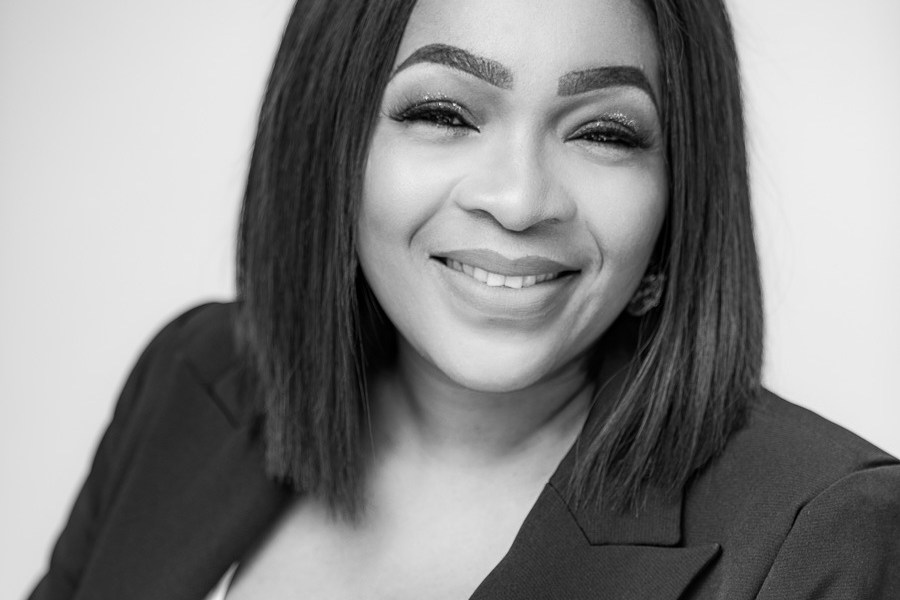
By Folu Adebayo
“Nigeria has the ambition, the talent and the market to lead Africa in AI. What we cannot afford to do is deploy AI faster than we govern it. That gap between adoption speed and governance maturity is where the risk lives.”
Let me begin with a number that should stop every Nigerian business leader in their tracks.
Nigeria’s digital economy is projected to reach $18.3 billion by 2026 nearly double what it was just five years ago. Internet penetration is approaching 60 percent. The CBN is running AI-powered fintech sandboxes. NITDA’s Director General Kashifu Inuwa was on a panel just weeks ago declaring that AI and RegTech will define Nigeria’s banking future.
On the surface, this is an extraordinary story of a nation stepping into the digital age with confidence and speed.
But beneath the ambition lies a governance gap that, if left unaddressed, will undermine everything we are building.
The Honest Picture
Here is what the celebration of Nigeria’s AI momentum often glosses over: we currently have no binding, enforceable AI-specific statute. The Nigeria Data Protection Act 2023 governs what happens to data but not what AI systems do with it. Algorithmic bias, automated discrimination, opaque decision-making in lending, hiring and insurance these largely fall outside current enforcement scope.
At least nine regulatory bodies including NITDA, the NDPC, the CBN, the NCC and the FCCPC exercise overlapping authority over digital spaces. With no formal coordination mechanism between them, enforcement is inconsistent. Powerful organisations exploit the gaps. Ordinary Nigerians bear the consequences.
I have spent over twenty years working as a Solution Architect across financial services and insurance in the UK and internationally. I have designed the integration systems that underpin the decisions these AI tools are now automating. And what I know from two decades in this space is this:
The patterns that cause AI failures are the same patterns that cause system failures. No single source of truth. Accountability gaps between teams. Decisions made without visibility of downstream impact. Risk discovered after deployment, not before.
Nigeria is building the adoption. We have not yet built the architecture to govern it.
The Opportunity And Why It Is Closing
The proposed National Digital Economy and E-Governance Bill which was expected to pass earlier this year would position NITDA as a super-regulator for Nigeria’s digital economy. It would introduce mandatory AI audits, algorithmic transparency requirements, and formal licensing for AI systems deployed in finance, public administration and automated decision-making.
If enacted, Nigeria would be one of the first African nations with a comprehensive, enforceable AI regulatory regime. That is a first-mover advantage with enormous implications for investment, for trust and for the credibility of our digital economy on the global stage.
But here is what Nigerian business leaders must understand right now:
You cannot wait for the bill to pass before you start governing your AI systems.
The CBN’s sandbox already evaluates model explainability, fairness and consumer transparency before granting approvals for AI-powered fintech tools. The NDPC is expanding enforcement on automated decision-making. Global partners, investors and international clients are already asking Nigerian organisations for evidence of responsible AI practices.
Governance is not something you build after the regulator comes knocking. By then, the damage to your reputation, your operations and your customers has already been done.
What This Means For Nigerian Businesses
Whether you run a fintech startup in Lagos, a financial institution in Abuja, a logistics company using AI routing, or a healthcare platform deploying diagnostic tools the question is the same:
If a regulator or an investor asked you today to explain how your AI makes decisions could you?
If the answer is no or not clearly here is where to start:
- Map your AI systems. Every tool, every automated decision, every algorithm touching your customers. If you cannot list them, you cannot govern them.
- Assign accountability. Every AI system needs a named human being who owns the risk and the outcomes. Not a department a person.
- Test for bias now. In a diverse, multi-ethnic nation like Nigeria, AI trained on biased data will produce biased outcomes. Credit decisions. Job applications. Insurance premiums. This is not hypothetical it is already happening.
- Build explainability in. When the CBN’s AI sandbox asks you to demonstrate model explainability and consumer transparency, you need that documentation ready not being written at the weekend before the audit.
- Treat governance as architecture. Not compliance paperwork. Not a legal exercise. Governance built into the design of your AI systems from the start will save you ten times the cost of retrofitting it after a regulatory incident.
Nigeria Can Lead This Continent If We Choose To
Nigeria has climbed 31 places in the global Government AI Readiness Index. We are drafting legislation that could make us one of the first African nations with enforceable AI governance. NITDA is talking about AI sovereignty and digital trust. These are not small things.
But legislation is a framework. The work of actually governing AI happens inside organisations in the boardroom decisions, the system design choices, the accountability structures and the daily operational practices of Nigerian businesses.
The global race to be a trusted AI economy is not won by the country that adopts AI fastest. It is won by the country that deploys AI most responsibly.
Nigeria has every resource needed to win that race. We have the talent. We have the market. We have the regulatory momentum.
What we need now is the governance architecture to match our ambition.
The starting pistol has already fired. The question is whether Nigerian business is already running.
Related
You may like
Tech and Humanity
Tech and Humanity: The World Just Sat Down to Decide the Future of AI. Was Africa in the Room?
Published
1 week agoon
July 11, 2026By
Eric
By Folu Adebayo
This week, in Geneva, something quietly historic happened. For the first time, at the mandate of the United Nations General Assembly, the world formally sat down together to decide how artificial intelligence should be governed. Governments, technology companies, scientists and civil society gathered for the first Global Dialogue on AI Governance, to confront a single, enormous question: can this technology be made to benefit all of humanity, safely and fairly, or will it benefit only a few?
I read the Secretary-General’s opening address twice, because it said, with the authority of the world’s highest office, what I have been arguing in this column for months. And it contained a warning that every African leader, and every African parent, needs to hear.
The warning that should reach every African home
The Secretary-General was blunt. Artificial intelligence, he said, is advancing at runaway speed, deployed faster than anyone, including the people building it, can keep up with. These systems are no longer simply tools awaiting our instruction. They are beginning to make choices with less and less human oversight. And our institutions, he warned, were built to govern machines that follow commands. They are not ready for machines that decide.
But it was his second warning that struck me hardest, because it is about us. The computing power, the data, and the talent behind the most advanced AI are concentrated in a handful of companies, in a handful of countries. Most nations, he observed, including many developing ones, have had no say in decisions that will shape their futures. And then a line I have not been able to put down: when power imbalances are hard-wired into technology, inequality becomes part of the code.
Read that again, slowly. Inequality becomes part of the code. Not inequality of income, which a good year can ease. Inequality built into the very systems that will run banking, healthcare, education and government for the next century. The kind of inequality that does not fade, but compounds.
| “When power imbalances are hard-wired into technology, inequality becomes part of the code.” |
The number that should shame us into action
The Secretary-General gave one figure that captures the danger precisely. Last year, private investment in AI infrastructure approached half a trillion dollars. Public investment in AI capacity for the developing world, by comparison, he called a rounding error.
Sit with that imbalance. Half a trillion dollars flowing into the systems of the already-powerful, while the nations with the most young people, the most to gain, and the most to lose, are left to watch. He warned, in words I wish every African finance minister would frame on their wall, that we cannot allow the digital divide to harden into an AI divide, and the AI divide to become a development gap, a security gap, and a sovereignty gap.
That is the whole danger for our continent in a single sentence. If we do not act, AI will not merely leave Africa behind. It will entrench our being behind, in the code itself, for generations.
And yet, the hope was real too
I would be doing the Secretary-General, and you, a disservice if I stopped at the warning. Because he did not. He turned, deliberately, to the hope, and it is the same hope that made me build what I have built.
The same technology, built with purpose, he said, is already changing lives for good. He painted the picture plainly. A mother in a rural clinic has her scan read in minutes, and her cancer caught in time. A child keeps learning beyond the classroom, with a tutor that never tires. A smallholder farmer plants with the same forecasts as the biggest agribusiness, and brings the harvest home. And then the phrase that moved me most: all of this is happening today, often in the very places the headlines rarely reach.
I know the truth of this in my own life. I built a free tool to help parents navigate the autism journey, and in a few short weeks it has reached thousands, in places and languages the headlines never mention. So when the highest office in the world says AI built with purpose can reach the forgotten, I do not hear a slogan. I hear something I have watched happen with my own eyes.
| “We cannot vibe-code the future of humanity.” — UN Secretary-General, Geneva, this week |
So, was Africa in the room?
Here is the question I cannot stop asking. The world sat down this week to decide the future of AI. Was Africa truly in the room, shaping the decision? Or merely in the building, watching others decide?
Because presence is not the same as power. It is not enough for our leaders to attend these summits and pose for the photographs. We must arrive with our own position, our own red lines, our own demands. That AI which touches African citizens is governed by rules made with African input. That our data is not simply extracted to train systems we will then rent back at a premium. That the half-a-trillion-dollar gap is named, and closed, and not politely ignored.
The Secretary-General offered one principle that should anchor every government on our continent. In every high-stakes decision, in justice, in healthcare, in policing, machines may inform, but humans must decide, and answer. When a citizen is harmed, the answer can never be that the algorithm did it. That principle is not a Western luxury. It is a protection our people need more than most, and we should demand it be built into every system that governs an African life.
The room is still open
This first Global Dialogue is a beginning, not an ending. The rules are not yet written. The gap is not yet closed. Which means the room is still open, and Africa can still walk in, not as a guest, but as an author.
But that will not happen by accident, and it will not happen through hope alone. It will happen only if our leaders treat AI governance as the sovereignty question it truly is, as serious as any question of land, currency or borders. Because in this century, the code is territory. And a continent that does not help write the rules of the technology that will govern its people has surrendered something it may never win back.
The world has sat down to decide the future of AI. I pray Africa does not merely watch. I pray we pull up a chair, open our mouths, and help write the future our children will have to live in. The room is open. Let us not waste the invitation.
Related
Tech and Humanity
The Dreams That Died, and the Son Who Was Worth More Than All of Them
Published
3 weeks agoon
June 27, 2026By
Eric
By Folu Adebayo
Almost thirty years ago, I held a healthy baby boy in my arms and I began to write his life.
Not on paper. In my chest. The way every mother does in those first hours, when the weight of a newborn is still strange and the future feels like something you can simply decide. We named him Akintade. And in the quiet of that hospital room, I wrote the whole story out.
I saw the first day of school. The blazer a little too big for his shoulders, the gap-toothed grin, my hand letting go of his at the gate. I saw a graduation, a gown, a name read out, a cap thrown into the air. I saw a wedding day. I saw grandchildren I would spoil and hand back sticky and overtired. I had written every chapter before he had lived a single day.
I just did not know that I was dreaming about a son who did not yet exist.
Akintade is autistic. He communicates without words.
And one by one, the chapters I had written began to be erased. The school gate I had imagined did not look the way I had pictured it. The graduation. The wedding. For a long time, I grieved each one as if it were a death. Because in a way, it was. Quietly, privately, in a grief I did not have permission to speak aloud, I mourned a future that was never going to arrive.
I want to be honest about that grief, because so many parents carry it in silence and are made to feel ashamed of it. We are told we should only feel grateful, only feel love. And we do feel those things, fiercely. But alongside them, in the early years, there was mourning. And pretending otherwise helps no parent who is sitting tonight where I once sat.
| “What died was never my son. What died was the script I wrote before I ever knew him.” |
Here is what took me years to understand, and what I would give anything to tell my younger self in that hospital room.
What died was never my son. What died was the script I had written before I knew him. Those were my dreams. My expectations. I had handed a newborn a stack of plans he never asked to carry, and when life gave me a different story, I mourned my version of him as though it were a real person who had been taken away.
It was not. He was here the whole time. The real one. And the real one was never the tragedy. The tragedy existed only in the comparison, only in measuring the son I was given against the son I had invented.
The day I finally put the script down; I got my son back.
And the son I got back was worth more than every dream I had lost.
Let me tell you about the real Akintade, the one I almost missed while grieving the imaginary one. He is jovial. He communicates using Picture Exchange Communication (PECS) and Makaton signs (by the way, all of us in my household are makaton experts, thanks to Akintade) He is full of life. He has a spot on the sofa that is his, where he settles when he comes home. He loves good food. His whole face changes when Afrobeats comes on, a joy so complete and so unguarded that it puts the rest of us to shame, we who have learned to hold our happiness back.
He may never speak full sentence to me. But without a single word, this man has taught me more about human worth than anyone I have ever met. He has redrawn my understanding of what success means, of what a life is for, of how to love without condition and without expectation of return. The dreams I lost were small, ordinary, borrowed from everyone else’s idea of a good life. What he gave me instead was something I did not know to dream of.
He may never speak a sentence. But without a single word, he has changed how I understand human worth.”
I am writing this in a Nigerian paper deliberately, because I know how autism is too often spoken of among my people. In hushed tones. As shame. As something to hide, to pray away, to be ashamed of in front of relatives. I have seen families isolate these children, and I have seen the children pay the price for our silence and our fear.
So let me say it plainly, as a Nigerian mother, in a Nigerian paper. My autistic son is not a punishment. He is not a curse. He is not a lesser version of a real child. He is a whole human being, of immense worth, who has enriched my life beyond anything I could have planned. And the shame that surrounds children like him belongs not to them, but to a society that has not yet learned to see them.
This is the work I have given my life to. Becoming his voice in every room he cannot speak in. Building a centre that bears his name. And trying, in whatever way I can, to change how our people see these extraordinary children, so that the next mother holding a baby like mine is met with understanding instead of pity, and welcome instead of shame.
If you are a parent reading this tonight, sitting in the chair I once sat in, mourning a future you had already written, I want to say one thing to you.
Put the script down. Gently, and without guilt. The grief is real and you are allowed it. But do not let it keep you from the child who is actually in front of you, the real one, who has been waiting this whole time to be met as he is rather than as you imagined him.
Go and meet your actual child. You may find, as I did, that the son you were given is worth more than all the dreams you lost. A man called Akintade is here. He has changed me. And if his story changes how even one family sees their own child, then every dream I once grieved was a small price for the one I was given instead.
Folu is the mother of Akintade, a Tech Leader, founder of Tade Autism Centre, Neurohelp.ai, and ATSI Charity. She is an autism advocate working to change how autism is understood and embraced.
Related
Tech and Humanity
Tech and Humanity: The Tribunal Ruling That Should Change How Africa Thinks About AI
Published
2 months agoon
May 23, 2026By
Eric
By Folu Adebayo
A lawyer in the United Kingdom needed to summarise a confidential client document. Forty pages. A busy day. So they did what millions of professionals around the world now do without a second thought.
They pasted it into an AI tool.
Faster than reading it line by line. Nobody had told them not to. Nobody had told them they could. There was no policy. No training.
No record of the decision.
It seemed harmless. It was not.
A UK tribunal has now ruled that uploading confidential documents to an AI tool can be treated as the equivalent of placing them in the public domain. The legal privilege protecting those documents, the confidentiality that is the very foundation of the relationship between a professional and their client was lost. Permanently.
Not because anyone acted in bad faith. Because the tool did what such tools do the moment information is entered into them.
“The employee was not trying to do anything wrong. They were trying to work faster.”
Why this matters far beyond the United Kingdom
It would be easy for African business leaders to read this as a distant story. A British tribunal. A British case. A British problem.
That would be a mistake.
The behaviour at the centre of this ruling a professional pasting confidential information into an AI tool to save time is happening in every law firm, every bank, every hospital, every government office, and every consultancy in Lagos, Nairobi, Accra, and Johannesburg right now. Today. As you read this.
The technology does not respect borders. The behaviour does not respect borders. The risk does not respect borders.
The only thing that varies from country to country is whether there is a governance framework in place to manage it and whether the people using these tools have been told, clearly, what is and is not permitted.
In most African organisations, that framework does not yet exist.
The quiet leak
Consider what is most likely happening inside your own organisation as you read this.
A member of staff has a long report to summarise. They paste it into a free AI tool.
A colleague is drafting a difficult email and asks an AI assistant to improve the wording including the confidential context. Someone in finance uploads a spreadsheet of sensitive figures to ask the AI to analyse it. A junior employee, eager and capable, uploads a client contract to extract the key terms quickly.
None of these people are acting maliciously. Every one of them is trying to do their job well.
And every one of them may be moving confidential information client data, commercial secrets, personal information, privileged material outside the protected boundary of the organisation.
This is not a hypothetical risk. Industry research suggests that the overwhelming majority of organisations have employees using AI tools, while only a small minority have any policy governing what may be entered into them. The gap between adoption and governance is not narrowing. It is widening.
“The technology does not respect borders. Neither does the risk.”
Why Africa is particularly exposed
There are three reasons this risk is especially acute across African markets.
First, AI adoption across Africa has been rapid, mobile-first, and largely informal. Professionals have embraced AI tools with energy and ingenuity often ahead of the organisations they work for. That is a strength. But it means usage is running far ahead of governance.
Second, many African organisations do not yet have the data protection infrastructure, the internal compliance functions, or the governance frameworks that would, in other markets, provide at least some guardrails. The legal frameworks are developing , Nigeria, Kenya, Ghana and South Africa have all made significant progress on data protection but the translation of law into day-to-day organisational practice remains incomplete.
Third, the consequences of a confidentiality breach are severe in any market, but in markets where trust is hard-won and reputational damage spreads quickly, the cost can be existential. A bank that leaks customer data, a law firm that loses privilege over client documents, a hospital that exposes patient information these are not recoverable inconveniences. They are breaches of the trust on which the entire business depends.
What African leaders must do now
The good news is that the solution is neither expensive nor complex. It does not require new technology. It requires leadership, clarity, and a small amount of disciplined effort.
First, establish a clear AI usage policy. A single, plain-language document that states what types of information may and may not be entered into AI tools. It does not need to be sophisticated. It needs to exist, and it needs to be communicated.
Second, train your people. Not a lengthy programme a clear, honest conversation. Most employees who create AI-related risk do so because nobody has explained the danger to them. Once they understand, the overwhelming majority adjust their behaviour immediately.
Third, create a record. The UK tribunal ruling makes clear that when accountability is tested, organisations will be expected to demonstrate that their people understood the rules. A simple, dated record showing that staff have received and acknowledged the AI usage policy is no longer an administrative nicety. It is a protection.
Fourth, lead by example. When senior leaders talk openly about responsible AI use, it gives everyone else permission to ask the questions they are currently afraid to ask.
The opportunity inside the warning
It would be easy to read this column as a reason to fear AI, or to restrict it. That is not my intention.
AI is one of the most powerful tools African professionals have ever had access to. It can close capability gaps, accelerate work, and allow small organisations to compete with much larger ones. The answer is not to ban it. The answer is to govern it.
The organisations that will thrive in the African AI economy are not the ones that move fastest or the ones that move most cautiously. They are the ones that move deliberately adopting AI with energy, and governing it with discipline.
The UK tribunal ruling is a warning. But it is a warning delivered early enough to act on. African leaders who read it, understand it, and act on it now will protect their organisations, their clients, and their reputations.
Those who treat it as someone else’s story will learn the same lesson later and at a far higher price.
The choice, as always, belongs to leadership.
Folu is AI Architect & Risk & Governance Director, United Kingdom, Founder of AIExpertsPro, and an AI governance advisor to UK and African financial institutions, and can be reached via aiexpertspro.co.uk/folu@aiexpertspro.co.uk
Related


NBA Election: Badejo-Okusanya Coasts to Victory, Becomes 2nd Female President
Third Place Playoff: England Beat France in 10-Goal Thriller
Britain Get New Prime Minister, Andy Burnham
Tech and Humanity: Nigeria is Building the AI Ambition…
Why GLO is the Gold Standard
The Wars of Ego: Leadership As the Architect of Collective Possibilities
Adding Value: Kill Worry Before It Kills You by Henry Ukazu
Argentina Stun England with Two Late Goals to Reach 2026 World Cup Final
The 1999 Constitution: The Blueprint for Chaos
Spain Beat France 2-0 to Reach 2026 World Cup Final
Nigeria Doing Well Under My Watch – Tinubu
Gunmen Attack Kogi School, Abduct Principal, NECO Staff, Students Writing Exams
Court Orders Final Forfeiture of 48 Assets Linked to Ex-AGF Malami
Atiku Accuses INEC of Aiding Tinubu’s Alleged One-party State Agenda
Trending
-
Sports4 days agoArgentina Stun England with Two Late Goals to Reach 2026 World Cup Final
-
Opinion6 days agoThe 1999 Constitution: The Blueprint for Chaos
-
Sports4 days agoSpain Beat France 2-0 to Reach 2026 World Cup Final
-
National3 days agoNigeria Doing Well Under My Watch – Tinubu
-
Featured4 days agoGunmen Attack Kogi School, Abduct Principal, NECO Staff, Students Writing Exams
-
Featured4 days agoCourt Orders Final Forfeiture of 48 Assets Linked to Ex-AGF Malami
-
Headline5 days agoAtiku Accuses INEC of Aiding Tinubu’s Alleged One-party State Agenda
-
Headline6 days agoAppeal Court Upholds Judgment Ordering INEC to Derecognise Mark-led EXCO