Connect with us

Economy

Buhari ‘Withdraws $462 Million from Excess Crude Account Without NASS Approval’

Published

on

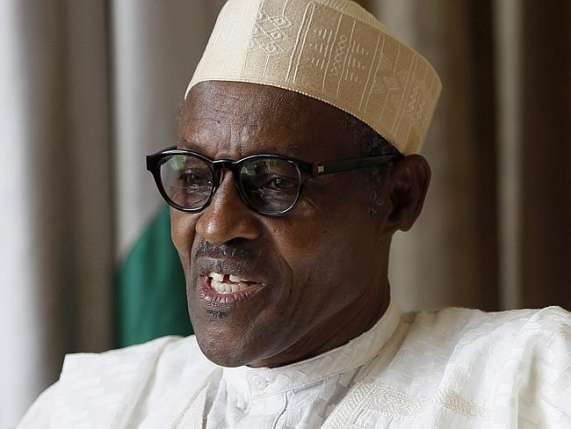
President Muhammadu Buhari has approved the withdrawal $462 million from the Excess Crude Account (ECA) to the United States for the procurement of 12 Super Tucano aircraft, without a prior approval of the National Assembly, This Day newspaper has reported.

A new letter by the president to the National Assembly, says the U.S. government had given a payment deadline for the aircraft purchase, hence, the need for the hasty approval and payment.

Buhari transmitted the letter to the National Assembly leadership on April 13 and it was received in the Office of the Speaker of the House of Representatives on April 17.

The letter shows that Buhari had already given anticipatory approval for the withdrawal of $496,374,470 (N151 394, 421, 355) from the ECA for the purchase of the aircraft and was only seeking the inclusion of same in the 2018 Appropriation Bill that the National Assembly is currently finalising.

The date on the letter indicated that the President had given approval for the withdrawal of the cash and paid before a public announcement of the approval, ThisDay reports.

The Offices of the senate president, Bukola Saraki, and the speaker of the House of Representatives, Yakubu Dogara, did not respond to requests for comment Monday.

According to ThisDay, Buhari’s letter reads, “I wish to draw the attention of the House of Representatives to the ongoing security emergencies in the country. These challenges were discussed with the state governors and subsequently, at the meeting of the National Economic Council on 14th December, 2017, where a resolution was passed, with the Council approving that up to US$1 billion may be released and utilised from the Excess Crude Account to address the situation.

“Subsequent upon this approval, we are preparing a comprehensive schedule of all the requirements for each of the security services for presentation to the National Assembly for consideration.

“It would be recalled that, for a number of years, Nigeria had been in discussions with the United States Government for the purchase of Super Tucano Aircraft under a direct Government-to-Government arrangement. Recently, approval was finally granted by the United States Government, but with a deadline within which part payment must be made otherwise, the contract would lapse.

“In the expectation that the National Assembly would have no objection to the purchase of this highly specialised aircraft, which is critical to national security, I granted anticipatory approval for the release of US$496,374,470.00. This was paid directly to the treasury of the United States Government.

“I am therefore writing, seeking approval of this House for the sum of US$496,374,470.00 (equivalent to N151,394,421,335.00) to be included in the 2018 Appropriation Bill, which the National Assembly is currently finalising. The balance of the requirements for critical operational equipment is still being collated from the different security services and will be presented in the form of a Supplementary Appropriation Bill, in due course.

“The Honourable Minister of Defence and other appropriate officers will be available to provide further details, as may be required.

“While thanking the Honourable Members for the usual cooperation, please be assured Mr. Speaker, the assurance of my highest regards.”

The letter also proved false several claims that Mr President did not give a final approval before the announcement.

The Minister of Defence, Mansur Dan Ali, while speaking with journalists at the end of a security meeting chaired by the president on April 4, announced that Mr Buhari had approved the release of $1 billion to Nigerian Defence authorities for the purchase of security equipment to fight insecurity in the country.

“Of recent, our leader, President Muhammadu Buhari, gave approval for the purchase of more equipment for the military, worth $1 billion,” he said.

The announcement was greeted by criticism by Nigerians who questioned the federal government for earmarking such huge amount for Boko Haram it claimed has been ‘technically defeated.’

Few days later, Mr Buhari’s aide took turns to defend him, saying that the president cannot approve such fund without go ahead from the National Assembly.

First was the President’s Senior Special Assistant, Media and Publicity, Garba Shehu, who said the approval is not final as it signifies only a stage approval while the process is still ongoing.

Also, the Special Adviser to the President on Media and Publicity, Femi Adesina, said the president would soon communicate the National Assembly on the issue.

The withdrawal is a breach on the Sections 80 (3) and (4) of the 1999 Constitution which states that:

“(3) No moneys shall be withdrawn from any public fund of the Federation, other than the Consolidated Revenue Fund of the Federation, unless the issue of those moneys has been authorized by an Act of the National Assembly.

“(4) No moneys shall be withdrawn from the Consolidated Revenue Fund or any other public fund of the Federation, except in the manner prescribed by the National Assembly.”

Premium Times

Continue Reading
Click to comment

Leave a Reply

Your email address will not be published. Required fields are marked *

Economy

Dangote Refinery Files Lawsuit Against FG, NNPC, Marketers over Petrol Import Licences

Published

on

By

Dangote Petroleum Refinery has filed a fresh lawsuit against the Nigerian National Petroleum Company Limited (NNPC) and several fuel marketers, seeking to overturn fuel import licences issued by the Nigerian Midstream and Downstream Petroleum Regulatory Authority (NMDPRA).

According to court documents filed at the Federal High Court in Lagos and cited by Reuters, the refinery is asking the court to nullify import permits recently granted or renewed by the regulator, arguing that the approvals violate an earlier directive ordering all parties to maintain the status quo pending the determination of the case.

The legal action comes at a time when Nigeria is recording a sharp decline in petrol imports due to rising domestic refining capacity, largely driven by output from the Dangote Refinery.

In its filing, Dangote Refinery argued that Nigerian law permits fuel importation only when local production is unable to meet national demand. The company maintained that continued issuance of import licences undermines its operations as it ramps up production from its multi-billion-dollar refinery located on the outskirts of Lagos.

Fuel marketers, however, have consistently defended importation, insisting that imports remain necessary to guarantee a stable supply and prevent shortages across the country.

This is not the first dispute between Dangote Refinery and fuel importers. In 2025, the company filed a similar suit against NNPC Ltd and several marketers, including AYM Shafa Ltd, A.A. Rano Ltd, T. Time Petroleum Ltd, 2015 Petroleum Ltd and Matrix Petroleum Services Ltd, while also seeking ₦100 billion in damages. The suit was later withdrawn without explanation.

Recent industry data showed petrol imports dropped to 965.52 million litres in Q1 2026 from 2.43 billion litres in the same period of 2025. Meanwhile, supply from local refineries rose to 3.18 billion litres, accounting for about 76.7 percent of Nigeria’s petrol supply during the quarter.

Continue Reading

Economy

World Bank Flags ‘Hidden Spending System’ Diverting N34.53trn of Nigeria’s Revenue

Published

on

By

The World Bank has raised concerns over Nigeria’s fiscal framework, revealing that more than N34.53 trillion was diverted from federation revenue over the past three years through pre-distribution deductions.

In its latest Nigeria Development Update obtained from its website, the global lender disclosed that although total federation revenue rose sharply to about N84 trillion between 2023 and 2025, about 41 per cent of the earnings did not reach the Federation Account for distribution to the federal, state and local governments.

According to the report, gross revenue increased from N17.08 trillion in 2023 to an estimated N37.44 trillion in 2025. However, deductions classified as “first-line charges” also rose significantly, from N6.22 trillion to nearly N15 trillion within the same period, reducing the pool of funds available for distribution.

The World Bank noted that the development has created a paradox in which rising revenues have not translated into improved public spending capacity, as a substantial portion is automatically retained by certain agencies before allocation.

It explained that reforms such as the removal of petrol subsidy and foreign exchange adjustments boosted nominal revenues, but much of the gains were offset by the structure of deductions tied to cost of collection and statutory transfers.

Agencies such as the Nigeria Customs Service, Nigerian National Petroleum Company Limited, and the Federal Inland Revenue Service account for a significant portion of these deductions. The report stated that their funding is based on fixed percentages of gross revenue, leading to higher allocations as revenues increase.

Describing the model as “pro-cyclical”, the Bretton Woods institution said it operates outside the conventional budgetary framework and weakens legislative oversight. In some cases, allocations to individual agencies exceed the revenues of several states and even the budgets of key federal ministries.

The report also highlighted the impact on public finances, noting a decline in capital expenditure from N5.5 trillion in 2024 to N4.5 trillion in 2025, with only about 25 per cent of the approved capital budget implemented. Meanwhile, the federal fiscal deficit remained elevated at N16.9 trillion, driven by debt servicing and recurrent expenditure.

The World Bank warned that the current arrangement undermines fiscal transparency and accountability, as significant portions of public revenue are spent outside the standard appropriation process.

Source: tribuneonline

Continue Reading

Economy

Dangote Refinery Raises Petrol Price to N1,275, Diesel Now N1,950

Published

on

By

The Dangote Petroleum Refinery has increased the gantry price of petrol and diesel, further tightening pressure on consumers and businesses across Nigeria. This is however, in response to the rising geopolitical tensions in the Middle East and their ripple effects on global energy markets.

A top official at the refinery, who confirmed the development to our correspondent on Tuesday night, said the facility adjusted its pricing in response to prevailing international crude oil benchmarks and market realities.

The new pricing template shows that petrol rose by N75 per litre to N1,275, representing an increase of about 5.02 per cent, while diesel jumped by N200 per litre to N1,950.

This marks a sharp increase from last month’s prices of N1,200 per litre for petrol and N1,750 for diesel, signalling that diesel is now on track to breach the N2,000 per litre mark at the pump, further intensifying cost pressures across the economy.

“The adjustment is in line with global market trends. You are aware of the ongoing tensions in the Middle East and how they have impacted crude oil prices. These are external factors that directly influence refined product pricing,” the official, who spoke in confidence due to the lack of authorisation to speak on the matter, stated.

He added, “Petrol has been reviewed upward by N75 to N1,275 per litre, which is about a five per cent increase, while diesel has increased more significantly by N200 to N1,950 per litre. These changes reflect the realities of the international market.”

Market data from Petroleumprice.ng corroborated the development, indicating that the latest petrol price reflects a 5.02 per cent increase at the gantry level.

The development comes at a time when stakeholders had hoped that increased local refining capacity would help stabilise domestic fuel prices. However, analysts say Nigeria remains exposed to global oil price volatility due to its reliance on international crude benchmarks for pricing.

The latest hike could trigger a fresh wave of increases in pump prices nationwide, with marketers expected to pass on the additional cost to consumers in the coming days.

Global oil markets have remained volatile in recent weeks due to escalating tensions in the Middle East, a region that accounts for a significant share of the world’s crude oil supply. Any disruption or perceived risk to supply routes often leads to price spikes, which in turn affect refined petroleum products globally.

Nigeria, despite being an oil-producing country, operates a deregulated downstream sector where fuel prices are largely determined by market forces. This means that local prices are influenced by international crude prices, exchange rates, logistics costs, and refinery operations.

The Dangote Petroleum Refinery, Africa’s largest, was expected to reduce Nigeria’s dependence on imported fuel and help stabilise prices. However, experts note that as long as crude oil pricing remains tied to global benchmarks, domestic fuel prices will continue to fluctuate in response to international developments.

The latest increase also comes amid concerns over affordability, with consumers already grappling with high energy and transportation costs. A sustained price increase could worsen inflationary pressures and slow economic recovery.

Continue Reading

Trending