Connect with us

Economy

Customs Intensifies War Against Smuggling, Intercept Goods Worth N1.6bn

Published

on

By Eric Elezuo

The Federal Operations Unit, Zone A of the Nigeria Customs Service (NCS), has continued to win the war against smuggling and smugglers as it recorded a landmark feat in less than one month, intercepting  goods with a total duty paid value (DPV) of N1, 461, 006, 823. 8 in addition to recovering the sum of N166, 207, 735. 25 from duty payments and demand notices on general goods from seaports, airports, and border stations through classification, transfer of value, and other forms of duty payment shortchange.

The revelation was made by the Controller, FOU, Zone A, Comptroller Mohammed Uba, during an interaction with the press at the Unit’s headquarters in Ikeja.

The Controller noted that cumulatively, the Service recovered a total of One Billion, Six Hundred and Twenty Seven Million, Two Hundred and Fourteen Thousand, Five Hundred and Fifty Nine Naira (N1, 627, 214, 559) within the period under review.

While asserting that there is no hiding place for smugglers, he outlined the intercepted goods to include Indian Hemp, 64 exotic vehicles, 6003 bags of foreign parboiled rice, 963 cartons of frozen poultry, 431 cans of vegetable oil, 163 bales of used clothing, 569 pieces of used tyre, 69 sacks of sugar among many other items.

Comptroller Uba stressed that the items were intercepted at different locations at different times within period March 19 and April 9, 2018. He noted that while the parcels and sacks of Indian Hemp were seized at the Olorunda axis of Ogun State, the sacks of 50kg rice were intercepted from Ilogbo, Abeokuta. All interceptions, he said, were based on credible intelligence report, adding that the seized Indian hemp will be handed over to the National Drug Law Enforcement Agency (NDLEA)

He maintained that all smugglers or would-be smugglers will sooner or later be caught, and so should desist from the act for their own good. He added that 10 suspects were arrested in connection to some of the seizures.

“Let me warn all smugglers or intending smugglers and their accomplices to desist from such trade malpractices and invest their money in legitimate businesses as the Unit has devised other operational modalities that will give them a run for their money… and land them in jail,” Uba said.

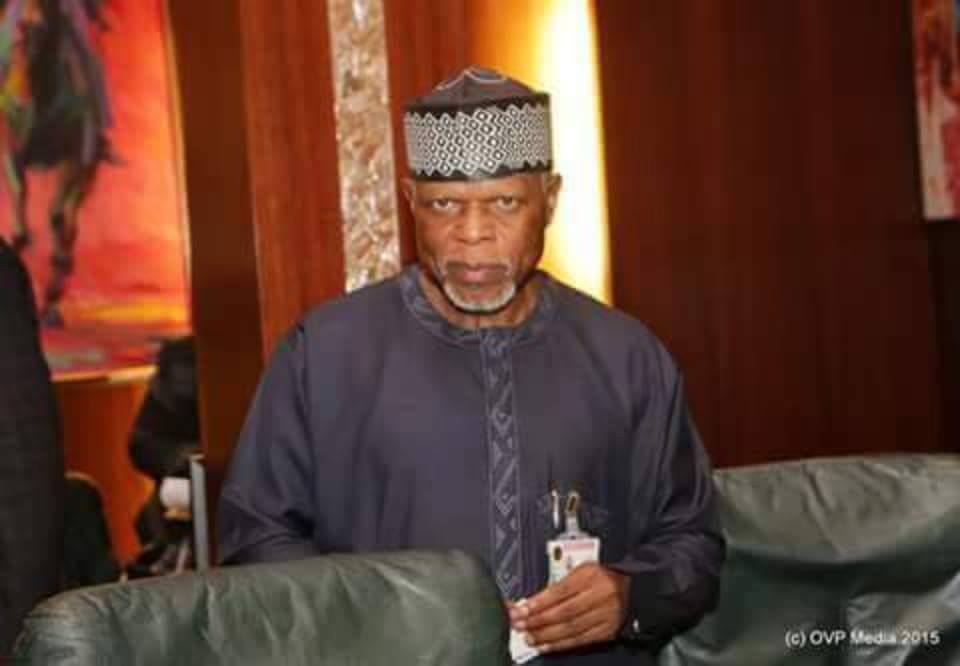
He expressed appreciation to the Comptroller-General of Customs, Col. Hameed Ali (Rtd), the management team of NCS and men and officers of the unit as well as sister agencies and the press for their various supports.

Continue Reading
Click to comment

Leave a Reply

Your email address will not be published. Required fields are marked *

Economy

World Bank Okays $1.25bn Loan for Nigeria, Unveils 6-Year Growth Strategy

Published

on

By

The approval, announced on Wednesday, falls under the Nigeria Actions for Investment and Jobs Acceleration (NAIJA) programme and is part of the World Bank’s Country Partnership Framework (CPF) for Nigeria, covering 2026 to 2032.

According to the bank, the financing will support reforms to improve competitiveness, deepen capital markets, modernise regulations for the digital economy, strengthen power sector reforms, expand agricultural productivity and enhance domestic revenue mobilisation. The programme also seeks to reduce trade barriers in line with Nigeria’s commitments under ECOWAS and the African Continental Free Trade Area.

The approval follows public debate over Nigeria’s rising debt profile, with some Nigerians questioning the country’s continued reliance on external borrowing and calling for greater transparency in the use of previous World Bank loans.

Beyond the financing, the World Bank said the new partnership framework aims to expand electricity access to 32 million Nigerians, provide broadband connectivity to 58 million people, improve health and nutrition services for 40 million citizens and support 9.5 million farmers through higher agricultural productivity.

World Bank Country Director for Nigeria, Mathew Verghis, said recent macroeconomic reforms had helped stabilise the economy but stressed that sustained improvements in living standards would depend on addressing structural constraints to private investment and job creation.

The World Bank Group added that its private sector arms, the International Finance Corporation (IFC) and the Multilateral Investment Guarantee Agency (MIGA), will support the strategy by mobilising private capital, expanding infrastructure investment and providing guarantees to reduce investment risks.

The new framework reflects the World Bank’s continued focus on supporting Nigeria’s economic reforms while encouraging greater private sector participation to drive long-term growth and reduce poverty.

Continue Reading

Economy

Dangote Refinery Files Lawsuit Against FG, NNPC, Marketers over Petrol Import Licences

Published

on

By

Dangote Petroleum Refinery has filed a fresh lawsuit against the Nigerian National Petroleum Company Limited (NNPC) and several fuel marketers, seeking to overturn fuel import licences issued by the Nigerian Midstream and Downstream Petroleum Regulatory Authority (NMDPRA).

According to court documents filed at the Federal High Court in Lagos and cited by Reuters, the refinery is asking the court to nullify import permits recently granted or renewed by the regulator, arguing that the approvals violate an earlier directive ordering all parties to maintain the status quo pending the determination of the case.

The legal action comes at a time when Nigeria is recording a sharp decline in petrol imports due to rising domestic refining capacity, largely driven by output from the Dangote Refinery.

In its filing, Dangote Refinery argued that Nigerian law permits fuel importation only when local production is unable to meet national demand. The company maintained that continued issuance of import licences undermines its operations as it ramps up production from its multi-billion-dollar refinery located on the outskirts of Lagos.

Fuel marketers, however, have consistently defended importation, insisting that imports remain necessary to guarantee a stable supply and prevent shortages across the country.

This is not the first dispute between Dangote Refinery and fuel importers. In 2025, the company filed a similar suit against NNPC Ltd and several marketers, including AYM Shafa Ltd, A.A. Rano Ltd, T. Time Petroleum Ltd, 2015 Petroleum Ltd and Matrix Petroleum Services Ltd, while also seeking ₦100 billion in damages. The suit was later withdrawn without explanation.

Recent industry data showed petrol imports dropped to 965.52 million litres in Q1 2026 from 2.43 billion litres in the same period of 2025. Meanwhile, supply from local refineries rose to 3.18 billion litres, accounting for about 76.7 percent of Nigeria’s petrol supply during the quarter.

Continue Reading

Economy

World Bank Flags ‘Hidden Spending System’ Diverting N34.53trn of Nigeria’s Revenue

Published

on

By

The World Bank has raised concerns over Nigeria’s fiscal framework, revealing that more than N34.53 trillion was diverted from federation revenue over the past three years through pre-distribution deductions.

In its latest Nigeria Development Update obtained from its website, the global lender disclosed that although total federation revenue rose sharply to about N84 trillion between 2023 and 2025, about 41 per cent of the earnings did not reach the Federation Account for distribution to the federal, state and local governments.

According to the report, gross revenue increased from N17.08 trillion in 2023 to an estimated N37.44 trillion in 2025. However, deductions classified as “first-line charges” also rose significantly, from N6.22 trillion to nearly N15 trillion within the same period, reducing the pool of funds available for distribution.

The World Bank noted that the development has created a paradox in which rising revenues have not translated into improved public spending capacity, as a substantial portion is automatically retained by certain agencies before allocation.

It explained that reforms such as the removal of petrol subsidy and foreign exchange adjustments boosted nominal revenues, but much of the gains were offset by the structure of deductions tied to cost of collection and statutory transfers.

Agencies such as the Nigeria Customs Service, Nigerian National Petroleum Company Limited, and the Federal Inland Revenue Service account for a significant portion of these deductions. The report stated that their funding is based on fixed percentages of gross revenue, leading to higher allocations as revenues increase.

Describing the model as “pro-cyclical”, the Bretton Woods institution said it operates outside the conventional budgetary framework and weakens legislative oversight. In some cases, allocations to individual agencies exceed the revenues of several states and even the budgets of key federal ministries.

The report also highlighted the impact on public finances, noting a decline in capital expenditure from N5.5 trillion in 2024 to N4.5 trillion in 2025, with only about 25 per cent of the approved capital budget implemented. Meanwhile, the federal fiscal deficit remained elevated at N16.9 trillion, driven by debt servicing and recurrent expenditure.

The World Bank warned that the current arrangement undermines fiscal transparency and accountability, as significant portions of public revenue are spent outside the standard appropriation process.

Source: tribuneonline

Continue Reading

Trending
