The Oracle
The Oracle: The Role of Courts in Enforcement of Judgments (Pt. 1)
Published
2 years agoon
By
Eric
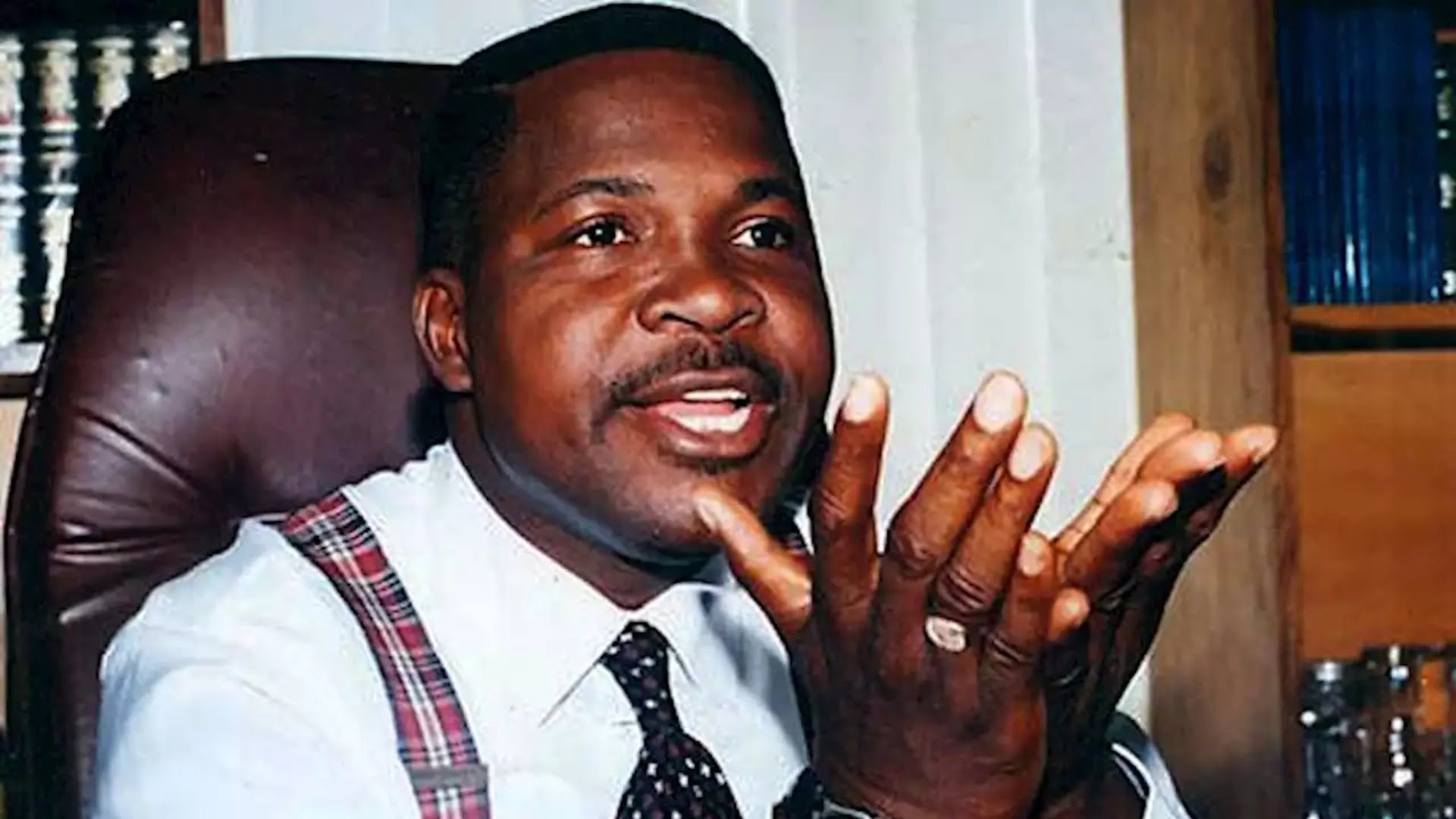
By Prof Mike Ozekhome SAN
Introduction
In Nigeria, the courts under the Constitution of Federal Republic of Nigeria, 1999 (Section 6, Constitution of Federal Republic of Nigeria, (as amended) 1999), has the power to hear and enter judgment in favour of a party to the matter, who has succeeded in proving his case. For any judgment delivered by a court of competent jurisdiction to become useful, it must be enforced, otherwise, the judgment cannot be used by the party to discharge the reliefs sought in the judgment by the court. There is no doubt, that the age long law is that a judgment of a Court of competent jurisdiction subsists until upset or sit aside on appeal. See NCC v. MOTOPHONE LTD & ANOR (2019) LPELR – 47401 (SC). This article shall focus on the role of the Courts in Nigeria, in the enforcement or execution of judgments delivered by the courts in Nigeria.
Therefore, in reviewing the role of the courts in the enforcement of judgement in Nigeria, we shall also review what courts and enforcement really mean, the types of judgments that is enforceable under Nigeria jurisprudence, the challenges encountered by courts in the enforcement of judgments, if any, and when a judgment is said to be fully and legally enforced or executed by a party to the judgment, through the courts.
What Is A Court?
A Court simply put is a forum, place or building where persons or corporate bodies litigants who have a dispute come to state facts and adduce evidence to prove their individual cases or allegations at trials. A court is constituted and established often by government as an adjudicating body or institution, with authority to decide legal disputes between and amongst disputants and running and managing the processes of justice in criminal and civil courts and adhering to the rule of law, equity and natural justice. The presiding person or groups of persons of these courts are usually called Magistrates, Judges, Justices and or Chairmen of Tribunals, which also serve as special courts.
There are various types of courts established under the 1999 Constitution of the Federal Republic of Nigeria [as Amended] 2011, [CFRN], from the Supreme Court of Nigeria (being the highest court of record) to customary courts.
Functions of Courts
The courts function as temples of justice, equity and natural law. The courts in Nigeria have many functions, including but not limited to the following:
1. Interpreting the law: The Courts interprets the Constitution and other laws, statutes and case law.
2. Protecting rights: The courts define citizens’ rights and protect vulnerable groups.
3. Resolving disputes: The courts settle disputes between parties through the application of rules and procedures.
4. Adjudicating: The courts determine guilt and administer punishment to those who have breached the law.
5. Guarding the Constitution: The courts are the guardians of the Constitution other laws, statutes and case law and upholds the rule of law.
6. Ensuring access to justice: The courts ensure that judicial services are accessible to everyone.
7. Upholding the rule of law: The courts protect and preserve the rule of law and ensures that laws are in accordance with the constitution and other higher laws.
8. Respecting human rights: The courts respect human rights and follows principles of fairness, equality, impartiality, legality and natural justice.
9. Delivering effective remedies: The courts deliver effective remedies and exercise their remit with the highest level of integrity.
10. Functions imposed by Statute Law: The courts exercises the role imposed by statutes, laws and the inherent powers of the courts.
What Is Judgment?
The word “judgement” can be termed as a pronouncement or a decision reached by a court over a matter that is pending before it. A person who judgment is entered in his favour is called the judgment creditor. The person whom a judgment is entered against is called the judgment debtor. It will suffice to say that judgment must be entered in favour of one party and not both the Claimant and Defendant. The Supreme Court defined the word ‘judgment’ in SARAKI & ANR. V. KOTOYE (1992) LPELR – 3016 (SC) as:
“A binding, authentic, official judicial determination of the Court in respect of the claims and in an action before it.”
Furthermore, UMANAH v. ATTAH & ORS, (2006) LPELR-3356(SC), Per NIKI TOBI, JSC, in defining what a judgment of court is, held that:
“The law is elementary that a minority judgment, as the name implies, is not the judgment of the court. The judgment of the court is the majority judgment.”
There are generally two types of judgments, to wit: Declaratory judgments and Executory judgments.
Declaratory judgments
A declaratory judgment is a court ruling that defines or clarifies the rights of the parties involved in a legal dispute. It’s a binding decision that can be used to resolve disputes, but it doesn’t require the court to order any action to be taken merely proclaims, or declares the existence of a legal relationship and does not contain any order which may be enforced against the judgment debtor. Furthermore, it is correct to state that a declaratory judgment is a binding judgment from a court defining the legal relationship between parties and their rights in a matter before the court.
It is a settled law that, whilst an executory judgment is capable of immediate execution, a declaratory judgment gives no such right. It merely declares the rights of the parties. The rights which it confers on the plaintiff can only become enforceable if another and subsequent judgment, albeit relying on the rights it declared, so decrees. Such a subsequent judgment conferring the power of execution is executor (See David Ogunlade v. Ezekiel Adeleye (1992) LPELR – 23040 (SC)). In such an instance, the date of enforceability will be the date of the subsequent (executory) judgment and not the earlier judgment, which is merely declaratory.
Executory Judgments
An executory judgment declares the respective rights of the parties and then proceeds to order the judgment debtor to act in a particular way, hence, it is enforceable. An executory judgment is a court order that is enforceable immediately after it is pronounced. It is also known as an enforceable judgment.
According to D.I. Efevwerhan¸ “every successful litigant desire to enjoy the fruit of his success, which is judgment.” Execution includes the process of carrying into effect the directions in a decree or judgment.
At this point, it may seem confusing for persons who are not well versed in law. However, this shall now digress to how a successful litigant can enforce a judgment against an unwilling judgment debtor.
Enforcement Of Judgment
Enforcement or execution of judgments can be defined as is defined as: “the process whereby a judgment or order of Court is enforced or given effect to according to law.”(See TUKUR v. GOVERNMENT OF GONGOLA STATE (1989) 4 NWLR (PT. 592) AT 608). The execution of a judgment thus encompasses the enforcement of the various writs provided under the laws for giving effect to a judgment and the most comprehensive laws governing enforcement of judgment are the Sheriffs and Civil Process Act, Cap S6, LFN 2004 and the Judgment (Enforcement) Rules. (Ibid).
It is one thing to argue your case before a court successfully and get judgment. It is another thing for the judgment creditor to objectify the fruits of his/her judgment. Often times, aside the psychological gratification of the declaration of’ judgment in winning party’s favour, the winning party ends up with a barren trophy, and the tangible realization of the fruits of the victory becomes a mirage. It is often times resulted from either ignorance or from the tiredness of protracted trial.
Before we progress into enforcement of judgment, it is good we know the law applicable in the enforcement of judgement of Nigeria. Some of these laws are:
a. Judgment Enforcement Rules
b. The Sheriffs and Civil Processes Act
c. The 1999 Constitution
d. Foreign Judgments [Enforcement Reciprocal] Act 2004
e. Administration Criminal Justice Act 2015.
f. The Civil Procedure Rules (Federal or States) of the several courts.
There are different modes of enforcing executory Judgments, as enforcement is according to subject matter. Under enforcement of judgment, the modalities for enforcing monetary judgment are different from the modes of enforcing possessory judgments.
A) Money Judgments
Under monetary judgments, the judgment debtor is expected to pay the judgment creditor the awarded sum. This sum may be damages awarded or a debt the Judgment Debtor owed the Judgment Creditor, which may sometimes constitute the subject matter of the suit.
Modalities for Enforcement of Monetary judgments:
a. Writ of Fieri Facias
This is process is adopted by a judgment creditor in a court to levy execution against the property of the judgment debtor; whether movable or immovable. It should be noted that the property must be within the within the jurisdiction of the court where the judgment was delivered. Under the Enforcement of Judgment, it can only be issued at the expiration of three (3) days from the date of delivery of judgment (see Order IV Rule 1(2) of the Judgment Enforcement Rules).
The initial step is on the movable property of judgment debtor. However, it must be limited to the property that may be seized and exempts wearing apparel, bedding and tools and implements of the judgment debtor’s trade to the value of N10, which is unarguably inconsequential because of the devaluation of the naira (see Section 25 of the Sheriffs and Civil Processes Act).
Another point to note is that seized property cannot be sold until the expiration of 5 clear days from the date of seizure, unless the goods are of a perishable nature or the judgment debtor requests that they be sold in writing. Where the seized and sold property of the judgment debtor cannot settle the debt, his immovable property may be attached but, with the leave of the High Court first. However, before the said leave can be obtained from a court by the judgment creditor, he must first show sufficient proof from the funds generated by the movable property did not settle the debt and that the property he is seeking to attach actually belongs to the judgment debtor.
To be continued
Thought for the week
The Supreme Court is the last line of defense for the separation of powers and for the rights and liberties guaranteed by the Constitution. (Brett Kavanaugh).
Related
You may like
The Oracle
The Oracle: The Independence of the Judiciary in a Democratic Dispensation (Pt. 3)
Published
3 days agoon
July 3, 2026By
Eric
By Prof Mike Ozekhome SAN
Introduction
Another public outrage attended the ex parte order granted by a Lagos High Court against the Nigeria Labour Congress (NLC) restraining it from calling out workers on a planned nationwide strike to protest the hike in price of petroleum products by the Federal Government. An Abuja High Court had refused the application because there was no genuine case of urgency. The Federal Government went down to Lagos and surprisingly a Lagos High Court, which had co-ordinate jurisdiction with the Abuja High Court granted the order. The NLC president, Adams Oshiomhole had to tell the whole world that the order was not binding on the NLC as it was obtained from the “Black market”. The strike went on as planned and the image of the Judiciary was worse off and its independence seriously put in question.
Another controversial ex-parte order was that made by a judge in the Abuja Division of the Federal High Court restraining the governor of Anambra State Dr. Chris Ngige from parading himself as governor. The order (which, apart from the questionability of the perceived extreme urgency attending it) could not be reconciled with the state of immunity enjoyed by the governor under the Constitution. The governor had to borrow the “Black market” appellation from Oshiomhole. Even more controversial and outrageous ex parte orders were dished out by the same court on the Anambra crisis alone.
At the heart of the issue of abuse of ex parte orders (especially in political issues) is the attendant erosion of public confidence in the independence and impartiality of the Judiciary. The ugly implications were rightly summed up by a writer as follows:
“In these instances of judicial recklessness, there was always the palpable belief that unseen hands moved the court to issue such controversial ex parte orders. That is the meaning of the ‘black market’ reference made by Oshiomhole and Ngige. None of them was prepared to obey a ‘black market’ order obtained outside the ‘official market’! They never obeyed and nothing happened!
Abuse of ex parte injunction aside from the grave implications it has on the independence of the Judiciary, is also capable of wide scale socio-political disaster as was the case with the annulment of the June 12 Presidential Election. The Judiciary set the key note of the disaster that followed when an Abuja High Court presided over the late Hon. Justice Bassey Ikpeme made an ex parte order restraining the conduct of the presidential election.
In the popular case of Kotoye V C. B. N 24 the Supreme Court settled the principles governing the grant of ex parte injunctions. Principally, the order can be made,
- When there is a real urgency but not a self-induced or self-imposed urgency.
- Where it is necessary to preserve the res which is in danger or imminent danger of being destroyed, and
- Where there is a real impossibility of bringing the application for such injunction on notice and serving the other party.
When these factors are inapplicable, a wise judge that imbibed good judicial milk would exercise his/her discretion by turning down the application and asking the applicant to put the respondent on notice. The institution has always stood against the menace of this abuse over the years. The former Chief Justice of Nigeria, Hon. Justice Mohammed Bello once bemoaned,
“indeed, there is urgent need among some of us, the judges, to appreciate that ex parte injunction which was devised as a vehicle for the carriage of instant justice in proper cases should not be converted into a bulldozer for the demolition of substantial justice, we should all realize that justice should be done to public functionaries and public institutions.
It has also been reiterated that lawyers equally have a role to play in the war against abuse of ex parte injunction. In this direction, the Hon. Justice C. P.N. Selong opined thus:
“In as much as the speech of the learned Chief Justice was directed at judges, I beg to opine that the same caution should apply to legal practitioners, after all both judges and legal practitioners are Ministers in the Temple of Justice. It is my humble view that an honest lawyer who abides by the ethics of the profession should not bring an application which is manifestly unjust”.
The need for restraint from both the Bench and the Bar on the issue was reiterated at the Annual Bar Conference, Enugu by the then Chief Justice of Nigeria, Honourable Justice Mohammadu L. Uwais, who counseled thus:
“I think it is not out of place to appeal to legal practitioners at large to exercise more restraint in and desist from advising their clients to bring absurd applications to court for ex parte injunctions. You will agree with me that unless such applications are brought, the inconsiderate and reckless judges amongst us will not find the opportunity to embarrass the judiciary and the profession in general’’.
It must be noted, that it is not in all cases where a judge grants an order perceived to be wrong that an actual case of influence arises. However, the perception of the public about justice is important – whether such perception is rightly or wrongly placed. This is because the standard of justice has always been objective: based on the notion of the reasonable man. Justice must not just be done, but manifestly be seen to be done. As one writer aptly put it:
“The role of the Judiciary in maintaining socio-political order cannot be compromised and once the citizen believes that somebody, other than the law and his judicial conscience, tells the judge what to say or do, then, the dangers of a system break down and institutional failure becomes real”.
Accordingly, the resolve of the National Judicial Council (NJC) to henceforth deal with judges who grant ex parte orders with recklessness cannot but be supported and encouraged. Charity begins at home. The filthy Augean stable must be cleansed.
We have concentrated on the issue of in-house cleaning by the Judiciary itself because we realize that the most ready and devastating blow to the independence of the Judiciary in the mind of the public is usually struck by the inability of some of the judges themselves to conduct the affairs of the Bench so judicially and judiciously as to inspire public confidence in their independence from external influence. Even some lawyers themselves fall into the league of those members of the public who doubt the independence of the Judiciary on the ground of questionable judicial orders. In this regard, Uche Onyegorocha, a lawyer and member of the House of Representatives while responding to a question from the press on the unpopular pronouncements of a Federal High Court judge, said:
“I see undue influence in the whole process. I see a person that is not acting independently. Like I said earlier I see people playing the drum for him in the bush and he is dancing on the street”.
But beyond the question of conduct of the members of the Bench in handling cases brought before them are more technical and political issues of political, economic/fiscal and intellectual independence. These we shall presently address.
POLITICAL INDEPENDENCE
The Judiciary ought to be apolitical in a democratic dispensation to safeguard its independence. Accordingly, judges should not only be free from political affiliation, but the system should be organized in such a manner as to ensure that a judge does not give a decision biased in favour of a political party, especially the ruling party. Accordingly, Nwabueze identified two forms of judicial involvement in politics (i.e organized politics) as:
- decisions biased in favour of a ruling party, and
- judicial membership of political parties.
It is submitted that Nigeria’s adoption of multiparty democracy is healthy for the protection of the ‘political independence’ of the Judiciary. The term ‘political independence’ should be understood to mean the freedom of the Judiciary from having any form of political influence exerted ion it as to undermine its independence from any individual, group or another arm of government. Nigeria should strive to refuse any attempt to reduce the country into a one-party democracy since the political independence of the Judiciary would obviously be difficult to be achieved therein. The concept of an apolitical judge is utopian in a one-party system. According to Mr. Justice Georges, a former Chief Justice of Tanzania,
“The concept of the judge as neutral, belonging to no party in the multiparty democracy, can have no meaning …. Where there is one party”.
It has been argued that the involvement of the Executive in the appointment of Judges undermines the imperatives for the freedom of the Judiciary from political influence. It is however, our view that the system of appointment under the Constitution is the best we can have at present. If more caution is employed in the appointment of judges, no problem of want of independence would be posed by the appointment method. Nigeria is not yet ripe for election of judges or else the system would be thoroughly polluted by politics. (We shall look at the issue of appointment of judges subsequently).
Indications that a cross section of Nigerians believe that a section of the Judiciary might have compromised their judicial oath can be gleaned from this passage from a major national daily:
“The Chief Justice of the Federation, from indications, prefers his colleagues to stand above the fray of Nigeria’s turbulent political process. This position may have been informed by the ignominious role played by the judiciary in the country’s chequered political history. But despite the goodwill enjoyed by the judiciary due to a mature handling of suits, that sought to stop the recent general elections, the (sic) a section of the bench may have unwittingly placed this third arm of government in the dock”. (To be continued).
Thought for the Week
“We are under a Constitution, but the Constitution is what the judges say it is, and the judiciary is the safeguard of our property and our liberty and our property under the Constitution” – Charles Evans Hughes
Related
The Oracle
The Oracle: The Independence of the Judiciary in a Democratic Dispensation (Pt. 2)
Published
1 week agoon
June 26, 2026By
Eric
By Prof Mike Ozekhome
Introduction
Last week we commenced this series with some operational definitions, today we shall continue and conclude on the definitions and take a critical look at some cases – their good parts, deficiencies and worst case scenarios. Read on.
Definition of Terms (continues)
During the colonial and military regimes, the Executive always attempted to undermine the Judiciary, erode its independence and powers of coercion and have a field day with illegality and impunity. On those occasions, the Judiciary always stood up courageously to uphold the rule of law. In Eshugbayi Eleko Vs. Government of Nigeria the Judicial Committee of the Privy Council declared null and void and of no effect whatsoever the deportation of the Oba of Lagos from his domain to an entirely different part of Nigeria on the ground, inter alia, that the Governor had no such power inspite of the fact that the Governor was then vested with both executive and legislative powers. It held:
“No member of the executive can interfere with the liberty or property of a subject except on the condition that he can support the legality of his action before a court of justice.”
In Lakanmi & Another Vs. A-G, Western State, the Supreme Court courageously declared null and void Edict No. 5 of 1967 promulgated by the Western State Government and Decree No, 48 and 45 of 1968 promulgated by the Federal Military Government, on the ground that they were ad hominem legislations. The legislations dealt with forfeiture of assets. The Supreme Court held that the 1963 Constitution clearly provided for separation of powers between the Judicial and the Executive and that Decree No. 45 of 1968 was a clear usurpation of the Judicial powers of the courts. Chief Rotimi Williams has then argued that the Decree which named specific people and confiscated their property were ad hominem and unconstitutional. The Supreme Court held that the legislations amounted to judicial rather than legislative acts and struck them down. In reply, the Federal Military Government of General Yakubu Gown promulgated Decree No. 28 of 1970 to undermine the Judiciary. The Decree was audacious and even brutal in its title: “The Federal Military Government (Supremacy and Enforcement of Powers Decree No. 28 of 1970.” The Decree restated the sacredness and unquestionability of any Decree or Edict promulgated or purported to be promulgated by the military government. But the Adetokunbo Ademola-led Supreme Court at the time was not intimidated.
In Governor of Lagos State Vs. Ojukwu Kayode Eso,JSC emphatically declared that:
“Under the Constitution of the Federal Republic of Nigeria, 1979, the Executive, the Legislature (while it lasts) and the Judiciary are equal partners in the running of a successful government. The powers granted by the constitution to these organs by Section 4 (Legislative Powers), Section 5 (Executive Powers) and Section 6 (Judicial Powers) are classified under an omnibus umbrella known under part II to the Constitution as Powers of the Federal Republic of Nigeria’. The organs wield those powers and one must never exist in sabotage of the other or else there is chaos, Indeed there will be no federal government. I think, for one organ, and more especially the Executive, which holds all the physical powers, to put up itself in sabotage or deliberate contempt of the other is to stage an executive subversion of the constitution it is to uphold. Executive lawlessness tantamount to a deliberate violation of the constitution.”
There are many cases decided during the military era and under democratic environment that underscore the relentless efforts by other arms of government, especially the Executive to erode the independence and vibrancy of the Judiciary as a way of expanding their own frontiers of influence, unquesitonability and impunity.
Since the Executive has considerable (if not total) influence over the wealth of the State and over the appointment of Judges, it continuously seeks to make the Judiciary dependent by starving it of funds and by influencing the enthronement of mediocrity on the Bench. Issues in independence of the Judiciary may thus be broadly classified into three, viz, political independence, economic independence and intellectual independence. Before looking at these issues in detail, we may take a look at the face of Nigeria’s Judiciary so that the issues can simultaneously be matched with the ease.
The Case (The Good, The Bad, The Ugly)
“Since I made the order of the remand of the accused person last Thursday and up till about 10 minuets before I sat this morning, I have been under untold pressure and threat from many quarters urging me to arrive at a particular decision ever before I listen to the accused. Let me make it that as a Muslin, the teaching of my religion is clear about death being the ultimate. I am therefore not bothered about any such threat. I am, however, worried about the untold pressure coming, as it were, from unexpected quarters… To continue with this case will…..be a breach of the solemn pledge I made when I became a judge (i.e) to administer justice without fear or favour and without ill-will or affection. In view of the foregoing, I hereby remit this case file to the honourable chief judge for re-assignment to another judge.”
In this way, Honourable Justice Mashood Abass of the Oyo State High Court washed his hands off, like Pontius Pilate, of the trial of Otunba Iyiola Omisore and other accused persons standing trial for the murder of Late Chief Bola Ige, SAN (Slain Attorney-general of the Federation). After the controversial withdrawal of the judge, allegations of undue pressure, bribery, arm-twisting tactics, threats and promises directed against the judge inundated the media.
Before, the breaking of this unpalatable story, a sordid allegation of bribery had been trailing the Election Tribunal that sat in Akwa Ibom State over the petition of Dr. Imeh Umanah, against the election of the then incumbent governor, Obong Victor Attah.
In Enugu State, matters came to a head when an Election Tribunal had to relocate to Abuja to complete its job after alleging that Enugu State was no longer safe for its honourable members. These are bad times for the Judiciary!.
But in Anambra State, the State Chief Judge, Honourable Justice C. J. Okoli proved to be a pride of the Judiciary when he smartly ‘made himself unavailable’ during the July 10, 2003 abduction of the governor of Anambra State, Dr. Chris Ngige by his political enemies. The House of Assembly had passed a motion asking the Chief Judge to swear in the Deputy Governor as incumbent governor, but the Chief Judge was not available to carry out the resolution. By that act, his lordship saved the Judiciary from being enmeshed in the dirty politics of the state, which almost consumed the other arms of government.
More than any other factor, the abuse of ex-parte injunction by some judges has immensely contributed to the erosion of public confidence in the Judiciary under this democratic dispensation. Most of the ex parte orders granted under controversial circumstances involved situations where the Executive was either the direct beneficiary or had an interest which the public believed (rightly or wrongly) the Judiciary merely ‘co-operated’ to protect. This perception is a dangerous omen for independence of the Judiciary, because the Justice must not only be done but must be manifestly seen to have been done.
During this democratic dispensation, an Abuja High Court granted an ex parte order stopping the national convention which of the All Nigeria Peoples Party (ANPP) when preparation for the convention had already gulped millions of naira and party members had already converged at the venue in Abuja. Most Nigerians did not believe that the Judge was not acting in the interest of the rival ruling Peoples Democratic Party (PDP) given the controversial and damaging circumstances under which the order was made. The resulting outrage cost the judge his job.
Another, Abuja High Court made an order restraining the National Assembly from further deliberating on a bill before it to amend the Independent Corrupt Practices and other Related Offences Act 2000. The Executive was interested in killing the bill. The order was made in defiance of the trite principle of the doctrine of separation of powers which precludes the courts from assuming jurisdiction over a bill that has not become law. In articulating the position of the Court of Appeal on the question of Judicial interference in the law making process purportedly under section 4(8) of the 1999 Constitution, Hon. Justice Mamman Nasir, P. said:
“though the courts have been given very wide powers under the subsection, the intention is not to authorize the Judiciary to interfere with the legitimate exercise of the powers of the legislature or the procedure to be followed in such exercise at power given to the courts comes into action after the legislature has enacted the law…”.
A similar controversy trailed the ex parte order given by the same Abuja Federal High Court which directed the Independent National Electoral Commission (INEC) to issue a certificate of return to Chief Adolphus Wabara (PDP) as Senator representing the Abia South Senatorial Zone. INEC complied (apparently reluctantly) and Wabara became the president of the senate the next day. The source of the controversy was that INEC had earlier declared Elder Dan Imo (ANPP) as the winner of the seat. As Ogbham-Emeka, a counsel in Mike Ozekhome’s Chambers observed about the controversy in ThisDay Law,
“The question how the Abuja Federal High Court assumed jurisdiction over the matter and how the issue became one suitable for an ex parte order raked up a lot of dust. When the dust subsided not a few people concluded that it was the court and not the electorate that gave Senator Wabara the Abia South Senatorial ‘mandate’. But that was not to be the end of the regime of such demonstrable judicial anarchy that force litigants to choose which court order to obey and which not to obey, a situation that spells doom for a regime of law and order”. (To be continued).
Thought for the Week
“A functioning, robust democracy requires a healthy, educated, participatory followership and an educated, morally grounded leadership”. (Chinua Achebe).
Related
The Oracle
The Oracle: Enforcement of Fundamental Human Rights Under the 1999 Constitution of Nigeria (Pt. 4)
Published
2 months agoon
May 22, 2026By
Eric
By Prof Mike Ozekhome SAN
INTRODUCTION
In our last discourse on this series, we examined the procedure for enforcement of fundamental rights, including applications for leave; as well as the substantive application itself and the reactions that follow. Today, we shall continues from where we stopped with the substantive application itself and the reactions thereto and later x-ray the applications to squash proceedings; applications for production and/or release of persons restrained; orders for bail, production and access to medication. Please read on.
SUBSTANTIVE APPLICATION: THE MOTION OR SUMMONS (Continues)
In the case of LAWRENCE OLUSEGUN ADEYEMO V. C.O.P, OYO STATE ([2021] LPELR-56272(CA)), the applicant requested the court for a writ of habeas corpus under order 2 of the fundamental Rights (Enforcement Procedure) rules 1979 which provision enjoined the applicant to serve all parties who are or might be interested in the proceedings. Although the affected party had put up appearance, but raised a preliminary objection to the application for non-compliance with the statutory conditions. Babalakin. J. (as he then was) struck out the application on the ground that order 2(1)(4) is mandatory whether the application is for mandamus, certiorari, or habeas corpus.
However the Supreme Court in recent times in respect of the fundamental rights enforcements has favourably leaned towards the equitable principle of “Ubi Jus Ubi remedium”, therefore looking more at the substance rather than the form. Hence the liberalization of the procedure for the enforcement of fundamental rights as exposed in the case of ABACHA V. FAWEHINMI ((2000) 6 NWLR (Pt. 660) 228) and UBI UJONG INAH & ORS V. MARCUS UKOI ((2001) (CA) 41981.
APPLICATION TO QUASH ANY PROCEEDINGS
Sometimes it may be necessary for an applicant by way of certiorari to apply to the court for an order that such proceedings be removed from a particular court or tribunal to another court for the purpose of being quashed for lack of power and/or jurisdiction to entertain such proceedings or make such order.
However, an applicant shall not be able to question the validity of any order, warrant, commitment, conviction, inquisition or record unless before the hearing of his application (Motion or summons), he has served a certified copy (CTC) thereof together with a Copy of the application on the Attorney-General of the Federation or of the State in which the applicant is being heard (as the case may be).
The court in granting an application seeking to quash proceedings, shall direct that the order, proceedings, conviction or the records of an inquisition be quashed forthwith upon being removed into the court hearing the application.
APPLICATION FOR PRODUCTION AND/OR RELEASE OF PERSON RESTRAINED
By virtue of Order 4 of the Fundamental Rights (Enforcement Procedure) Rules, where an applicant complains of wrongful or unlawful detention, the court or judge to whom the application is made ex-parte may make an order forthwith for his release from such detention.
The court may also direct that an originating summons (as in form 2) be issued or that an application therefore be made by notice of motion (as in form 3). The court may also as it deem fit adjourn the ex-parte application so that notice thereof may be given to the person against whom the order for the release of the applicant is sought.
ORDER FOR BAIL, PRODUCTION, AND ACCESS TO MEDICATION
Pursuant to order 4 of the bail application, the court upon application may grant to the detainee reliefs including bail, production of the detainee, access to mediation etc.
The court may grant bail at ex-parte stage, pending the substantive application. Where an applicant complains of wrongful or unlawful detention, the court may subject to its discretion order that the person restrained be produced in court. And where such order is so made, it shall constitute a sufficient warrant to any superintendent of a prison, police officer in charge of a police station, police officer in charge of the complainant or any other person responsible for his detention, to produce or ensure the production of the person so restrained or detained in court.
For the purpose of enforcing a person’s fundamental rights, no matter where a detainee is kept he can be allowed access to his personal physician or medically prescribed drugs.
It suffices to note here, that once an order has been made by the court pursuant to the Enforcement Rules, and for the purpose of enforcing or securing the enforcement of any of the fundamental rights provided for in the constitution, such order must be complied with. Failure to obey or comply with any order so made by the court under these rules will incur proceedings for the committal of the party disobeying such an order.
CONCLUSION
Without any controversy, the idea of human rights and personal liberties has become firm and secured. The universality and immutability of human rights are now globally accepted. Consequently, any nation that slacks or shyies away from the diligent protection and enforcement of human rights stand the precarious risk of being shunned by decent and civilised nations. The United Nations seems to have captured the importance and primacy of the issue of human rights and its protection when it poignantly stated as follows:
“Human Rights and fundamental freedoms are the birth right of all human beings, their protection and promotion is the first responsibility of Government” (Universal Declaration of Human Rights (UDHR).
It is the duty of every Government everywhere and every courts of law in every jurisdiction to promote, protect, uphold, and ensure enforcement of fundamental Human rights at all times, because these rights encapsulate the very essence of man.
The end.
THOUGHTS FOR THE WEEK
“Human rights, of course, must include the right to religious freedom, understood as the expression of a dimension that is at once individual and communitarian – a vision that brings out the unity of the person while clearly distinguishing between the dimension of the citizen and that of the believer”. – Pope Benedict XVI.
“Because no matter who we are or where we come from, we’re all entitled to the basic human rights of clean air to breathe, clean water to drink, and healthy land to call home”. – Martin Luther King III
“Human rights are not only violated by terrorism, repression or assassination, but also by unfair economic structures that creates huge inequalities”. – Pope Francis.
Related


Just In: Elumelu Retires As UBA Chairman, Nnorom Steps In
The Audacity of the Rubber Stamp Republic
Family Bids Farewell to a Distinguished Matriarch, Chief (Mrs.) Folashade Ajayi in Osun
IMF: Reveal Those Who ‘Stole’ 2% of Nigeria’s GDP, Atiku Tells Tinubu
Falana Asks Gbajabiamila to Step Aside for Probe over Alleged PFIPC Fraud
The Power of One Man: How Erling Haaland’s Norway Ended Brazil’s World Cup Dream
Fashion Icon, Eniafe Momodu, Joins Berlin Contemporary Jury
Glo Celebrates Executive Director, Sade Michael-Adenuga at 31
The Inherited Fracture: Escaping the Divide-and-Rule Instinct Across Board
Luka Modric’s World Cup Story Ends, Cristiano Ronaldo Gets Lifeline
Finance Minister Oyedele Defends Tinubu’s Borrowings, Says ‘It’s Not Immoral’
Trump Warns of Attack on American Identity As US Turns 250
Over 17 Million Nigerians from Nine Northern States Are Facing Hunger Crisis, Says United Nations
GbajaGate: I’ve Done No Wrong, Govt Playing to Shut Me Up – Adeyemi Matthew Speaks from Hiding
Trending
-
Boss Picks6 days agoGlo Celebrates Executive Director, Sade Michael-Adenuga at 31
-
Opinion3 days agoThe Inherited Fracture: Escaping the Divide-and-Rule Instinct Across Board
-
Sports4 days agoLuka Modric’s World Cup Story Ends, Cristiano Ronaldo Gets Lifeline
-
National6 days agoFinance Minister Oyedele Defends Tinubu’s Borrowings, Says ‘It’s Not Immoral’
-
USA3 days agoTrump Warns of Attack on American Identity As US Turns 250
-
National3 days agoOver 17 Million Nigerians from Nine Northern States Are Facing Hunger Crisis, Says United Nations
-
Headline5 days agoGbajaGate: I’ve Done No Wrong, Govt Playing to Shut Me Up – Adeyemi Matthew Speaks from Hiding
-
Voice of Emancipation1 day agoVoice of Emancipation: Will Tinubu’s Six Geopolitical Zones Save the One Nigeria Project