Connect with us

Opinion

Democracy and Prosperity of Nigerian Citizenry: Foundations for Deciding a Fruitful Future

Published

on

By Tolulope A. Adegoke PhD

Democracy, at its best, represents far more than periodic elections or formal institutions of government. It is a living covenant between the state and its people — one that promises participation, accountability, justice, transparency, and the genuine opportunity for collective advancement. In Nigeria, Africa’s most populous nation and a key actor on the global stage, the interplay between democracy and the prosperity of its citizens remains central to the nation’s future. When democracy is nurtured with sincerity and competence, it becomes a powerful driver of human development, economic growth, social cohesion, and national stability. When it falls short, it risks breeding disillusionment, inequality, and unrest. This write-up examines this vital relationship, reflecting on Nigeria’s democratic journey, its impact on citizen well-being, persistent obstacles, and realistic pathways toward a more secure, prosperous, and hopeful future for all Nigerians.

The Promise and Practice of Democracy in Nigeria

Nigeria’s return to civilian rule in 1999 ushered in the longest stretch of uninterrupted democratic governance in the country’s post-independence history. The 1999 Constitution, despite its imperfections, enshrines core principles such as separation of powers, fundamental human rights, federal character, and regular elections. For millions of Nigerians, democracy symbolises the chance to have a voice in shaping their destiny and to benefit from responsive governance.

True democratic prosperity goes beyond economic statistics. It encompasses improved access to quality education, healthcare, security, infrastructure, decent employment, and equal opportunities. When citizens experience tangible improvements in their daily lives as a result of democratic processes, public trust in institutions grows stronger. Conversely, when prosperity remains elusive for large segments of the population, democratic legitimacy weakens.

Nigeria has recorded notable achievements within its democratic framework. The liberalisation of the telecommunications sector, banking reforms, the rise of the creative economy (Nollywood, music, and digital content), and increasing participation in regional trade agreements such as the African Continental Free Trade Area (AfCFTA) all occurred in a democratic environment that enabled private enterprise and innovation.

Persistent Challenges on the Path to Prosperity

Despite these gains, significant gaps remain between democratic aspirations and lived realities. Nigeria continues to grapple with high rates of multidimensional poverty, youth unemployment, and widening inequality. Many citizens, particularly in rural areas and among vulnerable groups, feel disconnected from the dividends of democracy.

Key challenges include:

  • Insecurity: Persistent threats from insurgency, banditry, kidnapping, and communal conflicts continue to destroy lives, displace communities, and discourage investment.
  • Economic Structure: Over-reliance on oil revenue, weak industrial base, and limited value addition in agriculture and solid minerals constrain broad-based prosperity.
  • Institutional Weaknesses: Corruption, uneven policy implementation, and limited coordination across government levels often undermine development efforts.
  • Human Capital Deficits: Inadequate investment in education, healthcare, and skills development leaves many young Nigerians unprepared for the demands of a modern economy.
  • Electoral and Governance Issues: Concerns about electoral integrity, political patronage, and policy inconsistency sometimes erode public confidence.

These issues are not unique to Nigeria. Many democracies worldwide, especially in developing contexts, face similar tensions between democratic ideals and developmental outcomes.

Practical Pathways to a Deciding and Fruitful Democratic Future

For democracy to truly assure prosperity for the Nigerian citizenry, deliberate and sustained actions are required across multiple fronts:

1. Strengthening Institutions and Accountability Independent and well-resourced institutions — particularly the judiciary, anti-corruption agencies, and electoral bodies — are essential. Transparent appointment processes, adequate funding, and robust oversight mechanisms can significantly reduce impunity and enhance public trust.

2. Inclusive Economic Transformation Nigeria must accelerate economic diversification by investing heavily in agriculture, technology, manufacturing, renewable energy, and the creative industries. Policies should deliberately target small and medium enterprises, women, and youth. Human capital development through quality education, vocational training, and digital skills must become a national priority.

3. Security as a Foundation for Prosperity A holistic security strategy that combines effective law enforcement with community engagement, intelligence-led operations, and massive socio-economic interventions in affected regions is vital. Addressing the root causes of conflict — poverty, unemployment, and marginalisation — is as important as tactical responses.

4. Youth and Women Empowerment With a predominantly youthful population, Nigeria’s greatest resource is its people. Deliberate investments in youth entrepreneurship, innovation hubs, sports, and leadership development can transform demographic pressure into a powerful dividend. Similarly, gender-inclusive policies that enhance women’s access to education, finance, and political participation will accelerate national progress.

5. Deepening Democratic Culture and Participation Civic education, responsible media, and active citizen engagement beyond election periods are crucial. Citizens must be empowered to demand accountability while contributing constructively to nation-building.

6. Leveraging Regional and Global Opportunities Nigeria should continue to play a leadership role in ECOWAS and the African Union while attracting responsible foreign investment and technology transfer. Successful democratic governance and economic progress in Nigeria can serve as a beacon for other African nations.

Relevance to the Wider-World

Nigeria’s democratic experience offers valuable lessons for other nations navigating the complex relationship between democracy and development. It demonstrates the resilience of democratic ideals even in challenging contexts, the power of a vibrant civil society, and the potential of a youthful population. At the same time, it highlights the universal truth that democracy must deliver tangible results to remain legitimate and sustainable.

Conclusion: Democracy as an Assurance of a Fruitful Future

Democracy remains the most credible pathway to sustainable prosperity for the Nigerian citizenry. While challenges persist, they should not overshadow the progress achieved or the immense potential that still lies ahead. The deciding factor for a fruitful future lies not in abandoning democracy, but in deepening, refining, and perfecting it.

This requires visionary and ethical leadership that prioritises the common good, active and responsible citizenship that demands accountability, and institutional reforms that translate democratic promises into tangible improvements in people’s lives. When democracy truly works for the people — delivering security, opportunity, justice, and dignity — it becomes the strongest assurance of a stable, prosperous, and hopeful future.

Nigeria stands at a critical crossroads. The choices made by leaders and citizens today will determine whether the promise of democracy translates into widespread prosperity or remains an unfulfilled aspiration. With courage, wisdom, collective commitment, and sustained effort, Nigeria can build a democracy that not only endures but genuinely serves the aspirations of its people — offering inspiration to many nations facing similar journeys around the world.

The future of the Nigerian citizenry can be brighter — if democracy is well defended, strengthened, and made to work for all.

Dr. Tolulope A. Adegoke, AMBP-UN is a globally recognized scholar-practitioner and thought leader at the nexus of security, governance, and strategic leadership. His mission is dedicated to advancing ethical governance, strategic human capital development, resilient nation building, and global peace. He can be reached via: tolulopeadegoke01@gmail.comglobalstageimpacts@gmail.com

Continue Reading
Click to comment

Leave a Reply

Your email address will not be published. Required fields are marked *

Opinion

GLO and the Democratization of Communication in Nigeria

Published

on

By

By Dr. Sani Sa’idu Baba

Glo, the “Digital Oxygen” of Nigeria’s Democracy

As Nigeria marked Democracy Day on June 12, it is important to celebrate not only our democratic journey as a nation, but also institutions whose values and contributions reflect the very essence of democracy.

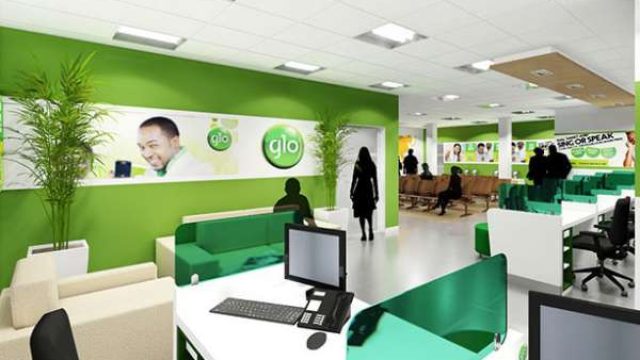
In Nigeria’s telecommunications industry, Glo stands out as arguably the most democratic network. Democracy thrives on inclusion, accessibility, equal opportunity, participation, and the empowerment of the people. Since its inception, Glo has consistently demonstrated these ideals through its commitment to making communication affordable and accessible to millions of Nigerians.

By pioneering competitive tariffs, affordable data services, and innovative products tailored to the needs of ordinary citizens, Glo helped break barriers to communication and brought connectivity within reach of people across different social and economic backgrounds. In doing so, it democratized access to information, knowledge, and opportunities in an increasingly digital world.

This commitment has been tested in recent times. Following the Nigerian Communications Commission’s approval of a 50 percent tariff adjustment across the telecommunications industry in 2025, operators were compelled to review their pricing structures. Yet Glo’s response reflected a people-first philosophy even amid economic pressure. Through generous data bundles, rollover benefits, value-back offers on MiFi devices, and bonus data packages, the company sought to cushion the impact on subscribers. While the industry generally moved toward higher costs, Glo worked to ensure that communication remained within the reach of ordinary Nigerians, staying true to the democratic principle that access should never be reserved for a privileged few.

Glo’s democratic approach extends beyond pricing to infrastructure development. Its 2025–2026 network modernization programme, which involved the deployment of over a thousand new 4G LTE sites, spectrum expansion, and the reconstruction of critical fibre routes, has been particularly noteworthy for its focus on underserved rural communities as well as densely populated urban centres such as markets and educational institutions. Democracy is not merely about serving those already at the centre of power; it is about extending opportunity to those at the margins. By expanding connectivity to communities that have historically been overlooked by telecommunications infrastructure, Glo has quietly been democratizing not only communication but also access to the digital future.

A key pillar of any true democracy is the protection and promotion of freedom of speech and expression. Through its reliable and affordable network, Glo has empowered millions of Nigerians to express their views, share ideas, engage in public discourse, and connect with others without being constrained by cost or access. This is not an abstract principle. It is reflected daily in the WhatsApp groups, Facebook communities, online forums, and citizen-led conversations that increasingly shape Nigeria’s political and social discourse. From grassroots town hall engagements to real-time reactions during elections and national debates, Glo provides a platform through which citizens exercise one of the most fundamental rights in a democratic society.

Furthermore, Glo’s unwavering support for local content, Nigerian talents, sports, entertainment, and entrepreneurship reflects its belief in creating opportunities for people to succeed and contribute meaningfully to national development. From its long-standing sponsorship of football competitions to its investment in Nigerian music, Nollywood, and homegrown entrepreneurial initiatives, Glo has consistently amplified Nigerian voices and celebrated Nigerian excellence. This commitment to empowering individuals mirrors the democratic principle of broad participation and shared progress.

As we honour the heroes of June 12 and reflect on the sacrifices that paved the way for democratic governance in Nigeria, Glo deserves recognition as a corporate institution that has consistently advanced the values of inclusion, accessibility, empowerment, and freedom of expression. In many respects, Glo has done for communication what democracy seeks to do for governance: place power in the hands of the people.

As Nigeria celebrates Democracy Day, Glo stands not merely as a telecom provider but as a symbol of inclusion, accessibility, and empowerment. In connecting millions of Nigerians to one another and to the world, it has helped deepen democratic participation and amplify the voices of ordinary citizens. It is more than a network. It is more than “unlimited.” It is “digital oxygen” that keeps Nigeria’s democratic conversation alive.

Happy Democracy Day, Nigeria.

Continue Reading

Opinion

A SILEC Voice Against the Tide by Kwame Jamal

Published

on

By

The morning sun streamed through the stained-glass windows of the Anglican Church of Transformation Hall, casting patches of amber and gold across the gathered crowd. Mothers clutched small bouquets—it was Mother’s Day—and children fidgeted in their seats, unaware that history was about to be made in their midst.

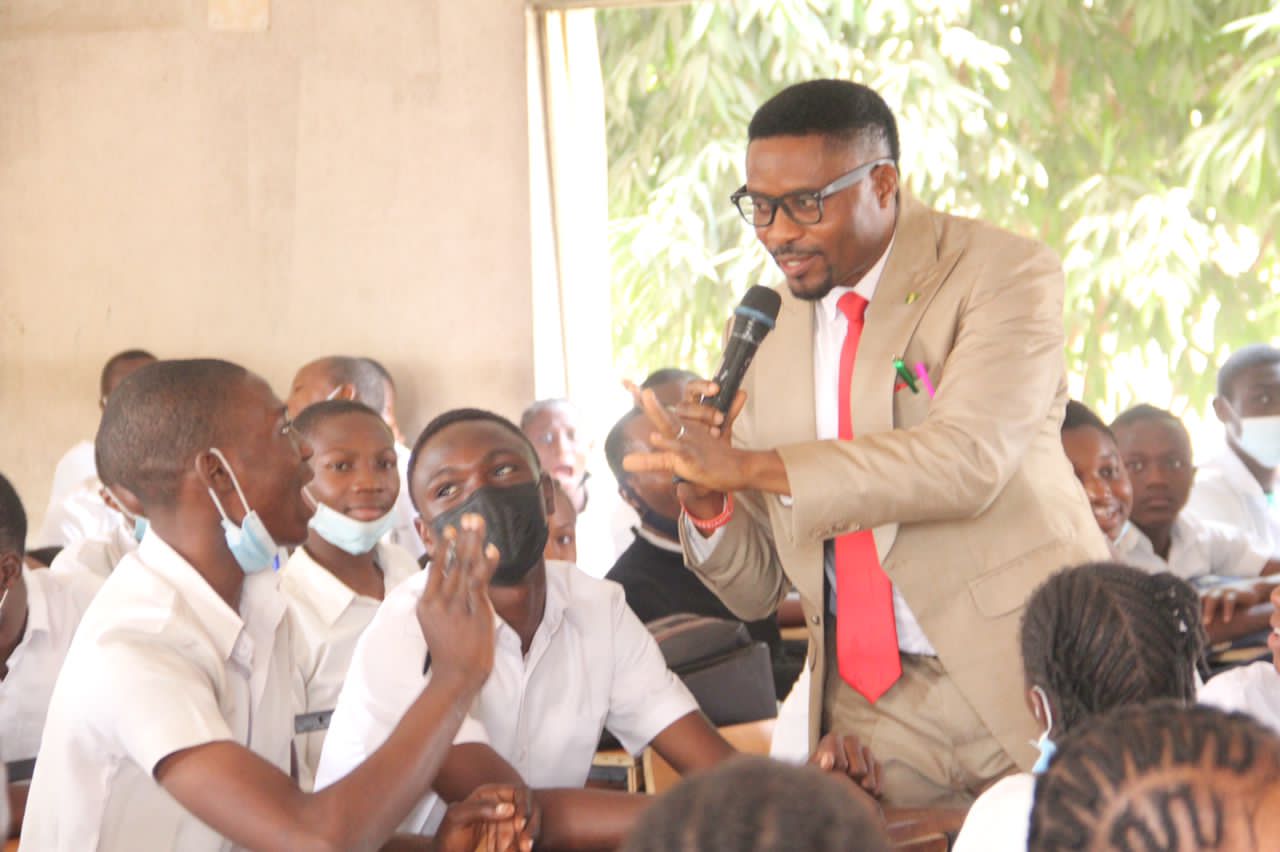
At the podium stood Sunny Irakpo, his hands steady on the lectern, his voice carrying the weight of nearly two decades of quiet war. Not a war of soldiers or bombs, but one fought with pamphlets, school visits, rehabilitation talks, and now—something far greater.

Before him sat bishops in clerical collars, doctors in tailored suits, community leaders in colorful Nigerian attire, and ordinary men and women who had crossed oceans for a better life. They had come to witness the unveiling of the SILEC International Magazine (SIM)—the first global media platform dedicated exclusively to reporting drug-related issues across Africa, the United States, and beyond.

“Just like a SIM device is important to a phone,” Sunny began, his voice warm yet resolute, “imagine one with a sophisticated phone without a SIM. Such a phone will be useless. Therefore, SIM is a solution provider—an enabler designed to bring value, reset mindsets, and create a global platform bold enough to revolutionize the media ecosystem.”

The room leaned in.

Three hours earlier, Revd. Canon Paul Obike had opened the ceremony with a prayer and a smile. The anchor Venerable Shola Ogbedebi , He looked out at the sea of faces—mothers, especially, whom he thanked for their invisible labor of raising children in a world saturated with temptation.

“Sunny Irakpo,” Ogbedebi had said, “is a courageous young man with strong passion and zeal, championing a worthy cause that has taken the lives of many promising youth in Nigeria, the United States, and across the globe. He is a trailblazer. A strong voice that keeps shaping policy direction.”

The audience had applauded, some wiping tears. They knew the statistics. They had buried nephews, cousins, sons.

Now, as Sunny continued his address, he moved from metaphor to mission.

“SILEC International Magazine is not just a publication,” he said. “It will drive awareness, create employment opportunities for young people, and support underprivileged students—particularly in Nigeria, where more than twenty million children remain out of school due to financial hardship.”

He paused, letting the number settle.

“Twenty million.”

A murmur rippled through the hall.

Sunny spoke of the vision conceived years ago, held in his heart like a pregnancy carried through contraction and pain. “When a child eventually escapes the womb, the mother leaps for joy,” he said. “Today, I stand in solidarity as a mother—not by pregnancy, but by conception of ideas that could help proffer solutions to the many problems confronting mankind. This is my joy: that baby SIM is birthed to the world today, in a country where dreams come through.”

He invoked Habakkuk 2:2—write the vision and make it plain—and reminded the gathering that a child’s raising belongs not only to its parents but to the entire community. “So it is for this newborn, named SIM,” he said. “I call for your collective nurturing.”

The statistics he shared were stark.

A United Nations report from 2025 stated that 316 million people worldwide were affected by drugs. Nearly half a million deaths annually. Twenty-eight million healthy years of life lost. In 2023, only one in twelve people with drug use disorders received any treatment.

In the United States, over one million people between the ages of eighteen and forty-five had died from drugs.

But it was Africa that Sunny named as the emerging frontline. “The new market,” he said quietly. “Seventy percent of young people. In Nigeria, according to UNODC, 14.4 million people aged fifteen to sixty-four abused drugs and substances as of 2018—significantly higher than the global average. Those aged eighteen to thirty-nine remain the worst users today.”

He did not shout. He did not need to. The numbers screamed for themselves.

Then came the moment the room had been waiting for.

The Chairman of the occasion, The Rt. Revd. Dr. Augustine Unuigbe—Coordinating Bishop of the Church of Nigeria North America Mission and Managing Director of Rapha Medical Group—rose from his seat. He was a tall man with gentle eyes and the steady hands of a physician.

“As a medical doctor,” Bishop Unuigbe said, stepping to the podium, “I have seen firsthand cases of drug overdose. I have watched young people slip away on hospital beds, their parents wailing in corridors. The drug problem and overdose deaths in the United States are underreported—for reasons I cannot ascertain. But time has come for the message to be louder.”

He turned to look directly at Sunny.

“My path and Sunny Irakpo crossed on social media,” the bishop continued. “I did not know Sunny from Adam. What brought us together is divine connection. In 2021, met him physically when the Primate of All Nigeria, the Most Rt. Dr. Henry Chukwudum Ndukuba, invited Sunny to present a paper at the Standing Committee meeting—the highest decision-making body of the Church of Nigeria, Anglican Communion. His presentation on ‘The Monster of Drug Addiction: A Battle for the Future’ was educative, revealing, and commendable.”

The bishop’s voice deepened. “My association and endorsement of SILEC Initiatives is based on the credible platform and the carrier of the message—Sunny Irakpo—who has shown serious commitment for nearly two decades. This young man deserves all the support and encouragement to propagate the message farther.”

He placed his hand on a tablet connected to a large screen. “I now unveil the SILEC International Magazine—electronically, with Artificial Intelligence tools for the campaign ideology—to the glory of God and benefit of humanity.”

The screen flickered to life. The magazine’s website appeared: crisp, modern, alive with stories. A video montage played—interviews with recovered addicts, profiles of resilient entrepreneurs, reports from Nigerian villages where schoolrooms stood empty. The audience watched in rapt silence.

Then they rose. They clapped. Some wept.

Dr. Inua Momodu, President of the Nigerian Community in Atlantic County, New Jersey, seized the moment. “Drug abuse affects almost every household,” he said. “Everyone must be involved in this fight to save the lives of young people. The Nigerian community under my leadership will continue to support SILEC Initiatives with effective collaboration.”

Distinguished guests nodded firmly from the front row. Besides, Angels In Motion ably represented by Laura Rhodes whispered to a colleague: We need to partner with them.

Before closing, Sunny Irakpo turned to the mothers in the room. It was, after all, their day.

“Dear mothers,” he said, “your roles in family and nation-building cannot be overemphasized. Sadly, in the cause of my advocacy, I have seen women deeply engaged in drug abuse and illicit trafficking. The most despicable act is using their most revered private parts to conceal drugs. One out of four females is now a drug abuser.”

The room grew very still.

“We urge our mothers to hold firm the values that help shape society. Tighten the home front. Help prevent our wards from this destructive path.”

He paused, and his voice softened.

“In loving memory, I remember today the sacrifices of my late parents—Pa Christopher Ewomarevia and Mrs. Victoria Adiheji Irakpo—for the value of education and godly parenting they implanted in me. They started this vision of SILEC with me in 2010. It pleased God that they did not witness this very important occasion. But I give God all the glory. May their kind souls continue to rest in peace.”

The ceremony ended with Reverend Ohio Simire offering the vote of thanks, followed by closing prayers from Bishop Unuigbe. As the crowd filed out into the New Jersey afternoon, phones buzzed with notifications—the live stream had reached thousands across three continents.

Outside, a young woman approached Sunny Irakpo. She was perhaps twenty-two, her eyes red-rimmed.

“My brother overdosed last year,” she said quietly. “He was nineteen.”

Sunny placed a hand on her shoulder. “Then we do this for him,” he said. “And for all the others.”

She nodded, and for the first time that day, she smiled.

Somewhere, a SIM card connects a phone to the world. And somewhere else, a newborn magazine called SIM began connecting broken stories to hope—one page, one life, one truth at a time. Oh, what a magazine you must get with just a click from your phone at www.sim.silecinitiatives.org.ng . SILEC is rising, SILEC International Magazine, the global light.

Article contributed by Kwame Jamal

Continue Reading

Opinion

When Architecture of Policy Meets Architecture of Connection

Published

on

By

By Shakirat Akintola

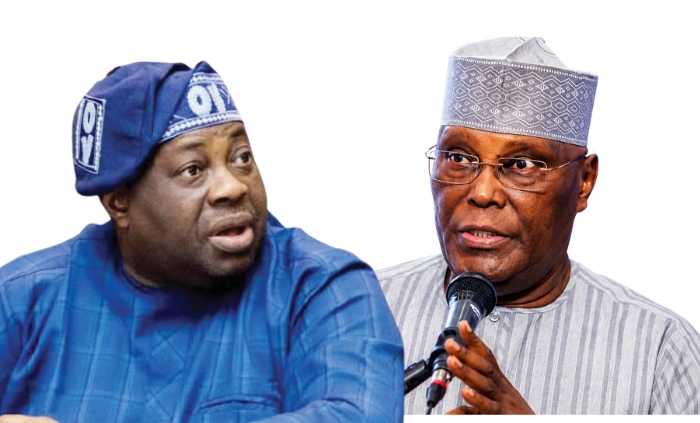
For many political observers, the proposition of an Atiku-Momodu ticket represents a fascinating answer to Nigeria’s complex governance puzzle. The conversation is rapidly moving past the two personalities involved, evolving into a broader debate about national cohesion, credibility, and the precise qualities required to steady a fractured nation.

Atiku Abubakar, having recently emerged as the presidential candidate for the African Democratic Congress (ADC) following a fiercely contested and highly scrutinized nationwide primary election, remains one of the most resilient figures in Nigeria’s democratic journey. His institutional memory is vast. As the Vice President who chaired the National Economic Council during one of Nigeria’s most consequential eras of economic restructuring and privatization, he understands the levers of state policy.

Yet, in a nation fractured along regional, religious, and generational lines, policy blueprints alone are no longer enough. The opposition faces a distinct hurdle: Nigerians already know who Atiku is. The challenge is not building recognition, but establishing a genuine, empathetic connection with the deep frustrations of the grassroots. This is precisely where Aare Dele Momodu enters the equation.

To view Momodu strictly through the glamorous lens of Ovation International is to misunderstand the deliberate philosophy behind his media empire. While critics might initially mistake his chronicling of high society for elite insulation, his career has actually functioned as a masterclass in breaking down walls. For decades, Momodu did not just document success; he demystified it, bringing the corridors of power and privilege directly to the gaze of the ordinary citizen. More importantly, this deep social capital was forged in the fires of grassroots defiance. Long before he was a celebrated publisher, Momodu was a pro-democracy activist who faced detention and forced exile during the dark days of the Abacha regime for standing with the masses. His ability to navigate corporate boardrooms today is not a sign of detachment from the struggle, but a powerful asset. It means the opposition gains a communicator who can walk into spaces of immense privilege, speak truth to power in their own language, and channel that access directly back into the service of Nigeria’s markets, classrooms, and farming communities.

A Referendum on Lived Realities

The ongoing security and economic trials illustrate exactly why a balance of institutional experience and cultural reach matters. For a parent deciding between school fees and healthcare, or a trader calculating the risks of interstate highways, governance is not a theoretical debate.

The next election will not be won by campaign slogans or aggressive social media strategies. It will be decided by trust. While the ruling party scrambles to convince a strained populace that their sacrifices will yield future rewards, the opposition must present a credible, steady, and comforting alternative.

Nigeria’s future will ultimately be shaped by leaders who look beyond political echo chambers and actively listen to the markets, classrooms, and farming communities. As the country continues its difficult search for stability, the political figures capable of building a bridge between sound policy and genuine human empathy will inevitably command the attention of a nation eager to move forward.

Continue Reading

Trending