By Tolulope Adegoke PhD
In an increasingly interconnected and volatile world, the twin forces of intentional progressive leadership and disciplined security stand as indispensable drivers of meaningful advancement. Intentional progressive leadership is characterized by deliberate, forward-thinking decision-making that prioritizes inclusive growth, innovation, accountability, and long-term societal transformation over short-term gains or entrenched interests. Disciplined security, in turn, refers to a professional, rule-of-law-based, human-centered approach to safeguarding citizens, institutions, and resources—one that integrates military, intelligence, law enforcement, and community engagement while upholding human rights and fostering trust. Together, these elements do not merely maintain stability; they actively unlock possibilities across three interconnected spheres: peoples (individuals and communities), corporates (businesses and organizations), and nation building (state institutions and societal cohesion).
This write-up examines their active roles, portrays the current realities as they stand in Nigeria, Africa, and the wider world, provides relevant global and regional examples, and offers practical, unbiased solutions. Drawing on established patterns of development, the analysis underscores that where these forces converge effectively, they generate exponential outcomes; where they falter, stagnation and fragility ensue. The goal is to present a balanced, evidence-informed perspective suitable for policymakers, business leaders, scholars, and development practitioners internationally.
Defining and Contextualizing the Core Elements
Intentional progressive leadership goes beyond charisma or authority. It demands strategic vision anchored in data, ethical governance, stakeholder inclusion, and adaptive resilience. Leaders in this mold invest in human capital, promote transparency, and align policies with sustainable development goals. Disciplined security complements this by creating the enabling environment of safety and predictability. It emphasizes professional training, intelligence-led operations, community policing, and the rule of law rather than militarization or repression. When these operate in synergy, they transform potential into tangible progress: educated citizens innovate, businesses thrive without fear, and nations build resilient institutions.
Active Roles in Delivering Possibilities for Peoples
For individuals and communities, intentional progressive leadership and disciplined security create pathways to dignity, opportunity, and empowerment. Progressive leaders prioritize education, healthcare, and skills development, viewing people as the primary asset. Disciplined security ensures freedom from fear, enabling daily pursuits of livelihood and aspiration.
In practice, this synergy fosters social mobility and cohesion. Progressive leadership invests in youth programs and vocational training, while disciplined security protects learning environments and public spaces. The result is reduced vulnerability to exploitation and increased civic participation.
Active Roles in Delivering Possibilities for Corporates
Corporations require stable operating environments to invest, innovate, and expand. Intentional progressive leadership enacts policies that ease business registration, combat corruption, and promote public-private partnerships. Disciplined security safeguards supply chains, intellectual property, and personnel against threats like extortion or sabotage.
This combination drives economic dynamism. Businesses flourish when leaders provide predictable regulations and when security forces respond swiftly to disruptions, allowing corporates to focus on value creation rather than risk mitigation.
Active Roles in Delivering Possibilities for Nation Building
At the national level, these elements are foundational to sovereignty, legitimacy, and prosperity. Progressive leadership builds inclusive institutions, diversifies economies, and integrates regional and global partnerships. Disciplined security preserves territorial integrity, deters external interference, and supports internal harmony.
Nation building succeeds when leadership fosters national identity and security architecture reinforces it through equitable protection and justice.
The Current Picture: Realities in Nigeria, Africa, and the Wider World
Nigeria exemplifies both promise and persistent hurdles. As Africa’s most populous nation and largest economy, it possesses immense human and natural potential. Yet, as of early 2026, security challenges remain acute: insurgency and banditry in the Northeast and Northwest, farmer-herder conflicts in the Middle Belt, kidnapping for ransom nationwide, and separatist tensions in the Southeast. These have displaced millions, stifled agriculture and commerce, and eroded public trust. Leadership under President Bola Tinubu has pursued reforms, including kinetic and non-kinetic counter-insurgency measures, the appointment of a new Chief of Defence Staff in late 2025 for better operational coherence, and emphasis on human capital development (HCD 2.0). Progress includes reported surrenders of insurgent affiliates and targeted infrastructure investments, yet gaps persist in governance coordination, community engagement, and addressing root causes such as poverty and youth unemployment.
Across Africa, the landscape is heterogeneous. Positive models include Rwanda, where post-genocide leadership under President Paul Kagame has combined visionary governance with disciplined security to achieve sustained growth, digital innovation, and regional stability. Botswana stands as another exemplar: decades of prudent, transparent leadership have turned diamond revenues into broad-based development while maintaining professional security institutions that uphold democratic norms. Ghana demonstrates democratic continuity with progressive economic policies and relatively effective security cooperation. Conversely, parts of the Sahel face coups, jihadist expansion, and governance fragility, highlighting how leadership vacuums and undisciplined security exacerbate cycles of instability.
Globally, the interplay is evident in success stories such as Singapore’s transformation under Lee Kuan Yew, where meritocratic leadership and disciplined, corruption-free security institutions propelled a resource-poor city-state into a high-income economy. South Korea’s post-war reconstruction similarly blended visionary leadership with security alliances and human capital focus. In contrast, nations experiencing leadership complacency or fragmented security—such as certain conflict zones in the Middle East or Latin America—illustrate stalled development and eroded possibilities.
These realities reveal a clear pattern: intentional progressive leadership and disciplined security are not luxuries but necessities. Their absence perpetuates underdevelopment; their presence catalyzes breakthroughs.
Relevant Examples Illustrating Essence and Impact
- Rwanda: Post-1994 genocide, intentional leadership focused on reconciliation, education, and technology hubs, supported by disciplined security reforms that prioritized professional training and community policing. This has elevated Rwanda to one of Africa’s fastest-growing economies, attracting foreign investment and reducing poverty dramatically.
- Botswana: Progressive leadership emphasized accountable resource management and anti-corruption measures, paired with a professional military and police force. The outcome is one of Africa’s most stable democracies and highest Human Development Indices.
- Singapore: Lee Kuan Yew’s intentional policies built a merit-based civil service and rigorous, rule-based security apparatus. This created a safe, efficient environment that transformed the nation into a global financial and logistics hub.
- Nigeria-specific: Initiatives like community-based security arrangements in some states, when aligned with progressive local leadership, have reduced localized banditry. Corporate examples include Lagos tech ecosystems thriving amid targeted security enhancements in business districts.
These cases justify the essence: deliberate leadership and disciplined security deliver measurable possibilities when integrated holistically.
Proffering Relevant Solutions: Pathways Forward Without Prejudice
Solutions must be context-specific yet universally applicable, emphasizing collaboration across stakeholders.
For Peoples (Individuals and Communities):
- Nigeria and Africa: Scale up human capital programs like Nigeria’s HCD 2.0 through universal basic education, vocational training, and digital literacy, especially in rural and conflict-affected areas. Integrate community policing models that empower local vigilantes under professional oversight to build trust.
- Wider World: Adopt inclusive social safety nets and mental health support in post-conflict settings. International partners can provide technical assistance for youth entrepreneurship funds.
- Outcome: Reduced vulnerability and empowered citizens who contribute actively to development.
For Corporates:
- Nigeria and Africa: Enact progressive policies such as streamlined business regulations, tax incentives for security technology investments, and public-private security partnerships (e.g., joint task forces for critical infrastructure). Encourage corporate social responsibility in community safety initiatives.
- Wider World: Promote global standards like ISO security management systems and cross-border investment guarantees tied to stability metrics.
- Outcome: Enhanced investor confidence, job creation, and innovation ecosystems.
For Nation Building:
- Nigeria: Strengthen institutional reforms, including anti-corruption enforcement, judicial independence, and devolved security responsibilities (e.g., state police with federal safeguards). Foster inclusive national dialogues and leverage technology for intelligence sharing.
- Africa: Enhance African Union mechanisms for peer review, joint peacekeeping, and economic integration to address transnational threats.
- Wider World: Support multilateral frameworks that reward progressive governance with development aid and security cooperation, emphasizing capacity-building over external imposition.
- Cross-cutting Measures: Invest in data-driven monitoring (e.g., peace indices), leadership training academies, and civil society engagement to ensure accountability.
Implementation requires political will, sustained funding, and adaptive evaluation. International standards—such as those from the World Bank’s governance indicators or the Institute for Economics and Peace—can guide benchmarking without external overreach.
Conclusion: A Call to Deliberate Action
Intentional progressive leadership and disciplined security are not abstract ideals but active agents that shape destinies. In Nigeria and across Africa, where challenges are pronounced yet potential is vast, their effective deployment can convert vulnerabilities into strengths. Globally, they offer proven blueprints for resilient, prosperous societies. The current picture, while marked by setbacks, also reveals pathways of hope through ongoing reforms and exemplary models. By embracing these forces with intentionality, stakeholders at all levels can deliver genuine possibilities—empowered peoples, thriving corporates, and cohesive nations. The imperative is clear: invest in people-centered leadership and professional security today to secure a more equitable and stable tomorrow. Through collaborative, evidence-based strategies, Nigeria, Africa, and the wider world can realize their full potential in an interdependent global order.
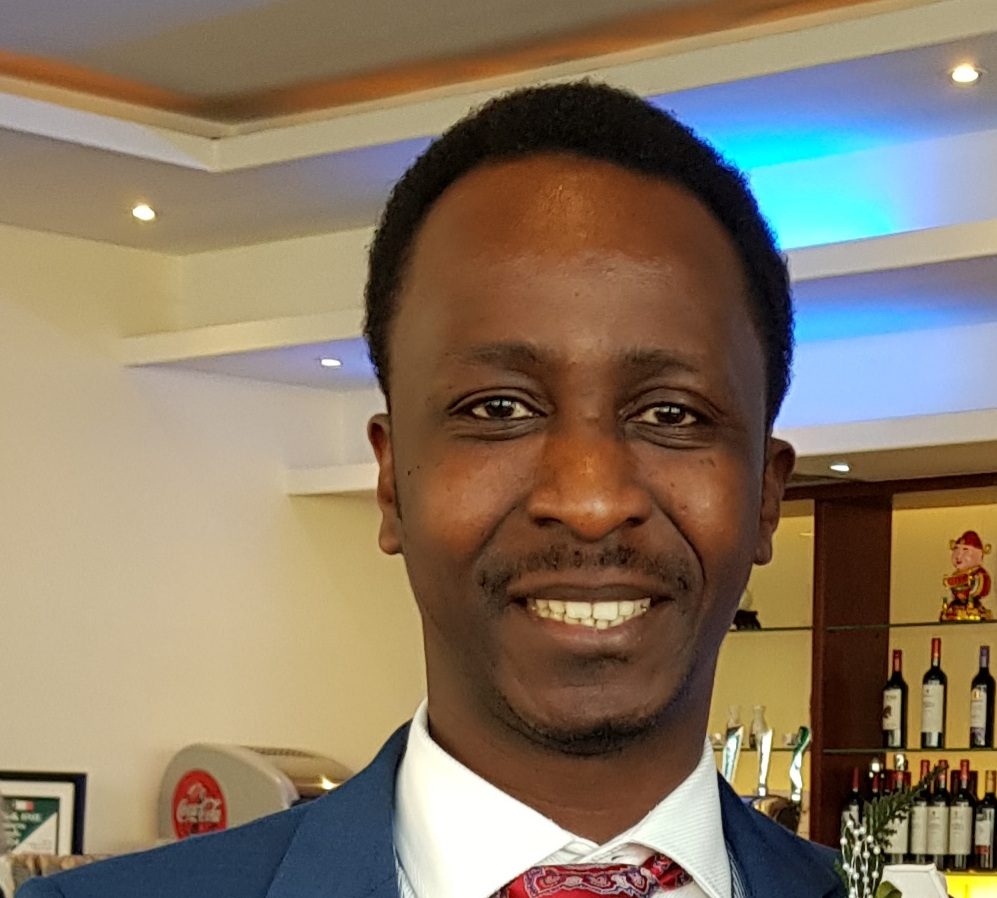
Dr. Tolulope A. Adegoke, AMBP-UN is a globally recognized scholar-practitioner and thought leader at the nexus of security, governance, and strategic leadership. His mission is dedicated to advancing ethical governance, strategic human capital development, and resilient nation-building, and global peace. He can be reached via: tolulopeadegoke01@gmail.com, globalstageimpacts@gmail.com










 Featured3 days ago