By: Ehi Braimah
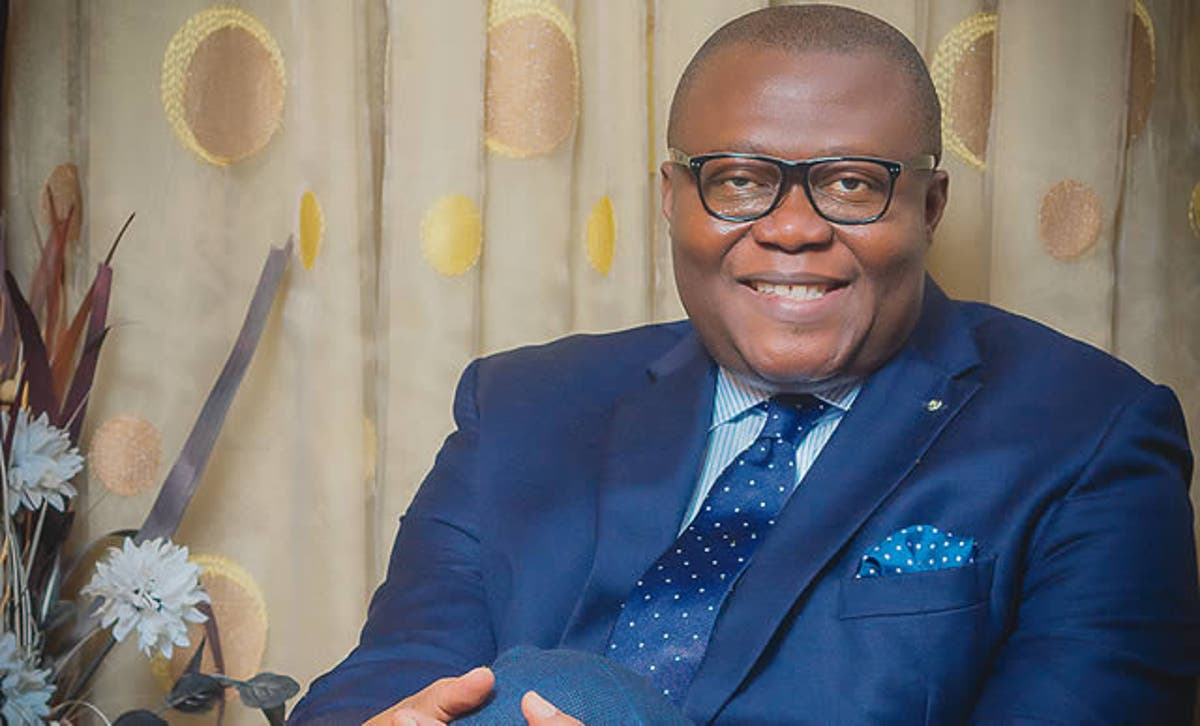
If we were to search for a person who is endowed with a remarkable talent or exceptional intelligence; someone who is a perfect embodiment of quality or class with amazing mental and creative ability, that person is Julius Adelusi-Adeluyi, a proudly Nigerian Ekiti Prince. There are very few of his kind in the world. I have gone to great lengths to understand this enigma by doing an internet search on “quintessence” and “genius” – two nouns – as they relate to Adelusi-Adeluyi, a distinguished Nigerian in the mould of some of the world’s best known philosophers such as Plato, Aristotle, Socrates, Confucius, Rene Descartes, Ralph Waldo Emerson, David Hume, Immanuel Kant, Thomas Aquinas, Karl Max and John Locke.
Prince Adelusi-Adeluyi was born on August 2, 1940. It could be argued that Adelusi-Adeluyi is not an ordinary person if we reflect on his history, antecedents and record of many firsts. As he marks his 80th birthday, there have been several moving tributes by those who know him and virtual birthday events to commemorate the life of an extra-ordinary patriot, philanthropist, mentor, teacher, philosopher, polyglot, humanist, business leader, award winner, pharmacist, lawyer, poet, doyen, goodwill ambassador, student activist, peace maker, husband and father.
As a Rotarian, Prince Adelusi-Adeluyi has lived by the principles of the Four-Way Test and the Objects of Rotary – these are strong pillars of Rotary. In business and the professions, Rotarians are guided by high ethical standards and our birthday celebrant has continued to exemplify the core values of Rotary: service, fellowship, diversity, integrity and leadership.
Everyone I spoke to before penning this tribute eulogised Prince Adelusi-Adeluyi as a mentor, leader and gift to the world. “His life is driven by service,” Samuel Akinyemi Akeju, my former boss at Ideas Communications, accomplished entrepreneur and one of our celebrant’s mentees, told me. “Prince is a professional to the core and he does not know how to cut corners. If you invite Juli to join the Board of a company, then you must be ready to live above board in terms of conduct and high ethical standards,” Akeju added.
I met Juli for the first time about 28 years when I was general manager of Ideas Communications at one of our events and Akeju introduced me to him. Since then, my relationship with him evolved as father and son, and at every opportunity, he would, as he often does to his large community of mentees around the world, counsel me and point the way to the future. “You are a bright young man with great potentials, but don’t get carried away,” Prince constantly reminded me.
The good thing about an encounter with Prince is that he extends his good graces to make you feel special, wanted and loved; he is honest and authentic about his conversations because, deep down in his heart, he knows many young lads see him as a role model and they want to emulate him. He is always advocating for youth development and entrepreneurship because he believes the youths are the leaders of tomorrow. Juli has a great command and mastery of English Language, and each time he speaks, he picks his words carefully with excellent diction. He is blessed with elocution — the skills of expressive speech, distinct pronunciation and articulation
A few times, I teased him that our radio and television stations would be happy to “borrow” his voice for a few minutes. Juli has the rare gift of speaking on any topic; it is a reflection of his cosmopolitan background and deep reservoir of knowledge which explains why his mentees are always eager to drink from his fountain of wisdom. At such moments, his penetrating gaze expands your attention span and holds you spellbound until his lecture or conversation is over. It does not matter whether you are young or old; Juli views everyone with the same lens.
Early last year, Prince Juli surprised me by showing me a wedding notice written in 1996 in my own handwriting on a personalised official memo pad — I was head consultant of PR Dimensions at the time. He was scheduled to attend a meeting at the Rotary Centre in GRA, Ikeja and because he knew I would be at that meeting, he turned up with the 23 years old note. There was no internet or email communication, but what Prince Juli did helped me to create my archives and I became a timeless record keeper. At the end of the meeting, Juli politely asked for the note so that he could return it for “safe keeping”. Juli has the gift of introspection and recollection — he remembers places, circumstances and events with a sharp memory that is similar to the memory of computers.
How our birthday celebrant manages to keep memories and records that do not fade amazes me. He is thoughtful, thorough, diligent and painstaking in his personal and business life. Prince Juli aims for perfection all the time and he has mentored a lot of people who are successful in different political and private sector appointments. Right from when he was born, Juli’s stars glowed brightly and his future was more or less assured. At the early age of five, he started living with a Reverend Father in a Catholic Church in Ado-Ekiti. The experience of that upbringing shaped his worldview and it gave him the opportunity to learn the values of humility, sacrifice, tolerance, moderation and service. Waking up early for morning mass at that young age was a daily grind but it taught Juli how to be focused, disciplined and determined – they are useful lessons for anyone who wants to succeed in life.
“Prince Juli is my role model and mentor,” eulogised Otunba Oluwatoyin Akomolafe, President of the Nigerian American Chamber of Commerce and Chairman of Index Brook, an oil and gas services company. “During Open Days, I visited Juli often with my childhood friend and classmate, Dr Funso Anishilowo. He mentored me greatly and I have also adopted his son in Houston as my own son, mentoring him the way Juli mentored me,” Otunba Akomolafe added.
As a smart and intelligent student, Prince spent only four years at Aquinas College, Akure, distinguishing himself as usual before he gained admission as a pioneer student of the College of Arts and Science in Ibadan. The school was relocated to Ile-Ife and upgraded to become the University of Ife in 1961 but it was later re-named Obafemi Awolowo University (OAU). “My father and Prince Adelusi-Adeluyi were classmates and the first set of students at the university,” recalls Dr Ikenna Nwosu, an energy law expert and my colleague on the Board of the Nigerian American Chamber of Commerce. Whereas Ikenna’s dad enrolled to study History and International Relations, Juli was admitted to read Pharmacy.
By 1965, Juli had graduated from Ife and became a student’s union activist at the young age of 25. Before he graduated, he was Vice President, International Affairs of the National Union of Nigerian Students (NUNS) and shortly after, he mounted the international stage as secretary general of the International Students Conference (ISC) with headquarters in Leiden, in the Netherlands. His tour of duty took him to over 140 countries where he set up student union organisations in Africa, Asia, Europe and the Americas. He became a polyglot, speaking Spanish, Portuguese, French and other languages. Besides Yoruba language, Juli also speaks Ibo and Hausa fluently.
After a three year sojourn, it was time to return home. Prince and late Chief M.K.O Abiola worked together in Pfizer back in the day – Prince Juli worked as a Pharmacist while Chief Abiola served the company in the Finance department. “I always looked up Prince Juli as a role model and mentor,” recalled Chief Olabintan Famutimi, Chairman/CEO of Tricontinental Group and Past President of the Nigerian American Chamber of Commerce; he also worked at Pfizer. “It was Juli that took me to Metropolitan Club for the first time. On our way, we stopped at Professor Bolaji Akinyemi’s office when he was Director General of the National Institute of International Affairs (NIIA); it was just next door to Met Club,” Chief Famutimi reminisced further about his early relationship with the birthday celebrant.
Juli set up Juli Pharmacy when he was 30 years old and the company became the first indigenous company to be floated on the Nigerian Stock Exchange. While similar medicine stores were only able to set up two or three branches, Juli scored another first by setting up 22 branches nationwide before he went public with the company. As Azu Ishiekwene noted in his tribute, the shares were oversubscribed to the tune of N400 million whereas Juli was shopping for N100m back then. The balance was returned at a cost of N20 million.
Prince Juli’s friendship is open and sincere; he does not patronise anyone. His standard of success is measured by how we are able to make other people’s lives better. In Rotary where he also recorded another string of firsts, he knows the value of selfless service in order to make the world a better place. He joined the Rotary Club of Ikeja in 1969 and became President of the Club during the 1977-78 Rotary year. Two years later, he became District Governor-elect for all the countries in West Africa (District 210) but by time he was ready to assume office, District 911 was created exclusively for Nigeria. Thus Juli became the first District Governor for the whole of Nigeria in the 1982-83 Rotary year but Nigeria as at today now has four Districts with four District Governors.
As a man of many parts, Juli is one of the world’s exemplary leaders and he has displayed excellent leadership and management skills everywhere he had the opportunity to serve. Prince Juli says commitment, determination, ability to focus and the grace of God have helped him to serve well in different roles. He is adviser to Presidents, Ministers and professionals in the public and private sectors. He is a Past President of the Nigerian American Chamber of Commerce; he is the Honorary Life Vice President of the Lagos Chamber of Commerce and Industry (LCCI); he is a Fellow and pioneer President of the Nigerian Academy of Pharmacy and Patron of the Nigerian British Chamber of Commerce (NBCC).
Prince Juli is also a Fellow of the Nigerian Institute of Management; Fellow and Past President of the Pharmaceutical Society of Nigeria (PSN); Fellow of the West Africa Pharmaceutical Post-Graduate College; Chairman, Board of MTN Foundation and President of the Alumni Association of the National Institute of Policy and Strategic Studies, Kuru, near Jos. In his quest for more knowledge to serve humanity, Juli enrolled for law at the University of Lagos and Vice President Yemi Osinbajo was one of his lecturers. He finished in 1986 and topped his class at the Nigerian Law School the following year as the best graduating student. Since then, his pro-bono legal service has helped to fight the cause of inmates in Nigerian prisons.
Juli’s life of service extended to the national level where he had a brief spell as former Secretary (equivalent to the rank of Minister) of Health and Social Services when Chief Ernest Shonekan headed the Interim National Government. Although the tenure was short, Juli made his mark while it lasted in spite of the road block that was mounted by an opposition group to frustrate his goals and agenda for healthcare development.
Prince Juli is a happy and contented family man. His wife, Julia, is the family’s backbone and they are blessed with four adorable children (two male, two female) who are also doing well in their own right: Funke, Adewale, Demilade and Adeolu. Why does Prince Juli wear white agbada all the time? Juli is a man of peace and wonderful mediator of conflicts. White signifies purity and it allows him to project his inner peace and good deeds straight from his heart. He bears no grudges, bitterness or animosity of any kind towards anyone. In addition, wearing white allows Juli to focus and maintain “environmental discipline” for neatness and cleanliness. When he was District Governor of Rotary District 911, he used the opportunity to sell Nigeria through his dress code (Nigerian attire now represented by white apparel) to the world during his frequent trips. It is evident that Juli is a man of style but he is a proudly Nigerian dresser. Most of the time, he represented Rotary International President which meant he was also a goodwill ambassador for the country. By the way, Prince Juli has all the credentials to have been elected Rotary International President.
With great minds and outstanding leaders like Prince Juli, why is Nigeria where it is today? Here is a man who has distinguished himself in various leadership positions and he is not active in Abuja. The Juli that I know does not solicit for appointments but Nigeria stands to benefit from his wide network, knowledge, resources and experience. However, Prince Juli is a national award recipient – he was honoured with MFR in 1986 and OFR in 2002. At 80 years old, Julie is now in retirement but he is certainly not tired; he still keeps an active schedule. I will find the time to tease him again to explain the secret of “looking so good and young” at his age. Congratulations and happy birthday sir!
Braimah is a PR and marketing strategist based in Lagos