Connect with us

Featured

Politicians Hear This! Earning People’s Trust, First Step to Prolific Governance, Fighting COVID-19

Published

on

By Joel Popoola

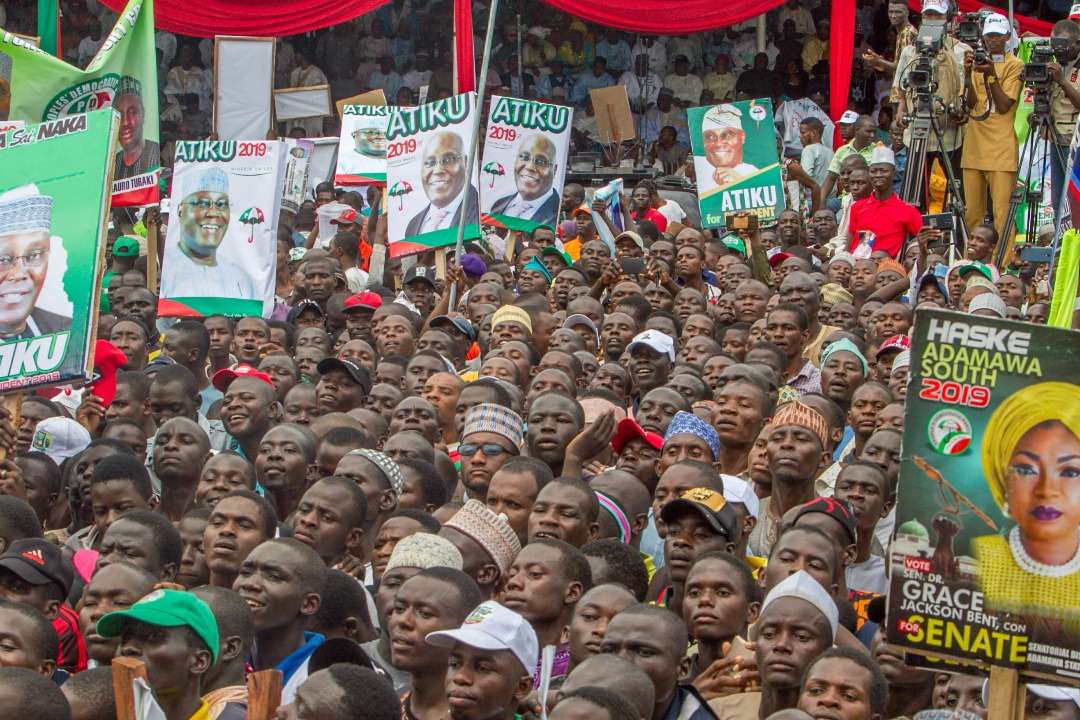
Why does Nigeria have the worst voter turnout in West Africa? And why does it matter more than even during the coronavirus crisis?

Take a look at voter turnout numbers in West African presidential elections and see if you can see the odd country out.
Ghana – 68.6%
Niger – 59.8%
Togo – 60.9%
Benin – 66.1%
Chad – 66%
Nigeria – 34.8%

How can it be that half as many Nigerians elect their president than in neighbouring countries? And those figures don’t even include countries like Sierra Leone (84.2%) and Guinea-Bissau (89.3%).

In fact, only one country in all of West Africa has voter turnout anywhere near as bad as Nigeria; Cape Verde. And with a turnout of 35.5% it’s still better than ours!
Why does Nigeria have the worst voter turnout in West Africa? The reason is trust. And during the current Coronavirus crisis that trust could not matter more.

The world-leading International Affairs think tank, Chatham House, has recently written:

“There is a yawning gap in trust and accountability between citizens and the state in Nigeria – the crisis will force the state to attempt to bridge this divide… a state that the vast majority of the population believe does not serve or care for them.

“Having largely ignored the needs of Nigeria’s citizens for decades, the political class face an uphill battle in building trust with the population. Earning this trust is not only crucial for the struggle against COVID-19 but also for Nigeria’s longer-term progress and system of political governance.”

Elements of the statement clearly go too far. The Nigerian government has recently made significant and important progress when it comes to meeting the needs of its citizens or how would our nation’s current score on the World Bank’s Epidemic Preparedness Index be so much higher than African and global averages if it hadn’t?

But it must not be doubted that many Nigerians feel this way. And feeling this way is a huge disincentive to engaging with political process through voting.
As one frontline worker battling COVID-19 in Kano recently told the international media:

“The government has promised to provide gloves and face masks to us but we are yet to receive it. We just depend on God.”

People need to know that they can depend on their government. Trust matters. And in the months and years to come that trust is going to be needed more than ever.

We are only in the first phase of the Covid-19 crisis. Next is likely to come Nigeria’s second recession in less than five years. Oil prices – our nation’s main source of revenue – are at an all-time low. After that we could see a huge challenge to our food security as the pandemic disrupts every aspect of our food supply from farm to fork.

Existing palliative efforts are described by Chatham House as “important (but) hampered by poor communication, inefficiencies and a lack of transparency – longstanding challenges in many aspects of public service delivery in Nigeria.”

So what is to be done?

As so often in the modern world, the answer can be found at our fingertips.
Reducing the spread and consequences of the coronavirus will depend on elected officials building trust with their citizens through effective communication. And in 2020 that communication primarily comes through a smartphone.

As I never tire of telling people, more Nigerians own a smartphone than vote.
My Digital Democracy Project is designed to reconnect electors and the elected using technology. Our free Rate Your Leader is designed to helps politicians engage directly with people who elected them, helping them understand what matters most to the people who elect them and build relationships of trust with the electorate.

When the coronavirus first arrived in Nigeria, it was state governments who were first to respond – shutting schools, and stopping the spread of the virus through travel and movement restrictions. They will have an even more crucial role in the recovery phase.

Yet politicians can feel like very remote, even irrelevant figures to many Nigerians. And this feeling is even more obvious at state level. Digital technology can bridge that divide and make it clear to local people how vital their work is and how committed to their communities they are.

Tough times are undeniably ahead for our states. Already over $20billion in debt, greater costs incurred countering Covid-19 and reducing resources could force many states to the brink of bankruptcy. The government of Akwa Ibom has already almost halved its annual budget and it will not be the only state where we see spending cuts on this scale.
If Nigerians start to see limited local services reduce even further, their opinion of local and national government is hardly likely to improve. And they will most likely become even less likely to vote.

Communication is key to stopping this vicious circle. But in a time of difficult challenges, technology exists to make communication that has never been, much easier.

Joel Popoola is a Nigerian technology entrepreneur, digital democracy campaigner and creator of the free Rate Your Leader app. You can reach him via Joel@rateyourleader.com or @JOPOPOOLA

Continue Reading
Click to comment

Leave a Reply

Your email address will not be published. Required fields are marked *

Featured

I Won’t Be Intimidated, Seun Okinbaloye Replies Wike

Published

on

By

Channels Television anchor, Seun Okinbaloye, has said he is not afraid and will not be intimidated following controversy surrounding remarks by the Minister of the Federal Capital Territory, Nyesom Wike, while also thanking Nigerians and organisations for their support.

Okinbaloye made this known during a broadcast on Sunday, where he acknowledged the outpouring of solidarity from civil society groups, viewers, and both local and international organisations.

“I sincerely want to thank civil society organisations, our viewers, for your love and your comments and your solidarity… Your support is deeply appreciated and reinforces our collective commitment to truth and accountability,” he said.

The anchor warned that democracy could be undermined if dissenting voices are silenced, stating that “our democracy is in danger if we allow one way traffic in balloting.”

He stressed that his comments were not directed at any political group but at all Nigerians, adding that “this is not a warning to the opposition or the ruling party, but to all Nigerians who believe in the development of our nation.”

Okinbaloye disclosed that he received reassurances regarding his safety, noting “the ongoing reassurance from the Department of State Services,” and also revealed that “I also received a call from the Honourable Minister who clarified that the intention was not as conveyed.”

Despite the clarification, he cautioned against the use of inflammatory language, saying “violent rhetoric or suggestive threats are never appropriate responses to dissent in a democratic society,” especially during an election period when “clear and consistent assurances of safety are critical.”

He added that such statements could create risks if misinterpreted, warning that “we must not create an environment where such statements can be exploited by those with harmful intentions.”

Reaffirming his position, Okinbaloye said, “Let me be clear, I’m not afraid, and I will never be intimidated,” adding that journalism “grounded in ethics and global best practices remains a duty to the public, not a concession to power.”
The anchor maintained that he would continue to hold public officials accountable, stating, “I will continue to do what I love, asking the necessary questions, holding power to account… If that commitment comes at a cost, so be it.”

The controversy followed remarks by Wike during a media parley in Abuja, where he reacted to Okinbaloye’s comments on a Channels Television programme discussing the leadership crisis in the African Democratic Congress and its implications for opposition politics ahead of the 2027 elections.

Okinbaloye had raised concerns about the possibility of a one-party state, a position the minister criticised as inappropriate for a journalist.

Although Wike later clarified that he did not intend physical harm, his aide, Lere Olayinka, said the remark was made “in a hyperbolic context… without intent,” explaining that the minister was responding to what he perceived as the anchor’s involvement in political commentary rather than neutral moderation.

Olayinka added, “The Minister never meant that he would shoot Seun Okinbaloye. What he meant was that he was angry seeing Okinbaloye descending into the political arena by speaking as an interested party, instead of an interviewer.”

However, Amnesty International Nigeria condemned the minister’s statement, describing it as “reckless and violent,” and warning that such language could incite attacks on journalists and undermine press freedom.

The organisation said the remark “carries the danger of normalising violence and encouraging the targeting of journalists for just doing their job,” stressing that such comments from public officials are unacceptable.

Continue Reading

Featured

Gov Adeleke Commends MicCom Legacy As Family Launches N150m Engineering Endowment at OAU

Published

on

By

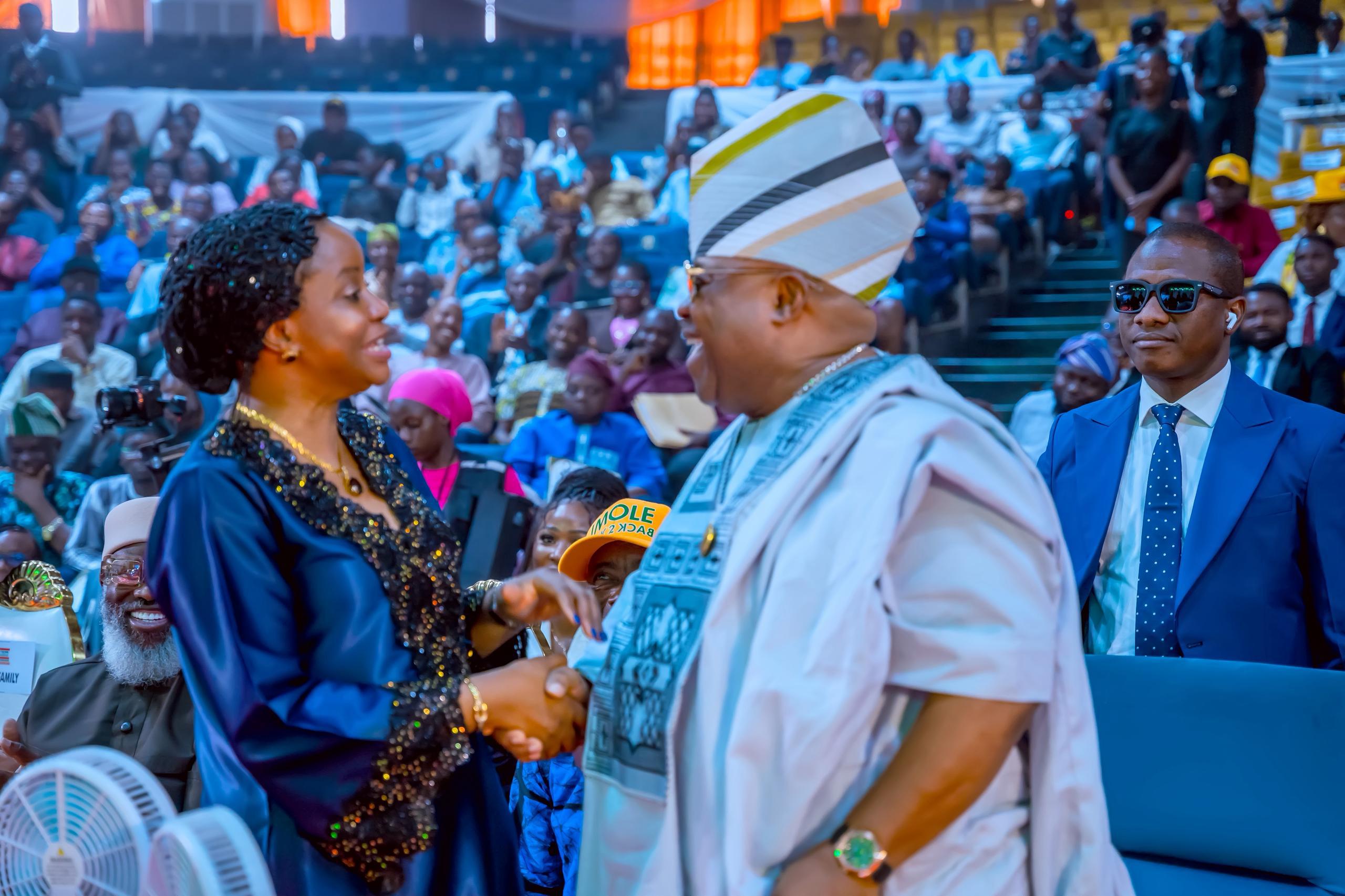
The Governor of Osun State, Ademola Adeleke, has commended the legacy of indigenous manufacturing firm MicCom Cables and Wires, describing it as a symbol of Nigerian innovation and industrial resilience.

Speaking at the inauguration of a ₦150 million MicCom Memorial Endowment for Engineering Development at Obafemi Awolowo University, Adeleke said the company’s founders, the late Engr. Michael Ayantunde Ponnle and Engr. (Mrs.) Comfort Olufunke Ponnle, demonstrated that Nigerian engineers can compete globally.

Delivering his address, Governor Adeleke described the occasion as both a moment of remembrance and a celebration of a legacy that continues to shape the future of engineering in Nigeria.

“We are remembering two exceptional lives, while celebrating a legacy that continues to build, teach, and inspire even beyond their passing,” the governor said.

He highlighted the pioneering roles of the late couple in advancing indigenous manufacturing through MicCom Cables and Wires, at a time when Nigeria heavily relied on imported engineering technologies. Their bold commitment to local innovation, Adeleke noted, demonstrated the capacity of Nigerian engineers to compete on the global stage.

The governor emphasized that the Ponnles exemplified a rare partnership built on shared vision and complementary strengths, with Engr. Michael Ponnle providing leadership in enterprise development, while Engr. (Mrs.) Comfort Ponnle was known for her technical discipline and operational excellence.

Earlier, the Chief Executive Officer of MicCom Cables & Wires Ltd, Bukola Adubi, stated that the endowment is designed to sustain their parents’ legacy while supporting the development of future generations of engineers.

“The endowment being inaugurated today is more than a ceremonial gesture; it is a purposeful commitment to the future of engineering, innovation, and technological advancement in Nigeria. Established in honour of Late Engr. Michael Ayantunde Ponnle, FNSE, OON, OFR, and Late Engr. (Mrs.) Comfort Olufunke Ponnle, FNSE, the fund seeks to immortalize their remarkable legacy while creating a lasting platform for the development of future engineers,” she said.

Adubi added that the Ponnles were pioneers in Nigeria’s industrial sector, having founded one of the country’s first indigenous cable manufacturing companies at a time when local production capacity was still evolving.

Also speaking, the Vice-Chancellor of Obafemi Awolowo University, Simeon Bamire, described the MicCom Memorial Endowment Fund as a visionary initiative that will create opportunities for future engineers through scholarships, research support, and upgraded facilities.

“The ₦150 Million MicCom Memorial Endowment Fund represents a strategic investment in engineering education and innovation. This fund will foster academic excellence through cutting-edge research, provide scholarships to deserving students, upgrade facilities, and nurture the next generation of engineers equipped to tackle Nigeria and Africa’s most pressing technological and infrastructural challenges,” he said.

The inauguration ceremony brought together dignitaries from academia, government, industry, and traditional institutions, including Chairman, Ovation Media Group, Chief Dele Momodu, celebrating the enduring legacy of the Ponnles and their contribution to Nigeria’s engineering and manufacturing sectors.

Continue Reading

Featured

ADC: Timi Frank Warns INEC, APC Against Setting Nigeria on Fire, Seeks America’s Intervention

Published

on

By

A former Deputy National Publicity Secretary of the All Progressives Congress (APC), Timi Frank, has warned that recent actions involving the African Democratic Congress (ADC) could destabilise Nigeria’s democratic system if not urgently addressed.

Frank also called on the United States government, including President Donald Trump, to intervene in safeguarding democracy in Nigeria.

In a statement issued in Abuja, Frank reacted to a decision by the Independent National Electoral Commission (INEC) to suspend recognition of the leadership of the ADC, including that of David Mark, as well as a rival claim by Nafiu Bala Gombe, pending the determination of a suit before a Federal High Court in Abuja.

He alleged that the development reflects a growing pattern of interference in opposition parties, warning that such actions could “set Nigeria on fire.”

“INEC and the APC-led government appear to be taking steps that threaten the very foundation of our democracy,” Frank said, adding that recent developments suggest a coordinated attempt to weaken opposition parties ahead of the 2027 general elections.

Frank drew parallels with the regime of former Head of State, Sani Abacha, alleging that current trends mirror past efforts to suppress democratic institutions.
He also expressed concern over the actions of President Bola Ahmed Tinubu, claiming they signal a drift towards authoritarianism.

“Recent developments raise serious concerns about the future of democratic governance in Nigeria,” he said.
The activist further alleged that internal crises within opposition parties—including the Peoples Democratic Party (PDP), Labour Party, Social Democratic Party (SDP), and New Nigeria Peoples Party (NNPP)—may have been influenced by external forces, warning that the situation is now extending to the ADC.

He also accused the judiciary of being used to frustrate opposition parties through questionable rulings and called on the international community to impose sanctions, including visa restrictions, on electoral and judicial officials found culpable.

“The courts have been used to thwart democratic processes with frivolous decisions,” he alleged.

Frank further claimed that opposition figures were being targeted through arrests and legal actions, warning that the country could face instability if the situation persists.
“Nigeria is heading towards a crisis that may be difficult to contain if urgent steps are not taken,” he said.

He urged Nigerians, civil society organisations, and professional bodies—including the Nigeria Bar Association (NBA), Nigeria Labour Congress (NLC), Trade Union Congress (TUC), Nigeria Medical Association (NMA), and the Inter-Party Advisory Council (IPAC)—to speak out in defence of democracy.

Frank also appealed to the international community, particularly the United States, to remain vigilant in supporting democratic values in Nigeria.

He maintained that Nigerians have historically resisted anti-democratic tendencies and would continue to do so.

“Freedom of association and the right to choose must be protected. Enough is enough,” he said.

Continue Reading

Trending