Connect with us

Opinion

Exemplars of Greatness: The Heroic Stride of Strive Masiyiwa of Africa!

Published

on

By Tolulope Adegoke

“The hero is one who kindles a great light in the world, who sets up blazing torches in the dark streets of life for men to see by” – Felix Adler 

I have no doubt that the wonderful model of destiny, The Nikola Tesla Story that we studied last week have been of tremendous blessing to you. As the Scripture says, “He who walks with the wise will be wise…” (Proverbs 1:20). It is for this reason that we must, once again, accompany some of the heroes of our contemporary time through the story of their life’s journeys, so that we can receive the necessary impartation of wisdom, guidance and inspiration for our own uplifting. So, here is another exemplar that you just cannot do without knowing about!

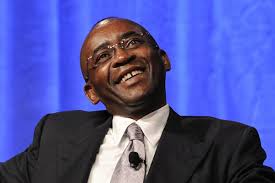
Strive Masiyiwa was born in 1961. By his 40th birthday, he had outwitted the dictator Robert Mugabe. By the age of 50, he was a multimillionaire mogul. Now, Masiyiwa – telecoms entrepreneur, philanthropist and proud Pentecostal – is among a cadre of African moguls aiming to turn the continent into a power house of productivity and entrepreneurship.

Masiyiwa’s story is full of trials and tribulations, including a battle against the government of Zimbabwe that earned him death threats and probably made him flee the country in the year 2000. But it is also replete with triumphs.

According to James Mwangi of Global Development Advisors, “Strive is one of a small but growing group of Senior African business leaders and entrepreneurs deliberately engaging in dialogue beyond business. Instead, those leaders are looking into Africa’s future overall, and in their broad-mindedness and sense of obligation, they are the latter-day Mellons and Carnegie.”

Like Cornelius Vanderbilt, who saw early on that railroad infrastructure would revolutionise the American economy, Masiyiwa is using his mobile phone network as a platform for economic development across Africa, from education to healthcare. This has made him a man in much demand. In addition to overseeing the multi-country operation of his $750 million firm, Econet Wireless, and his Kwese Satellite television, he sits on prominent boards like that of Rockerfeller Foundation. He appears on philantro-capitalist panels, is tapped by Richard Brandson for support, and dines with religious leaders at the White House’s annual Prayer Breakfast.

In 2016, Masiyiwa took up the board chairmanship of Alliance for a Green Revolution in Africa, a post previously held by his friend, Kofi Annan. It gives him an even broader Pan-African reach than he already had.

For all this, Masiyiwa presents as disarming and humble. He is a small man with a globe-like head, spherical and smooth. He favours gold-framed spectacles and light coloured ties, often in pastels that contrast nicely with the sharp black of his suits. He speaks softly and kindly, and punctuates his talk with jokes and exclamations. Masiyiwa would likely credit the Lord for his success. He turned seriously into faith during the darkest of his tribulations, in the mid-1990s, and has never let go.

“Do you read the Bible for an hour every day?” a CNN interviewer asked him in 2011. “Is that correct? I have read that.” “Oooh!” said Masiyiwa. “That’s when I am busy. I can read it for five hours in a weekend.”

Religion motivates his philanthropy, which involves orphans and schooling, and is very personal: According to June Wales, President and CEO of the Global Philanthropy Forum and World Affairs Council, “I spend most of my waking hours interacting with philanthropists but Masiyiwa really stands out. A lot of folks talk about engaged. Philanthropy – this is the real deal.”

Masiyiwa was born in what was then Rhodesia (Now Zimbabwe) and was barely four years old when severe conflicts broke out in the country.  The first major reason for the conflicts was getting independence from Britain and then rejecting white-minority rule. In 1968, Masiyiwa fled to Zambia, across the border. Their neighbours were Scottish, who had a son. That was more or less how young Masiyiwa landed in an Edinburg boarding school.

Masiyiwa returned to Africa in 1978, keen to join the guerrilla fight for independence. But a cousin in the Zimbabwe African National Liberation Army, later to morph into Mugabe’s Zanu-PF, advised that independence was nearly won. The new country would need people to run. And so, Masiyiwa scored a scholarship to University in Wales. In 1984, he returned with an engineering degree to Zimbabwe, which was then four years into its nationhood. He worked briefly for the government’s telecoms company, but state enterprise frustrated him, he says.

After borrowing the equivalent of $75, Masiyiwa started a construction business. Not only that, he spent two years studying banking in order to procure a small business loan – this before the advent of Internet – and changed his social networks to better understand the business community. He learnt the language of the golf course and of balance sheet.  According to him, “In money game, there is a way of talking that will have bankers and investors interested in what you do, and there is a way to talk which makes them shun and run from you, and it has nothing to do with where you come from.”

Many of the pieces he posts online evoke his stubbornness, tenacity and ability to educate himself into being better; his utter prescience, too. In the mid-1990s, only a few would have guessed that cell phones would become a major growth section in African countries. The government of Zimbabwe certainly did not. Masiyiwa did. He offered to develop a cell phone network in tandem with the State telecoms company, but the Mugabe-controlled government rejected his offer – a refusal that Masiyiwa wrote, “must surely rank amongst follies in the world of business: They could have owned the Econet Wireless Group, but instead they declared war on me!”

The State telecom refused to grant Masiyiwa a license to cell-frequencies, claiming it had a monopoly. That was when Masiyiwa sued in 1994. The case went on for five years, and at one point early on, Zimbabwe’s Supreme Court ruled against Econet, leaving, apparently, no chance to appeal.

As Masiyiwa recounted, “When we lost the Supreme Court case in June 1994, I was totally devastated. Two years of work appeared to have gone down the drain. My dream was shattered. The lawyers made it clear that there was no appeal possible, and we packed away all the files.

“Although four years earlier, I had survived abduction by what I believed, at the time, to be divine intervention; I never pursued this further from a spiritual perspective. Church for me remained a place of funerals and wedding ceremonies.

“When we got married, my wife tried very hard to get me to go to church, but whilst always respectful of her values, I never went. On Sundays, I would drop her and our then young daughter, at her church and go for my weekly squash game with “the boys” and dutifully pick her up, after the service. She was then pregnant with our second daughter.

“On the Sunday after our Supreme Court defeat, I was still too gutted to go and play with the boys, but I took my wife to her church, as usual. She begged me to come in with her, but again I refused. I drove round the block and decided to return…I sat in the back, by myself.

“My wife did not know I had returned. It was the first time in my life I had listened to a church service, without the compulsion of duty for an event held there. It seemed as though everyone in the room, except me, was so happy! The young American pastor was preaching about Jesus Christ, whom I thought I had known all my life. And yet now I realised that I did not know Him; I only knew of Him. Disturbed, I left hurriedly and went and sat in the car.

“Throughout that week, I continued in my miserable daze, but I was also disturbed by what I had heard in that service. I went back the following week. At the end of the service, there was a call for those who wanted to “accept Jesus Christ as Lord and Saviour”. I stood up, and went to the front. This is, and shall ever remain, the most important decision of my life. ‘Now that you are ‘born-again’, you must read your bible everyday’, the Pastor said, to the small group of us standing in front of him, after he had led us in prayer.

“Arriving home that day, I realised that the misery of my court defeat had completely lifted. It just seemed so unimportant. Sitting down that afternoon, with a borrowed copy of the New International Version Bible, I sat down to read the Bible for the very first time, in my life.

“Since the Pastor had said, “read the Bible”, I presumed that you must read the whole thing (cover to cover); and my wife did nothing to disabuse me of that: I just read, and read, and read…Often, I would read the whole day, and the whole night. Finally, I finished it after about three weeks.

“What I did not tell anyone at the time (including my wife) was that almost every night I laid my head down to sleep, I would begin to have quite extraordinary dreams. One evening, I attended a special church event, held at a local hotel. The Pastor preaching had never met me. As he preached, he suddenly stopped:

 ‘There is a man in this room; you have been having these dreams. In these dreams, you are building towers, rather like broadcasting towers, everywhere, all over the world. God is asking me to tell you that He is the one giving you those dreams, and He is going to make it happen. He has also given you a new heart; you are going to have such compassion. Please come forward, if you are that man.’

“There could have been 500 people in that room, that Sunday evening. I got up, and made my way to the front of the room. A few days later, a miracle would occur, which would take us back to court, in a very dramatic way…”

To put in a nutshell, some years later, Masiyiwa won the case. Econet now has a majority share of users in Zimbabwe and operations in more than 15 countries. It started offering mobile banking through its phones a few years ago, and within 18 months, some 20 per cent of Zimbabwe’s GDP was passing through its networks.

This reveals one of the keys to his success: foresight. At the time he was fighting the Mugabe government over his licence, hardly could anyone have imagined that mobile phone networks could become platforms for banking, or that they would so dramatically affect economic and healthcare infrastructures.

Masiyiwa has come to relish obstacles and challenges. When asked, “What are you doing with the challenges around you?” He replies that they are opportunities in disguise. And like other prominent African businessmen, he believes that “Ultimately, Africa’s development challenges are also its business opportunities.” Gaps in infrastructure, healthcare delivery and the like are “huge opportunities to unlock value,” not barriers to entry. Once those barriers are addressed people get more disposal income, and market opportunities grow – creating a phenomenal virtuous cycle.

And that, perhaps, was what Masiyiwa meant in the year 2016 when he sat on a panel with Bill Gates, Tony Blair, Paul Kagame and others, and told the audience to stop considering Africa “exotic”. Instead, he said, it is a business climate like any other – defined by challenges and opportunities – and one that rewards innovation, determination and homework.

Masiyiwa is, indeed, a living proof of the power of TENACITY. Added to that is the ability to FOCUS on the crown and not the crisis. And most importantly, his story reveals the strength of divine grace that comes through salvation! He went through the painful processes to get ultimately paid. He carried his cross to get his crown. He empowered himself with relevant skills and knowledge and applied them all through divine wisdom to solve challenges in a changing world. Being a lover of God, he became empowered and conquered his zero, then, emerged a HERO!

The key question is, what have you learnt from all these inspirational narrations and experiences so far? And what will you do about it?

Exemplars of Greatness Series continues next week…

Continue Reading
Click to comment

Leave a Reply

Your email address will not be published. Required fields are marked *

Opinion

Nation Building Reimagined: Integrated Principles and Strategies for Sustainable Growth

Published

on

By

By Tolulope A. Adegoke, PhD

“True nation building is not the work of the state alone, but a harmonious convergence where empowered peoples provide the foundation, innovative corporates generate the momentum, and visionary institutions ensure direction — together forging sustainable prosperity, social cohesion, and enduring national strength for current and future generations” – Tolulope A. Adegoke, PhD

Nation building is a deliberate and continuous process of constructing cohesive, resilient, and prosperous societies capable of realising their full potential. It extends far beyond political structures or state institutions to encompass three interdependent spheres: peoples (individuals and communities), corporates (businesses and private-sector organisations), and nations (governance institutions and the state). When these spheres are strategically aligned through sound principles and practical strategies, they generate all-round exploits — inclusive economic growth, social cohesion, innovation, human flourishing, and global competitiveness.

This comprehensive framework offers actionable guidance for sustaining productive and progressive development. It is grounded in universal principles validated by international development experience, economic history, and governance studies, making it relevant for scholars, policymakers, business leaders, and development practitioners worldwide.

Foundational Principles of Effective Nation Building

Successful nation building rests on six core principles that transcend cultural, geographical, and ideological differences:

Inclusive Human Dignity and Agency — Recognising every citizen as both beneficiary and active architect of national progress through equal opportunity and rights protection.
Institutional Integrity and Rule of Law — Building transparent, accountable institutions that foster trust and predictability.
Economic Dynamism and Shared Prosperity — Promoting broad-based growth that benefits individuals, businesses, and the state simultaneously.
Social Cohesion and Cultural Resilience — Forging unity while respecting diversity to create a shared national identity and purpose.
Adaptive Leadership and Long-Term Vision — Combining strategic foresight with the flexibility to learn and adjust.
Sustainable Resource Stewardship — Balancing present needs with intergenerational equity in environmental and fiscal matters.
These principles provide a universal compass for development, as evidenced by cross-national data from the World Bank’s Worldwide Governance Indicators and the UNDP Human Development Reports.


Core Strategies Across the Three Spheres

For Peoples (Individuals and Communities): Nation building begins with empowering citizens. Key strategies include universal access to quality education and skills development, robust health and social protection systems, community-driven development programmes, and targeted initiatives for youth and women empowerment. These efforts enhance social mobility, reduce vulnerability, and foster active civic participation.

For Corporates (Businesses and Private Sector): Corporates serve as the primary engine of wealth creation and innovation. Effective strategies involve creating an enabling business environment, promoting public-private partnerships, enforcing strong corporate governance and ethical standards, and implementing talent development and local content policies. When supported appropriately, the private sector generates jobs, technological advancement, and tax revenues that fuel broader development.

For Nations (State Institutions and Governance): The state provides the overarching framework for progress. Strategies include institutional reform and capacity building, decentralisation for better responsiveness, evidence-based policy making, and strategic regional and global integration. Strong institutions ensure equitable rules, policy continuity, and effective service delivery.

Sustaining Progressive Growth in Nigeria

In Nigeria, this integrated framework offers a practical pathway to convert demographic and natural endowments into sustained prosperity. At the peoples’ level, investments in education, health, and skills development can transform the large youth population into a productive demographic dividend. For corporates, policy predictability, infrastructure development, and public-private partnerships can drive diversification beyond oil into agriculture, manufacturing, and digital services. At the national level, institutional reforms, anti-corruption measures, and evidence-based governance would reduce policy inconsistency and enhance public trust.

When these elements reinforce one another, Nigeria can achieve higher productivity, reduced poverty, greater social cohesion, and improved global competitiveness — creating a virtuous cycle of inclusive growth.

Advancing Development in West Africa

Within the ECOWAS region, the framework supports deeper integration and collective resilience. Strategies for social cohesion help address cross-border challenges such as irregular migration, climate impacts, and youth unemployment. Corporate-focused approaches encourage intra-regional trade and industrialisation through harmonised policies and stronger value chains. Institutional strategies promote policy coordination, joint humanitarian response, and shared security mechanisms.

By applying this model, West African countries can move from fragmented national efforts toward coordinated regional progress, enhancing food security, energy access, and economic competitiveness while building resilience against external shocks.

Driving Continental Transformation in Africa

Across Africa, the principles and strategies align closely with the African Union’s Agenda 2063 and the African Continental Free Trade Area (AfCFTA). Sustainable resource stewardship helps convert natural wealth into long-term human and infrastructure investments. The corporate strategies support regional value chains and industrialisation, while institutional reforms strengthen governance and reduce trade barriers.

When implemented continent-wide, this approach fosters inclusive industrialisation, technological advancement, and reduced external dependency — positioning Africa as a major driver of global growth in the 21st century.

Global Relevance and Contribution

On the global stage, the framework provides timely lessons for both developed and developing nations navigating technological disruption, climate change, and rising inequality. The emphasis on shared prosperity and social cohesion offers pathways to mitigate polarisation. The integration of corporates as development partners demonstrates how private-sector innovation can serve public goals. Institutional strategies of adaptive leadership and evidence-based policy making are universally applicable in managing complex transnational challenges.

Nations adopting this model contribute to global stability by reducing conflict drivers, enhancing food and energy security, and participating constructively in multilateral systems. In this way, the framework supports the United Nations Sustainable Development Goals and helps build a more equitable and resilient world order.

Conclusion: A Practical Pathway to Enduring Progress

The principles and strategies of nation building presented here constitute a balanced, interconnected discipline capable of sustaining productive and progressive growth across multiple scales. For Nigeria, they chart a course from potential to performance. For West Africa, they strengthen regional solidarity. For Africa, they accelerate continental transformation. And for the global community, they offer practical wisdom for building fairer, more stable societies.

True nation building succeeds when peoples, corporates, and state institutions reinforce one another in a virtuous cycle. Its greatest strength lies in this holistic integration — recognising that sustainable development requires empowered citizens, innovative enterprises, and effective governance working in harmony.

In an increasingly interdependent world, embracing these principles with consistency, courage, and collective ownership is not merely beneficial but essential. Nations and regions that do so will unlock enduring prosperity, resilience, and a respected place in the global community. The framework provides both the vision and the practical tools needed to turn potential into lasting achievement for current and future generations.

Dr. Tolulope A. Adegoke, AMBP-UN is a globally recognized scholar-practitioner and thought leader at the nexus of security, governance, and strategic leadership. His mission is dedicated to advancing ethical governance, strategic human capital development, and resilient nation-building, and global peace. He can be reached via: tolulopeadegoke01@gmail.com, globalstageimpacts@gmail.com

Continue Reading

Opinion

Dear CDS, NSA, Your Prodigal Sons, Brothers Have Killed General Braimah

Published

on

By

By Eric Elezuo

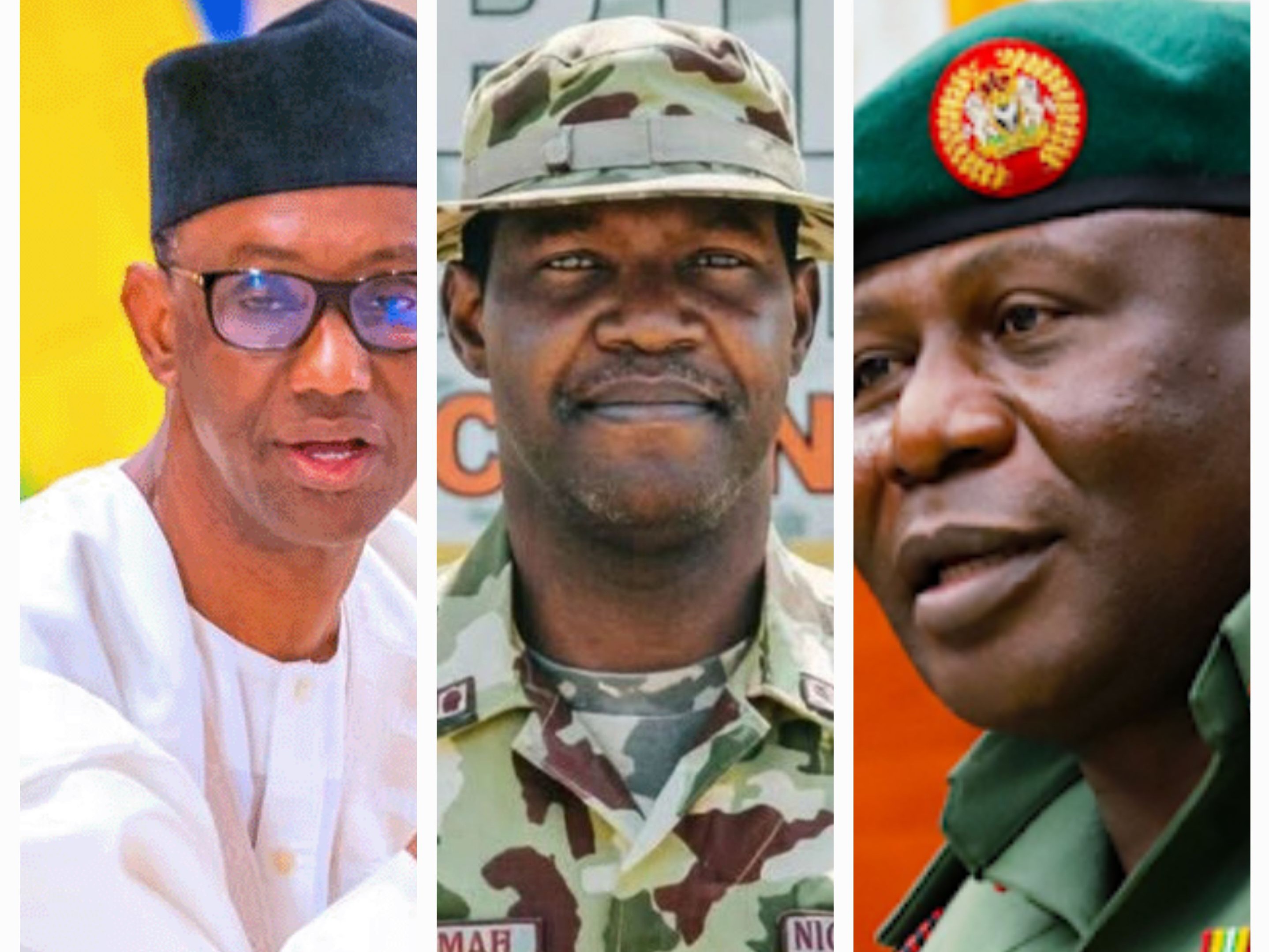
Almost five months since the yet to be explained killing of Brigadier General Musa Uba, another high ranking military officer, another Brigadier General, has been unlived. He was Brigadier General Oseni Omo Braimah, Commander of 29 Task Force Brigade Operation Hadin Kai, Maiduguri Borno State.

The sadness that followed the brutal killing of the Brigade Commander, can almost be touched, dear Nigerians, with special reference to the National Security Adviser, Mallam Nuhu Ribadu, and his counterpart, the Chief of Defense Staff, General Olufemi Oluyede. These men, have at separate fora concassed for the kid gloves handling of terrorism activities, and terrorists.

Ribadu, it was, that asked that they be rehabilitated as they are ‘our brothers. Oluyede echoed the stand, saying the terrorists was equated to the biblical prodigal son, and therefore should be received with open hands. This he said to justify his latest ‘Operation Safe Corridor’, designed to welcome ‘repentant’ terrorists and bandits, and have them reintegrated into the society.

It is still these touted same brothers, and prodigal sons that overran a military base in Benisheikh, reportedly killing 18 soldiers including the Brigadier General. According to the Army, however, the number of deaths was overhyped, claiming that only two officers and two other soldiers were killed in the battle they said the military had the upper hand, and auccessfully repelled the assailants and maintained their positions.

Much as the military agreed that they lost four soldiers, they have failed to produce casualties, or even speak on the number, from the terrorists side, in a battle they said they had the upper hand. It’s still had to believe, only that the prodigal sons and brothers snuffed the life of a general, and according to reports, he was caught like a sitting duck.

The prodigal sons with the ‘brothers’ did not stop there; they proceeded to kill Forest Guard Commander and five others in Kwara, just as they mercilessly hacked to death eight members of the same family in Bokkos, Plateau. The list is endless. Of prodigal sons and brothers. Thanks to the NSA and the CDS.

Someone once said that that the only mercy a terrorist or bandit deserve is the mercy of God. And it is the duties of the authority to send them to God for such mercy.

Why do we keep handling merciless killers with kid gloves, and turn around to call them sons and brothers. They in turn, are only looking for opportunity to strike again.

These people have gone from being brothers to becoming animals, very dangerous and ugly beasts that have lost the capacity to show, and so should not be shown any mercy caught.

Dear NSA and CDS, you muat understand that these people have been extremely radicalised, and can no longer fit into the society of sane beings, and therefore, should be put away permanently. We can’t continue to safe corridor to experiment with the lives of Nigerians. No bandit or terrorist is worth rehabilitating, talk less of being integrated into the military. Whoever does that is complicit, and should be treated as an enemy of the Nigerian state.

The NSA and the CDS should begin now to revisit everyone they have ever pardoned or reintegrated into the society for they are part of our problem. They are culpable.

General Uba died saraa, as we say in our local parlance. We should let Braimah die saraa. We must not allow this irresponsibility happen again. I’m not borrowing any words from the president because all his words appear empty, while Nigerians continue in droves, even when the country is not really at war.

Time to jettison this brother, cousin, prodigal son rubbish, and deal decisively with terrorists and bandits.

Continue Reading

Opinion

Ovation @30: A Triumph of Vision, Courage and African Excellence

Published

on

By

By Dr. Sani Sa’idu Baba

There is an African proverb that says, “However long the night, the dawn will surely break.” No story embody this truth more powerfully than that of Chief Dele Momodu and the remarkable rise of Ovation International. Founded in April, 1996 at the height of the Sani Abacha regime, Ovation was born not out of comfort, but from adversity. In forced exile in London, faced with uncertainty and hardship, Momodu chose not to surrender to circumstance but to challenge it, daring to create a global lifestyle magazine at a time when Africa’s image was largely defined by negativity.

From that improbable beginning emerged a publication that would go on to redefine how Africa is seen by the world. Ovation introduced a different narrative, one of elegance, achievement, culture, and pride, documenting African success stories with unmatched consistency. At a time when global media often overlooked the continent’s brilliance, Ovation boldly projected it, celebrating milestones, personalities, and cultures across Africa and its diaspora. It became a powerful cultural bridge, connecting cities and continents while showcasing an Africa that is vibrant, accomplished, and globally relevant.

Over the past three decades, Ovation has not merely reported stories, it has shaped destinies and elevated generations. It has provided a platform for emerging talents in entertainment, business, and public life, often spotlighting individuals long before they attained global recognition. Its influence extended beyond storytelling into economic and social impact, creating employment for thousands across journalism, photography, real estate, design, and event production, while also setting new standards in lifestyle media, enterprenership and event documentation. Long before the rise of digital platforms, Ovation was already global, distributing African excellence to audiences around the world and strengthening the connection between Africa and its diaspora.

Through changing times and technological revolutions, Ovation International has remained consistent in quality, bold in vision, and authentic in purpose. Its ability to evolve without losing its identity is a testament to its strength as not just a magazine, but an enduring institution. Today, as it marks 30 years of impact, it stands as one of Africa’s most influential media platforms, one that has significantly contributed to reshaping global perception and asserting Africa’s place in the world.

This milestone is a celebration of resilience, vision, and legacy. It is a tribute to the pride of Africa Chief Dele Momodu, whose courage transformed hardship into history, and whose dream once considered unrealistic became a continental force. It is also a celebration of the entire Ovation family, whose dedication over the years has sustained and expanded this vision. Thirty years on, Ovation is not just a witness to Africa’s story, it is one of its most powerful storytellers.

A big thank you to Chief Dele Momodu for proving long ago that Africa is not synonymous with bad news, and congratulations on three decades of excellence proof that when the dawn finally comes, it can illuminate the world.

Dr. Sani Sa’idu Baba writes from Kano, and can be reached via drssbaba@yahoo.com

Continue Reading

Trending