Connect with us

World

Gbagbo Remains in Detention until New Hearing in February – ICC

Published

on

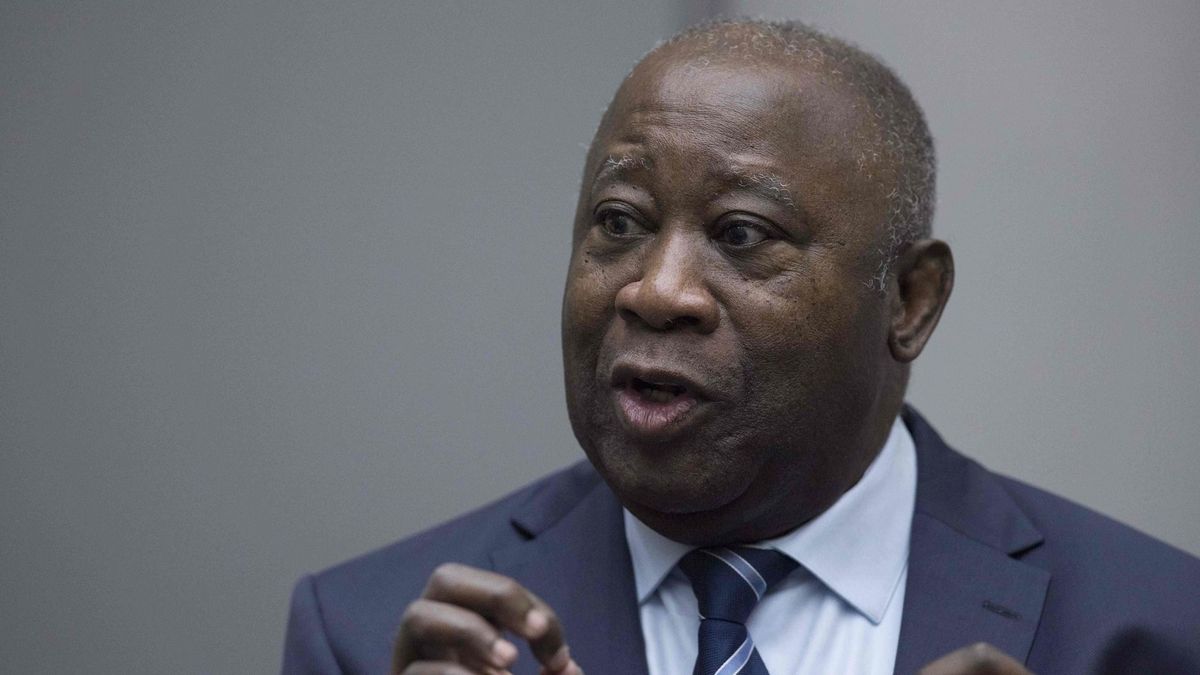
Ivory Coast ex-president Laurent Gbagbo will stay behind bars at least until a fresh appeal hearing in February, despite his acquittal this week by the International Criminal Court, the tribunal said Friday.

“The detention of Mr Laurent Gbagbo… shall be maintained pending the consideration of the present appeal,” appeals judges said in a statement, announcing a hearing on February 1 “in order to hear further submissions.”

(AFP)

Continue Reading
Click to comment

Leave a Reply

Your email address will not be published. Required fields are marked *

Africa

Loyal Soldiers Foil Military Coup in Benin Republic

Published

on

By

Benin’s government said on Sunday its armed forces had foiled a coup attempt after a group of soldiers in the West African nation claimed on national television to have seized power.
The attempted coup was the latest threat to democratic rule in the region, where militaries have in recent years seized power in Benin’s neighbours Niger and Burkina Faso, as well as in Mali, Guinea and, only last month, Guinea-Bissau.
At least eight soldiers, several holding weapons, went on state television on Sunday morning to announce that a military committee led by Colonel Tigri Pascal had taken over and was dissolving national institutions, suspending the constitution and closing air, land and maritime borders.
“The army solemnly commits to give the Beninese people the hope of a truly new era, where fraternity, justice and work prevail,” said a statement read by one of the soldiers.
A few hours later, Interior Minister Alassane Seidou said the West African country’s armed forces had thwarted the attempted coup.
“Therefore, the government urges the population to go about their business as usual,” he said.
A government spokesperson, Wilfried Leandre Houngbedji, said that 14 people had been arrested in connection with the coup attempt as of Sunday afternoon, without providing details.
Foreign Minister Olushegun Adjadi Bakari had earlier told Reuters that “a small group” of soldiers had attempted to overthrow the government but that forces loyal to President Patrice Talon were working to restore order.
He said the coup plotters had only managed to take control of state television, which was cut after the soldiers read out their statement. It resumed broadcasting shortly afterwards, allowing the interior minister to read his statement saying the coup bid had been foiled.
West Africa’s regional bloc ECOWAS and the African Union condemned the coup attempt.
The coup attempt came as Benin was preparing for a presidential election in April that would mark the end of the tenure of incumbent Talon, in power since 2016.
In their TV statement, the soldiers mentioned the deteriorating security situation in northern Benin “coupled with the disregard and neglect of our fallen brothers-in-arms.”
Talon has been credited with reviving the economy, but the country has also seen an increase in attacks by jihadist militants that have wreaked havoc in Mali and Burkina Faso.
In April, the government said that 54 soldiers were killed in an attack in the north by an affiliate of Al Qaeda.
Last month, Benin adopted a new constitution creating a Senate and extending the presidential mandate from five to seven years, in what critics said was a power grab by the ruling coalition, which has nominated Finance Minister Romuald Wadagni to be its candidate.
The opposition Democrats party, founded by Talon’s predecessor Thomas Boni Yayi, saw its proposed candidate rejected because of what a court ruled was insufficient backing from lawmakers.
Benin experienced several military coups and coup attempts in the first decades after independence from France in 1960. But there has not been a power grab by force in the country since it held multi-party elections in 1991.
Source: Reuters

Continue Reading

Africa

Soldiers Strike in Benin Republic, Removes Talon, Takes over Govt

Published

on

By

Military personnel in Benin on Sunday announced that they had ousted President Patrice Talon, although his entourage said he was safe and the army was regaining control.

Soldiers calling themselves the “Military Committee for Refoundation” (CMR), said on state television that they had met and decided that “Mr Patrice Talon is removed from office as president of the republic”.

The announcement follows two coups in Madagascar and Guinea-Bissau in as many months. Benin is bordered in the north by Niger and Burkina Faso, which have also seen military takeovers.

The French Embassy said on X that “gunfire was reported at Camp Guezo” near the president’s official residence in the economic capital.

It urged French citizens to remain indoors for security.

But Talon’s entourage said Talon, who has been president of the west African nation for 10 years and is due to step down in April, was safe.

“This is a small group of people who only control the television. The regular army is regaining control. The city and the country are completely secure,” his office told AFP.

Benin’s political history has been marked by several coups and attempted coups.

Talon, who came to power in 2016, is due to reach the end of his second term in 2026, the maximum allowed by the constitution.

The main opposition party has been excluded from the race to succeed him, and instead the ruling party will vie for power against a so-called “moderate” opposition.

Talon, a 67-year-old former businessman dubbed the “cotton king” of Cotonou, has been praised for bringing economic development to Benin but is regularly accused by his critics of authoritarianism.

AFP

Continue Reading

World

US Moves to Impose Visa Restrictions on Sponsors, Supporters of Violence in Nigeria

Published

on

By

The United States Department of State on Wednesday announced that it is outlining new measures to address violence against Christians in Nigeria and other countries.

The policy, according to a statement released by the department, targets radical Islamic terrorists, Fulani ethnic militias, and other actors responsible for killings and attacks on religious communities.

“The United States is taking decisive action in response to the mass killings and attacks on Christians carried out by radical Islamic terrorists, Fulani militias, and other violent groups in Nigeria and beyond,” said Secretary of State Marco Rubio in a statement.

According to the statement, a new policy under Section 212(a)(3)(C) of the Immigration and Nationality Act allows the State Department to restrict visas for individuals who have “directed, authorised, significantly supported, participated in, or carried out violations of religious freedom,” and, when appropriate, extend those “restrictions to their immediate family members.”

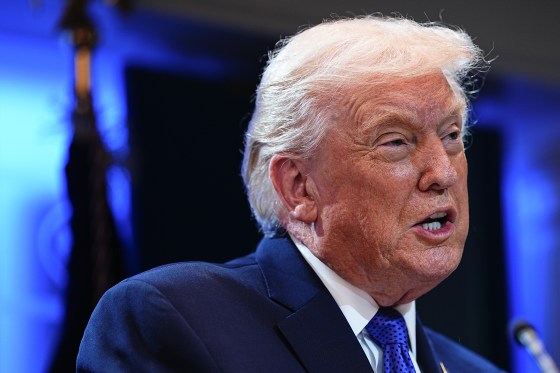
It stated that, as President Donald Trump made clear, the “United States cannot stand by while such atrocities are happening in Nigeria, and numerous other countries.”
Rubio noted that the visa restrictions could be applied “to Nigeria and any other governments or individuals engaged in violations of religious freedom.”
The announcement followed a briefing by US House Republicans on Tuesday, highlighting rising religious violence in Nigeria.
The session was convened at the direction of President Donald Trump, who instructed the House Appropriations Committee on October 31 to investigate what he described as the slaughter of Christians in the country.

The briefing, led by House Appropriations Vice Chair and National Security Subcommittee Chairman Mario Díaz-Balart, included members of the House Appropriations and House Foreign Affairs Committees, as well as religious freedom experts.

Participants included Representatives Robert Aderholt, Riley Moore, Brian Mast, Chris Smith, US Commission on International Religious Freedom Chair Vicky Hartzler, Alliance Defending Freedom International’s Sean Nelson, and Dr Ebenezer Obadare of the Council on Foreign Relations.

President Bola Tinubu recently approved Nigeria’s delegation to the new US–Nigeria Joint Working Group, formed to implement security agreements from high-level talks in Washington led by National Security Adviser Nuhu Ribadu.

The move follows growing concerns over terrorism, banditry, and targeted attacks on Christians in Nigeria, prompting increased US scrutiny and warnings about the protection of vulnerable faith communities.

On November 20, the US House Subcommittee on Africa opened a public hearing to review Trump’s redesignation of Nigeria as a Country of Particular Concern, placing the country under heightened scrutiny for alleged religious-freedom violations.

Lawmakers examined the potential consequences of the designation, which could pave the way for sanctions against Nigerian officials found complicit in religious persecution.

The Punch

Continue Reading

Trending