Connect with us

Headline

Who’s Afraid of New Electoral Act?

Published

on

By Eric Elezuo

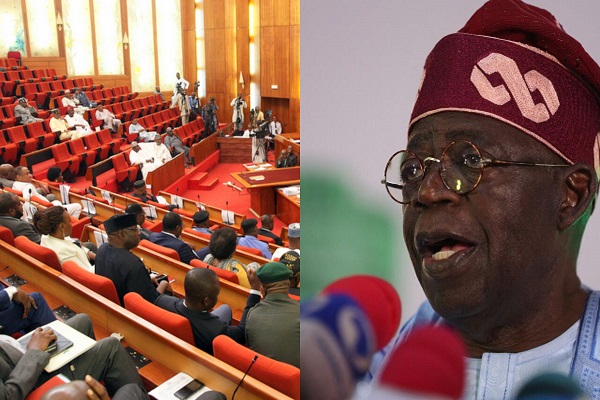
The furore generated with the passing of the Electoral Bill 2026 by the Nigerian Senate, is yet to die down as various groups, sections and institutions, have continued to lend their voices in condemnation of the tactical removal of the proposed real-time electronic transmission of results.

The Civil Society Organisations and Action Aid have declared a protest to kickoff on Monday, February 9, 2026, titled Occupy NASS Protest, until the Senate find reason to listen to Nigerians, and do what is right, and that aligned with the aspirations of Nigerians, according Samson Itodo, the Executive Director of YIAGA Africa.

In the same vein, the African Democratic Congress has pledged to begin a protest in Abuja on Monday over the removal of real-time clause in the new electoral bill.

The Senate, on Wednesday, passed the Electoral Bill 2026 following hours of debate, but ended up rejecting a proposal to mandate real-time electronic transmission of election results while however, approving significant reforms to election timelines, penalties for electoral offences and voting technology.

The Boss learnt that at the centre of the controversy was Section 60, which governs the transmission of polling unit results, where the Senators voted down a recommendation by the Senate Committee on Electoral Matters that would have compelled presiding officers to upload results to the INEC Result Viewing (IReV) portal in real time. The rejection has drawn the irk of majority of Nigerians, who have have wondered if anyone is actually afraid of the new electoral law? If yes, who? And what could be the reason behind such fears as the need to regulate a hitchfree and smooth and fair electoral process have remained the goal and aspirations of politically savvy Nigerian.

But the lawmakers, contrary to the yearnings of most Nigerians, have retained the approach in the 2022 Electoral Act, which allows electronic transmission after votes are counted and publicly announced at the polling unit. In other words, giving approval to transfer of results instead of transmit in real-time of results.

In their defence however, Senators opposing the real-time upload argued that inconsistent network coverage and logistical challenges could trigger legal disputes and undermine electoral credibility.

The rejected proposal was contained in the new Clause 60(5) of the draft bill, which aimed to mandate presiding officers to electronically transmit polling unit results in real time after completing and signing Form EC8A.

The clause was designed to strengthen transparency and reduce electoral malpractice through technology-driven result management.

The motion to reject the electronic transmission clause was swiftly seconded by the Deputy President of the Senate, Barau Jibrin.

Similarly, the Senate also rejected a proposed amendment under Clause 47 that would have allowed voters to present electronically-generated voter identification, including a downloadable voter card with a unique Quick Response (QR) code, as a valid means of accreditation.

In his defensive remarks, the Chairman of the Senate Committee on Media and Public Affairs, Adeyemi Adaramodu, described the debate as a process subjected to an invisible world of semantics.

“Electronic transmission remains part of the law,” he said, “and results will continue to be available to the public both electronically and through physical forms, ensuring verifiable records for disputes,” Adaramodu said.

In his own defence, President of the Senate, Godswill Akpabio, though admitted that the Senate deliberately deleted the provision for “real-time” transmission of election results from the Electoral Bill, 2026, noted however, that the Senate took the decision because it believed that “technology must save and not endanger democracy.”

Speaking at the launch of a book, “The Burden of Legislators in Nigeria”, authored by Senator Effiong Bob, in Abuja, Akpabio likened the issues raised in the book to the challenges faced by lawmakers in the course of their duties, including the controversy and alleged “abuses” directed at the Senate following the passage of the electoral bill.

The Senate President argued that the entire country could be thrown into chaos if, for instance, network or power failure affected the uploading of results.

He insisted that Form EC8A and other official election records should remain the most reliable means of declaring results.

“All we said was to remove the word ‘real-time’ to allow INEC decide the mode of transmission. If you make it mandatory and there is a system failure, there will be a serious problem,” Akpabio told the gathering, further confirming that the bill, as passed, excluded real-time electronic transmission of results.

Continuing, he said, “Real-time means that if there are nine states where there is no network, does it mean elections will not take place there?

“Or in any part of the country where there is a grid breakdown, does it mean there will be no election?”

The Senate President sounded a note of warning to Nigerians amid outrage, saying the legislature would not be “intimidated” into passing a faulty law simply to please opposition political parties, civil society groups and non-governmental organisations (NGOs).

He criticised NGOs for insisting that because they organised retreats for lawmakers, where ideas were exchanged on the electoral bill, the Senate must adopt their positions, even if such positions did not align with the interests of all segments of the country.

“Why are people setting up panels on television stations and abusing senators? I leave them to God.

“We will not be intimidated but will do what is right for Nigeria, not what one NGO says. A retreat is not law-making.

“Why do you think that the paper you agreed to in Lagos must be what we must approve?” he asked.

Akpabio frowned at the public attacks on the Senate, saying they were uncalled for, and stressing that any provision rejected by the Senate could be reinstated by the Conference Committee of the Senate and the House of Representatives. He said there was therefore no need to hastily criticise senators.

“We have not even completed it until we look at the votes and proceedings. When we bring out the votes and proceedings, any senator has the right to rise and amend it.

“We can amend anything before we approve the votes and proceedings. Why abuse the Senate when what we have is incomplete?

“I can’t talk until they tell me to drop the gavel. In this case, we are yet to complete the process,” he said.

Besides Akpabio’s defences, many groups and individuals have risen stoutly against the removal of the real-time electronic transmission clause, describing the act as irresponsible and detrimental to the feeling of Nigerians.

In his reaction, the National Chairman of the main opposition party, African Democratic Congress (ADC) Senator David Mark, who himself, was a Senate President, and was also present at the book launch, cautioned Akpabio against speaking for the Independent National Electoral Commission (INEC).

“What the ADC is saying is: pass the law and let INEC decide whether it can implement real-time electronic transmission or not. Don’t speak for INEC.

“The position of the ADC is clear: pass the bill and let INEC decide what it will do with it,” Mark harped.

Reacting also, a former governor of Anambra State and presidential candidate of the Labour Party in the 2023 presidential election, Mr. Peter Obi, delivered knocks to the Senate for the rejection, noting that the Senate decision to stick to the 2022 Electoral Act, which concedes the discretion to apply electronic transmission of results to the Independent National Electoral Commission ( INEC), is an assault on democracy.

In a lengthy post in X titled, “We Continue to Confirm our ‘Now Disgraced Status’ as a Nation?” the now ADC chieftain expressed concern that while other nations have embraced the practise of electronic transmission of results, “the supposed giant of Africa, shamelessly lags behind, dragging the continent backwards.”

He wrote: “Let us all pause and pray for the souls of over 150 innocent lives lost in Kwara yesterday. This tragedy is precisely why I delayed commenting on the outrageous and shameful news surrounding our electoral system.

“The Senate’s blatant rejection of mandatory electronic transmission of election results is an unforgivable act of electoral manipulation ahead of 2027.

“This failure to pass a clear safeguard is nothing short of a deliberate assault on Nigeria’s democracy. By rejecting these essential transparency measures, they are eroding the very foundation of credible elections. “One must ask: Does the government exist to ensure order and justice, or to institutionalise chaos? Is its purpose to serve the people, or to fulfil the sinister ambitions of a select few?

“The turmoil, disputes, and manipulations that plagued past elections, especially the 2023 general election, stemmed directly from the refusal to fully implement electronic transmission.

“Nigerians were fed excuses of a fabricated “glitch” that never existed. While numerous African nations adopt electronic transmission to bolster democracy, Nigeria, the supposed giant of Africa, shamelessly lags behind, dragging the continent backwards.

“We are wasting time hosting conferences and drafting papers on Nigeria’s problems while we, the leaders and elite, are the real issue. Our deliberate resistance to reform is pulling the country backwards, dragging us toward a primitive state of governance.

“By rejecting mandatory electronic transmission—a critical safeguard for electoral integrity—we are entrenching disorder aimed at perpetuating confusion according to the whims of a small clique. Have we not reached a point where we must think seriously about the future of our country and our children? Should leadership not focus on building a credible, orderly, and livable nation for the next generation, rather than one permanently ensnared in chaos?

“When the former Prime Minister of the UK, aware of our history, labelled us “fantastically corrupt,” we reacted defensively. When President Donald Trump declared us a “now disgraced nation,” we were incensed. Yet, with every act of resistance against transparency and reform, we continue to affirm their claims. Those responsible will later point fingers at others for harming the country while they quietly suffocate its potential.

“Let there be no illusion, the criminality witnessed in 2023 will not be tolerated in 2027. Nigerians everywhere must start getting ready to rise up, resist, and reject the backward trajectory, legitimately and decisively reclaim our country from the clutches of deliberate malevolence.

“The International community must take heed of this groundwork for continued future electoral manipulation, endangering our democracy and development.”

Another respondent, Akin Osuntokun, who was the Labour Party campaign DG in 2023, noted that the removal is an affront to democracy.

“It (Rejection of e-transmission of election results) does not portend good omen, it does not portend good for the growth of democracy in Nigeria.

“The growth of democracy is rooted in accountability and the integrity of elections.

“So anything that makes elections less accountable makes the election less credible. Automatically, it is a drag and an obstruction of the growth of democracy in Nigeria.

“It does not serve the purpose of democratic consolidation, so far as the elections that are conducted on that basis will not meet the bar or threshold of credible election,” Osuntokun said while fielding questions from NAN.

Also, opposition senators have stepped out as a group, insisting that the Senate passed the Act with provision of real-time in it, stressing that anything other than that, is not a document from the Senate.

In the midst of the public outrage, Akpabio has insisted that senate did not remove or reject electronic transmission, clarifying that it cannot guarantee the transmission of results in real time hence the omission of the status of ‘real-time’.

While presiding over the debate session, Akpabio also dismissed claims that electronic transmission had been removed, emphasising that “Retaining that provision means electronic transmission remains part of our law.”

WHAT THE SENATORS CONSIDERED APPROPRIATE FOR THE ELECTORAL BILL

But beyond the brouhaha of real-time electronic transmission, other major amendments to Nigeria’s electoral calendar were approved by the Senate.

The election notice period was reduced from 360 days to 180 days, the deadline for submission of party candidate lists was shortened from 120 to 90 days, and the nomination period was cut from 180 to 90 days.

To deter electoral malpractice, the fine for unlawful possession of voters’ cards was increased from N500,000 to N5 million, though the Senate rejected a proposal for a 10-year ban on vote-buyers, opting for stiffer financial penalties instead. The smart card reader was officially removed from the electoral framework and replaced with the Bimodal Voter Accreditation System (BVAS).

Under the retained provisions, presiding officers are required to count votes at the polling unit, record results on prescribed forms, announce them publicly and transmit them electronically to the appropriate collation centre.

The e-transmission of results, if approved, would have required INEC presiding officers to upload results from each polling unit to the IReV portal in real time, immediately after completing Form EC&A, which must be signed and stamped by the presiding officer and countersigned by party agents.
Instead, the senators chose to retain the present Electoral Act provision, which mandates that “the presiding officer shall transfer the results, including the total number of accredited voters and the results of the ballot, in a manner as prescribed by the Commission.”

Lawmakers voted to retain the existing 2022 provisions requiring voters to present their Permanent Voter’s Card (PVC) for accreditation at polling units.

The Senate further upheld the provision mandating the use of the Bimodal Voter Accreditation System (BVAS) or any other technological device prescribed by INEC for voter verification and authentication, rather than allowing alternative digital identification methods as proposed in the new bill.

With these decisions, the Senate reaffirmed the use of PVC and BVAS-based accreditation while rejecting efforts to expand digital voter identification and make electronic transmission of results compulsory.

Meanwhile, while Nigerians are planning to occupy NASS beginning from Monday, the Senate has called an emergency plenary for which the agenda is hitherto unknown, but related to votes and proceedings. It is interesting time in the Nigerian political circle now.

The bone of contention has remained ‘real-time’, and Nigerians continue to ask, ‘who is afraid of new electoral act’?

Continue Reading
Click to comment

Leave a Reply

Your email address will not be published. Required fields are marked *

Headline

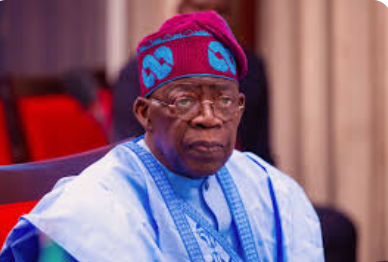
ADC Tells Tinubu to Resign As World Bank Reveals 139million Nigerians Live in Poverty

Published

on

By

The African Democratic Congress (ADC) on Saturday asked President Bola Ahmed Tinubu to resign rather than seek re-election, asserting that the World Bank’s recent report showing that 139 million Nigerians live below the poverty line is his scorecard.

The ADC, in a statement by its spokesperson, Bolaji Abdullahi, said the World Bank’s report, which also estimated that 17 million Nigerians are at risk of starvation, was “disturbing.”

“The evidence of 139 million people living in poverty and 17 million at risk of starvation is President Tinubu’s scorecard,” the party said. “On account of this catastrophic failure alone, President Tinubu should be contemplating resigning from office rather than seeking re-election.”

It decried that the “catastrophic” situation was occasioned by the Tinubu administration’s policies, which it said, “have favoured money over people and statistics over survival.”

The opposition party maintained that the economic growth Mr Tinubu’s government has repeatedly boasted of as a result of its economic reforms is “meaningless” if the livelihoods of people at the grassroots have yet to improve since 2023, when he assumed office.

“Instead of changing course, the government has stubbornly stuck with its ruinous economic policies and even continues to market recklessness as courage and wickedness as ‘necessary pains.’

“However, three years down the line, it is now clear that the chicken has come home to roost,” the ADC said.

According to the party, Nigeria desperately needs a leader who truly cares about citizens’ well-being and understands that economic reforms should improve citizens’ lives, not worsen their misery.

“A president whose government is not openly feasting while asking the people to continue fasting. A government that does not wallow in profligacy while handing the people palliatives,” it added.

The party condemned the ruling APC’s social intervention programmes aimed at cushioning the effects of its economic policies, adding, “Poverty cannot be defeated through palliatives.”

The ADC pledged that if elected in 2027, it would tackle the root causes of hunger by reducing energy costs, enhancing food production, and ensuring that farmers returned to their farmlands.

It also vowed to rehabilitate the 264 abandoned dams, improve access to fertilisers and quality seeds, and invest in storage facilities.

According to the party, transportation, waste, and food prices would be reduced while creating productive jobs.

“Hunger cannot be separated from poverty, education, or healthcare. That is why an ADC government will prioritise nutrition, primary healthcare, quality basic education, and skills development because no nation can build a prosperous economy while millions of its children are hungry, out of school, or cannot read simple texts,” the party said.

Continue Reading

Headline

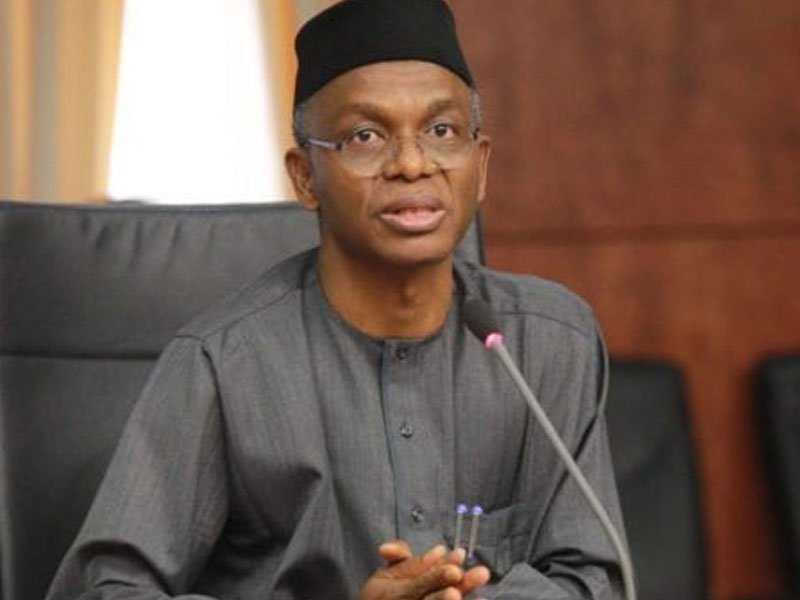
‘Punishment Before Trial’: The Travails of Nasir El-Rufai

Published

on

By

By Eric Elezuo

For 150 days and counting, a former Governor of Kaduna State, and one time Minister of the Federal Capital Territory, Mallam Nasir El-Rufai, has remained in the custody of various security agencies including the Department of State Services (DSS), the Economic and Financial Crimes Commission (EFCC) and the Independent Corrupt Practices and Other Related Offences Commission (ICPC) for alleged offences ranging from fund misappropriation, wiretapping and eavesdropping on security information among others. El-Rufai has not been found of any offence though he has spent over 150 days in custody.

The former governor’s plight was brought back to the fore weekend, when his wife, Asia Ahmad El-Rufai, made a passionate appeal to the international community to intervene over what she described as her husband’s prolonged detention and alleged denial of due process.

Mrs El-Rufai argued that the former governor’s continued incarceration amounted to “punishment before trial” and posed a threat to Nigeria’s democratic institutions. She noted that her husband has not been fairly treated even as she alleged that the former Director-General of the Bureau of Public Enterprise (BPE) may have taken ill in custody, bleeding from both nose and mouth. She wondered how someone, could made to undergo such severe punishment even when he is not undergone any trial, let alone being found guilty.

In a statement she signed herself, released his social media handles to mark what she described as the 150th day of El-Rufai’s detention, El-Rufai’s wife called on foreign governments, multilateral and multinational organisations and international human rights groups to closely monitor the legal proceedings involving her husband.

She acknowledged not speaking as a political actor but as a wife and mother seeking fairness for a member of her family.

The woman was of the opinion that the period of her husband’s incarceration without trial, has taken a significant emotional and physical toll on the former governor, members of his family and close associates.

“On the 150th day of Mallam Nasir El-Rufai’s detention, I ask readers outside Nigeria to pause over what that number means. One hundred and fifty days is not a legal phrase.

“It is five months of missed meals, missed prayers, missed proper mourning of his deceased mother, missed family conversations, interrupted medical care and moments we can never recover,” she said.

Acknowledging that her husband had been a controversial figure during his more than two decades in public service, as well as how rule of law and democracy should play out, she observed that “My husband is no stranger to controversy or public scrutiny. He has been praised, criticised, loved and opposed. That is democracy.

“But what is happening to him today is not democracy, and it is not accountability. It is punishment before trial,” she said.

Continuing and reflecting on the origin of the travails of her husband, Mrs El-Rufai traced his confrontation with the law to when am attempt was first made to arrest him at the airport on his way back from Egypt. The embarrassing situation at the airport culminated in his appearance for questioning, and ever since he has been allowed except when he was momentarily permitted to go and bury his dead mother.

She said, “There was the sudden invitation, his voluntary appearance before the authorities, and the promise of bail that existed on paper but not in freedom.

“There was the night he was moved between locations without warning and without the dignity of allowing his family to know where he was being taken,” she stated.

Asia also alleged that the former governor became seriously ill while in custody and experienced bleeding from his nose and mouth.

She claimed that officials were reluctant to provide him with adequate medical attention or allow his family to deliver his prescribed medication.

“I still remember the helplessness of hearing that he had fallen gravely ill in custody, bleeding from his nose and mouth, while those responsible for his welfare were reluctant to provide the care any person deserves.

“I remember the anxiety of trying to get his medication to him and wondering whether officials would accept it,” she said.

According to her, the detention had inflicted emotional distress on the family, which continued to wait for the legal process to take its course.

“These are not abstract violations. They are the moments that chip away at a family’s resolve and hope,” she added.

While not requesting that her husband be placed above the law, or escape investigation as a public officer, she insisted that such investigations must be conducted transparently, and in accordance with constitutional safeguards.

“If the state believes it has evidence, let it be presented before an impartial court, openly and fairly.

“But justice cannot be selective. It cannot be pursued through overlapping charges, repeated detention, impossible bail conditions and public humiliation designed to persuade the nation of guilt before a judge has heard the case,” she said.

She accused the government of the day of orchestrating the gory details of the situation, including stringent bail conditions to deprive her husband of freedom, even as the election approaches, stressing that Nigeria was drifting from legitimate accountability towards “lawfare,” which she described as the deployment of legal institutions and judicial procedures as political weapons. She believes that El-Rufai’s problems are the consequence of his disagreement with President Bola Tinubu, and his eventual decanting from the All Progressives Congress (APC).

“The concern is not whether former officials may be investigated; they can and should be.

“The concern is whether the law is being applied neutrally or deployed against those who have fallen out of political favour,” she said.

“His political rupture with President Bola Tinubu’s ruling All Progressives Congress and his refusal to surrender his independent voice should not make him a target for indefinite punishment or detention disguised as prosecution,” she said.

“The legal architecture”, she continued, “surrounding him is bewildering even to trained observers: multiple charges in different courts, overlapping allegations, shifting statutory theories and duplicated claims arising from the same alleged events.

“If one application for bail is made and the conditions are met, another accusation can be filed the next day. If one judge must consider freedom, another process can be used to delay it,” she alleged, querying why such procedures was allowed to turn the judicial process into a form of punishment before conviction.


In March 2026, the ICPC arraigned El-Rufai, alongside one Joel Adoga, before Honourable Justice A.I. Aikawa of the Federal High Court, Kaduna Division, on a 10-count charge bordering on abuse of office, money laundering and fraud.

According to the charge sheet marked FHC/KD/73/2026, the former governor was accused of unlawfully receiving multiple sums of money in naira and foreign currencies while serving as a public officer.

Specifically, the Commission alleged that El-Rufai, in September 2020 and January 2023, received the sum of N289,826,998.12 on each occasion as severance allowance, far exceeding the legally entitled sum of N20,013,245.00, being 300 percent of his annual basic salary.

The ICPC charge further revealed that between 2016 and 2023, the former governor allegedly took control of various sums in United States Dollars through his domiciliary account with Guaranty Trust Bank. These include $320,800 allegedly paid in tranches by Joel Adoga, as well as other deposits amounting to $155,800, $305,300, and several smaller sums from different individuals, all reasonably suspected to be proceeds of unlawful activities.

Joel Adoga was also accused of conspiring with the former governor in July 2019 to disguise the origin of $10,000 deposited into the said account.

One of the counts reads that both defendants, in July 2019 at Wuse, Abuja, allegedly conspired to disguise the origin of $10,000 paid into the former governor’s domiciliary account, knowing or reasonably ought to have known that the funds formed part of the proceeds of unlawful activity, contrary to and punishable under relevant provisions of the Money Laundering (Prevention and Prohibition) Act, 2022.

When the charges were read, both defendants pleaded not guilty to all counts, but they were ordered to be remanded in ICPC custody.

The ICPC further violated the court-ordered access to the former governor, saying that the order did not override the agency’s internal security rules.

In May 2026, the Federal High Court sitting in Abuja granted El-Rufai N100 million bail in the trial over the alleged unlawful interception of the phone communications of the National Security Adviser, Nuhu Ribadu. However, he was re-arrested right at the court premises by the DSS, prompting the family to raise alarm.


EL-RUFAI’S STRINGENT BAIL CONDITIONS

Much as the embattled former Kaduna governor was granted bail, the conditions have appeared too stringent and tough to meet, the situation that prompted the African Democratic Congress (ADC) among many other concerned Nigerians to react.

In its immediate reaction, the ADC accused the Federal Government of turning El-Rufai into a political prisoner, describing his ordeal as “political persecution dressed up as prosecution.”

El-Rufai’s family also condemned the re-arrest.

El-Rufai’s second wife, Hasiat, who addressed journalists outside the DSS facility, said the family was traumatised by the development and lived daily under the shadow of threats and surveillance.

“We now live in constant fear. Every day we get a threat — DSS is coming to raid your house, ICPC is coming to raid your house, police are coming to raid your house. You are being followed. Our phones are tapped,” she said.

As part of the bail conditions, the trial judge, Justice Joyce Abdulmalik ordered the defendant to produce a surety who must be a federal civil servant not below Grade Level 17.

According to the court, the surety must not only be resident in either Maitama or Asokoro highbrow districts of Abuja, but must also deposit the original Certificate of Occupancy of a landed property not valued below the bail sum.

It held that the surety must also provide evidence of receipt of salary for at least three months, with an authenticated letter from the manager of a bank within the jurisdiction of the court.

Furthermore, the court directed the surety to depose to an affidavit of means and equally submit a recent passport photograph to its registry.

It added that a verification letter from the surety’s immediate department must be submitted alongside a tax clearance certificate covering the last six months.

The defendant was further mandated to surrender his valid international passports and directed not to travel out of the country without permission.

Justice Abdulmalik ordered the defendant to report to the headquarters of the Department of State Services, DSS, every last Friday of the month by 10 a.m. to sign an attendance register, pending the determination of the case. The former governor was also directed to submit a letter of attestation from the Chairman of the Kaduna Traditional Council.

The trial judge warned that failure to comply with any of the conditions would lead to an automatic revocation of the bail.

Expressing its position on the travails of the former governor, the ADC, in a statement signed by its National Publicity Secretary, Mallam Bolaji Abdullahi, said “What is happening to Mallam El-Rufai confirms beyond all doubt that this detention is no longer about justice, it is about politics.

“It also confirms our fears that President Bola Ahmed Tinubu is deploying the instruments of state power to keep one of the leading opposition figures out of circulation. This is political persecution dressed up as prosecution.”

ADC also drew comparisons between El-Rufai’s case and those involving former Kogi State governor, Yahaya Bello, and former Delta State governor, Ifeanyi Okowa, both facing separate corruption allegations.

“When placed beside other high-profile cases, the contrast becomes stark and shameful. Yahaya Bello, former governor of Kogi State, has been accused in an alleged N80.2 billion money laundering case.

‘’Ifeanyi Okowa, former governor of Delta State, was arrested over the alleged diversion of N1.3 trillion in derivation funds. But today, they are walking around free, singing President Tinubu’s campaign song,” the ADC statement noted.

However, unconfirmed feelers reaching The Boss have it that El-Rufai’s incarceration has a lot to do with keeping him away from the face politics till after the 2027 General elections. The truth, or otherwise behind the postulation remains to be seen. Nigerians have to wait till the former governor’s next appearance in court by September 2026, to determine the direction of his freedom.

Continue Reading

Headline

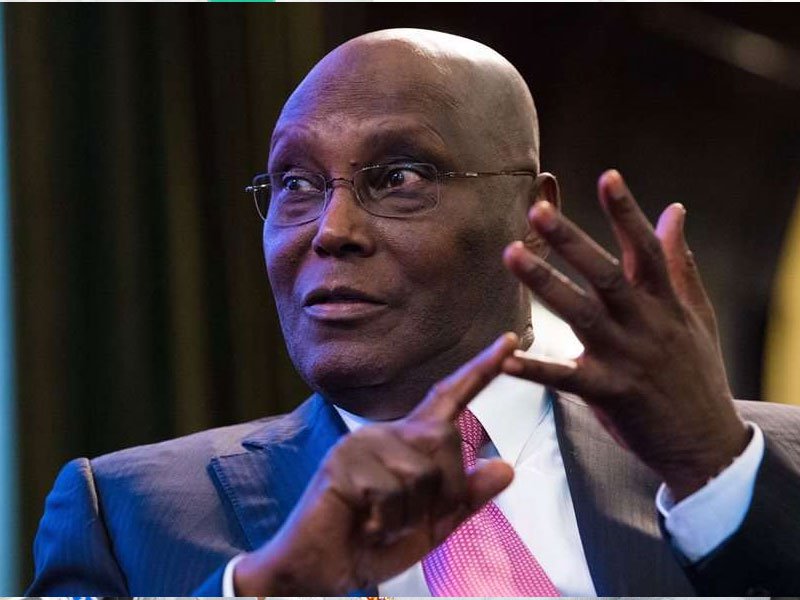
Mary Habila’s Death: Tinubu Has Failed Comprehensively, Disgracefully – Atiku

Published

on

By

By Eric Elezuo

A former Vice President, and Presidential Candidate of the African Democratic Congress (ADC), Atiku Abubakar, has lashed out at the administration of President Bola Tinubu over its prolonged silence on the death of a medical practitioner, Mary Habila, who died at the residence of the Minister of Works, Dave Umahi.

Atiku condemned the inability of the  Tinubu-led government from making any pronouncements or instituting any form of probe to unravel the cause of death since the sad incident occurred on June 27, 2026, saying the administration has failed comprehensively and disgracefully.

Atiku’s remarks are contained in a statement he released on his social platforms endorsed with his regular AA.

While not casting any blame on any particular person or entity, Atiku maintained that condolences are not enough,but must be accompanied by thorough investigation into the circumstances that led to the death of the 26 years old medical practitioner in her prime.

The former Vice President therefore called for a “credible, independent, and transparent investigation” to establish the truth, noting that “it is the refusal of the Federal Government to guarantee such an investigation that constitutes the scandal before us”.

The statement in full:

I have followed with deep sorrow and mounting concern the reports surrounding the death of Miss Mary Habila, a 26-year-old Nigerian from Nok, Southern Kaduna, who died on June 27, 2026, within the private residence of the Honourable Minister of Works, Senator David Umahi, in Uburu, Ebonyi State.

First, I extend my heartfelt condolences to the Habila family. No family should have to mourn a daughter taken in the prime of her life while also fighting simply to learn the truth of how she died.

But condolences are not enough. Nigerians deserve answers, and it is on this score that the Tinubu administration has failed, comprehensively and disgracefully.

Consider the facts that are not in dispute. A young woman died in the residence of a serving Federal Minister. For nearly two weeks, neither the Minister, nor the police, nor any arm of government said a word to the Nigerian people. It took the courage of Sahara Reporters to bring this death into public view. Three weeks after her death, no autopsy has been performed. No cause of death has been established. The investigation remains domiciled in the very state where the Minister served two terms as Governor and where his influence is beyond question.

And through all of this, silence from the Presidency. Silence from the Federal Executive Council. Silence from the Inspector-General of Police. Silence from the National Assembly. Not one word. Not one directive. Not one gesture to assure Nigerians that the life of Mary Habila matters to this government.

Instead, the Minister has been permitted to manage the narrative of a death that occurred under his own roof: issuing statements through his personal aides, deploying his private lawyers to correspond with the police, and continuing his official duties as though nothing has happened, while civil society groups, youth organisations, and the family’s own community cry out for an independent inquiry.

Let me be clear: I make no pronouncement on anyone’s guilt or innocence. That is precisely the point. Only a credible, independent, and transparent investigation can establish the truth, and it is the refusal of the Federal Government to guarantee such an investigation that constitutes the scandal before us.

A government’s first duty is the protection of life. Where a life is lost in circumstances touching a high official of state, the burden on government to act transparently is at its heaviest.

President Tinubu’s administration has instead treated this tragedy as an inconvenience to be waited out. If the death of a young Nigerian woman in a Minister’s residence cannot stir this government to act, then Nigerians must ask: whose life, exactly, does this government value?

I therefore demand the following: One, President Bola Tinubu must direct the Honourable Minister of Works to step aside immediately, pending the conclusion of investigations. This is not a punishment; it is the minimum standard of public accountability in any serious democracy. No official under this cloud should preside over a federal ministry as though it were business as usual.

Two, the Inspector-General of Police must immediately transfer the investigation from the Ebonyi State Command to Force Headquarters, with the involvement of independent forensic experts. No investigation conducted in the shadow of the Minister’s home-state influence can command public confidence.

Three, a full, independent, and internationally credible autopsy must be conducted without further delay, with the findings made public. The stalemate over the post-mortem, three weeks after this young woman’s death is an indictment of every institution involved.

Four, the family of Mary Habila must be protected from any pressure, inducement, or intimidation, and must be guaranteed unfettered access to the facts of their daughter’s death.

The measure of a nation is how it responds when the powerful are touched by tragedy and the powerless demand truth. Mary Habila was somebody’s daughter, somebody’s sister, a young professional with her life ahead of her. She was a Nigerian. Her death must not be reduced to a footnote of political convenience.

Nigeria will work again, but only when the life of every Nigerian counts, and when no one, however highly placed, stands beyond the reach of accountability.

May the soul of Mary Habila rest in peace. May her family find justice. -AA

Continue Reading

Trending