Headline
Tinubu’s 2026 Budget Bad Omen for Nigerians – PDP
Published
7 months agoon
By
Eric
By Eric Elezuo
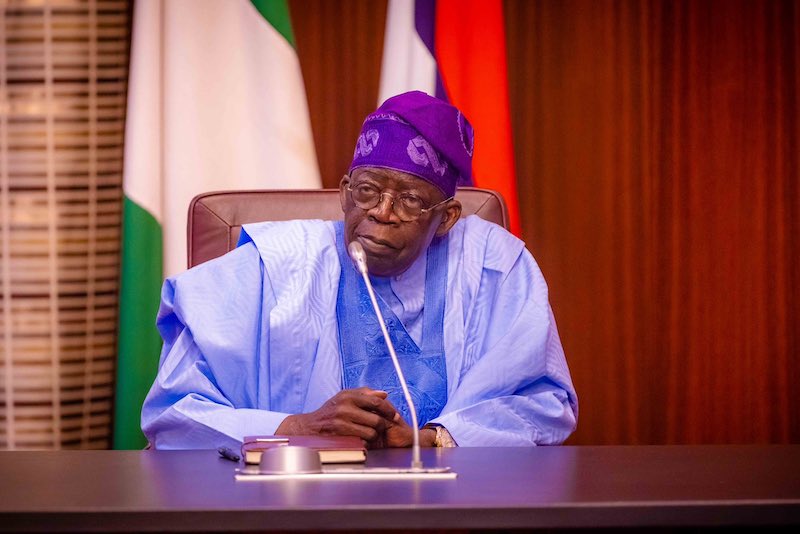
The 2026 Appropriation Bill presented by President Bola Tinubu before a joint session of the National Assembly has been rated below par, and described as a bad omen for Nigerians, by the opposition Peoples Democratic Party (PDP).
The Tanimu Turaki-led Peoples Democratic Party (PDP) said on Friday that President Bola Tinubu’s 2026 budget would add to the sufferings of Nigeria rather than giving them any renewed hope or consolidation of economic reforms.
The party noted that there would be no renewed hope in an environment where hunger, insecurity and other forms of deprivation were the lot of Nigerians.
It cited the 2025 World Bank Poverty & Equity Brief, which placed more than 30.9% of Nigerians below the international extreme poverty line.
“This shows that there is growth without prosperity for our citizens, meaning that despite GDP growth, poverty remains endemic”, the National Publicity Secretary, Comrade Ini Ememobong, stated on Friday soon after Tinubu presented the 2026 Appropriation Bill of N58.18trillion to a joint session of the Senate and the House of Representatives in Abuja.
Ememobong noted: “The budget, which is themed ‘Budget of Consolidation, Renewed Resilience and Shared Prosperity’, claims that the economy is stabilising and promises shared prosperity.
“In response, we see it rather as a budget of consolidated renewed sufferings, because what Nigerians have witnessed since the birth of this administration is nothing but unmitigated hardship on the people, while the governing class relishes in affluence.
“Nigerians have suffered greatly from many economic woes under this administration.
“President Tinubu cited a 3.98% GDP growth rate as evidence of economic stabilisation under his administration.
“However, it is well established that economic growth alone does not and cannot guarantee improved living standards for citizens.
“According to the 2025 World Bank Poverty & Equity Brief, more than 30.9% of Nigerians live below the international extreme poverty line. This shows that there is growth without prosperity for our citizens, meaning that despite GDP growth, poverty remains endemic.
“This clearly indicates that whatever economic gains exist are not reaching the majority of Nigerians.”
The PDP rejected the President’s figures on economic progress, saying rather that Nigeria has been on rever gear.
“The President stated that the economy under his watch grew by 3.98% without stating the sectors that stimulated the growth or identifying those who benefitted from it. This figure reflects the economic decline the nation has suffered under the leadership of the APC-led Federal government when compared to the growth rate of 6.87% recorded in 2013(same period under the last PDP administration), which was driven largely by non-oil sectors such as agriculture and trade.
“Today, the President celebrates a 3.98% growth rate, whereas a reality check reveals excruciating hunger, a high cost of living, and other indices of economic hardship, which Nigerians are currently facing.
“While we acknowledge the security allocation in the 2026 budget, we must remind the government and Nigerians that allocation alone is insufficient.”
The party added, “We therefore, demand effective and transparent execution to ensure that security funding translates into tangible improvements -modern equipment, adequate ammunition, improved intelligence capabilities, and better welfare for security personnel who are currently engaged in different theatres of armed conflict, where criminal non-state actors are alleged to possess superior arms compared to our security forces.
“Overall, we are deeply concerned about the unapologetic admission by the President that the execution of the 2024 capital budget had been extended to December 2025, while the 2025 budget is still in force.
“This confirms the long-standing rumours of the concurrent operation of multiple budgets.
“This cannot be described as best practice, as every budget has a defined period of operation and no two budgets should operate concurrently. The operation of different budgets at the same time undermines fiscal discipline, transparency, and accountability. These multiple budgetary regimes show yet another unprecedented negative feat by this APC Bola Tinubu-led administration.
“We hereby call for increased transparency and accountability in the administration of the finances of our country, as these have been conspicuously absent so far under this administration.
“Financial accountability and transparency are critical to public trust-building and effective public administration.”
The budget with the theme, “Budget of consolidation, Renewed Resilience and Shared Prosperity”, is N3.19trillion higher than the N54.99trillion approved for 2025.
The key aggregates of the budget are expected revenue of N34.33trillion; debt servicing of N15.52trillion; recurrent (non‑debt) expenditure of N15.25trillion; capital expenditure of N26.08trillion; a deficit of N23.85trillion representing 4.28% of GDP.
In addition, the budget will be benchmarked at $64.85 per barrel of crude oil, daily oil production of 1.8million barrels and a dollar/naira exchange.
Below is the full presentation of Tinubu’s 2026 Budget:
FULL SPEECH BY PRESIDENT BOLA AHMED TINUBU AT THE PRESENTATION OF THE 2026 NATIONAL BUDGET
“Budget of Consolidation, Renewed Resilience and Shared Prosperity”
Distinguished Senate President,
Rt. Honourable Speaker and Honourable Members of the House of Representatives,
Distinguished Senators and Honourable Members of the National Assembly,
Fellow Nigerians,,
1. I am here today to fulfil an essential constitutional obligation by presenting the 2026 Appropriation Bill to this esteemed Joint Session of the National Assembly for your consideration.
2. This budget represents a defining moment in our national journey of reform and transformation. Over the last two and a half years, my government has methodically confronted long‑standing structural weaknesses, stabilised our economy, rebuilt confidence, and laid a durable foundation for the construction of a more resilient, inclusive, and dynamic Nigeria.
3. Though necessary, the reforms have not been painless. Families and businesses have faced pressure; established systems have been disrupted; and budget execution has been tested. I acknowledge these difficulties plainly. Yet, I am here, today, to assure Nigerians that their sacrifices are not in vain. The path of reform is seldom smooth, but it is the surest route to lasting stability and shared prosperity.
4. Today, I present a Budget that consolidates our gains, strengthens our resilience, and takes this country from out of the dark tunnel of hopelessness, from survival to growth.
5. The 2026 Budget is themed: “Budget of Consolidation, Renewed Resilience and Shared Prosperity”. It reflects our determination to lock in macroeconomic stability, deepen competitiveness, and ensure that growth translates into decent jobs, rising incomes, and a better quality of life across for every Nigerian.
6. Mr. Chairman, Leaders of the National Assembly, while the global outlook continues to improve, this Budget aims to further strengthen our Nigerian economy to benefit all our citizens.
7. I am encouraged that our reform efforts are already yielding measurable results:
1) Our economy grew by 3.98 per cent in Q3 2025, up from 3.86 per cent in Q3 2024.
2) Inflation has moderated for eight consecutive months, with headline inflation declining to 14.45 per cent in November 2025, from 24.23 per cent in March 2025. With stabilising food and energy prices, tighter monetary conditions, and improving supply responses, we expect the deflationary trend to persist over the 2026 horizon, barring major supply shocks.
3) Oil production has improved, supported by enhanced security, technology deployment, and sector reforms.
4) Non‑oil revenues have expanded significantly through better tax administration.
5) Investor confidence is returning, reflected in capital inflows, renewed project financing, and stronger private‑sector participation.
6) Our external reserves rose to a 7‑year high of about US47 billion dollars as of last month, providing over 10 months of import cover and a more substantial buffer against shocks.
8. These outcomes are not accidental or lucky. They are the consequence of our difficult policy choices. Our next objective is to deepen our gains in pursuit of enduring and inclusive prosperity.
9. Mr. Chairman, Distinguished Members, our 2025 budget implementation faced the realities of transition and competing execution demands. As of Q3 2025, we recorded:
• 18.6 trillion naira in revenue — representing 61% of our target; and
• 24.66 trillion naira in expenditure — representing 60% of our target.
10. Following the extension of the 2024 capital budget execution to December 2025, a total of 2.23 trillion naira was released for the implementation of 2024 capital projects as of June 2025.
11. While fiscal challenges persisted, the government met its key obligations. However, only 3.10 trillion naira — about 17.7% of the 2025 capital budget — was released as of Q3, reflecting the emphasis on completing priority 2024 capital projects during the transition period.
12. Let me be clear: 2026 will be a year of stronger discipline in budget execution. I have issued directives to the Honourable Minister of Finance and Coordinating Minister of the Economy, the Honourable Minister of Budget and Economic Planning, the Accountant‑General of the Federation, and the Director‑General of the Budget Office of the Federation to ensure that the 2026 Budget is implemented strictly in line with the appropriated details and timelines.
13. We expect improved revenue performance through the new National Tax Acts and the ongoing reforms in the oil and gas sector — reforms designed not merely to raise revenue, but to drive transparency, efficiency, fairness, and long‑term value in our fiscal architecture.
14. I have also provided clear and direct guidance regarding Government‑Owned Enterprises. Heads of all agencies have been directed to meet their assigned revenue targets. To support this, we will deploy end‑to‑end digitisation of revenue mobilisation — standardised e‑collections, interoperable payment rails, automated reconciliation, data‑driven risk profiling, and real‑time performance dashboards — so leakages are sealed, compliance is verifiable, and remittances are prompt. These targets will form core components of performance evaluations and institutional scorecards. Nigeria can no longer afford leakages, inefficiencies, or underperformance in strategic agencies. Every institution must play its part.
15. Mr Chairman and fellow Nigerians, the 2026 Budget is guided by four clear objectives:
1) Consolidate macroeconomic stability;
2) Improve the business and investment environment;
3) Promote job‑rich growth and reduce poverty; and
4) Strengthen human capital development while protecting the vulnerable.
16. In short: we will spend with purpose, manage debt with discipline, and pursue broad-based, sustainable growth.
17. Distinguished Members, the 2026 Federal Budget is anchored on realism, prudence, and growth.
18. The key aggregates are as follows:
1) Expected total revenue is 34.33 trillion naira.
2) Projected total expenditure is 58.18 trillion naira, including 15.52 trillion naira for debt servicing.
3) Recurrent (non‑debt) expenditure is 15.25 trillion naira.
4) Capital expenditure will be 26.08 trillion.
5) The Budget deficit is expected to be 23.85 trillion naira, representing 4.28% of GDP.
19. These numbers are not mere accounting lines. They are a statement of national priorities. We remain firmly committed to fiscal sustainability, debt transparency, and value‑for‑money spending.
20. The 2026–2028 Medium‑Term Expenditure Framework and Fiscal Strategy Paper sets the parameters for this Budget. Our projections are based on:
1) a conservative crude oil benchmark of US64.85 dollars per barrel;
2) crude oil production of 1.84 million barrels per day; and
3) an average exchange rate of 1,400 naira to the US Dollar for the 2026 fiscal year.
21. We will continue to reduce waste, strengthen controls, and ensure that every naira borrowed or spent delivers measurable public value.
22. Our allocations reflect the Renewed Hope Agenda and the practical needs of Nigerians. Key sectoral provisions include:
1) Defence and security: 5.41 trillion naira
2) Infrastructure: 3.56 trillion naira
3) Education: 3.52 trillion naira
4) Health: 2.48 trillion naira
23. These priorities are interlinked. Without security, investment will not thrive. Without educated and healthy citizens, productivity will not rise. Without infrastructure, jobs and enterprises will not scale. This Budget is, therefore, designed to provide a single, coherent programme of national renewal.
A. National Security and Peacebuilding
24. National Security remains the foundation of development. The 2026 Budget strengthens support for:
• modernisation of the Armed Forces;
• intelligence‑driven policing and joint operations;
• border security and technology‑enabled surveillance; and
• community‑based peacebuilding and conflict prevention.
25. We will invest in security with clear accountability for outcomes — because security spending must deliver results. To secure our country, our priority will remain on increasing the fighting capability of our armed forces and other security agencies and boosting the effectiveness of our fighting forces with cutting-edge equipment and other hardware.
26. We will usher in a new era of criminal justice. We will show no mercy to those who commit or support acts of terrorism, banditry, kidnapping for ransom and other violent crimes.
27. Our administration is resetting the national security architecture and establishing a new national counterterrorism doctrine — a holistic redesign anchored on unified command, intelligence gathering, community stability, and counter – insurgency. This new doctrine will fundamentally change how we confront terrorism and other violent crimes.
28. Under this new architecture, any armed group or gun-wielding non-state actors operating outside state authority will be regarded as terrorists.
29. Bandits, militias, armed gangs, armed robbers, violent cults, forest-based armed groups and foreign-linked mercenaries will all be targeted. We will go after all those who perpetrate violence for political or sectarian ends, along with those who finance and facilitate their evil schemes.
B. Human Capital Development: Education and Health
30. No nation can grow beyond the quality of its people. The 2026 Budget strengthens investments in education, skills, healthcare, and social protection.
31. In education, we are expanding access to higher education through the Nigerian Education Loan Fund. Over seven hundred and eighty eight thousand students have been supported, in partnership with two hundred and twenty nine tertiary institutions nationwide.
32. In healthcare, I am pleased to highlight that investment in healthcare is 6 per cent of the total budget size, net of liabilities.
33. We also appreciate the support of international partners. Recent high‑level engagements with the Government of the United States have opened the door to over 500 million United States dollars for health interventions across Nigeria. We welcome this partnership and assure Nigerians that these resources will be deployed transparently and effectively.
C. Infrastructure and Economic Productivity
34. Across the nation, projects of all shapes and sizes are moving from vision to reality. These include transport and energy infrastructure, port modernisation, agricultural reforms, and strategic investments to unlock private capital.
35. We will take decisive steps to strengthen agricultural markets. Food security shall remain a national priority. The 2026 Budget focuses on input financing and mechanisation; irrigation and climate‑resilient agriculture; storage and processing; and agro‑value chains.
36. These measures will reduce post‑harvest losses, improve incomes for small holders, deepen agro‑industrialisation, and build a more resilient, diversified economy.
37. In 2026, the Bank of Agriculture plans to plant confidence back into our soil; mechanising through seven regional hubs, protecting harvests with fair prices and substantial reserves, providing affordable finance to millions of small holders and growing export value. Under the plan, Nigerian farmers will cultivate one million hectares, create hundreds of thousands of jobs, and prove that prosperity can rise through better use of our God given land.
D. Procurement
38. Starting in November last year, the government has embarked upon a comprehensive framework of procurement reforms. These reforms have enhanced efficiency and generated significant cost savings for the government, resulting in resulting in reduced processing times for Government contracts and better enforcement procedures directed against erring contractors and government officials.
39. Our Nigeria First Policy has been established to encourage self-sufficiency and sustainable growth within Nigeria by promoting domestic products and businesses. By mandating that all Ministries, Departments, and Agencies (MDAs) consider Nigerian-made goods and local companies as their primary option, the policy aims to support local industries, create job opportunities, and reduce dependency on imported items. This bold new approach is expected to enhance the competitiveness of Nigerian enterprises, foster innovation, and ultimately contribute to the country’s overall economic development.
40. Distinguished Members and fellow Nigerians, the most significant budget is not the one we announce. It is the one we deliver.
41. Therefore, 2026 will be guided by three practical commitments:
1) Better revenue mobilisation through efficiency, transparency, and compliance.
2) Better spending by prioritising projects that can be completed, measured, and felt by citizens.
3) Better accountability through strengthening of procurement discipline, monitoring, and reporting.
42. We will build trust by matching our words with results, and our allocations with outcomes.
43. Distinguished Members of the National Assembly, fellow Nigerians, the 2026 Budget is not a budget of promises; it is a Budget of consolidation, renewed resilience and shared prosperity. It builds on the reforms of the past two and a half years, addresses emerging challenges, and sets a clear path towards a more secure, more competitive, more equitable, and more hopeful Nigeria.
44. I commend the people of this country for their understanding and resilience. My administration remains committed to easing the burdens of the transition to a more stable and prosperous nation. We promise to make sure that the benefits of reform reach households and communities across the Federation.
45. In united purpose between the Executive and the Legislature; and with the resilience of the Nigerian people, we will deliver the full promise of the Renewed Hope Agenda.
46. It is, therefore, with great pleasure that I lay before this distinguished Joint Session of the National Assembly; the 2026 Appropriation Bill of the Federal Republic of Nigeria, titled: “Budget of Consolidation, Renewed Resilience and Shared Prosperity”. I seek your partnership in charting the nation’s fiscal course for the coming year.
47. May God bless the Federal Republic of Nigeria.
48. Thank you.
Bola Ahmed Tinubu, GCFR
President, Commander-in-Chief of The Armed Forces,
Federal Republic of Nigeria
Related
You may like
Headline
ADC Tells Tinubu to Resign As World Bank Reveals 139million Nigerians Live in Poverty
Published
1 day agoon
July 20, 2026By
Eric
The African Democratic Congress (ADC) on Saturday asked President Bola Ahmed Tinubu to resign rather than seek re-election, asserting that the World Bank’s recent report showing that 139 million Nigerians live below the poverty line is his scorecard.
“The evidence of 139 million people living in poverty and 17 million at risk of starvation is President Tinubu’s scorecard,” the party said. “On account of this catastrophic failure alone, President Tinubu should be contemplating resigning from office rather than seeking re-election.”
It decried that the “catastrophic” situation was occasioned by the Tinubu administration’s policies, which it said, “have favoured money over people and statistics over survival.”
The opposition party maintained that the economic growth Mr Tinubu’s government has repeatedly boasted of as a result of its economic reforms is “meaningless” if the livelihoods of people at the grassroots have yet to improve since 2023, when he assumed office.
“Instead of changing course, the government has stubbornly stuck with its ruinous economic policies and even continues to market recklessness as courage and wickedness as ‘necessary pains.’
“However, three years down the line, it is now clear that the chicken has come home to roost,” the ADC said.
According to the party, Nigeria desperately needs a leader who truly cares about citizens’ well-being and understands that economic reforms should improve citizens’ lives, not worsen their misery.
“A president whose government is not openly feasting while asking the people to continue fasting. A government that does not wallow in profligacy while handing the people palliatives,” it added.
The party condemned the ruling APC’s social intervention programmes aimed at cushioning the effects of its economic policies, adding, “Poverty cannot be defeated through palliatives.”
The ADC pledged that if elected in 2027, it would tackle the root causes of hunger by reducing energy costs, enhancing food production, and ensuring that farmers returned to their farmlands.
It also vowed to rehabilitate the 264 abandoned dams, improve access to fertilisers and quality seeds, and invest in storage facilities.
According to the party, transportation, waste, and food prices would be reduced while creating productive jobs.
“Hunger cannot be separated from poverty, education, or healthcare. That is why an ADC government will prioritise nutrition, primary healthcare, quality basic education, and skills development because no nation can build a prosperous economy while millions of its children are hungry, out of school, or cannot read simple texts,” the party said.
Related
Headline
‘Punishment Before Trial’: The Travails of Nasir El-Rufai
Published
2 days agoon
July 19, 2026By
Eric
By Eric Elezuo
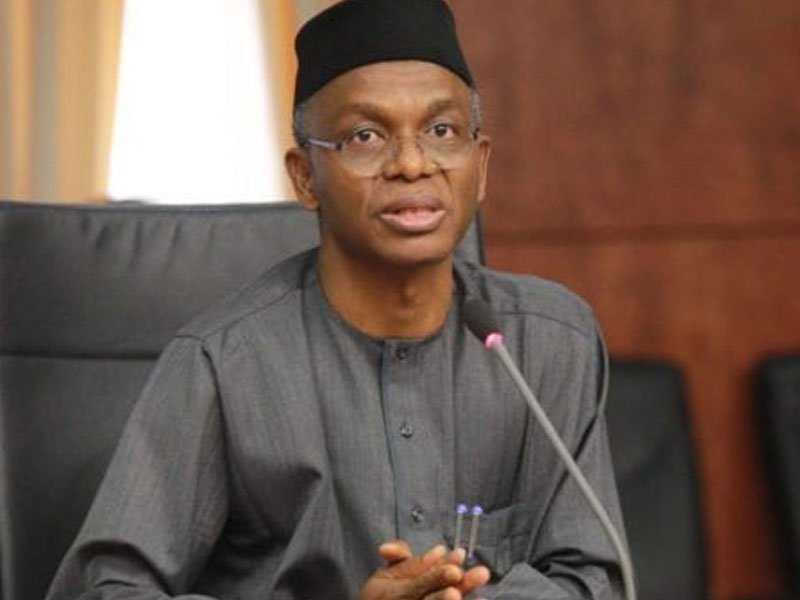
For 150 days and counting, a former Governor of Kaduna State, and one time Minister of the Federal Capital Territory, Mallam Nasir El-Rufai, has remained in the custody of various security agencies including the Department of State Services (DSS), the Economic and Financial Crimes Commission (EFCC) and the Independent Corrupt Practices and Other Related Offences Commission (ICPC) for alleged offences ranging from fund misappropriation, wiretapping and eavesdropping on security information among others. El-Rufai has not been found of any offence though he has spent over 150 days in custody.
The former governor’s plight was brought back to the fore weekend, when his wife, Asia Ahmad El-Rufai, made a passionate appeal to the international community to intervene over what she described as her husband’s prolonged detention and alleged denial of due process.
Mrs El-Rufai argued that the former governor’s continued incarceration amounted to “punishment before trial” and posed a threat to Nigeria’s democratic institutions. She noted that her husband has not been fairly treated even as she alleged that the former Director-General of the Bureau of Public Enterprise (BPE) may have taken ill in custody, bleeding from both nose and mouth. She wondered how someone, could made to undergo such severe punishment even when he is not undergone any trial, let alone being found guilty.
In a statement she signed herself, released his social media handles to mark what she described as the 150th day of El-Rufai’s detention, El-Rufai’s wife called on foreign governments, multilateral and multinational organisations and international human rights groups to closely monitor the legal proceedings involving her husband.
She acknowledged not speaking as a political actor but as a wife and mother seeking fairness for a member of her family.
The woman was of the opinion that the period of her husband’s incarceration without trial, has taken a significant emotional and physical toll on the former governor, members of his family and close associates.
“On the 150th day of Mallam Nasir El-Rufai’s detention, I ask readers outside Nigeria to pause over what that number means. One hundred and fifty days is not a legal phrase.
“It is five months of missed meals, missed prayers, missed proper mourning of his deceased mother, missed family conversations, interrupted medical care and moments we can never recover,” she said.
Acknowledging that her husband had been a controversial figure during his more than two decades in public service, as well as how rule of law and democracy should play out, she observed that “My husband is no stranger to controversy or public scrutiny. He has been praised, criticised, loved and opposed. That is democracy.
“But what is happening to him today is not democracy, and it is not accountability. It is punishment before trial,” she said.
Continuing and reflecting on the origin of the travails of her husband, Mrs El-Rufai traced his confrontation with the law to when am attempt was first made to arrest him at the airport on his way back from Egypt. The embarrassing situation at the airport culminated in his appearance for questioning, and ever since he has been allowed except when he was momentarily permitted to go and bury his dead mother.
She said, “There was the sudden invitation, his voluntary appearance before the authorities, and the promise of bail that existed on paper but not in freedom.
“There was the night he was moved between locations without warning and without the dignity of allowing his family to know where he was being taken,” she stated.
Asia also alleged that the former governor became seriously ill while in custody and experienced bleeding from his nose and mouth.
She claimed that officials were reluctant to provide him with adequate medical attention or allow his family to deliver his prescribed medication.
“I still remember the helplessness of hearing that he had fallen gravely ill in custody, bleeding from his nose and mouth, while those responsible for his welfare were reluctant to provide the care any person deserves.
“I remember the anxiety of trying to get his medication to him and wondering whether officials would accept it,” she said.
According to her, the detention had inflicted emotional distress on the family, which continued to wait for the legal process to take its course.
“These are not abstract violations. They are the moments that chip away at a family’s resolve and hope,” she added.
While not requesting that her husband be placed above the law, or escape investigation as a public officer, she insisted that such investigations must be conducted transparently, and in accordance with constitutional safeguards.
“If the state believes it has evidence, let it be presented before an impartial court, openly and fairly.
“But justice cannot be selective. It cannot be pursued through overlapping charges, repeated detention, impossible bail conditions and public humiliation designed to persuade the nation of guilt before a judge has heard the case,” she said.
She accused the government of the day of orchestrating the gory details of the situation, including stringent bail conditions to deprive her husband of freedom, even as the election approaches, stressing that Nigeria was drifting from legitimate accountability towards “lawfare,” which she described as the deployment of legal institutions and judicial procedures as political weapons. She believes that El-Rufai’s problems are the consequence of his disagreement with President Bola Tinubu, and his eventual decanting from the All Progressives Congress (APC).
“The concern is not whether former officials may be investigated; they can and should be.
“The concern is whether the law is being applied neutrally or deployed against those who have fallen out of political favour,” she said.
“His political rupture with President Bola Tinubu’s ruling All Progressives Congress and his refusal to surrender his independent voice should not make him a target for indefinite punishment or detention disguised as prosecution,” she said.
“The legal architecture”, she continued, “surrounding him is bewildering even to trained observers: multiple charges in different courts, overlapping allegations, shifting statutory theories and duplicated claims arising from the same alleged events.
“If one application for bail is made and the conditions are met, another accusation can be filed the next day. If one judge must consider freedom, another process can be used to delay it,” she alleged, querying why such procedures was allowed to turn the judicial process into a form of punishment before conviction.
In March 2026, the ICPC arraigned El-Rufai, alongside one Joel Adoga, before Honourable Justice A.I. Aikawa of the Federal High Court, Kaduna Division, on a 10-count charge bordering on abuse of office, money laundering and fraud.
According to the charge sheet marked FHC/KD/73/2026, the former governor was accused of unlawfully receiving multiple sums of money in naira and foreign currencies while serving as a public officer.
Specifically, the Commission alleged that El-Rufai, in September 2020 and January 2023, received the sum of N289,826,998.12 on each occasion as severance allowance, far exceeding the legally entitled sum of N20,013,245.00, being 300 percent of his annual basic salary.
The ICPC charge further revealed that between 2016 and 2023, the former governor allegedly took control of various sums in United States Dollars through his domiciliary account with Guaranty Trust Bank. These include $320,800 allegedly paid in tranches by Joel Adoga, as well as other deposits amounting to $155,800, $305,300, and several smaller sums from different individuals, all reasonably suspected to be proceeds of unlawful activities.
Joel Adoga was also accused of conspiring with the former governor in July 2019 to disguise the origin of $10,000 deposited into the said account.
One of the counts reads that both defendants, in July 2019 at Wuse, Abuja, allegedly conspired to disguise the origin of $10,000 paid into the former governor’s domiciliary account, knowing or reasonably ought to have known that the funds formed part of the proceeds of unlawful activity, contrary to and punishable under relevant provisions of the Money Laundering (Prevention and Prohibition) Act, 2022.
When the charges were read, both defendants pleaded not guilty to all counts, but they were ordered to be remanded in ICPC custody.
The ICPC further violated the court-ordered access to the former governor, saying that the order did not override the agency’s internal security rules.
In May 2026, the Federal High Court sitting in Abuja granted El-Rufai N100 million bail in the trial over the alleged unlawful interception of the phone communications of the National Security Adviser, Nuhu Ribadu. However, he was re-arrested right at the court premises by the DSS, prompting the family to raise alarm.
EL-RUFAI’S STRINGENT BAIL CONDITIONS
Much as the embattled former Kaduna governor was granted bail, the conditions have appeared too stringent and tough to meet, the situation that prompted the African Democratic Congress (ADC) among many other concerned Nigerians to react.
In its immediate reaction, the ADC accused the Federal Government of turning El-Rufai into a political prisoner, describing his ordeal as “political persecution dressed up as prosecution.”
El-Rufai’s family also condemned the re-arrest.
El-Rufai’s second wife, Hasiat, who addressed journalists outside the DSS facility, said the family was traumatised by the development and lived daily under the shadow of threats and surveillance.
“We now live in constant fear. Every day we get a threat — DSS is coming to raid your house, ICPC is coming to raid your house, police are coming to raid your house. You are being followed. Our phones are tapped,” she said.
As part of the bail conditions, the trial judge, Justice Joyce Abdulmalik ordered the defendant to produce a surety who must be a federal civil servant not below Grade Level 17.
According to the court, the surety must not only be resident in either Maitama or Asokoro highbrow districts of Abuja, but must also deposit the original Certificate of Occupancy of a landed property not valued below the bail sum.
It held that the surety must also provide evidence of receipt of salary for at least three months, with an authenticated letter from the manager of a bank within the jurisdiction of the court.
It added that a verification letter from the surety’s immediate department must be submitted alongside a tax clearance certificate covering the last six months.
The defendant was further mandated to surrender his valid international passports and directed not to travel out of the country without permission.
Justice Abdulmalik ordered the defendant to report to the headquarters of the Department of State Services, DSS, every last Friday of the month by 10 a.m. to sign an attendance register, pending the determination of the case. The former governor was also directed to submit a letter of attestation from the Chairman of the Kaduna Traditional Council.
The trial judge warned that failure to comply with any of the conditions would lead to an automatic revocation of the bail.
“It also confirms our fears that President Bola Ahmed Tinubu is deploying the instruments of state power to keep one of the leading opposition figures out of circulation. This is political persecution dressed up as prosecution.”
ADC also drew comparisons between El-Rufai’s case and those involving former Kogi State governor, Yahaya Bello, and former Delta State governor, Ifeanyi Okowa, both facing separate corruption allegations.
“When placed beside other high-profile cases, the contrast becomes stark and shameful. Yahaya Bello, former governor of Kogi State, has been accused in an alleged N80.2 billion money laundering case.
‘’Ifeanyi Okowa, former governor of Delta State, was arrested over the alleged diversion of N1.3 trillion in derivation funds. But today, they are walking around free, singing President Tinubu’s campaign song,” the ADC statement noted.
However, unconfirmed feelers reaching The Boss have it that El-Rufai’s incarceration has a lot to do with keeping him away from the face politics till after the 2027 General elections. The truth, or otherwise behind the postulation remains to be seen. Nigerians have to wait till the former governor’s next appearance in court by September 2026, to determine the direction of his freedom.
Related
Headline
Mary Habila’s Death: Tinubu Has Failed Comprehensively, Disgracefully – Atiku
Published
5 days agoon
July 16, 2026By
Eric
By Eric Elezuo
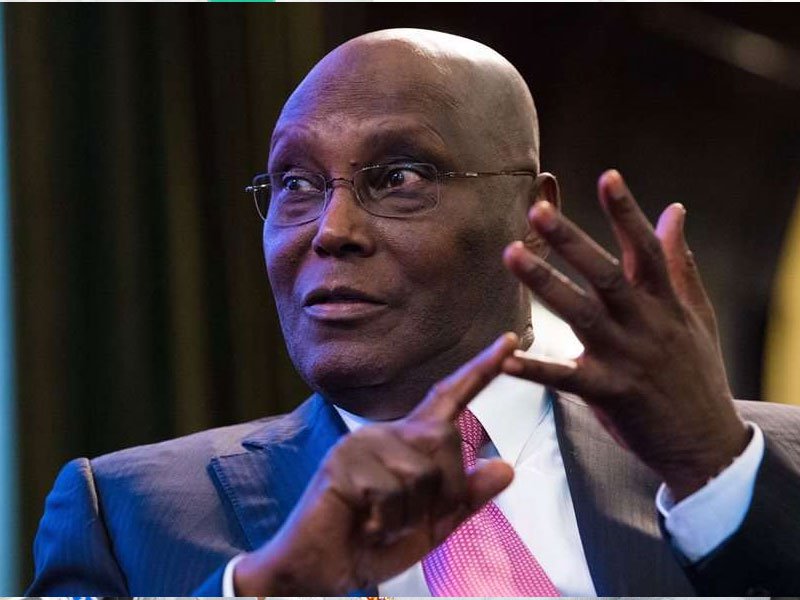
A former Vice President, and Presidential Candidate of the African Democratic Congress (ADC), Atiku Abubakar, has lashed out at the administration of President Bola Tinubu over its prolonged silence on the death of a medical practitioner, Mary Habila, who died at the residence of the Minister of Works, Dave Umahi.
Atiku condemned the inability of the Tinubu-led government from making any pronouncements or instituting any form of probe to unravel the cause of death since the sad incident occurred on June 27, 2026, saying the administration has failed comprehensively and disgracefully.
Atiku’s remarks are contained in a statement he released on his social platforms endorsed with his regular AA.
While not casting any blame on any particular person or entity, Atiku maintained that condolences are not enough,but must be accompanied by thorough investigation into the circumstances that led to the death of the 26 years old medical practitioner in her prime.
The former Vice President therefore called for a “credible, independent, and transparent investigation” to establish the truth, noting that “it is the refusal of the Federal Government to guarantee such an investigation that constitutes the scandal before us”.
The statement in full:
I have followed with deep sorrow and mounting concern the reports surrounding the death of Miss Mary Habila, a 26-year-old Nigerian from Nok, Southern Kaduna, who died on June 27, 2026, within the private residence of the Honourable Minister of Works, Senator David Umahi, in Uburu, Ebonyi State.
First, I extend my heartfelt condolences to the Habila family. No family should have to mourn a daughter taken in the prime of her life while also fighting simply to learn the truth of how she died.
But condolences are not enough. Nigerians deserve answers, and it is on this score that the Tinubu administration has failed, comprehensively and disgracefully.
Consider the facts that are not in dispute. A young woman died in the residence of a serving Federal Minister. For nearly two weeks, neither the Minister, nor the police, nor any arm of government said a word to the Nigerian people. It took the courage of Sahara Reporters to bring this death into public view. Three weeks after her death, no autopsy has been performed. No cause of death has been established. The investigation remains domiciled in the very state where the Minister served two terms as Governor and where his influence is beyond question.
And through all of this, silence from the Presidency. Silence from the Federal Executive Council. Silence from the Inspector-General of Police. Silence from the National Assembly. Not one word. Not one directive. Not one gesture to assure Nigerians that the life of Mary Habila matters to this government.
Instead, the Minister has been permitted to manage the narrative of a death that occurred under his own roof: issuing statements through his personal aides, deploying his private lawyers to correspond with the police, and continuing his official duties as though nothing has happened, while civil society groups, youth organisations, and the family’s own community cry out for an independent inquiry.
Let me be clear: I make no pronouncement on anyone’s guilt or innocence. That is precisely the point. Only a credible, independent, and transparent investigation can establish the truth, and it is the refusal of the Federal Government to guarantee such an investigation that constitutes the scandal before us.
A government’s first duty is the protection of life. Where a life is lost in circumstances touching a high official of state, the burden on government to act transparently is at its heaviest.
President Tinubu’s administration has instead treated this tragedy as an inconvenience to be waited out. If the death of a young Nigerian woman in a Minister’s residence cannot stir this government to act, then Nigerians must ask: whose life, exactly, does this government value?
I therefore demand the following: One, President Bola Tinubu must direct the Honourable Minister of Works to step aside immediately, pending the conclusion of investigations. This is not a punishment; it is the minimum standard of public accountability in any serious democracy. No official under this cloud should preside over a federal ministry as though it were business as usual.
Two, the Inspector-General of Police must immediately transfer the investigation from the Ebonyi State Command to Force Headquarters, with the involvement of independent forensic experts. No investigation conducted in the shadow of the Minister’s home-state influence can command public confidence.
Three, a full, independent, and internationally credible autopsy must be conducted without further delay, with the findings made public. The stalemate over the post-mortem, three weeks after this young woman’s death is an indictment of every institution involved.
Four, the family of Mary Habila must be protected from any pressure, inducement, or intimidation, and must be guaranteed unfettered access to the facts of their daughter’s death.
The measure of a nation is how it responds when the powerful are touched by tragedy and the powerless demand truth. Mary Habila was somebody’s daughter, somebody’s sister, a young professional with her life ahead of her. She was a Nigerian. Her death must not be reduced to a footnote of political convenience.
Nigeria will work again, but only when the life of every Nigerian counts, and when no one, however highly placed, stands beyond the reach of accountability.
May the soul of Mary Habila rest in peace. May her family find justice. -AA
Related


UK PM Burnham Unveils 10-Year Plan, Begins Cabinet Overhaul
Where’s the Nigeria’s Oil Metering Fund?
ADC Tells Tinubu to Resign As World Bank Reveals 139million Nigerians Live in Poverty
Dominican University Hails Peter Obi on 65th Birthday
Ooni of Ife Loses Elder Brother Prince Adetunji
Spain Beat Argentina, Crowned 2026 FIFA World Cup Champions
Harakati Za Holds Pan-African Conference on Economic Restructuring, Political Reforms, Regional Integration in Accra
Argentina Stun England with Two Late Goals to Reach 2026 World Cup Final
Nigeria Doing Well Under My Watch – Tinubu
Tech and Humanity: Nigeria is Building the AI Ambition…
Investors at UBA Business Series Identify Africa’s Next Billion-Dollar Opportunities
Why GLO is the Gold Standard
Friday Sermon: The Sociology of Aging: Olusegun Osoba at 87
Third Place Playoff: England Beat France in 10-Goal Thriller
Trending
-
Sports6 days agoArgentina Stun England with Two Late Goals to Reach 2026 World Cup Final
-
National5 days agoNigeria Doing Well Under My Watch – Tinubu
-
Tech and Humanity3 days agoTech and Humanity: Nigeria is Building the AI Ambition…
-
Business4 days agoInvestors at UBA Business Series Identify Africa’s Next Billion-Dollar Opportunities
-
Opinion3 days agoWhy GLO is the Gold Standard
-
Islam4 days agoFriday Sermon: The Sociology of Aging: Olusegun Osoba at 87
-
Sports2 days agoThird Place Playoff: England Beat France in 10-Goal Thriller
-
Featured2 days agoHarakati Za Holds Pan-African Conference on Economic Restructuring, Political Reforms, Regional Integration in Accra