Connect with us

Headline

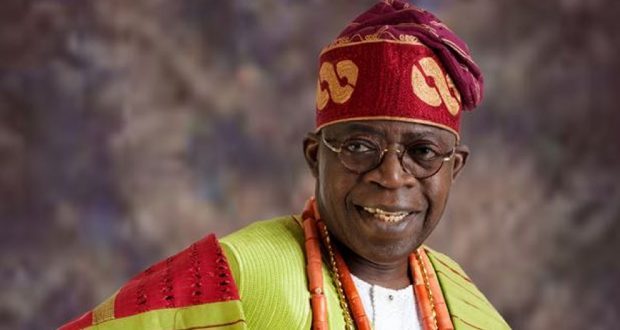
Yoruba at Crossroads As Tinubu Eyes 2023

Published

on

By Eric Elezuo
Will 2023 be the year of Tinubu or the Year of the Yoruba? This is the question on many lips.
The last time the presidency berthed at the doorsteps of Yorubaland was in 1999, and it stayed till 2007 when President Olusegun Obasanjo relinquished power and handed over to late President Umar Musa Yar’dua.
It has been 14 years, and by 2023, when the political drum beats sound again, it would have been 16 years, and already the jostling for the numero uno position in Nigeria has begun.
Though none of the parties has zoned the presidency as it is unwritten norm of the past, there are strong indications that the ruling All Progressives Congress (APC) would be looking southwards this time around.
Already key stake holders of the party are speaking about the possibility. A few days ago, Borno State Governor, Babagana Zulum, speaking at a book launch insisted that power should shift to the South. It is also because of this seeming “body language” of the party that Ebonyi State Governor, David Umahi, defected to the ruling party, and we gathered that other Governors in the South may also jump ship to take a shot at the juicy position.
Available statistics have it that if the APC keeps their promise of returning the presidency to the south, as President Muhammadu Buhari, who is from the North, will be concluding his stewardship in May 29, 2023, the likeliest beneficiary will be the Southwest. This is because the region is basically the stronghold of the APC in the South. They can boast of five governors out of the available six in the region. The Southeast has only two governors, both of which have circumstantial trajectories.
While in Imo, the party got the governorship through a a Supreme Court pronouncement even as their candidate, Hope Uzodinma, came a distant fourth in the election, the Ebonyi situation is a consequence of defection. The bottom-line however, is both states are APC states. The South is not even in the radar as all six states in the region are opposition Peoples Democratic Party (PDP).
Even if zoning to the South does not mean the South West or the Yoruba race but the most prominent gladiators in the APC are certainly from that part of the country, and they all have intimidating credentials that is fitting for the top job.
Already, all manner of groups are being formed by their cronies and proteges, posters and billboards are being mounted while high wire negotiations have begun, but none of these individuals have officially made a declaration.
It should be said that one of the frontliners, who has been touted as having his eye on the great pie in Aso Rock, is the indefatigable grassroots politician, and master strategist, Asiwaju Bola Ahmed Tinubu, fondly called among other terms of endearment, Jagaban.
Tinubu, since 2007 when he left office as the Governor of Lagos State, has remained unlike many of his contemporaries, in the corridors of power. Though he has not held any political position since then, but he has remained a powerful force to reckon with, especially in the Southwest region, with extra special emphasis to his immediate jurisdiction, Lagos.
Tinubu, without mincing words, has a hand in the electoral victory or political appointment of many south-westerners; many of the political elites have stood on his shoulders to stardom, that is why he is touted as one of the deftest political leaders today in Nigeria.
Those in the know say that it was his political sagacity that helped to ensure that his former party, the Action Congress of Nigeria (ACN) formed an alliance with the Congress for Progressive Change (CPC) and other members of the Peoples Democratic Party (PDP) which led to the birth of the current ruling party, the All Progressives Congress (APC).
However, the story is getting a twist as Tinubu, the undisputed kingmaker, is now seeking to be King.
As experienced as Asiwaju Tinubu is, gunning for the presidency is not a familiar turf. And there are indications that his ambition may have put the Yoruba nation at crossroads.
The race for 2023 has begun in earnest. This assertion is strengthened by the decamping to the APC of former Governor of Ogun State, who was also the campaign manager of Atiku Abubakar, the PDP presidential candidate in 2019, Gbenga Daniel along with former Speaker of the House of Representatives, Rt. Hon. Dimeji Bankole. Both men have subsequently had a meeting with President Buhari during the week.
While there are many of Yoruba stock, who are interested in the presidential villa or who are fit, considering their pedigree, for the exalted office, there are many names being touted as eyeing the Presidency come 2023. However, the following are the leading lights according to a short survey conducted by our Board of Editors.

ASIWAJU BOLA TINUBU

In terms of his clout and connection, Asiwaju Bola Tinubu is the most prominent person in South West politics today.

He has the name recognition and the follower-ship to get things done when any push gets to shove.

One of the founders of the APC, and a force behind the ousting of a sitting president in 2015, and the installation of Buhari, Tinubu has practically seen all the colours and intrigues of political maneuvers.

He served as governor of Lagos State after the return of civil rule in 1999 following the death of General Sani Abacha in 1998. He ruled Lagos for two terms of eight years, establishing political and infrastructural landmarks that have stood the test of time. In fact, Lagos, as a state, is striving and functioning with the blue print he created.

Prior to becoming the Governor of Lagos in 1999, Tinubu, who will be celebrating his 69th birthday on Monday, March 29, had a short spell in the National Assembly as Senator representing Lagos West before the Abacha junta took over the reins of power in November, 1993. He subsequently went into exile from where he joined in the fight for the restoration of the June 12, 1993 mandate of Chief Moshood Abiola.

He is highly experienced in political matters, and can rightly be addressed as a political juggernaut. Most stakeholders believe that Tinubu is the most appropriate Yoruba man to be the recipient of the APC candidacy should the southwest gets the ticket. They believe that the man referred to as the Lion of Bourdillion, who is also the National Leader of the APC, deserves to be compensated with the presidency, having worked very hard to bring about the APC as a party and the Buhari presidency.

Not only that, there is hardly any prominent Lagos politician, who did not pass through his tutelage or benefit from his humongous structure or muscle.

Tinubu is known to randomly select technocrats capable of delivering dividends for his government, irrespective of where they come from.

A workaholic of great repute, Tinubu already has a structure in all the southwest states to set him on the right track, and that is owing to the fact that he is a great team player, who has the ability to detect talents, and nurture them to greatness. The fact that he is also a great spender, places him at an advantageous position.

It is not out of place to say that Tinubu’s friendliness is highly infectious, and that explains why even without his knowledge, people work for him, sometimes using their own resources in the bargain.

But, like he is fit and qualified, the same way he has backlogs that will definitely drag him back, and may eventually cost him the opportunity and the presidency.

Tinubu is seen as a very independent person, who cannot be controlled, not even by the northern oligarchy, and this is a minus for him because the North will definitely seek to support someone they could put on a leash. Tinubu is not that person by any standards.

Again, he is presently not in the good books of the ruling class, a source, who wished anonymity told The Boss, especially the North, and that explains why he is periodically sidelined, and reabsorbed when alarm is raised.

The source maintained that Tinubu’s role during the Ambode saga may work against him. His highhandedness in the matter annoyed not a few political heavyweights, who were said to have pleaded with him to forgive Ambode and hand him a second term. The stakeholders felt let down, said the source, and may not listen to him if he now seeks their assistance.

It was allegedly reported that even President Buhari interacted with Tinubu on the matter, but he went ahead to coordinate the process that saw Ambode out, and Babajide Sanwo-Olu in.

Tinubu’s other albatross is the allegation of corruption and the fact that he has his unseen hands in every pie in Lagos. Though nothing has been linked to him, the former Executive at Mobil Unlimited, who earlier had stints with Arthur Andersen, Deloitte, Haskins, GTE Services Corporation among others, has not been able to shake off that tainted perception.

A respondent noted: “How would you categorise the bullion vans that were offloading money in his compound during the 2019 election, that is sheer impunity”

The respondent maintained that the allegation of corruption on Tinubu, though not proved, will make so many to be wary of him as the race for 2023 hots up, adding that even those who are his protege may shelter themselves from him. He stressed that the corruption issue is one area the media team of Tinubu has been careless about, noting that they have done absolutely nothing to change the narrative.

Tinubu may also be confronted with the Abiola syndrome, where it will be slightly difficult to find a running mate, who is not a Muslim. There is no possibility that Muslim/Muslim ticket will fly again in Nigeria as it happened during the Abiola era with Babagana Kingibe. On closer analysis, the veritable Christian politician that can complement Tinubu’s ambition is former Speaker of the House of Representatives, Yakubu Dogara.

The Jagaban has proteges and stooges in all areas of human endeavours; it is a matter of how he plays his card that would eventually determine his eligibility for the exalted position.

Recall that a serving minister the previous week revealed that Buhari was not keen in having Tinubu as his successor.

“The president is not interested in Tinubu’s candidature because he is not convinced that Asiwaju is the right person to succeed him,” he was quoted as saying.

The Jagaban’s actions in recent times has actually riled many, making people think he or his supporters are showing signs of desperation.

Just a few days ago, he visited and made a donation of N50 million to victims of Katsina Market fire; a gesture that caused quite a storm because there have been many fire outbreaks in the southwest including a major blast in Abule-Ado in Lagos and he did not openly visit or donate a kobo.

And to even make matters more interesting, he has decided to take his 69th birthday to the Kano State Government House with President Buhari as the Chairman, and Governor Abdullahi Ganduje as Chief host.


PROF YEMI OSINBAJO

Professor Yemi Osinbajo, the current Vice President of the Federal Republic of Nigeria wears the toga of a perfect, cerebral gentleman. Osinabjo the highest-ranking Yoruba office holder in the country today should be the easiest choice for the Yoruba if everything was equal. But everyone knows that in politics, things are usually not as they seem.

The Amiable VP, respected and learned, is no push over in any ramification. He has proved his mettle in the few areas he been allowed to perform, and knows his onions.

Many believe that the former Attorney General and Commissioner for Justice of Lagos has the capacity and ability to unite the nation, especially at this time that the drums of succession and banditry has filled the air.

What gives Osinbajo an edge is the fact that he has acted in the position of president and passed with flying colours.

When his principal, President Buhari was away for about 150 days on medical vacation, Osinbajo showed his stuff. He was firm and fair and took decisions that won him accolades even among his most vociferous critics. The positive impact his decisions had on the economy is a trump card he could use when the chips are down.

Osinbajo is not a hardcore politician, and many Nigerians believe that the country does not need another career politician at this time, but a tested technocrat, who has academic prowess and mental depth. Osinbajo is certainly the man.

Another plus for the number two man is the fact that having spent six years, and soon will be spending eight years, in the corridors of power, Osinbajo is now an insider, who knows the working of the presidency and can correct the wrongs of the present administration as well as conduct a veritable surgical operation on all malfunctioning areas.

Recall That in 2020, a group under the aegis of Friends of Prof gave out N1 million each to twenty businesses as  Initiative for Small Businesses, to celebrate the 63rd birthday of Vice President Yemi Osinbajo. Observers say that the effort is only geared towards creating relevance for the Vice President as 2023 approaches.

And then of course, being a Christian, the issue of getting a northern running mate will not pose any challenge for the Redeemed Pastor.

On the downside, the VP is seen as lacking political capital even in his native Ogun State. Many also believe he may not have the muscle to take serious decisions and stand up to the Northern cabal.

They allege that his golden silence regarding the poor performance of the Buhari administration has shown that he may not be able to be his own man.

Many of our respondents are of the opinion that they are not sure Osinbajo will even dare put his hat in the ring if Asiwaju makes the first move.

BABATUNDE FASHOLA, SAN

From an outstanding performance as Governor of Lagos State, Babatunde Raji Fashola SAN, became a Super Minister, supervising three stand alone ministries: Power, Works and Housing.

A legal luminary by training, Fashola was the Chief of Staff to Tinubu during his tenure as Governor of Lagos State. He rose to become governor after Tinubu completed his tenure in 2007. He was reelected in 2011, and relinquished power in 2015 to Ambode.

He is seen as a silent performer and a technocrat who is trusted by President Buhari, and that explains why he was saddled with the responsibility of managing three powerful ministries in the first tenure of the administration.

His eight years as governor in Lagos, with executive powers, is enough to prove the kind of administrator he is, and the fact that given the estate called Nigeria to run, he would do more than a good job.

Though many say Fashola’s sterling profile tanked big time with his seeming poor performance as Super Minister, many still adjudge him as fit for the job of president.

They are of the opinion that as Minister, he had no free hand and thus as President, he would be able to exhibit his can do spirit as he did when he ran Lagos.


DR KAYODE FAYEMI

The Governor of Ekiti State, John Kayode Fayemi, is another technocrat, who is well versed and equipped to take up the mantle of president.

Presently serving the second term of his tenure as governor, Dr Fayemi has first-rate credentials as a good administrator.

His supporters say that as the current Chairman, Nigeria Governors’ Forum, the next place for him after leaving office is Aso Rock. This position has also helped him forge alliances across the nation that could be critical in the quest for the presidency. And more importantly, it will be easier for him to mobilize his colleagues to his side at the APC primaries.

Furthermore. It is also said that his experience and expertise in Military Studies would be excellent points to consider since the country is currently battling severe insecurity challenges.

Also, Governor Fayemi’s persona as a fighter and a respecter of the rule of law are attributes that would add to his suitability for the big position.

The only problem with Fayemi is that as Minister of Solid Minerals, he had very little impact, so our respondents were of the opinion that if he could not excel at a small assignment like that, how would he be able to run the nation?

Again, his second coming in Ekiti State has not witnessed the kind of massive turn around that would position him as a performer par excellence.


SENATOR IBIKUNLE AMOSUN

Presently in the National Assembly as a Senator representing Ogun Central, Ibikunle Amosun fca is arguably the closest southwest politician to President Buhari. He is known to be a good networker, and cannot be said to have much regard for the much talked about invincibility of Asiwaju Tinubu.

Senator Amosun is a silent operator and has used his position to better the lots of Ogun Indigenes at that Federal level. He is also well respected by many in the party.

Despite his political clout, Amosun, according to our respondents, may just not have the political muscle to get the backing of the heavyweights of the south as was seen during the Gubernatorial primaries of the APC where his candidate of choice was roundly beaten.

That is not all, as a Muslim, he may also have the muslim-muslim challenge that the APC would rather avoid.

Amosun may have to come back home and put his house in order, and not depend on Buhari’s influence if he intends to fly the APC flag in 2023.

AKINWUNMI AMBODE

Akinwunmi Ambode, the immediate past Governor of Lagos State, who was unceremoniously sent packing may be the dark horse of this race.

Ambode, who in his short stint stamped his signature on Lagos with many audacious and legacy projects, managed to gain the sympathy of the Presidency, the APC and the North.

He reportedly mobilized resources for the party during the general election and the party eggheads are still grateful till tomorrow.

An Accountant by training, who has supervised meticulously the accounts of Lagos State over the years, retiring as Accountant General, Ambode is a man who has shown capacity as an excellent manager of men and resources.

With his appointment as Member of the APC Contact and Strategy Committee, tongues have begun to wag about the possibility of an Ambode presidency.

Infact, not a few believe that Ambode’s appointment is to checkmate Tinubu.

The big question then is, who will the cap fit?

Continue Reading
Click to comment

Leave a Reply

Your email address will not be published. Required fields are marked *

Headline

Parties’ Deregistration: ADC, Not NDC, is the Target

Published

on

By

By Eric Elezuo

As the 2027 presidential election draws closer, intrigues, manipulations and maneuvers have continued to be the order of the day as political parties engage in one gimmick or another to outdo and undo one another.

While some are playing politics of numbers and conviction, others are engaging tendencies that tend to question the status quo and established principles under which genuine democracy is formed. As a matter of fact, fingers have been pointed at the President Bola Tinubu-led Federal government as the brain behind all machinations that have attempted to derail multi-party democracy, and institute a one-party state, which is alien to the Nigerian democratic roots. This is as a result of the constant imbroglio that has consistently engulf almost all the major political parties in the country.

Fresh facts have however, emerged to prove that every act of frustration thrown at the opposition has been indirectly aimed at the main opposition party, the African Democratic Congress (ADC), and its presidential candidate, Alhaji Atiku Abubakar.

According to reliable sources, the recent deregistration of parties, especially the Nigerian Democratic Congress (NDC), was actually targeted at the ADC.

Recall that the Federal High Court in Lokoja, Kogi State, on June, 26, set aside its earlier judgement directing the Independent National Electoral Commission (INEC) to register the NDC as a political party. A ruling that put a question mark on the eligibility of the party presenting candidates in the forthcoming 2027 elections

The presiding judge, Isah Dashen, held that all relevant parties must be heard before any substantive decision can be made in the matter.

The court upheld the application filed by a certain organization, the Peace Movement Party (PMP), ruling that the party was a necessary party to the suit.

According to the judge, the earlier judgement was constitutionally defective as it was delivered without hearing from all interested parties.

He declared that such an omission rendered the entire process null and void.

Mr Dashen further ruled that the status quo be restored to what it was before the December 10, 2025 judgement, pending the determination of the substantive suit.

He also observed that certain material facts were suppressed in the earlier proceedings, which justified the decision to set aside the judgment.

Consequently, the court ordered that the substantive suit should begin afresh, with the Independent National Electoral Commission (INEC), the PMP and the NDC as parties to the case.

According to NAN’s reports, the applicant’s lawyer, Chikezie Ekeocha, told journalists that the PMP approached the court after discovering that NDC’s registration was based on a logo it had previously submitted to INEC before the commencement of the suit.

According to Mr Ekeocha, the court agreed that the applicant’s rights had been affected and consequently vacated the earlier judgement.

“The court has ordered all parties to return to the position they occupied before the judgment of 10 December 2025, and directed the claimants to join all necessary parties to ensure the issues in dispute are effectually and completely determined,” he said.

He explained that the implication of the ruling is that every action taken by INEC in compliance with the now-vacated judgment stands reversed.

“The recognition of the NDC, the issuance of its certificate of registration, its inclusion in INEC’s records, and any appearance on ballot papers arising from that judgement must be withdrawn pending the final determination of the substantive suit,” Mr Ekeocha stated.

He, however, clarified that the substantive case remains before the court and has not been decided.

“The matter has not been concluded. The court merely set aside its previous judgment and directed that the party whose interests were affected be joined so that all sides can be heard before a fresh decision is reached.”

Mr Ekeocha also dismissed suggestions that the court merely ordered parties to maintain the status quo, insisting that the ruling specifically directed a restoration of the position that existed before the 10 December 2025 judgement.

The ruling effectively returns the dispute over the registration of the NDC to the Federal High Court for a fresh hearing, with all relevant parties expected to participate before a new determination is made.

It would also be recalled that a few weeks earlier, the Federal High Court in Abuja, had ordered the deregistration of five political parties including the African Democratic Congress (ADC). The others are Action People’s Party (APP), Action Alliance (AA), Zenith Labour Party (ZLP) and Accord Party.

However, on June 16, the Court of Appeal in Abuja halted the enforcement of the judgement, ruling that it violated its earlier ruling staying proceedings before the Federal High Court.

While INEC awaits the release of the Certified True Copy (CTC) of the judgment to deregister the NDC, the NDC has reacted, rejecting the judgment as travesty of justice.

Lending credence to the notion that the President Tinubu-led administration is basically targeting the establishment of the ADC as a party, and the candidature of its presidential flagbearer, former Vice-President Atiku Abubakar, who is also the presidential candidate of the ADC, has stated categorically that there are plots to prevent the party from participating in the 2027 general election.

Atiku’s position is stated in a statement issued by his Senior Special Assistant on Public Communication, Phrank Shaibu on Monday, notifying the public that he had received credible information suggesting that political and legal manoeuvres were being deployed against the ADC, stressing that the persecution that has been thrown towards the NDC was a clear distraction as the main target is the ADC.

Atiku alleged that anti-democratic elements within the ruling All Progressives Congress (APC) were working to ensure that the ADC is excluded from the ballot.

“We are fully aware of their plots. While they seek to sow confusion within the opposition, we know their real target is the ADC because it represents the most credible alternative,” he said.

Atiku called on Nigerians to reject any attempt to determine which opposition parties participate in the election.

“We therefore call on all Nigerians — not just ADC members and supporters — to rise in defense of democracy and reject any attempt by the ruling party to cherry-pick which opposition parties are permitted to participate in the next general election,” he said.

“Our message to the APC and the hooded men plotting in dark chambers is simple: you may conspire, but you will not succeed.

“If the APC is truly confident in its popularity, why is it so terrified of the ADC?”

He said he hoped the information available to him would not materialise but argued that recent political developments made such concerns difficult to dismiss.

“The pattern has become all too familiar. First, institutions that ought to be neutral are drawn into partisan contests,” he said.

“Then, frivolous litigations suddenly gain unusual momentum. Administrative powers are selectively deployed.

“Political pressure is mounted behind closed doors. Before long, democracy itself becomes the casualty.”

Atiku alleged that the ruling party has focused more on weakening the opposition than addressing the country’s economic and security challenges.

“The obsession with silencing the opposition has become so consuming that governance itself has taken a back seat,” he said.

“At a time when Nigerians are battling hunger, inflation, unemployment, insecurity, and collapsing purchasing power, those entrusted with public office appear preoccupied with political survival rather than national survival.”

Nigerians recall that ever since the official rejuvenation of the ADC in June/July of 2025, where the duo of Senator David Mark and Ogbeni Rauf Aregbesola emerged as the party’s chairman and secretary respectively, the party has not known moments of peaceful coexistence as litigations from corners unknown have sprang up in a bid to destabilize the party and deprive it of the opportunity of featuring on the ballot paper come 2027.

ADC, as a child of circumstance emerged from the rumbles of the litigation-ridden former main opposition party, the Peoples Democratic Party (PDP), where two factions have consistently remelained at loggerheads over leadership. While the Minister of the Federal Capital Territory, Nyesom Wike, who is working assiduously to ensure the reelection of Bola Tinubu, leads one faction, Oyo State Governor, Seyi Makinde, who became a defacto head, leads the other faction. In all, PDP appeared to have no direction, forcing many of its members to jump ship, thereby birthing the ADC, and to a large extent, the NDC, which is presenting Peter Obi as the presidential candidate, with former Kano governor, Rabiu Musa Kwankwaso, as his running mate.

Sources also informed The Boss that the hasty reading and passage of the Electoral Act 2026 by the Godswill Akpabio-led National Assembly, with many great areas left unattended to, were also part of the grand design to deprive the ADC the constitutional rights of presenting candidates for the 2027 elections.

But both the ADC and the NDC has vowed that they would follow every process to ensure that the crackdown on opposition parties by the Tinubu administration comes to an abrupt end.

But beyond the intrigues, Nigerians are gearing up to participate fully in the forthcoming election with cross sections of the population either hailing Tinubu for his policies or knocking him for the untold hardship in the land.

Continue Reading

Headline

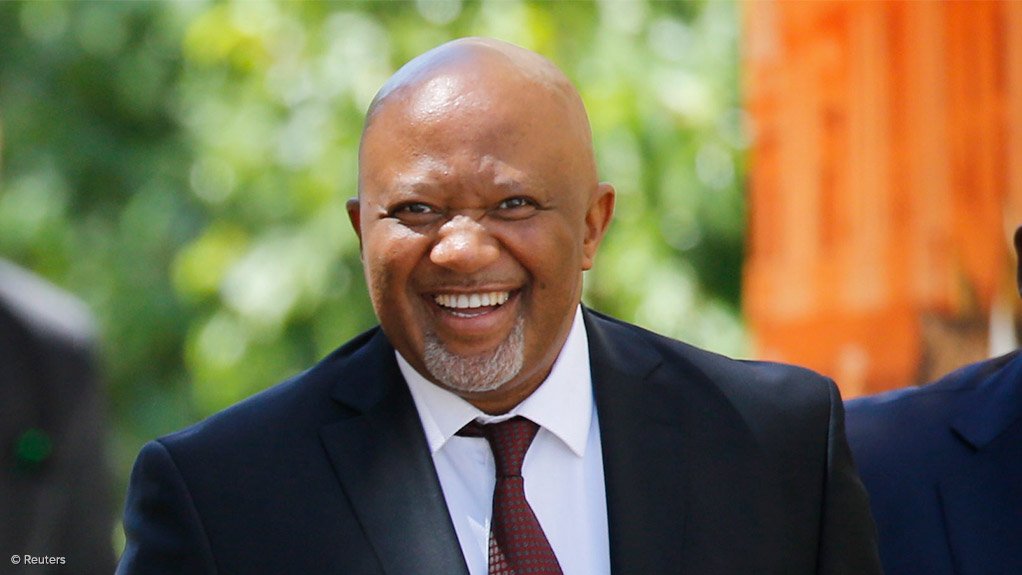
South Africa Nothing Without Africa – MTN Boss, Mcebisi Jonas

Published

on

By

The MTN Group Chairman, Mcebisi Jonas, has condemned the ongoing anti-foreigner sentiment in South Africa, describing it as a symptom of State failure being cynically exploited by politicians with no interest in genuine solutions.

The speech is seen as one of the most substantive interventions by a senior business figure into xenophobic crisis currently plaguing South Africa.

Delivered during the funeral service of Zimbabwean-born activist and public servant, Thokozani Damasane, Jonas’ words have sparked a wave of discussion across South African civil society.

“I was thinking, what is home to Damasane?” he said. “Because I understand, and I understood very early in life, that home is where humanity is. Home is about humanness. It is about the good of humanity and striving for the good of humanity.”

Thokozani Damasane was born and educated in Zimbabwe before relocating to South Africa during the post-apartheid transition period. Jonas described him as arriving “as an outcast” into a country still finding its post-liberation footing – and choosing, nonetheless, to commit himself entirely to its struggles and its people.

“He immersed himself deeply into the struggles, into the pains of South Africans, and he became one of us,” Jonas said.

“In Damasane’s strength, our strength as South Africa and South Africans is reflected. And in his weaknesses, our own weaknesses are reflected.”

Speaking further, Jonas blamed the state for the failure being witnessed, emphasising that if foreigners leave South Africa today, the country’s problems will still persist.

“Foreigners can leave tomorrow – inequality will be with us,” he told the congregation.

“Foreigners will leave tomorrow – unemployment will be with us. Foreigners will leave tomorrow – our police will remain corrupt. Foreigners will leave tomorrow – our politicians will still be concerned with one thing: being elected and re-elected.

“The problem is the failure of the state. The State doesn’t manage immigration. It doesn’t manage its borders. It doesn’t enforce
law enforcement. It doesn’t manage education. What are you expecting?”

Jonas argued that this failure created fertile ground for political manipulation. “When people feel the burn, they become vulnerable to politicians whose sole purpose is to be elected and re-elected. Some of them have no credibility whatsoever. But they lead marches and tell our people that the problem is not us – it is foreigners.”

Jonas recounted a conversation he had witnessed between Damasane and a young man who had challenged the right of foreigners to be in South Africa. Damasane’s response, Jonas said, had stayed with him ever since.

“Damasane said to this guy: Just wait fifteen or twenty years. You will also want to leave your country.”

Jonas told mourners those words now carry a weight Damasane may not have anticipated. “As I stand up today, I look at South Africa. The level of oppression and inequality, the level of exclusion of our people, the level of corruption, the betrayal of the dream of liberation – those words of Damasane ring very loud in my ears.”

South Africa is nothing without Africa

Jonas closed with a call for what he described as a return to “national consciousness” – one rooted in continental solidarity and economic interdependence rather than ethnic exclusion.

“We are a nation embedded in Africa,” he said. “And without Africa, our growth as a country – economically – our fortune is intertwined with the growth of Africa. South Africa is nothing without Africa. And Africa is nothing without South Africa.”

He also reframed the question of legacy and identity for Damasane’s children, who were present. “Sometimes this thing called meritocracy is measured in wealth. No. It is values, it is principles, it is integrity. And your father had all of that.”

“We cannot judge people by their origin,” he told mourners. “We cannot determine the legal status of people by their origin.”

Continue Reading

Headline

NDC Rejects Court Ruling on Party’s Registration, Heads to Appeal Court

Published

on

By

The Nigeria Democratic Congress (NDC), on Friday, vowed to challenge the judgment nullifying its registration by the Independent National Electoral Commission (INEC), insisting that it would exercise its constitutional right of appeal.

Reacting to the ruling on Thursday, the party’s spokesman, Osa Director, said the NDC was still awaiting the certified copy of the judgment before making a comprehensive statement on the court’s decision.

He, however, confirmed that the party had resolved to head to the appellate court.

“We are still waiting to obtain a copy of the judgment. After reading the comprehensive judgment, we will make a detailed statement,” he said.

The spokesman added: “For now, what is certain is that we will exercise our right of appeal.”

Insisting that the party would challenge the ruling, he said: “It is our constitutional right to appeal, and we intend to exercise that right.”

When asked specifically whether the NDC would appeal the judgment voiding its registration, the spokesman replied: “Yes, the party will appeal the case.”

The party’s reaction came shortly after a Federal High Court sitting in Lokoja, Kogi State, in a judgement that nullified its registration by INEC, a development that could have significant implications for the NDC’s participation in the country’s political process ahead of the 2027 general elections.

The NDC, however, maintained that it would refrain from making further comments on the substance of the judgment until it had studied the full text of the court’s decision.

The party’s planned appeal is expected to set the stage for a fresh legal battle over its status and continued existence as a registered political party.

Continue Reading

Trending