Connect with us

Headline

Lagos, Port Harcourt, Kaduna & Enugu: A Tale Of Four Cities

Published

on


By Professor Akinjide Osuntokun

There has been so much controversy on who owns Lagos in recent times between the indigenes and the non-indigenes, between “omo Eko” (indigenes ) and “ara Eko” ( residents), that a little knowledge of the history of Lagos may remove the blinkers from our eyes.The indigenes of Lagos have a saying “Awori lo l’Eko” meaning Lagos belongs to the Awori. The Awori were the original settlers of Lagos and their settlements still exist in various Awori settlements from Iddo, Iganmu, Apapa, Isheri, and so on up to Otta. These Awori settlements were founded around the 12th century during the evolution of similar political entities in Yorubaland.It was not until the 15th century that Oba Ewuare the Great sent an expedition to the island now known as Lagos for the purpose of making it a slave port for evacuating war captives to Europe through the Portuguese, the first Europeans to make contact with the Benin Empire. The Bini settlement or camp (Eko) was separate from the Awori villages and settlements and there was no attempt by the Bini camp to lord it over the Aworis. Waves of people from neighboring Ijebu, Remo and Egba territories came to Lagos virtually overwhelming the Awori and the Bini camp. But since they were all of the same culture there was no acrimonious contention about indigenous rights and the rights of newcomers. The Bini group hunkered down around their settlement at Igha Idugaran (pepper farm ).The prestige of the Benin Empire made the settlement to be respected and the place grew into a kingdom replicating in a small way the royalty of Benin and its palace chiefs on the island the Portuguese named Lagos, but which the Yoruba’s, appropriating the Bini word for camp, called Eko. The independence of the Awori settlements on the mainland continued to be respected even until today and throughout the colonial period. The sister Empire of Oyo also put down a toehold at Ajase, west of Lagos, which the Portuguese called Porto Novo for the same purpose of the slave trade. Benin influence on the island of Lagos is a historical fact, but this does not mean Lagos is not part of Yorubaland. The Benin influence extended to the dynasties of such places in eastern Yorubaland like Ado, Ikere, Ita Ogbolu, Igbara Oke and Akure.This does not make the people from these towns Bini.The fact, for example, that the ruling monarch in England is German does not make England part of Germany. Also the Bini inspired monarchy in places like Onitsha and the western periphery of Igboland does not remove the fact that Onitsha and kingdoms west of Onitsha are part of Igboland. Neither does the replacement of the Ogisos in Bini by an Oduduwa Dynasty make Bini part of Yorubaland. What is important to note is the dynamic relationship of people in the Bight of Guinea in the past, and that the whole area shares a common cultural similarity.
When the British took over Lagos and its mainland in 1861, after naval bombardment of the town, they signed a Treaty of Cession with the Oba who surrendered his suzerainty to the British Crown. From that time onwards the people of the Crown Colony became British subjects while the rest of what later became Nigeria was “terra incognita,” at least for a while until the heyday of European imperialism of the 1880s to 1900s.
At the amalgamation of all British territories in Nigeria with the colony of Lagos in 1914, with Egbaland remaining still independent until its independence was abrogated at the outbreak of the First World War, Lagos became the capital of Nigeria .

The then Governor-General hated Lagos with it’s “insalubrious climate and seditious press” and its “trousered Niggers, dressed in Bond Street attire, who send their laundry for dry cleaning in England,” and decided to build a new capital in the centre of the country. He found this centre on River Kaduna, which gave the new capital its name. Lugard embarked on feverish development of Kaduna using the same tax on “trade gin” banned from the North, as well as revenue from custom levies and proceeds from palm kernel, palm oil and cocoa trade. The development of Kaduna continued during the Great War at a less frenetic speed as before. The whole idea of moving the capital to Kaduna was ended by Sir Hugh Clifford, a different kind of governor from Lugard. Sir Hugh Clifford, the successor of Sir Fredrick Lugard, said he was not prepared to administer Nigeria from a “specially fabricated isolated centre in the middle of the country.” Development of Kaduna was however never quite abandoned and its effect is the well planned Kaduna city, compared with the chaos of Lagos. Hugh Clifford tried to improve Lagos by developing the so called “Ikoyi plains” in the 1920s.

Contemporaneous with the Kaduna project were two other new towns built by Nigeria. Port Harcourt was conceived by Sir Fredrick Lugard as an alternative if not an outright replacement for Lagos. Lugard felt that the Lagos Port was too shallow and that its development was constituting a drain on Nigeria’s exchequer. The principal officers in the Colonial Office in London were not persuaded about Lugard’s project, and to outwit them Lugard named the port after the Secretary of State for the Colonies, Sir Lewis Harcourt. Sir Lewis fell for it and action for the new port began in 1913. The city around the port was well planned by British architects which accounts for the town’s sobriquet as “garden city.” Any visitor to Port Harcourt, before the deluge of people from the hinterland, would have described it as “little Lagos.”

With the outbreak of the First World War it became difficult to get British ships to bring coal from Newcastle to Nigeria. Coal was absolutely necessary to run the railways which criss crossed the country from Lagos to Kano and from Port Harcourt to Jos. Coal was also needed to fire the generators to light up the European Government Reserved Areas ( GRA). It was in this circumstance that the colliery in Enugu was developed. The native Wawa people were too primitive to work in the mines, so people were recruited from all over the country to work in the Enugu coal mines. Enugu owes its well planned lay out to its colonial origin.

Another town that developed around the tin and columbite mines on the Plateau was Jos. In fact, the European impact was such that a certain part of Jos was known as “Anglo Jos,” perhaps until recently. There is no doubt that our British colonial heritage brought together a heterogeneous population, many of whom had very little in common. This has led to bloody frictions in Jos between the indigenes and the Hausa, who claimed that they built Jos. Old Jos was an amalgam of Hausa, Birom, Naraguta, Yoruba, and Urhobo – the Igbo were late arrivals after the tin mines had become unprofitable. It seems a modus vivendi now exists between the natives and the Hausa in Jos. Enugu has not experienced too much conflict between the indigenes and other Igbo settlers, with the exception of resentment of the natives against those who exploited their backwardness to alienate their land to themselves during colonial and post-colonial rule, when Enugu was the capital of the entire Eastern Region.
Port Harcourt’s indigenes in Diobu and the Nkwerre people resented the dominance of the up country Igbo during the colonial and post-colonial period. In fact, up till the 1940s, Port Harcourt was reasonably cosmopolitan. The Nigeria Civil War and the creation of a Rivers State allowed the local people to ventilate their feeling against their Igbo neighbours by seizing their landed property and converting it to their own use under the rubric of “abandoned property.” When the war ended, the Rivers people, even though a large percent of them speak the same language with the Igbo in the hinterland, refused to give up the properties of the Igbo.

Now to Lagos, the big elephant in the Nigerian room. Lagos is like New York, the big apple which everybody wants to have a bite from. Lagos, since 1861 up to the amalgamation of all British territories to form Nigeria, became a frontier of opportunity for Yorubaland and others immigrants from all across West Africa, as well as the returnees from Brazil and Sierra Leone. After the amalgamation, Lagos was opened to all comers from the whole country.The colonial and post-colonial governments have spent considerable amount of money to make the place liveable. Facilities such as new port, new airport and housing estates to decongest the unwieldy urban sprawl of Lagos sprang up. Those who were displaced by the Civil Ear and other ethnic conflicts up country always found a home in Lagos. Incredibly, people tend to find a way of living together in spite of differences in socialization from urban to a village type of life. Now it seems to be coming under severe strain by those who want to use the force of population to seize control from the owners of the place, using spurious arguments about how one can move from one state to another in America to contest elections. Africa is an old continent, and not like America that is a recently settled country. Unitil recently you couldn’t become a German except by blood! It is foolish to deny the power of ethnicity in African politics as much as we deprecate it. It will be unreasonable for me to enjoy the right to contest in Lagos and in Ekiti at the same time, or as Igbo propagandist TV has been threatening that an Anambra man will be the next governor of Lagos. Ideally that should be wished for through evolution, but not by threat of unproved superiority of one ethnic population and tax contribution over those of the quiet majority who have been very generous to non-indigenes whose properties were preserved for them during the Civil War with accumulated rents collected, unlike what happened in neighboring states. We need to build on the trust that existed in the past and respect each other.There is no need for ethnic bellicosity and jingoism, because at the end of the day, it is the poor people who merely eke out an existence who will suffer. We need to preserve past civility and not rock the boat because of electoral politics. “A ki je meji laba alade.” Nobody disputes the ownership of Kaduna, Enugu and Port Harcourt. Why is Lagos different?

Professor Akinjide OsuntokunPhD, OON., FNAL, FHSN, is a Professor Emeritus of History and International Relations and Bapitan of Oyo.

Continue Reading
Click to comment

Leave a Reply

Your email address will not be published. Required fields are marked *

Headline

Mary Habila’s Death: Tinubu Has Failed Comprehensively, Disgracefully – Atiku

Published

on

By

By Eric Elezuo

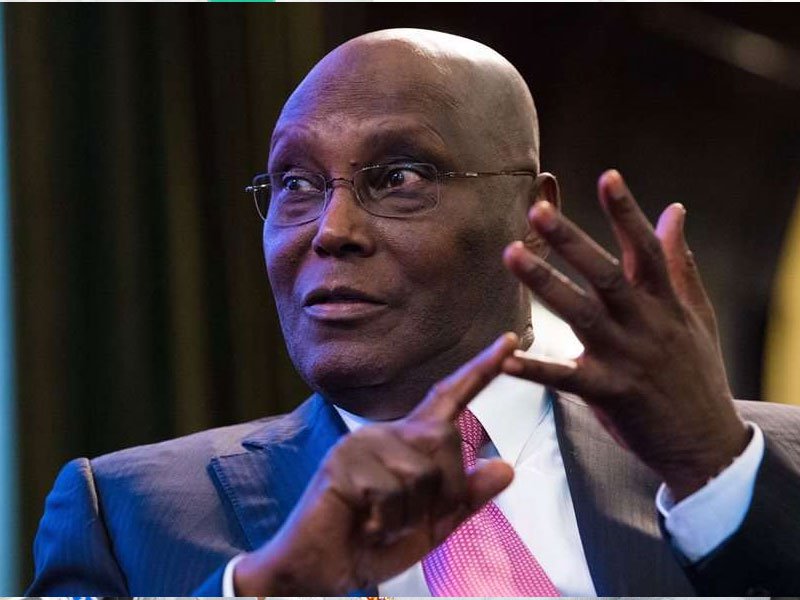
A former Vice President, and Presidential Candidate of the African Democratic Congress (ADC), Atiku Abubakar, has lashed out at the administration of President Bola Tinubu over its prolonged silence on the death of a medical practitioner, Mary Habila, who died at the residence of the Minister of Works, Dave Umahi.

Atiku condemned the inability of the  Tinubu-led government from making any pronouncements or instituting any form of probe to unravel the cause of death since the sad incident occurred on June 27, 2026, saying the administration has failed comprehensively and disgracefully.

Atiku’s remarks are contained in a statement he released on his social platforms endorsed with his regular AA.

While not casting any blame on any particular person or entity, Atiku maintained that condolences are not enough,but must be accompanied by thorough investigation into the circumstances that led to the death of the 26 years old medical practitioner in her prime.

The former Vice President therefore called for a “credible, independent, and transparent investigation” to establish the truth, noting that “it is the refusal of the Federal Government to guarantee such an investigation that constitutes the scandal before us”.

The statement in full:

I have followed with deep sorrow and mounting concern the reports surrounding the death of Miss Mary Habila, a 26-year-old Nigerian from Nok, Southern Kaduna, who died on June 27, 2026, within the private residence of the Honourable Minister of Works, Senator David Umahi, in Uburu, Ebonyi State.

First, I extend my heartfelt condolences to the Habila family. No family should have to mourn a daughter taken in the prime of her life while also fighting simply to learn the truth of how she died.

But condolences are not enough. Nigerians deserve answers, and it is on this score that the Tinubu administration has failed, comprehensively and disgracefully.

Consider the facts that are not in dispute. A young woman died in the residence of a serving Federal Minister. For nearly two weeks, neither the Minister, nor the police, nor any arm of government said a word to the Nigerian people. It took the courage of Sahara Reporters to bring this death into public view. Three weeks after her death, no autopsy has been performed. No cause of death has been established. The investigation remains domiciled in the very state where the Minister served two terms as Governor and where his influence is beyond question.

And through all of this, silence from the Presidency. Silence from the Federal Executive Council. Silence from the Inspector-General of Police. Silence from the National Assembly. Not one word. Not one directive. Not one gesture to assure Nigerians that the life of Mary Habila matters to this government.

Instead, the Minister has been permitted to manage the narrative of a death that occurred under his own roof: issuing statements through his personal aides, deploying his private lawyers to correspond with the police, and continuing his official duties as though nothing has happened, while civil society groups, youth organisations, and the family’s own community cry out for an independent inquiry.

Let me be clear: I make no pronouncement on anyone’s guilt or innocence. That is precisely the point. Only a credible, independent, and transparent investigation can establish the truth, and it is the refusal of the Federal Government to guarantee such an investigation that constitutes the scandal before us.

A government’s first duty is the protection of life. Where a life is lost in circumstances touching a high official of state, the burden on government to act transparently is at its heaviest.

President Tinubu’s administration has instead treated this tragedy as an inconvenience to be waited out. If the death of a young Nigerian woman in a Minister’s residence cannot stir this government to act, then Nigerians must ask: whose life, exactly, does this government value?

I therefore demand the following: One, President Bola Tinubu must direct the Honourable Minister of Works to step aside immediately, pending the conclusion of investigations. This is not a punishment; it is the minimum standard of public accountability in any serious democracy. No official under this cloud should preside over a federal ministry as though it were business as usual.

Two, the Inspector-General of Police must immediately transfer the investigation from the Ebonyi State Command to Force Headquarters, with the involvement of independent forensic experts. No investigation conducted in the shadow of the Minister’s home-state influence can command public confidence.

Three, a full, independent, and internationally credible autopsy must be conducted without further delay, with the findings made public. The stalemate over the post-mortem, three weeks after this young woman’s death is an indictment of every institution involved.

Four, the family of Mary Habila must be protected from any pressure, inducement, or intimidation, and must be guaranteed unfettered access to the facts of their daughter’s death.

The measure of a nation is how it responds when the powerful are touched by tragedy and the powerless demand truth. Mary Habila was somebody’s daughter, somebody’s sister, a young professional with her life ahead of her. She was a Nigerian. Her death must not be reduced to a footnote of political convenience.

Nigeria will work again, but only when the life of every Nigerian counts, and when no one, however highly placed, stands beyond the reach of accountability.

May the soul of Mary Habila rest in peace. May her family find justice. -AA

Continue Reading

Headline

Atiku Accuses INEC of Aiding Tinubu’s Alleged One-party State Agenda

Published

on

By

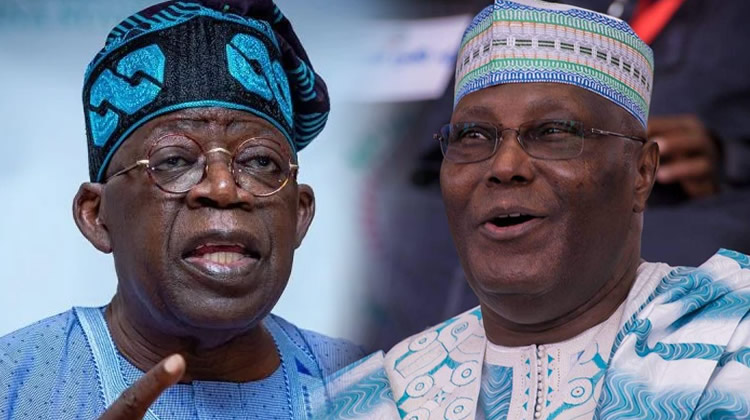
Former Vice President Atiku Abubakar has accused the Independent National Electoral Commission (INEC) of aiding President Bola Tinubu’s agenda to weaken opposition parties ahead of the 2027 polls by granting access to a factional leader of the African Democratic Congress (ADC).

In a statement issued Monday by the Atiku Media Office, Atiku alleged that INEC’s actions amounted to partisanship and a violation of the Constitution and the Electoral Act.

The statement referenced a July 11, 2026 claim by Nafiu Bala Gombe, who “parades himself as National Chairman of the African Democratic Congress (ADC)”, that he had succeeded in uploading the names of his candidates on INEC’s portal.

According to Atiku’s office, uploading candidates is part of the process for the 2027 General Elections, made possible by access codes granted to political parties in line with INEC guidelines.

“Meanwhile, INEC has been mum, and has not denied or confirmed this obvious contradiction to the law and its own guidelines,” the statement said.

Atiku’s team argued that by granting an access code to Bala Gombe, INEC was recognizing a “pretender” despite having “since validated the chairmanship of the Sen. David Mark-led exco.”

“By granting access code to Bala Gombe, a pretender, laying claims to the chairmanship of the ADC, though the law is not on his side and INEC has since validated the chairmanship of the Sen. David Mark-led exco, the electoral umpire is once again manifesting its partisanship,” the statement noted.

It drew parallels with a past incident under Prof. Joash Amupitan-led INEC, alleging the commission “illegally removed the names of the duly recognised ADC exco following the judicial rascality of Justice Lifu in ignoring a superior ruling of an appellate court.”

The statement described the “so-called ‘successful’ uploading of ‘candidates’ by Nafiu Bala Gombe” as lacking legal basis.

“Nafiu Bala Gombe is not recognised as ADC Chairman. Mark is duly recognised. Can there be two recognised Chairmen of a political party? Possibly only in an INEC led by Amupitan. Can INEC grant two access codes to a political party? Certainly not,” it added.

Atiku’s office warned that the development “is a recipe for crisis and confirms that Prof Joash Amupitan was appointed to enable the weakening of the opposition parties by creating crisis even where none exists.”

Citing the law, the statement noted that Section 222 of the 1999 Constitution (as amended) provides that candidates must emerge through recognized party primaries supervised by INEC, while Section 84 of the Electoral Act 2022 requires parties to submit only one validly nominated candidate per elective office.

“Nafiu Bala Gombe and his criminal gang did not conduct any primaries. The INEC granting of access code to Nafiu Bala Gombe is unconstitutional and unlawful. The only submitted candidates known to the law are those of David Mark. Any parallel submission such as Nafiu Bala Gombe’s is null and void,” it said.

The statement called on the INEC Chairman to stop “fomenting crisis in the ADC and the other opposition parties and by so doing helping President Bola Tinubu’s agenda of total State capture.”

Continue Reading

Headline

Appeal Court Upholds Judgment Ordering INEC to Derecognise Mark-led EXCO

Published

on

By

The Court of Appeal sitting in Abuja on Monday affirmed the judgment restraining the Independent National Electoral Commission (INEC) from recognising or participating in any state congresses organised by committees appointed by the Senator David Mark-led caretaker leadership of the African Democratic Congress (ADC).

The appellate court decision was a split of two-to-one.

A three-member panel of the appellate court, in a lead verdict delivered by Justice Okon Abang, said it found no reason to set aside the restraining order the Federal High Court in Abuja had issued against the Mark-led ADC on April 29.

It further upheld the order of trial Justice Joyce Abdulmalik, which restrained the Mark-led executives from interfering with the tenure and functions of the party’s elected state executives.

The appellate court concurred that responsibility for conducting state congresses of political parties rests with elected state executive committees, not with the national leadership.

While Justices Abang and Donatus Okorowo gave the majority verdict barring the electoral body from acknowledging the outcome of congresses held by the Mark-led leadership of the ADC, the head of the appellate court’s panel, Justice Abba Mohammed, gave a dissenting judgment.

In his minority decision, Justice Mohammed held that the case that precipitated the restraining order bordered on a non-justiciable internal affair of a political party.

He held that the trial court was wrong to have assumed jurisdiction to entertain the matter.

Meanwhile, the Court of Appeal judgment may jeopardise the presidential candidacies of former Vice President Atiku Abubakar and other candidates who emerged through the national congress organised by the Mark-led faction of the ADC, ahead of the 2027 general elections.

It will be recalled that the High Court had, in its judgment, held that the four-year tenure of the ADC’s State Working Committees and State Executive Committees remained valid and subsisting, pending the conduct of properly constituted congresses and the convocation of a national convention.

The judgment followed a suit marked FHC/ABJ/CS/581/2026, lodged before the court by aggrieved members of the ADC.

Those behind the suit are Don Norman Obinna, Johnny Tovie Derek, Obah C. Ehigiator, Hon. Olona Yinka, Dr. Charles Idowu Omideji, Samuel Pam Gyang, and Obianyo Patrick, who told the court that they sued for themselves and on behalf of all State Chairmen and State Executive Committees of the African Democratic Congress (ADC).

Listed as defendants in the matter are the ADC; Sen. David Mark; Sen. Patricia Akwashiki; Mallam Bolaji Abdullahi; Ogbeni Rauf Aregbesola; and Prof. Oserheimen Osunbor (sued on behalf of the Caretaker/Interim National Working Committee); and INEC.

The plaintiffs had, among other things, challenged the decision of the Senator Mark-led leadership of the ADC to constitute committees for the purpose of conducting state congresses.

They challenged the validity of appointments made by the Mark-led caretaker committee, arguing that planned state congresses slated for April 2026, if conducted under the supervision of the said caretaker committee, would constitute a gross violation of the party’s constitution.

It was further the position of the plaintiffs that only duly elected party organs recognised under the party’s constitution possess the power to conduct congresses.

While agreeing with the plaintiffs, Justice Abdulmalik held that neither the 1999 Constitution, as amended, nor the Constitution of the ADC empowered the caretaker/interim National Working Committee led by Senator Mark to appoint committees for the purpose of conducting state congresses.

The court held that the claims brought before it by the plaintiffs were valid and deserving of judicial consideration, citing an alleged breach of constitutional and statutory provisions.

It held that Section 223 of the 1999 Constitution, as amended, mandates political parties to conduct periodic elections based on democratic principles, adding that Article 23 of the ADC Constitution also provides that national and state officers shall hold office for a maximum of two terms spanning eight years.

Justice Abdulmalik stressed that although courts are generally reluctant to interfere in the domestic affairs of political parties, they nonetheless intervene where there is a clear allegation of violation of constitutional or statutory provisions. Political commentary articles

She held that evidence before the court established that the tenure of the state executive committees of the ADC remained valid and must be allowed to run its full course without interference.

The court stressed that only those elected structures have the authority to organise state congresses, and it accordingly nullified any process initiated by the Senator Mark-led caretaker leadership.

Earlier, the court dismissed a preliminary objection filed by the defendants challenging the competence of the suit and the court’s jurisdiction to entertain it.

It held that the subject matter of the plaintiffs’ action pertained to the affairs of INEC and therefore fell within the jurisdiction of the Federal High Court under Section 251 of the 1999 Constitution, as amended.

The court also waved aside the defendants’ contention that the plaintiffs failed to exhaust internal dispute resolution mechanisms before instituting the action.

It held that the plaintiffs had the requisite locus standi (legal right) to file the suit.

The appellate court, while upholding the restraining order, said it had a duty to intervene so as to “prevent anarchy and ensure the survival of democracy in Nigeria.”

It cited a recent Supreme Court judgment in the leadership crisis rocking the Peoples Democratic Party (PDP) to hold that the ADC case could not be classified as a domestic affair of a political party.

“Once a complaint before the court is anchored on a constitutional infraction, the shield of internal affairs drops and the veil is lifted for judicial intervention,” Justice Abang added in the majority judgment.

Consequently, the panel dismissed the appeal marked CA/ABJ/CV/608/2026, which the ADC lodged in order to set aside the high court judgment.

It held that congresses and the national convention conducted by the Mark-led ADC amounted to a nullity as they were held in disobedience to a subsisting order that the High Court made on April 14.

Having resolved the case against the ADC, the appellate court awarded a cost of N10million against the party.

Shortly after the judgment, the ADC, which was represented by its National Welfare Secretary, Mr Nkem Ukandu, said the party would take the case before the Supreme Court.

Continue Reading

Trending