Connect with us

Headline

Appeal Court Jails Yakubu Yusuf Six Years with N22.9bn Fine Over N24bn Fraud

Published

on

The Abuja Division of the Court of Appeal on Wednesday quashed the sentence of two years imprisonment with option of N750,000 fine imposed by the High Court of the Federal Capital Territory, Abuja, on a former official of the Police Pension Office, Yakubu Yusuf,  for stealing N24bn pension funds.

A three-man panel of the Court of Appeal headed by Justice Abdu Aboki, in a unanimous judgment, described the High Court’s sentence as unreasonable and substituted it with a total of six years’ imprisonment with an addition of N22.9bn fine.

Justice Emmanuel Agim, who delivered the lead judgment of the court, ruled that “the sentences levied” by the High Court “are clearly light and lenient ones.”

The justice ruled that this  allowed “the convict, who had admitted misappropriating or stealing N24bn, the option to pay the sum of N250,000 per count of offence in lieu of serving a prison term of two years for the offence,” to enjoy the huge balance he had in his possession.

He added that the “amount” of the sentences “is paltry, a pittance and unreasonably low.”

Justice Agim noted that it was “disproportionate to the amount stolen and therefore can comfortably and quickly be paid by the convict from the humongous amount stolen.”

He added that with the sentence, the convict would be left with “a huge balance of the stolen funds in his possession and without really causing him any pain of punishment.”

Justice Abubakar Talba of the Federal High Court in Gudu, Abuja, had in his judgment delivered on January 28,  2013 convicted Yusuf and sentenced him to two years imprisonment with an option of N750,000 fine.

Yusufu, had after pleading guilty to three of the counts preferred against him and others, was convicted and sentenced to two years imprisonment on each count with an option of paying N250, 000 fine on each of the three counts.

Although, two years imprisonment was the maximum jail term with an option of undisclosed fine prescribed as punishment by Section 309 of the Penal Code Act, under which Yusufu and his co-defendants were charged, Justice Talba ordered that the two years imprisonment imposed on the convict should run concurrently with the option of paying the N750,000 fine.

The convict had promptly paid the fine and walked free shortly after the judgment was delivered.

The Economic and Financial Crimes Commission had through its private prosecutor, Mr. Rotimi Jacobs (SAN), appealed against the High Court judgment.

Delivering the Court of Appeal’s lead judgment on the appeal on Wednesday, Justice Agim  held that the considerations of the High Court in imposing the light sentence were contrary to judicially established principles.

He noted that there was no monetary value of the properties already forfeited by the convict to justify the light sentence imposed on him by the High Court.

“I hold that the sentence of fine of N250,000 in lieu of imprisonment for a term of two years for each offence is unreasonable, unjust, unfair, irrational, arbitrary, and contrary to judicially established principles as it is not the result of a judicious and judicial exercise of the trial court’s sentence discretion,” he said.

He held that considering the humungous amount stolen, the nature and gravity of the offence, its destructive effect on the country, and its impact on retired police officers, the trial court ought to have imposed a severe sentence that would deter further commission of such crime and prevent the convict from retaining any part of the proceeds of the crime.

In passing a fresh sentence on Yusufu on Wednesday, Justice Agim imposed two years imprisonment on the convict on each of the three counts and in addition a fine of N20bn on the first count, N1.4bn on the second count and N1.5bn on the third count.

Justice Agim held that while the monetary fines on each of the counts amounting to N2.9bn would “run cumulatively,” the two years jail terms on each of the three counts would run “consecutively,” giving rise to a total of six years imprisonment.

He held, “In reviewing the sentence of imprisonment with option to pay fine, as in this case, this court can vary the sentence to one of both imprisonment and fine or imprisonment without option to pay fine.

“Considering the humongous amount stolen, the nature and gravity of the crime and its destructive effect on the country and its impact on retired police officers and the grave breach of public trust, a severe sentence that would deter the further commission of such a crime and prevent the convict from retaining any part of what he stole to avoid him obtaining financial benefit from his crime should be imposed.

“The sole issue raised for determination in the appellant’s (EFCC) brief is resolved in favour of the appellant.

“On the whole, this appeal succeeds as it has merit.

“I hereby quash the sentences of two years imprisonment or a fine of N250,000 for each of the offences in counts 18, 19 and 20 and substitute them with the following sentences for each count as follows:

“Count 18: The convict is sentenced to two years imprisonment and in addition a fine of N20bn.

“Count 19: The convict is sentenced to two years imprisonment and in addition a fine of N1.4bn.

“Count 20: The convict is sentenced to two years imprisonment and in addition a fine of N1.5bn.

“The prison terms shall run consecutively and the monetary fines cumulatively.”

Expressing concerns over the plight of the retired police officers who must have been at the receiving end of the massive theft of the pension funds, Justice Agim noted, “The offence committed by the respondent, by its nature, involves a grave breach of trust, erodes public confidence in public governance and causes retired police officers hardship and suffering.

“The funds stolen or misappropriated by the convict are police pension funds for the payment of monthly pensions and other retirement benefits of police officers nationwide.

“The theft or misappropriation of over N24bn of that fund would make the prompt payment of monthly pensions to retired police officers very difficult, if not impossible, with attendant hardship and suffering inflicted on such retired officers who rely on their monthly pensions as their only means or source of sustenance in retirement.

“The hopeless, helpless and dehumanising conditions the retired police officers have been put into by this offence that has become habitual and widespread amongst government officials in pensions departments of government whose duties are to be in custody of pension funds and process the payment of gratuities, monthly pensions and other retirement benefits to retired public servants is obvious.”

Justice Abdu Aboki, who led the three-man panel, and another member of the panel, Justice Mohammed Mustapha, agreed with the lead judgment.

The Punch

Continue Reading
Click to comment

Leave a Reply

Your email address will not be published. Required fields are marked *

Headline

ADC Tells Tinubu to Resign As World Bank Reveals 139million Nigerians Live in Poverty

Published

on

By

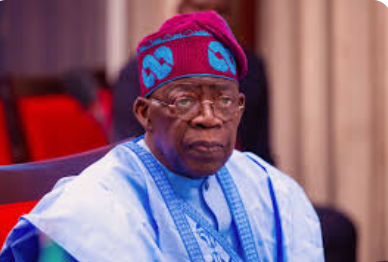
The African Democratic Congress (ADC) on Saturday asked President Bola Ahmed Tinubu to resign rather than seek re-election, asserting that the World Bank’s recent report showing that 139 million Nigerians live below the poverty line is his scorecard.

The ADC, in a statement by its spokesperson, Bolaji Abdullahi, said the World Bank’s report, which also estimated that 17 million Nigerians are at risk of starvation, was “disturbing.”

“The evidence of 139 million people living in poverty and 17 million at risk of starvation is President Tinubu’s scorecard,” the party said. “On account of this catastrophic failure alone, President Tinubu should be contemplating resigning from office rather than seeking re-election.”

It decried that the “catastrophic” situation was occasioned by the Tinubu administration’s policies, which it said, “have favoured money over people and statistics over survival.”

The opposition party maintained that the economic growth Mr Tinubu’s government has repeatedly boasted of as a result of its economic reforms is “meaningless” if the livelihoods of people at the grassroots have yet to improve since 2023, when he assumed office.

“Instead of changing course, the government has stubbornly stuck with its ruinous economic policies and even continues to market recklessness as courage and wickedness as ‘necessary pains.’

“However, three years down the line, it is now clear that the chicken has come home to roost,” the ADC said.

According to the party, Nigeria desperately needs a leader who truly cares about citizens’ well-being and understands that economic reforms should improve citizens’ lives, not worsen their misery.

“A president whose government is not openly feasting while asking the people to continue fasting. A government that does not wallow in profligacy while handing the people palliatives,” it added.

The party condemned the ruling APC’s social intervention programmes aimed at cushioning the effects of its economic policies, adding, “Poverty cannot be defeated through palliatives.”

The ADC pledged that if elected in 2027, it would tackle the root causes of hunger by reducing energy costs, enhancing food production, and ensuring that farmers returned to their farmlands.

It also vowed to rehabilitate the 264 abandoned dams, improve access to fertilisers and quality seeds, and invest in storage facilities.

According to the party, transportation, waste, and food prices would be reduced while creating productive jobs.

“Hunger cannot be separated from poverty, education, or healthcare. That is why an ADC government will prioritise nutrition, primary healthcare, quality basic education, and skills development because no nation can build a prosperous economy while millions of its children are hungry, out of school, or cannot read simple texts,” the party said.

Continue Reading

Headline

‘Punishment Before Trial’: The Travails of Nasir El-Rufai

Published

on

By

By Eric Elezuo

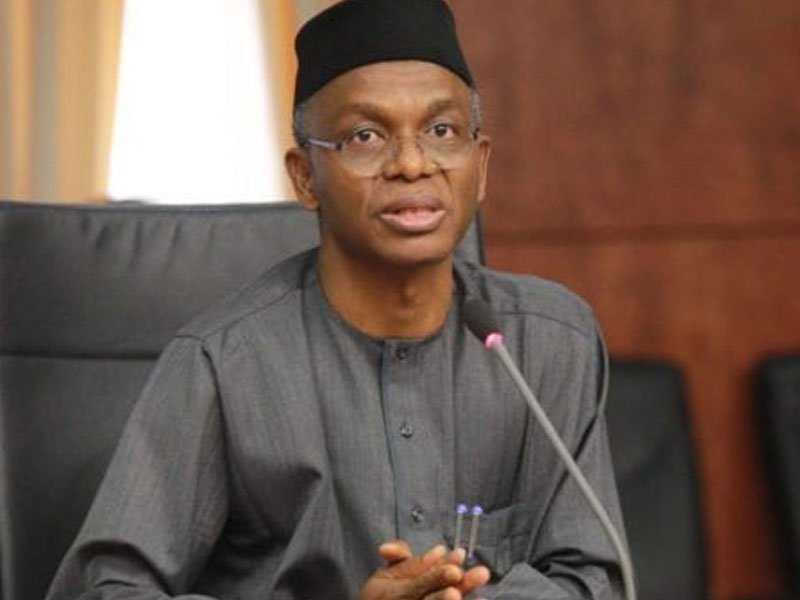
For 150 days and counting, a former Governor of Kaduna State, and one time Minister of the Federal Capital Territory, Mallam Nasir El-Rufai, has remained in the custody of various security agencies including the Department of State Services (DSS), the Economic and Financial Crimes Commission (EFCC) and the Independent Corrupt Practices and Other Related Offences Commission (ICPC) for alleged offences ranging from fund misappropriation, wiretapping and eavesdropping on security information among others. El-Rufai has not been found of any offence though he has spent over 150 days in custody.

The former governor’s plight was brought back to the fore weekend, when his wife, Asia Ahmad El-Rufai, made a passionate appeal to the international community to intervene over what she described as her husband’s prolonged detention and alleged denial of due process.

Mrs El-Rufai argued that the former governor’s continued incarceration amounted to “punishment before trial” and posed a threat to Nigeria’s democratic institutions. She noted that her husband has not been fairly treated even as she alleged that the former Director-General of the Bureau of Public Enterprise (BPE) may have taken ill in custody, bleeding from both nose and mouth. She wondered how someone, could made to undergo such severe punishment even when he is not undergone any trial, let alone being found guilty.

In a statement she signed herself, released his social media handles to mark what she described as the 150th day of El-Rufai’s detention, El-Rufai’s wife called on foreign governments, multilateral and multinational organisations and international human rights groups to closely monitor the legal proceedings involving her husband.

She acknowledged not speaking as a political actor but as a wife and mother seeking fairness for a member of her family.

The woman was of the opinion that the period of her husband’s incarceration without trial, has taken a significant emotional and physical toll on the former governor, members of his family and close associates.

“On the 150th day of Mallam Nasir El-Rufai’s detention, I ask readers outside Nigeria to pause over what that number means. One hundred and fifty days is not a legal phrase.

“It is five months of missed meals, missed prayers, missed proper mourning of his deceased mother, missed family conversations, interrupted medical care and moments we can never recover,” she said.

Acknowledging that her husband had been a controversial figure during his more than two decades in public service, as well as how rule of law and democracy should play out, she observed that “My husband is no stranger to controversy or public scrutiny. He has been praised, criticised, loved and opposed. That is democracy.

“But what is happening to him today is not democracy, and it is not accountability. It is punishment before trial,” she said.

Continuing and reflecting on the origin of the travails of her husband, Mrs El-Rufai traced his confrontation with the law to when am attempt was first made to arrest him at the airport on his way back from Egypt. The embarrassing situation at the airport culminated in his appearance for questioning, and ever since he has been allowed except when he was momentarily permitted to go and bury his dead mother.

She said, “There was the sudden invitation, his voluntary appearance before the authorities, and the promise of bail that existed on paper but not in freedom.

“There was the night he was moved between locations without warning and without the dignity of allowing his family to know where he was being taken,” she stated.

Asia also alleged that the former governor became seriously ill while in custody and experienced bleeding from his nose and mouth.

She claimed that officials were reluctant to provide him with adequate medical attention or allow his family to deliver his prescribed medication.

“I still remember the helplessness of hearing that he had fallen gravely ill in custody, bleeding from his nose and mouth, while those responsible for his welfare were reluctant to provide the care any person deserves.

“I remember the anxiety of trying to get his medication to him and wondering whether officials would accept it,” she said.

According to her, the detention had inflicted emotional distress on the family, which continued to wait for the legal process to take its course.

“These are not abstract violations. They are the moments that chip away at a family’s resolve and hope,” she added.

While not requesting that her husband be placed above the law, or escape investigation as a public officer, she insisted that such investigations must be conducted transparently, and in accordance with constitutional safeguards.

“If the state believes it has evidence, let it be presented before an impartial court, openly and fairly.

“But justice cannot be selective. It cannot be pursued through overlapping charges, repeated detention, impossible bail conditions and public humiliation designed to persuade the nation of guilt before a judge has heard the case,” she said.

She accused the government of the day of orchestrating the gory details of the situation, including stringent bail conditions to deprive her husband of freedom, even as the election approaches, stressing that Nigeria was drifting from legitimate accountability towards “lawfare,” which she described as the deployment of legal institutions and judicial procedures as political weapons. She believes that El-Rufai’s problems are the consequence of his disagreement with President Bola Tinubu, and his eventual decanting from the All Progressives Congress (APC).

“The concern is not whether former officials may be investigated; they can and should be.

“The concern is whether the law is being applied neutrally or deployed against those who have fallen out of political favour,” she said.

“His political rupture with President Bola Tinubu’s ruling All Progressives Congress and his refusal to surrender his independent voice should not make him a target for indefinite punishment or detention disguised as prosecution,” she said.

“The legal architecture”, she continued, “surrounding him is bewildering even to trained observers: multiple charges in different courts, overlapping allegations, shifting statutory theories and duplicated claims arising from the same alleged events.

“If one application for bail is made and the conditions are met, another accusation can be filed the next day. If one judge must consider freedom, another process can be used to delay it,” she alleged, querying why such procedures was allowed to turn the judicial process into a form of punishment before conviction.


In March 2026, the ICPC arraigned El-Rufai, alongside one Joel Adoga, before Honourable Justice A.I. Aikawa of the Federal High Court, Kaduna Division, on a 10-count charge bordering on abuse of office, money laundering and fraud.

According to the charge sheet marked FHC/KD/73/2026, the former governor was accused of unlawfully receiving multiple sums of money in naira and foreign currencies while serving as a public officer.

Specifically, the Commission alleged that El-Rufai, in September 2020 and January 2023, received the sum of N289,826,998.12 on each occasion as severance allowance, far exceeding the legally entitled sum of N20,013,245.00, being 300 percent of his annual basic salary.

The ICPC charge further revealed that between 2016 and 2023, the former governor allegedly took control of various sums in United States Dollars through his domiciliary account with Guaranty Trust Bank. These include $320,800 allegedly paid in tranches by Joel Adoga, as well as other deposits amounting to $155,800, $305,300, and several smaller sums from different individuals, all reasonably suspected to be proceeds of unlawful activities.

Joel Adoga was also accused of conspiring with the former governor in July 2019 to disguise the origin of $10,000 deposited into the said account.

One of the counts reads that both defendants, in July 2019 at Wuse, Abuja, allegedly conspired to disguise the origin of $10,000 paid into the former governor’s domiciliary account, knowing or reasonably ought to have known that the funds formed part of the proceeds of unlawful activity, contrary to and punishable under relevant provisions of the Money Laundering (Prevention and Prohibition) Act, 2022.

When the charges were read, both defendants pleaded not guilty to all counts, but they were ordered to be remanded in ICPC custody.

The ICPC further violated the court-ordered access to the former governor, saying that the order did not override the agency’s internal security rules.

In May 2026, the Federal High Court sitting in Abuja granted El-Rufai N100 million bail in the trial over the alleged unlawful interception of the phone communications of the National Security Adviser, Nuhu Ribadu. However, he was re-arrested right at the court premises by the DSS, prompting the family to raise alarm.


EL-RUFAI’S STRINGENT BAIL CONDITIONS

Much as the embattled former Kaduna governor was granted bail, the conditions have appeared too stringent and tough to meet, the situation that prompted the African Democratic Congress (ADC) among many other concerned Nigerians to react.

In its immediate reaction, the ADC accused the Federal Government of turning El-Rufai into a political prisoner, describing his ordeal as “political persecution dressed up as prosecution.”

El-Rufai’s family also condemned the re-arrest.

El-Rufai’s second wife, Hasiat, who addressed journalists outside the DSS facility, said the family was traumatised by the development and lived daily under the shadow of threats and surveillance.

“We now live in constant fear. Every day we get a threat — DSS is coming to raid your house, ICPC is coming to raid your house, police are coming to raid your house. You are being followed. Our phones are tapped,” she said.

As part of the bail conditions, the trial judge, Justice Joyce Abdulmalik ordered the defendant to produce a surety who must be a federal civil servant not below Grade Level 17.

According to the court, the surety must not only be resident in either Maitama or Asokoro highbrow districts of Abuja, but must also deposit the original Certificate of Occupancy of a landed property not valued below the bail sum.

It held that the surety must also provide evidence of receipt of salary for at least three months, with an authenticated letter from the manager of a bank within the jurisdiction of the court.

Furthermore, the court directed the surety to depose to an affidavit of means and equally submit a recent passport photograph to its registry.

It added that a verification letter from the surety’s immediate department must be submitted alongside a tax clearance certificate covering the last six months.

The defendant was further mandated to surrender his valid international passports and directed not to travel out of the country without permission.

Justice Abdulmalik ordered the defendant to report to the headquarters of the Department of State Services, DSS, every last Friday of the month by 10 a.m. to sign an attendance register, pending the determination of the case. The former governor was also directed to submit a letter of attestation from the Chairman of the Kaduna Traditional Council.

The trial judge warned that failure to comply with any of the conditions would lead to an automatic revocation of the bail.

Expressing its position on the travails of the former governor, the ADC, in a statement signed by its National Publicity Secretary, Mallam Bolaji Abdullahi, said “What is happening to Mallam El-Rufai confirms beyond all doubt that this detention is no longer about justice, it is about politics.

“It also confirms our fears that President Bola Ahmed Tinubu is deploying the instruments of state power to keep one of the leading opposition figures out of circulation. This is political persecution dressed up as prosecution.”

ADC also drew comparisons between El-Rufai’s case and those involving former Kogi State governor, Yahaya Bello, and former Delta State governor, Ifeanyi Okowa, both facing separate corruption allegations.

“When placed beside other high-profile cases, the contrast becomes stark and shameful. Yahaya Bello, former governor of Kogi State, has been accused in an alleged N80.2 billion money laundering case.

‘’Ifeanyi Okowa, former governor of Delta State, was arrested over the alleged diversion of N1.3 trillion in derivation funds. But today, they are walking around free, singing President Tinubu’s campaign song,” the ADC statement noted.

However, unconfirmed feelers reaching The Boss have it that El-Rufai’s incarceration has a lot to do with keeping him away from the face politics till after the 2027 General elections. The truth, or otherwise behind the postulation remains to be seen. Nigerians have to wait till the former governor’s next appearance in court by September 2026, to determine the direction of his freedom.

Continue Reading

Headline

Mary Habila’s Death: Tinubu Has Failed Comprehensively, Disgracefully – Atiku

Published

on

By

By Eric Elezuo

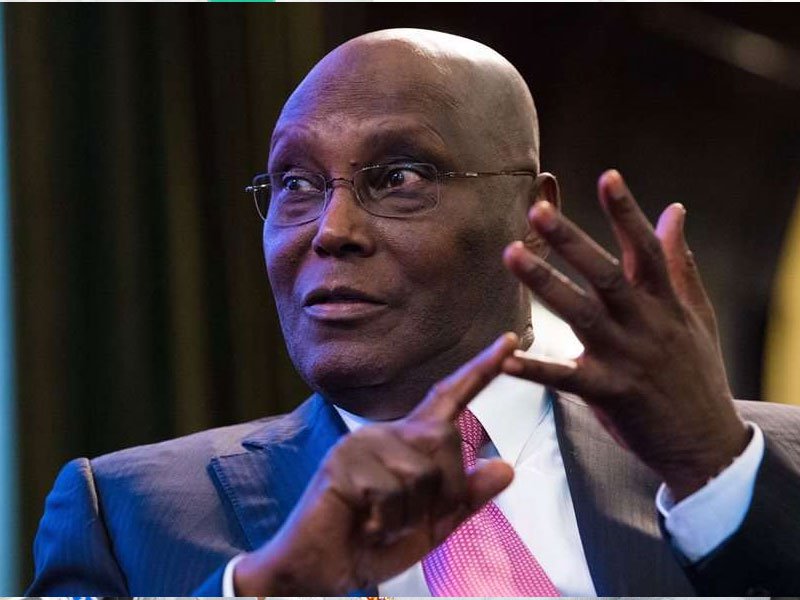
A former Vice President, and Presidential Candidate of the African Democratic Congress (ADC), Atiku Abubakar, has lashed out at the administration of President Bola Tinubu over its prolonged silence on the death of a medical practitioner, Mary Habila, who died at the residence of the Minister of Works, Dave Umahi.

Atiku condemned the inability of the  Tinubu-led government from making any pronouncements or instituting any form of probe to unravel the cause of death since the sad incident occurred on June 27, 2026, saying the administration has failed comprehensively and disgracefully.

Atiku’s remarks are contained in a statement he released on his social platforms endorsed with his regular AA.

While not casting any blame on any particular person or entity, Atiku maintained that condolences are not enough,but must be accompanied by thorough investigation into the circumstances that led to the death of the 26 years old medical practitioner in her prime.

The former Vice President therefore called for a “credible, independent, and transparent investigation” to establish the truth, noting that “it is the refusal of the Federal Government to guarantee such an investigation that constitutes the scandal before us”.

The statement in full:

I have followed with deep sorrow and mounting concern the reports surrounding the death of Miss Mary Habila, a 26-year-old Nigerian from Nok, Southern Kaduna, who died on June 27, 2026, within the private residence of the Honourable Minister of Works, Senator David Umahi, in Uburu, Ebonyi State.

First, I extend my heartfelt condolences to the Habila family. No family should have to mourn a daughter taken in the prime of her life while also fighting simply to learn the truth of how she died.

But condolences are not enough. Nigerians deserve answers, and it is on this score that the Tinubu administration has failed, comprehensively and disgracefully.

Consider the facts that are not in dispute. A young woman died in the residence of a serving Federal Minister. For nearly two weeks, neither the Minister, nor the police, nor any arm of government said a word to the Nigerian people. It took the courage of Sahara Reporters to bring this death into public view. Three weeks after her death, no autopsy has been performed. No cause of death has been established. The investigation remains domiciled in the very state where the Minister served two terms as Governor and where his influence is beyond question.

And through all of this, silence from the Presidency. Silence from the Federal Executive Council. Silence from the Inspector-General of Police. Silence from the National Assembly. Not one word. Not one directive. Not one gesture to assure Nigerians that the life of Mary Habila matters to this government.

Instead, the Minister has been permitted to manage the narrative of a death that occurred under his own roof: issuing statements through his personal aides, deploying his private lawyers to correspond with the police, and continuing his official duties as though nothing has happened, while civil society groups, youth organisations, and the family’s own community cry out for an independent inquiry.

Let me be clear: I make no pronouncement on anyone’s guilt or innocence. That is precisely the point. Only a credible, independent, and transparent investigation can establish the truth, and it is the refusal of the Federal Government to guarantee such an investigation that constitutes the scandal before us.

A government’s first duty is the protection of life. Where a life is lost in circumstances touching a high official of state, the burden on government to act transparently is at its heaviest.

President Tinubu’s administration has instead treated this tragedy as an inconvenience to be waited out. If the death of a young Nigerian woman in a Minister’s residence cannot stir this government to act, then Nigerians must ask: whose life, exactly, does this government value?

I therefore demand the following: One, President Bola Tinubu must direct the Honourable Minister of Works to step aside immediately, pending the conclusion of investigations. This is not a punishment; it is the minimum standard of public accountability in any serious democracy. No official under this cloud should preside over a federal ministry as though it were business as usual.

Two, the Inspector-General of Police must immediately transfer the investigation from the Ebonyi State Command to Force Headquarters, with the involvement of independent forensic experts. No investigation conducted in the shadow of the Minister’s home-state influence can command public confidence.

Three, a full, independent, and internationally credible autopsy must be conducted without further delay, with the findings made public. The stalemate over the post-mortem, three weeks after this young woman’s death is an indictment of every institution involved.

Four, the family of Mary Habila must be protected from any pressure, inducement, or intimidation, and must be guaranteed unfettered access to the facts of their daughter’s death.

The measure of a nation is how it responds when the powerful are touched by tragedy and the powerless demand truth. Mary Habila was somebody’s daughter, somebody’s sister, a young professional with her life ahead of her. She was a Nigerian. Her death must not be reduced to a footnote of political convenience.

Nigeria will work again, but only when the life of every Nigerian counts, and when no one, however highly placed, stands beyond the reach of accountability.

May the soul of Mary Habila rest in peace. May her family find justice. -AA

Continue Reading

Trending